Embroidery Beanies Ecommerce Pricing Request: What It Unlocks
The phrase embroidery beanies ecommerce pricing request sounds simple, but it only works when it forces the supplier to define the job. If the request does not pin down the blank beanie, decoration method, packaging, and delivery terms, the quote is usually just a placeholder.
Beanies are not interchangeable blanks. A cuffed acrylic beanie, a rib-knit style with more stretch, and a fleece-lined winter cap all behave differently in production. Fabric, cuff height, and inside construction can change stitch behavior and decoration space.
For ecommerce, the goal is not the lowest sticker price. It is a quote you can use to protect margin and plan inventory. A supplier who includes digitizing, mockups, packaging, and freight assumptions up front gives you a landed number. That is the number that matters.
A useful pricing request does not ask only, “How much per piece?” It asks, “What exactly are you pricing, and what did you assume to get there?”
That shift makes every quote easier to compare. Once the blank, stitch count, placement, and ship terms are defined, the answer becomes a decision tool instead of a number that needs decoding later.
How Decoration on Beanies Changes the Build
Beanies are small, but they are fussy. The knit stretches, the cuff folds, and the surface is rarely flat for long. A logo that looks clean on a screen can turn muddy once it hits textured fabric.
Direct embroidery is the most common route because it creates a retail-ready look without extra components. Cost still moves quickly as stitch count rises. Dense lettering, tiny details, or oversized art increase machine time and can raise the price.
Patches and appliques solve some problems and create others. A woven or felt patch can preserve detail that embroidery would lose, but it adds cutting, finishing, and sewing steps. That can be the right choice for a detailed brand mark or a more premium finish.
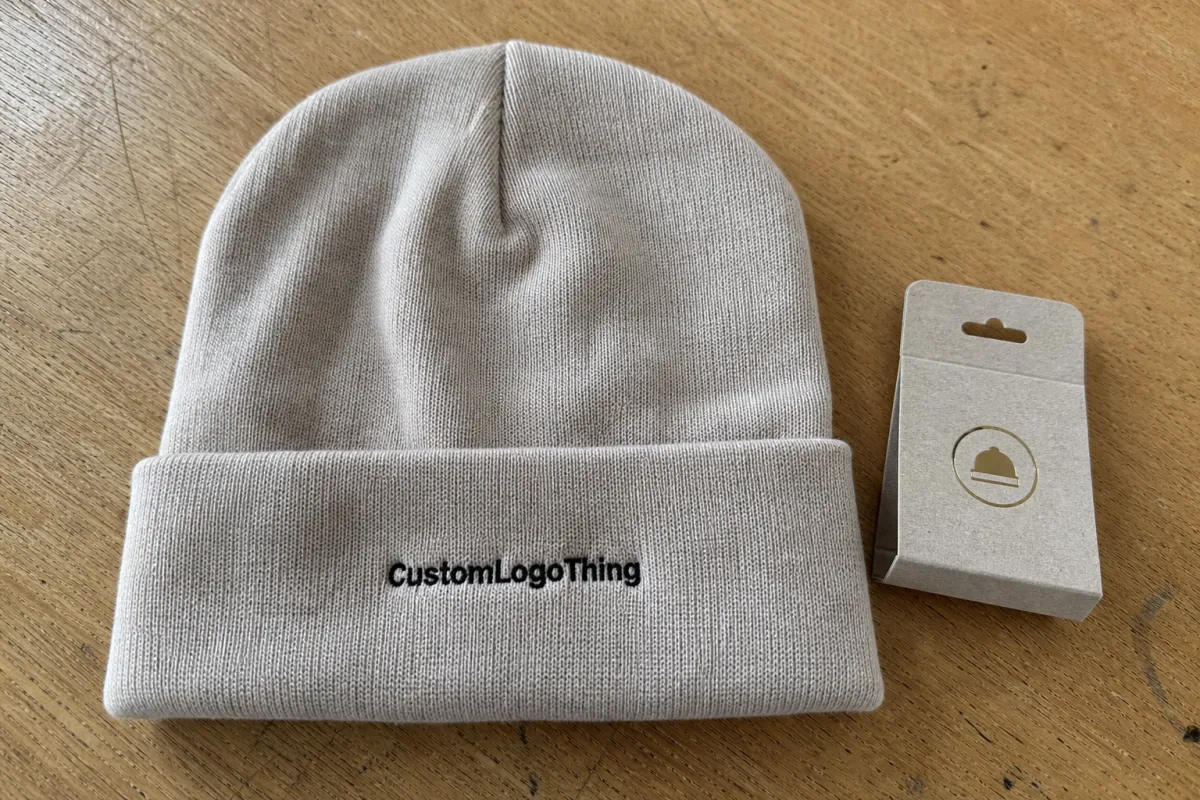
Placement matters too. A small front-cuff mark is usually easier than a wider panel design or a crown placement that must sit neatly across a curve. Buyers often underestimate how much usable decoration area shrinks once the beanie is worn.
| Decoration style | Typical cost impact | Best use case | Watch-outs |
|---|---|---|---|
| Direct embroidery | Usually lowest for simple art; climbs with stitch count and color changes | Everyday ecommerce beanies, team merch, launch inventory | Fine details can blur if the logo is too small |
| Woven or felt patch | Moderate; setup and attachment add labor | Premium presentation, detailed logos, limited runs | Patch edges, thread match, and placement need close review |
| Appliqued emblem | Moderate to higher depending on layer count | Bold marks, contrast-heavy branding | Bulkier hand feel and more visible seams |
| Hybrid stitch plus patch | Highest for complex retail finishes | Signature drops, premium collections, seasonal releases | More steps mean more proofing and more room for delay |
Good mockup review catches a lot before production starts. Ask how the thread colors are matched, whether any backing will show, and whether the logo still reads clearly at thumbnail size. Ecommerce photos sell at phone size first and close-up second.
For packaging and transit, the conversation should not stop at decoration. A beanie that looks fine on a table can get crushed, wrinkled, or distorted in the wrong carton spec. Distribution testing references from groups like ISTA are useful here: ista.org.
Pricing Factors That Move Unit Cost and MOQ
The main cost drivers are the blank beanie, the decoration method, stitch count, number of placements, thread colors, and packing requirements. Most quote problems come from one of those fields being vague or missing.
Blank quality matters. A standard acrylic beanie usually sits at the lower end of the price range. Recycled yarn, heavier rib knits, cotton blends, and fleece-lined winter styles cost more before decoration starts. Better hand feel and shape retention are not free.
Setup work adds real cost too. Digitizing converts artwork into machine-readable stitch paths. Simple art may digitize quickly, but anything with small text, layered shapes, or odd proportions can take cleanup. Some suppliers also charge for first samples, thread matching, or art correction if the file is messy.
Quantity changes the math fast. Fixed costs spread better across larger runs, which is why 500 pieces often carry a higher per-piece burden than 2,500 pieces even when the beanie and logo are identical. For ecommerce buyers, a low MOQ can be convenient without being the cheapest outcome.
There are hidden costs as well: individual polybags, hang tags, barcode labels, carton marking, split shipments, and rush handling all move the quote. If one supplier includes packaging and another does not, the lower quote is not really lower. It is just incomplete.
In practice, simple embroidery on a standard acrylic beanie can sit in the low single digits at scale before freight, while premium blanks, denser stitch work, patches, or retail packout push the landed number higher. That range is wide because you are buying a package of decisions, not one line item.
Use these rough bands to compare offers:
- Basic embroidery on standard acrylic beanies: lowest unit cost, especially once the run reaches volume.
- Premium knit or fleece-lined blanks: higher base price because the blank itself is more expensive.
- Patch or applique builds: mid-range to premium depending on attachment method and layer count.
- Retail packout: can add more than expected if each unit needs a branded bag, insert, or barcode label.
If the goal is a real supplier comparison, freeze the assumptions. Same blank. Same placement. Same decoration size. Same packaging. Same destination. Same ship window. A embroidery beanies ecommerce pricing request only becomes useful once every vendor is pricing the same job.
For paper-based packaging components like hang tags or carton inserts, FSC is a practical reference point for responsible sourcing: fsc.org.
Production Steps and Turnaround From Proof to Shipment
Most beanie orders follow a familiar path: art review, digitizing, proof creation, buyer approval, machine setup, embroidery, finishing, quality check, and packing. That sounds orderly, but it only stays orderly when the buyer approves quickly and the specs do not change.
Approval is usually the slowest step. If the buyer changes logo size, thread color, or placement after the proof comes back, the schedule resets. Fast orders are usually the ones where the buyer sends clean art and approves without another round of uncertainty.
Production time depends on complexity. A cuffed acrylic beanie with a small one-location logo can move quickly. A larger crown placement, a multi-color patch, or a mixed packout with labels and inserts adds hand time and more chances for delay.
Transit time should always be separated from production time. A quote that says “10 business days” may mean 10 business days after approval, not 10 days from the original email. Then shipping gets added on top.
A reasonable production window for many embroidered beanie runs is often 7 to 15 business days after final proof approval. Larger runs, premium blanks, complex patch work, or retail packout can stretch that into the 2 to 4 week range.
Quality control should not be an afterthought. A practical inspection pass looks for crooked placement, loose threads, skipped stitches, tension issues, wrong cuff position, and packaging errors. Retail buyers usually care about whether the beanie looks balanced, ships cleanly, and holds up after unpacking.
If the order is headed straight into ecommerce fulfillment, ask for carton counts, pack weights, and box dimensions before approval. Those details affect freight cost, storage efficiency, and the shape of the unboxing experience.
Step-by-Step: Building an Apples-to-Apples Request
Start with the use case. Ecommerce resale, employee kits, event merch, and retail launch inventory all have different standards. A product intended for a fast seasonal drop can tolerate a simpler spec. A premium brand release usually cannot.
Then choose the exact beanie style and color family before asking for numbers. A cuffed acrylic style, a slouchy fit, a rib-knit body, a recycled yarn option, and a fleece-lined winter cap may look close on a mood board. They do not quote the same way, and they do not decorate the same way.
Send the cleanest artwork you have. Vector files like AI, EPS, or PDF are the best starting point because they let the supplier digitize cleanly. If the logo has small text or fine lines, say so. Small details are where embroidery gets picky.
State the decoration size and placement. A 2-inch front mark is not the same job as a larger panel logo or a patch on the cuff. If visual balance matters in product photos, say that too.
Ask for multiple quantity tiers. Common breakpoints like 100, 250, 500, 1,000, and 2,500 pieces show the curve instead of hiding it. That matters because the lowest tier is often too expensive for scale, while the highest tier may tie up more inventory than you want.
Use the same assumptions for every vendor. Ship-to address, packaging, proof timing, and lead-time range should match. If one supplier quotes delivered pricing and another quotes ex-works, the comparison is broken before it starts.
Here is a clean checklist for an embroidery beanies ecommerce pricing request that people can quote without translation:
- Define the use case and target quantity range.
- Specify the exact beanie style, color, and fit.
- Attach the best artwork file available.
- State decoration size, placement, and thread colors.
- Ask for proof, setup, packaging, and freight details.
- Request pricing at several volume breakpoints.
That structure keeps the quote usable and reduces back-and-forth that can push seasonal inventory too close to the ship date.
Common Mistakes That Skew Beanie Quotes
Low-resolution art is the first problem that shows up. A screenshot might be enough for a rough estimate, but it is not enough for a production-ready stitch path. Once the supplier sees the actual file quality, the quote may shift because the art needs cleanup or because the design is more delicate than it first appeared.
Another common miss is leaving out the placement or size. A small embroidered mark and a larger front-panel treatment are different jobs. They use different amounts of thread, different machine time, and different levels of skill to place well.
Mixing too many styles in one ask also muddies the comparison. Cuffed, uncuffed, oversized, fleece-lined, and recycled yarn beanies are not the same build. If you want a meaningful read on cost, keep each style separate or spell out the differences clearly.
Packaging assumptions cause plenty of confusion. A low piece price can hide individual bagging, carton labeling, or freight charges that show up later. That is why buyers should always ask whether the quote is ex-works, FOB, or delivered.
The last mistake is more subtle: comparing a low number without checking what is actually included. One supplier may include digitizing, another may include mockups, another may include freight, and another may include none of it. A cheap quote that leaves out half the job is not a bargain. It is a delayed surprise.
Expert Tips for Cleaner Quotes and Faster Decisions
Tiered pricing is the easiest way to make a quote useful. Ask for realistic breakpoints so you can see whether the unit cost drops enough to justify a larger buy. A good tiered quote usually tells you more than one isolated price ever will.
Ask for a proof that reflects the actual blank and placement. A flat logo on a digital render is fine for internal review, but it can hide problems with cuff height, knit texture, or logo scale. A supplier that can show a reasonable mockup before production is usually making fewer assumptions.
Decide which specs are fixed and which can flex. If the brand can live with one thread color instead of three, or a cleaner patch instead of layered embroidery, the quote often tightens without hurting the look. That is spec control, not cutting corners.
Keep the request short enough to answer, but not so short that the supplier has to guess. Exact blank, exact artwork, exact placement, exact quantity tiers, exact ship-to. The cleaner the inputs, the cleaner the quote.
From a buyer’s point of view, the value of an embroidery beanies ecommerce pricing request is clarity. It gives you enough detail to compare the landed number, proofing process, and ship timing side by side instead of reconstructing the real cost after the fact.
Good quote discipline usually saves money twice: first on the purchase price, and again by avoiding packaging or freight mistakes that quietly destroy margin.
Frequently Asked Questions
What should I include in an embroidery beanie pricing request?
Include the beanie style, color, decoration size, logo file, and the quantity range you want quoted. Add your delivery destination, target ship date, and whether you need packaging or retail labeling. If you already know them, note thread colors and placement so the supplier is not guessing.
Why do embroidery beanie quotes vary so much between suppliers?
Different suppliers may be quoting different blanks, different stitch counts, or different decoration methods. Some include digitizing, proofs, or freight, while others leave those out until later. Pricing also shifts with quantity, packaging requirements, and the supplier’s current production load.
Does a lower MOQ usually mean a higher unit cost for embroidered beanies?
Yes. Setup and digitizing costs are spread across fewer pieces when the order is small, so the unit cost usually rises. Ask for pricing at several tiers so you can see where the number improves. Sometimes a slightly larger run saves enough to justify the extra inventory.
How long does embroidered beanie production usually take after approval?
Production time usually starts after final proof approval, not when the first quote arrives. A common range is 7 to 15 business days for straightforward orders, with more complex builds taking longer. Shipping time is separate, so always ask for the full calendar window.
Can I reduce cost without changing the look of the beanie?
Often, yes. Simplifying the artwork, reducing stitch area, limiting the number of thread colors, or keeping to one decoration location can bring the price down. Avoiding rush freight helps too. The key is to ask which spec change moves the price the most before you lock the order.
What details matter most for ecommerce-ready packaging?
Carton size, pack quantity, individual bagging, label placement, and total carton weight matter most. Those items affect freight cost and warehouse handling. If the beanies are going straight into fulfillment, ask for these details before you approve production so there are no surprises later.
Good beanie sourcing is not about chasing the cheapest line item. It is about getting the decoration, blank quality, packout, and ship terms into one clean comparison so the price means something. That is what a solid request does: it turns a vague ask into a quote you can actually use.