Buyer Fit Snapshot
| Best fit | Export Packaging Cartons Cost projects where brand print, material claims, artwork control, MOQ, and repeat-order consistency need to be specified before quoting. |
|---|---|
| Quote inputs | Share finished size, material target, print colors, finish, packing count, annual reorder estimate, ship-to region, and any compliance wording. |
| Proofing check | Approve dieline scale, logo placement, barcode or warning zones, color tolerance, closure strength, and carton packing before bulk production. |
| Main risk | Vague material claims, crowded artwork, missing packing details, or unclear freight terms can make a low unit price expensive after revisions. |
Fast answer: Export Packaging Cartons Cost: What Drives the Price should be specified like a repeatable production item. The safest quote records material, print method, finish, artwork proof, packing count, and reorder notes in one written spec.
Production checks before approval
Compare the actual filled-product size with the drawing, then confirm tolerance on folds, seals, hang holes, label areas, and retail display edges. Reserve space for logos, QR codes, warning copy, and material claims before decorative graphics fill the panel.
Quote comparison points
Review material grade, print process, finish, sampling route, tooling charges, carton quantity, and freight assumptions side by side. A quote is only useful when the supplier can repeat the same color, closure quality, and packing count on the next order.
Export Packaging Cartons Cost: What Drives the Price
Export packaging cartons cost can look straightforward on a quote sheet, then turn out to be a lot less simple once the shipment is stacked, strapped, loaded, and sent across a long route. A carton that seems fine in a clean warehouse can still scuff, crush, or soften when it sees humidity, vibration, transfer points, and weeks of handling. That is why export packaging cartons cost should never be judged by unit price alone. The better question is whether the carton protects the product, keeps the pallet in shape, and avoids problems after the freight leaves the dock.
From a packaging buyer's point of view, the carton is part of the shipping system, not just a box. Board grade, flute profile, compression strength, moisture resistance, pallet pattern, and print coverage all influence export packaging cartons cost because each one changes material usage and manufacturing effort. A cheaper quote can look attractive until you account for damaged goods, more dunnage, larger cube, or a rejected load at destination. That is a lesson many teams only learn once, usually after the freight bill is already paid.
For Custom Logo Things, the smartest way to buy is to match the carton to the route, the product weight, and the handling conditions. A box meant for domestic pallet movement is not always the same box that should be used for ocean freight, high-humidity storage, or mixed-mode export handling. If the spec is right, export packaging cartons cost becomes easier to control because the carton works with the shipment instead of fighting it.
The cheapest carton is rarely the lowest shipping cost. A better spec can cut claims, stabilize pallets, and keep export packaging cartons cost under control over the full shipment cycle.
Export Packaging Cartons Cost: Why the Cheapest Quote Can Fail
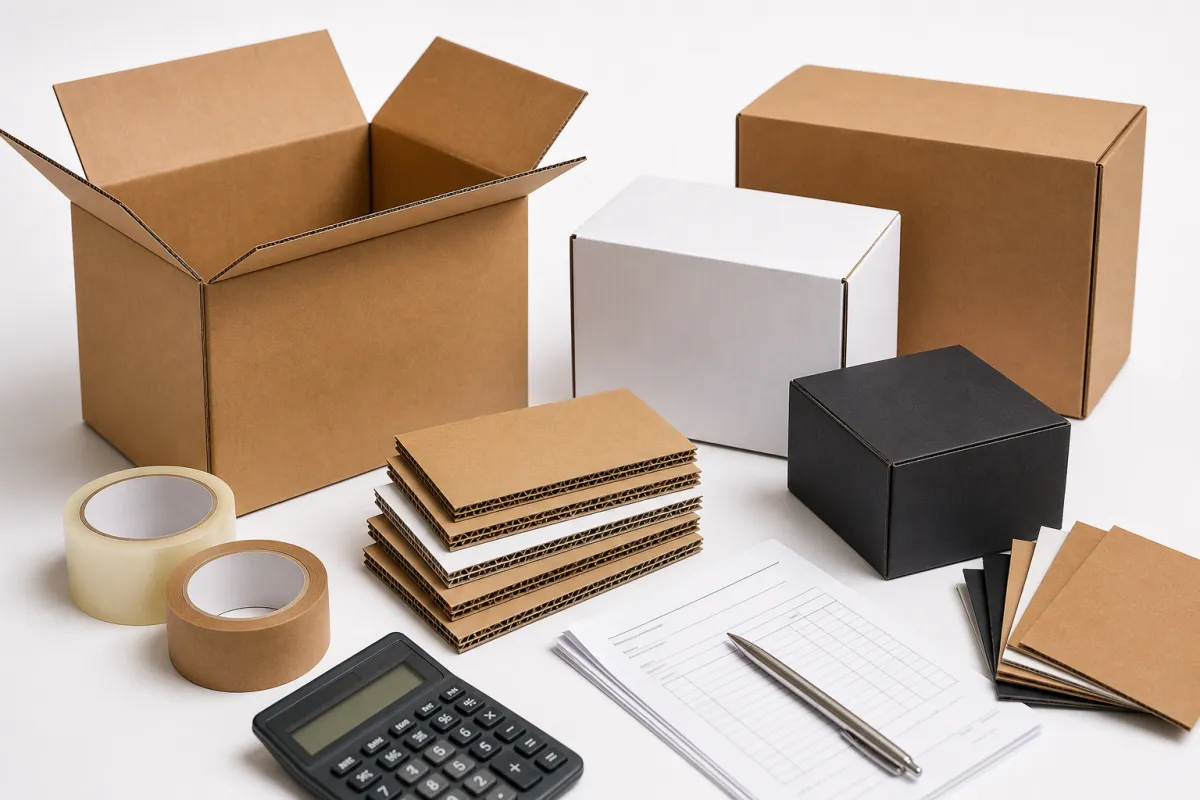
Here is the trap most buyers run into: they ask for a carton that will “hold the product,” and the supplier quotes a low unit price using a light board or a standard domestic-style construction. The sample looks clean. The dimensions fit. The price is friendly. Then the first export shipment hits a rough transfer point, the pallet edges catch, or the cartons absorb moisture in a warm port environment, and export packaging cartons cost jumps sharply because the shipment needs rework, replacements, or claims handling.
In practice, export packaging cartons cost is tied to performance per shipment, not just cost per box. A carton that saves two cents but increases failure risk is usually a bad buy. I have watched buyers accept a lighter carton to protect budget, only to discover that they needed stronger tape, corner protection, pads, or more void fill just to get through the lane. Those extras did not make the shipment safe enough, and they brought their own labor cost. The “cheap” carton stopped being cheap the moment the shipment was repacked.
Export cartons also need to survive stacking. That matters more than many teams expect. If a pallet is designed for six-high stacking in a warehouse, the carton should be specified for that compression load with some safety margin, not just for the product’s dead weight. The box has to carry the load through compression, vibration, and temperature swings, which is why export packaging cartons cost reflects structural strength as much as paper stock. A better board grade or a heavier flute can be the difference between a stable export pallet and a load that slowly leans out of square.
There is another hidden cost that rarely gets enough attention: freight cube. A carton that is slightly larger than necessary can lower pallet efficiency, which increases the number of pallets, the container fill pattern, or the air freight chargeable weight. In that case, the higher box price is not the real issue; the larger cubic footprint is. Smart buying means looking at the whole system. Export packaging cartons cost should be weighed against product protection, pallet utilization, labor efficiency, and the chance of claims after arrival.
Common hidden cost drivers include:
- Higher damage rates that lead to replacement shipments or credit notes.
- Extra dunnage added to compensate for weak carton design.
- Larger freight volume caused by inefficient carton dimensions.
- Moisture-related failure when the board is not suited to the route.
- Repacking labor when the box does not match the product cleanly.
That is why a serious carton spec should be judged by what it does in the field. Export packaging cartons cost is not just a purchase decision; it is a risk decision. If a carton protects the load, stacks well, and travels efficiently, it usually pays for itself through fewer surprises.
If you want a neutral reference point for corrugated terminology and transport testing, Packaging.org and ISTA both provide useful industry background on corrugated board and shipment performance testing.
Product Details: What Export Packaging Cartons Are Built To Do
Export packaging cartons are built to protect goods through a much harsher set of conditions than many domestic retail packaging programs face. The carton has to resist stacking pressure, vibration, puncture, rough handling, and humidity changes while also making sense on a pallet or in a container. That is why the design conversation should start with product behavior, not artwork. A well-built carton protects the product, preserves presentation, and keeps export packaging cartons cost aligned with the real shipping requirement.
The most common constructions buyers compare are single-wall, double-wall, heavy-duty corrugated, die-cut formats, and reinforced shippers for fragile or irregular goods. Single-wall can work for lighter cargo and lower stack loads. Double-wall is often the better choice for export because it adds rigidity and improves compression performance. Heavy-duty designs may include stronger liners, moisture-tolerant papers, or internal supports to protect the product during long dwell times in ports or overseas warehouses. In every case, the construction changes export packaging cartons cost because it changes material usage and conversion time.
Product type matters a great deal. Bottled goods need different support than flat-packed components. Electronics often need cleaner presentation and more controlled internal movement. Industrial parts can tolerate a more straightforward shipper, but they may need stronger board to handle weight concentration. Kitted items, meanwhile, benefit from partitions, inserts, and very accurate die-cut fit because loose movement inside the carton increases abrasion and load instability. Each of those details affects product packaging performance, and each one has a direct effect on export packaging cartons cost.
Buyers who are shopping for branded packaging often want the carton to do more than survive transit. They want it to communicate identity, support receiving efficiency, and look professional when a partner opens the case. That can mean a one-color logo, handling marks, product codes, or a cleaner printed panel for retail packaging programs. None of that is cosmetic fluff. Better package branding can help the carton move through a warehouse more accurately and support the buyer's internal sorting process. Still, every added ink coverage, plate, or finishing step adds to export packaging cartons cost.
There are also secondary features that influence usability:
- Hand holes improve manual handling on larger shippers.
- Partitions protect bottles, jars, and glass components.
- Inserts prevent movement for electronics or machined parts.
- Tape seams and lock-bottoms change assembly speed and strength.
- Pallet patterning affects how many cartons fit a load unit.
From a packaging design standpoint, the goal is not to add features for their own sake. It is to match the structure to the shipment. That is where export packaging cartons cost becomes easier to justify: the carton is doing several jobs at once, and none of those jobs is wasted.
For buyers comparing options, our Custom Packaging Products page is a useful starting point because it shows how different packaging formats can be matched to product weight, branding needs, and shipping conditions without forcing a one-size-fits-all spec.
Specifications That Drive Export Packaging Cartons Cost
Specifications are where export packaging cartons cost becomes truly predictable. Once the carton size, board grade, flute profile, print coverage, and performance target are locked in, the quote starts to reflect actual manufacturing work instead of guesswork. Buyers sometimes assume the supplier is mainly pricing cardboard. In reality, they are pricing structure, conversion, waste, setup time, and the performance margin built into the carton.
The biggest variables are easy to name, but each one carries its own consequences. Board grade matters because it controls compression resistance and durability. Flute type matters because it affects crush resistance, cushioning, and printability. Liner quality matters because recycled content, fiber length, and paper grade all change how the board behaves in humidity and under load. Print coverage matters because more ink, more color, and tighter registration increase setup and running time. Add a moisture-resistant coating or a special adhesive, and export packaging cartons cost rises again.
Dimensions are especially important. A change of even a few millimeters can alter board utilization, die-line layout, and pallet count. That may not sound dramatic, but in export work, small differences cascade quickly. A slightly taller carton can reduce case count per layer. A slightly wider carton may force a new pallet pattern. A carton that appears “close enough” on a drawing can be expensive once it is nested on a pallet or loaded into a container. Strong packaging design prevents those small errors from turning into big freight losses.
For carton performance, many buyers use stacking and strength targets such as ECT values, burst strength, and internal compression goals. Some projects also require reference to transport standards such as ASTM or ISTA methods, especially if the product has a claims history or if the carton will be validated before launch. If sustainability is part of the brief, FSC-certified fiber can be requested as part of the sourcing plan, though that may change export packaging cartons cost depending on paper availability and order size. The point is not to pile on every possible spec; the point is to choose the few that actually protect the shipment.
Here is a practical comparison of common export carton options and how they tend to affect export packaging cartons cost:
| Carton Option | Typical Build | Typical Unit Cost at 5,000 pcs | Best Use | Cost Driver |
|---|---|---|---|---|
| Single-wall RSC | 32-44 ECT, B flute, minimal print | $0.42-$0.78 | Lighter goods, lower stack load, controlled handling | Lowest material usage |
| Double-wall RSC | 44-48 ECT, BC flute or similar, one-color print | $0.88-$1.65 | General export loads, better stack performance | More board and stronger liners |
| Die-cut export shipper | Custom dieline, inserts or lock features, printed branding | $0.75-$1.40 | Clean presentation, accurate fit, mixed components | Tooling and conversion complexity |
| Heavy-duty reinforced shipper | Double-wall or higher, moisture-resistant treatment, partitions | $1.20-$2.40 | Fragile, heavy, or humidity-sensitive cargo | Higher board grade and added protection |
Those are not fixed prices, and they should not be treated as a quote. They are practical ranges that help buyers understand why export packaging cartons cost moves the way it does. A strong spec can cost more per unit yet cost less per shipment because it reduces damage, repacking, and freight waste. That is the right way to think about the buying decision.
If the project also needs custom printed boxes for branded packaging or shelf-ready presentation, the print spec should be locked early. Every added color, coating, or special finish creates more setup work. For larger programs, that is often justified. For small runs, simpler graphics can be the smarter path, especially if the box is mostly a shipping tool. Export packaging cartons cost should stay tied to the function the carton needs to perform.
Export Packaging Cartons Cost, MOQ, and What Affects Your Quote
MOQ is one of the fastest ways to change export packaging cartons cost. A supplier has to account for board allocation, machine setup, plate or die charges, print adjustment, and waste during startup. If the run is small, those fixed costs are spread across fewer units, which pushes the unit price up. If the run is larger, the setup burden is diluted, and export packaging cartons cost usually comes down. That is why volume matters so much in packaging procurement.
Most buyers will see several parts in a quote: the carton unit cost, tooling or plate charges, sampling charges, and freight. If the quote bundles everything together, ask for a line-item breakdown. It is much easier to compare suppliers that way, and it makes the real export packaging cartons cost much clearer. A quote that looks low on paper can hide a high freight charge or an oversized tooling fee. Clear pricing is the only honest way to compare suppliers.
Here is the practical buying rule I give customers: if the carton size, print, and performance requirements are stable, a higher MOQ often lowers export packaging cartons cost over time. If the product is still changing, keeping the MOQ modest can protect cash flow and prevent inventory overhang. The right answer depends on how often you ship, how much storage space you have, and whether the carton is tied to a recurring export lane or a one-time program.
There is also a difference between adapting an existing size and ordering a fully custom carton. If an existing format is close to the needed fit, it may be cheaper to adjust the insert or minor artwork than to commission a new structure. If the existing size wastes pallet space, however, the “cheap” shortcut can cost more in freight than a custom solution would. That is why export packaging cartons cost should be reviewed together with pallet pattern, container fill, and damage risk.
For quick comparison, here is how MOQ usually affects pricing pressure:
- Low MOQ often means faster approval and lower inventory risk, but higher unit cost.
- Mid-range MOQ usually gives a better balance of price and flexibility.
- Higher MOQ can lower export packaging cartons cost if demand is steady and storage is available.
That balance matters even more for product packaging tied to recurring export shipments. A buyer may be tempted to order only enough cartons for the next load, then reorder later. That can work, but it is not always economical if the same spec will be used throughout the year. The right MOQ keeps the unit cost honest without tying up too much cash.
A useful way to compare suppliers is to ask for three versions of the same quote: a lower quantity, a middle quantity, and a higher quantity. Then review how export packaging cartons cost changes with volume, and look for any hidden step changes in tooling or freight. That gives you a much more complete view than a single number ever will.
Buyers sometimes ask whether a higher MOQ always lowers unit cost. Usually yes, but not always in a clean straight line. If board availability is tight, if the print spec is complex, or if the carton needs special finishing, the savings from volume can flatten out. Export packaging cartons cost is still influenced by the realities of the production line, not just the size of the purchase order.
Process and Timeline for Custom Export Packaging Cartons
Most custom export carton projects follow a straightforward path, but each step affects timing and price. The process usually begins with product review, then dimensions, then material recommendation, then a structure proposal, then sample approval, and finally production. If any of those steps change after approval, export packaging cartons cost can rise because the job has to be reworked or restarted. Good planning protects both lead time and budget.
A realistic timeline depends on the carton type. Plain corrugated shippers with no print can move quickly once the dimensions are confirmed. Printed cartons, die-cut structures, or cartons with inserts usually take longer because the tooling has to be reviewed and the graphics have to be proofed. If the project needs structural testing or user trials, add extra time for that as well. For many export programs, I would rather see a buyer lock the spec early than rush into production and pay more later.
The main timing drivers are usually these:
- Dieline approval for custom shapes and closures.
- Prepress review for artwork, text, logos, and print placement.
- Board availability for the required grade and flute structure.
- Sampling to check fit, loading, and handling.
- Testing when the route or product needs validation.
For standard export packaging cartons, production can often move in about 12-15 business days after approval, depending on quantity and board supply. More complex programs may need 15-25 business days or more, especially if print coverage is heavy or if special coatings are part of the build. That does not mean the job is slow; it means the carton is being made to a more exact requirement. In export work, exact often saves money in the long run.
Testing deserves a serious mention. ISTA methods are commonly used to simulate the conditions a carton sees during transit, and compression tests such as ASTM-based methods are useful when pallet stacking is the main risk. If a carton passes a realistic test, buyers can make decisions with more confidence. That is not just technical pride; it is a practical way to keep export packaging cartons cost from being swallowed by preventable failures.
One thing that helps every project is clean communication. Share the product dimensions, product weight, any stack load requirement, the shipping mode, and the destination climate. If the carton will sit in a humid port or travel in mixed containers, say so early. The earlier those details are known, the easier it is to avoid a weak spec or a rushed revision. A well-managed project usually has a lower total export packaging cartons cost because it avoids surprises.
For buyers who also need broader sourcing support, our Custom Packaging Products catalog is a practical place to compare case styles, inserts, and branded packaging options before committing to a final structure.
Why Choose Us for Export Packaging Cartons
Custom Logo Things focuses on practical carton decisions, not oversized promises. The goal is to match the carton to the real job: protect the product, keep the pallet stable, and avoid unnecessary paper weight or elaborate finishing that does nothing for the shipment. That is the right mindset for export packaging cartons cost, because the best carton is the one that performs cleanly without wasting material or freight space.
What buyers usually need most is specification support. A carton that is too light can fail under stack pressure. A carton that is too heavy can inflate freight and material cost. The sweet spot comes from balancing the board grade, the box style, the product weight, and the route conditions. Our job is to help narrow that gap so export packaging cartons cost stays aligned with the performance the shipment actually needs.
Consistency matters as much as design. Clear quotations, stable sampling, and repeatable production are what make recurring export programs manageable. When the spec is documented properly, the next order does not become a new engineering exercise. That matters to buyers who need predictable unit cost, dependable lead time, and cartons that behave the same way every time they are produced.
We also pay attention to simplification. In many cases, a carton can be improved by reducing unnecessary complexity rather than adding more parts. A cleaner seam, a better board choice, or a slight adjustment to the pack size can reduce export packaging cartons cost without weakening the shipment. That kind of practical adjustment is often more valuable than a fancy structure that looks impressive but does not help the load.
For export shipping, the supplier should understand handling realities: pallet compression, humidity, container loading, and transfer points. Those realities are not theoretical. They are the reasons some cartons fail and others stay intact. A supplier that understands them can often reduce claims and stabilize export packaging cartons cost over repeated shipments, which is what matters to a buyer with an active export lane.
If you need custom printed boxes, product packaging support, or carton formats that also support package branding, the team can help keep the structure sensible while still giving the shipment a professional look. That balance is where value lives. A carton should protect the goods first and communicate the brand second, but it should do both with discipline.
Our internal process is built around straightforward choices:
- Right-size the carton to the product and pallet pattern.
- Choose the board grade that fits the route, not the highest grade available.
- Keep print and finishing aligned with real branding needs.
- Review total shipment efficiency, not just carton unit price.
That approach makes export packaging cartons cost easier to defend inside a procurement review, because the value is visible in fewer claims, cleaner packing, and better freight use. A carton should earn its place in the shipment, and that is exactly how we think about it.
Next Steps: Get a Quote and Lock In the Right Spec
If you are ready to request pricing, the best way to get an accurate quote is to share enough detail for a real specification review. Start with the product dimensions, product weight, shipping method, destination climate, print requirements, stack load target, and monthly or annual quantity. Those details let the supplier estimate export packaging cartons cost with much more accuracy than a general inquiry ever will.
It also helps to ask for two or three options instead of one. A lighter spec, a mid-range spec, and a stronger export spec can show how export packaging cartons cost changes with board grade, box style, and volume. That makes it easier to compare unit cost against freight efficiency and protection level. Many buyers discover that the middle option is the one that balances performance and budget best.
Before production starts, review a sample or prototype in a real packing scenario. Put the product in the carton. Stack it. Tape it. Move it. If possible, compare the pack against the handling conditions it will actually see. That simple step often reveals a fit issue, a weak closure, or a pallet pattern concern that would have been expensive to discover later. A small adjustment now can keep export packaging cartons cost from turning into a damage claim later.
Once the spec is approved, confirm artwork, quantity, lead time, and the reorder plan. If the carton is a recurring item, keep the approved drawing on file and avoid casual changes that alter the structure. The more stable the spec, the easier it is to keep export packaging cartons cost predictable from one run to the next.
Here is the cleanest way to move forward:
- Send the product dimensions, weight, and shipping route.
- Share any stack, drop, or vibration requirements.
- Confirm whether the carton needs print, inserts, or moisture control.
- Request a line-item quote with MOQ and freight separated.
- Review a sample before locking the final production order.
That process keeps the decision practical and calm. It also gives you a better read on export packaging cartons cost before you commit to production. If you want a carton that protects the load, supports the brand, and stays sensible on budget, the right spec is the place to start.
For buyers who need a long-term packaging partner, the smartest move is to treat export packaging cartons cost as part of the shipment strategy, not just a box price. Get the dimensions right, choose the board with intent, verify the pallet pattern, and approve a sample that reflects the real route. Do that well, and export packaging cartons cost becomes a controllable part of your operation rather than a recurring surprise.
What affects export packaging cartons cost the most?
Board grade, box style, and dimensions usually have the biggest effect because they change material usage and structural strength. Print coverage, moisture resistance, and internal supports can also raise export packaging cartons cost when the carton has to perform in tougher transit conditions. Volume matters too, since larger runs spread setup costs across more units.
How do I compare export packaging cartons cost between suppliers?
Ask each supplier to quote the same dimensions, board grade, print requirements, and quantity so you are comparing like for like. Request a line-item quote that separates carton price, tooling, sampling, and freight. That makes export packaging cartons cost easier to judge on total landed cost, not just the box price alone.
Does a higher MOQ lower export packaging cartons cost?
Usually yes. A larger run reduces setup time per unit and improves material efficiency during production, so export packaging cartons cost often drops as quantity rises. The tradeoff is inventory and cash flow, so the best MOQ depends on shipment frequency and storage capacity.
How long does it take to make custom export cartons?
Simple custom cartons can move quickly once dimensions and artwork are approved, while printed or reinforced designs take longer. Sampling, dieline approval, and board availability are the usual timeline drivers. The safest way to protect lead time is to lock the spec early and approve proofs without delay.
What information do I need for an export packaging cartons quote?
Provide product size, weight, shipping method, destination, and any stack or compression requirements. Include print needs, moisture exposure concerns, and whether the cartons will ride on pallets or be packed individually. Share your target order quantity so the supplier can recommend a practical spec and give accurate export packaging cartons cost.
Takeaway: The fastest way to control export packaging cartons cost is to stop pricing cartons as if they were isolated items and start pricing them as part of the shipment. Lock the dimensions, match the board to the route, confirm the pallet pattern, and approve a sample in real packing conditions. That is where the real savings show up.


