Fabric Clothing Labels Personalized are small parts with outsized influence. They sit against skin, get folded into seams, survive washing machines, and carry the brand signal that tells a buyer whether a garment feels finished or improvised. A label can be the difference between “private label” and “someone printed this at the last minute.”
That is why buyers care about more than the logo. They need a brand name, size marking, care instructions, fiber content, origin details, and a label that still feels comfortable after the third wash. For small apparel brands, makers, uniforms, and private-label sellers, fabric clothing labels personalized do a job that is part branding, part compliance, and part quality control.
People also underestimate how quickly a poor label gets noticed. If the edge is scratchy, the print is blurry, the font is too small, or the label twists after sewing, customers do not blame the thread count. They blame the garment. That is a costly place to miss.
What Fabric Clothing Labels Personalized Actually Mean
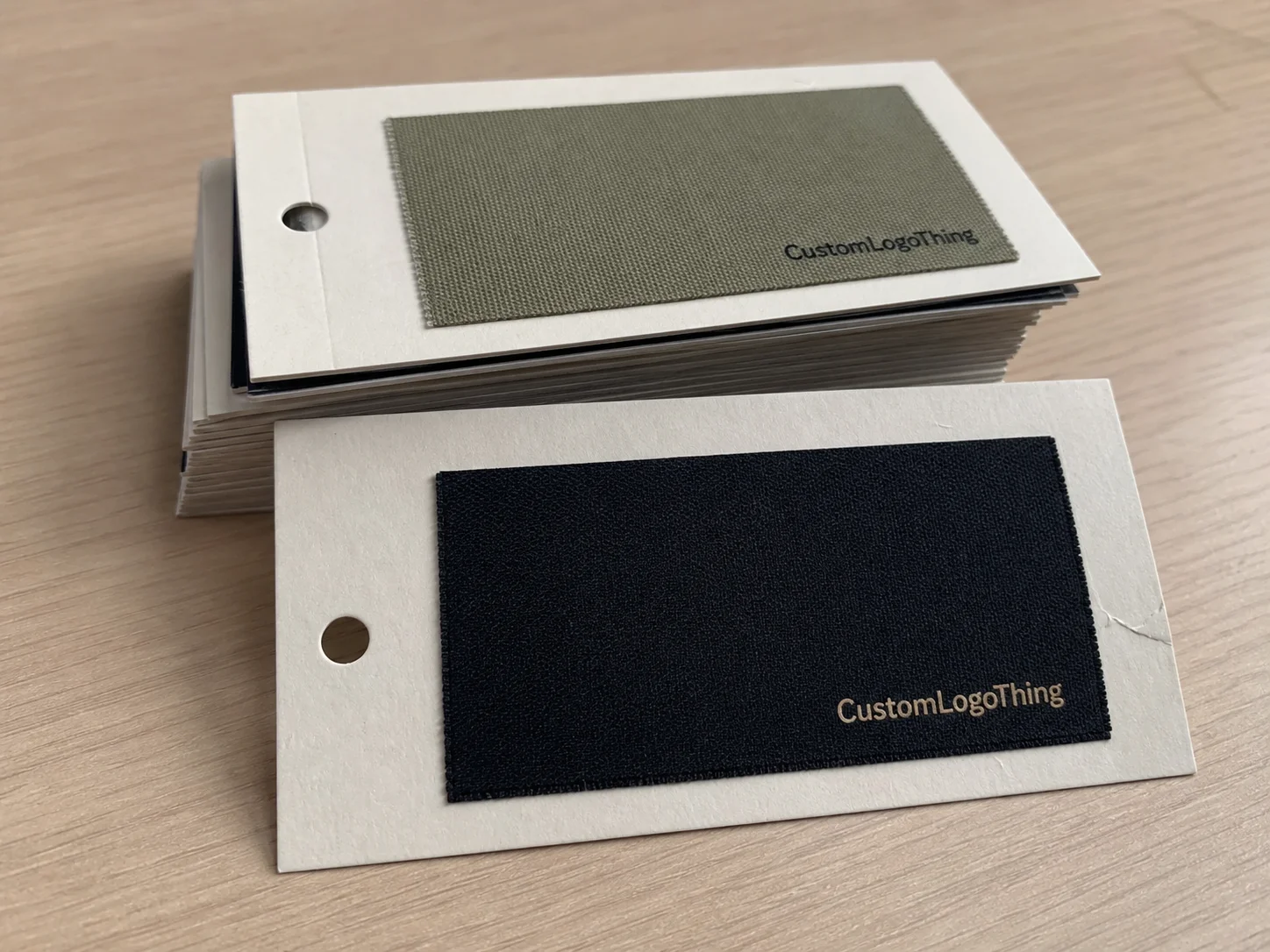
When buyers ask for fabric clothing labels personalized, they usually want a label built to spec rather than a stock tag with a name added to it. That can mean woven labels, printed satin labels, cotton labels, damask labels, heat-transfer labels, or mixed constructions that combine a soft face with a durable backing.
The useful part of personalization is not the artwork alone. It is the combination of size, fold, base material, attachment method, and content hierarchy. A label that looks fine at mockup scale can fail once it is narrowed to 20 mm or 25 mm and stitched into a seam. Tiny labels are unforgiving. They do not reward clutter.
From the buyer’s side, the label usually has four jobs:
- Brand identification so the garment is recognized immediately.
- Functional information such as size, fiber content, and care copy.
- Retail finish because a polished inside label makes the garment feel complete.
- Production control so SKUs, sizes, and variants stay organized.
The brand signal matters more than many first-time buyers expect. A clean label does not fix a bad fit or sloppy stitching, but it raises the perceived standard. Customers notice. Sometimes they notice before they notice the outside of the garment.
Label Materials, Folds, and Backings That Survive Wear
Material choice drives comfort, durability, and how much detail the label can hold. Fabric clothing labels personalized are usually made from satin, taffeta, cotton, woven damask, or transfer systems. Each one behaves differently once it is sewn in, stretched, laundered, and worn against skin.
Material choices
Satin feels soft and smooth, which is why it appears often in babywear, lingerie, and garments worn close to the body. It prints well and tends to feel gentler than more rigid options, but it is not the strongest choice for rough wear. Taffeta is crisp, practical, and cost-effective. It works for basic brand or care labels, though some buyers consider it firmer than they want for neck placement. Cotton gives a natural look and pairs well with heritage or eco-positioned brands, though it is not always the best option for high-friction garments. Woven damask is the premium workhorse. It carries small text better, keeps edges neat, and usually outlasts printed alternatives.
Heat-transfer labels remove the fabric tag entirely and place the information directly on the garment. That makes sense for performance wear, stretch fabrics, and tagless lines where comfort matters. The tradeoff is process control. Heat, pressure, dwell time, and fabric blend all need to line up. If any one of those variables drifts, the label can crack, peel, or distort faster than expected.
For garments that are washed hard or worn hard, woven or transfer constructions usually make more sense. For pieces that sit against the neck all day, softness matters more than visual cleverness. A scratchy label on a $48 hoodie is not a minor defect. It is the kind of detail customers remember.
Fold styles and backing options
Fold style changes both appearance and comfort. An end fold works well when the label is sewn into a seam and the ends need to stay hidden. A center fold is common for neck labels because it presents the front cleanly and gives the sewing team a simple insertion point. A mitre fold can help the label sit neatly in a side seam or create a more polished edge. Straight cut labels are the simplest and often the cheapest, but they need clean stitching so raw edges do not become a problem.
Backing matters just as much. Sew-in labels are still the default for most apparel because they hold up well and fit normal assembly flow. Iron-on and heat-seal backings can reduce sewing steps, which is useful for small runs or accessories, but they are only as reliable as the garment fabric and the application process. A backing that looks efficient on paper can be the wrong choice if the garment is brushed fleece, very stretchy, or washed aggressively.
| Label Type | Feel | Durability | Best Use | Typical Buyer Range |
|---|---|---|---|---|
| Satin printed label | Very soft | Moderate | Babywear, lingerie, light basics | $0.05-$0.16 each at 1,000-5,000 pcs |
| Woven damask label | Smooth, premium | High | Brand labels, neck labels, premium basics | $0.08-$0.28 each at 1,000-5,000 pcs |
| Cotton label | Natural, matte | Moderate | Heritage apparel, eco-leaning brands | $0.07-$0.22 each at 1,000-5,000 pcs |
| Heat-transfer label | No tag feel | High if applied correctly | Sportswear, stretch garments, tagless lines | $0.10-$0.30 each at 1,000-5,000 pcs |
"If the label scratches, the garment feels cheaper. Customers may not say it like that, but they act like it."
For buyers who care about transit and packaging discipline, outside standards can matter too. Groups like ISTA help define how products handle shipping stress, which matters when labels are bundled with finished garments. If the full product story includes sustainable sourcing claims on paper inserts or outer packaging, FSC sourcing is worth verifying instead of assuming. That is not a label-design issue, but it affects how the finished product is presented and shipped.
Cost, MOQ, and Unit Price Drivers
Price is never just price. With fabric clothing labels personalized, the unit cost shifts with material, size, fold, color count, artwork complexity, finishing, and packaging. A simple two-color woven label is not the same order as a full-color printed satin label with custom folding and retail bundling. Suppliers price those differences into the quote because the work is genuinely different.
The production method usually drives the biggest price change. Woven labels cost more when the weave needs to carry fine text, very small symbols, or several color changes. Printed labels can be cheaper when the artwork is simple, but the gap narrows when the design needs higher resolution or special inks. Heat-transfer labels can land in the middle or move higher depending on wash resistance, stretch performance, and how exact the application spec needs to be.
MOQ, or minimum order quantity, is where a lot of buyers misread the offer. A low MOQ sounds flexible, but the unit cost often rises because setup is spread across fewer pieces. A higher MOQ usually lowers the unit price, sometimes enough to justify ordering 10% to 15% extra for buffer stock. That extra stock is usually cheaper than placing a second small order later and paying the setup fee again.
Watch for the extra charges that often sit outside the headline price:
- Sample charges for physical prototypes or strike-offs.
- Proof revisions when artwork changes after the first layout.
- Rush fees when the schedule gets squeezed.
- Freight for air, ocean, or split shipments.
- Repacking when labels need bundling by size, style, or SKU.
If you want to lower cost without weakening the product, simplify the artwork first. A clean logo with one or two colors usually looks stronger than a crowded micro-label with tiny icons, fine copy, and five different line weights. Small labels punish bad design. They do not hide it.
For buyers comparing fabric clothing labels personalized across several vendors, ask for quotes at 1,000, 3,000, and 5,000 pieces. The change between tiers often reveals more than the first quote alone. If the 5,000-piece price barely improves, the setup cost may be buried in the unit price. If the price drops sharply, the order has real scale benefits and can support a larger stock position.
Process, Lead Time, and Production Steps
The order flow is simple on paper and less simple in execution. A typical run for fabric clothing labels personalized follows this sequence: brief, artwork prep, proof, sample or strike-off, approval, bulk production, inspection, packing, and shipping. Every step depends on the one before it, so a missing detail at the start tends to show up as a delay at the end.
Lead time depends on complexity and approval speed. Repeat orders with unchanged art can sometimes move in 10 to 15 business days after proof approval. Fully Custom Woven Labels with new artwork, multiple revisions, or special folding usually need 15 to 25 business days before freight. International shipping adds more time, and rush production changes the economics quickly. It is possible, but it should be treated as an exception.
The approval stage is where schedules most often slip. Buyers change size, font, care copy, or fold direction after the first proof and then expect the original date to hold. The factory cannot build around moving targets. Each change resets part of the workflow. The cleaner approach is to lock one decision set at a time: layout first, then size, then material, then finish.
Good suppliers usually run a few basic quality checks before bulk shipment. Those checks matter more than a glossy sample photo. A real inspection should look at thread tension, edge trim, color consistency, text clarity, label width, fold accuracy, and any signs of fraying or adhesive failure. For heat-transfer labels, a basic wash or adhesion test is useful, especially if the garment uses a stretch fabric or a finish that resists bonding. If the supplier never mentions a test method, that is a warning sign.
Here is the cleanest way to keep the order moving:
- Send one clear brief with garment type, placement, size target, and quantity.
- Approve the artwork with exact wording and line breaks.
- Confirm material and backing before sample production.
- Review the sample under real light, not just on a screen.
- Lock the shipping method and delivery window before bulk starts.
That kind of discipline matters more when labels are tied to a launch date or seasonal inventory window. Delays on trim orders create problems downstream in cutting, sewing, packing, and fulfillment. Once one label spec shifts, more work follows. It is always cheaper to catch it at proof stage than to correct it after production.
How to Specify the Right Label in 7 Decisions
The easiest way to order fabric clothing labels personalized without wasting time is to make seven decisions up front. Not twenty. Seven is enough to get a useful quote and avoid the endless back-and-forth that turns a simple label into a week of email threads.
- Garment type. A baby onesie, a heavy hoodie, and a stretch active top do not want the same label.
- Placement. Neck seam, side seam, hem, waistband, exterior patch, or tagless transfer each changes the spec.
- Finished size. Common sizes are 20 x 40 mm, 25 x 60 mm, or 15 x 50 mm, but the right size depends on seam space.
- Fold style. Center fold for necks, end fold for seam inserts, straight cut for simple branding, mitre fold for a cleaner side presentation.
- Material. Satin for softness, woven damask for detail, cotton for a natural look, transfer for tagless comfort.
- Color count. One or two colors keeps cost and production risk lower. More colors are possible, but they need a reason.
- Quantity. Ordering 1,000 versus 5,000 pieces changes the price structure more than most buyers expect.
Once those seven decisions are locked, the rest is detail control. Check logo line thickness. Thin lines can disappear on a small woven label. Confirm that the font remains readable at the final size, not just on a monitor at full zoom. Keep enough contrast that the brand name does not melt into the background color. A dark thread on a dark base can look stylish in a mockup and nearly invisible in production.
Care copy needs the same discipline. If the garment requires fiber content, origin, and washing instructions, make room for them early. Shrinking all of that into a 12 mm strip is how brands end up with text nobody can read and a buyer asking for another sample. If the label must carry regulatory details, do not treat them as decorative extras. Build the layout around them.
Ask how the labels are packed as well. Flat-packed labels are standard, but some buyers need bundling by size, color, or style code. That sounds minor until a warehouse has to sort mixed trims by hand. If the order needs retail-ready packing, say so before the quote is locked.
Common Ordering Mistakes That Raise Cost or Scrap
The worst label mistakes are rarely dramatic. They are small, repeated, and completely avoidable. Tiny type, weak contrast, and crowded artwork are the first offenders. If the proof needs a magnifier, the customer will not enjoy it any more than the production team does.
Comfort gets ignored until the garment is already packed. That is especially true for neck labels, baby garments, and stretch fabrics that move against skin. A sharp edge may look harmless on a mockup. After one wash and a full day of wear, it stops being harmless. If the label touches the body, softness should beat decoration.
Proof review is another common failure point. People approve a mockup and miss the fold direction, trim allowance, or a misspelled word in the smallest line on the label. The factory will produce what was approved, not what was intended. That gap costs money.
Common buyer mistake: approving a label proof at screen size and discovering later that the smallest text is unreadable in actual fabric scale.
Under-ordering is a quiet tax. A second run for 200 extra labels often costs more per unit than the first larger batch because the setup cost comes back immediately. If the label is tied to an evergreen SKU, buy a little extra. If the garment is seasonal or likely to change, keep the buffer smaller and protect yourself with a cleaner art file instead.
One more avoidable problem: mismatched expectations about color. Thread, print, and screen colors do not behave the same way. A deep navy woven label may look close to black under warehouse light. A soft cream can read warmer on cotton than on satin. The buyer who expects exact Pantone behavior from every substrate usually ends up disappointed. Close match is realistic; perfect repeatability across different materials is not.
Expert Tips and Next Steps Before You Request a Quote
Before requesting pricing on fabric clothing labels personalized, gather the inputs that actually affect the quote. You do not need a polished spec sheet. You do need enough information to avoid guesswork. Start with garment photos, target quantity, estimated label size, artwork file, placement location, and attachment method. That alone improves the first quote significantly.
Ask for price breaks at several quantities, not just one. A decent supplier should show how 1,000, 3,000, and 5,000 pieces change the unit cost. If the price curve is flat, setup is probably sitting too heavily in the unit cost. If it drops meaningfully, the order can support a larger inventory position without much extra risk.
Request one proof route and one backup material option. That keeps the comparison readable. If you ask for satin, woven, and transfer in the same message with three fold styles and two sizes, the quote turns into decision soup. Buyers may think they are being thorough. Usually they are just making the result harder to trust.
Practical buyers also check whether the supplier understands finishing tolerances. Ask about trim width, stitch allowance, color consistency, and acceptable variation on small text. Those details separate a working trim supplier from a vendor that only sells pretty mockups. Good labels are judged at garment scale, not on a designer’s monitor.
If the order is part of a broader trim package, keep the label spec aligned with the rest of the garment details. Neck labels, care labels, size labels, and hang tags should all speak the same visual language. That does not mean they must match exactly. It means the brand system should feel deliberate instead of assembled from separate decisions made under pressure.
How long do personalized fabric clothing labels usually take?
Repeat orders are usually faster because the artwork and build are already approved. Many jobs land in the 10 to 15 business day range after proof approval, while more complex woven or heat-transfer builds can take longer if the artwork changes, the material is special, or the order needs custom packing. Shipping time sits on top of that.
What is the minimum order for fabric clothing labels personalized?
MOQ varies by material and construction. Some suppliers can quote 100 to 500 pieces for simple runs, while more customized or premium builds may start higher. A low minimum is helpful only if the per-piece cost still works for the garment margin, so compare unit prices at multiple quantities before deciding.
Are woven or printed fabric labels better for soft garments?
Woven labels usually look premium and last well, while printed labels can be softer and clearer for fine text. For babywear or next-to-skin garments, softness should win over decoration. If the label sits in a contact area, a smooth satin build or tagless transfer may be the better choice.
How do I keep custom fabric labels from irritating skin?
Choose a soft base material, a smooth edge finish, and a fold that keeps rough edges away from contact points. Avoid oversized labels, dense seams, and scratchy coatings on garments that sit directly on the neck or waist. If the garment is meant to feel premium, the label should disappear during wear instead of announcing itself.
What should I send to get an accurate quote for personalized fabric clothing labels?
Send the artwork file, finished size, quantity target, label placement, and whether you need sew-in, iron-on, or another attachment method. Add the garment type and deadline so the supplier can price the right material and production path. If you are comparing fabric clothing labels personalized, a clear spec sheet is the difference between a useful quote and a vague one.


