Fitness Brand Rigid Boxes bulk orders are not just about buying a nicer carton. They are about protecting a dense, often high-value product while giving it the kind of presentation that feels deliberate the moment the outer case is opened. A rigid box earns its keep when it keeps glass bottles from knocking together, holds supplement jars steady, protects recovery tools from scuffing, and carries the brand story without looking thin or improvised. That is practical value, not decoration.
Plenty of brands start with the lowest per-box quote and end up paying for the difference later through damage claims, replacements, customer complaints, and weak first impressions. A buyer looking at fitness Brand Rigid Boxes bulk sees a different equation. The structure protects the product, the print surface gives the brand a cleaner stage, and the box itself can lift customer perception before the product is even touched. Cheap cartons are cheap for a reason, and that reason tends to show up after the shipment lands.
Launch kits, subscription sets, athlete seeding packs, retail bundles, and recovery collections all benefit from the same basic advantage: a rigid box gives the contents a stable shell and a more finished presence. Once the dimensions, insert, and outer wrap are set, fitness brand Rigid Boxes Bulk starts to make sense at scale. The savings are not only in the unit price. They show up in lower breakage, fewer replacements, smoother reorders, and a stronger sense of brand recognition across repeated runs.
A low price does not stay low if the box arrives damaged or looks tired on the shelf. The real cost shows up after the shipment has already left the building.
The sections that follow cover the parts buyers usually want to see first: structure choices, finish options, spec details, pricing behavior, and the steps that keep a packaging order from turning into a scramble. For teams comparing packaging formats, our Custom Packaging Products page gives a broader view, and the Wholesale Programs page shows how bulk tiers typically change with volume.
Why Fitness Brand Rigid Boxes Bulk Can Beat Cheaper Cartons
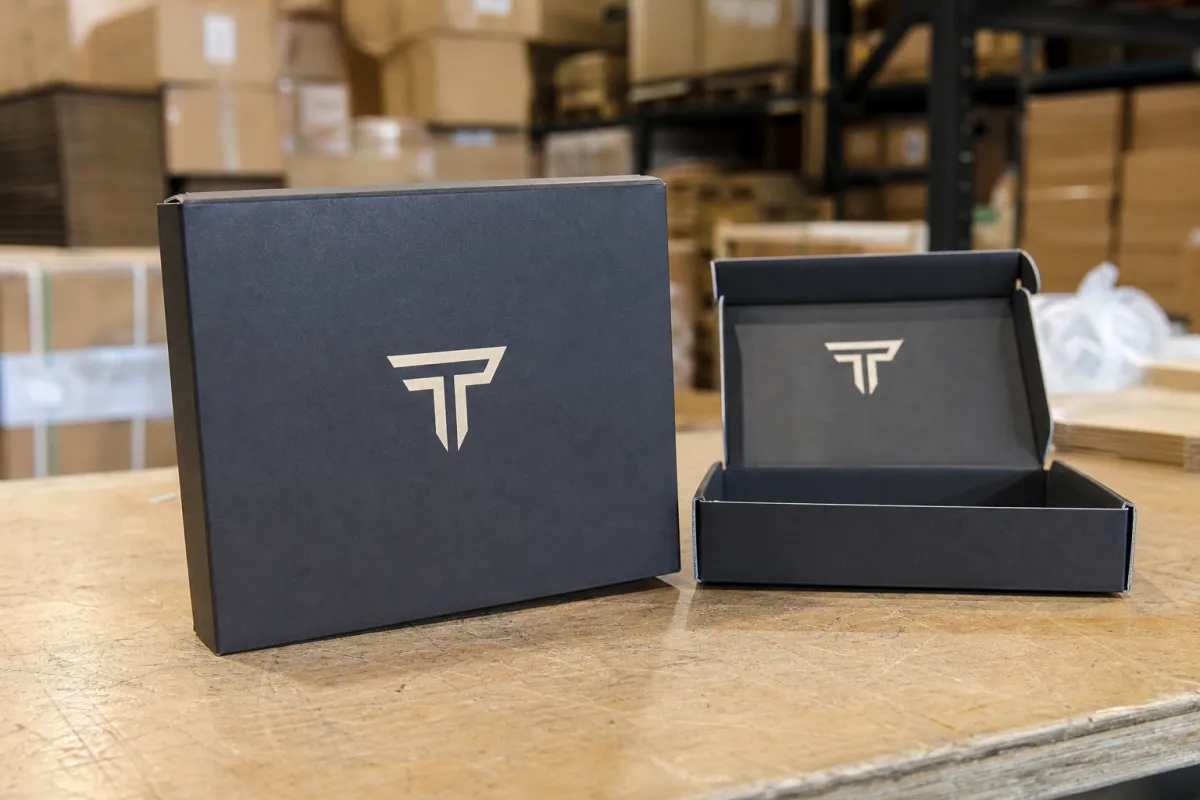
Packaging gets treated like a cosmetic expense too often, and that is usually where the trouble begins. For fitness brand rigid boxes bulk, the box is part protector, part merchandising tool, and part brand language. That matters in fitness because the products are frequently heavy, dense, or awkwardly shaped. A protein kit with bottles, scoops, bands, and accessories does not sit politely in a flimsy mailer. It shifts during transit, presses into corners, and turns a premium product into something that looks rushed before it is even opened.
Look at the full landed cost and the picture changes quickly. A cheaper carton may shave a few cents off the factory quote, yet if it causes a 2% to 5% damage rate on a launch run, the replacement cost can wipe out the savings before the first reorder. Add customer service time, refunds, and the quiet damage to brand consistency, and the low-cost option stops looking smart. I have seen buyers chase a lower quote and miss the price of one bad unboxing experience. Those costs are not abstract. They are the kind that show up in margins.
The presentation side matters just as much. Fitness is crowded, and crowded categories punish packaging that looks interchangeable. Fitness brand rigid boxes bulk gives the brand more control over edges, print behavior, and shelf presence, which is useful whether the box is headed for retail, subscription fulfillment, or influencer mailers. If packaging is doing any of the work of outreach, it needs to look intentional, not accidental.
Brands that get the most value from this format usually fall into a familiar set of situations:
- New supplement or wellness launches that need a stronger first impression
- Premium subscription boxes and loyalty gifts
- Retail gift sets that have to look orderly on shelf
- Influencer and athlete seeding kits with a presentation role
- Recovery bundles, accessories, and apparel add-on sets
That is why fitness brand rigid boxes bulk is less about luxury for luxury's sake and more about matching the packaging to the job. A rigid box is not the answer for every product, yet it is the better answer more often than buyers expect when the contents are valuable, dense, fragile, or meant to feel premium. The repeatability matters too. Once the structure is locked, the dieline stays fixed, the wrap stays fixed, and the insert stays fixed. That kind of consistency makes second and third runs easier to plan and easier to trust.
Product Details That Make the Box Feel Premium
For fitness brand rigid boxes bulk, the premium feel usually starts with structure and finish follows behind it. Two-piece setup boxes, magnetic closure boxes, drawer boxes, and book-style presentation boxes are the common options, and each one serves a slightly different purpose. A two-piece setup box keeps production simple and predictable. A magnetic closure box creates a more elevated opening moment, which works well for higher-value kits. Drawer boxes handle layered presentation nicely. Book-style boxes give the whole package a more deliberate opening sequence, which is useful when the unboxing itself is part of the experience.
Structure choices that actually matter
The box style should follow the product, not the mood board. A supplement stack may only need a clean two-piece setup. A premium coaching kit or a launch set with multiple components may call for a magnetic closure because the opening action helps the product feel considered. Fitness brand rigid boxes bulk should not force complexity into the project just because the box can support it. Extra parts add cost, and extra cost always finds its way back into the budget. The better move is choosing the simplest structure that still protects the contents and reinforces the story.
Inserts do much of the real work. Foam, paperboard, molded pulp, and EVA all have legitimate uses. Paperboard inserts work well for lighter products and for brands that want a cleaner material story. Molded pulp suits packaging that needs moderate cushioning with a more restrained look. Foam or EVA is a better fit for bottles, jars, and accessory sets that must sit tight without movement. In fitness brand rigid boxes bulk, insert design can matter more than the outer wrap because rattling, shifting, and corner impact undo the premium effect faster than a simple exterior ever could.
Finishes need restraint. Soft-touch lamination feels rich and photographs well, though it adds cost and can show wear if the box is handled a lot. Matte wrap keeps the surface modern and calm. Gloss helps color pop. Foil stamping works best for logos, symbols, and small design accents. Embossing and debossing add depth and a tactile edge. Spot UV is useful when a logo or pattern needs a controlled shine. Used with a clear purpose, these details strengthen brand recognition. Used without discipline, they become surface noise.
Interior printing deserves more attention than it gets. A short product story, dosage guide, QR code, or onboarding message inside the lid can turn fitness brand rigid boxes bulk into part of the customer journey instead of a shell around it. The box is not only carrying the item. It is shaping the unboxing experience. That is where a lot of brands lose a chance to build trust. A clean interior with well-placed instructions and a short brand message feels deliberate. A blank interior suggests the project stopped after the outside looked good enough.
The inside has to match the outside. If the wrap looks polished but the insert is loose or the interior printing feels rushed, customers notice the mismatch immediately.
Brands that care about brand identity should treat the box like a small physical media system. The structure says one thing, the finish says another, and the insert says a third. When those pieces point in the same direction, the package feels coherent. When they do not, the box feels uncertain. That is not a design problem alone. It is a brand problem. And if a finish is chosen just because it looks expensive on a mockup, it can end up feeling kinda wrong in hand, which is exactly the kind of mismatch that cheapens the whole run.
Specifications to Lock Before You Request Quotes
A useful quote starts with a clear spec sheet. That sounds obvious, yet plenty of fitness brand rigid boxes bulk projects drift because the buyer asks for something premium without describing what premium needs to do. Premium is not a specification. Dimensions are. Product weight is. Insert layout is. If those details are vague, the quote will wander and the final cost will follow it.
Lock these items before asking for pricing:
- Exact outer dimensions and internal cavity size
- Product weight and count per box
- Board thickness, usually around 1.5mm to 3mm for rigid setups
- Wrap stock, such as coated art paper, textured paper, or specialty paper
- Closure style, including magnetic, lid lift, ribbon, or drawer pull
- Insert material and the number of cavities
- Print coverage, foil, embossing, or spot UV requirements
Board thickness is one of the real tradeoffs. Thicker chipboard improves crush resistance and gives the box more structure, but it also adds weight and can raise freight and storage cost. That matters in fitness brand rigid boxes bulk because many orders move nationally or internationally, and every extra gram finds a place on the cost sheet. A properly sized box with a well-designed insert usually performs better than a heavier box that uses extra material just to feel solid in the hand.
Artwork details matter just as much as the physical build. Confirm bleed, safe area, barcode placement, Pantone or CMYK choice, and whether compliance copy belongs on the panel or inside the lid. If regulated product information needs to appear on the packaging, do not leave that decision to a late proof note. It creates delays and introduces errors that are painful to unwind. Fitness brand rigid boxes bulk orders move more smoothly when legal text, barcode space, and design hierarchy are settled early.
Stacking behavior deserves a decision too. That detail gets overlooked more than it should. If the boxes will sit on shelves, in warehouse cartons, or on display tables, the geometry has to work beyond the render. A box that looks polished in a mockup but collapses under stacking pressure is not a packaging success. It is a visual exercise that never met real handling.
What to ask before you approve a sample
Before you sign off, check the lid fit, magnet strength, thumb cut, ribbon pull, insert retention, edge wrap quality, and whether the box opens and closes without binding. These are small checks with large consequences. A sample for fitness brand rigid boxes bulk is not a formality. It is the point where cheap mistakes are still cheap.
For transport validation, it helps to think in terms of ISTA testing methods. A full lab report is not necessary for every order, but the principle is straightforward: packaging should survive realistic handling, vibration, and drop risk. For fragile or premium products, that baseline is sensible, not excessive.
The tighter the spec sheet, the cleaner the quote. Vague brief, vague pricing. Production rarely rewards ambiguity.
Fitness Brand Rigid Boxes Bulk Pricing, MOQ, and Unit Cost
Pricing for fitness brand rigid boxes bulk depends on a short list of variables that move quickly: size, board thickness, finish complexity, insert type, print coverage, and the amount of hand assembly required. A box that needs several wrap steps, magnets, custom inserts, and interior printing will cost more. A design that stays compact, uses standard proportions, and keeps handwork under control will cost less. That is not a marketing answer. It is production math.
The minimum order quantity, or MOQ, is where many buyers pause. Smaller runs are possible, and sometimes that flexibility matters more than cost. Still, a low MOQ is not free. Setup and labor are spread across fewer units, so unit cost rises. For fitness brand rigid boxes bulk, that can be the right trade when a line is being tested or a launch is happening in stages. If the structure is already proven and the box will repeat across multiple shipments, a larger run usually gives better value.
Here is a practical way to think about the cost stack:
| Box Type | Typical Use | Approx. Unit Cost at 1,000 Units | Notes |
|---|---|---|---|
| Two-piece setup box | Starter kits, supplement bundles | $0.95-$1.80 | Good value, easy to scale, lower assembly complexity |
| Magnetic closure box | Premium launches, gift sets | $1.60-$3.20 | Higher perceived value, stronger presentation, more labor |
| Drawer box | Accessory sets, layered kits | $1.55-$2.95 | Useful for guided opening and internal organization |
| Book-style box | Influencer kits, PR packs | $2.10-$4.00 | Best for story-driven presentation and premium brand feel |
The ranges are broad because the build can change them fast. A plain structure with simple print stays closer to the low end. A box with foil, embossing, soft-touch lamination, and a shaped insert moves up the scale. In fitness brand rigid boxes bulk, the difference between a $1.10 box and a $2.80 box usually is not quality versus bad quality. It is simple versus complex. That distinction keeps budget conversations honest.
Bulk breakpoints matter as well. Ask for quotes at 500, 1,000, 3,000, and 5,000 units. Sometimes the jump from 1,000 to 3,000 lowers the unit cost enough to change the decision. Sometimes it barely moves. Without those breakpoints, you are guessing, and guessing tends to be expensive.
Freight, duties, and storage belong in the same conversation. A quote that ignores shipping is not a cheap quote. It is a partial quote with missing weight. For fitness brand rigid boxes bulk, landed cost is the number that matters, because that is the number that reaches the budget.
The plain version is often the correct one: a low MOQ helps when flexibility matters most. A larger run makes more sense when the structure is locked and the box will repeat across several launches. Once that call is made, fitness brand rigid boxes bulk becomes a supply chain decision as much as a packaging decision.
If you want to compare how structure and pricing change across packaging styles, our Case Studies page is a useful place to review real production outcomes.
Process and Timeline for Fitness Brand Rigid Boxes Bulk Orders
Most fitness brand rigid boxes bulk projects move through the same steps: brief, structure, sample, artwork approval, production, inspection, and shipping. The labels change a little by supplier, but the sequence stays familiar. Rigid boxes carry more parts than a folding carton, so the workflow needs more discipline and a little more patience. That is where timelines are won or lost.
The biggest delays often start on the buyer side. Late artwork is common. Finish changes are common. Insert revisions are common. Slow proof approvals are common. Production cannot move while decisions are still floating around. That can sound blunt, yet it is the reality of fitness brand rigid boxes bulk. Each revision tends to touch several specs, and one small change can ripple into a larger delay if it is not controlled.
Typical timeline checkpoints
A standard project often looks like this:
- Brief and quote: 1 to 3 business days if the spec sheet is complete
- Dieline or structural plan: 2 to 5 business days
- Sample development: about 5 to 10 business days, depending on structure complexity
- Artwork proofing: 1 to 4 business days if decisions are fast
- Production: commonly 12 to 20 business days for mid-size runs, longer for complex builds
- Transit: separate from production and dependent on destination
Rush orders make sense in some cases. A launch date can be fixed, retail windows can be unforgiving, and packaging may need to arrive with almost no margin for error. Still, if the calendar allows it, a normal run is often the smarter financial choice. Fitness brand rigid boxes bulk is not the place to improvise under pressure, because speed tends to invite compromises in finish, fit, or proof review.
One useful rule: do not approve a proof until measurements, copy, barcode, and finish details are final. Once approval is given, changing artwork or dimensions mid-run is the quickest way to turn a controlled timeline into a messy one. That is not drama. It is what production does when the brief changes after the work has already started.
For brands that need documented fiber claims, FSC-certified paper sources can support sustainability messaging, provided the material selection and paperwork line up correctly. A logo alone does not make a claim true. The supply chain has to back it up.
Timing discipline is part of good packaging management. The brands that handle fitness brand rigid boxes bulk well are usually the ones that treat approvals like hard gates rather than casual checkpoints. That simple habit saves more time than most rush fees ever will.
Why Choose Us for Bulk Fitness Packaging
We are a good fit for fitness brand rigid boxes bulk when the job calls for consistency instead of theater. The real goal is clean color, accurate die-cutting, tight inserts, reliable closures, and packaging that arrives looking like the approved proof. That may sound plain. Plain works when the product is valuable and the launch window is tight.
Strong design support saves money in ways that are easy to miss at the quote stage. A lot of packaging waste comes from avoidable revisions: the box is too large, the insert is too loose, the finish is too expensive, the artwork is too busy, or the shelf presence is too soft. A good partner spots those issues before production starts. For fitness brand rigid boxes bulk, that kind of feedback is valuable because the cost of a mistake rises with volume. Larger runs leave less room for correction.
Quality control should be specific. The checkpoints that matter most are print calibration, die-cut accuracy, wrap alignment, assembly consistency, and final packing verification. If a supplier cannot speak clearly about those steps, that is a signal worth paying attention to. In bulk packaging, control is not a slogan. It is the difference between a box that supports the brand and a box that creates extra work.
Fitness brands also benefit from a supplier that understands product mix. A supplement jar does not behave like a resistance band set. A PR kit does not need the same structure as a retail gift set. Insert layout, closure style, and outer wrap all change depending on what the box carries. That is why fitness brand rigid boxes bulk works best as a packaging system, not as a generic carton order.
Our focus stays on the parts that matter most:
- Brand consistency across repeated runs
- Stable color matching across print batches
- Clean folding and assembly for a premium unboxing result
- Practical insert design that prevents movement and damage
- Realistic planning around MOQ, shipping, and lead time
That approach helps preserve brand identity across launches and makes the packaging easier to explain internally. Marketing wants impact. Operations wants fewer headaches. Finance wants a sensible landed cost. Fitness brand rigid boxes bulk should satisfy all three without trying to be clever for no reason. In practice, that means fewer surprises, fewer last-minute approvals, and a cleaner path from sample to shipment.
When you compare suppliers, start with the questions they ask. Good suppliers ask about dimensions, product weight, finish, and shipping destination before they give you a price. Poor suppliers hand over a number and hope the rest sorts itself out. It rarely does.
Next Steps to Order Fitness Brand Rigid Boxes Bulk
If you are ready to move, send a complete brief. For fitness brand rigid boxes bulk, the quickest way to get a useful quote is to share the exact box dimensions, product weight, target quantity, finish preference, insert type, shipping destination, and desired delivery date. Missing details do not just slow the process down. They make the price less trustworthy. Waiting one extra day for a clean brief is usually cheaper than revising a half-finished order for two weeks.
Before approving anything, run through the final checklist:
- Artwork files are final and print-ready
- Barcode placement has been checked
- Insert cavities match the product dimensions
- Carton counts and pallet needs are defined
- Retail compliance text is included if needed
- Shipping terms and destination are confirmed
If the box will hold fragile items, premium kits, or tightly fitted products, order a sample or prototype before the full run. Guessing gets expensive quickly. A sample for fitness brand rigid boxes bulk is the cheapest insurance available before production scales up. It catches fit issues, print problems, and closure failures while the cost of fixing them is still manageable.
Compare quotes on landed cost instead of unit price alone. That means accounting for the box, insert, assembly, freight, and any duty or storage cost. A lower per-box price can disappear once logistics are added back into the total. People skip that step because it is less exciting than a clean quote sheet, but it is the number that actually matters.
A smarter buying path usually starts with standardization. A shared structure across the product line, with different wraps or printed sleeves, is often easier to manage than five custom builds that all need separate tooling, separate proofs, and separate timing. That is where fitness brand rigid boxes bulk gets easier over time, and where your team stops fighting packaging every quarter.
Practical takeaway: lock the specs first, then price the run. Once the dimensions, product weight, insert style, finish, and shipping destination are fixed, a fitness brand rigid boxes bulk quote becomes something you can actually trust, and the final package has a much better shot at doing its job in transit, on shelf, and in the hand.
What is the usual MOQ for fitness brand rigid boxes bulk?
A common starting point is 500 to 1,000 units, though the real MOQ depends on size, finish complexity, and insert requirements. Smaller runs are possible, but the unit cost usually rises because setup and labor are spread across fewer boxes. Ask for several quantity quotes so you can see where the real break point sits.
How much do fitness brand rigid boxes bulk usually cost per unit?
Cost depends on board thickness, wrap stock, inserts, and finishes like foil, embossing, or soft-touch lamination. Simpler structures cost less. Premium presentation boxes with inserts and multiple finishing steps cost more. The clearest comparison is landed unit cost, not just the factory quote.
Which insert works best for fitness brand rigid boxes bulk orders?
Paperboard or molded pulp works well for lighter items, while EVA or foam is a better match for bottles, jars, or premium kits that need a tighter hold. The insert should follow the product weight, fragility, and transit movement. If the product shifts in the box, the insert needs to change before production starts.
How long does production take after artwork approval?
Typical production runs take about 15 to 30 business days after approval, depending on volume and finishing complexity. Samples usually move faster than full production, though structure changes and proof revisions can still add time. Shipping is separate, so build that into the launch calendar.
Can I order multiple SKUs in one fitness brand rigid boxes bulk run?
Yes, if the structure stays the same and only the print or wrap changes. That can be efficient. If the sizes or inserts are different, each SKU may need its own setup and MOQ. The cleanest way to reduce cost is to standardize the box structure across the line.


