Fitness Studio Custom Poly Mailer Bags Packing Requirement Guide
For fitness studios, packaging problems usually show up at the packing table, not in transit. A garment gets folded a little too loosely, the mailer is sized by guesswork, and the adhesive strip never gets a full press. By the time the order reaches the customer, the package looks like shipping failed even though the real problem started much earlier.
That matters for class apparel, starter kits, welcome packs, and small merch drops. Poly mailers work well for soft goods because they are light, quick to pack, and cheaper to ship than boxes. Typical production uses co-extruded LDPE or LLDPE film, often with 30%-60% post-consumer recycled (PCR) content when a recycled spec is requested. They are not a universal answer, though. Once the order includes rigid accessories, liquid items, or sharp edges, the spec changes and the bag choice needs to change with it.
Fitness Studio Custom Poly Mailer Bags: What Fails First
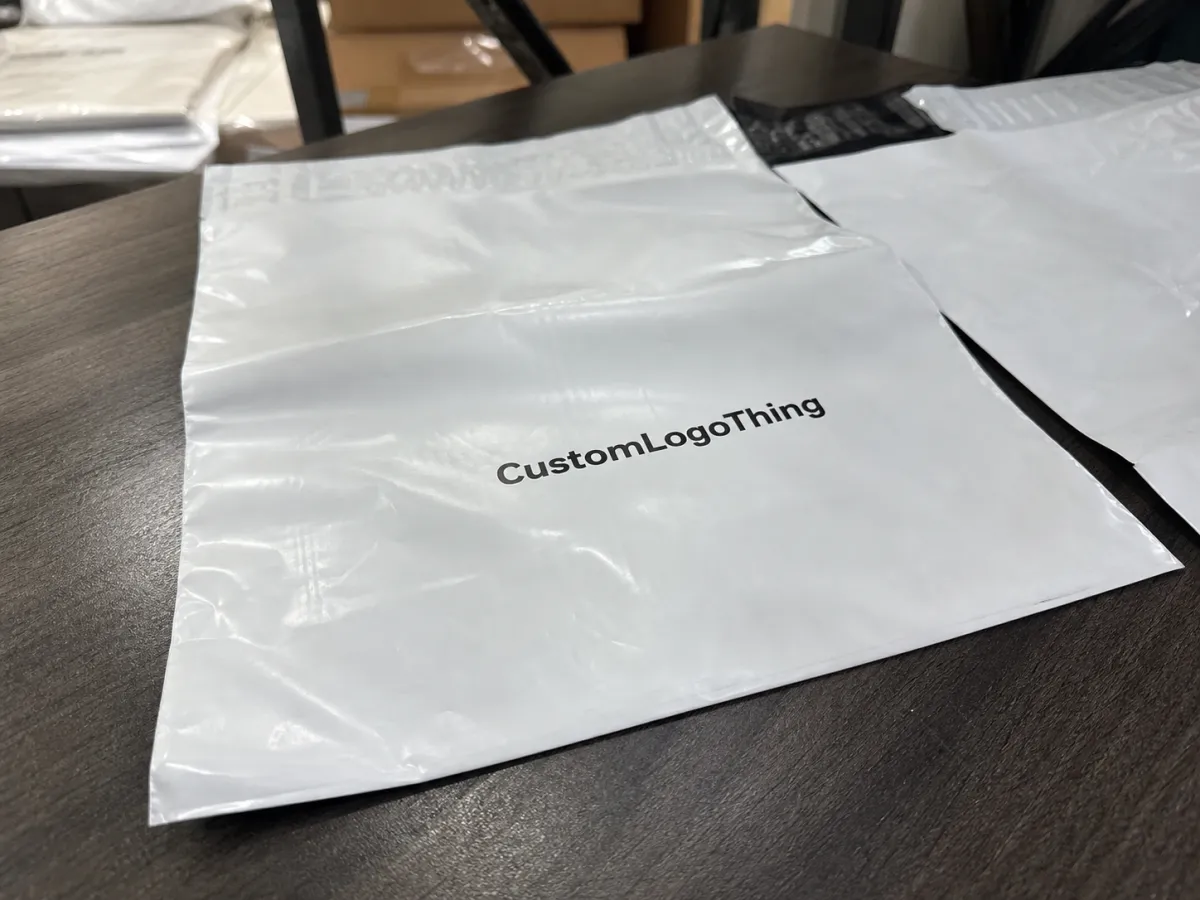
The first failure is usually fit. A bag that is too small stretches at the corners, puts stress on the seal, and looks overpacked before it leaves the studio. A bag that is too large lets the product move around, which hurts presentation and wastes film. For most apparel programs, a 10 x 13 inch mailer works for a folded tee or tank, a 12 x 15 inch mailer fits leggings or a tee-plus-card bundle, and a 14 x 17 inch mailer is a safer target for hoodies or thicker sets.
The next weak point is the closure. Artwork gets attention because it is visible, but the adhesive strip does the real work. If staff have to press twice, fight a sticky edge, or reopen the flap to make it sit flat, pack-out slows down and confidence in the bag drops fast. A standard hot-melt adhesive strip should close on the first press and hold under normal handling after a 24-hour bond window.
Most complaints about "shipping damage" are really packing issues. The package was already compromised before it hit the outbound shelf. That is why the fix is usually in the packing requirement, not in the carrier. In practice, that means checking the folded dimensions, the fill level, the flap overlap, and the label position before anyone approves a bulk run.
Studios usually need packaging that handles a few known use cases well instead of pretending to solve every product type. A single tee, leggings plus a card, and a hooded sweatshirt should not all use the same spec unless the fold, thickness, and seal still work cleanly. A recurring order can often be standardized into two or three mailer sizes instead of one catch-all bag.
A mailer that fits the fold and seals on the first press is more useful than a prettier sample that only looks right in a mockup.
When comparing Custom Poly Mailers with other Custom Packaging Products, the main tradeoff is simple: poly mailers usually win on speed, weight, and shipping cube, while boxes make more sense for rigid or fragile contents. If your product is soft, low-profile, and repeatable, a poly mailer is usually the more efficient format.
How the Packing Flow Works From Fold to Ship
The best packing process is repetitive on purpose. Fold the item to a known size, add inserts only when needed, slide the product into the mailer, remove excess air, seal the strip, and apply the label. When the steps stay the same, pack-out stays fast and errors drop.
Consistency matters more than speed tricks. If one employee folds tees loosely and another folds them tightly, the bag that worked for one order may reject the next one. That is not a material defect; it is process drift. Most fulfillment teams solve this by setting one fold card or one standard fold for each product category, then training staff to use that fold every time.
- Measure the folded product, not the open garment.
- Choose one standard fold for each product category.
- Decide where inserts go before pack-out starts.
- Load the item the same way every time.
- Press the adhesive strip once, firmly, across its full width.
- Place the label where it will not cover the logo or wrinkle over a fold.
That last step matters more than it sounds. If the label overlaps the printed art, the package stops looking branded and starts looking patched together. It also slows scanning and can cause reprints when the surface is uneven. A flat label panel of at least 2 x 3 inches makes application easier on glossy or matte film.
Speed and presentation often pull against each other. A rushed pack-out can look cheap even if the material itself is fine. If a studio has to refold or reseal every few orders, the labor savings from poly mailers start disappearing quickly. A simple packing SOP usually works better than ad hoc judgment at the table.
Size, Thickness, Print, and Seal: The Spec Factors That Matter
The four choices that affect performance most are size, thickness, print coverage, and seal strength. Finish and texture can improve presentation, but they do not fix a bad fit or a weak closure.
Size fit should follow the folded dimensions of the actual product mix. A single tee may fit a 10 x 13 inch mailer. Leggings, a bundled set, or a welcome kit often need 12 x 15 inches or larger. Too small creates stress at the seal; too large makes the package look underplanned. When possible, allow 0.5 to 1.0 inch of headroom around the folded stack so the flap closes without forcing the seam.
Film thickness usually sits around 2.5 mil for light apparel, 3 mil for standard studio shipments, and 4 mil for heavier bundles or repeated handling. Buyers who want a stronger read on durability should ask for tensile and puncture data under ASTM D882 or ASTM D1709 instead of relying on vague heavy-duty claims. For recycled builds, request the declared PCR percentage in writing and ask whether the film is mono-material LDPE/LLDPE or a layered co-extrusion.
Print coverage affects both cost and appearance. A small logo on the front keeps the package simple. Full-bleed artwork gives stronger shelf presence, but it increases cost and can look crowded if the layout tries to do too much. Matte film tends to hide scuffs better; glossy film gives more pop but shows fingerprints and crease lines sooner. Flexographic printing with 1-4 colors is common for higher volumes, while digital print or short-run plate setups are often used for low MOQ tests.
Seal strength is easy to underestimate. If the adhesive peels at the edge, needs a second press, or fails under light tugging, the bag is mismatched to the load. The seal should close cleanly the first time and stay closed under normal handling. In a bulk order, it is worth checking adhesive width, tack, and peel consistency across the first and last cartons of the run.
For most studios, the simplest rule works best: if the shipment is soft, low-profile, and repeatable, poly mailers are usually the right choice. If the order includes rigid accessories or a premium reveal depends on shape retention, boxes may justify the extra cost and freight space. For sustainability claims, GRS is the most relevant certification when recycled content is being used in the film; WRAP and BSCI are useful for social compliance review; OEKO-TEX Standard 100 is more relevant to textile inserts or garment components than to the poly film itself.
| Option | Typical use | Usual unit cost at 5,000 pcs | Why buyers choose it |
|---|---|---|---|
| 10 x 13 in, 2.5 mil, one-color print | single tees, socks, small accessories | $0.16-$0.24 | lowest cost and quickest pack-out |
| 12 x 15 in, 3 mil, two-color print | leggings, sets, welcome kits | $0.22-$0.34 | better fit and sturdier hand feel |
| 14 x 17 in, 4 mil, full-bleed print | hoodies, bundled merch, heavier orders | $0.31-$0.48 | more surface area and more protection |
| Custom size with matte finish | premium package branding | $0.28-$0.55 | tailored appearance, but higher MOQ pressure |
At 500 MOQ, custom poly mailers with a unique size, one to four colors, and a custom seal pattern often land around $2.50-$4.00 per unit because setup, plates, and short-run waste are spread across fewer pieces. As the order moves into 3,000-5,000 pieces, the unit cost usually drops sharply because the print and converting setup is amortized over more bags.
Ask for the seal width and resin spec, not just a sample that feels fine in hand. Bags can pass a quick touch test and still fail after warm storage, stacking pressure, or a hurried hand-off. A practical spec sheet should list film gauge, bag dimensions, flap length, adhesive width, print count, and whether the film is virgin, PCR-blended, or GRS-certified recycled content.
If your studio adds paper inserts, thank-you cards, or belly bands, FSC-certified stock can support the paper portion of the package. For paper sourcing, the FSC standards are more useful than broad green claims. For shipping behavior, the ISTA testing protocols help frame how a package should respond to vibration, compression, and handling.
Step-by-Step Setup for the Right Packing Requirement
This part should read like an operations sheet, not a sales pitch. Start with the product list. Measure the folded size of the items you actually ship. Build two or three standard pack sizes. Do not guess order by order unless you want waste and rework.
In practice, the setup is usually strongest when it stays simple:
- Measure the folded height, width, and thickness of the top products.
- Set one bag size for single-item apparel, one for bundles, and one for seasonal kits.
- Choose the closure style based on load weight and handling frequency.
- Write a pack order so staff always fold, insert, load, seal, and label the same way.
- Add a visual check for logo placement, label position, and corner stress before shipping.
The best systems are boring in the right way. Once the dimensions are locked, staff should not need to make a fresh judgment on every order. A note like "seal must close with one press and no visible bulge at the flap" helps more than vague instructions about making it neat. If the mailer needs to fit a folded item plus a card, specify both dimensions together so the packer knows the real load, not just the garment size.
Test the mailer with the actual merchandise, not a random sample. Do a full trial pack, run the label application, and check whether the flap stays flat after the product is inserted. If the package looks tight, move up one size or increase the flap length rather than forcing a marginal fit.
A good sample process usually follows three steps: a digital proof for artwork placement, a physical sample for fit and seal, and then a pre-production sample when the final size or film thickness changes. For short-run approvals, that sample cycle is often 3-5 business days for proofing and 7-10 business days for a physical sample if stock film is available.
Cost, Pricing, MOQ, and Unit Cost: What Changes the Quote
Pricing changes fastest with size, print coverage, film thickness, and order quantity. A plain 2.5 mil mailer with one-color branding costs far less than a custom-size 4 mil mailer with matte finish, white underprint, and a full-bleed design. Recycled-content film can add cost, especially when the supplier is certifying GRS chain-of-custody or documenting PCR content for each lot.
MOQ is usually the first practical filter. Many factories can sample at 100-200 pieces, but production MOQs commonly start around 500 pcs for simple custom runs and 1,000-3,000 pcs for more complex printing or custom sizing. If the bag needs a special adhesive strip, metallic ink, or a custom die, the MOQ can move higher because of setup waste and tooling.
For quick planning, the quote usually shifts like this:
- 500 MOQ: about $2.50-$4.00 per unit for custom size, custom print, and short-run setup.
- 1,000-3,000 pcs: often a meaningful drop in unit price as setup spreads out.
- 5,000 pcs: common production pricing can sit around $0.16-$0.55 depending on size, film, and print count.
- Special finishes: matte, soft-touch, metallic ink, or extra-wide adhesive usually add cost.
Useful quote requests should ask for the resin type, film gauge, print method, seal width, finished dimensions, and carton pack count. A supplier cannot price accurately if the request only says "custom poly mailer" without the exact bag size and print spec. If the artwork has multiple PMS colors, ask whether the factory is matching with flexo spot colors or approximating with process printing.
For studios that want a more premium presentation, a custom outer bag with a recyclable film and a FSC paper insert can still stay efficient if the design is restrained. The cheapest package is not always the best value; a slightly stronger film that reduces rewraps and returns often pays for itself in labor savings.
Process and Lead Time From Artwork Approval to Delivery
The cleanest production flow starts with a proof, then a sample, then bulk production. Once artwork is approved, the supplier usually confirms size, film type, print count, and packaging count before moving the order to the press.
A typical process looks like this:
- Send finished artwork or a logo file with print size and placement notes.
- Review a digital proof for dimension, color count, and barcode or label area.
- Approve a physical sample or pre-production sample if the size or seal is new.
- Confirm the batch spec, carton count, and inspection method before production starts.
- Run bulk production with in-line checks on print alignment, sealing, and bag dimensions.
- Complete final inspection, carton packing, and pallet or master carton verification.
Lead time depends on whether the order uses stock film or custom film. For many custom mailers, 18-22 business days after artwork approval is a realistic production window for printing, bag conversion, and final packing. If the order includes custom film extrusion, specialty ink, or a recycled-content certification review, the timeline can stretch. Shipping time is separate and depends on the method selected.
The machines behind the order matter because they determine consistency. A blown film extrusion line creates the base film, a flexographic press handles repeat logos and multi-color art, a slitting machine cuts the web to width, and an automatic side-seal or bag-making machine forms the final mailer. In the quality room, a peel tester, thickness gauge, and seal check are the tools that catch problems before cartons leave the line.
Inspection should not be vague. A practical checkpoint set usually includes incoming film thickness, print registration, adhesive placement, seal integrity, bag dimensions, and carton count. Many buyers ask for AQL 2.5 for major defects and AQL 4.0 for minor defects, plus photos of the first-article sample and the final packing count. If the design uses recycled content, ask for the certification number and the lot-level claim reference rather than a generic "eco" statement.
For apparel inserts or other textile components, ask whether the related item needs GOTS or OEKO-TEX Standard 100 documentation. For the poly mailer itself, GRS is the more relevant certification if recycled content is part of the claim, while WRAP and BSCI help verify the factory's social compliance program.
Common Mistakes That Create Waste and Rework
The most common mistake is ordering by guess instead of by measured fold. That usually creates either a tight pack that distorts the seal or an oversized bag that wastes film and looks sloppy.
Other repeat problems show up when the artwork and the production spec do not match. A logo that is sized beautifully on a screen can end up too close to the flap, too large for the print zone, or positioned where a label has to cover it. Once the press plate or print file is made, small changes become expensive.
Another source of waste is mixing product types inside one bag spec. A tee and a hoodie are not the same load, even if they are both soft goods. If the heavier item requires a 4 mil film and the lighter item works in 2.5 mil, one-size-fits-all procurement will either overpay on the easy orders or under-spec the hard ones.
Common avoidable issues include:
- Using the open garment size instead of the folded size.
- Ignoring flap width and adhesive overlap.
- Choosing a glossy finish when scuff resistance matters more than shine.
- Skipping a physical sample before bulk production.
- Assuming recycled-content claims are valid without a certification trail.
The fix is usually a better spec sheet and a tighter approval process. If a supplier cannot tell you the film gauge, seal width, adhesive type, and inspection method, the order is not ready to place.
Practical Checks Before You Place the Order
Before you approve production, ask for five things: the finished dimensions, the film thickness, the print method, the closure spec, and the inspection standard. Those five answers determine most of the outcome.
It also helps to test the actual packing motion. Put the garment in the bag, close the flap, apply the label, and stack the package with the other studio orders. If the mailer wrinkles, puffs, or opens under pressure, the spec needs to change before you spend money on a full run.
Useful pre-order checks include:
- Confirm the folded size of the top three products.
- Request a digital proof and one physical sample.
- Verify whether the film is virgin, PCR-blended, or GRS-certified recycled material.
- Ask for the adhesive width and whether the flap is permanent or resealable.
- Set a carton-level inspection target with AQL or another written defect standard.
If the project includes a sustainability claim, keep the language specific. "Recycled content" is better than "eco-friendly." "GRS-certified recycled film" is stronger than "green packaging." If you are pairing the mailer with paper inserts, then FSC is the relevant paper claim, and if you are adding textile accessories, then GOTS or OEKO-TEX Standard 100 may apply to those parts.
For most fitness studios, the winning formula is simple: standardize the fold, choose the smallest bag that still seals cleanly, specify the film and print details in writing, and approve a sample that matches the real order. That keeps cost down, improves pack-out speed, and makes the package look deliberate instead of improvised.
FAQ
What MOQ should a fitness studio expect for custom poly mailers?
Simple custom runs often start around 500 pcs, while more complex print or custom sizing may need 1,000-3,000 pcs. Low-MOQ samples are possible, but production pricing improves quickly at 5,000 pcs and above.
How long does production usually take?
After artwork approval, a realistic bulk lead time is 18-22 business days for standard custom mailers. Sample approval and shipping time are separate and depend on whether stock film is available.
Which certifications matter most?
For recycled-content film, GRS is the most relevant. WRAP and BSCI are useful for social compliance review. OEKO-TEX Standard 100 is relevant for textile components or inserts, and GOTS applies when organic textile materials are involved. FSC is relevant for paper inserts or cards.
What should be checked on a sample?
Check finished size, fold fit, seal closure, print alignment, label space, and whether the package stays flat after loading. If the sample is too tight or the seal needs a second press, the spec should be changed before bulk production.
What makes the quote go up fastest?
Custom size, heavier film, full-bleed printing, matte finish, special adhesive, and recycled-content certification can all increase cost. Short runs are also expensive on a per-unit basis because setup is spread across fewer bags.

