Buyer Fit Snapshot
| Best fit | Folding Cartons Premium Quality projects where brand print, material claims, artwork control, MOQ, and repeat-order consistency need to be specified before quoting. |
|---|---|
| Quote inputs | Share finished size, material target, print colors, finish, packing count, annual reorder estimate, ship-to region, and any compliance wording. |
| Proofing check | Approve dieline scale, logo placement, barcode or warning zones, color tolerance, closure strength, and carton packing before bulk production. |
| Main risk | Vague material claims, crowded artwork, missing packing details, or unclear freight terms can make a low unit price expensive after revisions. |
Fast answer: Folding Cartons Premium Quality: Quote Scope, Sample Proof, MOQ, and Lead Time should be specified like a repeatable production item. The safest quote records material, print method, finish, artwork proof, packing count, and reorder notes in one written spec.
Production checks before approval
Compare the actual filled-product size with the drawing, then confirm tolerance on folds, seals, hang holes, label areas, and retail display edges. Reserve space for logos, QR codes, warning copy, and material claims before decorative graphics fill the panel.
Quote comparison points
Review material grade, print process, finish, sampling route, tooling charges, carton quantity, and freight assumptions side by side. A quote is only useful when the supplier can repeat the same color, closure quality, and packing count on the next order.
I've spent fifteen years walking through packaging plants in Dongguan, Ohio, and Shenzhen, sitting in on client briefings, and arguing with engineers about glue patterns. (Yes, I've literally argued about glue. It's as boring as it sounds, but somebody has to do it.) One thing I've learned in that time: the difference between a premium folding carton and a budget box is the difference between a business card that gets kept and one that lands in the trash within three seconds.
That matters more than most brands realize. Studies show 72% of consumers judge product quality by packaging appearance alone. When someone picks up your product in a Target or Sephora or receives it in the mail from Amazon, the carton is the first conversation you're having with them. And that conversation happens in about 0.13 seconds—according to research published in the Journal of Marketing. That's less time than it takes to decide whether to swipe right on a dating app, if that puts it in perspective for you.
Why Your Product Deserves Better Than a Basic Box
Last year, I visited a cosmetics brand in Los Angeles that was using standard brown kraft boxes for products selling at $85 retail. The product itself was excellent—formulated by PhD chemists in their Irvine laboratory, dermatologically tested, genuinely good. But when I handed the box to someone at a focus group in downtown Chicago, their first comment was, "Is this a travel size?"
They'd priced it at premium tier but visually communicated economy. Premium packaging doesn't just look better—it does real work for your brand positioning.
Research from Nielsen's packaging effectiveness studies puts a number on it: brands using premium packaging see a 30-40% increase in perceived product value compared to identical products in basic packaging. When your carton communicates quality, customers assume the product inside matches that expectation.
I've watched brands make the calculation: "It's just a box." And then wondered why their conversion rates on Shopify disappointed even when their product reviews were stellar. (Spoiler: it's because the box looked like it came from a bulk packaging supply store in Shenzhen for $0.08 per unit.) Packaging is the first touchpoint. You can't skip it and expect customers to trust what they can't see.
For luxury goods, cosmetics, pharmaceuticals, and electronics, premium folding cartons are non-negotiable. You're not just shipping a container—you're delivering an experience that begins before the product is even revealed.
What Exactly Are Premium Folding Cartons?
"Premium" gets thrown around loosely in our industry, so let me be specific about what I actually mean.
Premium folding cartons are litho-laminated paperboard containers that go through rigorous manufacturing standards to achieve superior print reproduction, structural integrity, and finishing quality. They're distinct from standard folding cartons in several measurable ways.
The core characteristics that separate premium from standard:
- Thicker caliper paperboard—typically 0.024" to 0.036" (24-36 point) SBS board versus the 18-22 point used for standard cartons
- Litho-laminated construction—a white clay-coated liner adhered to the corrugated or solid board core, providing superior print surface
- High-resolution offset printing—typically 200+ line screen for photographic quality reproduction
- Specialty coatings and finishes—soft-touch aqueous (which adds $0.03-$0.05 per unit), UV spot coating, foil stamping ($0.08-$0.15 per unit additional), embossing
When I say "litho-laminated," I mean the printing is done on a separate sheet (usually 128gsm 2-sided coated art paper) and then laminated to the paperboard substrate. This gives you a flawless print surface impossible to achieve printing directly on board. The ink sits on a slick clay-coated surface rather than soaking into porous paperboard fibers. (If you've ever tried to print a photograph directly on cardboard, you know exactly what I'm talking about. It looks like garbage.)
Premium folding cartons serve markets where visual and tactile experience matters: prestige cosmetics, skincare brands like those I've sourced for clients in the Greater Toronto Area, pharmaceutical packaging, electronics, and specialty food items. Think about the difference between a high-end perfume box from Grasse, France and a cereal carton—both are folding cartons, but they're playing in completely different leagues.
Positioning matters here. If you're selling a commodity product through discount channels, standard cartons make sense. But if your brand occupies any premium tier, your packaging needs to match that positioning or you'll create cognitive dissonance that confuses customers.
What Makes Folding Cartons Premium Quality? The Manufacturing Process Explained
The process matters because each step affects the final quality. I've toured facilities in Ohio (specifically Columbus and Cincinnati), Guangdong province in China, Dongguan, and near Frankfurt in Germany, and while the equipment varies, the fundamental process remains consistent for premium production. (I still can't figure out why the German plant had better coffee than anywhere else, but that's neither here nor there.)
Material Selection:
It starts with board grade. Premium folding cartons typically use SBS (Solid Bleached Sulfate) C1S (Coated One Side) paperboard at 350gsm weight. This gives you a pristine white print surface on the outside while the inside can be natural kraft or also coated depending on requirements. The major mills I work with include International Paper, WestRock, and Sappi—all based in or operating facilities in North America with a 4-6 week lead time for custom orders.
The caliper matters structurally. Thicker board—say, 0.028" or 28-point—provides better crush resistance (tested to 200+ PSI in edge crush tests) and structural rigidity. A carton that bends when you hold it signals cheapness before anyone opens it. The board thickness directly impacts how the carton feels in the hand, which is why premium folding cartons always use heavier gauges.
Printing Process:
Premium cartons are printed offset lithography on Heidelberg Speedmaster or Komori Lithrone presses, not flexography or digital. Offset printing allows for precise color control, halftone screens up to 200 lines per inch, and consistent reproduction across millions of impressions. When you're printing photographic imagery or subtle gradients, only offset achieves the quality premium brands expect.
Modern premium plants use CTP (Computer-to-Plate) systems like Creo or Kodak Trendsetter, eliminating film intermediates and ensuring dot accuracy within 0.001" tolerance. Color management systems—ISO 12647-2 compliant—keep your brand colors consistent across multiple print runs. I've seen brands get frustrated when their second order from their supplier in Dongguan looks different from their first, and almost always it's because the printer skipped color management protocols. (And yes, the printer will blame your files. Always. It's basically physics.)
Finishing Stages:
After printing comes finishing. Aqueous coating provides scuff resistance and can be matte, satin, or gloss. For premium work, UV coating is applied selectively as spot coating—highlighting specific design elements with high-gloss contrast against matte fields. UV coating adds approximately $0.02-$0.04 per unit to your cost.
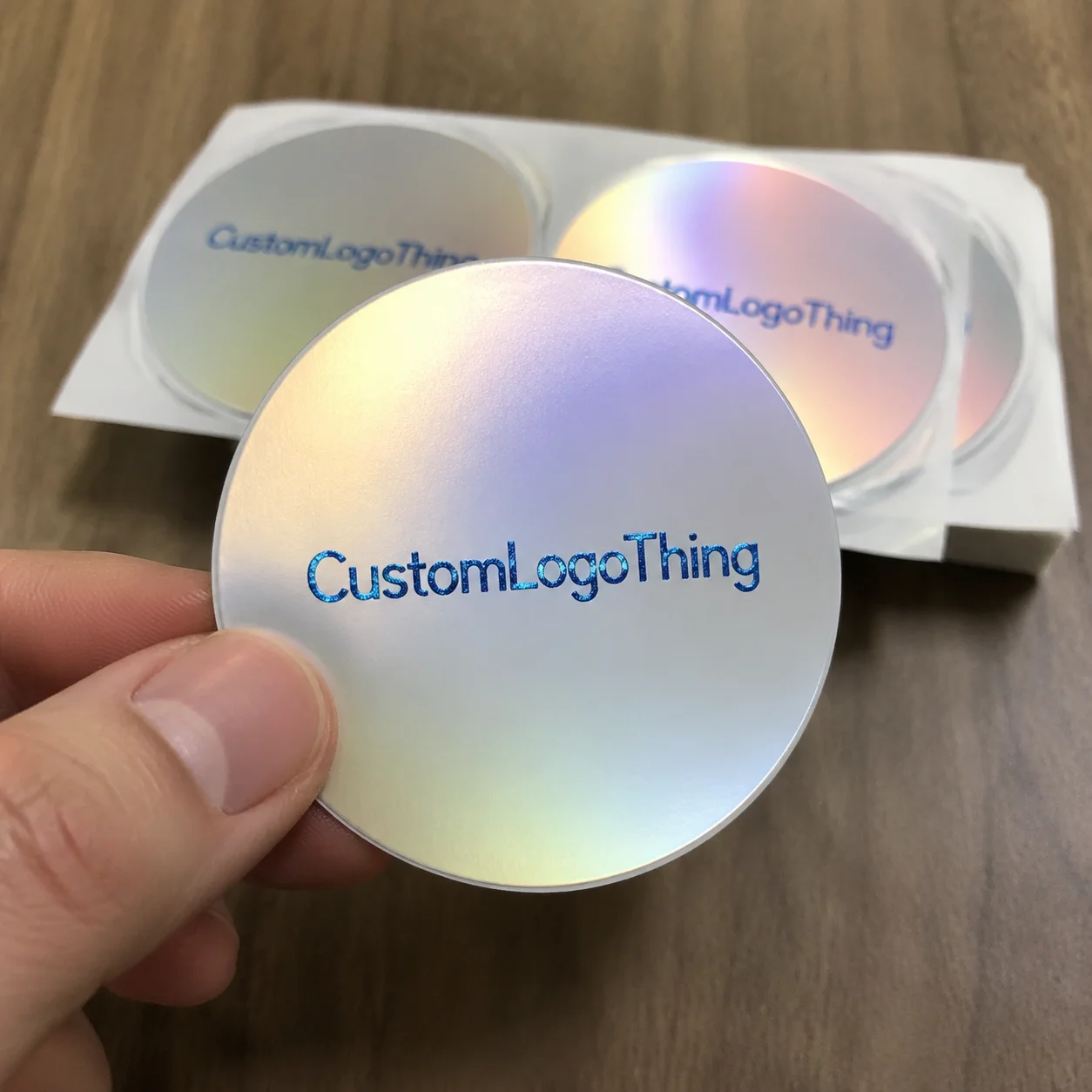
Foil stamping comes next in the sequence. Hot-stamped foil (typically gold, silver, or holographic patterns from manufacturers like Kurz or API) adds luxury cues that consumers immediately associate with premium positioning. Embossing and debossing add tactile dimension—there's a reason high-end skincare from brands like La Mer and Augustinus Bader always uses embossed logos. It's not just aesthetic; it signals "we spent money on this."
Folding and Gluing:
The printed sheets are scored (creased) on Bobst or Masterwork rotary or flat-bed scorers, then folded on high-speed Bobst or Sunrpm rotary machines running at 400-600 cartons per minute. Scoring is critical—the score depth must precisely match the board caliper, otherwise you'll get crack lines at the fold points. I once reviewed a client's carton that looked cheap because the printer had used incorrect score rules for their 28-point board. It was a $40,000 order and they had to reprint. Forty. Thousand. Dollars. I still get a pit in my stomach thinking about it.
Gluing uses either hot-melt (checking 180-degree peel strength of 4-6 lbs per linear inch) or PVA adhesives, depending on end-use requirements. Hot-melt sets in 2-3 seconds and handles temperature extremes better (important for products stored in refrigerators or hot cars). PVA provides more open time (45-60 seconds working time) and flexibility. The glue pattern—where and how much adhesive—is engineered based on carton design and handling requirements.
7 Factors That Determine Premium Quality
After running hundreds of packaging projects, I've identified seven factors that separate genuine premium folding cartons from products that merely call themselves premium.
1. Material Thickness and Board Grade
The board caliper directly determines structural integrity. Premium applications use 24-36 point board depending on carton size and handling requirements. I've seen brands cut costs by dropping to 18-point board (which costs $0.02-$0.03 less per unit), and the result was catastrophic—cartons crushed in shipping, looked dented on shelves at Nordstrom and Neiman Marcus, and customers posted photos of damaged packaging on Instagram. (Nothing says "we don't care about details" like crushed packaging.)
2. Print Resolution and Color Consistency
Offset printing with CTP plates achieves 200+ line screen resolution. Color management systems (ISO 12647-2 compliant) ensure consistency within Delta E 2.0 tolerance across runs. Without proper color management, your second order might arrive with a noticeably different shade of blue than your first—from Pantone 286 C to something that looks like it belongs to a different brand entirely. That's not acceptable for premium brands.
3. Coating Selection
The coating choice affects both protection and perception. Standard aqueous costs approximately $0.01 per unit extra. Premium work uses soft-touch aqueous (which provides a velvety texture that consumers associate with luxury—like the feeling of holding a Cartier box—at $0.03-$0.05 per unit), matte UV at $0.02-$0.04 per unit, or combinations. I recommend requesting swatches from your printer—there's a significant tactile difference between standard aqueous and premium soft-touch coatings. (And touching things is free, so take advantage of that.)
4. Structural Design Precision
Die lines and scores must be engineered for the specific board caliper being used. Poor structural design causes cracking at fold points, weak glue seams (failing at pull-test values below 15 lbs), and registration issues. Using structural engineers who understand paperboard physics prevents problems before they occur. Most premium manufacturers offer free dieline reviews—Bobst and Ebrahim at regional Die Line Review Services have helped my clients avoid costly errors.
5. Gluing Quality and Adhesive Selection
Hot-melt versus PVA affects shelf performance. Hot-melt adhesives set in 2-3 seconds and perform in temperature extremes from -20°F to 140°F. PVA (white glue) takes 45-60 seconds to set but remains flexible—better for cartons that might be refrigerated. The glue pattern must be engineered for the specific carton design, with coverage typically ranging from 0.125" to 0.25" wide bead.
6. Material Certifications
Premium folding cartons come from mills with FSC (Forest Stewardship Council) or SFI (Sustainable Forestry Initiative) chain-of-custody certifications. Recycled content percentages matter for brands with sustainability commitments. If you're marketing organic or eco-friendly products (like the Portland-based supplement company I worked with in 2019), you need documented chain-of-custody—not just a claim that the board is "recycled." (Anyone can claim anything on a website. Request documentation. Real documentation.)
7. Quality Control Checkpoints
Reputable manufacturers have multiple QC checkpoints: incoming material inspection (checking board caliper with micrometer to ±0.001"), in-process checks during printing and finishing (color density readings every 500 impressions), and final inspection before shipment (AQL 1.0 or better). Ask potential suppliers about their defect tolerance rates. Premium manufacturers target less than 1% defect rate; budget suppliers might accept 3-5%.
Understanding Premium Folding Carton Pricing
This is where clients get confused, and I've seen brands get burned by incomplete quotes. Honestly, the pricing side of this industry is designed to confuse you. Let me break down the actual numbers.
Typical cost ranges for premium folding cartons:
| Specification Level | Price Range per Unit | Typical Order Quantity |
|---|---|---|
| Entry-level premium (350gsm SBS, standard aqueous) | $0.25 – $0.50 | 10,000+ units |
| Mid-tier premium (400gsm, soft-touch aqueous) | $0.50 – $1.00 | 1,000 – 10,000 units |
| Luxury with specialty finishes (foil, embossing) | $1.00 – $3.50 | 500 – 5,000 units |
These figures are for the carton cost alone. There's additional investment required.
Die Cut Tooling Costs: Expect $200-$2,500 one-time setup for custom die cuts. Simple shapes cost $200-$500; complex designs with multiple cutouts cost $1,500-$2,500. This tooling is necessary for production but doesn't appear in per-unit pricing. (Of course it doesn't. Nothing is ever simple in packaging.)
Setup Fees: Printing setup typically runs $150-$500 depending on color count and complexity. Each color requires separate plate installation and ink metering. A 4-color process job (plates cost $35-$50 each from vendors in Ontario) has different setup than a 2-color job with spot colors.
Minimum Order Quantities: Most premium manufacturers have MOQs of 1,000-5,000 units. Some accept smaller runs with premium pricing. If you need 500 units, expect to pay 30-50% more per unit than ordering 2,500 units—your $0.45 per unit becomes $0.60-$0.68 per unit.
Hidden Costs to Budget For:
- Freight from printer to your warehouse: can be $0.05-$0.15 per unit for domestic shipping, $0.20-$0.40 per unit for international LCL from Shenzhen or Hong Kong
- Warehousing if you can't receive full production run (approximately $0.02-$0.05 per unit per month)
- Sample approvals: $50-$200 per set for pre-production samples
- Expediting fees if you need faster turnaround: typically 25-50% premium on unit price
Bulk ordering reduces per-unit pricing significantly. If you can absorb inventory carrying costs, ordering 2x your immediate need often yields 15-25% savings on unit price. I've helped brands negotiate forward contracts where they commit to quarterly orders from facilities in Ohio or Ontario in exchange for locked pricing. It works. Do it.
The Production Timeline: From Design to Delivery
Understanding lead times prevents costly expediting fees and late-night panic calls. (I've been on those calls. They're never fun, and they always happen on Fridays at 4:45 PM.) Here's what to expect.
Standard Lead Times:
Premium folding carton production typically runs 12-15 business days from proof approval for standard orders. The variation depends on:
- Print complexity (more colors = more setup time—4-color adds 1-2 days versus 2-color)
- Finishing requirements (foil stamping adds 3-5 days; embossing adds 2-3 days)
- Material availability (stock board: 1-2 days; custom 400gsm orders from mills: 5-7 days)
- Factory workload at time of order (busy seasons like Q4 before Chinese New Year can add 5-7 days)
A straightforward 4-color job on standard 350gsm stock board with standard aqueous coating might be 10-12 business days from a facility like WestRock in Dallas or International Paper in Cincinnati. Add foil stamping and you're looking at 15-17 days. Custom board specification from a specialty mill? Add another 5-7 days for procurement. Plan accordingly.
Rush Options:
Most manufacturers offer rush production with 25-50% premium pricing. If you're paying $0.50 per unit at standard lead, rush might run $0.65-$0.75 per unit from facilities in California or Michigan. Sometimes that's worth it—I've seen brands pay $1,000 in expediting fees to save a product launch that had millions riding on it. Other times, they've paid rush fees because they didn't build proper timelines into their project plan. (You can guess which situation I see more often.)
Timeline Factors to Plan For:
Before production even begins, you need 5-10 business days for design finalization and proof approval. Building this into your project timeline prevents the "we need these next week" crisis. Which brings me to my next point: if you're reading this and you've got a deadline crunch right now, my heart goes out to you. Start earlier next time.
Shipping Considerations:
Premium folding cartons ship flat, which optimizes freight costs. A standard 12" x 12" x 3" carton might ship 500 per box when flat versus 50 per box when assembled. Flat-packed shipping can reduce freight costs by 60-70% versus assembled shipment. Transit time from Chinese manufacturers (Shenzhen, Dongguan) runs 21-28 days by sea; air freight reduces this to 5-7 days but costs 3-4x more. Plan your receiving and assembly capacity accordingly.
Common Mistakes That Kill Quality
I've watched brands make these errors repeatedly. Learn from their expensive lessons. (Please. I'm begging you.)
Skipping Structural Prototypes:
A dieline is a flat drawing. It doesn't show you how the carton will actually fold, how the flaps align, how it feels in your hand. I've seen gorgeous print designs produce cartons that don't close properly or have awkward proportions that look different assembled than flat. Requesting a prototype—actual physical sample before production—costs $50-$200 and prevents $5,000+ mistakes. I've caught issues with prototype testing that saved clients over $30,000 combined.
Ignoring Bleed and Safe Zone Requirements:
Premium printing extends ink beyond the final trim line—typically 0.125" to 0.25" bleed on all sides. Critical elements (logos, text) need to stay within the safe zone, typically 0.125" inside the trim. Designs that ignore bleed requirements arrive with unexpected white borders or cut-off graphics. I've reviewed products where the client's phone number got trimmed off because it was too close to the edge. Theirs, not mine. Thank goodness.
Underestimating Coating Curing Times:
Aqueous coatings need 24-48 hours to fully cure before finishing operations. UV coatings need proper curing under UV lamps (typically 200-400 watts per inch, 2-3 passes at 100 feet per minute). If production schedules don't allow sufficient cure time, you get adhesion failures, smearing, or marring during subsequent processing. Premium manufacturers like those in Columbus, Ohio build in adequate cure time; budget suppliers might push timelines to fit more jobs.
Choosing Price Over Partner Capability:
I've seen brands select suppliers based solely on price, then struggle through communication issues, quality problems, and missed deadlines. A supplier who offers $0.05 less per unit but delivers 5% defective product or misses your ship date costs you more in the long run. The $500 savings on 10,000 units becomes a $5,000 loss when you have to discard defective cartons and reorder. Capability matters more than quoted price. (I cannot stress this enough. I've seen the chaos. It's not worth the savings.)
Not Testing in Actual Conditions:
Your carton will be stacked in warehouses (often reaching 60°F-80°F), shipped in trucks, stored on shelves, and handled by customers. ISTA 3A testing validates performance, but you should also test in real conditions. I worked with a food brand that had beautiful premium cartons that absorbed moisture and delaminated in high-humidity environments in Florida and Texas. They should have specified moisture-resistant barrier coating (adding $0.02-$0.03 per unit). The lesson? Think about where your product will actually live in the world.
Expert Tips for Sourcing Premium Folding Cartons
Over fifteen years, I've refined a sourcing process that consistently delivers quality results. Here are the things that actually matter.
Request Physical Samples Before Production:
Never approve production without seeing a sample. Print samples reveal color accuracy, coating texture, and finishing quality that digital proofs can't show. Most premium manufacturers charge $50-$200 for samples but apply that cost to your order. It's non-negotiable for premium work. (And if a supplier tells you samples aren't necessary, that's a red flag. Run.)
Negotiate Tooling Ownership:
Die tooling is often amortized into unit pricing initially, but you should negotiate ownership after meeting minimum quantities (typically $5,000-$10,000 total order value). If you've spent $10,000 on an order, the die should transfer to you. This allows you to get quotes from multiple suppliers for repeat orders and prevents being held hostage by a single manufacturer in Dongguan or Shenzhen. Honestly, if a supplier refuses to transfer tooling ownership, I question what else they're hiding.
Build Relationships with Quality Personnel:
Your main contact is usually sales, but the quality department controls what actually ships. When I've developed relationships with quality managers like Maria at the WestRock facility in Dallas or James at a supplier in Ontario, they've escalated issues before they became problems, accommodated tight specifications, and prioritized my orders during crunch times. Be respectful of their expertise and they'll go to bat for you.
Use Structural Engineers Who Offer Free Dieline Reviews:
Many premium manufacturers employ structural engineers who review dielines at no charge—facilities operated by Pratt Industries, WestRock, and International Paper all offer this service. They catch potential problems before production—incorrect scoring for 28-point board, weak glue points requiring more than 0.25" bead width, awkward fold sequences. Use this resource. It costs you nothing and prevents expensive errors.
Verify Quality Certifications:
Request documentation of ISO 9001:2015 quality management system certification. Verify FSC or SFI chain-of-custody claims with actual certificates (valid for 5 years, requiring annual audits), not just marketing language. Ask about their defect rate history. Premium manufacturers track this data (typically targeting <1% defect rate) and share it with serious prospects.
Next Steps: Getting Started With Premium Packaging
If you're evaluating your current packaging or preparing for a new project, here's a practical action sequence. (Yes, I'm giving you homework. But it's useful homework.)
Audit Your Current Packaging:
Identify three specific improvement areas. Is it print quality (are you seeing ink starvation on fine lines)? Structural integrity (are you seeing crush damage in transit from California to New York)? Coatings that don't match your brand's premium positioning? Vague goals produce vague results. Specific targets (improved color consistency within Delta E 2.0, reduced crush damage by switching from 18-point to 24-point board, better tactile feel with soft-touch aqueous coating) guide supplier conversations.
Request Quotes from Multiple Manufacturers:
Send identical specifications to at least three suppliers—a mix of domestic facilities in Ohio, Michigan, or Ontario and international options in Shenzhen or Dongguan if timeline allows. "Identical" means same board spec (350gsm SBS C1S from a named mill), same print requirements (Pantone references, 200-line screen), same finishing (soft-touch aqueous, gold foil stamping), same quantities (2,500 units), same timeline (15 business days). Comparing quotes is only valid if you're comparing the same thing. I've seen brands compare a premium quote against a budget quote and then wonder why the pricing was different. (Spoiler: they're not comparing equivalent things.)
Prepare a Detailed Brief:
Your brief should include:
- Exact dimensions (length x width x depth in inches or millimeters—e.g., 4.5" x 2.5" x 1.2")
- Quantity requirements (broken into multiple quantities if flexible—e.g., 2,500 / 5,000 / 10,000)
- Material preferences (board grade like 350gsm SBS C1S, caliper like 24pt, certifications if needed)
- Finishing requirements (coatings like soft-touch aqueous, foil stamping like gold metallic from Kurz, embossing)
- Timeline (with hard deadlines versus flexible dates—e.g., "need by March 15, 2025, flexible ±3 days")
- Quality expectations (defect tolerance like AQL 1.0, color matching like Pantone 877 C metallic with Delta E 3.0 tolerance)
Ask for Printed Samples:
Request samples from similar projects the supplier has completed. A supplier with no relevant samples to share either lacks experience in your category (cosmetics, pharmaceuticals, electronics) or has been delivering substandard work that they won't show you. Premium folding cartons have samples available—there's no legitimate reason for a supplier to refuse to share them.
Calculate Total Cost of Ownership:
Unit price is just the starting point. Add freight costs ($0.08-$0.15 per unit for domestic, $0.25-$0.40 for international), warehousing needs ($0.02-$0.05 per unit per month), quality issues (cost of defects at 5% defect rate on 10,000 units = 500 defective cartons at $0.50 each = $250 loss), and the cost of missed deadlines or brand damage from poor packaging. When you compare total cost of ownership, premium folding cartons often make more economic sense than budget options, especially for products where packaging quality affects purchase decisions.
"The carton is your silent salesperson. It works 24/7 across every touchpoint—shelf presentation at Nordstrom or Whole Foods, unboxing videos on TikTok reaching 50,000+ views, customer Unboxing Experience That drives word-of-mouth. Cutting corners on packaging is a false economy when your product's success depends on perceived quality."
Frequently Asked Questions
What materials make folding cartons premium quality versus standard?
Premium quality uses thicker SBS paperboard (24-36 point caliper, approximately 350-400gsm) compared to standard cartons that typically use 18-22 point board (250-280gsm). Premium folding cartons feature litho-laminated construction where a separate printed sheet (usually 128gsm 2-side coated art paper) is laminated to the board core, providing superior ink coverage and print surface quality. Specialty coatings like soft-touch laminate (adding $0.03-$0.05 per unit) or matte aqueous distinguish premium from standard options. Higher board grades provide better structural integrity (200+ PSI edge crush versus 150 PSI for standard), crush resistance, and print surfaces that result in sharper, more vibrant graphics.
How much do premium folding cartons cost per unit?
Entry-level premium folding cartons typically cost $0.25-$0.50 per unit for orders of 10,000+ pieces with 350gsm SBS board and standard aqueous coating. Mid-tier premium runs $0.50-$1.00 per unit for orders between 1,000-10,000 pieces using 400gsm board with soft-touch aqueous coating. Luxury premium with specialty finishes (foil stamping at $0.08-$0.15 per unit additional, embossing at $0.05-$0.10 per unit, holographic patterns) range from $1.00-$3.50 per unit for orders of 500-5,000 units. Die cut tooling adds a $200-$2,500 one-time setup cost that gets amortized across the order. Higher quantities always reduce per-unit pricing significantly—ordering double your immediate need often yields 15-25% unit cost savings.
What is the typical production lead time for premium folding cartons?
Standard production runs 12-15 business days after design approval for straightforward 4-color jobs on stock board. Material procurement adds 5-7 days when ordering non-stock board specifications (custom 400gsm from mills). Complex finishing like foil stamping and embossing typically adds 3-5 days to standard timelines. Rush orders are available with 25-50% premium pricing, reducing standard 15-day lead time to 8-10 business days. Build in an additional 5-10 business days for design finalization and proof approval before production begins. When planning a launch, work backward from your deadline and add buffer days for unexpected issues—I've seen delays of 2-3 days from Chinese New Year closures affecting suppliers in Shenzhen and Dongguan.
What finishing options enhance premium folding cartons?
Spot UV coating adds visual interest by creating high-gloss contrast against matte surfaces, highlighting specific design elements at approximately $0.02-$0.04 per unit. Foil stamping in gold, silver, or holographic patterns from manufacturers like Kurz or API creates luxury appeal and tactile quality that consumers associate with premium products—costs typically $0.08-$0.15 per unit depending on coverage area. Embossing and debossing add dimensional texture to brand elements like logos, creating a three-dimensional effect that's both visual and tactile (approximately $0.05-$0.10 per unit for single-level embossing). Soft-touch aqueous coating provides a velvety paper feel that distinguishes premium packaging and creates Memorable Unboxing Experiences—adding $0.03-$0.05 per unit to your cost.
How do I ensure quality when ordering premium folding cartons?
Request pre-production samples ($50-$200 per set) and test them thoroughly before approving full production runs. Verify the supplier's quality certifications—ISO 9001:2015 for their quality management system, FSC or SFI chain-of-custody if sustainability claims matter for your brand. Ask about their defect rate history (premium manufacturers typically target under 1%) and request documentation of incoming material inspection, in-process quality checks, and final AQL testing. Build specific quality requirements into your purchase order: exact board caliper tolerances (±0.001"), color matching requirements (Pantone references with stated Delta E tolerance), and defect definitions. The suppliers who take quality seriously will have no problem meeting these specifications. Those who push back? That's your answer about whether they're actually