Food Shipping Tubes Quote: Request Custom Pricing Today
A food Shipping Tubes Quote can swing more because of barrier choice, closure design, and print coverage than because of the tube body itself. That surprises a lot of buyers the first time they compare suppliers. A neat-looking cylinder still has to survive crush, vibration, grease, humidity, dimensional weight, and the slightly chaotic reality of parcel delivery.
Snack brands, confectioners, seasoning suppliers, and powder-based food makers usually get the best result when the quote starts with the product build, not the budget spreadsheet. A tube that is fine for shelf-stable dry goods may wobble the moment it meets an oily snack mix or a fine powder that needs tighter package protection during order fulfillment and transit. Same shape, different job.
The notes below explain what really moves the number, how materials and specs change performance, and how to request a food shipping tubes quote that actually helps you compare options. If you are planning the rest of the packaging system at the same time, see our Custom Packaging Products or compare related formats such as Custom Shipping Boxes for bundled kits and mixed-SKU programs.
Why a food shipping tubes quote can vary so widely
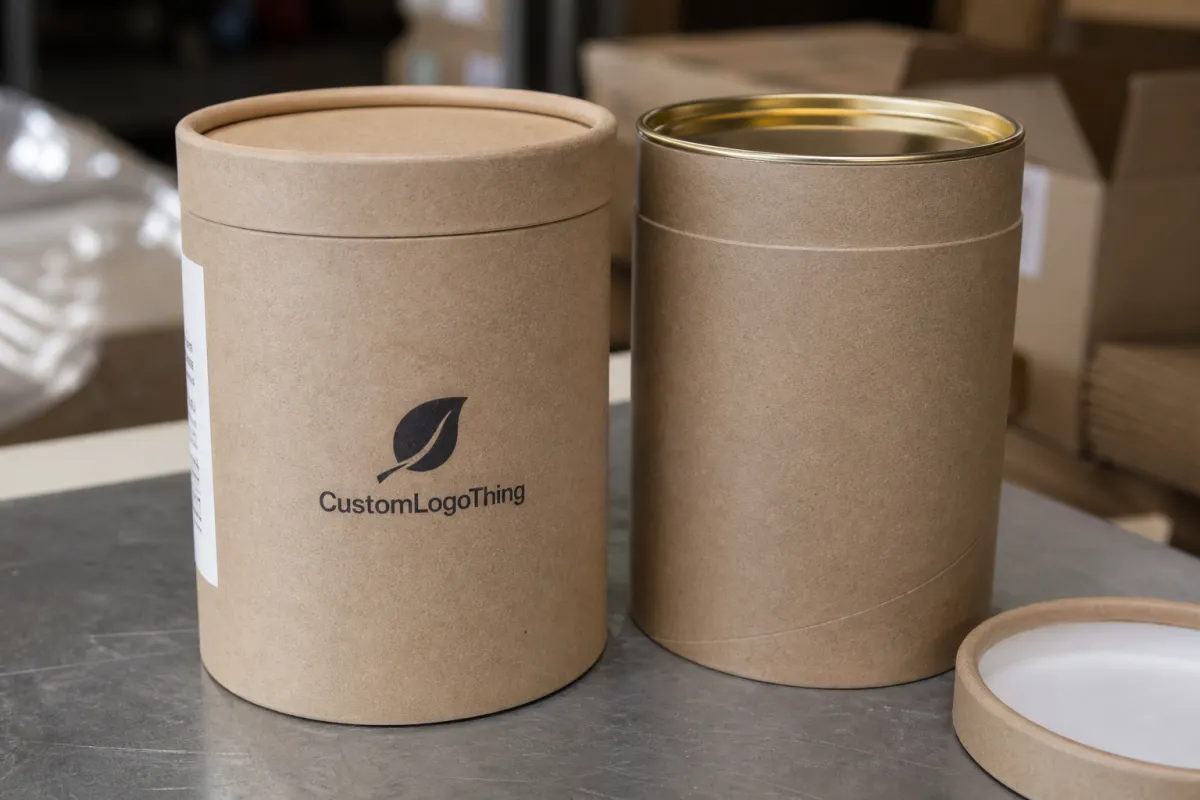
A food shipping tubes quote rarely rises because of the paper tube shell alone. The bigger jumps usually come from a moisture barrier, a lined interior, a tamper-evident closure, or full-wrap graphics with multiple ink colors. The shell may look simple; the finished package is doing real work. I have seen packaging teams assume a tube was basically a cylinder and then get blindsided by the details. It never really is that simple.
Three products can fit the same diameter tube and still demand different structures: a dry cookie snack, a powdered seasoning, and a confection with a grease-prone coating. The seasoning needs tighter barrier control to fight humidity. The confection may need a grease-resistant liner so the interior does not stain or soften. The cookie snack may care more about crush strength and shelf appearance. A single food shipping tubes quote should not treat those products as interchangeable.
Retail display goals also shape price. Brands that want a premium shelf impression often ask for metallic inks, soft-touch lamination, or tight full-wrap registration that keeps logos aligned across the seam. Those are not decorative extras in the abstract. They affect press setup, proofing, and waste. That is why a food shipping tubes quote for retail-ready packaging often lands higher than one for plain transit packaging.
Failure cost matters just as much. A packaging line that loses 2% of units to scuffing, settling, or closure issues can burn more money in repack labor and returns than it saved on the first quote. A slightly higher unit price can be the cheaper decision if it cuts spoilage, complaints, and replacement shipments. I learned that the hard way on a seasonal snack program years ago: the cheapest build looked fine on paper, then the first dry winter shipment exposed a closure problem nobody had priced in. That kind of lesson sticks.
"A low unit price only matters if the tube arrives clean, fits the product, and survives the route. If the build creates repack labor or product loss, the quote was never truly low."
Procurement teams usually need the total picture, not a headline number. A food shipping tubes quote should reflect package protection, print complexity, and logistics together. If a supplier cannot explain why one version costs more than another, the number is not a quote so much as a guess with a dollar sign attached.
One practical way to compare offers is to split the price into four buckets: materials, decoration, closures, and logistics. That is where the truth usually sits. When a food shipping tubes quote is written in that structure, comparing it with another vendor becomes much easier. The same goes for alternate formats such as a folding carton, a rigid tube, or a lighter mailer for non-food inserts like Custom Poly Mailers.
Transit testing should enter the conversation early if the buyer wants fewer surprises. The ISTA test methods are a better benchmark than gut feel because they simulate the shocks, drops, and vibration that real packages see between the line and the customer.
Food shipping tubes quote essentials: tube styles and materials
A food shipping tubes quote starts to make sense once the structure is defined. Most builds land in a few familiar categories: chipboard, kraft paperboard, coated paperboard, and hybrid constructions that pair a decorative outer layer with a functional inner liner. Each solves a different problem, and each pushes the quote in a different direction.
Chipboard and kraft builds
Chipboard is common when the goal is straightforward containment and a clean printed surface. It is usually the most economical route for dry snacks and lightweight food items. Kraft paperboard, by contrast, gives a more natural look and can signal sustainability or simplicity to the shopper. If the brand story leans on recycled fiber or an uncoated aesthetic, the food shipping tubes quote may favor kraft even if the unit price is a little higher than standard chipboard.
Neither choice wins automatically. A buyer who needs bright graphics and sharp registration may prefer coated chipboard. A brand selling rustic seasonings or artisanal mixes may prefer kraft because the texture supports the product story. The strongest food shipping tubes quote matches the material to the marketing job, not only to the budget line.
Barrier and liner choices
The inside of the tube matters almost as much as the outside. A lined interior can help with grease resistance, moisture control, and aroma retention. That matters for powdered drink mixes, chocolate-coated snacks, and salty items that can migrate oils. Skip barrier protection and the product may look fine on the quote sheet while failing on the shelf or in a delivery van.
Food-contact requirements belong in this same conversation. Not every product needs the same level of protection, but the supplier should be able to explain whether the inks, adhesives, coatings, and liners suit the intended use. A food shipping tubes quote that ignores this step is incomplete. Dry and stable products can stay simple. Moisture-sensitive or flavor-sensitive items usually need better liners, and that extra spend often pays for itself in fewer complaints.
Closures, tamper evidence, and stacking
End caps, plugs, paperboard lids, and resealable closures all change the quote. A tighter closure can improve tamper evidence and keep the product from shifting, which matters when the pack moves through ecommerce shipping and gets handled several times before delivery. Some closures stack better in cartons or on retail shelves. That reduces crushed lids, lowers deformation risk, and makes pallet loading cleaner.
Stackability affects more than appearance. Better stack performance can reduce freight waste and improve carton counts, especially in mixed-SKU master cases. A strong food shipping tubes quote should show those tradeoffs instead of hiding them inside a single line item.
Print method and finish
Decoration is often one of the biggest quote drivers. Digital print works well for shorter runs, seasonal artwork, or several SKUs with different graphics. Flexographic or offset-style production usually wins at higher volume, but it adds setup and plate logic that short runs cannot spread across enough units. Full-wrap coverage, soft-touch finishes, matte varnish, and metallic accents all increase cost and raise the risk of waste during press setup.
The right food shipping tubes quote depends on how much the package must do in the market. A tube meant to disappear into a shipping carton may only need one-color branding. A tube that sits on a retail shelf can justify richer decoration because it works as a display unit and a container at the same time. That is a cost-to-function decision, not marketing fluff.
If sustainability is part of the brief, ask about fiber sourcing and recyclability claims. The FSC system can help verify responsible forest sourcing for paper-based components, but the supplier still has to confirm which part of the assembly is certified and which part is not. Buyers often get tripped up when the outer wrap is certified and the closure component is not. The food shipping tubes quote should separate those facts clearly.
Material selection changes more than sourcing. It shifts performance, shelf appeal, and the final number. A solid food shipping tubes quote ties each material to a product category: dry cookies, trail mix, powdered drink blends, specialty tea, or seasoning packets. That level of detail makes procurement easier and order fulfillment smoother.
Dimensions and specifications that protect the product
The most expensive mistakes in a food shipping tubes quote are often dimensional, not decorative. Length, diameter, wall strength, fill weight, and headspace all interact. A tube can look right on paper and still fail if the product settles too much, crushes too easily, or leaves too much unused void inside the pack.
Start with the product itself. Measure the longest piece, the widest section, and the total packed weight after the product is arranged the way it will actually ship. Fragile products need special attention. A brittle snack, a stack of cookies, or a delicate confection may need a tighter fit than a loose dry good. A good food shipping tubes quote should ask for more than one dimension because one dimension is never enough.
Headspace matters more than many buyers expect. Too little and the closure may bulge or fail. Too much and the contents can bounce around, which increases breakage and gives the package a cheap feel when the customer opens it. That becomes especially important in ecommerce shipping, where the product may travel farther and be handled more times than it would in retail replenishment. Package protection turns into a cost-control issue, not only a quality issue.
Insert depth and closure style are another pair of hidden variables. A deeper insert can improve retention, but it may also increase tooling complexity and change the final quoted price. Venting may be needed for certain snack applications to avoid pressure build-up or condensation. Food-safety notes, including what materials are suitable for direct or indirect food contact, should be spelled out before the food shipping tubes quote is finalized. If the supplier has to guess, the price usually changes later. That is exactly the sort of headache buyers can avoid with a better brief.
Measurement tolerance is where the quote often stops being theoretical. A 1 mm difference in diameter or a small shift in wall thickness can affect fit, especially if the closure is designed tightly for tamper resistance or stacking strength. Dielines should be approved before tooling begins, and the tolerance range should be visible in writing. A buyer who approves dimensions casually often pays for revisions later.
The most practical rule is simple: the more complete the spec sheet, the cleaner the food shipping tubes quote. Send the fill weight, final packed size, closure preference, graphics coverage, and the intended route to market. If the pack will go direct-to-consumer, say so. If it must survive club-store handling or wholesale palletization, say that too. The more the supplier knows up front, the fewer surprises show up after proofing.
A spec sheet that saves time
- Product dimensions: finished length, widest diameter, and weight.
- Product behavior: brittle, oily, powdery, moisture-sensitive, or shelf-stable.
- Closure needs: tamper evidence, resealability, or stacking strength.
- Artwork files: logo, copy, barcode, and any regulatory text.
- Distribution details: direct ship, retail shelf, or mixed-SKU kitting.
- Destination: ship-to ZIP or postal code for freight planning.
The better the inputs, the better the food shipping tubes quote. That stays true whether you are launching a small seasonal item or converting a long-running SKU from another package format. It helps to describe the rest of the packaging system too, because a tube does not travel alone. If the product is part of a kit, the quotation may need to account for outer cartons, void fill, and any Custom Poly Mailers used for ancillary items. Package architecture matters.
Teams that want a more disciplined distribution plan should ask whether the design is being checked against an ISTA-style route profile or a simple pass/fail visual review. A food shipping tubes quote that includes testing assumptions is more useful than one that assumes the customer will solve fit problems later. That is not pessimism. That is disciplined purchasing.
Food shipping tubes quote: cost, MOQ, and unit pricing
Price is where most conversations begin, but it should be where the conversation gets more specific. A food shipping tubes quote is shaped by a few major levers: board grade, barrier coating, closure type, print coverage, tooling, and freight. If those pieces are not separated, the number tells you very little.
Short digital runs usually carry a higher unit price because setup is lighter but the press cannot spread its cost across as many units. Conventional print methods often improve the per-unit number as volume grows, but they bring minimums that make tiny launch runs harder to justify. That is why MOQ matters so much. A food shipping tubes quote for 500 units and a quote for 5,000 units are not scaled versions of the same offer; they are different production economics.
| Construction | Typical MOQ | Indicative Unit Price | Best Fit | Cost Notes |
|---|---|---|---|---|
| Plain chipboard tube with basic print | 1,000-3,000 units | $0.24-$0.45 | Dry snacks, tea, shelf-stable foods | Lower decoration cost; good for simple branding and tighter budgets |
| Barrier-lined kraft or paperboard tube | 2,500-5,000 units | $0.36-$0.68 | Seasonings, powders, oily snacks | Higher material cost, but better moisture and grease control |
| Full-wrap premium hybrid tube | 5,000+ units | $0.48-$0.92 | Retail display, seasonal promotions, subscription programs | Best visual impact; setup and finish choices can raise the quote quickly |
Those ranges are directional, not fixed. Size, artwork complexity, closure engineering, and the destination all matter. Even so, the pattern holds: the more function and finish you ask for, the more the food shipping tubes quote rises. That is not a penalty. It is the cost of turning a paper tube into a food-ready shipping component.
Freight can alter the real budget more than buyers expect. A tube may have a modest unit price, but if it ships in inefficient carton counts or bulky pallet configurations, the landed cost climbs fast. Dimensional weight can distort the math too, especially for light but long packaging. A 12-inch tube that ships densely in clean cartons may be far cheaper to receive than a premium-looking version that wastes pallet space and needs extra corrugate around every bundle.
Storage should not get ignored either. Some buyers compare a food shipping tubes quote without calculating warehousing costs. A low price on a higher MOQ can look attractive until inventory sits for months and ties up cash. Landed cost beats headline price every time. Compare unit cost, print setup, freight, carton count, pallet efficiency, and expected storage duration on the same terms.
Here is a simple way to compare offers:
- Ask each supplier to quote the same dimensions, print coverage, and closure style.
- Confirm whether freight is included or excluded.
- Check if tooling, plates, or proofing charges are separate.
- Compare carton counts and pallet quantities, not just unit pricing.
- Ask for lead time at the quoted volume, not just the sample run.
Two offers can look similar on paper and still produce very different budgets. The cheaper food shipping tubes quote can end up costing more once the hidden pieces are counted. Packaging teams get burned by this often. They compare one line item and forget the rest of the chain: receiving, storage, order fulfillment, and customer-facing performance. The quote is only one part of the total.
For buyers planning several SKUs at once, ask for the quote to be split by SKU and also tallied as a program. That lets you see whether shared print plates, common tube diameters, or a single freight plan improve the total budget. If the program includes non-food inserts or kits, pair the tube conversation with your broader packaging set and align it with Custom Packaging Products so the supplier can view the whole system rather than one tube at a time.
Process and timeline: from quote to production
A useful food shipping tubes quote should come with a clear process, not just a number. Better suppliers begin with a feasibility review, confirm the structure, check artwork requirements, and then map the lead time from proof approval to shipment. That is how you avoid the awkward surprise of a quote that looks good but cannot actually be produced on schedule.
The intake step is usually the most important. A sales team should review product dimensions, food-contact needs, print coverage, and target quantity before sending a final quote. If the spec is incomplete, the quote should say so. Buyers usually appreciate honesty more than optimism, especially when launch dates are tied to retail resets or ecommerce shipping calendars. A food shipping tubes quote that hides assumptions invites delay later.
After artwork is submitted, revision count starts to matter. One clean proof cycle can keep the project moving. Three or four cycles can slow the schedule by days or even weeks. Barcode issues, legal copy changes, and unapproved claims are common delay points. If the design includes nutrition panels or regulated language, the brand team should verify those elements before the final food shipping tubes quote is signed off.
Typical production timing depends on the build, but a common pattern is 2-4 business days for quote review, 3-5 business days for proofing, and 12-15 business days from proof approval to standard production on a mid-size custom run. If the project needs sampling first, add time for sample build and review. Rush options exist in some cases, but they are not magic. A rushed food shipping tubes quote still depends on material availability, press capacity, and artwork complexity.
The sequence usually looks like this:
- Quote intake: specs, artwork, quantity, and destination are reviewed.
- Feasibility check: the team confirms structure, print method, and closure logic.
- Proofing: artwork is placed on a dieline and sent for review.
- Sample or approval: a prototype or digital proof is signed off.
- Production: materials are scheduled and the run is printed or formed.
- Freight booking: cartons are packed, labeled, and shipped to destination.
That path stays predictable when the inputs are clean. It gets messy when the buyer is still deciding on size, barrier level, or closure style. A food shipping tubes quote can only be as reliable as the data behind it. That is why the fastest projects are usually the ones where packaging, marketing, and operations agree early.
If you are planning a distribution run through multiple channels, build testing discipline into the schedule. The physical route matters. A tube that works in a protected bulk shipment may not survive parcel networks with the same confidence. Transit testing protocols, including ISTA methods, help anchor that discussion. The goal is not to over-engineer every pack; the goal is to match the package to the route.
For teams managing recurring launches, define a re-order path in advance. Keep the original dieline, approved artwork, and production notes in one place so the next food shipping tubes quote does not begin from zero. That small habit often saves days on future programs and keeps the packaging system stable across seasonal and repeat orders.
Why buyers choose us for custom food shipping tubes
Buyers do not just want a food shipping tubes quote; they want a quote they can trust. The difference shows up in how the supplier handles assumptions, test questions, print constraints, and material recommendations. Good packaging partners are direct about what will work, what may need adjustment, and what should not be promised too early.
Our process follows that logic. We focus on practical structure choices, food-contact discipline, and responsive quoting with clear assumptions. If a tube needs a liner, we say so. If a closure is too loose for the route, we flag it. If artwork coverage pushes the price higher, we explain why instead of disguising it inside a generic line item. That makes the food shipping tubes quote easier to compare and easier to approve.
Structural testing is another reason buyers stay with a reliable supplier. A tube is not successful because it looked good in a PDF. It is successful when it holds its shape, protects the product, and prints consistently across the full run. That matters especially for seasonal SKUs, launch programs, and repeat orders that must match from one production cycle to the next. Packaging teams hate surprises more than they hate higher quotes.
Clear communication also pays off in procurement. A generic vendor may look inexpensive at first, but the savings can disappear once change fees, artwork corrections, and shipping adjustments show up. A better food shipping tubes quote often costs less in the long run because it avoids those downstream charges. That is the difference between price and cost.
Food packaging rarely lives alone, either. One brand may need a tube for one SKU, boxes for another, and mailers for a small accessory program. If that sounds familiar, keep the packaging stack unified so sourcing, artwork, and freight decisions align. Our Custom Packaging Products range makes it easier to coordinate those pieces without juggling disconnected vendors.
For packaging buyers, consistency is money. A repeatable tube spec means fewer approvals, steadier inventory, and less time spent reconciling mismatched runs. That becomes especially valuable in ecommerce shipping, where quick turns and accurate order fulfillment leave little room for guesswork. A dependable food shipping tubes quote should reduce procurement friction, not add to it.
The cheapest quote is not always the safest choice. A better test is to ask which quote gives the clearest assumptions, the fewest hidden charges, and the strongest fit for the product. That answer is often the most useful food shipping tubes quote, even when it is not the lowest number on the page.
Next steps to request a food shipping tubes quote
If you want a fast, accurate food shipping tubes quote, send complete specs the first time. The more the supplier knows, the fewer delays you will face. Start with product dimensions, fill weight, expected shelf life, barrier preference, artwork files, quantity, and ship-to ZIP or postal code. If the product is fragile, oily, or moisture-sensitive, say that plainly. That context changes the build.
Ask for at least two or three options if you are still deciding between protection levels or appearance tiers. A good food shipping tubes quote should let you compare a simple build, a mid-tier branded build, and a premium retail-facing build. That side-by-side comparison helps the buyer see where the money goes and which compromises are acceptable. A low-cost version may be perfect for a launch test, while a premium version may be better for permanent shelf placement.
For regulated or fragile products, request a sample or proof before you approve the full run. It is much cheaper to catch a closure issue, barcode problem, or artwork spacing error on a proof than on 10,000 finished units. That is basic packaging discipline, and it matters even more when the product is food. A careful food shipping tubes quote should support sampling instead of rushing past it.
Here is the shortest possible checklist for a clean inquiry:
- Product type and fill weight
- Exact dimensions and preferred tube diameter
- Barrier, liner, or grease-resistance needs
- Print coverage, colors, and finish preferences
- Quantity, launch date, and replenishment expectations
- Ship-to location and any freight constraints
Once you have that information, the rest moves faster. The supplier can compare board grades, estimate MOQ, and recommend the best structure for package protection without guessing. That is how a food shipping tubes quote becomes a decision tool instead of a placeholder number.
When you are ready to move, send the specs, review the options, and approve the best-fit food shipping tubes quote for your product and route. If you need help gathering the right inputs, Contact Us with your dimensions and target quantity, and we will help you shape a quote that reflects the real job the tube has to do. The right food shipping tubes quote saves time now and reduces packaging mistakes later.
How do I request a food shipping tubes quote online?
Send product dimensions, fill weight, quantity, artwork files, and the destination ZIP or postal code. Include barrier, print, and food-contact requirements so the first food shipping tubes quote reflects the real build. If the product is fragile or the brand team needs to review graphics, ask for a sample or proof with the initial request.
What affects the price of a food shipping tubes quote the most?
Material grade, barrier coating, closure style, and print coverage usually drive the biggest price swings. MOQ and tooling can change the unit cost quickly, especially on short runs. Freight and pallet efficiency also matter, so compare landed cost instead of only the quoted unit price. A clear food shipping tubes quote should separate those items.
What MOQ should I expect for custom food shipping tubes?
MOQ depends on the structure, decoration method, and whether the run is digitally printed or conventionally printed. Higher MOQs usually bring a better unit price, but they also raise inventory exposure. Ask for alternative quantities if you want to compare launch volume against repeat-order pricing in the same food shipping tubes quote.
How long does production take after I approve the quote?
Timeline depends on proof approval, material availability, and whether samples are required first. A common schedule is a few business days for proofing and roughly 12-15 business days from approval to standard production, though complex artwork can add time. Request a milestone schedule so you know when proofing, production, and shipping should happen.
Can I order food shipping tubes for multiple SKUs at once?
Yes, but each SKU may need its own dimensions, closures, artwork, or barcode setup. Bundling SKUs can improve planning, but it may also affect MOQ and press setup economics. Ask for a quote on each SKU and then compare the combined freight and production plan so the food shipping tubes quote reflects the full program.

