Ceramic Logo Patch Beanies Material Sample Guide Request
Use a sample request to check feel, fit, color behavior, attachment quality, and real production limits before you approve a bulk order.
A sample is the fastest way to find out whether the concept survives real use. A render can hide a stiff edge, a weak bond, or a logo that sits too heavy on a knit cuff. A physical sample shows how the hat feels in hand, how the patch reads against the texture, and whether the build matches the price you expect to pay.
That matters for retail, corporate programs, promotions, and private-label drops. A beanie can look clean on screen and still feel bulky, scratchy, or poorly balanced when worn. The sample is where those issues become visible before you commit to production.
What a Ceramic Logo Patch Beanies Material Sample Guide Really Shows
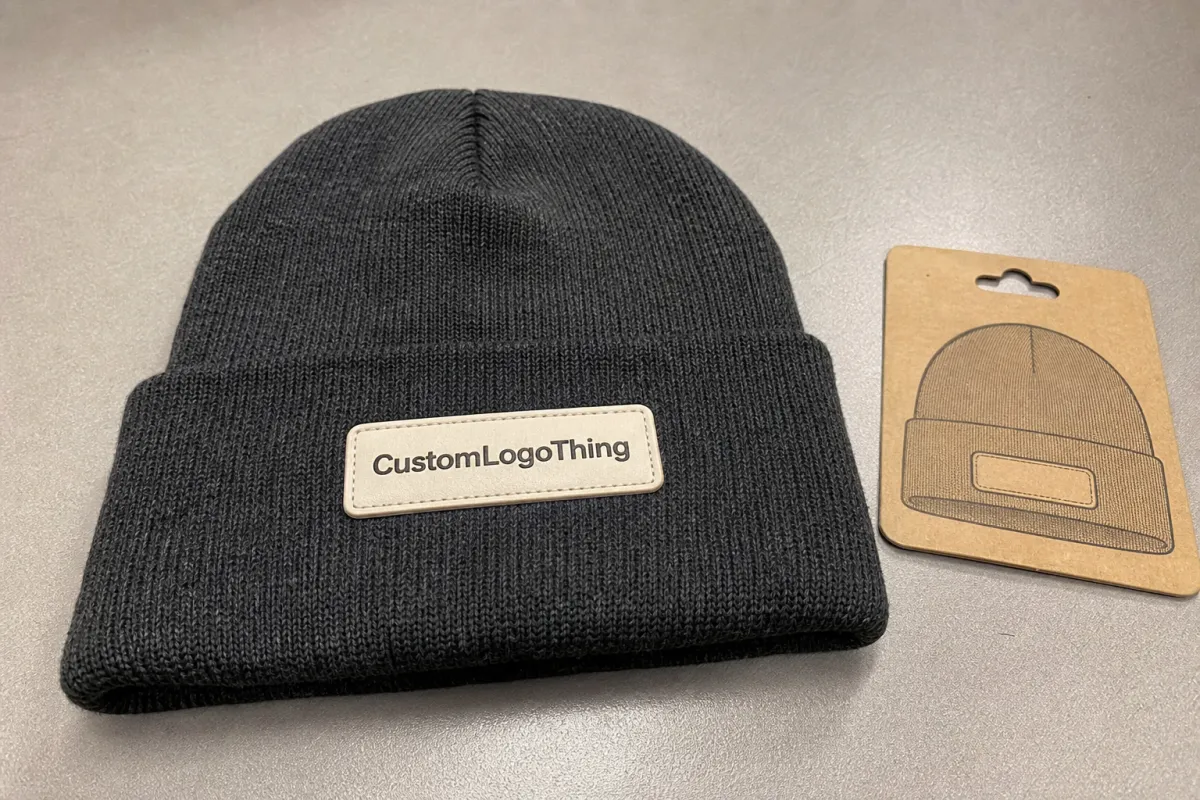
The first thing a sample reveals is hand feel. A patch that looks slim in artwork may still create a hard spot once it is attached to a rib knit cuff. If the hat needs to sit under a hood or helmet, even a small bump can matter.
It also shows whether the logo reads clearly against the knit texture. Flat artwork does not account for stretch, curve, or fabric movement. On a beanie, the front panel bends, the crown pulls, and the cuff folds, so the logo needs to hold its shape in motion.
A sample is not just a prettier proof. It is a test of the patch, the knit, the placement, and the finishing.
Another common surprise is scale. A 50 mm patch can look balanced on one beanie and oversized on another. The difference usually comes from the body fabric and cuff height. A thicker wool blend can support more structure, while a lighter acrylic knit may make the same patch feel heavy.
Samples also expose issues that photos miss. You can feel uneven stitching, see edge lift, and spot a patch that sits too high above the cuff fold. Those are small details, but they are the details customers notice when they handle the product.
That is why a ceramic Logo Patch Beanies material sample guide should be treated as a decision tool, not a courtesy step. It is the easiest place to catch a problem before it becomes a full run of bad inventory.
How the Patch and Beanie Actually Work Together
Patch construction and beanie construction are separate decisions, but they have to work as one product. The patch may be molded, coated, or rigid-looking, while the beanie body may be acrylic, cotton blend, wool blend, recycled polyester, or a mixed yarn knit. Each combination reacts differently to heat, pressure, and stitching.
Three attachment methods come up most often:
- Sewn attachment gives the strongest mechanical hold and usually handles stretch best.
- Heat-applied backing keeps the front cleaner, but the base material must tolerate temperature and bond properly.
- Hybrid construction combines a backing with stitching, which helps on larger patches or more structured logos.
Sewn samples usually feel safest because the patch follows the fabric and does not depend entirely on adhesive. The stitch line still matters: too close to the edge can cause puckering, while too far in can leave the border weak.
Heat-applied versions can look tidy at first glance, but they may add stiffness. If the patch covers a wide area, the beanie can stop folding naturally at that point. Since people compress beanies, store them in bags, and pull them back on repeatedly, stiffness is not a small issue.
Hybrid builds sit in the middle. They often make sense for structured logos because the backing keeps the patch flat during production, while stitching adds security. The tradeoff is more setup work and usually a higher sample cost.
A practical test is simple: stretch the hat, fold the cuff, then press the logo area with your thumb. If the front puckers, the attachment is too stiff for the body fabric. If the edge lifts or feels loose, the bond or stitch path needs work.
Do not ignore the inside of the hat. Scratchy thread ends, thick seams, or visible glue can turn into comfort complaints even when the front looks good. That is often the difference between a product that feels premium and one that feels rushed.
Material Specs That Change Comfort and Durability
Patch thickness is one of the most important specs, and also one of the easiest to overlook. A thin patch can look elegant, but if it is too soft it may lose definition on textured knit. A thicker patch can read more premium, but if the profile is too rigid it may feel clumsy on a cold-weather hat.
Knit density matters just as much. Loose knits are comfortable and relaxed, but they can swallow a logo edge or let a patch sit unevenly. A tighter rib knit usually gives cleaner placement and sharper visual balance. If the style has a lot of stretch, ask how the patch behaves at full extension, not just flat on a table.
Yarn composition affects both cost and appearance. Acrylic keeps pricing lower and gives a consistent feel. Wool blends add warmth and structure, but they raise cost and can complicate color matching. Recycled yarn blends vary widely, so do not assume all recycled options will look or feel the same.
Color matching is another place where buyers get fooled by screens. Monitor color is not production color. Daylight, warm indoor lighting, and warehouse fluorescents all shift perception. A dark patch on charcoal knit may look balanced in a photo and too flat in hand, while a bright logo may look energetic on screen and too loud in person.
For exact brand colors, ask for physical references and review them in real light. A printed Pantone chip helps, but it is not enough on its own because yarn, coating, and thread each behave differently. Keep approved samples labeled if you have more than one version in circulation.
Surface finish also changes the result. Some logos need a smooth, almost polished look; others need texture so the mark does not feel plastic or flat. A shiny surface can look premium or cheap depending on the rest of the build, so the sample should settle that question.
Packaging can affect the material story too. If the hat is going into retail, mail order, or a gift set, the sample should reflect the full package. FSC certified corrugated cardboard, kraft paper wrap, and recycled inserts all change weight, cube, and presentation. For broader material standards, FSC publishes reference information at fsc.org.
For shipping protection, corrugated cardboard does most of the work. Kraft paper is useful for folding and presentation. Recycled materials are a good fit when the brand wants lower waste without changing the product spec. Check packaging claims early so the outer pack and the product story stay aligned.
Cost, MOQ, and Sample Pricing Basics
Sample pricing depends on patch shape, material finish, number of colors, attachment method, yarn choice, and packaging. A simple one-color patch on a standard cuff beanie is quicker and cheaper to develop than a detailed logo with a custom edge and special backing.
Most sample programs fall into a few broad ranges. A basic development sample is often around $25 to $60. A revised sample, where artwork or materials change, may move into the $40 to $90 range. A preproduction sample that mirrors the final build more closely can land around $60 to $120 or more, especially if the style needs special packaging or extra setup.
Those numbers are only starting points. What matters is what is included. Some suppliers credit sample fees against the bulk order later, while others treat sampling as separate development work. Compare the full path, not just the first invoice.
| Sample Option | Typical Cost Add-On | Best Use | What to Check |
|---|---|---|---|
| Basic development sample | $25-$60 | First layout and fit review | Patch size, placement, and overall feel |
| Revised approval sample | $40-$90 | After artwork or material changes | Color match, edge finish, and attachment quality |
| Preproduction sample | $60-$120+ | Final sign-off before bulk run | Exact construction, packaging, and consistency |
MOQ has a direct effect on unit price. A small run usually costs more per piece because setup is spread across fewer hats. That is normal, and it is why buyers need to decide whether they are testing demand or stocking a proven seller. Limited drops, corporate giveaways, and new designs usually justify lower quantities, while repeat programs can absorb larger MOQs and get better pricing.
Rush orders are rarely cheap. Repeated revisions are not, either, especially when the cause is vague approval notes. If the buyer changes logo size after sampling, the patch blank or stitch path may need to change as well. That is a new setup, not a tiny tweak.
The cleanest quote breaks out unit price, sample cost, setup, and shipping. If packaging is part of the spec, it should be listed clearly. A beanie in a simple polybag is not the same as one folded into kraft paper inside a printed mailer, and freight, presentation, and storage all change with that choice.
Timeline: From Art File to Approval
A practical sampling process usually starts with artwork review, then material selection, then a first sample, then one revision cycle if needed, then approval. The slow part is usually the handoff between buyer and supplier. Clean input files move faster than messy ones.
Vector art helps. Clear line weights help. Named color references help. A low-resolution JPG with no dimensions and no notes creates back-and-forth, and that is where schedules slip. If the art file is ready, some samples can move in just a few business days. If the file needs cleanup or the patch spec is not fixed, the timeline stretches quickly.
Plan for at least one revision if the sample matters to the final order. The first round often reveals small but important issues: logo scale, sheen, placement relative to the cuff fold, or a patch that feels too large on the selected yarn weight. Catching those problems early is cheaper than finding them after production starts.
Shipping time and internal review time should both be built into the calendar. A sample that arrives late in the week can sit unopened until Monday, then get reviewed under poor lighting instead of daylight. Open it, inspect it in natural light, stretch it, wear it, and compare it to the approved reference before anyone signs off.
If packaging is part of approval, review it with the hat, not after. A recycled mailer, a printed carton, or an FSC certified corrugated box can change perceived value and shipping weight. That matters if the beanie is going into retail distribution or direct-to-consumer fulfillment.
How to Review a Sample Without Missing the Obvious
Do not approve from photos alone. A camera hides texture, flattens depth, and can make a patch look cleaner than it really is. If the product is a knit accessory, the tactile check is not optional.
Do not inspect only the front logo. The inside finish, seam placement, and stitch comfort often decide whether the hat feels premium or sloppy. A scratchy interior can ruin an otherwise solid sample.
Do not compare the sample to a generic beanie. Compare it to the exact body style you are buying. A tall cuff, a shallow cuff, a loose rib, and a tight rib all present the same logo differently, so the reference needs to match the production style.
Do not assume color is final if the room lighting is bad. Warm bulbs, cool daylight, and warehouse fluorescents all shift perception. Check the sample under more than one light source if brand color matters.
Do not make late artwork changes unless you are ready to reset the process. A small logo move can affect stitch counts, patch size, or backing choice. Tiny on a screen does not mean tiny in production.
A simple review checklist keeps the conversation practical:
- Brand fit: Does the size, placement, and finish look right on the actual hat?
- Wear check: Does the patch stay comfortable after stretching and folding?
- Production check: Does the sample match the quote, MOQ, and packaging plan?
That short pass catches most problems that matter and keeps the review focused on the physical product instead of the concept mockup. A good ceramic logo patch Beanies Material Sample guide should help a buyer make decisions from evidence, not hope.
What should a ceramic logo patch beanies material sample guide include?
It should cover patch material, beanie body fabric, attachment method, logo placement, thickness, edge finish, and color references under real light. If packaging is part of the order, include that too. The best sample reflects the actual production method, not just a loose mockup.
How long does a beanie sample usually take?
Simple samples can move in a few business days if the art file is ready and the material is already selected. Revisions add time, and shipping adds more. Leave space for both factory lead time and your internal review window.
What drives sample cost the most?
Patch complexity, attachment method, color count, yarn choice, and packaging are the main drivers. A basic one-color layout is usually cheaper than a multi-color logo with a custom edge and special backing. Rush timing and revision rounds also add cost.
Can I approve from a digital proof alone?
Digital proofs are useful for layout, but they do not show texture, edge behavior, or how the patch sits on knit fabric. Use the proof for placement and the physical sample for the final product judgment whenever possible.
What should I check first when the sample arrives?
Start with logo size, placement, and overall balance on the hat. Then check the hand feel, edge quality, and inside finish. After that, compare the sample to the spec sheet and quote so you can catch any drift before bulk production starts.
A sample is the easiest way to reduce risk before production. It shows whether the logo works on the chosen knit, whether the attachment holds up, and whether the finished piece feels worth the price. If the sample passes those checks in real light, in hand, and against the production spec, the bulk order has a far better chance of landing where it should.


