Gift Set Padded Mailers Lead Time: Plan Your Order
Gift set padded Mailers Lead Time can look straightforward on a spec sheet, then change the moment the insert size shifts, the artwork changes, or the cushioning layer needs a little tweaking to support a more polished unboxing experience. From a packaging buyer’s point of view, the real question is not only how long the mailer takes to make, but how long the full chain takes from order confirmation to a finished product in hand, ready to ship with the gift set.
That distinction matters because gift set padded mailers lead time usually includes quoting, artwork approval, material sourcing, production scheduling, packing, and freight. A plain stock mailer and a Custom Printed Gift presentation piece do not follow the same path, so their schedules should never be treated as if they do. The cleanest orders are the ones where the spec is locked before the quote is requested, not after the proof arrives.
"If the spec sheet is fuzzy, the schedule is gonna be fuzzy too. In packaging, delays usually show up at the handoff points, not inside the machine."
What Gift Set Padded Mailers Lead Time Really Means
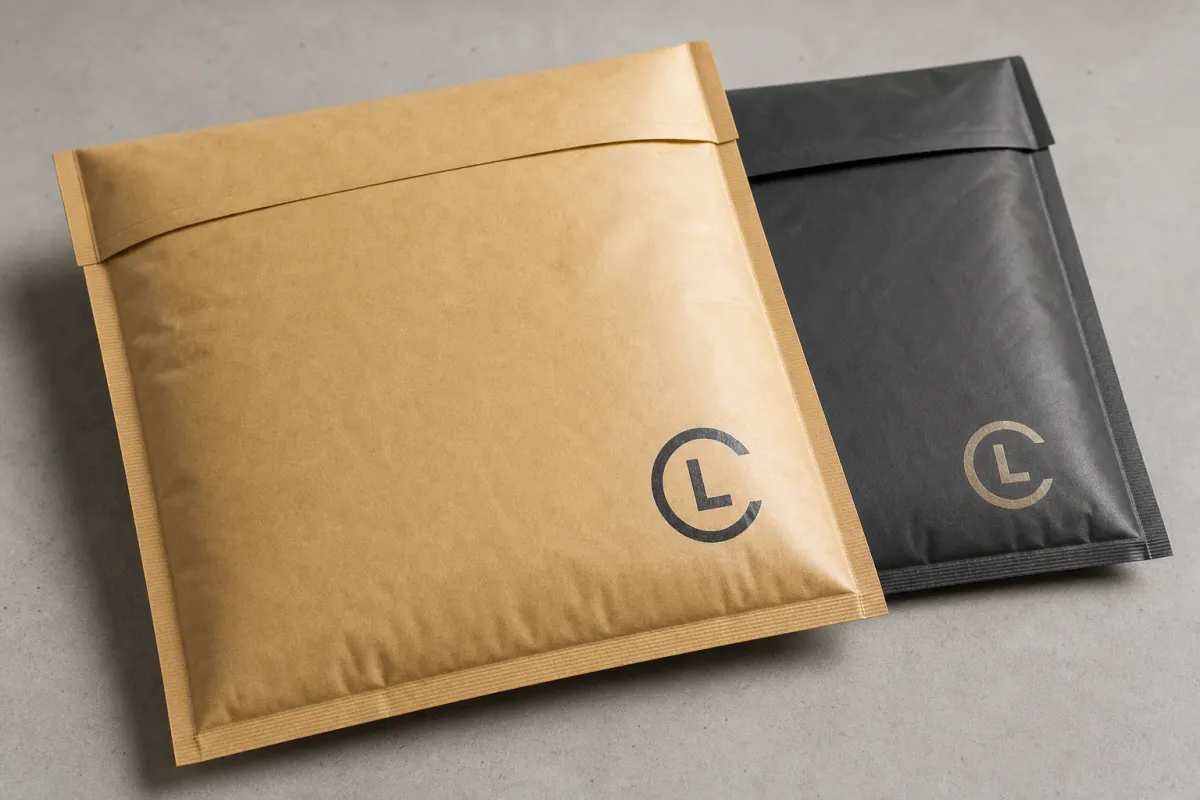
In practical terms, gift set padded mailers lead time is the total time from order confirmation to a finished, shippable product. That total covers the supplier’s internal work, proofing or sample approval, line scheduling, packing, and the time it takes to move the cartons to your warehouse or fulfillment center. It does not mean only the minutes or hours spent running the mailers on a machine, because production time is just one piece of the timeline.
That difference matters more with gift packaging than with a basic mailer. A standard shipper can often come from stock, while a gift set mailer usually needs a sharper unboxing feel, a closer fit for the contents, and a better match between the outer face stock, the cushioning layer, and the print finish. In other words, gift set padded mailers lead time grows when the order has to do more than protect a product. It has to carry the brand story too.
There is also a practical split between stock and custom work. Stock mailers move faster because the material is already on the shelf, while custom orders often need artwork setup, plate or file preparation, and a production slot. Short-run orders can move quickly if the supplier runs digital print and has the right base material in hand, but bulk orders often follow a different schedule because the factory balances run length, setup time, and carton packing efficiency.
From a buyer’s point of view, the safest way to think about gift set padded mailers lead time is as a chain of dependencies. If one link slips, the whole schedule shifts. A mailer can be simple in structure and still be slow to launch if the insert dimensions are not final, the artwork is still under review, or the cushioning material has to be ordered in. That is why the fastest quote usually starts with the cleanest spec sheet.
If you are still comparing packaging formats, it helps to look at broader options on our Custom Packaging Products page, or compare the simpler structure of Custom Poly Mailers against a padded gift mailer. That comparison often makes the tradeoff between presentation and gift set padded mailers lead time easier to see.
How Gift Set Padded Mailers Are Built and Decorated
A padded mailer has a few core parts, and each one can influence gift set padded mailers lead time. The outer layer is usually a paper face stock or film, depending on the look and the moisture resistance needed. Inside that shell sits the cushioning layer, which may be recycled fiber, bubble cushioning, corrugated padding, or another protective structure. Then there is the closure system, often a peel-and-seal adhesive strip, a tuck closure, or a tamper-evident strip if security matters. For gift presentation, some programs add a label panel, a custom sleeve, or a printed insert card so the mailer feels like part of the gift set rather than just the shipper around it.
The decoration method is where timing can separate one order from another. Flexographic printing is efficient for longer runs and simple graphics, but it usually requires plate preparation and a fixed run schedule. Digital printing often fits lower quantities or variable artwork better because it removes some setup steps, though the per-piece cost can be higher. Labels and sleeves can shorten the path to a finished look when the base mailer is already stocked, while stamping or foil branding can add a premium touch and introduce extra approval steps and material checks. Each of those choices changes gift set padded mailers lead time in a different way.
That is why the product brief matters so much. If the mailer is only a protective shipper, the workflow can stay fairly simple: select the base size, confirm the cushion type, approve the print, and move into production. If the mailer is part of the gift experience, the workflow gets broader. The supplier may need to confirm how the item opens, how the inner product sits, whether the closing flap hides the adhesive cleanly, and whether the printed colors align with the rest of the gift set.
Artwork setup is another place where time disappears quietly. A clean file in the right format can move quickly, but a file that needs resizing, color correction, or die-line cleanup can stall the job before the first sheet is printed. If the design uses spot colors, metallic ink, or a very tight brand match, color proofs may need another review cycle. That is not a flaw in the process; it is the reality of matching packaging to brand expectations. I have seen a job sit for days because one tiny insert dimension changed after proof approval, and nobody caught the ripple effect until the cartons were already being scheduled. In practice, the more the presentation matters, the more carefully gift set padded mailers lead time should be mapped out before the order is placed.
For buyers who care about transit performance and paper sourcing, two standards are worth keeping on the radar. The International Safe Transit Association explains transport test thinking at ista.org, and Forest Stewardship Council certification details are available at fsc.org. Those resources do not shorten gift set padded mailers lead time by themselves, but they do help you ask smarter questions about structure, durability, and material claims.
Gift Set Padded Mailers Lead Time Factors That Change the Schedule
Several variables can change gift set padded mailers lead time even when the product looks almost identical on two different quotes. Quantity is one of the biggest. A run of 1,000 pieces may look smaller and therefore faster, but if it requires a special setup on a line built for larger jobs, it can take longer than a 5,000-piece order that fits neatly into an existing schedule. Print complexity matters just as much. A single-color logo on a stocked mailer is a different task from a full-coverage design with multiple-pass registration, special finishes, and insert matching.
Material availability can be the deciding factor. If the right face stock, padding, or adhesive strip is already in the warehouse, the job can move. If not, the supplier may need to wait on paper, cushioning, or packaging cartons before the order can start. That waiting period is part of gift set padded mailers lead time, even though nothing visible is happening on the shop floor. Seasonal demand can also stretch the schedule. Holiday launches, subscription box resets, and promotional gift programs often compete for the same production slots, so a quote that looks fine in March may look tight in October.
MOQ, or minimum order quantity, deserves special attention. A lower MOQ can help a team test a design or launch a small gift program, but it may also mean a special run that does not fit neatly into a factory’s standard scheduling rhythm. A higher MOQ can lower unit cost, yet it may require more planning and more space in the production calendar. If the buyer wants a premium finish, a custom insert, or a special closure system, MOQ becomes even more important because the supplier has to decide whether the setup time is justified by the run size. That decision affects gift set padded mailers lead time more than many buyers expect.
Shipping location changes the picture as well. If the factory is close to the delivery point, transit may be a simple two- or three-day move. If the destination is farther away, or if the shipment must clear an additional handoff point, freight can add more days after production is complete. Split shipments can make the buyer feel like the order is moving faster because some cartons arrive early, but they also create more coordination and more room for error. If the gift set cannot be packed until all mailers are in hand, even a small delay can ripple through the whole program.
A practical way to think about gift set padded mailers lead time is to separate what the factory controls from what the buyer controls. The factory controls machine time, line changeovers, material procurement, and packing. The buyer controls artwork approval, sample signoff, final dimension confirmation, and shipping instructions. Most avoidable delays happen in that buyer-controlled half of the timeline, which is why a fast response on proofs can matter more than a rush fee.
For readers comparing structure options, packaging professionals often use trade association resources for general industry context, but the most useful habit is to ask for stage-by-stage timing rather than one vague estimate. That one habit usually reveals where gift set padded mailers lead time can be shortened and where it cannot.
Process and Timeline for Gift Set Padded Mailers Lead Time
A realistic gift set padded mailers lead time starts long before the first sheet is printed. The timeline usually begins with a spec review. At this stage, the supplier confirms size, closure style, print method, finish, quantity, destination, and any insert or cushioning requirement. If the buyer can supply a clean dimension sheet and artwork files upfront, this step may take only one to two business days. If the brief is incomplete, the back-and-forth can stretch much longer.
Next comes pricing and proofing. A quote can be fast when the specs are stable, but proofing often becomes the first real pause. The supplier may send a digital proof, a line drawing, or a physical sample, depending on how detailed the order is. A plain stock run may only need a file check, while a custom printed gift set can require proof approval on placement, color balance, and finish. This stage is often where gift set padded mailers lead time starts to split into a quick path and a slower path.
After proof approval, the order moves into scheduling. This is the part buyers do not always see, but it matters a great deal. The factory must place the job into a production window, confirm the material pull, and line up the right equipment or finishing station. If the order needs special paper, foam padding, die-cut insert components, or a secondary assembly step, scheduling can take more thought than the printing itself. For a standard custom run, production might start in several business days after approval. For a more complex gift program, the start date may be pushed out to protect other jobs already on the line.
Once production starts, the run itself may be quick. A straightforward print-and-fold job can move through manufacturing in a short window, then go to inspection and packing. Final packaging of the finished mailers still matters because gift-set buyers usually want clean cartons, accurate counts, and clear labeling. The last thing anyone wants is a beautiful product that arrives mixed by size or packed too loosely for efficient fulfillment. When the box count, pallet build, or carton labeling is not clear, gift set padded mailers lead time gets longer on the back end.
Freight is the final piece. Air freight can speed up delivery but increase cost sharply. Ocean or ground freight is more economical for larger programs but adds transit time, and that transit time should never be confused with the factory’s production window. A buyer may say the order took three weeks, but if two of those weeks were freight, then the actual gift set padded mailers lead time at the supplier was shorter than the calendar made it look.
Here is a simple way to map the difference between standard and custom jobs:
- Stock, unprinted mailers: often 3-7 business days if inventory is available and freight is straightforward.
- Custom printed mailers: often 10-20 business days after proof approval, depending on print method and quantity.
- Gift-ready mailers with inserts or premium finishes: often 15-30 business days when the project includes added assembly or special sourcing.
A basic example helps. A standard order of 2,000 plain padded mailers with a simple adhesive closure may be quoted, approved, and produced fairly quickly if the base material is in stock. A custom order of 5,000 branded gift set mailers with a printed inner panel, special color match, and a custom insert card will almost always take longer because the supplier has more steps to clear before release. In both cases, the phrase gift set padded mailers lead time sounds simple, but the timeline behind it is built from many separate decisions.
Gift Set Padded Mailers Lead Time, Cost, Pricing, and MOQ
Speed and price are tied together more tightly than many buyers want to admit. When gift set padded mailers lead time has to be shortened, the cost usually rises because the supplier has to rearrange scheduling, source material faster, or choose a production path with more labor per unit. If the order can sit in the queue and use existing stock, pricing is often better. If the order needs a custom print, a tight turnaround, or a special finish, the quote usually climbs. That is not a penalty; it is the actual cost of compressing work into fewer days.
For context, plain stock padded mailers can often land in a lower per-unit range, especially at higher quantities. Custom printed mailers sit in the middle. Premium gift-oriented mailers with inserts, special closures, or matched presentation details can land higher still. A practical range for many programs might look like this at common order sizes:
| Option | Typical Unit Cost | Common Lead Time | Best Fit | Main Tradeoff |
|---|---|---|---|---|
| Stock unprinted padded mailers | $0.25-$0.60 | 3-7 business days | Fast replenishment and simple shipping | Limited branding control |
| Custom printed padded mailers | $0.45-$1.10 | 10-20 business days | Branded mailers with moderate volume | Proofing and setup time |
| Premium gift set mailers with inserts | $0.85-$2.25 | 15-30 business days | Gift launches and presentation-focused sets | More steps, more approval points |
Those numbers are planning figures, not guarantees. Material choice, decoration method, and freight method can move them up or down, and a rush order can change the price quickly. Still, the table makes the relationship between cost and gift set padded mailers lead time easier to see. If the buyer wants soft-touch lamination, a metallic accent, or a closely matched custom color, the order may need an additional approval cycle. If the supplier uses digital print on a stocked base, the order may be faster but still cost more per piece than a higher-volume flexographic job. In practice, the shortest schedule is rarely the cheapest one.
MOQ changes the equation too. A small test run may cost more per unit because the setup work is spread over fewer pieces. A larger order may reduce the unit price, but it can also require a more deliberate slot on the production calendar. That matters if the launch date is fixed, because a low unit price is no win if the boxes arrive after the gift set has already been assembled or shipped. Smart buyers look at gift set padded mailers lead time and pricing together, not separately.
Quote clarity is one of the simplest cost-control tools available. If the supplier receives vague dimensions, partial artwork, or an unclear closure spec, they may have to revise the quote later. Each revision invites delay. The cleaner the spec, the fewer surprises in the final number, and the more stable gift set padded mailers lead time becomes. It is far easier to compare two complete quotes than to compare two rough estimates that hide different assumptions.
If the order also touches sustainability requirements, ask whether the paper components are FSC-certified and whether the design avoids unnecessary material use. That kind of question does not always change gift set padded mailers lead time, but it does help align the quote with the actual buyer brief instead of forcing a redesign later.
Common Mistakes That Stretch Gift Set Padded Mailers Lead Time
The biggest delays are usually not exotic. They are ordinary mistakes that show up again and again. Incomplete specs are first on the list. If the buyer sends a rough size, a loose quantity range, or a screenshot instead of print-ready artwork, the supplier has to pause and ask for more information. That pause sounds small, but it can push gift set padded mailers lead time by days because the job cannot be released until the missing pieces arrive.
Artwork issues are another common problem. Files in the wrong format, missing fonts, low-resolution images, or unclear color callouts all create extra review time. If the design changes after the proof has been sent, the supplier may need a fresh proof cycle, and that can move the job out of its original slot. The same risk applies to dimension changes after signoff. A small alteration to the insert or cushion thickness can force a new layout, a new sample, or a recheck of carton counts. For a gift launch, that is enough to stretch gift set padded mailers lead time in a way that feels avoidable in hindsight.
Another issue is choosing a supplier based only on unit price. A very low quote can look attractive until the buyer realizes the job needs a special setup or a long queue wait because the factory is booked. In that case, the packaging is cheap but the schedule is expensive. The real decision should be based on the combined view of unit price, MOQ, proofing time, and production window. A supplier with a slightly higher quote but a cleaner lead time may actually save the launch.
Insert changes are especially risky. Gift sets tend to evolve, and one small component swap can ripple across the whole packaging plan. If the mailer was sized to hold a certain insert tray, and that tray changes at the last minute, the entire pack-out logic can change. The result is a new proof, a new fit check, and sometimes a new production window. That is why gift set padded mailers lead time often gets longer not because the mailer itself is complex, but because the surrounding gift components are still moving.
Freight is the last thing people underestimate. A good production schedule means little if the cartons miss the deadline for assembly or fulfillment. Some buyers assume that once the order leaves the factory, the work is finished. It is not. If the mailers are needed for a kit build, the transit window has to be built into the calendar from the start. Otherwise, the order may be technically complete and still operationally late. That is how gift set padded mailers lead time turns into a bottleneck.
Here is a quick practical checklist of delay triggers:
- Missing finished dimensions or insert dimensions
- Artwork sent in a non-editable or low-resolution format
- Late approval on proofs or physical samples
- Changing print colors after the quote has been issued
- Adding a new finish, closure, or cushioning layer after scheduling
- Ignoring freight days while planning the gift set assembly date
If you avoid those mistakes, gift set padded mailers lead time becomes much easier to manage, even on a custom order.
Expert Tips and Next Steps for a Faster Order
The cleanest way to shorten gift set padded mailers lead time is to build a complete spec sheet before asking for quotes. Include the finished dimensions, quantity, print method, coating or finish, closure style, shipping destination, and target in-hand date. If the mailer needs to work with an insert tray, bottle, candle, apparel item, or multi-piece gift kit, include those dimensions too. The more the supplier knows early, the less likely the order is to drift after the quote is issued.
Ask for lead time by stage, not just one total number. A single total can hide where the schedule is tight. A stage-by-stage response tells you whether the slow point is proofing, material sourcing, scheduling, or freight. That is useful because not every delay can be solved the same way. If proof approval is the choke point, the fix is internal. If material procurement is the choke point, the fix may be a different base stock. If production is the choke point, the fix may be a simpler decoration method. That is the most practical way to manage gift set padded mailers lead time without guessing.
For high-value gift programs, a sample or pilot run can be worth the extra time. A small pilot lets the buyer see how the mailer opens, how the print reads at hand, and whether the cushioning layer feels right in real use. It also reveals problems that are hard to spot on screen, such as a flap that feels too stiff, an insert that shifts in transit, or a closure that does not hold as cleanly as expected. Yes, a pilot adds a step, but it can prevent a larger delay later if the first full run fails to meet the brand standard. In that sense, a pilot can protect gift set padded mailers lead time rather than hurt it.
One more practical tip: compare the quote and the calendar together. A supplier may offer a lower unit price and a longer schedule, while another may offer a slightly higher cost and a much safer delivery window. If the gift launch date is fixed, that second option can be the better business decision. The goal is not to chase the cheapest mailer; the goal is to land the right mailer at the right time. From a packaging operations point of view, that is usually the real measure of success for gift set padded mailers lead time.
Before you place the order, freeze the artwork, confirm the MOQ, verify the finish, and leave a buffer for freight and internal receiving. If you can do those four things early, gift set padded mailers lead time stops being a surprise and starts becoming a planning tool. That is the difference between reacting to packaging and managing it.
How long is a typical gift set padded mailers lead time for a custom order?
Stock, unprinted mailers can often move faster because the supplier is not waiting on a custom print schedule, while a custom order usually needs more time for proofing, setup, and line placement. For a branded gift program, gift set padded mailers lead time often falls in the 10-20 business day range after proof approval, and it can run longer if there are inserts, special finishes, or material sourcing issues. The most accurate answer comes from the exact spec sheet, quantity, and shipping destination, not a generic estimate.
What affects gift set padded mailers lead time the most?
Quantity and print complexity usually have the biggest impact because they change machine setup and run length. Material availability can slow the order if the preferred paper, padding, or closure system is not already in stock. Approval timing matters too, since delayed artwork signoff or sample approval pushes the production start date back and extends gift set padded mailers lead time before the factory even begins the run.
Can I reduce gift set padded mailers turnaround without hurting quality?
Yes, by locking the size, artwork, and finish early so the supplier can schedule the order without rework. Choosing a simpler decoration method or a stocked material can shorten the path to production. Giving the factory a realistic ship date and fast feedback on proofs helps prevent idle time, which is one of the easiest ways to keep gift set padded mailers lead time under control.
Does MOQ change both gift set padded mailers pricing and lead time?
Yes, MOQ often changes the economics because smaller runs may carry higher setup cost per unit. A larger MOQ can lower unit cost, but it may also require more production planning and a longer slot on the schedule. Ask whether the supplier can offer a stock option, a pilot run, or a tiered quote if your quantity is flexible, because that often gives you more control over gift set padded mailers lead time and budget at the same time.
What should I send to get an accurate quote and lead time?
Send finished dimensions, quantity, artwork files, material preferences, and any insert or cushioning requirements. Include the in-hand date, destination, and whether the order must ship in one lot or multiple drops. If possible, include a reference photo or sample so the supplier can match the gift set presentation more precisely and give you a more realistic gift set padded mailers lead time.
Plan the order with the calendar first, the quote second, and the presentation details third, because that order of thinking usually prevents the schedule from slipping. If the spec is clear, the approvals are fast, and the freight is built into the plan, gift set padded mailers lead time becomes a manageable part of the launch instead of the thing that holds everything up.


