Gift Set Shipping envelopes material guide decisions often look easy on a spreadsheet, then get messy the moment a customer lifts the parcel and finds a scuffed corner, a bent edge, or a little moisture mark on the face of the pack. That is the real test. A gift set can arrive intact and still feel underwhelming, which is why a gift set shipping envelopes material guide is really a guide to perceived value, not just a spec sheet.
For a packaging buyer, the envelope is not only a transport layer. It is the first physical promise the brand makes, and sometimes the only one the customer remembers. In a disciplined fulfillment operation, the material choice affects protection, print quality, dimensional weight, packing speed, and complaint volume in ways that stay hidden until the returns start to stack up.
This gift set shipping envelopes material guide stays practical. It focuses on film structure, thickness, finish, Cost, and Production speed so you can choose a poly mailer that performs in ecommerce shipping without looking like a rushed afterthought. Teams comparing Custom Poly Mailers, Custom Packaging Products, and even Custom Shipping Boxes usually find that the material question is where the real tradeoffs begin.
Gift Set Shipping Envelopes Material Guide: Why Material Changes First Impressions
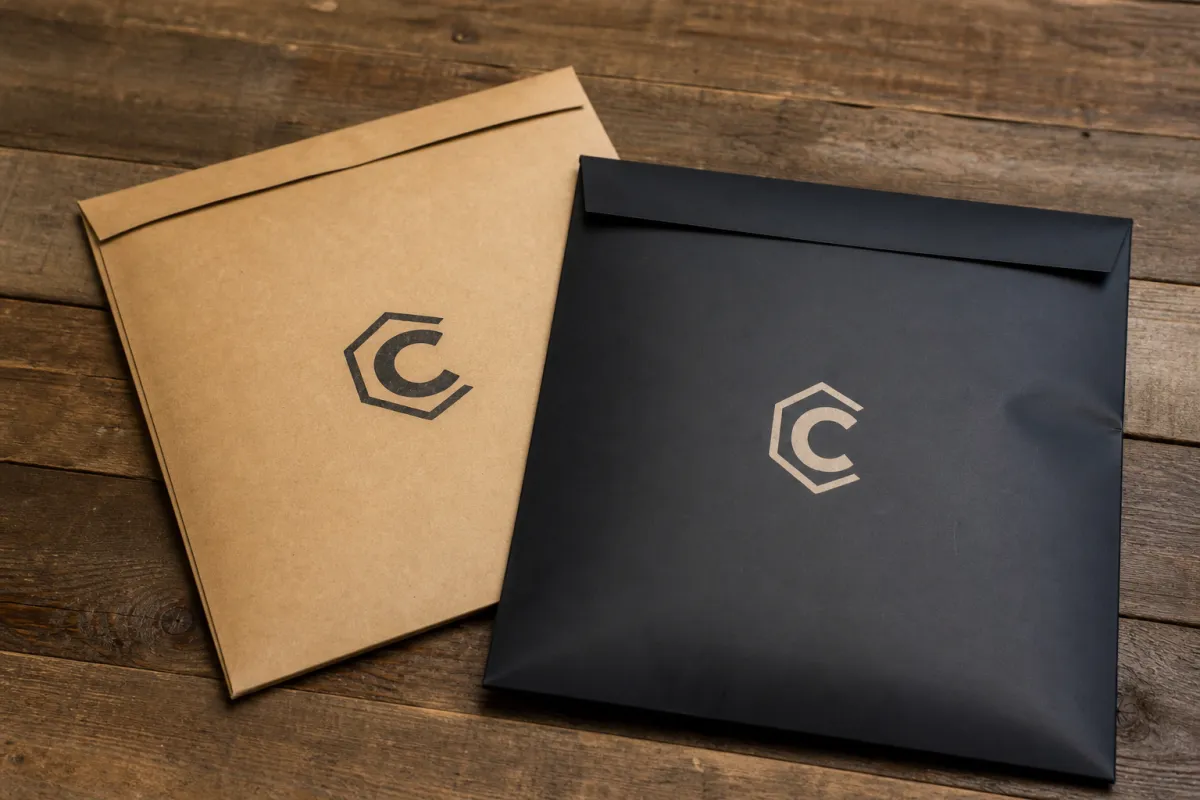
A gift set shipping envelopes material guide starts with a simple truth: customers judge the outside before they trust the inside. A clean, well-kept envelope makes the contents feel more considered. A creased, cloudy, or scuffed envelope makes the same gift set feel cheaper, even when the product itself is fine. That reaction is not fluff. It is merchandising psychology tied directly to transit packaging.
Picture the opening sequence. The parcel comes off a porch, sits in a warehouse line, or lands on a desk at home. The outer envelope may be the only surface the customer touches before the reveal. A gift set shipping envelopes material guide should look at how the film handles friction, pressure, and light humidity, not only whether it survives the trip in theory.
Gift set shipping envelopes can mean several things in the poly mailer context: outer mailers for curated kits, padded-envelope alternatives for lighter items, and branded shipping sleeves that protect and present bundled goods. The structure is usually simpler than corrugated cardboard or kraft paper mailers, but the expectations are higher because gift sets depend on presentation as much as containment. That is why this gift set shipping envelopes material guide keeps returning to appearance and protection together.
One detail buyers often overlook is that the envelope may be the first and last physical touchpoint the customer sees from the brand. If the packaging feels flimsy, the gift feels less premium. If the seal looks uncertain, the customer starts wondering whether the contents were protected properly. That concern can turn into support tickets even when nothing inside was damaged. I have seen that happen more than once, and it is never a great look.
"A mailer can protect the product and still fail the brand test. The reverse is also true: a beautiful mailer that splits at the seam creates a more expensive problem."
The strongest teams frame the gift set shipping envelopes material guide around the post-delivery experience, not only the shipping rate. Lower-cost envelopes can make sense for lightweight kits and short routes. Premium bundles, especially those with cosmetic surfaces, hard edges, or small accessories that shift in transit, need an outer material that does more than stop tears. It has to stay visually stable long enough for the brand to land its message.
That is also where shipping materials selection becomes a business decision rather than a design preference. If the envelope reduces perceived value, more customers will ask for replacements, and margin erodes faster than a slightly better film ever would. That is the hidden math behind a good gift set shipping envelopes material guide.
How Gift Set Shipping Envelopes Materials Work in Poly Mailers
To use a gift set shipping envelopes material guide well, you need to understand what the mailer is made of and how the parts work together. A poly mailer is not just one sheet of plastic. It is usually a film system with multiple layers, a sealed seam, a closure strip, and sometimes a printed outer face made to carry branding without rubbing off in fulfillment.
Low-density polyethylene, or LDPE, remains common because it offers flexibility and decent puncture resistance at a manageable cost. Co-extruded film adds another layer of control, often pairing an outer print-friendly surface with an inner layer tuned for strength or stretch. For gift sets, that matters. A film that stretches a little can absorb movement better than one that cracks under stress, and a controlled seam can stop a small tear from running across the whole pack. That is one reason a gift set shipping envelopes material guide should compare construction, not only price per thousand.
Recycled-content blends are appearing more often in ecommerce shipping, especially where retailers want visible sustainability claims. Recycled film is not automatically weaker, but it is not automatically equal either. Surface finish, opacity, seal consistency, and print clarity can shift with the resin mix. If the brand uses a recycled-content mailer, the gift set shipping envelopes material guide should include side-by-side samples under warehouse lighting, because a proof that looks fine in the office can look dull or uneven in production.
Finish matters more than many buyers expect. Matte finishes hide fingerprints and small abrasions better, which helps a lot in order fulfillment. Glossy finishes can look richer on a brand table, yet they may reveal scuffs sooner. Opaque films block the contents from showing through, which protects perceived value and helps when a gift set includes mixed components. Transparent or semi-clear options can work, but only if the contents are intentionally arranged. A good gift set shipping envelopes material guide should ask whether the film is doing visual merchandising or just transport.
Transit behavior is where the differences show up. Stretch helps when parcels are squeezed into bins. Tear resistance matters when sharp corners press against the wall of the envelope. Moisture protection helps labels, inserts, and outer branding survive rain or condensation. Tear propagation is one of the biggest hidden risks; a tiny nick at the edge can travel fast if the film is too brittle. If contents slide around, the material also has to limit abrasion so printed graphics do not wear through before delivery.
Different gift set types need different material behavior:
- Apparel bundles usually do well with lighter poly mailers because the contents are soft and compressible.
- Beauty kits often need stronger seals and more opacity, especially if bottles or jars are inside.
- Small hard goods need better puncture resistance and often a slightly thicker gauge.
- Mixed gift sets with both soft and rigid components benefit from co-extruded films and reinforced seams.
That is why a gift set shipping envelopes material guide is not interchangeable with a generic mailer buying checklist. It has to account for how the product behaves inside the pack. A soft scarf and a boxed candle do not ask the same thing from the film, and a supplier who treats them as the same package class will usually miss something important.
For teams comparing this category with adjacent formats, the tradeoff usually sits between poly mailers and corrugated cardboard. Corrugated cardboard gives more structure and better crush resistance, while kraft paper can support a cleaner recyclable story for certain buyers. Poly mailers, though, are lighter and often lower in dimensional weight, which can improve shipping economics. The gift set shipping envelopes material guide sits right in that middle ground.
Gift Set Shipping Envelopes Material Guide: Key Factors to Compare Before You Order
The strongest gift set shipping envelopes material guide is built around comparison points that reflect how packages actually move through the channel. Start with item weight, surface sensitivity, fragility, shipping distance, and whether the envelope must also serve as a branding surface. Those five variables explain most of the failures I see in packaging reviews.
Thickness is only one line on the spec sheet. A thinner co-extruded film with good seal integrity can outperform a thicker film that splits at the side seam. That sounds backward until you have seen enough production runs. The gift set shipping envelopes material guide should therefore ask for film gauge, seam type, closure quality, and print method in the same conversation. Otherwise the buyer ends up comparing things that do not line up.
Print and appearance carry real weight too. A mailer with rich color but poor opacity can look premium on the outside and reveal clutter inside. Uneven color consistency can make a branded mailer look cheap even when the film itself is strong. Ink adhesion matters as well; if the print rubs during order fulfillment, the whole package loses polish before it leaves the building. The best gift set shipping envelopes material guide treats aesthetics as a functional requirement, not a finishing touch.
Sustainability and compliance add another layer of detail. Some retailers ask for recycled content documentation, while others care more about curbside recyclability or FSC-certified paper inserts inside the pack. If the program uses recycled resin, the supplier should be able to explain the claim clearly and provide traceability where needed. For paper-based collateral, FSC certification from FSC can support a documented sourcing story. For distribution and transport performance, many teams look to guidance from the International Safe Transit Association and use those methods as a testing reference.
Here are the core buyer questions I would put into any gift set shipping envelopes material guide before sending a quote request:
- What is the exact load weight, including inserts and inner packaging?
- Does any item inside have sharp corners, hard edges, or liquid content?
- Will the package travel regionally, nationally, or across multiple handoffs?
- Does the envelope need premium print quality, full coverage, or a matte look?
- Is the customer expected to retain or reuse the outer pack?
That last question matters more than it seems. Reuse expectations can push the buyer toward stronger films, cleaner seals, and better opacity because the envelope may be kept for gifting, storage, or returns. A gift set shipping envelopes material guide that ignores reuse is leaving value on the table.
From a technical angle, some teams use basic in-house tests before committing to a production run. A practical test plan might include a 36-inch drop, seam pull checks, rub testing on the print face, and a short moisture exposure trial. Those steps are not the same as a certified distribution program, but they are enough to catch obvious failures before a large order goes in. The best gift set shipping envelopes material guide makes room for that kind of proofing discipline.
Gift Set Shipping Envelopes Material Guide: Cost, Pricing, and MOQ Tradeoffs
Price is where many sourcing conversations begin, and it is exactly where they can go wrong. A gift set shipping envelopes material guide should break cost into resin grade, film thickness, print coverage, adhesive upgrades, custom sizing, and any protective extras such as tamper-evident seals. Each of those inputs changes the final unit cost, and the cheapest quote rarely includes all of them cleanly.
For example, at around 5,000 units, a basic unprinted mailer in a standard gauge may land roughly in the $0.12-$0.20 per unit range, depending on size and supplier structure. Move into branded co-extruded film with higher opacity or heavier print coverage, and the range can shift to about $0.18-$0.28 per unit. Premium constructions, custom sizing, or specialty finishes can push above that. A gift set shipping envelopes material guide that gives realistic pricing bands is far more useful than a single quote with no context.
MOQ changes the picture too. A low unit price can become expensive if it forces you to overbuy, hold inventory longer than planned, or slow replenishment because you cannot reorder flexibly. There is a hidden cost in capital tied up on the shelf. In ecommerce shipping, that matters because demand can swing with promotions, seasonality, and channel mix. The best gift set shipping envelopes material guide includes procurement risk, not just unit economics.
To make the tradeoffs easier to read, here is a practical comparison:
| Material Tier | Typical Gauge | Look and Feel | Approx. Unit Cost at 5,000 | Best Use Case |
|---|---|---|---|---|
| Budget LDPE mailer | 2.0-2.5 mil | Simple, functional, basic opacity | $0.12-$0.18 | Light gift sets with soft contents and low break risk |
| Mid-tier co-extruded mailer | 2.5-3.0 mil | Cleaner print face, better seal strength, stronger presence | $0.18-$0.28 | Most branded gift sets, especially mixed or boxed items |
| Premium reinforced mailer | 3.0-4.0 mil | Higher opacity, better abrasion resistance, stronger premium feel | $0.28-$0.45 | Fragile kits, long routes, higher-value brand experiences |
That table is not a promise. It is a working range. Freight, artwork, and material market conditions can push the number up or down. A gift set shipping envelopes material guide should always ask whether the price includes setup, plate charges, freight assumptions, and palletization. Those details often explain why two quotes that seem similar are actually far apart.
There is also a strategic cost comparison with other shipping materials. Corrugated cardboard usually costs more per unit but can reduce damage on rigid products. Kraft paper mailers can appeal to brands that want a paper-forward message and easier recycling narratives. Poly mailers often win on dimensional weight, especially for lighter kits, which can cut transportation cost across large volumes. So the right gift set shipping envelopes material guide does not ask, "Which is cheapest?" It asks, "Which option creates the lowest total landed cost for this specific gift set?"
For a buyer managing promotional kits, that distinction matters a lot. If a stronger film cuts replacement shipments by even 1% to 2%, it can justify a slightly higher unit cost very quickly. The same logic applies when print quality reduces the need for manual bagging or extra protective wraps inside the pack. A thoughtful gift set shipping envelopes material guide makes those downstream savings visible.
Step-by-Step Process and Timeline for Choosing the Right Mailer
Choosing the Right material gets easier when the process is structured. A strong gift set shipping envelopes material guide usually follows the same path: define the gift set, confirm dimensions, identify protection needs, shortlist materials, test samples, and lock the final production plan. That sequence sounds simple because it is simple. The difficulty comes from skipping a step and then trying to repair the mistake in production.
Start with the gift set itself. Measure the largest dimension, then add clearance for inserts, closures, and any movement inside the pack. If the contents are boxed, note the edge profile and whether the box surfaces scuff easily. If there are bottles, jars, tools, or other hard components, the envelope needs more puncture resistance. A good gift set shipping envelopes material guide should ask for a sample of the real product, not only a dimension sheet.
Next, create a short list of two or three material options. That keeps the decision focused. One option can be budget-oriented, one can be mid-tier, and one can be premium. This kind of tiering helps because it turns the choice into a comparison of outcomes rather than a debate over taste. It also keeps procurement and design talking about the same thing. For brands already using Custom Poly Mailers, this is the point where an updated material spec can improve both protection and brand feel.
Sample testing should use real product loads and a realistic handling scenario. I would look for three things first: seal integrity, abrasion resistance, and moisture tolerance. Then I would review print quality, especially around folds and seams. If the program has a lot of manual fulfillment, the sample should be passed through the same station flow used in real operations. A gift set shipping envelopes material guide is only as strong as the test conditions behind it, and that part gets missed more often than it should.
Typical timing varies, but a useful benchmark is often 3-5 business days for sampling, 2-4 business days for artwork proofing, 10-15 business days for production after approval, and additional freight time depending on origin and destination. If the order needs custom sizing or special print treatment, that schedule can stretch. The delay usually shows up in proof revision rather than in the press run itself. A practical gift set shipping envelopes material guide helps teams budget time for approvals instead of assuming every supplier can run immediately.
Here is a compact decision workflow that works well in procurement:
- Gather product dimensions, weight, and fragility details.
- Choose two or three candidate materials with distinct performance levels.
- Request samples with the actual print method and closure type.
- Run drop, rub, and seal tests using real gift sets.
- Approve one spec sheet and freeze the bill of materials.
That workflow reduces debate. It also keeps the gift set shipping envelopes material guide rooted in evidence. From a packaging buyer's point of view, that is the difference between a decision and a guess.
Common Mistakes When Sourcing Gift Set Shipping Envelopes
The most common error in any gift set shipping envelopes material guide is choosing by price alone. A low-cost envelope with weak seals, thin side seams, or poor opacity can create more expense than it saves. If returns rise, replacements increase, and customer service spends time handling complaints, the apparent savings disappear quickly. Cheap shipping materials are only cheap if they do the job.
Another mistake is mismatching the envelope to the gift set. Delicate items, liquid-filled kits, and sharp-edged products all demand different material behavior. A scent set with glass bottles needs more puncture resistance than a soft apparel bundle. A magnetized accessory may shift in transit and abrade the film. A gift set shipping envelopes material guide that does not distinguish among those cases will miss obvious failure modes.
Print quality is also easy to underestimate. Heavy graphics near fold lines can crack or look uneven if the ink system is not suited to the film. Adhesive failure during warehouse handling is another hidden risk, especially if the closure strip is weak or contaminated by dust. If the final customer sees rubbed artwork or a half-open envelope, the brand loses credibility before the gift set is even touched. That is why any serious gift set shipping envelopes material guide should include handling tests, not only a visual proof.
Skipping sample testing is the mistake that causes the most regret. This becomes especially risky when switching suppliers, changing film blend, or moving to a recycled-content material. The sample may look fine in the office and fail under repeated handling, stacking pressure, or a damp delivery route. In my experience, the phrase gift set shipping envelopes material guide should almost always be paired with the words "test before scale."
There is also a packaging-system mistake that shows up in mixed ship programs. Some teams optimize the mailer in isolation and forget the secondary pack. If the gift set ships with corrugated cardboard inserts, bubble wrap, or kraft paper fillers, the material should be selected in context. A mailer that is perfect alone may be too weak once the contents are boxed internally. That is why multi-component transit packaging needs a full-system view.
Finally, teams sometimes ignore documentation. Retailers may ask for proof of recycled content, material composition, or compliance information before approving a pack change. If the supplier cannot support the claim, the buyer inherits the risk. A disciplined gift set shipping envelopes material guide helps avoid that problem by asking for spec sheets, claim support, and test references before the first PO is cut.
Expert Tips and Next Steps for Shortlisting Materials
If I had to condense the best advice into one sentence, it would be this: a gift set shipping envelopes material guide works best when it compares performance, appearance, and landed cost side by side. Not separately. Side by side. That is where the real tradeoffs show up.
One practical method is to request three samples, each representing a different tier. The first should be the lowest-cost functional option. The second should be the likely production target. The third should be the premium version you would choose if the brand story or damage risk justified it. Then build a scorecard and rate each on protection, visual appeal, sustainability, and total landed cost. That approach makes the gift set shipping envelopes material guide useful to operations, creative, and finance at the same time.
Another good habit is to document exact pack dimensions, shipping method, acceptable cosmetic marks, and required print coverage before asking for a final quote. Ambiguity causes most pricing confusion. A supplier cannot price a clear result if the spec is vague. This is especially true for gift sets that travel across multiple channels, because ecommerce shipping can shift from postal sortation to parcel carrier handling inside one program. A good gift set shipping envelopes material guide should reduce that ambiguity early.
For brands that want a cleaner brand lift, I usually suggest looking at the envelope as part of a larger packaging system. If the outer mailer is doing the heavy lifting, the inner inserts can be simpler. If the outer pack is plain, the internal presentation may need more work. That balance can change the whole budget. It is why some companies eventually move from mailers to Custom Shipping Boxes, while others stay with poly because the lighter weight and lower dimensional weight fit the model better. The right answer depends on the product, the route, and the customer expectation. A gift set shipping envelopes material guide should make that call visible instead of hidden.
Here is a clean short-listing process that works well:
- Pick the top two material constructions that meet your protection target.
- Ask for print and unprinted versions if branding is a key requirement.
- Test with actual gift sets, not substitute items.
- Review lead time, MOQ, and freight assumptions together.
- Approve the option that performs best at acceptable cost, not just the lowest quote.
For teams building a broader packaging program, the next step is to pair this gift set shipping envelopes material guide with a wider sourcing review across shipping materials. That is where the subtle savings hide: slightly stronger film, cleaner print, fewer replacements, less damage, and fewer customer complaints. If the envelope does its job, the brand gets credit it may never see directly. If it fails, everyone notices immediately.
That is the practical reason I keep coming back to the gift set shipping envelopes material guide. It is not just about buying poly mailers. It is about choosing the outer material that protects the product, carries the brand, and keeps fulfillment predictable from carton to doorstep.
FAQ
What is the best material for gift set shipping envelopes?
For most lightweight gift sets, a co-extruded poly film offers a strong balance of tear resistance, moisture protection, and cost. In a gift set shipping envelopes material guide, I would usually start there before moving up or down the spec ladder. If the contents have hard edges or higher abrasion risk, a thicker or reinforced construction is safer. If branding matters, compare matte and opaque finishes to see which hides handling marks better.
Are poly mailers better than paper for gift set shipping envelopes?
Poly mailers usually win on moisture resistance, puncture resistance, and lower shipping weight. Paper can work for rigid, low-risk items, but it often needs more padding and may show wear sooner in rough transit. A good gift set shipping envelopes material guide should compare the full package system, not just the outer layer. For premium gift sets, poly often delivers a cleaner unboxing experience if the finish and print quality are chosen carefully.
How thick should gift set shipping envelopes be?
Thickness should match the load, not the category. Lightweight kits may be fine in thinner film, while heavier sets need a stronger gauge. A gift set shipping envelopes material guide should rely on sample testing for seam strength, stretch, and puncture resistance instead of gauge alone. If the package travels long distances or passes through automated sorting, a sturdier material is usually the safer choice.
Can I print branding on gift set shipping envelopes without hurting performance?
Yes, but ink coverage, curing method, and print placement matter. Avoid piling heavy graphics near seals or fold lines where flexing can cause cracking or adhesion issues. In a gift set shipping envelopes material guide, I would always ask for print samples and rub testing so the artwork can be checked against normal warehouse handling. Done well, branding improves the package without reducing performance.
How do I compare quotes for gift set shipping envelopes material?
Compare the exact film spec, dimensions, closure type, print coverage, and MOQ before you focus on the unit price. Check whether freight, setup, and artwork charges are included, because hidden costs can change the real total dramatically. A disciplined gift set shipping envelopes material guide treats sample quality and lead time as part of the comparison, not price alone.
If you are narrowing down options for your next launch, use this gift set shipping envelopes material guide to shortlist two or three constructions, sample them with real products, and finalize the spec only after testing. That is the cleanest path to a mailer that protects the product, supports the brand, and keeps fulfillment on schedule.


