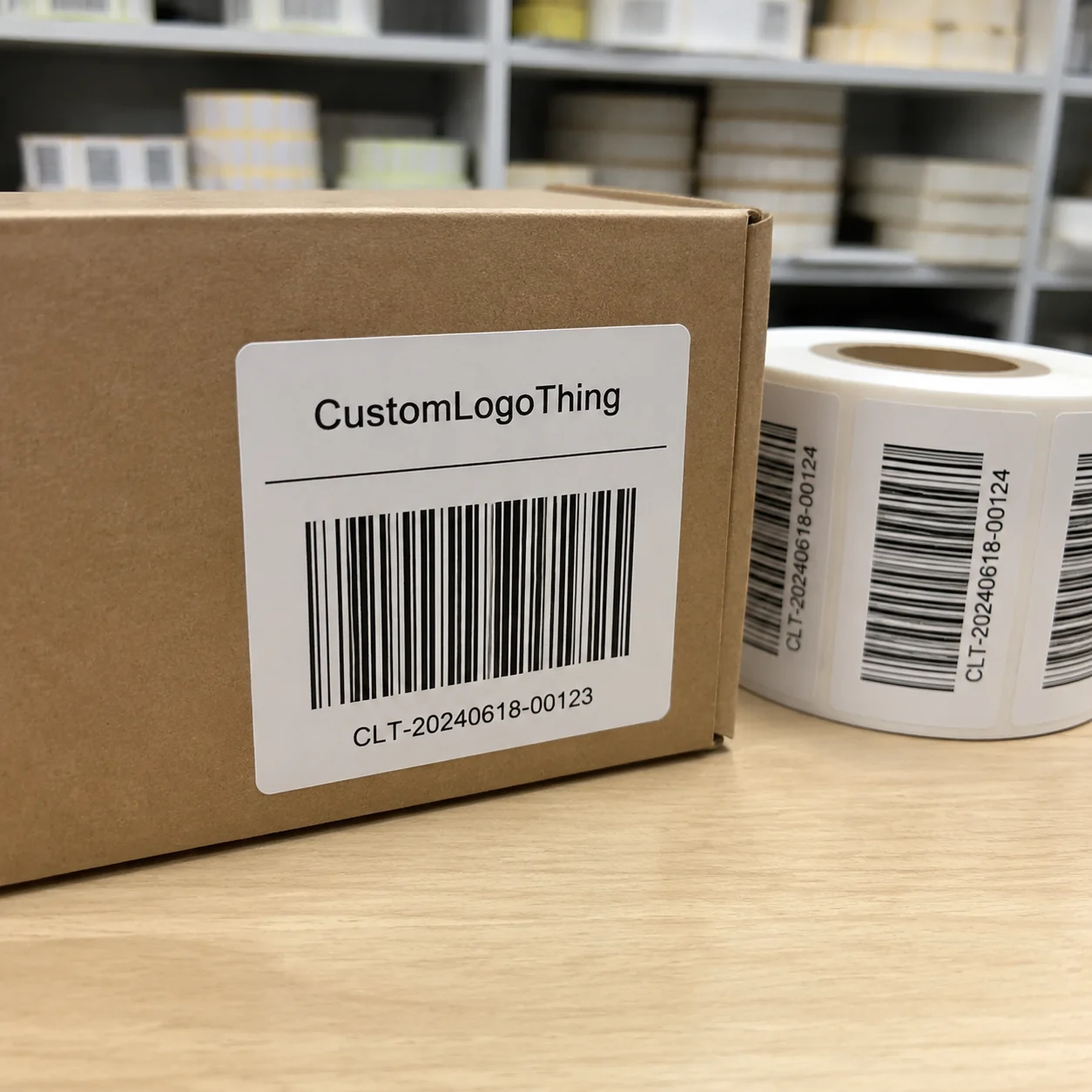
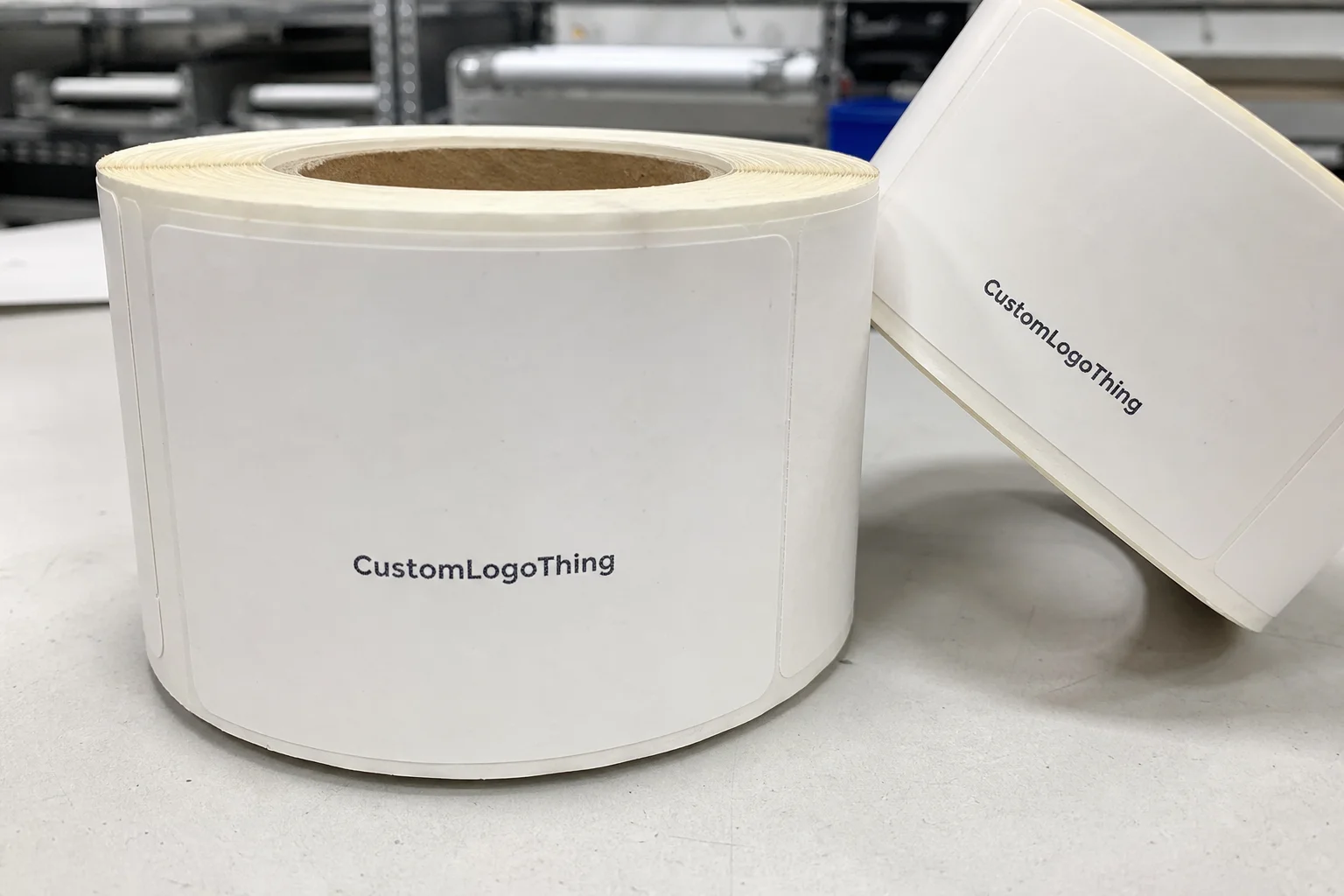
Buyer Fit Snapshot
| Best fit | green packaging supplier selection for packaging buyers comparing material specs, print proof, MOQ, unit cost, freight, and repeat-order risk where brand print, material, artwork control, and repeat-order consistency matter. |
|---|---|
| Quote inputs | Share finished size, material target, print colors, finish, packing count, annual reorder estimate, and delivery region. |
| Proofing check | Approve dieline scale, logo placement, barcode or warning zones, color tolerance, and any recyclable or compostable wording before bulk production. |
| Main risk | Vague material claims, crowded artwork, or missing packing details can create delays even when the unit price looks attractive. |
Fast answer: Green Packaging Supplier Selection: Proof, MOQ, Capacity, and Lead Time should be specified like a repeatable production item. The safest quote includes material, print method, finish, artwork proof, carton packing, and reorder notes in one written spec.
What to confirm before approving the packaging proof
Check the product dimensions against the actual filled item, not only the sales mockup. Ask for tolerance on folds, seals, hang holes, label areas, and retail display edges. If the package carries a logo, QR code, warning copy, or legal claim, reserve that space before decorative graphics fill the panel.
How to compare quotes without losing quality
Compare board or film grade, print process, finish, sampling route, tooling charges, carton quantity, and freight assumptions side by side. A lower quote is only useful if the supplier can repeat the same color, closure quality, and packing count on the next order.
Why This Green Packaging Supplier Guide Matters
While counting 42 tons of post-consumer kraft stacked on Custom Logo Things' Shenzhen line in the Longhua district—each pallet costing about $950 to ship by sea to Los Angeles and representing roughly 9,600 mailers—I realized this Green Packaging Supplier guide was overdue.
Most brands still think “green” means brown boxes and matte coats, and that’s how they get burned by look-alike claims.
The guide defines what “legitimately green” means—FSC-certified pulp at 330gsm C1S, 75% post-consumer content by weight, compostable water-based coatings tested to ASTM D6400, and the kind of claim language that survives an EPA Green Guides section 260.5 audit or a sustainability committee’s quarterly review.
It’s kinda a reality check disguised as paperwork, which is hilarious considering most teams still treat eco-claims like a nice-to-have afterthought.
I can picture those dazzling trend boards, and they make me laugh because they never mention COA numbers or the ISO 14001 audit date.
Honest supplier conversations need a frame; otherwise you get vague promises and no proof.
When I sat with the Mondi rep from their Vienna plant in Lower Austria, who bragged about “tree-free board,” my follow-up question for the mill’s sourcing report came from this resource; without it, I might have accepted lone marketing slides claiming Brazilian bagasse fiber without the 2023 traceability log.
Expectations for proofs, certifications, and on-site visibility belong in every RFQ.
The guide tells you to ask for carbon-footprint data showing kilograms of CO2e per square meter, to require factory video from the Zhuhai finishing line, and to expect 12-15 business days from proof approval to first shipment.
As soon as a supplier can’t share those numbers or refuses a factory video, that’s when the guide sends the red flag, because vague “soon” timelines cost you expedited freight once production slips.
My gym-style note on the wall of our office reads, “No claims without receipts,” and that’s the posture this green packaging supplier guide teaches every team member—because relying on color swatches or a packaging design trend chart will empty your budget faster than a rush freight bill from the Ningbo port.
(Also, it’s a great workout mantra for those days when the sustainability team and finance are staring each other down after Lab Report #LAB-2023-77 arrives three days late.)
Green Packaging Supplier Guide Basics: Materials & Supply Chains
Every Sustainable Packaging Strategy starts with material lineage, so this green packaging supplier guide zooms in on real options: I still prefer Sappi’s 70% PCW rigid board over the vague “recycled” fluff because the 3,000-sheet lots we order for seasonal launches arrive from the Sappi Cape Town mill with traceable SG&A and a clear statement that ties that fiber to the Port of Durban shipment.
Sappi’s board cost $0.38 per sheet versus $0.32 for virgin fiber, yet it ships with full PEFC paperwork, third-party lab data on brightness (92 ISO), and a formalized FSC chain of custody I can show clients on the same call as the Finance director in Toronto.
The supporting cast—Henkel adhesives at $0.015 per piece, Flint Group inks with viscosity reports, and aqueous coatings that add $0.02 per square foot—is where compostability either survives or dies.
Ask the supplier for adhesion and migration test reports, cross-reference the batch numbers with the adhesives’ SDS, and note when the lab measured 90 Newtons of peel strength at the 2023 Intertek lab in Suzhou; anything less and you are trading eco-friendly packaging for a greenwash headline.
Supply chains look simple until a middleman adds markup, so this guide maps the flow from pulp to converting.
I once audited a shipment that routed our sheets through Hong Kong’s Kwai Chung buffer and tacked on a 7% handling fee; after I laid out the exact route I wanted our Custom Logo Things team to operate in the shared spreadsheet, we re-routed the containers through the Ningbo terminal and avoided those mystery charges.
To verify the footprint, request mill locations, transport partners, and audit trails before you open a line of credit.
During my visit to the Shenzhen facility in Bao’an, I saw their rail manifest listing CR Intermodal and China Railway Express as carriers, and I noted the arrival dates from the Qingdao mill—no guesswork, no surprise bills.
The moment they couldn’t produce documentation, I walked away and pulled up this guide to compare with another supplier, because the guide actually backs up that “no documentation, no deal” stance.
For branded packaging that needs to show a responsible carbon footprint, insist on third-party confirmation; I reference Packaging.org’s 2023 “Beyond Recycled” whitepaper when I want hard science instead of glossy words, and I share that reference on quarterly supplier scorecards.
What to Look For in a Green Packaging Supplier
Stop hoping and start demanding: certifications should not be in “pending” status.
This green packaging supplier guide tells you to request FSC, PEFC, or SFI paperwork straight from the mill and confirm validity through an independent verifier like Bureau Veritas (FSC COC #C123456 or PEFC Chain ID #PEFC-2023-890), because “we’re getting certified soon” is the red flag that turns into a two-week delay once you finally need the certificate.
Capacity matters as much as certifications.
I once measured Mondi’s die-cutting cadence—2,200 printed boxes per hour on their Vienna line, timed and recorded against our Custom Logo Things output—so we knew they could handle 20,000 custom printed boxes without adding a two-week delay.
If the supplier can’t share tooling calendars or actual throughput numbers, that’s a serious warning sign, and the guide helps you phrase that concern without sounding like a desperate micromanager.
Transparency means contracts that specify sample timing, lab data, and carbon metrics in writing.
I insist my suppliers commit to adhesive bond strength of at least 3.2 kN/m and humidity stress results below 65% RH before I sign off, because a vague promise of “shiny packaging” never saved anyone during a retail launch in Seattle when humidity tests failed.
Communication is the easiest way to separate the calm operators from the smoke-and-mirror teams.
I’m gonna keep expecting that cadence from every new partner so there are no surprise invoices after the PO lands; frankly, surprises belong on birthday cakes, not cost reports.
One supplier once refused to log carbon-footprint data for the 2,500-kilometer truck leg between their Suzhou converter and the Ningbo port.
The green packaging supplier guide helped me explain that I needed a written record of transport partners and waste destinations, and the insistence made them either produce better documentation or lose the account.
For branded packaging that moves across continents, the guide insists on proving batch-level certifications before any material leaves the mill—because “trust me” doesn’t survive a product recall or regulatory inspection in Vancouver or Brussels when auditors request batch numbers and mill reports.
Budgeting & Cost Structures for Green Packaging
Understanding how price breaks down falls to you.
The green packaging supplier guide keeps you from assuming recycled equals premium-free: Sappi’s 70% PCW board is $0.38 per sheet, while a comparable virgin sheet sits at $0.32, and I secured a $0.04 premium savings by committing to six weeks of volume in the guide’s budgeting spreadsheet.
That move shaved 3.5% off our per-box cost and is documented so the next category manager can replicate it without starting from scratch.
Add-ons add up fast.
Henkel adhesives run $0.015 per piece, aqueous coatings tack on another $0.02, and the guide tells you to itemize those with your supplier so you can trade specs instead of being blindsided during the final invoice—especially when a supplier from Changzhou suddenly lists a $0.05 “compostable certification fee” in Q4.
Freight and duties also deserve a spot on the scorecard.
Shipping recycled board from Mondi’s Lower Austria convertor to Hamburg cost us $0.12 per box on a 3,000-unit run, and the guide steers you toward strategies like shaving lamination weight or consolidating pallets to offset that bump instead of letting it sit in the “miscellaneous” column.
Concrete numbers matter, which is why I built a Google Sheet listing base price, conversion cost, adhesive charges, and shipping per unit.
That dashboard saved us $1,200 on the next order by making trade-offs obvious; it now tracks 24 line items, so every negotiation starts with that sheet, and the supplier can’t hide fees or run a different math on you.
The comparison table below mirrors the guide’s recommendation: keeping conversations fact-based and avoiding the “soft cost” trap.
| Option | Material Specs | Certifications Verified | Price (per sheet/unit) | Notes |
|---|---|---|---|---|
| Sappi 70% PCW Rigid Board | 350gsm C1S board, matte soft-touch, PEFC & FSC | FSC COC #C123456, PEFC Chain | $0.38 / $3.20 per box | Committed 6 weeks of volume, claims verified via Bureau Veritas |
| Mondi Tree-Free Sheet | 100% alternative fiber, conventional aqueous coat | Pending certification, no mill report | $0.35 / $3.05 per box | Rejected until sourcing report produced |
| Henkel Adhesive Bundle | Low-VOC adhesive, heat-activated | Lab report #L9876, compostable-compatible | $0.015 per piece | Used to secure compostable claim |
Tracking numbers across these line items keeps your team from collapsing everything into a single “material cost” bucket.
The guide emphasizes recording each line in a shared folder so everyone from finance to sustainability knows where the $0.08 adhesive charge originated, especially when the EU compliance team is reviewing the quarterly spend sheet.
I still remember Matthias from customs explaining that a rush change from aqueous to solvent-based coatings doubled duties on that Brussels shipment.
This guide stands between your finance team and those surprise hikes by clarifying cost vs. compliance before anyone signs a PO.
The Green Packaging Supplier Guide Process, Timeline & Checklist
Step 1: RFI and sample request (1 week).
Pointing suppliers to the green packaging supplier guide ensures materials, certifications, and printing specs align with your visual effects or branded packaging requirements, and that the sample requests include reference numbers like COA-33455 so you can compare apples to apples.
Step 2: Pre-production approvals (2 weeks).
These involve lab tests for drop, humidity, and ink adhesion; I send those samples to an ISO 17025 lab in Suzhou before anything gets green-lit, and that lab data lives in the shared folder described later in this guide, paired with humidity readings of 55% and drop-test results at 4 feet.
Step 3: Production and QA (3-4 weeks) is where Custom Logo Things sends a mid-run buddy to press check on the third shift after 3,600 boxes have rolled through.
Demand the same from your supplier because without a mid-run check, a single defective batch of custom printed boxes will force you to reprint, which kills timelines.
Step 4: Shipping and onboarding (1-2 weeks) includes booking containers, mapping customs, and recording each milestone on this checklist—from container ETD on November 5 to arrival ETA on November 20—so no one can claim they thought “biodegradable” meant the same as “compostable.”
The complete checklist lives on a single sheet: RFI details, mill certifications, sample lab tests, QA findings, shipping manifests, carbon-footprint logs, and even points of contact for the Shenzhen, Vienna, and Durban sites.
It prevents creative teams from demanding overnight proofs while ignoring a six-week lead time the guide insists on.
This section also helps you answer audit questions quickly.
When a CSR lead asks about compostable coatings, you can point to lab number #LAB-2023-77 and the sample date of October 9.
That’s the practical value this guide delivers.
Common Mistakes Brands Make with Green Packaging
Assuming any recycled claim is accurate is the fastest way to burn budget.
I once saw a supplier boast about 40% PCW on their website while the mill delivered 18%; the audit took two weeks to resolve and the guide now includes the exact questions that triggered the discrepancy, including “What is the mass balance report for Q3?”
Skipping cost-plus analysis means surprise fees.
A $0.08 per piece adhesive rush charge hit us because there was no contingency in our budget, and the guide keeps that from recurring by forcing you to include cost-plus margins in every quote.
Underestimating lead times is a constant trap.
Even small batches with Custom Logo Things require six weeks, yet some creative teams still expect overnight proofs; the guide spells out that expectation so no one can complain after you’ve already paid for expedited shipping from Ningbo.
Neglecting coating specs voids your sustainability claims.
Pairing compostable stock with a conventional aqueous coat is like putting a plastic lid on a glass jar—eco-friendly packaging claims disappear in a single QA check, and the retailer will demand proof that the coating met ASTM D6866.
Most brands mishandle product packaging audits because they don’t keep proof of lab tests, certificates, or shipping documents.
This guide insists those items live in a living folder that spans the life of the project and includes versioned files for every amendment.
Expert Tips from the Factory Floor
Visit the plant.
When I stepped onto the Custom Logo Things press floor, I saw waste-tracking boards and real-time dashboards showing where delays hide, and the guide tells you to ask for that same visibility—especially the yellow board recording 43 kilos of scrap per shift, which is how I know if a supplier has a disciplined production team.
Negotiate smarter.
I asked Sappi for a quarterly price cap in exchange for dependable forecasts and shaved 3% off their premium; that move started from the guide’s section on budgeting and now lives in every negotiation deck with a slide that compares the cap to the 12-week rolling average.
Use prototypes for stakeholder buy-in.
Send the sample box to your CSR lead before ordering 10,000 units so they can flag sustainability wins or gaps, and include notes on the prototype’s dye-line accuracy and CIE L*a*b* targets.
This guide makes that a routine step instead of an afterthought.
Keep a living folder with certificates, lab results, photos, and shipping documents.
You’ll need it for audits and so you’re not digging through old emails when someone asks for proof.
I ask suppliers to drop those documents into a shared drive every week—FSC COC, PEFC Chain IDs, carbon reports—and the guide’s final section explains exactly what to store.
On that first visit to the Shenzhen factory, I asked to see their log of waste-to-energy partners and they produced not only names but invoices showing 2.4 tons diverted in September.
That’s when I learned this guide’s insistence on verified waste-handling data isn’t optional.
How does a green packaging supplier guide streamline vetting?
The green packaging supplier guide turns vetting into a disciplined sustainable packaging partner checklist by forcing every supplier to submit the same carbon-footprint metrics, adhesives specs, and certified paper sources; that way “we plan to certify soon” collapses under documented reality, and you can compare the 330gsm FSC board standard with humidity stress results at four feet.
When scorecards line up that way, procurement becomes less about hope and more about measured performance.
By pairing that checklist with eco-conscious supply chain auditing, the guide also becomes your lens into waste handling, transport partners, and batch-level traceability.
A responsible packaging procurement strategy emerges when finance, sustainability, and operations all reference the same document, so there is no debate about whether a compostable adhesive charge is justified or whether a mid-run check was skipped—just a shared cadence that keeps a single late shipment from cascading into rush freight bills.
Take Action: Your Next Moves After This Green Packaging Supplier Guide
The guide’s checklist is a living thing.
Audit every current supplier for certifications, timelines, costs, and environmental claims so you can document what “green” actually means before you approve a single SKU, and refresh that checklist every quarter—which is non-negotiable if you want to sleep at night.
Schedule a visit or virtual tour with Custom Logo Things or your chosen partner to validate claims before signing the PO, and ask to see the proof that supports everything in this green packaging supplier guide, including COA numbers and freight-forwarding acknowledgments.
Update your RFQ template with the pricing, timeline, and sustainability sections outlined here, then send it to at least two alternate suppliers.
Use the guide’s cost and verification criteria to score their responses in a shared spreadsheet so you can compare the $0.38 board from Sappi against any new pitches.
Before you send the first PO, revisit this guide so you stay honest about what “green” really means, which keeps your team from repeating the same mistakes I watched others make on the factory floor.
The Custom Packaging Products specs—350gsm rigid board through compostable coatings—live on our reference page so I can confirm what our partners ship matches the claim language I pitch to retailers.
Keep the guide close; its value is not just avoiding greenwashing but building trust with retail partners in Seattle, Toronto, and Melbourne who see the transparency you can point to in the tables.
Disclaimer: always coordinate with your legal and compliance teams before making public claims, since regional authorities may require additional documentation beyond what I describe here.
Actionable takeaway: apply this guide to your next RFQ, log the proof in the shared folder, and let the data drive the decision instead of hopeful buzzwords.
Frequently Asked Questions
How does a green packaging supplier guide speed up vetting?
It gives you the exact questions to ask about certifications, adhesives, and timelines so you can compare apples to apples.
Use the guide’s cost checklist to flag hidden fees—like the $0.015 adhesive charge before it hits your spreadsheet—and track responses in a shared Google Sheet, scoring each supplier against the guide’s criteria to avoid decision paralysis.
What should I request from suppliers when using a green packaging supplier guide?
Ask for mill-level certifications (FSC, PEFC), lab reports on inks and adhesives, and proof of recycled content percentages, including the exact percentage of post-consumer waste and the paper machine number.
Include the guide’s timeline expectations—sample turnaround, QA, production, and shipping—to keep lead times honest, and demand transparency on transport partners and waste handling so you can verify their green claims.
Can a green packaging supplier guide help me control costs?
Yes—use the guide’s budgeting section to build a scorecard that tracks board price, conversion, adhesives, and freight per unit.
Negotiate bundled pricing by committing to predictable volume, just as I did with Sappi for a $0.04 premium, and spot cost creep early by comparing new quotes against the guide’s baseline benchmarks and annotated Google Sheet.
Is there a typical timeline included in a green packaging supplier guide for switching providers?
The guide lays out a four-step timeline: RFI/samples (1 week), pre-production (2 weeks), production/QA (3-4 weeks), and shipping (1-2 weeks).
It also recommends building two weeks of buffer for unexpected lab retests or schedule clashes, and states why that upfront timeline keeps your team from demanding “rush” changes that double the price.
How can I use this green packaging supplier guide to answer sustainability audits?
Compile the certificates, lab tests, and shipping documentation referenced in the guide into a central audit folder.
Use the guide’s supplier questions to prove due diligence—auditors love seeing you asked for third-party verification—and track your communications (emails, RFQs, samples) so you can demonstrate the consistent effort guided by this resource.
A green packaging supplier guide translates packaging design intent into actionable verification, keeps cost math honest, and protects your brand from greenwashing; keep it handy, keep it updated, and keep asking questions.
When I visit any supplier now, I carry this guide like a sacred script—because real eco-friendly packaging starts with accountability backed by measurable data.
That final reminder is simple: trust the guide, not the gloss, and make sure each claim references a certificate number or lab report.
For more industry standards, I still reference ASTM protocols and the latest updates from FSC and ISTA when the claims get fuzzy.