Why Beer Kraft Bags Sell the Product Before the First Sip
A customer buys a four-pack, a bottle opener, and a shirt from your taproom, then walks out carrying everything in a plain brown bag that says nothing. Buyers searching for a beer Kraft Paper Bags supplier quote usually are not hunting for packaging mood boards; they need workable numbers, material choices, print limits, order minimums, and a supplier who understands that beer is heavier, wetter, and less forgiving than candles or postcards.
That plain bag is missed advertising. Not tragic, just wasteful. A printed kraft bag can carry the brewery name through the parking lot, into a hotel lobby after a beer festival, onto a commuter train, or back to an office fridge without asking the customer to do anything except hold it.
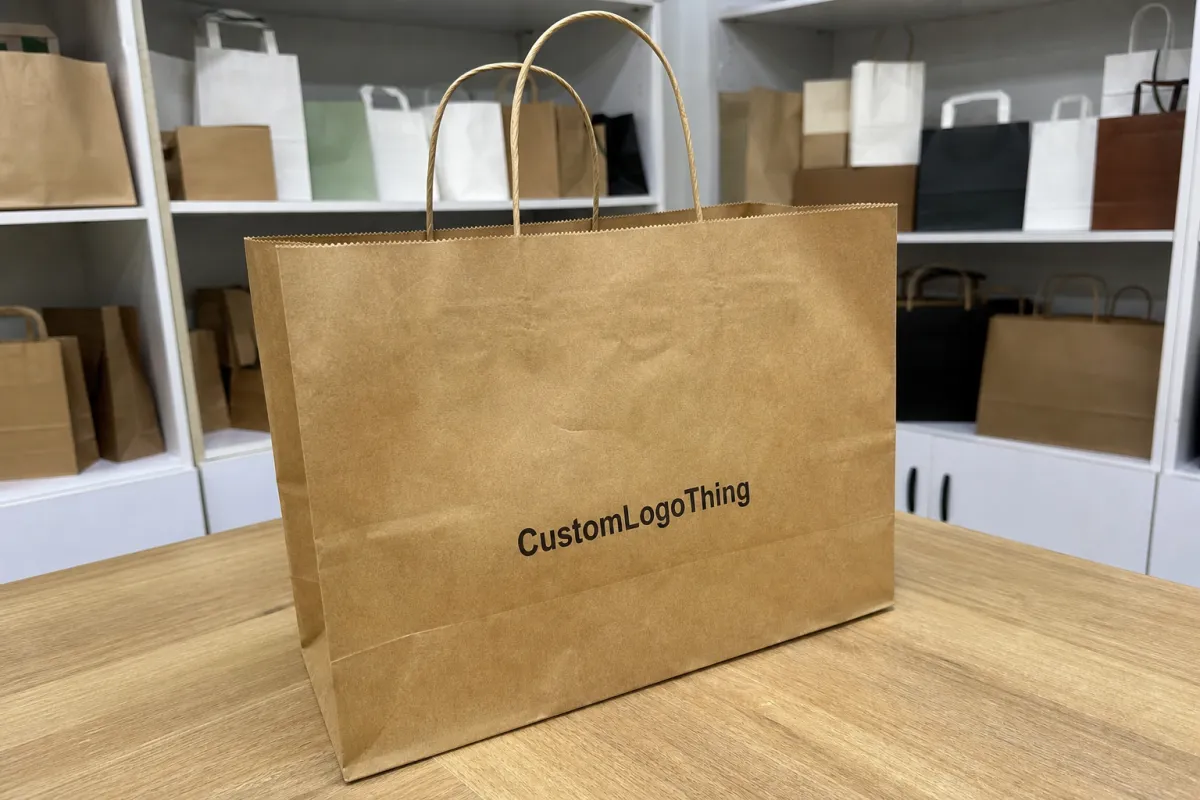
Kraft paper fits beer because the material feels direct and practical. It has texture. It looks less polished than luxury coated board, in a good way, and it sits naturally beside cans, bottle labels, tasting cards, coasters, and merch. Beer packaging does not need to pretend it belongs at a perfume counter. It needs to carry the purchase cleanly and make the brand easier to remember.
For taprooms, bottle shops, brewery festivals, gift sets, and retail counters, kraft paper gives better brand visibility than a generic plastic sack while still feeling grounded. If lower-waste packaging is part of the brand position, ask about recycled kraft, FSC certified paper, post-consumer waste content, and water-based inks rather than relying on vague “eco” language. For broader context, the EPA’s sustainable materials management resources are a useful reference point.
The strongest use cases are simple: single bottle purchases, mixed cans, six-pack add-ons, glassware, growler accessories, tasting kits, apparel, gift boxes, and checkout Bags for Retail counters. The bag does not need to carry a keg. It does need to survive normal handling, light condensation, a crowded event table, and the occasional person who swings it like a lunchbox.
Practical rule: if you define size, GSM, handle type, print colors, order quantity, and delivery location before quoting, supplier numbers become comparable. Without those details, every price is partly a guess.
A useful quote should help you decide what to buy, not simply display the lowest possible unit price. Packaging that fails at the handle is not a bargain. It is a refund with witnesses.
Paper Bag Styles That Work for Beer Retail
Not every kraft bag belongs near beer. Glass is heavy. Cans stack awkwardly. Merch creates odd shapes. Cold packaging can bring condensation into the picture. Choose the bag style around what customers actually carry, not around the prettiest catalog image.
Flat merchandise bags are best for shirts, hats, stickers, labels, lightweight gifts, and bottle openers. They are inexpensive, easy to store, and useful at checkout counters with limited space. They are a weak choice for multiple glass bottles unless the paper weight and dimensions are deliberately selected for that load.
SOS block-bottom bags stand upright and work well for counter sales, small mixed purchases, packaged snacks, and single-bottle sleeves. Many versions have no handle, so they are better for light grab-and-go use than heavier beer orders. Their main advantage is stability: staff can load them quickly, and the flat bottom helps prevent tipping.
Twisted-handle shopping bags are the everyday workhorse. They are familiar, printable, relatively economical, and available in many stock sizes. For general retail use, kraft paper in the 120-180gsm range is common, while heavier beer loads may need stronger paper, reinforced handles, wider gussets, or bottom cards.
Die-cut handle bags look clean and pack flat, but they are not always comfortable under weight. The handle cutout can tear faster if the paper is too light or the reinforcement is poor. They can be a good fit for lighter retail goods or premium presentation, but for glass bottles, comfort and tear resistance matter more than a tidy silhouette.
Bottle bags are tall and narrow, usually made for wine-style bottles, bombers, specialty releases, and gift packs. They make sense for limited bottle drops, barrel-aged releases, and holiday bundles. For cans, they are usually the wrong shape unless the format has been engineered around a specific pack count.
Reinforced carry bags are the safer option for heavier taproom orders. Wider gussets, thicker paper, bottom inserts, and stronger handle attachment points add cost, but they reduce the risk of failure. That matters when customers are carrying glass, not marshmallows.
| Bag Style | Best Use | Typical Strength Level | Buying Advice |
|---|---|---|---|
| Flat merchandise bag | Shirts, stickers, openers, light retail | Light to medium | Low-cost and compact, but weak for heavy bottles |
| SOS block-bottom bag | Counter sales, snacks, small mixed items | Light to medium | Good for standing display; less useful for heavy carryout |
| Twisted-handle kraft bag | Taproom retail, cans, merch bundles | Medium to heavy | Best general-purpose choice for many breweries |
| Bottle bag | Bombers, specialty bottles, gifts | Medium | Check height, neck clearance, and bottom strength |
| Reinforced carry bag | Glassware, multi-item beer orders | Heavy | Costs more, but protects the customer experience |
Kraft color changes the mood quickly. Natural brown kraft gives a rugged craft look. White kraft improves print contrast. Black kraft can work for premium releases, although ink opacity and scuffing should be tested before a large run. Dyed kraft makes sense when brand color is more important than the earthy paper tone.
Handle choice deserves the same attention. Twisted paper handles are economical and common. Flat paper handles pack efficiently and feel clean. Rope handles look more premium, but they add cost and can complicate recyclability depending on the material. Die-cut handles are visually neat, though less comfortable under weight.
A quote should identify the bag style clearly. “Paper bag with logo” is not a specification; it is an invitation for two people to imagine two different products.
Specifications to Prepare Before Requesting a Quote
The fastest way to get accurate pricing is to send complete specs. The slowest way is to ask, “How much for bags with our logo?” That question has the same energy as asking how much a truck costs. Which truck? Carrying what? Going where?
For a useful beer kraft Paper Bags Supplier Quote, prepare these details before contacting suppliers:
- Bag dimensions: width, height, and gusset in inches or millimeters.
- Paper weight: 100-120gsm for light retail, 140-180gsm for general shopping bags, and 190gsm+ or reinforced construction for heavier loads.
- Handle type: twisted paper, flat paper, rope, die-cut, or no handle.
- Quantity: one target quantity plus two alternate tiers if possible.
- Printing: one-color, two-color, spot color, full-color, or special ink.
- Artwork: AI, EPS, editable PDF, or another high-resolution production file.
- Finish: uncoated, matte varnish, gloss accents, or scuff-resistant coating.
- Shipping details: delivery city, postal code, deadline, and whether samples are needed first.
Size is where many buyers get burned. Leave room for product depth. Do not make the bag so tight that staff have to wrestle cans into it while a line forms behind them. If the bag needs to fit carriers, cans, bombers, glassware, boxed gift sets, or apparel, say that early.
For beer retail, a wider gusset is often more useful than extra height. A bag that stands better, loads faster, and keeps products from tipping around is usually worth a few extra cents. If staff hate using the bag, customers will feel that friction at checkout.
Print specs need discipline too. One-color logos are usually the most economical for reorder bags. Two-color branding gives stronger shelf-to-street presence without pushing the job into a premium range. Full-color printing can work for seasonal releases, but natural kraft will warm and mute colors compared with a screen proof. That is material behavior, not supplier betrayal.
Artwork should be vector whenever possible. AI, EPS, and editable PDF files give printers clean edges and scalable logos. A 600-pixel logo pulled from a website is rarely enough unless the goal is blurry printing, which, to be clear, is not a goal.
Useful extras include reinforced bottom cards, thicker handles, water-based ink, recycled content, FSC certified kraft paper, and custom cartons for cleaner storage. If environmental claims matter to your brand, ask for documentation. The Forest Stewardship Council explains FSC certification and sourcing claims in plain terms.
Better specs reduce revisions, shorten quoting time, and prevent the classic mistake of comparing one supplier’s lightweight bag against another supplier’s heavy-duty option. That is not comparison shopping. That is spreadsheet theater.
Beer Kraft Paper Bags Supplier Quote: Cost, MOQ, and Unit Price
Pricing depends on size, paper weight, handle construction, print coverage, ink colors, order quantity, finishing, packing, and freight. Anyone giving a fixed price without those details is either guessing or trying to hook the conversation with a number that will change later.
MOQ usually falls into two broad lanes. Printed stock-size bags can start lower because the structure already exists. Fully custom sizes, specialty kraft colors, complex printing, reinforced handles, and custom carton packing usually require higher minimums because setup, plates, paper sourcing, and machine time need to be spread across the run.
Typical ranges vary by supplier and specification, but practical buying expectations often look like this:
| Order Type | Typical MOQ Range | Approximate Unit Cost Range | Best Fit |
|---|---|---|---|
| Stock-size brown kraft, one-color print | 500-2,000 pieces | $0.28-$0.75 | Starter taproom retail, small reorder needs |
| Mid-weight twisted-handle bag, one or two colors | 2,000-5,000 pieces | $0.18-$0.45 | Regular brewery checkout and merch sales |
| Custom size with heavier kraft or reinforced bottom | 3,000-10,000 pieces | $0.30-$0.85 | Bottles, glassware, mixed beer bundles |
| Premium kraft color, full coverage print, specialty finish | 5,000-20,000 pieces | $0.55-$1.50+ | Seasonal releases, gift sets, higher-margin retail |
These ranges are not promises. Freight, exchange rates, paper markets, carton count, and production location can move the final landed cost. Still, they give you a reasonable starting point before someone waves an unusually low number at you.
Cost drivers are predictable. Heavier kraft costs more. Reinforced handles cost more. Full-coverage ink costs more. Tight color matching can cost more. Air freight costs a lot more. None of this is mysterious, but it is often hidden when quotes are reduced to a single unit price.
Small orders protect cash flow, but the per-bag price is higher because setup costs have fewer units to hide behind. Larger runs lower unit cost, but they require storage space and a realistic demand forecast. A brewery ordering 20,000 bags to save eight cents each should have a plan for cartons, humidity, dust, and inventory rotation, not just a corner behind the walk-in cooler.
To compare quotes properly, ask every supplier for the same size, GSM, handle, ink count, quantity, packing, and shipping terms. Otherwise, the cheapest quote may simply be the weakest bag. Ask for unit price, setup cost, sample cost, production lead time, carton quantity, estimated freight, payment terms, and quote validity period.
There are sensible ways to control cost. Use a standard size when it fits. Keep printing to one or two colors for high-volume reorder bags. Use seasonal stickers, hang tags, or inserts if artwork changes often. Consolidate bag SKUs if the taproom and merch counter are buying nearly the same size. If you need quantity breaks, send your specs through Contact Us and ask for side-by-side options.
Printing Options, Branding Choices, and Finish Tradeoffs
Printing turns the bag into advertising, but only if the design respects the material. Kraft has texture. It absorbs ink differently than coated paper. Tiny copy, weak contrast, thin lines, and complicated gradients can turn muddy faster than expected.
Flexographic printing is common for economical volume runs. It suits simple logos, repeat artwork, and one- or two-color designs. Offset printing can deliver cleaner detail on certain constructions, especially when smoother paper or laminated sheets are involved. Screen printing works for bold specialty effects, though it is usually not the cheapest method for large everyday runs. Digital printing can help with smaller or variable runs where available, but size and material limits vary by equipment.
Black ink on brown kraft is the reliable classic. It is affordable, legible, and strong. White ink can look excellent on brown or black kraft, but opacity should be tested, especially if the design relies on crisp white areas. Full-color artwork on natural kraft prints warmer and less bright than it looks on a monitor. If an IPA label uses neon blue and electric orange, expect adjustment.
Finish choices should match use. Uncoated kraft feels natural and direct. Matte coating gives a smoother, more polished presentation. Gloss accents can highlight a logo or illustration. Varnish can add scuff resistance for bags that will rub against cans, boxes, counters, car seats, and event tables.
Branding does not need to be complicated. Breweries often do well with a large logo, batch-style typography, ingredient illustrations, map graphics, taproom slogans, or one strong line printed on the side panel. The goal is recall, not an essay printed on a gusset.
A quote should clarify print method, ink count, print area, color references, and finish. If the supplier cannot explain how artwork will behave on kraft paper, keep asking. Or move on.
For larger orders, request a digital proof and consider a pre-production sample or printed material reference. Proof the logo placement, handle clearance, side gusset orientation, color notes, and spelling. Approving a proof without reading it is how typos become expensive souvenirs.
Process and Timeline From Artwork to Delivery
A clean buying process saves time. A messy one creates late deliveries, emergency freight, and irritated staff. The usual flow is inquiry, specification review, quote, artwork check, proof, deposit, sample if needed, production, quality inspection, packing, shipping, and delivery.
Quoting can move quickly when the request is complete. A vague message asking for “bags with our logo” slows everything down because the supplier has to ask basic questions before pricing anything responsibly. Dimensions, quantity, artwork, destination, and deadline should be in the first message. That is how a beer Kraft Paper Bags supplier quote turns into a purchasing decision instead of a week of email back-and-forth.
Timing depends on complexity. Simple repeat orders can often move faster than new custom work. New custom sizes, special materials, multi-color printing, and pre-production samples add time. For many Custom Printed Kraft bag orders, buyers should plan for roughly 10-20 business days after proof approval for straightforward production, plus shipping time. More complex orders can run longer.
Event deadlines need respect. If you have a festival, brewery launch, holiday gift pack, or retail promotion, do not start the week before and call it urgent planning. Rush freight may save the date, but it can flatten the budget.
Artwork approval deserves careful attention. Production should not begin until layout, color references, size, handle placement, and print position are confirmed. If the bag has side gusset printing, bottom marks, or wraparound artwork, review the dieline carefully. A logo placed too close to a fold can look crooked even if the print is technically accurate.
Shipping choices create another tradeoff. Sea freight can reduce landed cost on larger orders, especially high-volume runs packed in many cartons. Air freight helps with urgent replenishment, but the bill can be ugly. Courier service is practical for samples, proofs, and small batches.
Quality control checkpoints should include paper weight verification, handle strength review, print registration, color consistency, glue strength, carton packing, and random finished-bag inspection. For heavier bags, ask how handle attachment and bottom strength are checked. Packaging standards such as ISTA testing are more common for shipping systems and corrugated cartons, but the mindset still applies: test the package against real handling, not showroom fantasy.
Supplier Checks That Separate Pros From Pretty Catalogs
A polished catalog is nice. It does not carry beer. A good kraft paper bag supplier asks practical questions before quoting because the bag has a job to do.
Look for packaging experience, clear specification questions, sample support, realistic lead times, material options, print knowledge, and a willingness to discuss tradeoffs. A supplier who says yes to everything is not always being helpful. Sometimes they are avoiding the uncomfortable part where artwork, budget, and weight requirements do not all fit together perfectly.
Red flags are easy to spot if you know where to look:
- No paper weight listed on the quote.
- No handle strength discussion for bottles or mixed beer orders.
- No artwork requirements beyond “send logo.”
- Vague freight terms with no delivery location shown.
- Suspiciously low pricing without material detail.
- Quotes that ignore the actual use case.
Cheap is charming until the handle tears.
A professional supplier should provide accurate dielines, proofing support, clear MOQ options, production photos when useful, quality checks, export packing, and transparent communication if something changes. Paper shade, ink opacity, carton count, and production timing should not be treated like state secrets.
Custom Logo Things handles custom printed paper bags and can help match structure to product weight, which matters for breweries that need usable packaging rather than decorative nonsense. The right bag should protect the purchase, carry the logo cleanly, and make reordering straightforward.
Working with one supplier across multiple bag styles, print methods, kraft grades, and order sizes can also make scaling easier. A brewery may start with a stock-size twisted-handle bag, add bottle bags for specialty releases, then move into reinforced carry bags for gift sets. That progression is easier when each order builds on known dimensions, artwork files, and material history.
Judge suppliers by the questions they ask. A supplier asking about bottle weight, pack count, handle type, storage conditions, and delivery deadline is protecting the order. A supplier who only asks for a logo is selling paper rectangles.
How to Request a Quote That Can Be Priced Accurately
If you want pricing that can actually be used for purchasing, prepare the basics before you send the request. It does not need to be perfect, but it needs enough detail for the supplier to price the same product you expect to receive.
- Choose the bag style: flat, SOS, twisted-handle, die-cut, bottle bag, or reinforced carry bag.
- Confirm dimensions, including width, height, and gusset.
- Estimate filled weight, especially for glass bottles, cans, and glassware.
- Pick kraft color: brown, white, black, dyed, recycled, or FSC certified.
- Decide handle type and whether reinforcement is needed.
- Select print colors and finish preferences.
- Prepare vector logo files and any brand color references.
- Request two or three quantity breaks, such as 1,000, 3,000, and 5,000 pieces.
- Provide delivery address, deadline, and any event date.
Include the use context. Taproom retail, bottle shop checkout, festival merch, delivery kits, holiday gift sets, and distributor support all push the bag specification in different directions. A holiday gift set with two bottles and glassware is not the same as a shirt and sticker pack. Obvious, yes. Still missed constantly.
Ask for material and handle recommendations if you are unsure. You do not need to pretend you know every paper weight and handle construction. A good supplier should guide the specification, explain cost differences, and flag weak choices before production.
For a practical beer Kraft Paper Bags Supplier Quote, send dimensions, quantity, artwork, deadline, filled weight, and shipping location in one message. Request a Custom Quote from Custom Logo Things through Contact Us with your brewery logo, target quantity, and bag use case, then compare options based on strength, print quality, landed cost, and reorder practicality.
FAQ
What information do I need for a beer kraft paper bag supplier quote?
Provide bag dimensions, quantity, paper weight preference, handle type, print colors, artwork file, delivery address, and deadline. If you are unsure about size or GSM, share what the bag will carry, such as bottles, cans, merch, or gift sets, and ask for recommendations. Include target quantities if you want cost-saving options instead of one flat answer.
What is the usual MOQ for custom beer kraft paper bags?
MOQ depends on whether you use a stock bag size or a fully custom structure. Printed stock-size bags usually have lower minimums than custom-sized kraft bags with special handles, special paper colors, or complex printing. Larger quantities reduce unit cost, but breweries should balance savings against storage space and expected reorder timing.
How much do custom kraft paper beer bags cost?
Cost depends on bag size, kraft paper thickness, handle type, print method, number of colors, order quantity, finishing, and shipping. One-color printing on a standard brown kraft bag is usually more economical than full-color printing on a custom-size reinforced bag. Ask for itemized pricing with unit cost, setup fees, sample fees, freight, payment terms, and quote validity so supplier offers can be compared fairly.
Can kraft paper bags hold beer bottles and cans safely?
Yes, if the bag is correctly specified for the filled weight and product shape. Heavier bottles, glassware, and multi-can orders may need thicker paper, stronger handles, wider gussets, or reinforced bottoms. Do not choose the cheapest lightweight bag for heavy beer orders unless you enjoy customer complaints and cleanup.
How long does production take for printed beer kraft bags?
Timeline depends on artwork readiness, sampling needs, order quantity, printing complexity, and shipping method. Simple repeat orders are faster, while new custom sizes, special materials, and multi-color printing require more production time. For festivals, seasonal releases, or holiday packs, start early and build in buffer time for proof approval, production, and freight.
Can I request a beer kraft paper bags supplier quote from Custom Logo Things?
Yes. Send your logo, preferred bag size, estimated quantity, use case, and delivery location through Contact Us. A clear quote should show bag structure, print method, MOQ, unit price, lead time, and shipping assumptions so you can buy with fewer surprises.