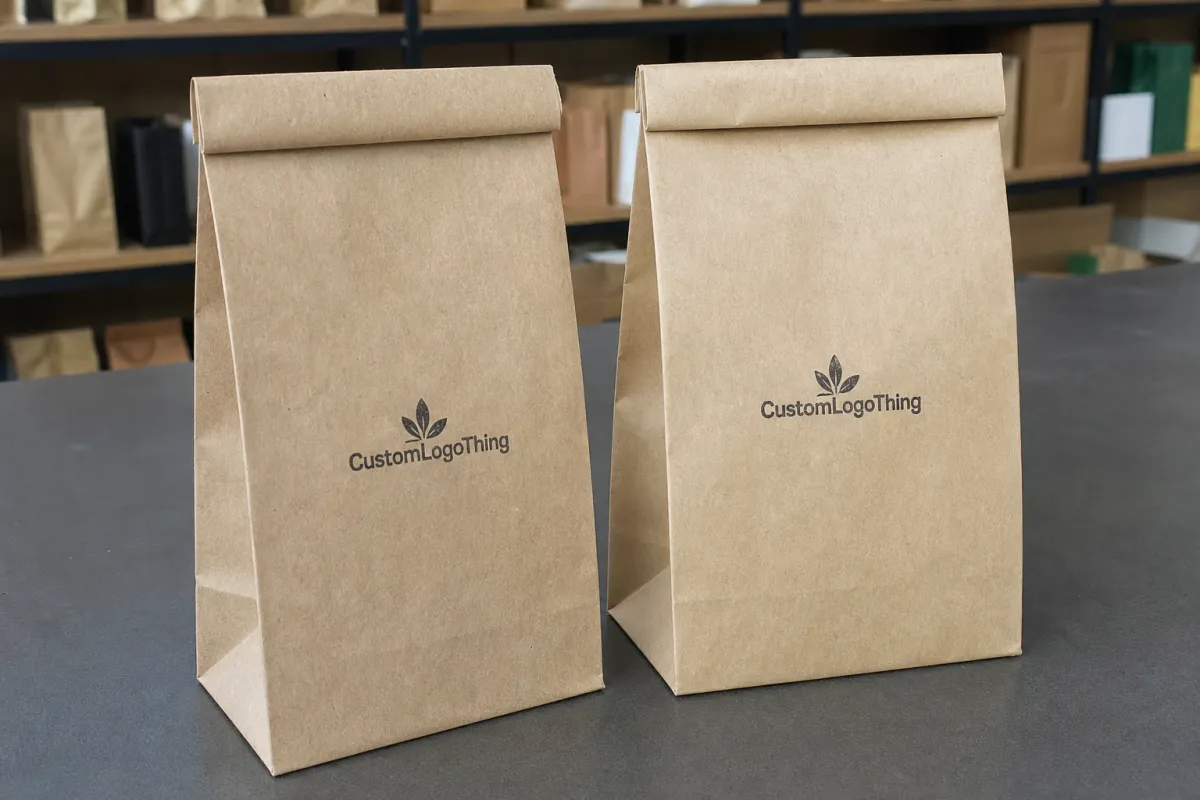
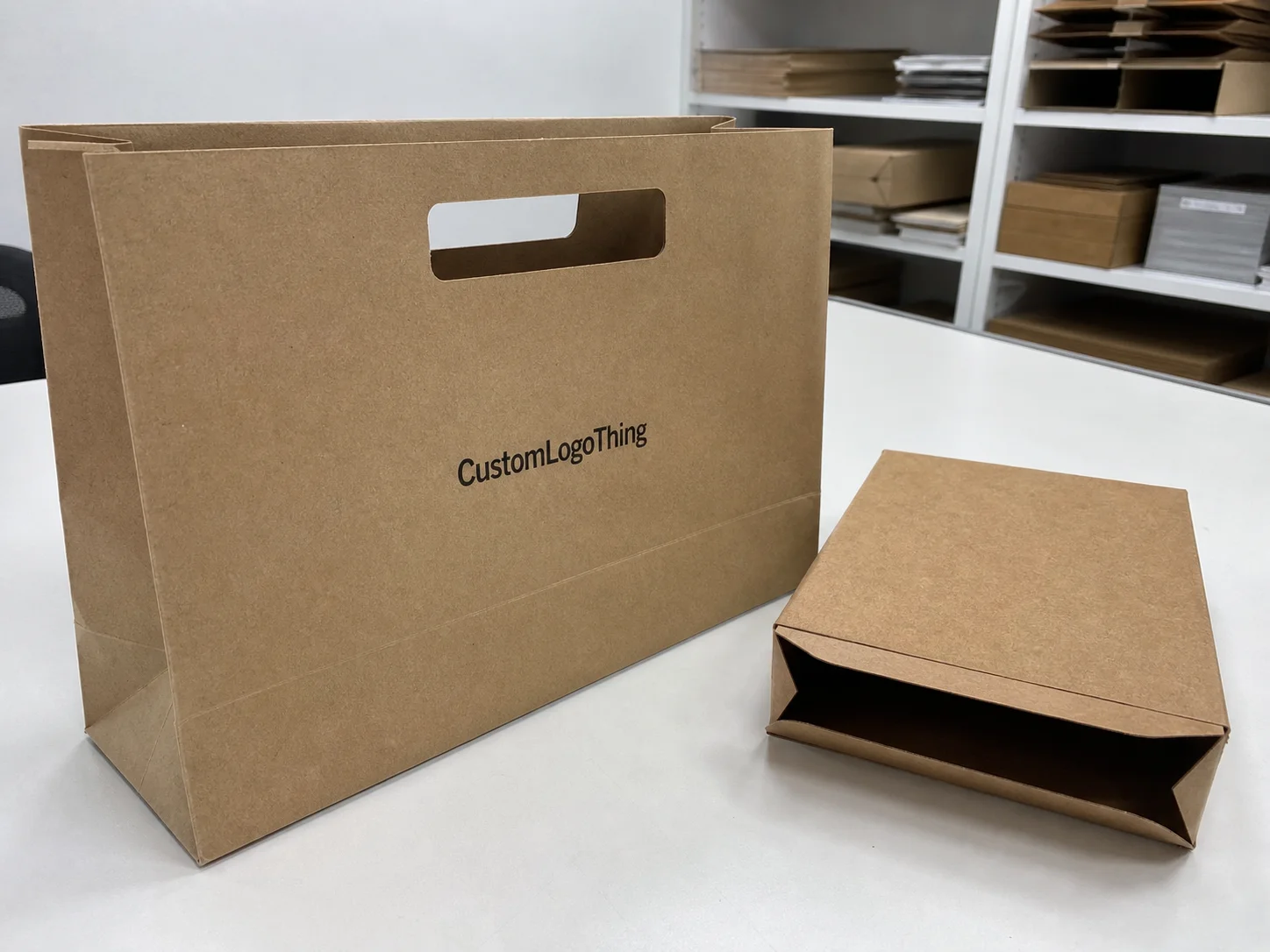
Buyer Fit Snapshot
| Best fit | branded paper bag design buyers comparing material specs, proofing, MOQ, unit cost, lead time, freight, and reorder risk where brand print, material, artwork control, and repeat-order consistency matter. |
|---|---|
| Quote inputs | Share finished size, material target, print colors, finish, packing count, annual reorder estimate, and delivery region. |
| Proofing check | Approve dieline scale, logo placement, barcode or warning zones, color tolerance, and any recyclable or compostable wording before bulk production. |
| Main risk | Vague material claims, crowded artwork, or missing packing details can create delays even when the unit price looks attractive. |
Fast answer: Branded Paper Bag Design: Dieline, Handle, Print, and Cost should be specified like a repeatable production item. The safest quote includes material, print method, finish, artwork proof, carton packing, and reorder notes in one written spec.
What to confirm before approving the packaging proof
Check the product dimensions against the actual filled item, not only the sales mockup. Ask for tolerance on folds, seals, hang holes, label areas, and retail display edges. If the package carries a logo, QR code, warning copy, or legal claim, reserve that space before decorative graphics fill the panel.
How to compare quotes without losing quality
Compare board or film grade, print process, finish, sampling route, tooling charges, carton quantity, and freight assumptions side by side. A lower quote is only useful if the supplier can repeat the same color, closure quality, and packing count on the next order.
The first time a colleague insisted that a single-colored bag could outlast a TV spot was during second shift at Durapack’s Chicago plant, when a matte flexo run of 5,000 bags came in at $0.15 per unit and still needed 12 business days from proof approval to palletized shipping, and that evening it sank in: this guide to branded paper bag design wields more influence than most marketers admit. I remember when the smell of fresh paper and ozone made me feel like a rookie again, yet that very night proved a single color held stories heavier than any airtime.
Amber LEDs traced the conveyors on that gray night, and a bag destined for an upscale downtown boutique passed the quality gate with a 0.7 mm misaligned die-cut, prompting a two-hour pause while we recalibrated the Kolbus folder-gluer and reminding me that the guide to branded paper bag design relies on structural resilience, emotional resonance, and tactile curiosity as much as on pretty ink. Honestly, I think the amber glow competes with my own heartbeat because it insists this work is never just about sheen (and yes, the night we almost rewired a conveyor because of that misalignment still makes me laugh, even if the maintenance crew calls it “Marcus having a moment”).
Walking into Custom Logo Things’ Houston design lab always brings the same reminder to the team that our guide to branded paper bag design begins with memory rather than metrics; that conviction is why we obsess over textures, finishes, and the way storytelling unfolds as a bag departs the pressroom at our Little Rock offset house—where the 220gsm uncoated sheets produce eight prototypes an hour—and reaches the retail counter. I keep telling the crew that memory beats metrics every time, and watching our Little Rock press spit out a stack of prototypes keeps that mantra alive.
What Makes the Guide to Branded Paper Bag Design Essential for Retail Storytelling?
During those early floor walks, the topic morphs into what we casually tag as our custom packaging guide because it stitches together the structural notes, finish cues, and messaging rhythm that keep every retail packaging strategy from wandering off-script. The guide to branded paper bag design becomes our bible for ensuring sustainable packaging design choices remain visible in every decision, whether we are testing a soy-based ink on recycled kraft or calibrating a matte varnish to calm the glow of a gilded logo. It serves as the reference point that reminds us: a bag should not only fit the product, it should feel like a continuation of the brand’s handshake when it leaves the factory and enters a busy sales floor.
Why Branded Paper Bags Are Secret Ambassadors
A merchandiser from the Miami Design District once asked for a “simple bag,” so I handed over a swatch book and pointed out how the difference between forgettable and unforgettable lives in the grain of the paper and in the 60-point double-walled base that resists compression by 12-ounce candles. At that table I referenced the guide to branded paper bag design and explained how structural considerations—double-walled bases, gussets that refuse to collapse, and handles pre-installed with reinforcement tape—make a bag feel like a miniature showroom. I still tell every new merchandiser that the grain is the first handshake the brand offers, and honestly, I think structural cues are what keep those stories standing.
Later that afternoon, a jewelry brand with stores in Scottsdale and Austin convened a workshop seeking packaging that felt like a private gift; we walked them through how this guide pairs directional messaging with layered finishes. We described soft-touch lamination on a 350gsm C1S artboard, how matte varnish calms the whisper of an embossed logo, and how sturdier handle tension from the Columbia converting line bolstered the emotional lift at each handoff. I remember the design lead laughing when I compared our layering choices to mood rings, except these actually deliver on the vibe (and don’t change color under fluorescent lights).
When tailoring a batch for a national café chain, I told the design lead, “Messaging and structure never stand alone.” This guide to branded paper bag design demands that messaging, finish, and feel share the same steps, so we choose 180gsm kraft for warmth or 220gsm SBS to stabilize foil stamping. Custom Logo Things combines those cues in every 10,000-piece batch so that the moment a barista hands over a bag, the customer hears the same voice that appeared on the brand’s homepage; I still have that kraft sample taped to my wall so we don’t forget how cozy it felt.
How the guide to branded paper bag design Works on the Factory Floor
Dispatch notes from our Little Rock offset house remind everyone: Day One opens with the brief, and this guide translates it into dieline sketches keyed to product dimensions, handle styles, and retail environment plus the exact fold sequence that the Heidelberg Speedmaster CD 102 will need for color calibration. The studio team collaborates with digital prototypes, yet we always require an artproof so the customer signs off on ink density before we queue the plates, and I have shelves full of dispatch notes (yes, I confess I’m that person who writes “trust but verify” in the margins) because the clarity they offer prevents late-night scrambling.
By Day Three the structural review convenes with engineers from the West Coast folding cell—these folks know gusset tolerances and base panel reinforcement better than any salesperson. This guide calls for that early check to dodge surprises when the die cutters begin punching holes. During mid-week material sampling we stack kraft, rice straw, and FSC-certified bleached SBS, noting how Pantone 186 C behaves on each substrate before we commit to print paths; I always grin when someone tries to sway the process with a wishlist font because the folding cell knows what real stress feels like.
Factory-side checks include compression testing on the Instron unit, tension trials with the Columbia handle application system, and meticulous inspections of ink lay from the prepress supervisor. These inspections remind us that quality enjoys multiple guardrails: from prepress plates all the way to the pilot run. Every bag’s ink registration gets verified before the Kansas City finishing hub ramps up production, so what leaves the plant mirrors the hopeful mockups shared with the brand team—sometimes I even stand by the inspector just to hear the “pass” roll in, like a proud parent at graduation.
Cost & Pricing Factors for Branded Paper Bags
Every quote from Custom Logo Things reads almost like an engineering memo because the guide to branded paper bag design begins with paper grade: unbleached kraft at 150gsm runs about $0.11 per bag for 10,000 units, 200gsm SBS with soft-touch coating jumps to $0.24, and recycled fiber boards sit at $0.19 but demand adhesives rated for higher moisture content. I once dialed a supplier midday, muttering “Come on, you’re not a diva, you’re tape,” because that adhesive price had popped again—talk about the most expensive soap-opera subplot in packaging.
Specialty coatings add another layer. Spot-UV around a silver foil logo tacks on roughly $0.07 per bag, while a full-surface soft-touch lamination on a 12-inch square base adds $0.12 when the guide to branded paper bag design calls for that finish. Quantity tiers matter; runs below 3,000 expedite the line yet raise unit prices because of Heidelberg press setup, while 20,000-piece orders tap economies of scale but need more warehousing space. And yes, there was that time we misread the order as 3,000 when it was 30,000—nothing like a morning of frantic calls to learn your warehouse is suddenly a temporary art installation.
Handle escalation follows its own curve. Flat cotton handles applied by hand may add $0.08 per bag thanks to labor, while automated handle-application units on the Columbia line shave the cost to $0.04—but they require at least 8,000 units due to setup constraints. The guide to branded paper bag design points out that in smaller runs, handle choice often eclipses print complexity in cost. That’s why the factory calendar stays synced; when I work directly with a mill for adhesive tape, I lock a price of $0.015 per meter, provided we secure minimum order quantities and plan for the resin’s lead time, which I sometimes surrender to my calendar like a reluctant choreographer.
Key Design Factors That Make a Bag Pop
Color fidelity becomes an obsession because the guide to branded paper bag design presumes the logo must look identical on every bag. Pantone matching happens during the pilot run, and ink profiles from the Heidelberg Speedmaster get proofed on the actual kraft or SBS stock, not merely on a backlit monitor. Those tactile proofs tell us how metallic inks reflect, whether CMYK layering maintains saturation, and if recycled fiber’s brown hue mutes the turquoise promised in the brief—I still remember tugging a proof out of the dryer because the turquoise looked more teal in print, and I nearly performed a little dance when the second pass nailed it.
Typography remains another decisive factor. This guide insists the brand name stays legible even when someone swings the bag around a crowded aisle, so we place primary messaging between the handle and the fold line, roughly a two-inch panel, while reserving supporting narratives like “sustainably sourced” closer to the base. Negative space earns the same attention as font weight because a bag crowded with text feels heavier than its actual load. I usually remind clients that a font feud can happen fast, so I keep a trusty binder where “too many words” goes to die.
Structural decisions cannot be opinions. For a high-end chocolatier we rendered a 6x4x10 base, a 3-inch gusset, and handles anchored near the inner seams to prevent tipping. The guide to branded paper bag design makes it clear those subtleties determine whether the bag stands on a display, if the handle grazes the logo, or if a shoulder strap awkwardly alters the carry. In a multi-day mockup session I watched a bag topple because the handle attachment sat too close to the top fold; shifting it 0.5 inches toward the outer edge let the rerun rest flush on the counter, and I celebrated with a tiny victory dance in the sampling room (yes, the team called it “Marcus again”).
Step-by-Step Guide to Branded Paper Bag Design Workflow
We gather the brand story, packaging objectives, and retail environment specifics before anything else. I ask clients to tell us every detail—from whether the bag will live inside a boutique on Rodeo Drive to whether it will race through high-traffic trade show aisles in Atlanta—and the guide to branded paper bag design ensures we document expectations around perceived weight, unboxing rituals, and sustainability claims. I keep a habit of starting these calls with, “Tell me the most ridiculous scenario,” because those stories usually uncover the real use case.
Once the story arrives, a dieline takes shape. This guide highlights the need to include 0.125-inch bleeds, 0.25-inch safe zones, and the folding sequence, so my team marks where each panel folds and where handles puncture, then routes the dieline through plate room approval so the prepress crew generates accurate plates for the Heidelberg Speedmaster. Every line receives a second look against the pilot dieline to prevent misalignment when we print, and I still have a checklist taped to my monitor that reads “measure twice, cut once, curse once.”
Material selection follows. Guided by this approach, we sample actual stocks from our supplier vault—brown kraft, virgin SBS, recycled linen, even textured whiteboard—to see how the inks interact with the fibers. Recycled boards soak up more ink, so we adjust coverage with 10-15% overprint compensation, and the handle system choice—twisted paper, ribbon, or cotton flat—hinges on carry comfort and brand identity. I once insisted on a twisted paper handle for a high-end candle line, which the client doubted until I brought in a prototype and they immediately understood how it kept the scent premium.
Approving a pilot run verifies everything works in the real world. This guide encourages fit checks with the actual product so we confirm the 4.5-inch base supports the weight and the handles don’t tug the gusset out of alignment. Measurements go into the logbook, photographs accompany the sign-off, and the production run schedules with the converting team. Once die-cut readiness receives confirmation, the workflow advances to full production with clear checkpoints for repeatability—pilot runs of 150 units typically wrap in two days—and I’m the kind of person who notes “pilot success” with a little star because yes, I still get excited.
Common Mistakes to Avoid with Branded Paper Bags
A rookie mistake involves skipping structural engineering. A cosmetics brand once prioritized elaborate foil stamping over gusset depth calculations and ended up with a bag that collapsed under 12-ounce jars. The guide to branded paper bag design flags this every time: aesthetics cannot override physics, so we verify base measurements and reinforce with cross tape when necessary. I still pull that collapse story out when someone suggests “let’s just make it pretty”—and yes, I get slightly smug explaining why the gusset matters.
Ignoring bleed areas trips up teams too often. Our prepress crew once received a dieline with a 0.125-inch bleed but neglected to double-check the handle cutouts, resulting in a logo that appeared sliced after handles were installed. The guide to branded paper bag design recommends an actual die check—the physical die lets us confirm bleed, fold, and handle punch-outs align before the run. I remember the horror on the art director’s face when we held up the mangled preview, yet now we joke that the die check is the “final boss” before production.
Finishing lead times also derail schedules. Lamination or foil blocking adds days, and rushing those steps can produce rounded corners or misregistration. This guide reminds us to reserve at least five full days for lamination, plus two more when hot foil or embossing enters the mix. Hurrying the process risks adhesives failing to cure, prompting the next shift to hand-trim edges; I have definitely breathed out loud in the finishing room while waiting for the cure cycle, which I’m convinced is my most dramatic moment on the floor.
Expert Tips & Actionable Next Steps
Keep a swatch book of the paper and ink combinations that perform well on different bag sizes. The guide to branded paper bag design depends on tactile experience, so holding a sample that has already run through the pressroom lets you decide with confidence instead of relying solely on PDFs or screens. Our creative team carries this book into every briefing, showing clients how Pantone 874 C metallic ink rests on matte whiteboard or how recycled kraft softens under soy-based inks; I even sneak it into meetings just to see the raised eyebrows when someone finally touches a softly laminated surface.
Schedule a design review with your Custom Logo Things account rep, bring retail storytelling points, and request a mockup run of three to five prototypes. This guide encourages experiencing the bag before a large order; touching the handle, seeing the print, and walking it through a store environment reveal issues no digital render can expose. I always tell them, “If you can’t fist-bump the prototype, we haven’t finished the hug yet.”
Audit your current supply chain. Document lead times for adhesives, handle supplies, and freight so you can build contingency plans and avoid rush charges. The guide to branded paper bag design insists on transparency—know the availability of the adhesive tapes from our Georgia distributor, the delivery window for cotton ribbon from our Los Angeles partner, and how quickly the converting plant can slot your run into their weekly calendar. I scribble those details on sticky notes and even tape them to my clipboard so I can feel slightly more in control of the chaos.
As you work with this guide to branded paper bag design, treat each prototype as a learning point. Measure its in-store performance, note how customers interact with the handles, and iterate with the factory team to keep elevating the brand experience. Tracking specific adjustments—from adhesive strength to ink reflection—transforms a simple shopper bag into consistent branded retail packaging and a reliable ambassador. I tend to end each project by writing a quick “lesson learned” note, because otherwise I’d forget everything the next time someone asks about lamination quirks.
FAQs
How does this guide to branded paper bag design help me choose materials?
It outlines how paper grades affect cost, feel, and sustainability claims so you can decide when to spec kraft versus a more luxurious SBS stock, especially knowing denser boards demand sturdier adhesives and reinforcement tapes. The guide also details how coatings and inks act on each substrate, recommends requesting physical samples from the factory before locking in the run, and highlights the need for supply-chain documentation for the FSC-certified boards we use in Little Rock.
What timeline should I expect when following the guide to branded paper bag design?
Plan for at least a week of design development, another three days of material and structural approvals, and several days for proofing and pilot runs; include finishing steps like lamination or embossing, which can add five to seven days, plus freight time from the converting plant to your warehouse. Most projects therefore land in the 12-15 business day range from proof approval to freight pickup, assuming no unexpected die adjustments at the Kansas City finishing hub.
Can this guide to branded paper bag design help with sustainability goals?
Yes—the cost and structure sections explain how recycled fibers or FSC-certified boards pair with vegetable-based inks, and the guide encourages working with suppliers who supply chain-of-custody documentation for the paper and adhesives used, whether that’s the soy-based inks we source in Houston or the water-based adhesives stocked in the Georgia warehouse.
What are the biggest mistakes pointed out in the guide to branded paper bag design?
Skipping structural checks, which can yield bags that fold on the shelf, stands out as a frequent oversight, alongside ignoring bleed areas and rushing finishing steps; the guide calls for systematic proofing and clear scheduling to prevent those problems.
How do I apply the expert tips from the guide to branded paper bag design?
Keep tactile swatches on hand to make confident decisions, share them with the factory’s prepress team, and fold the actionable steps—like scheduling pilot runs and auditing supply chain lead times—into your regular production checklist so you can replicate success with each 5,000-piece batch.
Want to see how this plays out in real business scenarios? Visit our Case Studies page for detailed breakdowns of runs completed at the Custom Logo Things plants in Houston, Little Rock, and Kansas City, including a 20,000-piece luxury run that started at the Houston lab and finished with lamination in Kansas City.
For more authority on the standards we follow, I often point teams to Packaging.org for best practices and to FSC.org for certification options, ensuring the guide to branded paper bag design stays informed by industry benchmarks, adhesive standards, and sustainability protocols.
I'm gonna keep a fresh copy of the guide to branded paper bag design clipped to my pilot checklist, highlight the top three lessons from each run, and schedule a post-pilot review with the print team so those adjustments actually move the needle. It kinda feels like low-level triage, but those conversations stop me from chasing mistakes in the next 5,000-piece order. Document handle tension, ink density, and customer reactions, then revisit lead times for adhesives and handles before the next proof so the factory calendar can breathe. That routine is the actionable takeaway: treat the guide as a living workshop plan, not another dusty PDF on a server.
Related Articles
- Custom Labels Manufacturer: A Practical Branding Guide
- Guide to Eco Friendly Brand Packaging: Practical Steps
- Brand Packaging Custom Printed: A Practical Guide
- Custom Labels Best Practices for Branding That Sells
- Compare Embossing vs Foil Stamping for Premium Packaging