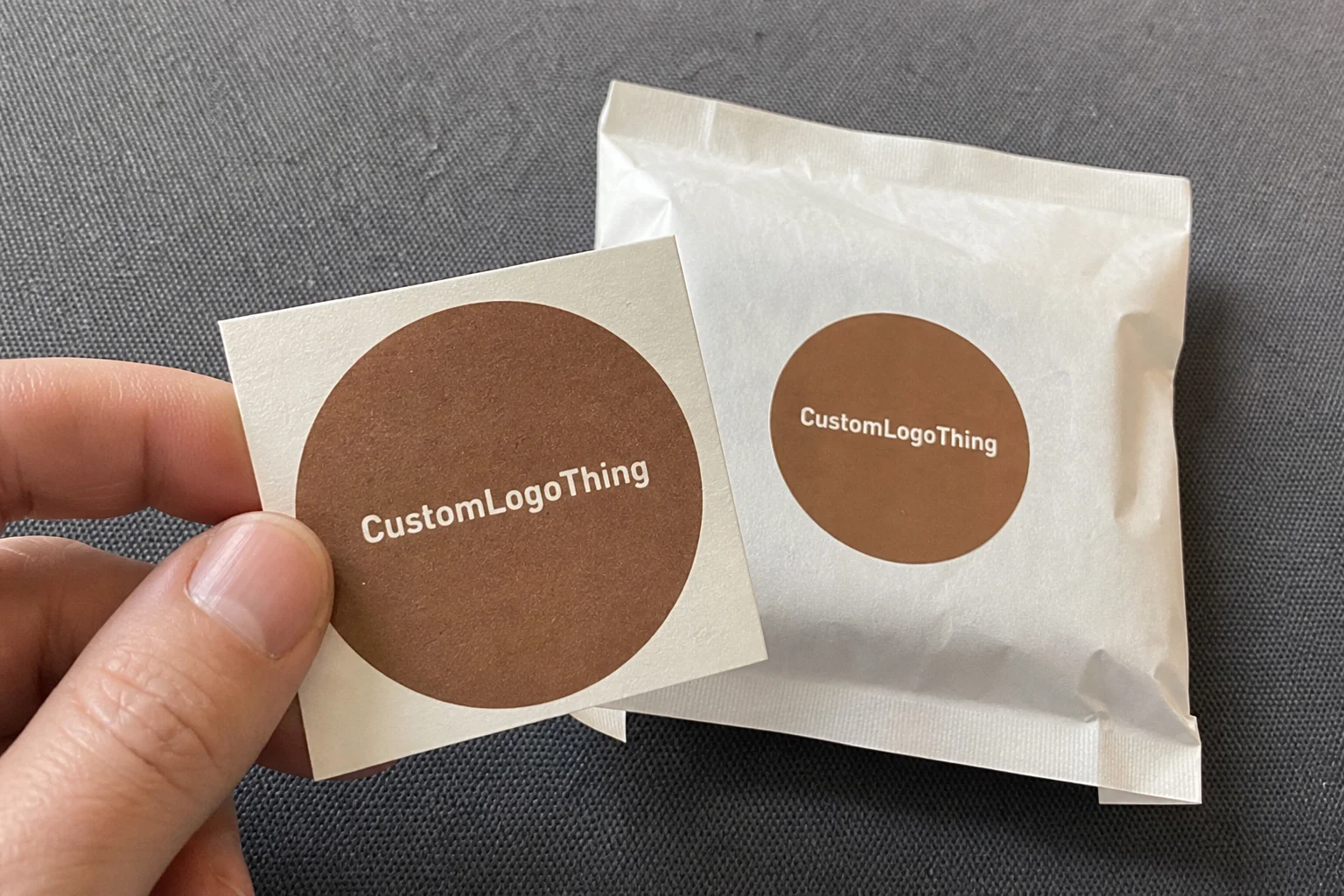
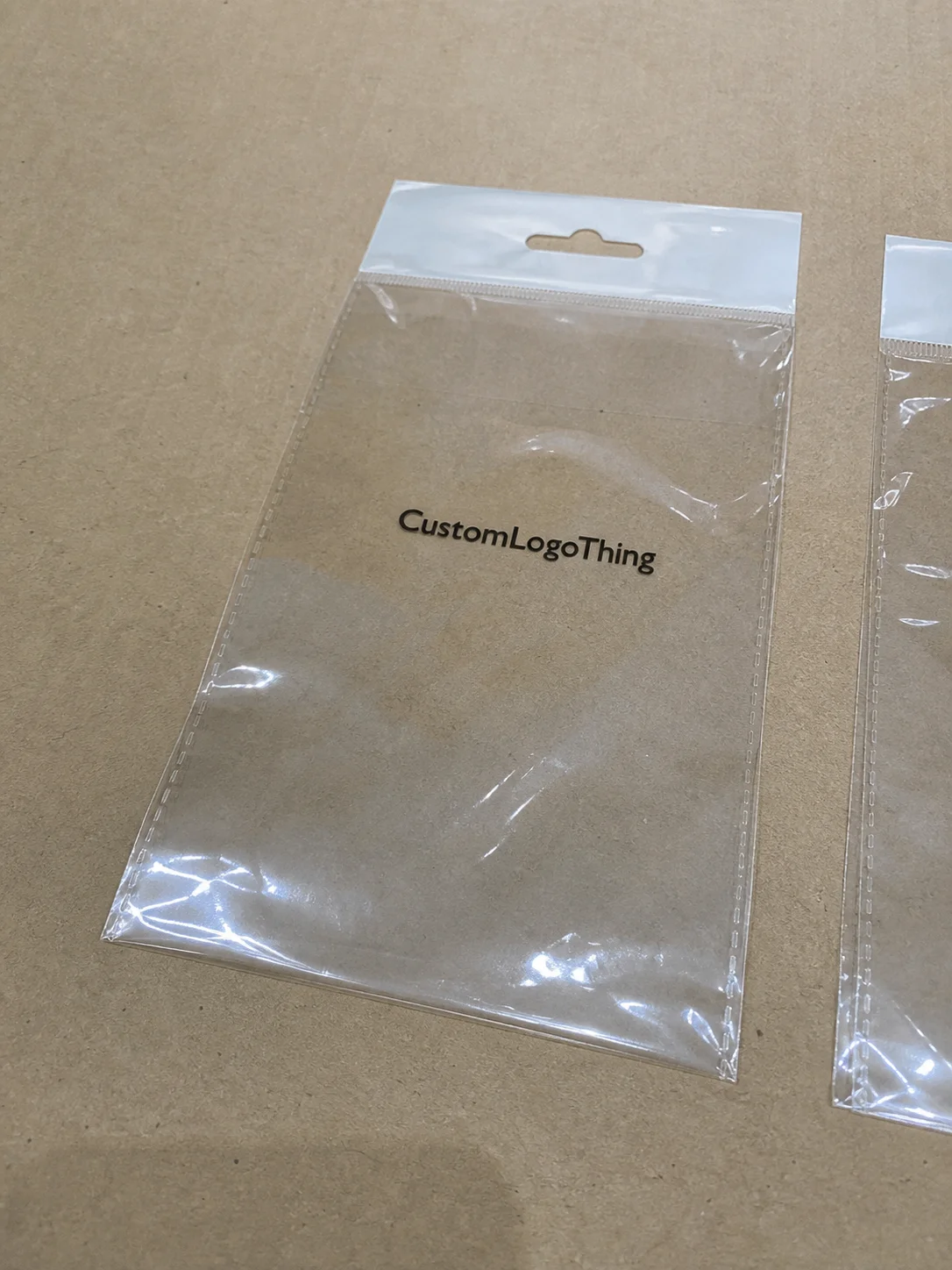
Buyer Fit Snapshot
| Best fit | To Packaging Cost Forecasting projects where brand print, material claims, artwork control, MOQ, and repeat-order consistency need to be specified before quoting. |
|---|---|
| Quote inputs | Share finished size, material target, print colors, finish, packing count, annual reorder estimate, ship-to region, and any compliance wording. |
| Proofing check | Approve dieline scale, logo placement, barcode or warning zones, color tolerance, closure strength, and carton packing before bulk production. |
| Main risk | Vague material claims, crowded artwork, missing packing details, or unclear freight terms can make a low unit price expensive after revisions. |
Fast answer: To Packaging Cost Forecasting: Quote Scope, Sample Proof, MOQ, and Lead Time should be specified like a repeatable production item. The safest quote records material, print method, finish, artwork proof, packing count, and reorder notes in one written spec.
Production checks before approval
Compare the actual filled-product size with the drawing, then confirm tolerance on folds, seals, hang holes, label areas, and retail display edges. Reserve space for logos, QR codes, warning copy, and material claims before decorative graphics fill the panel.
Quote comparison points
Review material grade, print process, finish, sampling route, tooling charges, carton quantity, and freight assumptions side by side. A quote is only useful when the supplier can repeat the same color, closure quality, and packing count on the next order.
Value Proposition: Why Guide to Packaging Cost Forecasting Matters
I built the guide to Packaging Cost Forecasting to stop teams from letting 18 percent of their spend slip through the cracks.
That number came from a procurement pulse in my second month with a retail packaging client whose quarterly budget had ballooned while everyone relied on gut feelings and the freight surcharge shot up to $1.40 per kilo on unexpected Shenzhen-to-Los Angeles air shipments.
We rerouted one group call, dug into multiple spreadsheet tabs, and confronted the habit of chasing glossy samples instead of tracking the $0.03-per-unit adhesive run that was driving overtime.
I remember when our Shenzhen crew accused me of turning their cozy chaos into a spreadsheet horror show—I smiled, because someone had to say the words “cost driver” in that 12- to 15-business-day proof loop.
That guide became our Packaging Cost Forecasting blueprint, the only source giving us packaging spend visibility while another group chased glossy samples.
It forces every stakeholder to speak the same language—packaging engineers verify dielines, finance folks digest working capital drag, and operations wants the demand pulse that matches their Hong Kong shipping calendar.
During a supplier negotiation I led in Guangzhou, the price decks were identical down to the $0.05 variance on Pantone ink, yet only the team using the guide to Packaging Cost Forecasting talked from a forecast instead of a bullet list.
The others stayed trapped in an outdated binder metaphor, chasing samples and gloss finishes while ignoring that adding structural complexity bumped die-cut hours by three per run and specialty adhesives added $120 in setup time.
That kind of cost driver modeling sharpened forecast accuracy and kept negotiations honest.
It’s gonna feel like I’m messing with your comfortable chaos, but someone has to point out why die-cut hours spike before Chinese New Year.
Most people treat forecasting as optional, which is why I still hear, “We’ll worry about the guide later,” when I walk into a beverage co-packer in Los Angeles with six-week lead times.
They once handed me a slick presentation with zero source data and a claimed plan to launch in April.
When I pushed them to document the guide to packaging cost forecasting behind that story, they cut budget variance another 5 percent, locked a 15-business-day sample proof cycle, and earned a monthly forecast co-signed by finance and operations.
The guide is not a bureaucratic form—it is a relief valve that keeps the custom printed box spend honest and visible, and it’s kinda the only thing that lets messy teams chew through friction instead of pretending the problem will go away.
How does the guide to packaging cost forecasting keep surprises out of budgets?
My go-to answer? It forces everyone to own the same math before we spend another dime.
The guide to packaging cost forecasting clamps down on assumptions by linking spend drivers, demand signals, and supplier updates in one dashboard.
That clarity lets finance call out risk, operations plan the right lanes, and procurement double-checks a 10 percent variance before it becomes a crisis.
It’s kinda the only way budget surprises stop showing up as passive-aggressive emails from accounting.
Product Details: Strategic Inputs in the Guide to Packaging Cost Forecasting
The guide to packaging cost forecasting breaks down into four actionable layers—volume tiers, material mix, labor rate, and destination charges.
I ask clients to note the expected run length for each SKU family and anchor it to the tiered pricing matrix we build.
A recent beverage brand mapped demand to three volume triggers: under 10,000 units, 10,000–35,000, and above 35,000; each step spelled different flex on printing setup, die cut maintenance, and supplier changeover time.
That meant the run under 10,000 units carried a $0.27 per unit premium.
The worksheet then consumes the material mix, from the precise gsm board spec—usually 350gsm C1S artboard with matte lamination for retail shelves—to pigment choices and eco varnishes underlying the brand story.
Labor rates cascade down as operators gain run time, while the worksheet flags bumps when third shifts or overtime at $32 per hour become necessary.
I remember being on-site when the plant manager showed me the laminator in Dongguan and muttered, “We’re dancing with fire whenever someone requests soft-touch,” so I forced the guide to highlight that risk before anyone signed the $0.12 change order.
Packaging engineers, supply planners, and finance leaders all get pulled into authoring the guide to packaging cost forecasting.
Engineers share dieline complexity, adhesives, and structural reinforcements; supply planners check volume tiers and container loads against actual demand; and finance brings currency exposure plus working capital assumptions, including that the RMB exchange rate moved 4 cents in one quarter.
One branded packaging executive told me, “You’re not just pushing data; you are forcing us to own the assumptions.”
When the guide shows a $600 spike in die station maintenance, the group decides whether to absorb it or defer a run; no one gets to ignore the cost anymore.
I appreciate those moments—there’s nothing like seeing a CFO realize the die cutter was chewing through three hours every few runs and then actually calling the supplier to negotiate a maintenance schedule.
Rather than chasing ad hoc quotes, the guide offers structured data surfaces that keep the conversation grounded.
During a factory walk-through in Ho Chi Minh City with a new client, the procurement lead pulled up our shared dashboard; by the third prototype the supplier delivered, he could already see how a shift from 120gsm to 140gsm recycled board changed the price per pack by $0.04 and what happened when we upgraded lamination quality.
That transparency shifted the dialogue from “Can you do better?” to “How does this change the forecast?”—exactly what the guide is meant to achieve.
Specifications: Data Sources and Metrics for the Guide to Packaging Cost Forecasting
The guide to packaging cost forecasting hangs on hard metrics—unit dimensions, dieline complexity, print counts—and soft signals like seasonal ramp-ups or SKU proliferation in the Northeast region.
I always tell teams to start with their top three SKUs by spend and document the drivers: coated panels, die-cut steps, multicount colors, foil blocking, or embossing.
Those inputs populate the worksheet columns, then sync against ERP pulls.
Our analysts usually pull six months of transaction-level spend from SAP or Netsuite, including unit costs, payment terms, freight modes, and inbound lead times so we capture the full 360-degree picture, typically covering January through June to catch both spring and summer launches.
I once sat through a two-hour session watching a packaging engineer measure a dieline with a ruler while murmuring about tolerance, which convinced me that documenting complexity is the only way to stop it from sneaking in as “specialty geometry.”
ERP data, supplier quotes, and historical spend converge inside the guide to packaging cost forecasting so nobody wrestles with siloed spreadsheets.
I remember a packaging team that maintained one Excel per supplier; a new senior buyer spent two weeks consolidating the mess.
We uploaded that data into a shared template with a secure API to their procurement system, refreshing nightly so the dashboard always reported the latest $0.04 shift in linerboard pricing.
Suddenly the dashboard showed that 62 percent of spend flowed to long-lead corrugate board, which matched the ISTA benchmark we layered in, and the planning conversations finally gained precision.
There was that wild moment when the senior buyer threw his hands up and said, “So all this time I could’ve just watched this dashboard?”—I nodded and reminded him that a guide doesn’t write itself.
Benchmarks matter in this guide—percent of spend tied to long-lead materials, SKU counts with Custom Printed Boxes versus stock, deferral costs for late deliveries.
Those measures live in the guide to packaging cost forecasting so teams can compare their performance to sector medians, like the 18 percent variance observed by Packaging.org’s 2022 Cost Curve study.
When needed, we introduce ASTM D4169 testing metrics for structural validation, especially on 350gsm C1S artboard used in refrigerated aisles.
By blending packaging specs, supplier performance, and real-time spend, the forecast becomes a credible document instead of a theoretical guess.
Honestly, I think any forecast without this level of detail is just wishful thinking wrapped in pretty slides.
Pricing & MOQ: Translating the Guide to Packaging Cost Forecasting into Real Budgets
The guide to packaging cost forecasting exposes the real elasticity around MOQ by mapping Cost per Unit against incremental steps.
I documented this for a snack brand whose supplier pegged an MOQ at 20,000 units.
The forecast revealed a kink at 12,500 units where the unit cost savings evaporated and carrying costs rose due to warehouse rent hitting $0.65 per pallet position per day.
Presenting that insight to their CFO led to a revised batch plan that cut inventory days by 15 and saved $8,200 in holding costs.
The guide also factors in storage constraints and palletizing labor when extra product piles up, which added $95 in dock labor per additional 5,000 units.
Pricing cadence lives inside the guide, covering locked-in tiers, the impact of print complexity like multi-pass CMYK plus UV spot, and clauses that allow indexed material increases.
I document those in a “Supplier Commitment Level” section.
During a negotiation with a European board mill, I flagged their 4 percent pulp surge clause; keeping it visible in the guide helped us ask for a three-month lock instead of the default 30 days.
This isn’t theater; it proves the CFO has seen the forecast and establishes the ceiling and floor for suppliers.
Below is one such table we shared with a direct-to-consumer health brand:
| Scenario | MOQ | Price per Unit | Annualized Carrying Cost | Notes |
|---|---|---|---|---|
| Standard Run | 15,000 units | $0.18 | $2,700 | Balanced flexibility with 30-day lead time |
| Extended MOQ | 40,000 units | $0.15 | $7,200 | Requires 90-day warehouse space at $0.60/pallet/day |
| Rush Reorder | 8,000 units | $0.24 | $1,440 | Includes expedited freight and $320 setup fee |
Everything feeds back into the guide so that when a buyer asks “Can we go lower?” we can show the entire calculus, including how MOQ shifts influence storage and labor.
That transparency wins conversations with finance and keeps the projections accurate.
Plus, the buyer finally stops blaming the supplier—they see the real trade-offs in black and white, with the actual data points from their June and July orders.
I’m gonna keep repeating that until it sticks.
Process & Timeline: Implementing the Guide to Packaging Cost Forecasting
The implementation timeline for the guide to packaging cost forecasting runs through five gates: kickoff alignment, data capture, modeling, review, and approval.
Kickoff means gathering packaging engineers, supply planners, and finance in a 60-minute workshop so everyone documents the same vision, usually on a Tuesday when we all travel into the Chicago office.
Data capture takes two to three days for pulling ERP spend, current supplier rates, unit dimensions, and proof-of-concept samples.
Modeling follows with analysts layering volumes into the template, testing scenarios, and surfacing the first forecast version within another three days, enabling us to hit the 12- to 15-business-day sample proof approval window.
That cadence protects forecast accuracy by testing scenarios before we lock proofs.
We keep the guide alive by stress-testing scenarios—doubling demand, shifting suppliers, or introducing a new material like FSC-certified board sourced from the Pacific Northwest.
On a recent cosmetics brand meeting, we doubled their SKU families for a new line and the guide immediately recalculated labor hours, shipping fees, and lead time risks.
It showed a 4-business-day slip if we stayed with the current supplier.
That conversation led to delaying the launch by two weeks instead of scrambling for air freight, which would have added $14,000 in expedited costs.
I’ve been in those panicked air-freight meetings too many times; the guide is my favorite antidote and I’m gonna keep it that way.
Checkpoints keep the process honest.
At the linear supplier performance review we connect data from the guide to supplier scorecards, quality sign-off, and finance reconciliation.
The scoreboard captures actual versus forecasted costs per supplier, tracks change orders, and triggers alerts when variances exceed 3 percent, which last quarter saved us from a $0.16-per-unit spike on adhesives.
That keeps the document grounded and ensures packaging design changes, such as switching from matte to soft-touch lamination, are captured before the next purchase order.
When the alerts start pinging, procurement knows something needs fixing—probably before I’ve had coffee.
Integration with our supply chain team ties the guide to packaging cost forecasting directly into the Custom Packaging Products catalog so everyone sees the same spec sheet and lead time.
Once it is live, buyers map their next six purchase orders to it, transforming insights into orders instead of letting them disappear into a slide deck.
I keep a sticky note on my monitor that says, “If it’s not in the guide, it’s not real,” just to remind me that inconsistency is the enemy.
The guide isn’t perfect—it still needs clean data, but it gives us a shared reality.
Why Choose Us: Following the Guide to Packaging Cost Forecasting with Custom Logo Things
Custom Logo Things is not an anonymous broker; we co-author the guide to packaging cost forecasting with clients through detailed audits, shared forecasting templates, and supplier transparency.
In my seventh month consulting for a national snack brand, we audited twelve suppliers, found inconsistent freight reporting that cost $0.08 per unit, and rebuilt the guide so every spend avoidance became visible before each monthly purchase order.
That level of investigative consulting is what we bring.
Honestly, I think the companies still using brokers that ghost their data are playing a dangerous game of “guess the cost.”
Our methodology produced measurable savings—clients trimmed 12 percent off annual packaging budgets by trusting the guide and acting on anomalies within ten days.
I still have spreadsheets annotated with timestamps showing how quickly abnormal spikes were flagged and corrected, proving this approach is about action, not theory.
Clients who choose us over generic brokers receive a monthly review comparing forecast to actuals, commentary on retail packaging trends like the quarterly $0.03 increase in biodegradable coatings, and adherence to ISTA testing protocols for structural integrity.
That continuity keeps procurement teams from spiraling back into reactive chaos.
We dig into data instead of pushing ready-made SKU bundles.
During a packaging design sprint with a footwear brand, our competitor offered a bundled set of stock boxes, so I responded with a bespoke forecast showing how unit cost moved from $0.32 to $0.41 once we added a premium sleeve for the limited edition drop.
The guide to packaging cost forecasting gave finance clarity because it showed triggers and risk mitigation plans rather than leaving them to infer costs from a brochure.
That’s the difference between investigative consulting and the transactional approach most others deliver.
I still remember the CFO whispering, “Thank you for the transparency”—that made my day.
Next Steps: Applying the Guide to Packaging Cost Forecasting Immediately
Actionable next steps are crucial.
First, gather the last six months of actual spend, including unit costs, freight, and overtime labor, ideally pulled from your ERP by the end of the week.
Second, map current suppliers with their lead times and MOQ thresholds, especially when juggling multiple packaging specs, and note which suppliers deliver in 18 days versus 30.
Third, identify the first three SKU families—those carrying the highest spend or the most variability—and stress-test them through the guide to packaging cost forecasting.
This trio gives you a pilot forecast that can be adjusted fast.
Schedule a 30-minute walk-through with a Custom Logo Things analyst to align on assumptions and define a pilot forecast for a single product line.
During that call we review the template, decide which packaging engineers should be looped in, and set a supplier verification timeline, usually within the next five business days.
It is also the moment to ensure your branded specifications are included so the forecast mirrors the materials and print methods you plan to use.
Honestly, I think this is the most efficient part of the process—get the data in, get the forecast out, and start cutting waste.
Finally, compare forecasted versus actual costs within the first 30 days after implementing the guide to packaging cost forecasting.
That discipline becomes the habit that keeps the process relevant, uncovers anomalies early, and stops budgets from drifting back into reactive purchasing.
I still believe teams who skip this step drift back into chaos too quickly.
I’m gonna remind you of that every quarter if you let me.
Frequently Asked Questions
What data should I collect first to start a guide to packaging cost forecasting?
Inventory SKU volumes, current supplier rates, material breakdowns, and upcoming promotional spikes are the first data to capture, and I’m not kidding—kinda like building a financial CSI file.
Capture historical spend and payment terms to understand working capital implications within the guide, and prioritize high-quality data from top spend categories so the forecast addresses the areas with the biggest impact.
If your data smells like it’s been sitting in a dormant spreadsheet for years, clean it up first—trust me, I’ve inherited files that looked like archaeology projects.
How does the guide to packaging cost forecasting handle MOQ changes?
It models cost per unit against incremental MOQ steps so you can see where savings stop and carrying costs kick in.
The guide layers in storage constraints and labor to ensure MOQ decisions are not based solely on unit pricing, enabling scenario comparisons that reveal when a higher MOQ still outperforms frequent reorders.
Honestly, it saves me the headache of explaining why a low MOQ option costs more in the long run.
Can the guide to packaging cost forecasting adapt to supplier lead time shifts?
Yes, it includes lead time variances so the timeline view shows how schedule slippage alters costs.
The guide flags when expedited air freight or buffer inventory becomes necessary, quantifies those trade-offs, and highlights alternative suppliers with comparable specs to back up contingency plans.
I keep a list of backup suppliers handy because even the best forecasts can’t control port delays or unexpected labor strikes.
How frequently should the guide to packaging cost forecasting be updated?
Revisit it at least quarterly, and immediately after major demand shifts, material price spikes, or contract negotiations.
Let supplier scorecards and spend dashboards trigger updates instead of relying on arbitrary dates, and keep a living version so the guide moves with internal launches and seasonal surges.
When teams treat it like a living breathing animal, the guide actually thrives; when they ignore it, the chaos returns within weeks.
What makes a packaging cost forecasting guide actionable for procurement teams?
Its ability to translate forecast insights into purchase orders, supplier conversations, and budget cycles makes the guide actionable.
Clear visualization of cost drivers points teams to the top three variables that can swing a forecast, and integration with actual spend reporting lets the guide be validated weekly and recalibrated as needed.
I remind teams that the guide’s goal is to prevent surprises—if you’re still blindsided by cost swings, we haven’t done our job.
Reference points such as packaging.org research and ISTA test standards keep the forecast grounded in industry authority; the guide to packaging cost forecasting keeps finance and operations accountable.
I still carry that note from a factory site visit that said, “Forecast it or forget it,” and frankly, I’ve never seen an unforecasted budget survive.
Be honest about the weaknesses—if your data relies on too much guesswork, call it out and build time for cleanup into the guide.
No single guide is a silver bullet, but this one makes messy, reactive purchasing a whole lot harder.
Takeaway? Keep the guide live: compare forecast versus actual on the very next shipment, flag the top three cost drivers, and lock those findings into the subsequent budget cycle.
If you keep doing that, the guide to packaging cost forecasting stops being a file on a drive and becomes the thing that keeps supply chain jerks from blindsiding procurement.
You made a promise to the budget; honor it with data.