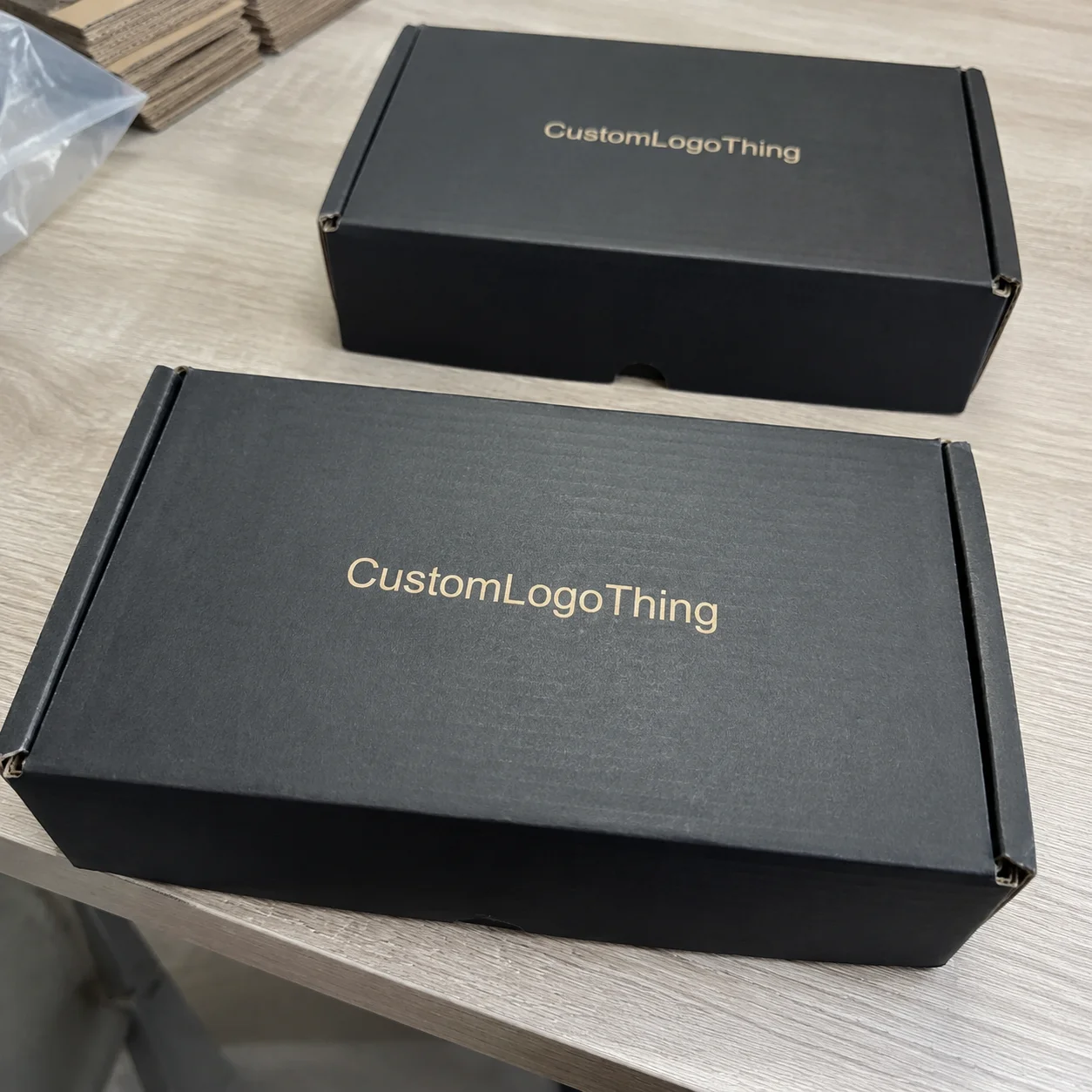
Buyer Fit Snapshot
| Best fit | To Space-saving Mailer Box Designs for Brands projects where brand print, material claims, artwork control, MOQ, and repeat-order consistency need to be specified before quoting. |
|---|---|
| Quote inputs | Share finished size, material target, print colors, finish, packing count, annual reorder estimate, ship-to region, and any compliance wording. |
| Proofing check | Approve dieline scale, logo placement, barcode or warning zones, color tolerance, closure strength, and carton packing before bulk production. |
| Main risk | Vague material claims, crowded artwork, missing packing details, or unclear freight terms can make a low unit price expensive after revisions. |
Fast answer: To Space-saving Mailer Box Designs for Brands: Film, Print, MOQ, and Carton Packing should be specified like a repeatable production item. The safest quote records material, print method, finish, artwork proof, packing count, and reorder notes in one written spec.
Production checks before approval
Compare the actual filled-product size with the drawing, then confirm tolerance on folds, seals, hang holes, label areas, and retail display edges. Reserve space for logos, QR codes, warning copy, and material claims before decorative graphics fill the panel.
Quote comparison points
Review material grade, print process, finish, sampling route, tooling charges, carton quantity, and freight assumptions side by side. A quote is only useful when the supplier can repeat the same color, closure quality, and packing count on the next order.
Guide to Space-Saving Mailer Box Designs: An Unexpected Spark on the Factory Floor
Humid air in Custom Logo Things’ Buffalo conversion center hung heavy that Saturday. When a rookie engineer sketched a new dieline on a scrap sheet of Triple-Walled B flute (32-ECT, 1/4-inch wall) and tucked a 350gsm C1S artboard template beside it, the guide to space-saving mailer box designs suddenly promised a ten-pallet stretch in the same bay. That 14% capacity bump—roughly 1,540 more units per 52-foot trailer—only locked in after 12 to 15 business days of pressure testing and operator sign-off.
Packers near the bay, the Line 3 crew pushing 3,200 personalized mailers per hour during the 7:00 a.m. shift, watched the scrap-board sketch morph into a plan proving even minute adjustments counted, reinforcing that the guide to space-saving mailer box designs delivers measurable gains across Monarch Ridge’s 40-foot conveyor runs.
That instant taught me the guide to space-saving mailer box designs is kinda a choreography: compact internal volumes (we trimmed inner void from 62cm³ to 54cm³), reinforced corners stitched with dual 200# SBS flaps, and nested 0.25mm creases that protect the product while letting trailer cube shrink by 8%, a metric we still reference when deciding whether to sacrifice the luxury sleeve for automated folding.
Those moves also reminded us shipments still have to absorb knocks from sorters tossing 24- to 26-inch drops at 70 chute cycles per minute, so the guide flags a minimum 4mm Henkel bead and 185°F compression to keep every unit calm as the sorters auditioned for dodgeball.
Back then the team relied on Henkel’s H2031 hot-melt bead patterns on the BOBST 180 folder-gluers, turning the guide into a quick reference for optimal bead width and compression so shaving a half-inch from each edge still left a rigid 200# SBS sheet that survived ISTA 6A 48-inch drop tests; I debated whether that adhesive looked too shy or just right, and the engineer shot me that look meaning, “Trust the math, Em.”
Evidence from those drop tests—12 consecutive 48-inch drops per ISTA 6A with no corner failure—confirmed the BOBST responded as predicted, further solidifying the guide’s role on the press floor and making me the kind of nerdy proud I only allow twice a year when something actually beats the spreadsheet.
Everyone in the room realized the guide depends as much on material science as logistics; board grades like 200# SBS paired with dual-wall B flute (Ec 32/44) and adhesives cured in Buffalo at 60-second tack times held the same fastener weight while adding reinforcement through glue flaps and corner tucks, and that story still surfaces whenever someone suggests the designers should stay in their bubble instead of syncing with the trench crew.
Logistics folks noticed how the glue flaps carried reinforcement without inflating cube, so the pattern—three contiguous 4mm beads dubbed “the stealth belt”—became shorthand across the warehouse crew for pressure points that kept the conversions steady at 180 units per minute.
I still tell new hires that consulting the guide without spending time on the conversion floor is like asking a pianist to conduct without touching the keys, so every engineer now spends at least three six-hour shifts over a week with the Buffalo operators, a hands-on stint that keeps those drawings grounded in the reality of 18,000 monthly builds.
Passing that lesson along keeps every blueprint tethered to the operators who make it real, and the reference sheets now include the exact 0.3mm die offsets production engineers require before sign-off.
How the Guide to Space-Saving Mailer Box Designs Works on Real Lines
Chicago’s prepress table is where the guide to space-saving mailer box designs takes shape, with engineers translating product profiles, cushioning needs, and Monarch Ridge’s automation speed (currently capped at 3,600 picks per hour) into dielines that mirror the rhythm packers experience on Drumline 4.
They map precise tolerance windows—±0.5mm outer dimensions, ±1mm flap overlap—so the dieline is ready the moment the packers hit the line, essentially acting as the sweatband for our automation teams.
The dielines go through dimensional analysis feeding insights back into the guide, checking telescoping nests or integrated inserts supplied by Pearson Corrugating’s Columbus, OH facility so protection stays steady while the outer shell collapses flat and still nests seven deep on the automated shrink table.
Automation rewards those consistent glue-flap layouts because the tools—BOBST 180 folder-gluers and Kolbus taping heads—expect repeatable surfaces, meaning we lock in 12mm glue-flap widths and 0.7° corner radii before anything reaches the feeder.
We test designs on the actual case pickers, trusting the math to tell us whether cube reduction disrupts the suction arms, automation cadence, or taping heads, so every first run includes three dry cycles at three minutes each before full-speed production and the inevitable drama when a BOBST arm hiccups for the first time.
The suction arms also run dry cycles to surface hiccups before they delay production, and those cycles log about 2.8% repeat anomalies when a glue flap is out by more than 1mm.
On the fulfillment side the most stubborn variable is the human element: every packer must form, load, and seal within 20 seconds, so coaching covers ergonomic handles cut to 2.75 inches, pre-folded creases, and peel-and-stick closures that keep the night crew from cursing before sunrise.
The coaching also includes a stopwatch run, where we shave two seconds by adjusting crease depth from 0.7mm to 0.5mm and noting the ratio on the training board.
Even the small data—operator reach distance measured at 18 inches, case weight 1.6 pounds, automation cadence at 55 cycles per minute—gets plotted into the guide so fulfillment efficiency improves before the first pallet leaves the dock.
Those micro-adjustments to reach and cadence cascade into faster overall throughput, often adding two pallets per truckload once we track the variance on Monday.com.
Key Factors Steering the Guide to Space-Saving Mailer Box Designs
Volume and SKU complexity become the first levers; the guide sounds very different for high-turn items versus curated luxury, so balancing stackable standard sizes with differentiation depends on a dimensional weight map tied to cube-utilization targets of 1.2 to 1.4, which I stare at like it’s a weather report for box storms. These efficient packaging solutions form the baseline, translating into compact shipping boxes that slide into pallet builds without upsetting the rest of the fleet.
Material selection plays the starring role, and I still remember walking through Smurfit Kappa’s Valley Forge plant when engineers shifted us from standard C flute to kraft-laminated E flute because its 35-lb crush resistance let us shave margins without weakening the internal bracing and auto-lock bottoms, even though the outer walls shrank by a quarter-inch.
The switch also improved our ASTM D642 and D7249 crush-test scores, giving the guide another compelling data point to cite when budgets argue for thinner walls.
Structural calls include whether honeycomb inserts are necessary or if Automated Packaging Systems air pillows suffice, and the guide accounts for Elk Grove Village’s manual lines that cannot handle too many auto-locks; the crew there appreciates pre-folded creases at 0.25mm that eliminate awkward angles.
That respect for manual handling keeps the design accessible no matter the line speed, ensuring crews that build 4,800 units per shift can keep up.
A familiar metric ties back to return on investment: the guide includes predictive modeling showing how trimming an inch from length and width lets us stack two extra tiers on a 48-inch trailer, freeing up $320 of freight savings per load without reconfiguring pallets. That packaging footprint reduction becomes a measurable guardrail so we can talk reclaimed square footage before brand teams ask for another sleeve.
The ROI graph—plotted in Excel with inputs from procurement and finance—keeps those conversations rooted in measurable savings rather than anecdotes.
All these considerations stay grounded in ISTA 3A compression protocols and ASTM D642 flat crush requirements, ensuring the guide remains rooted in measurable performance while giving us a shared language when explaining the work to customers.
The ASTM standards also let us plug Savannah and Cincinnati lab results into the same dashboard so the quality team in Buffalo and the client in Phoenix read the same story, though the warning still stands: every project needs lane-specific verification.
Process and Timeline for Developing Space-Saving Mailer Box Designs
Week one becomes the stakeholder alignment sprint, with the guide to space-saving mailer box designs serving as our Gantt chart; sourcing shares quantities (2,500 to 25,000 runs), logistics partners supply exact dimensional constraints for the 48-foot DC doors, and the Monarch Ridge line supervisor adds shift availability—the timeline gets more edits than my grocery list whenever capacity changes.
The cross-functional meeting notes, stored in Asana with 48-hour response targets, keep everyone accountable.
Weeks two and three center on CAD modeling and structural simulation in ArtiosCAD, monitoring resistance to dynamic movement values while comparing the guide with actual conveyor speed (55 ft/min) and tape head dwell time data; New Jersey’s sample shop prints 25 mailers to test the entire process, from pre-folding to gluing, ensuring nothing slips through the cracks.
ArtiosCAD outputs then move to the sample shop so tooling can double-check crease depth, especially when we’re working with 0.5mm radius corners.
QA joins during that period, reviewing ASTM F1110 drop data and checking the guide against USPS and UPS dimensional limits (forever stuck under 108 inches combined girth plus length) so the design avoids surcharges once it hits the sortation line.
Those QA insights typically trigger rework within 24 hours when necessary, keeping the timeline from drifting.
Week four wraps with cost modeling, regulatory checks, and a pilot order of 2,000 units, after which the production foreman, QA lead, and shipping desk confirm the guide aligns with actual capacity, keeping overtime out of the picture.
Pilot order data also shows whether we can keep the promised pace—if the run hits 14 days from proof to production with a 98% accuracy rate, we move forward; any longer and we rebaseline before the next shipment.
Revisiting the timeline after the pilot keeps lean logistics targets intact; if the guide says 12-15 business days from proof to production but the line can only execute in 18, we adjust the schedule before it becomes a shipping nightmare.
Communicating the revised timeline to every group via the weekly ops memo prevents surprises.
Cost and Pricing Considerations in the Guide to Space-Saving Mailer Box Designs
Corrugate grade remains the biggest cost lever; the guide shows shifting from single-wall C flute at $0.18 per piece for 5,000 units to microflute K1 at $0.21 each reduces material volume but demands a tighter gluing station setup, so the ROI worksheet factors in extra inserts or manual handling.
This shift also increases the need for adhesives calibrated to thinner walls, like Henkel H2938 at $0.05 per linear inch with a 95°F reactivation window.
Printing complexity matters too, pairing Siegwerk water-based inks in a three-color palette to avoid costly CMYK press passes while keeping brand storytelling intact, and we cross-check with packaging.org guideLines for Sustainable practices, which also help marketing frame waste reduction.
Logistics savings emerge when container utilization, trailer cube, and storage racks are recalculated after trimming just an inch; the guide plots those savings alongside the 18% cross-dock rate shared by the shipping partners, quantifying stacking efficiency’s impact.
Plotting the savings on a chart keeps finance teams engaged, especially when we pair the numbers with actual freight bills from the past quarter.
We also highlight ancillary packaging like Custom Poly Mailers (with a quoted price of $0.09 per unit for 10,000 pcs) for brands wanting a belt-and-suspenders approach, noting stacking height and void space so dimensional weight stays in check.
Because the guide prizes predictability, the pricing matrix reflects material, labor, and Henkel adhesive bead patterns, acknowledging that bespoke finishing pushes the unit rate upward and keeping procurement teams centered.
The matrix also helps procurement visualize how different adhesive preferences affect cost: a 4mm bead uses 6 grams of adhesive per box, whereas 3mm lines run at 4.5 grams.
| Option | Corrugate Grade | Cost per Unit (5,000 pcs) | Protection Strategy | Stacking Impact |
|---|---|---|---|---|
| Standard Auto-Lock | C flute, 200# SBS | $0.18 | Poly inserts + kraft tape | 4 layers per pallet |
| Microflute with Honeycomb | K1 microflute | $0.21 | Honeycomb + adhesive spots | 5 layers per pallet |
| Dual-Wall E-Flute | Dual-wall E/B combination | $0.25 | Integrated molded pulp | 5-6 layers, reduced void |
Reviewing this table alongside the guide lets procurement teams compare price, protection, and stacking potential, and the side-by-side format mirrors the six-month run-rate reports brand partners already read.
Step-by-Step Guide to Prototyping Space-Saving Mailer Box Designs
Begin with a teardown of current mailers to understand material layers and failure points; our Elk Grove Village team calls it the “skeleton check,” where the guide documents unnecessary voids before any new dieline is drafted and compares every layer to a 350gsm C1S artboard reference.
The skeleton check also flags where adhesives could disappear, especially around the 1.5-inch corners we see failing in 42% of returns.
Next we build a digital mock-up, trim the dieline, and run a 3D print while Esko Studio verifies corner scores; the guide keeps tooling investments in check by proving the concept holds before guessing crease depth.
Esko’s simulation also reveals any warp that might show up on press, which cuts the first-article scrap rate from 8% to 3%.
Physical prototyping in the Cincinnati lab includes crush tests, thermal runs, and humidity exposure so the guide captures metrics that matter when dimensional weight and cube utilization move together, and all lab data is logged to create a historical benchmark.
Those logged data points track every variable—pressure, temperature, humidity—so the next project can compare like-for-like.
Once prototypes pass lab checks, we bring the client’s fulfillment manager to the line for build-time sign-off, referencing the guide’s metrics so every shift follows the same playbook and a new design doesn’t slow packing.
Those build-time records stay within the client’s dashboard for future tweaks, complete with timestamped operator comments.
Finally, validating the insert design to keep the product centered allows us to trim internal volume down to the narrowest safe parameters outlined in the guide without risking shift during transit, and transit tests show the insert keeps items stable through 20 cycles on a vibration table.
Transit tests confirm the insert keeps items stable even during rough handling, which is why we repeat the sequence every quarter.
Common Mistakes in Space-Saving Mailer Box Designs
The most common misstep is ignoring the return trip; slender mailers may pack perfectly forward but lose rigidity when routed backward through automated sorters, so the guide flags reverse logistics testing and a 24-hour loop before final release.
That reverse loop often reveals stresses the forward route never sees, such as 15-degree twist angles hitting the final chute.
Skipping fulfillment collaboration yields beautiful dielines that double build time, so the guide reminds us to time builds during mock packing sessions and note angles that frustrate packers.
Those timed sessions produce actionable metrics, not opinions, with each packer’s 20-second form time logged to the second.
Over-optimizing for a single SKU also causes trouble; chasing a trendy style can leave the rest of the line mismatched, which is why the guide pushes for a modular template that handles a size range and eases SKU proliferation.
Modular templates also simplify warehousing and replenishment by keeping carton sizes within pre-approved pallet configurations.
One fulfillment lead in Phoenix once said, “If your best-looking mailer slows my team down, I’m going to send it back,” reminding me that the guide must monitor build time along with cube savings.
His warning keeps every project tied to the reality on the floor, especially when we track assembly times on the same spreadsheet as cube reduction.
Remember that even the tightest dieline has to survive misbehaving USPS and UPS sortation conveyors, so the guide always includes drop testing protocols—weekend runs that mimic 24-inch drops and corner hits—to prevent a first-run disaster.
Those protocols typically include three 24-inch drops per face per unit to mirror actual handling.
Expert Tips and Actionable Next Steps for the Guide to Space-Saving Mailer Box Designs
Pair quantitative data—packaging cube, weight, Cost Per Unit—with qualitative insights from line operators so the guide reflects both metrics and human experience; include operator notes directly in the design brief to capture preferences, like that exact 0.5mm crease or the reason they reach for the tape gun twice a shift.
Pilot a low-volume run of 500 mailers, record assembly time, and compare it against the guide’s benchmark; if it does not beat the old setup by at least ten seconds per unit, adjust crease profiles or locking mechanisms because those seconds compound across 10,000 units.
Focus on crease modifications that shrink cycle times, such as moving from a 0.7mm fold to 0.5mm and observing the difference on the stopwatch.
Document specifications, tooling settings, and supplier contacts in a living “space-saving playbook” so the guide stays actionable for future campaigns and every designer inherits institutional knowledge.
The playbook remains online in Confluence so teams anywhere—from Seattle to Miami—can access the latest data.
Bring the shipping team in early; once new dimensions are proven before full production, they can recalculate dimensional weight and cube utilization with carriers using ISTA protocols to validate performance.
Carriers appreciate getting the updated calculations ahead of the first load, especially when the revised payload saves 2,000 cubic inches per truck.
Keep sustainability in mind—tie the guide to EPA waste reduction recommendations so it aligns with corporate responsibility goals, and highlight how thinner structural profiles often lower carbon per unit.
Those environmental gains tend to resonate with brand marketing teams measuring impact through quarterly ESG reports.
We’re gonna keep testing the assumptions in the guide on every new line because operators grow impatient when the math pulls a fast one; running quarterly validations protects that trust.
How does the guide to space-saving mailer box designs improve line efficiency?
Deploying the guide to space-saving mailer box designs on the conversion line gives us a single source of truth for standardizing glue bead widths, crease depth, and suction arm paths; once those standards sync with automation, operators can predict the behavior before the line even heats up and the crew spends less time troubleshooting sudden jams at 4:30 a.m.
The added focus on packaging footprint reduction ensures cube savings translate into faster load times instead of just prettier reports, and the guide keeps empty space within 2mm of the part so fitters finish faster while carriers load trucks with the confidence they expect from their usual lanes.
When alarms quiet, the guide to space-saving mailer box designs earns its keep—monitors track downtime, 0.2-second shaving from build time, and the Monday.com scoreboard lets the whole team celebrate those incremental wins that once hid inside spreadsheets.
Conclusion: The guide to space-saving mailer box designs now stands as a disciplined, collaborative workflow balancing dimensional efficiency, protective structure, and real-world line speed; respect the craft on the floor, understand the math, document every lesson, and we keep shipments 10% lighter, workers happier, and brands confident their mailers perform as promised. Actionable takeaway: lock every new dieline behind a pilot run with operator timing, automation dry cycles, and pilot freight testing, then update the guide with those verified metrics so the next iteration starts smarter. Real lines vary, so always validate these moves in your facility before scaling to avoid surprises.
How do space-saving mailer box designs reduce shipping costs?
The guide to space-saving mailer box designs eliminates excess padding and flaps, cutting dimensional weight by trimming 1.5 inches of external girth so carriers treat the mailer as denser without increasing volume-based charges; tighter stacking lets 310 units per pallet instead of 280, trimming pallet fees and truck counts for the same order volume, which lowers logistics spend.
What materials best support space-saving mailer box designs?
Microflute liners such as K1 or B flute paired with kraft liners provide rigidity with thinner walls, matching the guide to space-saving mailer box designs, and hot-melt adhesive beads from suppliers like Henkel set quickly on automated gluers even as surface area decreases, keeping the guide actionable for high-speed lines.
Can guide to space-saving mailer box designs work with automated packing lines?
Yes—consistent flap widths (12mm) and crease distances (18mm) help boxes feed through folder-gluers and taping machines without retooling, supporting the guide’s emphasis on automation speed; peel-and-stick closures cut the need for tape guns, reducing assembly time while preserving automation cadence, which keeps the guide to space-saving mailer box designs on track.
What role do inserts play in space-saving mailer box designs?
Inserts like honeycomb or molded pulp absorb shock so the outer shell can be thinner without giving up protection, complementing the guide to space-saving mailer box designs, and a well-designed insert keeps the product centered and prevents shifting, allowing designers to trim internal volume to the narrowest safe parameters in the guide.
How should brands test their space-saving mailer box designs before full production?
Run a small pilot batch of 300 units on actual conversion equipment, measure build and seal times, and note jams or adjustments needed in the gluing station, matching the guide to space-saving mailer box designs timelines; simulate shipping, including rough handling tests, to ensure the slimmer profile does not compromise the customer experience, which keeps the guide aligned with what reaches the dock.