Two folded tees can land on a retail table looking like they came from completely different brands, and the bag is usually the reason. Thin, cloudy film makes a nice garment look ordinary. The right sleeve does the opposite. It keeps the product clean, organized, and a little more expensive-looking without trying too hard.
That is why clear Resealable Poly Bags for Apparel brands material comparison is not just packaging nerd behavior. It affects shelf appeal, warehouse efficiency, and how many repacks your team has to deal with later. A bag that looks cheap in a sample almost always looks worse after a few carton movements and a long shipping lane. Physics is rude like that.
Clear Resealable Poly Bags are simple on paper. They are transparent plastic sleeves made from films such as LDPE, LLDPE, or polypropylene, with either an adhesive flap or a zipper-style closure. In practice, the choice is less about “clear bag yes or no” and more about which film performs well with your garment weight, folding method, packing speed, and presentation target.
Why material choice shapes apparel presentation
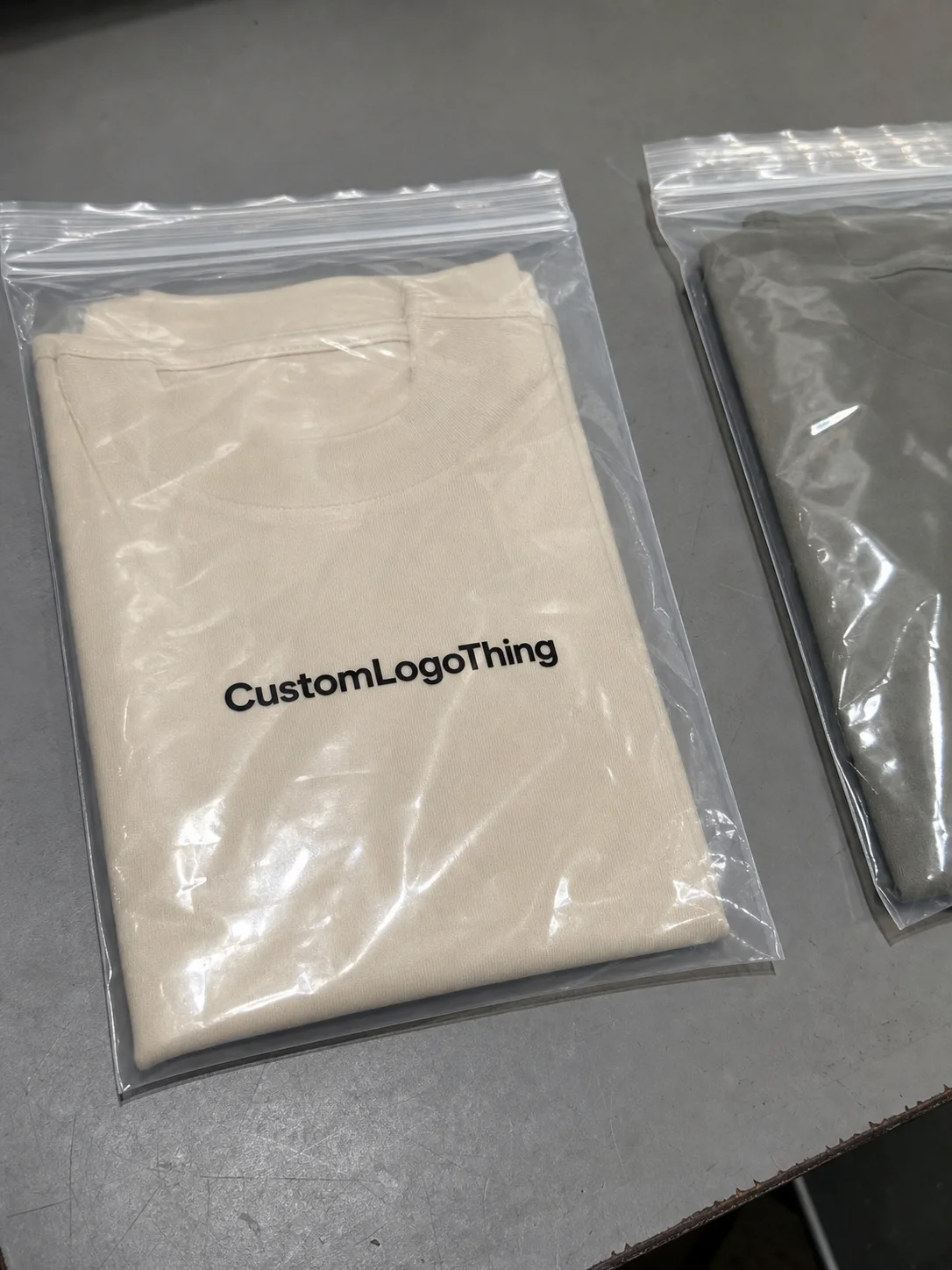
Apparel buyers usually compare bag materials because presentation and protection pull in different directions. A crystal-clear film can show off a folded shirt, label, and hang tag. But if the closure is weak or the gauge is too light, the bag may wrinkle, haze, or pop open during handling. That means repacking. Repacking burns labor, and labor is never cheap.
The bag also changes how the product is perceived before anyone even touches the garment. Retail basics often need a clean, neutral presentation. Premium basics need a cleaner one. A simple sleeve can support both, but only if the film has enough clarity, the seal is consistent, and the thickness matches the product weight.
Most apparel brands end up evaluating four main material families: LDPE for softness and flexibility, LLDPE blends for extra toughness, PP for a brighter, crisper look, and recycled-content structures for brands trying to reduce virgin resin use. There are also biodegradable claims floating around, and some of them are more marketing than packaging performance. If the bag still has to protect a folded tee through picking, packing, shipping, and a customer return, the film has to earn its place.
Clear apparel bags are not isolated from the rest of the packaging system either. They sit beside cartons, inserts, labels, and sometimes poly mailers. If you are comparing formats, it helps to look at the packaging as a whole instead of pretending each item lives in a vacuum. It does not.
Packaging-specific resources can help buyers understand material and structural tradeoffs before samples are ordered.
How resealable closures and film construction work together
A bag’s film and closure have to match. If the film is too limp, the sleeve folds over itself and looks sloppy in the carton. If it is too stiff, it can slow packing and make the garment harder to insert cleanly. Good packaging is usually boring in the best way: it opens easily, closes reliably, and does not fight the line.
There are two common reseal formats. An adhesive flap is fast and common for folded apparel. It works well when the bag is opened once in the warehouse and maybe again by the customer. A press-to-close zipper-style seal is better when the bag needs to be reused, such as for returns processing, multi-piece sets, or retail handling where product is inspected more than once.
Film construction affects feel as much as appearance. Gauge, softness, gloss, puncture resistance, and surface slip all change the way the sleeve behaves on the line. A 1.5 mil bag might look fine in a sample but show stress marks after a heavyweight hoodie is packed into it. A 2.5 mil version can feel more premium, but if the closure is overly stiff, packers may slow down because the bag takes too much effort to open and seal.
Cold rooms, rough carton movement, and high compression during fulfillment can also change the look of a bag after sample approval. That is why empty-bag testing is not enough. A clear sleeve can look perfect in a hand sample and then crease, haze, or burst at the seal once real garments are packed tightly. Real product testing beats wishful thinking every time.
A good apparel bag should do three things at once: show the product clearly, stay closed under normal handling, and open without turning packing into a fight.
For brands that want to judge performance more seriously, common references include ASTM methods for material testing and ISTA distribution testing for shipping conditions. Those standards do not pick the bag for you, but they do help separate “looks fine” from “survives actual transit.” If your packaging program includes sustainability targets, EPA recycling guidance is also useful background: EPA recycling resources.
What to check before requesting samples
Samples are only useful if the evaluation criteria are clear. For a Clear Resealable Poly Bags for apparel brands material comparison, the first things to compare are clarity, seal strength, thickness, puncture resistance, and print or label compatibility. That gets you much closer to real performance than staring at a glossy sleeve under warehouse lights and calling it a day.
Clarity and gloss determine how visible the garment really is. A bag can be “clear” and still have haze, glare, or slight distortion that dulls the look of printed graphics and care labels. For fashion basics, that can reduce the premium feel. For graphic tees, socks, or anything with visible branding, it can affect shelf appeal more than people expect.
Seal strength matters because the bag has to stay closed, but not become annoying to open. Too much opening force slows the line and frustrates packers. Too little and the closure can fail during transit, especially if cartons are compressed or stacked. Adhesive quality, seal width, and film finish all play into that balance.
Thickness and toughness should be reviewed together. A lighter gauge lowers unit cost and can work fine for tees or accessories. Thicker film usually improves puncture resistance and gives a more substantial hand feel. But thicker is not always better. Some garments pack more cleanly in softer film because it conforms around the fold instead of springing back and fighting the closure.
Ask early whether the bag needs a logo, barcode, care instructions, or tamper-evident label. Surface consistency matters if the sleeve has to do more than protect product. A slick surface can reduce label adhesion, while certain matte or textured finishes can change clarity. If branding is part of the spec, it belongs in the material decision from the start.
| Comparison point | What to look for | Why it matters |
|---|---|---|
| Clarity | Low haze, low distortion, clean gloss | Improves product visibility and shelf presentation |
| Seal strength | Easy to open, secure when closed | Speeds packing and lowers accidental opening risk |
| Thickness | Matched to garment weight and handling | Impacts puncture resistance and perceived quality |
| Surface behavior | Stable finish and label adhesion | Supports branding and barcodes |
Material comparison for clear resealable poly bags for apparel brands
No single resin wins every situation. The right choice depends on garment weight, handling risk, launch budget, and how polished the item needs to look in the customer’s hands. A bag that works for a basic tee may be a bad fit for a heavyweight hoodie. Same with the reverse. A lot of packaging problems start with someone assuming all folded apparel behaves the same. It does not.
LDPE
LDPE is the workhorse for a lot of apparel packaging. It is soft, flexible, and usually easy to seal. That flexibility helps when packing tees, socks, loungewear, and other lighter items that do not need a rigid sleeve. LDPE often gives solid clarity at a reasonable cost, and it tends to handle folding without feeling noisy or overly stiff.
For everyday apparel, LDPE is often the most balanced option. It is not always the toughest film, but it usually performs well when the bag is properly sized and the closure is reliable. If the item is light and the shipping lane is normal, LDPE is often the safest place to start.
LLDPE blends
LLDPE blends are commonly chosen when puncture resistance matters more. They can feel tougher than straight LDPE at similar thickness, which helps with denser folds, sharper garment edges, or packaging that sees a lot of carton movement. If your team handles returns, rework, or bulkier folded items, that extra toughness can prevent a lot of nonsense later.
The tradeoff is feel. Some blends are less soft than LDPE, so the bag may not drape as nicely. Still, for heavier hoodies or items that travel through more handling steps, LLDPE is often worth the small sacrifice in hand feel. It is one of those specs that looks boring on paper and saves time in production.
PP
Polypropylene usually gives a bright, crisp presentation, and that can look excellent on retail shelves. The film often has a sharper visual character than LDPE, which some brands prefer for premium basics or specialty fashion pieces. It can make a product look neat and modern without extra branding.
That said, PP can be less forgiving in some packing environments. Cold rooms, high-friction lines, and repeated bending can expose stiffness or cracking concerns if the spec is not matched well. So while PP may win on shelf appeal, it should be tested under the actual operating conditions, not just under ideal sample-room lighting.
Recycled-content and recyclable options
Recycled-content options are getting more attention from brands that want to reduce virgin resin use. These bags can support sustainability goals, but buyers need to verify film performance, clarity, and closure quality. A recycled-content film that clouds too much or tears too easily will not help the brand story. It just gives sustainability a bad name and makes the packaging look tired.
Also, recyclable and biodegradable are not the same thing. They are often thrown around like they mean the same thing, which is convenient for marketing and annoying for everyone else. If the brand wants to make a sustainability claim, the film structure, local recovery options, and labeling should all line up. If other packaging components use FSC certified paper or recycled materials, that can fit into the broader system, but the apparel bag still needs to perform on its own.
For most brands, the best choice is the one that fits the garment and the channel. A light tee sold direct-to-consumer may need a different spec than a heavyweight sweater sold through retail. That sounds obvious. Apparently it still needs saying.
Cost, pricing, MOQ, and unit cost basics
Price is driven by a handful of variables: material type, thickness, bag dimensions, closure style, print coverage, and order quantity. That means a “simple clear bag” quote can vary more than people expect. A small change in width or gusset can shift resin usage enough to move pricing, especially at larger volumes.
For apparel runs, unit cost usually drops as MOQ rises. That only helps if the order size fits storage space and cash flow. Ordering 50,000 bags to save a couple of cents per unit is not a win if the warehouse ends up holding them for two seasons. Packaging savings are only savings if they do not create inventory pain elsewhere.
As a rough budgeting guide, lighter unprinted apparel bags generally land in a lower price band, while heavier-gauge or custom-printed versions cost more. It is better to compare price bands than chase a single cheap number. A basic clear adhesive bag in a common size can price very differently from a thicker zipper-style bag with logo printing, even if both are transparent and resealable.
Look at the bag’s total value. Does it reduce repacking? Does it improve presentation enough to support a higher shelf price? Does it protect product well enough to reduce dust marks or scuffing? That is the right way to judge unit cost.
Typical pricing logic buyers use:
- Material cost rises with tougher films and specialty resin content.
- Closures add cost, especially zipper-style formats.
- Print and label requirements can add setup and production time.
- Higher quantities usually lower the per-bag price.
Production steps, process, and lead time from quote to delivery
The workflow is usually straightforward, but speed depends on how complete the brief is. First comes specs gathering: bag size, target thickness, closure type, quantity, and any branding requirements. Then the supplier recommends a material and may provide samples or a proof approval step before production. After that come artwork confirmation, production, packing, and freight scheduling.
Projects move fastest when the buyer provides exact dimensions, a clear folded garment target, and final artwork in a usable format. If the bag needs logo print, barcode placement, or special labeling, settle that early. Back-and-forth on artwork is one of the most common schedule killers, and it tends to show up right when the team is already counting down to launch.
Lead time varies based on whether the bag is a stock-style spec or a made-to-order run. Inventory availability, order size, and any tooling or print setup needs all affect timing. For many custom apparel packaging jobs, a realistic window is around 12 to 15 business days from final proof approval, but that depends on material availability, factory workload, and freight choice. Rush orders can happen sometimes, but only when the spec is simple and production capacity is open.
If the order is tied to a seasonal launch, build in time for sample review. That sounds conservative until you miss it once. Tight calendars do not leave much room for corrections, and a one-week delay on packaging can hold up an entire apparel drop.
Common mistakes apparel brands make when choosing bag film
The first mistake is choosing the thinnest film just to save money. It looks smart on a spreadsheet and then costs more in repacking, damaged product, or returns. A bag that tears in packing is not a bargain. It is a future problem wearing a discount.
The second mistake is ignoring the closure. A bag can look great in a sample and still fail if the adhesive weakens, the seal is too hard to open quickly, or the zipper style does not suit the packing pace. If workers have to fight the bag, the line slows down and consistency drops.
Third, many brands use one material for every SKU. That rarely works. Lightweight tees, dense hoodies, and small accessories do not behave the same way in the same sleeve. One spec for all of them usually means compromise everywhere.
Another common miss is skipping sample testing with real folded garments. Empty bags do not reveal bulk, label visibility issues, or how the closure behaves under pressure. That is where fit problems hide.
Finally, some teams use sustainability language that does not match the construction. If the bag contains recycled material, say so clearly. If it is not biodegradable packaging, do not imply that it is. Buyers trust direct labeling, especially when they are comparing apparel bags with kraft paper mailers, corrugated cartons, or other packaging formats.
Expert tips for choosing the best clear bag spec
Test with real product folds, not empty bags. It sounds basic because it is basic, and it is the fastest way to spot trouble. A folded hoodie changes bag fill, seal pressure, and carton fit enough to make a “good” sample fail in practice.
Ask for side-by-side samples in two or three gauges. Comparing them together makes the differences in clarity, stiffness, and opening force much easier to judge. A small increase in thickness may be worth it if it reduces tears or improves the retail feel.
Consistency matters more than squeezing out the lowest quote. Stable film thickness, reliable seals, and clean edges produce fewer headaches than a bargain spec that varies from run to run. That is especially true once you are shipping at scale and every packing error turns into labor cost.
My short checklist for buyers:
- Use real garments in testing.
- Compare closure feel, not just appearance.
- Check clarity under retail lighting.
- Confirm label and barcode performance.
- Match the film to the garment weight and channel.
For brands building packaging systems across multiple formats, keep the bag aligned with the rest of the line. A clean clear apparel sleeve next to branded inserts, FSC certified paper elements, or recycled-content cartons makes the whole package feel deliberate instead of patched together. That kind of consistency usually reads better to buyers than one flashy component trying to do all the work.
If you need a broader view of structure and branding options, seeing how different pack setups are used in real product categories can make the tradeoffs easier to judge. Browse Case Studies if you want to compare how packaging specs change across apparel types.
For brands comparing Clear Resealable Poly bags for apparel brands material comparison across multiple SKUs, the goal is not to find one perfect film. It is to find the right film for each product class, keep the packing line moving, and protect the brand’s presentation from warehouse to customer.
What material is best for clear resealable poly bags for apparel brands material comparison?
For many apparel brands, LDPE is the most balanced option because it offers flexibility, decent clarity, and reliable sealing behavior. LLDPE is often better when puncture resistance and toughness matter more than softness. PP can look very crisp, but it may not fit every packing environment.
How do I choose the right thickness for apparel packaging?
Match thickness to garment weight and handling risk rather than choosing the thinnest possible film. Light tees and accessories often work well in lighter gauges, while hoodies or heavier folded items usually benefit from thicker film. Sample with real products to confirm that the bag seals properly and still looks clean.
Does a resealable closure slow down packing operations?
It can if the seal is too tight or inconsistent, but a well-designed closure usually improves efficiency because workers can open and reseal quickly. Adhesive flaps are often simple and fast, while zipper-style closures may add a little time but improve reusability. The right closure depends on your line speed and how often the end customer will reuse the bag.
What affects the price of clear resealable poly bags the most?
Material choice, thickness, bag size, closure type, and order quantity are the biggest cost drivers. Print requirements and special features can also raise pricing. Higher MOQ usually lowers unit cost, but the total spend should still fit storage and cash flow.
How long does the process usually take from quote to delivery?
Lead time depends on whether the bag is a stock-style spec or a custom-made order. Fast approvals on size, material, and artwork shorten the schedule significantly. Sampling, revisions, and freight timing are the most common reasons projects take longer.


