If you are planning Clear Resealable Poly Bags for cosmetic brands moq planning, the real question is not “what bag looks good?” That part is easy. The harder question is whether the bag protects the product, supports the launch timeline, and avoids tying up cash in inventory before the SKU proves itself. Cosmetic packaging has a habit of looking simple right up until the purchase order lands.
A clear resealable bag can make a lip gloss set, sampler kit, or bath bundle look organized and retail-ready while still helping with dust control, minor leak containment, and pack-out efficiency. That balance matters. Visibility helps merchandising, resealability helps the customer, and the right MOQ keeps the program from turning into an expensive warehouse resident.
Why Cosmetic Brands Use Clear Resealable Poly Bags to Protect Margin and Presentation
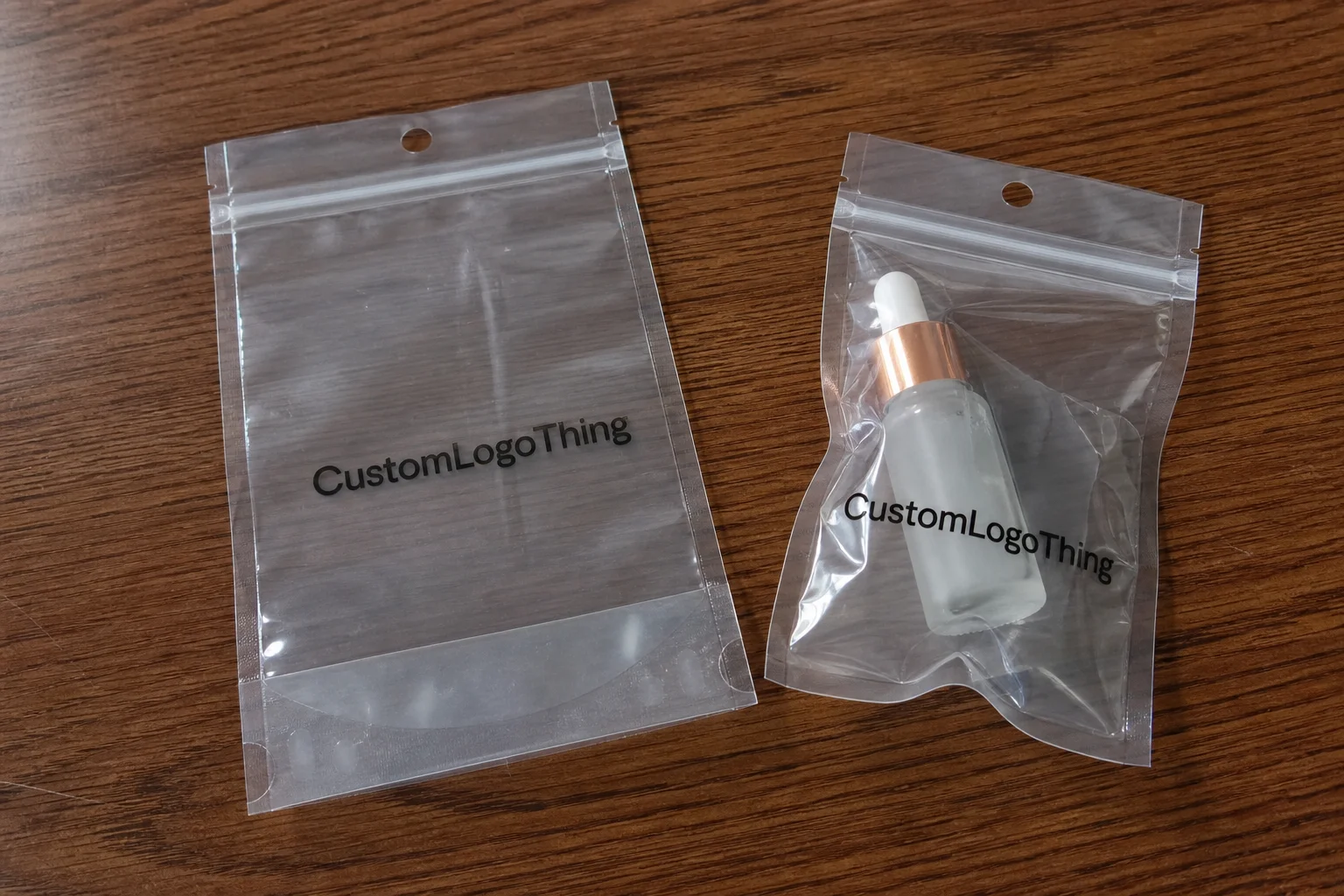
Clear bags sell because they show the product. In cosmetics, that visual proof is useful whether the item is headed for direct-to-consumer shipping, a counter display, or a subscription box. A transparent bag tells the buyer what is inside without opening anything, which reduces handling and keeps the product looking tidy through fulfillment.
Clear Resealable Poly Bags for cosmetic brands moq planning usually starts with a familiar launch problem: the brand wants a premium look, but it also needs a secondary package that does not push unit cost off a cliff. That is why these bags show up so often for lip gloss sets, sheet masks, bath bombs, travel kits, applicators, swatches, promotional inserts, and mixed-item bundles. They keep small components together when a fulfillment team has to pick, pack, and ship quickly.
The money side matters just as much as the appearance. MOQ is not only a factory rule. It is a cash-flow decision. Higher quantities usually lower the unit price, but they also increase storage demand and lock up money in inventory that may move more slowly than the forecast promised. If the SKU is still changing, that trade-off needs real attention before the order goes out.
The most common mistake is treating a low bag price as the whole story. If the size is wrong and the pack-out slows down, if the closure fails during fulfillment, or if the brand overbuys before the artwork is settled, the “cheap” option gets expensive in a hurry. Bag selection needs to be treated as a margin decision, not a last-minute box to tick.
“The best cosmetic packaging solution is the one that looks right, packs fast, and does not force the brand to carry more inventory than it can comfortably sell.”
For buyers who need broader context on packaging choices and recovery questions, general industry references such as the Institute of Packaging Professionals and sustainability guidance from the EPA are useful starting points. They do not pick the bag for you, obviously, but they do help frame the decision.
Material, Closure, and Finish Options That Affect Shelf Appeal
Most clear cosmetic poly bags are made from polyethylene, usually LDPE or a similar film structure. That gives the bag flexibility, light weight, and decent resistance to small tears and handling wear. For lighter promotional items, a thinner gauge may be enough. For heavier sets, glass jars, or products with sharper edges, a thicker film generally performs better and feels more substantial in the hand.
The closure matters too. Zip lock and press-to-close styles are common because they are fast for fulfillment and easy for the customer to reopen. Adhesive flap closures can work well for presentation packs, especially if the bag is not meant to be opened repeatedly. Hang holes help with retail display, while euro slots are useful when the bags need to sit neatly on pegs or hooks.
Clarity is another buying point that gets overlooked. Virgin material usually gives better transparency than recycled-content film, so if the brand wants crisp visibility for pigments, labels, or product color, that extra cost can be justified. Frosted or anti-static options may be a better fit when the look should be softer or when small items tend to cling during packing.
Optional details can add value, but only if they actually help the package do its job. A printed logo panel improves brand recognition. A barcode area helps warehouse scanning. Vent holes can be useful for certain inserts or contents that need a little airflow. Gussets add room for multi-item kits and make stacking easier in cartons. None of those features are “nice to have” unless they support the way the product moves through the supply chain.
For brands comparing packaging formats, it can help to benchmark against other flexible options such as Custom Poly Mailers or other Custom Packaging Products when the same launch needs both presentation and shipping protection.
Before a quote is requested, confirm whether the bag is intended as secondary packaging or for direct product contact. That distinction affects material choice, odor expectations, and the cleanliness standard the brand should ask for during production. If the bag will hold liquid-filled items, the team should also check compatibility with the product shape and any leakage risk. A pretty bag is not much help if the seal gives up halfway to the customer.
Specification Checklist for Custom Sizing, Thickness, and Compliance
Clear Resealable Poly Bags for cosmetic brands moq planning goes much smoother when the spec sheet is finished before quoting begins. The useful starting points are width, length, gusset depth, film thickness, closure style, print coverage, and carton pack count. If those are fuzzy, the quote may look attractive at first and then drift once the details get real.
Thickness is one of the simplest ways to control performance and cost. Thinner film can reduce cost per piece and may work well for sample sachets, swatches, or light inserts. A thicker gauge improves puncture resistance, reduces the chance of seal damage, and usually feels more premium for glass jars, compacts, or mixed kits with sharper corners. In practice, many cosmetic launches land in the middle range because the bag has to do a bit of everything.
Size planning deserves more attention than it usually gets. A bag should fit the product with enough headroom for the resealable closure to shut cleanly, but not so much extra space that items slide around and look loosely packed. If the kit includes an insert card, applicator, or promotional sample, build that into the dimensions early. A fit that looks fine on a spreadsheet can feel awkward on a packing table.
Compliance in cosmetic packaging is not the same as food-contact packaging, but clean manufacturing still matters. Low odor, consistent seals, and stable film quality affect how the brand is perceived. If the product is being sold through retail or a regulated channel, buyers should also ask how the supplier handles contamination control, traceability, and lot consistency. Standards like ISTA help when the shipment will face parcel handling, drop risk, or rough distribution.
Pre-production samples are worth the time when the bag is part of a new kit or bundle. A sample shows whether the closure feels right, whether the seams run straight, and whether the actual product stack behaves the way the drawing suggested. If the artwork, fill weights, or kit contents are still changing, a sample approval can prevent a costly re-run later.
| Option | Typical Use | Cost Impact | Performance Notes |
|---|---|---|---|
| Thin clear poly bag | Samples, swatches, lightweight inserts | Lowest cost per piece | Good visibility, lower puncture resistance |
| Medium gauge resealable bag | Lip gloss sets, sheet masks, bundled kits | Moderate unit cost | Best balance of presentation and durability |
| Thick clear bag with gusset | Heavier kits, glass jars, mixed products | Higher cost per piece | Better shape retention and handling strength |
| Printed clear bag | Retail-ready cosmetic programs | Higher due to print and setup charges | Improves branding, but requires tighter artwork control |
MOQ, Cost, and Unit Price Factors Buyers Should Model Early
MOQ is usually driven by material consumption, bag size, whether the order is plain stock or custom printed, and how much setup is needed on the production line. A simple clear bag can have a lower minimum than a printed one because there are fewer tooling fees and less press setup. Once print colors, custom sizing, or specialty closures enter the picture, the supplier may need a larger run to make the economics work.
The useful question is not “what is the lowest quote?” It is “what does the quote actually include?” The answer should separate unit cost, setup charges, sample fees, freight, and any finishing costs such as printing, perforation, or special packing instructions. If those items are mixed into one number, it becomes hard to compare offers or calculate true landed cost. That is how people end up surprised by their own purchase order. Not ideal.
Here is the kind of quantity thinking that helps finance and operations stay aligned:
| Quantity Tier | Typical Use Case | Unit Price Trend | Inventory Risk |
|---|---|---|---|
| Small pilot run | New SKU test, limited launch, seasonal kit | Highest cost per piece | Lowest risk, easiest to change |
| Mid-size production run | Proven product with moderate demand | Better bulk pricing | Balanced cash use and supply coverage |
| Large run | Core SKU, steady replenishment item | Lowest unit cost | Higher storage and carry cost |
A launch team should model at least two or three quantity levels before sign-off. That lets marketing see the budget impact, operations judge warehouse space, and finance compare unit cost against expected sell-through. If the artwork may change, or if shade names and bundle contents are still under review, a smaller initial run is usually the safer call even when the per-unit price is a little higher.
One practical move: ask for pricing at different breakpoints, such as 5,000, 10,000, and 25,000 pieces, if those quantities are realistic for the program. The spread between those numbers usually says more than a single quote ever will. It shows where setup charges are being absorbed and where the real savings start.
For brands that care about sourcing and recovery questions, FSC can be useful when paper components are part of the broader packaging mix. It does not change the bag spec, but it does help the sustainability conversation stay grounded in something other than vibes.
Production Steps, Lead Time, and Approval Milestones
Most programs follow the same basic path: inquiry, spec confirmation, artwork review, sample or proof approval, production, quality check, packing, and shipment. The exact timing depends on whether the bag is plain or custom printed, but the approval steps are what keep the job from drifting. A clear bag may move faster than a decorated carton, yet missing dimensions or delayed artwork can still stall the order for days.
From a planning standpoint, the biggest delays usually come from unclear reseal requirements, late quantity changes, unapproved artwork, or shipping details that arrive after the run is already scheduled. Those issues are easy to avoid if the launch calendar includes packaging deadlines, not just product fill dates. A bag that arrives after the product is packed is not a packaging solution; it is a storage problem.
A realistic timeline often includes quote response, sample or proof review, production, and freight booking. Plain clear bags generally move faster, while custom printed runs take longer because of proofing and setup. For many cosmetic programs, a clean approval process reduces the risk of repeated corrections and keeps the order inside the launch window.
For a brand with multiple launch dates, it helps to map the bag schedule against filling, labeling, and warehouse receiving. If the product will be assembled by a co-packer, they need the right carton counts and pack configuration in advance. If the brand fulfills in-house, the team should know exactly how the bags arrive, how many units are in each carton, and whether any secondary packing is needed before distribution.
What to Look for in a Packaging Partner for Cosmetic Bag Programs
A strong supplier for cosmetic bag programs should be comfortable with repeat orders, stable sizing, consistent seal quality, and direct communication on spec changes. Cosmetic packaging is small compared with some industrial packaging, but the expectations are high because the bag is often visible to the customer right away. If the edges are uneven, the seals wander, or the closure feels weak, the package can hurt the brand impression even if the product itself is excellent.
Quality control matters a great deal here. Buyers should ask what the supplier checks before shipment: dimensional accuracy, clarity, seal integrity, closure function, print alignment if applicable, and carton packing details. A supplier should be able to provide written specs and, when appropriate, production photos or sample confirmation so the approved order is easy to match against the finished goods.
Flexibility is another sign of a good partner. A seasoned packaging contact can suggest a slightly different thickness, a better closure style, or a smarter carton count if the goal is to lower freight damage or reduce labor at receiving. That kind of advice is useful because it connects packaging design to the realities of warehouse handling.
There is also a relationship benefit that buyers sometimes undervalue. A vendor who understands Clear Resealable Poly Bags for cosmetic brands moq planning can help a brand avoid overbuying, keep inventory in line with demand, and still maintain a reasonable unit cost. That matters more than shaving a fraction of a cent off the quote and then discovering the order pattern no longer fits the business.
If you want a broader view of service capability, sample handling, and packaging categories, our Case Studies and FAQ pages are useful places to see how packaging choices are usually evaluated before a program is approved.
Next Steps to Order Clear Resealable Poly Bags for a Cosmetic Launch
Start with a simple spec sheet. Include product dimensions, target quantity, bag style, closure type, print requirements, and delivery deadline. If the product is a kit, list every item that has to fit inside the bag. If the bag is for retail display, say so clearly, because that changes how the closure, clarity, and carton pack count should be handled.
Then gather two or three quantity scenarios. That gives you a real view of MOQ, bulk pricing, and inventory exposure before you commit. A launch team makes better decisions when it sees how unit cost changes across different levels instead of chasing one number that may not fit the plan.
Request a sample or proof whenever the bag is new, the contents are mixed, or the items are fragile. A fit check for Clear Resealable Poly Bags for cosmetic brands moq planning should confirm not just size, but also how the closure feels, how the contents sit, and whether the final look supports the brand position. It is much easier to adjust a spec at sample stage than after production starts.
Finally, confirm packing and freight details early. Make sure the warehouse knows the carton count, master carton size, and delivery timing so receiving does not create a bottleneck. When the packaging, fill schedule, and launch calendar line up, the bag program becomes one less thing to worry about.
If you are pricing a launch, send your product dimensions, artwork, and order range, and ask for a quote built around clear resealable poly bags for cosmetic brands moq planning that protects margin without overcommitting inventory.
What MOQ should cosmetic brands expect for clear resealable poly bags?
MOQ usually depends on bag size, thickness, and whether the order is plain or custom printed. Larger runs generally improve unit cost, while smaller runs are useful for pilots or new SKU tests. Ask for multiple quantity breaks so you can compare launch risk against per-bag savings.
Are clear resealable poly bags suitable for lip gloss, samples, and small kit items?
Yes, they are commonly used for lip gloss sets, sachets, swatches, samples, and bundled kits. The key is choosing the right thickness and size so the closure seals cleanly without stressing the seam. Heavier or sharper items may need a thicker film or a gusseted format.
How does thickness affect pricing and durability for cosmetic packaging?
Thicker film generally increases cost but improves puncture resistance and the premium feel of the bag. Thinner film lowers cost and may work well for lightweight samples or secondary packaging. The best choice depends on product weight, shipping method, and display expectations.
How long does production usually take after artwork approval?
Timing depends on whether the bag is stock or custom printed, plus current production workload. Plain clear bags typically move faster than decorated runs because they require less setup. A clean approval process with final specs and artwork ready usually shortens lead time.
What information should a brand send to get an accurate quote?
Send product dimensions, desired bag style, closure type, thickness preference, print requirements, and target quantity. Include whether the order is for retail display, fulfillment, or direct product contact. If possible, share a sample or photo so the manufacturer can confirm fit and recommend the right spec.


