Buyer Fit Snapshot
| Best fit | To Adhesive Strip Mailers projects where brand print, material claims, artwork control, MOQ, and repeat-order consistency need to be specified before quoting. |
|---|---|
| Quote inputs | Share finished size, material target, print colors, finish, packing count, annual reorder estimate, ship-to region, and any compliance wording. |
| Proofing check | Approve dieline scale, logo placement, barcode or warning zones, color tolerance, closure strength, and carton packing before bulk production. |
| Main risk | Vague material claims, crowded artwork, missing packing details, or unclear freight terms can make a low unit price expensive after revisions. |
Fast answer: To Adhesive Strip Mailers: Material Claims, Seal Quality, and Freight Cost should be specified like a repeatable production item. The safest quote records material, print method, finish, artwork proof, packing count, and reorder notes in one written spec.
Production checks before approval
Compare the actual filled-product size with the drawing, then confirm tolerance on folds, seals, hang holes, label areas, and retail display edges. Reserve space for logos, QR codes, warning copy, and material claims before decorative graphics fill the panel.
Quote comparison points
Review material grade, print process, finish, sampling route, tooling charges, carton quantity, and freight assumptions side by side. A quote is only useful when the supplier can repeat the same color, closure quality, and packing count on the next order.
The guide to adhesive strip mailers starts with a simple truth I’ve seen on more packing floors than I can count: a lot of shipping damage, leaks, and returns come from a weak closure, not from the mailer body itself. I remember standing beside a case packer in a New Jersey fulfillment center where a product looked fine all the way through boxing, only to pop open later because the tape line was rushed and uneven. That is exactly why the guide to adhesive strip mailers matters for brands that want cleaner pack-outs, fewer mistakes, and a more dependable seal with less manual effort, especially when the pack bench is moving 400 to 800 orders per shift.
At Custom Logo Things, we talk about packaging the way a plant manager does: by looking at film thickness, adhesive behavior, pack speed, and what actually happens when the carton hits a conveyor, a dock door, or a delivery van. A good guide to adhesive strip mailers should not be about flashy claims. It should help you match the right construction to the product, the warehouse rhythm, and the customer expectation. Honestly, I think that practical fit is where most packaging decisions succeed or fail, and I’ve seen that difference show up as clearly as a $0.12 unit cost spread on a 5,000-piece purchase order.
What Are Adhesive Strip Mailers? A Simple Definition
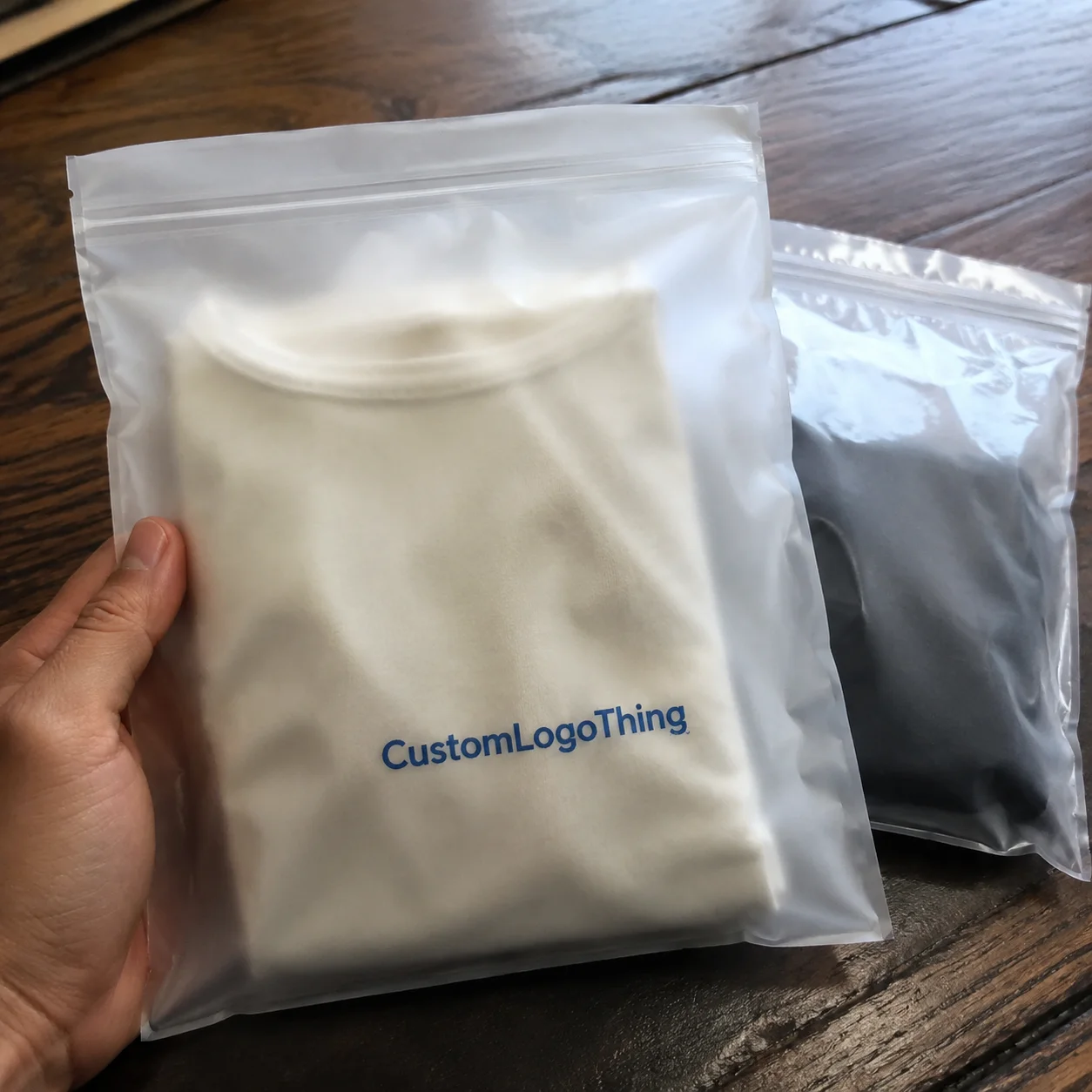
Adhesive strip mailers are poly mailers with a built-in peel-and-seal closure, usually protected by a release liner that you remove right before sealing. In plain packaging terms, they are flexible shipping bags designed to eliminate the need for tape, glue, or heat sealing, which is why they show up so often in apparel lines, subscription boxes, and ecommerce packing rooms from Jersey City to Dallas. If you are reading a guide to adhesive strip mailers because your team is tired of tape guns and uneven seals, you are in the right place.
Most of the units I’ve handled on factory floors were made from polyethylene film, often in single-layer or co-extruded structures. A co-extruded mailer can give you a stronger outer skin and a more practical balance of puncture resistance and flexibility, especially for garments, soft goods, and printed inserts. Some versions include a tamper-evident adhesive strip, so once the mailer is opened, you can usually tell. That’s useful for consumer trust, and in a few client audits I’ve seen it help reduce disputes over whether a shipment was opened in transit or after delivery. For soft goods, I’ve seen 2.0 mil and 2.5 mil constructions perform well in Ontario, California and Columbus, Ohio distribution centers when the product is folded tightly and the flap is pressed evenly.
Where do adhesive strip mailers fit in the packaging family tree? They sit below corrugated boxes on rigidity, above paper envelopes on strength, and right in the sweet spot for lightweight items that do not need rigid corner protection. The guide to adhesive strip mailers usually covers apparel, socks, books, documents, brochures, flat textile items, and other non-fragile ecommerce products. I would not use them for glass, brittle cosmetics jars without interior protection, or anything with sharp edges unless you have tested the pack-out carefully, because a 350gsm C1S artboard insert or a corrugated sleeve may be the better answer in those cases.
What makes them attractive in real operations is not just the closure design, but the way they simplify the bench. Fewer packing steps means less tape consumption, fewer consumable SKUs, cleaner work surfaces, and more repeatable sealing from operator to operator. In one Chicago-area fulfillment room I visited, the supervisor told me their packing bench looked “less like a craft table and more like a production line” after switching to adhesive strip mailers. That comment stayed with me because it was true, and because their tape consumption dropped by roughly 18% over a 60-day period.
The key lesson in any guide to adhesive strip mailers is this: the right choice is less about a fancy print and more about matching film gauge, adhesive quality, and size to the item. A 0.045 mm mailer may be fine for a folded tee, while a heavier 2.5 mil film might be better for a thicker hoodie or a multi-item bundle. Spec matching saves more money than people expect, and it prevents the kind of return cycle that quietly eats margin. I’ve had buyers tell me they wished someone had said that sooner, usually after the third round of reorders and a quote that jumped from $0.15 per unit for 5,000 pieces to $0.19 once the size was corrected.
How Do Adhesive Strip Mailers Work from Pack-Out to Delivery?
The packing sequence is straightforward, and that simplicity is one of the reasons the guide to adhesive strip mailers resonates with warehouse teams. You place the product inside, remove the release liner, fold the flap down, and press firmly across the adhesive zone. That pressure-sensitive adhesive begins forming a bond immediately, and if the surfaces are clean and aligned, the seal holds through sorting, carrier handling, and final delivery. In a high-volume facility in Phoenix, Arizona, I’ve seen operators seal hundreds of units per hour once the motion was standardized.
Mechanically, the adhesive does not need heat to activate. It needs contact, pressure, and a clean mating surface. I’ve watched operators at a Kansas distribution center move too quickly and only catch the middle of the flap, leaving the corners under-compressed. Those corners are often where the failure starts, because a partial bond can lift when the mailer gets flexed in a parcel hub. A strong guide to adhesive strip mailers should always tell you that full-width pressure matters more than brute force, especially on mailers using a 25 mm or 30 mm adhesive lane.
Some mailers use a single-use peel-and-seal closure. Others offer a second strip for return shipping or reclosure, which can be useful for apparel and size exchanges. Dual-adhesive designs are not always necessary, though, and I have seen buyers pay extra for a return feature they never used. That is why the guide to adhesive strip mailers should push you to think about your actual return rate and customer journey before adding features. Otherwise, you end up paying for a feature that mostly sits there looking important, even when your return rate is only 6% or 7%.
In transit, the mailer has to survive vibration, compression, humidity swings, and temperature changes. Dock areas can be hot, trailer interiors can get warmer than people realize, and a cold morning on a loading ramp can stiffen film enough to affect how it lays flat. The adhesive itself also matters under those conditions. A mailer that seals beautifully in a climate-controlled room may not behave the same way after two days in a hot warehouse. That kind of real-world behavior is why a practical guide to adhesive strip mailers includes shipping conditions, not just glossy spec sheets, and why suppliers in Shenzhen, Dongguan, and Ho Chi Minh City often quote different adhesive formulations for summer versus winter shipment programs.
There is also a tamper-evidence angle. Once opened, many adhesive strips show tearing, residue, or visible disturbance. That can be a quiet but meaningful benefit for brands that care about package integrity. I remember a client in the cosmetics-adjacent accessories business who had customer complaints about “mystery openings.” Their switch to adhesive strip mailers did not solve every issue, but it gave them a clearer visual record of whether a package had been opened after sealing. That alone made investigations simpler and cut replacement approvals from three days to one in their Austin, Texas service center.
On a busy pack line, the time savings can be real. I’ve timed operators who went from tape-sealing standard mailers to adhesive strip mailers and cut seal time from several seconds to one smooth motion. That sounds minor until you multiply it by 600 orders a shift. A good guide to adhesive strip mailers should always connect the closure method to labor efficiency, because labor is often the hidden cost that shows up later on the P&L. Even a 4-second reduction per order can save roughly 40 minutes over 600 units, which is not trivial when labor runs $18 to $24 per hour.
Key Factors to Compare Before Choosing a Mailer
The first thing I compare is material thickness. In the guide to adhesive strip mailers, thickness usually comes up as gauge or mil rating, and it directly affects puncture resistance, opacity, and feel. Thinner film can lower unit price, but if the product has a zipper, metal button, or a slightly sharp tag, thin film can become a false economy. I’ve seen 1.5 mil mailers work beautifully for tees, and I’ve seen them fail quickly with bulkier knitwear that should have been in a heavier spec, such as 2.75 mil or 3.0 mil film made in factories around Dongguan or Ningbo.
Size matters just as much as film. A mailer should fit the product without excessive slack, because too much empty space lets the item slide and bunch during shipping. Too little space stresses the flap, the corners, and the adhesive line. When I wrote proposals for apparel clients, I always asked for the flattened dimensions and the thickest point, not just the garment size on the label. That is the level of detail a serious guide to adhesive strip mailers should encourage, and it is why a 12" x 15.5" mailer can perform very differently from a 14" x 19" one, even if both look similar at first glance.
Adhesive quality is another major variable. Look at tack, seal width, temperature tolerance, and whether the adhesive is meant for standard parcel use or heavier duty shipping. A wide seal band can be more forgiving than a narrow one, especially in a line where operators are moving fast. Some suppliers will quote a lower unit cost but quietly reduce the adhesive lane width by a few millimeters. That small change can Matter More Than people think, and I’ve seen it create trouble in winter when adhesive behavior changes. If your production is running in a warehouse near Minneapolis in January, the difference between a 20 mm adhesive strip and a 30 mm strip can be the difference between confidence and callbacks.
Then there is cost, and this is where a lot of buyers get stuck on the wrong number. The best guide to adhesive strip mailers does not just compare unit price; it compares labor savings, carton quantity, shipping weight, tape elimination, and damage reduction. For example, a mailer priced at $0.18 per unit for 5,000 pieces may look higher than a basic poly mailer at $0.14, but if it saves 6 to 8 seconds of tape application per order, the labor math can swing in its favor quickly. I’ve watched procurement teams discover that the “cheaper” option cost more after returns and repacks were included, especially once they added another $0.03 to $0.05 in tape, dispensers, and labor overhead.
Branding also matters, especially for consumer-facing shipments. Custom print, matte or glossy finishes, and colored films all affect how your package is perceived when it lands at a customer’s door. A cleanly printed mailer with accurate logo registration can feel more premium than a plain one, even when the underlying material is similar. If you are comparing options, our Custom Poly Mailers and broader Custom Packaging Products pages are good places to start sketching out what the spec should actually look like, whether you want a kraft-look finish, a black opaque film, or a translucent recycled-content blend.
Sustainability deserves a careful, honest look. Some mailers may be recyclable where facilities exist, and some use less material than a box-and-void-fill setup, which can reduce overall package weight. Still, recycling rules vary by region, and not every consumer has access to the same collection stream. I always tell clients not to oversell claims they cannot verify. A trustworthy guide to adhesive strip mailers should point you toward proof, not slogans, and if you need formal references, the EPA recycling resources are a useful starting point. If the mailer includes paper inserts or carton components, a 350gsm FSC-certified board from a mill in Guangdong or Zhejiang may also be part of the packaging conversation.
Warehouse compatibility rounds out the list. Mailers need to stack well, feed smoothly, and play nicely with label placement and scan workflows. In one Detroit-area facility, the problem was not the mailer itself but the way the barcode label overlapped a fold line, which caused poor scans at the sortation table. If your operation uses SKU-based staging or tote picking, the guide to adhesive strip mailers should include a note about where the mailers sit in the pack station and how easily staff can grab the right size without confusion, especially during peak weeks when the team is moving 1,000 orders before 2 p.m.
Step-by-Step Guide to Using Adhesive Strip Mailers
Start with the product itself. Before packing, make sure the item is dry, clean, and free of sharp corners that could snag the film. I’ve seen a simple metal hangtag edge slice through a mailer in transit, and the seal was blamed when the real issue was the product preparation. A reliable guide to adhesive strip mailers always starts with item condition, because packaging can only do so much if the product is poorly prepared.
Next, Choose the Right size. Measure the thickest point of the item, then allow enough room for it to sit flat without being forced into a curve. Overstuffed mailers are a common mistake, especially when a pack room tries to stretch one size across too many SKUs. In practice, that creates stress on the flap and a poor-quality closure. The best guide to adhesive strip mailers I can give is simple: match the mailer to the shape, not just the category, and allow for at least 10 to 15 mm of clearance on each side if the product has a bulky fold.
Once the item is inside, align any inserts or packing slips if presentation matters. For a brand selling Direct to Consumer, a neat fold and correct orientation can improve the unboxing experience without adding a single extra consumable. I’ve watched a premium knitwear brand in Los Angeles lose customer confidence because the garment and card insert arrived crumpled in a mailer that was technically the right size but poorly packed. A detailed guide to adhesive strip mailers should not separate function from presentation, because customers rarely do, and a crisp insert printed on 350gsm C1S artboard can help the package feel intentional rather than rushed.
Now remove the release liner. Do it in one clean motion if possible, because half-peeled liners and delayed flap contact invite dust and wrinkles. Then fold the flap down carefully, making sure the edges line up before the adhesive touches. Once the flap makes contact, your chance to reposition is limited. This is one reason training matters so much in any guide to adhesive strip mailers; a worker who seals from the center outward will usually get a better result than someone who slaps the flap down in a hurry, especially on lines where operators are sealing 20 to 30 parcels per minute.
Apply firm, even pressure across the entire adhesive strip. I like to tell operators to think left corner, center, right corner, then a second pass across the full width. That sounds almost too simple, but it works. The corners are where failures begin most often, especially if the adhesive lane is narrow or if the mailer has a textured print surface. In a high-volume environment, this tiny technique shift can cut rework noticeably, which is why it belongs in every practical guide to adhesive strip mailers.
If the mailer includes a return strip or secondary seal, keep that area protected until it is needed. Don’t let the liner collect dust or fold over the adhesive lane during the outbound pack-out stage. Some companies also use a return label or instruction card inside the pack, and that can help if exchanges are common. A smart guide to adhesive strip mailers should remind you that a return-friendly design only helps if the extra adhesive remains clean and usable. In a New York apparel studio I visited, simply keeping spare liner off the bench reduced accidental adhesion problems by half.
Finally, standardize the process. In most pack rooms, a trained operator can seal a mailer very quickly, but the real value comes when every operator uses the same motion. That consistency reduces variability across shifts, which is one of the first things I look for when auditing a warehouse. If you want a fast-moving line that still produces reliable seals, the guide to adhesive strip mailers should end with training, not just product selection, and a 15-minute floor demo often does more than a 20-page SOP.
Common Mistakes That Cause Failures, Returns, or Waste
The most common mistake I see is choosing the wrong size. Oversized mailers let the product slide around, which can lead to impact damage, bent corners, and an ugly customer experience. Undersized mailers stress the flap, the corners, and the closure line. In both cases, the mailer gets blamed when the real problem is fit. A careful guide to adhesive strip mailers has to say this plainly, because size errors are expensive and easy to prevent, and they can turn a $0.16 mailer into a $3.50 replacement order.
Contamination is another big one. Dust, powder, skin oils, moisture, and even tiny bits of lint can interfere with adhesive performance. I once watched a fulfillment team in a humid Gulf Coast warehouse keep losing seals on the same batch of mailers until we traced the problem to a nearby folding table that had a fine layer of shipping dust on it. Once they cleaned the work surface and kept the adhesive lane away from debris, failures dropped fast. That story is a reminder that any guide to adhesive strip mailers should include housekeeping details, not just product specs, especially in facilities in Houston, New Orleans, or Tampa where humidity can sit above 70% for long stretches.
Rushed sealing causes trouble too. If workers press too lightly or do not run pressure across the whole strip, the seal may look fine at the bench but fail after a few bumps in transit. High-volume lines are especially prone to this because speed pressure can make people skip the final pass. I’ve seen that happen during peak season when a team was trying to move 1,200 parcels before lunch. The guide to adhesive strip mailers answer is not “slow everything down,” but rather “train the motion so speed does not destroy consistency.”
Another mistake is putting rigid or sharp products into a mailer that was really meant for soft goods. Even a strong adhesive strip cannot compensate for a puncture caused by a hard edge. The film may tear, the contents may punch through, and the closure will be unfairly blamed. This is where a packaging test matters. If your item has an edge, a zipper, or a carton corner inside, the guide to adhesive strip mailers should push you toward a sample trial before a full rollout, preferably with the actual insert, label, and fold pattern you intend to ship from the plant.
Storage conditions matter more than many buyers expect. Keeping cartons in hot dock areas, damp stockrooms, or direct sunlight can affect the film and the adhesive over time. I have seen adhesives age differently when cartons sat near a bay door versus on interior racking. It is not dramatic every day, but over weeks it can show up as inconsistent sealing. A strong guide to adhesive strip mailers always includes storage, because packaging materials are not static once they leave the supplier’s truck, whether they were packed in Ho Chi Minh City, Xiamen, or a domestic facility in Louisville.
The hidden cost of a bad spec is the one procurement teams sometimes miss. A few cents saved per unit can disappear quickly if failed seals cause repacks, reships, support tickets, and damaged customer trust. In a supplier meeting I sat through in North Carolina, the buyer finally admitted they had spent far more on labor correction than they had saved on the lower-priced mailer. That is the kind of mistake a practical guide to adhesive strip mailers is meant to prevent, especially when the original quote looked attractive at $0.13 per unit but the real landed cost climbed closer to $0.21 after rework.
Expert Tips for Better Performance, Branding, and Cost Control
Test two or three film gauges and adhesive styles before committing to a large order. Real pack-out conditions reveal things a spec sheet never will, especially if your product mix changes by season. A winter hoodie, a summer tee, and a bundled promo pack do not behave the same way in the same mailer. A good guide to adhesive strip mailers should encourage sample testing because the factory floor is always a better teacher than a catalog page, and because a 12- to 15-business-day proof cycle can save a quarter’s worth of trouble.
I like a simple line test: pack, seal, drop, and inspect. Use a small sample set, maybe 20 to 30 units, and look for corner lifting, flap creep, punctures, and label interference. If you ship through parcel networks that handle a lot of compression, it is smart to align your testing with recognized methods such as ISTA testing guidance. That does not mean every brand needs a full lab program, but a thoughtful guide to adhesive strip mailers should at least nod to standard test discipline, especially if your products move through hubs in Memphis, Newark, and Dallas-Fort Worth.
Branding matters more than some teams realize. If the mailer goes directly to the consumer, print consistency, color accuracy, and clean logos often influence perceived value as much as the product inside. I have seen a very ordinary cotton T-shirt feel more premium simply because it arrived in a neatly printed, well-sized mailer with a crisp closure. That is why a guide to adhesive strip mailers should connect structural choices to marketing outcomes, because presentation and function travel together, and a matte black film with 1-color white print can feel very different from a plain natural poly mailer.
Controlling cost does not mean buying the cheapest possible item. Right-size the mailer, avoid overspec, and match the feature set to the product category. If you are shipping soft goods, you may not need a heavy-duty, high-opacity, extra-wide seal on every SKU. On the other hand, if you ship bulkier or higher-value items, shaving a penny off material cost can be false economy. A sound guide to adhesive strip mailers focuses on total landed cost, not just line-item price, and that includes whether a carton count of 1,000 or 2,000 pieces per master case works better for your receiving flow in Chicago or Atlanta.
Warehouse workflow is another place where a little planning pays off. Keep mailers near the pack station, stage the most common sizes by SKU family, and train staff to inspect the adhesive lane before sealing. I’ve walked through operations where the right size was technically available, but the crew spent more time searching than packing. That kind of friction is avoidable. A smart guide to adhesive strip mailers should think like a floor manager and design for speed without sacrificing accuracy, which is often easier if the top three sizes are pre-bundled on a cart at each bench.
Ask suppliers real questions. What adhesive type is used? What is the film construction? How wide is the seal zone? Can they provide sample performance data or test references? Are the materials certified under a forest stewardship program if paper components are involved? If you need references for broader sustainability or paper sourcing conversations, FSC information is a solid authority source. A serious guide to adhesive strip mailers keeps you from buying on price alone and gives you a checklist that supports better sourcing conversations, whether the supplier is in Shenzhen, Mumbai, or a converting plant in the Midwest.
“The cheapest mailer on paper is often the most expensive one after the third repack, the second complaint, and the first chargeback.”
— what I’ve told more than one procurement team after a rough peak season audit
That line gets a few nods because it comes from experience, not theory. I’ve seen enough production floors to know that good packaging decisions usually look boring on a spreadsheet and beautiful on the dock. That is a healthy sign. A practical guide to adhesive strip mailers should leave you with fewer surprises, not more drama, and if your current spec saves $0.02 per unit but creates one extra return per hundred orders, the math usually speaks for itself. Kinda hard to argue with that once the numbers land.
What to Do Next: Build a Smarter Mailer Spec
If you are ready to move beyond generalities, build a simple decision path. Start by identifying the product type, then measure dimensions at the thickest point, then define the shipping stress the package will face. Only after that should you narrow down the right construction. That order of operations is at the heart of a practical guide to adhesive strip mailers, and it keeps the conversation grounded in actual use rather than guesswork, whether you’re shipping from a 20,000-square-foot warehouse in Ohio or a small fulfillment room in Southern California.
From there, create a one-page spec sheet. Include size range, film thickness, closure style, print requirements, target unit cost, and any special handling concerns such as returns or tamper evidence. I’ve seen sourcing get much easier once that sheet exists, because it gives vendors a real target rather than a vague request for “something stronger and cheaper.” That kind of clarity is one of the simplest wins in the whole guide to adhesive strip mailers process, and it helps suppliers quote more accurately in 12 to 15 business days from proof approval instead of going back and forth for three weeks.
Run a small pilot with real packed orders before scaling. Ten sample orders on a desk are useful, but fifty live orders moving through your actual pack line tell a far better story. Watch seal reliability, pack speed, and how the mailer presents to the customer. In one apparel pilot I helped review, the team found that the mailer they loved in the conference room was too glossy under their label printer, which created scan issues. Those details are exactly why the guide to adhesive strip mailers should always include a pilot, and why a proof run plus live sampling often reveals problems that a digital mockup in a Brooklyn office never will.
Track three numbers after rollout: seal failures, pack time per order, and damage or return rate. Those metrics are simple, but they tell you whether the change is helping or hurting. If seal failures drop while labor time improves, you have a valid case for the switch. If damage climbs, the size or film spec may need adjustment. The guide to adhesive strip mailers is not about buying a product once and moving on; it is about creating a repeatable packaging standard that performs under real conditions, with actual numbers like 1.5% damage rate, 30-second pack time, or 600 units per shift.
My final recommendation is straightforward: review your top-selling SKUs, test a fitting sample for each one, and compare total landed cost against your current mailer or box setup. If you need help mapping that into a larger packaging plan, our Custom Packaging Products and Custom Poly Mailers pages can help you frame the options. A well-built guide to adhesive strip mailers should make the next step obvious, not intimidating, and it should leave you with a clearer buying decision, whether your custom run is 3,000 pieces or 50,000 pieces.
I’ll say it plainly: the best guide to adhesive strip mailers is the one that gets you a cleaner seal, a calmer pack bench, and fewer avoidable returns. That has been my experience after years of walking factory floors, talking with operators, and sorting out the difference between a mailer that looks fine and one that actually performs. If you choose based on fit, adhesive quality, and honest testing, you will usually end up in a much better place than if you chase the lowest quoted price alone, especially when that quote comes from a factory in Guangdong or a domestic converter without a real performance sample.
to Adhesive Strip Mailers: decision table
| Decision area | Best fit | What to verify | Risk if skipped |
|---|---|---|---|
| Board or flute choice | Product protection, stacking strength, and shipping distance | Caliper/flute, crush resistance, and sample fit | Weak structure or oversized cartons increase damage and freight cost |
| Print and finish | Retail presentation, unboxing, and shelf recognition | Color proof, coating, scuff resistance, and logo placement | A good dieline can still look cheap if finish and color drift |
| Packing method | Hand packing, ecommerce fulfillment, or retail-ready cartons | Inner count, master carton, label position, and warehouse handling | Good packaging slows operations if pack-out is ignored |
Frequently Asked Questions
What is a guide to adhesive strip mailers trying to help me decide?
It helps you Choose the Right mailer by comparing structure, seal quality, size, Cost, and Use case instead of relying on guesswork. It is especially useful for Ecommerce Brands That want faster pack-out and cleaner presentation, and a strong spec usually includes film thickness, seal width, and carton quantity.
Are adhesive strip mailers strong enough for shipping?
Yes, for many lightweight and soft goods they are strong enough when sized correctly and sealed properly. The best results come from matching film thickness and adhesive strength to the product’s weight and shipping conditions, such as 1.5 mil for lighter apparel or 2.5 mil for denser folded goods.
How do I know which size adhesive strip mailer to buy?
Measure the product at its thickest point and allow enough room for a flat, unstressed fit. Leave extra space only if you need an insert, but avoid oversized mailers that let items shift during transit, and consider a sample run with 20 to 30 units before placing a 5,000-piece order.
What affects the price of adhesive strip mailers the most?
Material gauge, print coverage, quantity ordered, and adhesive performance all influence price. Labor savings can also change the true cost, since peel-and-seal mailers often reduce pack time and tape use, and a quote like $0.15 per unit for 5,000 pieces can become a stronger value than a cheaper mailer that slows the line.
Can adhesive strip mailers be used for returns?
Some styles include a second adhesive strip or dual-closure design for return use. If returns matter to your customer experience, confirm the mailer includes a functional reclose feature before buying, and ask whether the return strip is protected by a release liner that stays clean through outbound shipping.