Buy Small Retail Paper Bags: Material and Sizing Guide
Small Retail Paper Bags Material and Sizing Guide: What the Bag Must Do
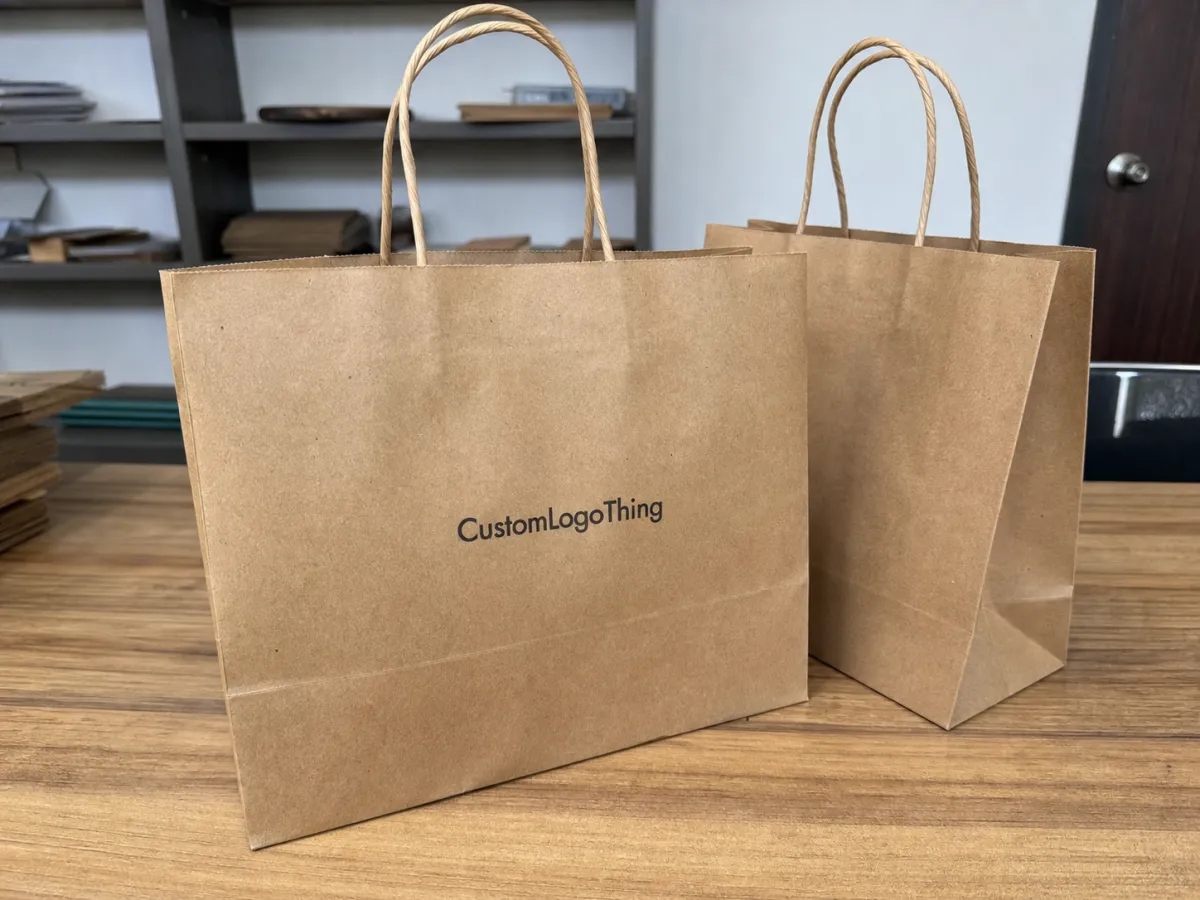
A bag can look perfect on a spec sheet and still fail at the counter. That is why a useful Small Retail Paper Bags material and sizing guide starts with the product, not the logo mockup. Pretty front panels are nice. They do not stop a candle jar from punching through a weak base.
Small retail bags are not just shopping bags made smaller. They have to work around four stubborn details: product footprint, filled weight, presentation, and the way the customer carries the purchase after leaving the register.
A jewelry box, a candle tin, and a boxed cosmetic set may all count as “small.” They do not behave the same inside a bag. One is light and flat. One is compact and dense. One may have sharp corners, extra inserts, or a sleeve that catches on the gusset. The bag has to fit the sale as it is actually handed over, not the clean product photo from the catalog.
Common uses include jewelry, cosmetics, candles, accessories, boutique apparel add-ons, gift shop items, bakery goods, event merchandise, and pickup counter orders. Popular sizes often land around 5 x 3 x 8 inches, 8 x 4 x 10 inches, or 10 x 5 x 8 inches. Those numbers only help if the product shape makes sense for them.
Three measurements matter most: width, depth, and height. Width is the front panel from side to side. Depth is the gusset, meaning the side and bottom expansion that gives the bag volume. Height runs from the base to the top edge.
Depth is where buyers get burned. A boxed item may technically fit the width and height, then jam against a narrow gusset and bulge the panels. That makes the bag look cheap even if the paper is expensive. Annoying, but predictable.
Material choice is the other half of the job. Natural kraft paper gives a sturdy, earthy retail look. White kraft prints cleaner while keeping a practical feel. Coated art paper supports sharper graphics, dense color, foil, embossing, and premium finishes. Recycled paper can bring a softer, more textured surface, especially when it includes post-consumer waste. Laminated paper adds stiffness and scuff resistance, though it raises cost and may complicate recycling depending on the film and local recovery systems.
Counter test: if staff have to squeeze the product into the bag, the bag is too small. A good small retail bag accepts the item, tissue, receipt, and hand movement without wrinkling the side panels or slowing down checkout.
The goal is not to buy the thickest, glossiest bag available. The goal is to choose a bag that carries the product cleanly, presents the brand well, stores efficiently, and does not create avoidable problems during packing or delivery.
How Paper Type, GSM, and Handles Work Together
GSM means grams per square meter. It measures paper weight, which gives a rough signal for thickness and stiffness. It is not a full strength rating. Fiber quality, grain direction, coating, humidity, handle reinforcement, top fold, glue, and bottom construction all affect how a finished bag performs.
For small retail paper bags, typical paper ranges look something like this: 100-130gsm for light counter bags, cards, and small accessories; 140-170gsm for general boutique use; 180-210gsm for candles, jars, boxed cosmetics, and denser gifts; and 230gsm or higher for rigid-feeling premium bags. Treat those as working ranges, not commandments. A compact glass jar can demand more support than a larger scarf.
Natural kraft is usually chosen for durability, simplicity, and a less polished surface. It suits bakery, gift, handmade, apothecary, outdoor, and eco-leaning retail styles. Colors print darker and warmer on brown kraft, so do not expect a bright coral logo to behave like it does on a screen.
White kraft gives a cleaner print surface while staying more practical than coated art paper. It is useful for simple logos, spot colors, and brands that want a crisp look without moving into full luxury packaging.
Coated art paper, often C1S or C2S, is the better choice for full-color graphics, gradients, rich brand color, and specialty finishes. It can also feel more structured at the same GSM because of the coating and finishing. The tradeoff is cost, freight bulk, and sometimes recyclability if lamination is added.
Recycled paper can be excellent, but ask specific questions. What percentage is recycled? Is it post-consumer or pre-consumer? Is the stock FSC certified? Does the supplier have documentation, or just a nice green icon on the quote? Paper claims get vague fast if nobody asks for details.
| Bag Use | Typical Paper Range | Common Handle Choice | Practical Note |
|---|---|---|---|
| Jewelry, cards, small accessories | 100-150gsm | Twisted paper, die-cut, or handle-free | Presentation matters more than load strength unless boxes are dense. |
| Candles, jars, boxed cosmetics | 160-210gsm | Twisted paper, cotton rope, or reinforced flat paper | Check filled weight before choosing paper by bag size alone. |
| Premium gifts and boutique sets | 200-250gsm or laminated art paper | Cotton rope or ribbon | Stronger shelf presence, but heavier cartons and higher freight volume. |
Handles are not decoration. Twisted paper handles are practical, widely used, and recyclable in many paper streams when the rest of the bag construction supports it. Flat paper handles fold neatly and suit economical carry bags. Cotton rope and ribbon handles feel more premium, but they add labor, mixed materials, and cost. Die-cut handles keep the profile simple, though stress concentrates around the cutout. Handle-free bags work for fast handoff items, wrapped bakery goods, and small purchases that customers are not expected to carry far.
Lamination, varnish, and ink coverage change the feel too. A matte laminated 200gsm art paper bag may feel stiffer than an uncoated sheet at the same GSM. Heavy ink coverage can reduce flexibility and make creasing more visible. Gloss and soft-touch finishes can look sharp, but many tiny bags are over-finished. On a 5 x 3 x 7 inch bag, a clean one-color mark on good stock often beats a full-coverage print fighting every fold.
A strong handle on weak paper is still a weak bag. The stress moves to the handle patch, top fold, punched hole, or glue area. That is where tearing starts. If the product is small but dense, treat handle attachment as a load-bearing decision.
Key Sizing Factors: Product Fit, Weight, and Shelf Presence
Size around the actual product, not the product category. Two candles may sit on the same shelf and need different bags. One could be a low, wide tin with a 3.25 inch diameter. Another could be a tall glass jar packed inside a rigid box. The wrong bag makes one tip, bulge, or disappear in extra space.
Start by measuring the widest, deepest, and tallest points. If the item is boxed, measure the box. If it will be wrapped in tissue, placed in a sleeve, paired with a care card, bundled with another item, or protected with cushioning, measure that finished sale setup.
Clearance matters. For many small retail bags, an extra 0.25-0.5 inches in gusset depth is enough to turn a frustrating checkout pack into a clean drop-in fit. Too little space slows staff down and damages the presentation. Too much space creates a different problem: the product slumps, the front panel bends, and the purchase looks less considered.
A small jewelry box floating inside a tall, wide bag can look worse than the same box in a compact bag with tissue rising neatly above the top edge. Scale is part of perceived value.
Weight is the quiet troublemaker. Paper bags are often judged by footprint, but carry load matters more. A small jar, fragrance box, or cosmetic kit may weigh 1-3 lb even though it fits in one hand. For these items, paper thickness, bottom support, handle comfort, and reinforcement all matter. A narrow rope handle may look polished on the counter and still dig into the customer’s hand after a few minutes.
Proportion affects presentation as much as strength. Tall narrow bags suit bottles, slim boxes, and rolled accessories. Wider gusseted bags work better for square boxes, candles, jars, and folded soft goods. Short compact bags suit jewelry, premium add-ons, and small gift items. If customers often buy more than one product, consider two bag sizes: one snug presentation size and one roomier service size.
Storage and freight belong in the sizing conversation early. Oversized bags use more paper, ship in larger cartons, and take up more back-room space. A wide gusset looks harmless on a sample. A few thousand pieces can become several bulky cartons behind a small counter.
Always test with the real product if the order size justifies it. Open the bag, fill it, add tissue, lift it by the handle, set it down, and carry it for a minute. Paper behaves differently once it is creased, opened, loaded, and held at an angle. A flat dieline cannot show that.
Step-by-Step Process and Timeline for Ordering Small Paper Bags
Start with product measurements and estimated filled weight. Those two details drive the rest of the recommendation: bag dimensions, paper stock, top fold, base support, handle type, and whether a standard size will work. If you send only a logo and ask for “a small bag,” the quote will be mostly guesswork.
Artwork comes next. Send vector files when possible, usually AI, EPS, or editable PDF. Confirm whether the design is one-color, two-color, CMYK, foil stamped, embossed, debossed, varnished, or printed with a flood background. Ask for safe zones around folds, handle patches, bottom creases, and gussets. On a small bag, a logo only 0.25 inches too close to the fold can look wrong after forming.
Sampling can be basic or detailed. A stock-size blank sample may be enough to confirm fit, GSM, texture, and handle feel. A printed pre-production sample is worth the added time and cost when the bag uses specialty paper, foil stamping, soft-touch lamination, embossing, or strict brand color. For heavier products, ask for a realistic load check.
- Confirm product size, filled weight, quantity, and use case.
- Review standard sizes or create a custom dieline.
- Prepare artwork with bleed, safe zones, and color references.
- Approve quote, layout, and proof.
- Prepare material, print sheets, apply finishing, cut, crease, fold, glue, and add handles.
- Inspect, pack into cartons, label, and ship.
Timelines vary because bag orders have more moving parts than buyers expect. A simple kraft bag with one-color printing on a standard size can move much faster than a custom laminated art paper bag with rope handles and foil stamping. Proof revisions, material availability, quantity, factory workload, drying time, hand assembly, and shipping method all affect turnaround.
As a practical planning range, many custom small paper bag orders land around 12-25 business days after proof approval. Complex finishing, imported materials, peak-season production, or ocean freight can push that longer. Rush orders are sometimes possible, but rushing packaging is a reliable way to make everyone tense and nobody smarter.
Buyers can shorten the schedule by approving dimensions early, sending clean artwork, confirming Pantone or CMYK expectations, and avoiding changes after proof approval. Late changes cost money because printed sheets, plates, screens, foil dies, or cutting layouts may already be prepared.
Build in time for transit and receiving inspection. For a retail launch, trade show, or seasonal promotion, bags should arrive at least a week before staff needs them. The International Safe Transit Association is a useful reference for transport thinking, especially if cartons will move through parcel networks or mixed freight.
Cost, Pricing, and MOQ Factors Buyers Should Expect
Unit cost depends on quantity, paper type, GSM, size, handle style, print method, ink count, finish, and whether the bag uses a standard or custom dimension. MOQ is not just a sales hurdle. It usually reflects machine setup, paper purchasing, printing plates or screens, labor, waste allowance, and the conversion work required to turn sheets or rolls into finished bags.
For a simple small kraft paper bag with one-color logo printing, a rough planning range might be $0.18-$0.45 per unit at several thousand pieces, depending on size, paper weight, handle, and print area. A premium boutique bag with coated stock, rope handles, foil stamping, embossing, and lamination may move into the $0.60-$1.50+ range, especially at lower quantities. These are planning ranges, not a quote.
| Specification Level | Typical Features | Cost Behavior | Best Fit |
|---|---|---|---|
| Economy branded | Kraft or white kraft, one-color logo, twisted paper handle | Lower setup and lower unit cost at moderate quantities | Gift shops, bakeries, events, everyday retail |
| Mid-range retail | Heavier kraft or art paper, two-color print, reinforced handle area | Better structure and presentation without luxury-level cost | Boutiques, cosmetics, candles, accessories |
| Premium boutique | Coated stock, lamination, rope or ribbon handles, foil or embossing | Higher labor, setup, freight volume, and material cost | Luxury gifts, curated sets, high-margin products |
The cheapest unit price is not always the lowest total cost. If the bag is too large, you pay for extra paper, larger cartons, and more storage. If it is too weak, staff may double-bag purchases or customers may return damaged products. If it feels far below the value of the item, the brand loses polish at the handoff point.
Freight deserves its own line in the review. Wide gussets, thick paper, and rigid construction increase carton volume. Small retailers sometimes focus on unit price, then get surprised when the bags occupy half the storage area. Ask how many bags fit per carton, what the carton dimensions are, and whether the quote includes shipping or only production.
Request quantity breaks. Pricing at 1,000, 2,500, 5,000, and 10,000 pieces can show whether ordering more actually makes sense. Sometimes the savings are real. Sometimes storage, cash flow, and changing artwork make a smaller run smarter.
Share the product weight and use case during quoting. A supplier cannot recommend the right paper or handle if the only instruction is “small black bag with logo.” Specifics prevent two expensive mistakes: paying for unnecessary thickness or ordering a bag that underperforms.
Common Mistakes That Make Small Retail Bags Feel Wrong
The first mistake is choosing by height only. Buyers see that an 8 inch tall bag covers the product and assume it fits. Then the box hits the side gusset, bulges the front panel, or sits crooked on the bottom. Depth is not a minor measurement. For boxes, jars, and candles, it may be the deciding one.
The second mistake is using paper that is too light for the filled weight. Thin paper wrinkles easily, loses shape, and can tear near the handle attachment. It also changes the perceived value of the product. A $38 candle in a flimsy bag feels less considered than the same candle in a compact 180gsm kraft or art paper bag with a stable base.
Over-specifying finishes is another common problem. Heavy lamination, foil, full-coverage ink, and complex print can overwhelm a very small bag. They also raise cost. A tiny bag does not have much real estate, so the best design is often disciplined: clear logo, controlled color, good paper, and one finish used with restraint.
Artwork placement errors usually appear after forming. Logos placed too close to the fold, side gusset, bottom crease, handle patch, or rope hole may distort or disappear from the clean front-view panel. Review the dieline, not only the flat logo proof.
Color expectations cause friction too. A backlit screen is not ink on paper. Colors print warmer and less bright on natural kraft or textured recycled stock. White ink, underprinting, or a move to coated paper may be needed if color matching is critical. Pantone references help, but the substrate still affects the result.
Storage gets ignored until the cartons arrive. A retailer may order a high quantity for a better unit price and then struggle to place the boxes behind the counter. Ask carton counts before approval. If the bags will sit near food, candles, fragrance products, or damp storage areas, keep them dry, clean, and away from scent transfer.
Skipping samples is another avoidable mistake. At minimum, review similar paper and handle samples before approving a full run. Physical samples catch stiffness, texture, handle comfort, finish glare, and opening behavior that photos rarely show. That small step belongs in any serious buying process.
Build a Spec Sheet Before You Request a Quote
A clear spec sheet turns a vague bag request into something a packaging supplier can price and produce. It does not need to be fancy. It needs real measurements, real use conditions, and enough brand direction to avoid guesswork.
- Product dimensions: width, depth, and height of the product as sold, including box, sleeve, or wrap.
- Filled weight: single-item weight and likely multi-item purchase weight.
- Quantity: starter order, target reorder quantity, and any event or launch deadline.
- Paper look: natural kraft, white kraft, coated art paper, recycled paper, or laminated paper.
- Handle preference: twisted paper, flat paper, cotton rope, ribbon, die-cut, or no handle.
- Print and finish: logo file, brand colors, ink count, foil, embossing, varnish, or lamination.
Place the product on a table and measure its widest, deepest, and tallest points. Then note whether tissue paper, inserts, ribbons, care cards, receipts, protective wrap, or multiple items will be added. Those extras often change the final bag size more than buyers expect.
If the right size is unclear, choose two candidates: one snug presentation size for single-item purchases and one roomier service size for multi-item sales. Match each bag to the selling environment. A checkout counter bag, trade show carry bag, boutique gift bag, and pickup order bag may need different handle strength and visual polish.
Gather logo artwork in vector format when possible, and identify brand color references before proofing. If sustainability claims matter, be specific. Ask about recycled content, FSC certified paper, plastic-free handles, and whether the final construction supports local recycling or biodegradable packaging goals. Paper bags are not the same as corrugated cardboard shipping boxes, so do not assume the same strength or recovery path applies.
The best quote request is boring in the right way: exact product dimensions, target carry weight, preferred material, handle style, artwork files, quantity, delivery deadline, and any finishing requirements. Boring details keep packaging from becoming an expensive surprise.
FAQs
What size small retail paper bag should I choose for boxed products?
Measure the box width, depth, and height first. Choose a bag with a gusset slightly larger than the box depth so the product drops in without forcing. Add room for tissue paper, protective wrap, receipts, care cards, or multiple small items. For a cleaner presentation, avoid a bag that is much taller than the product unless tissue will rise above the item.
What paper material is best for small retail shopping bags?
Kraft paper is a strong, practical choice with a natural look. White kraft gives a cleaner surface for simple branded printing. Coated art paper works better for sharper graphics, richer color, and premium finishes, but it can increase cost and affect recyclability when coatings or lamination are added. The best material depends on product weight, brand style, print design, budget, and carry distance.
How thick should paper be for small retail paper bags?
Lightweight items can often use lower GSM paper, while candles, jars, boxed cosmetics, and dense gifts usually need heavier stock. Thickness should be reviewed with handle style, top fold, and reinforcement because the handle area carries high stress. If the product is small but heavy, do not assume thin paper is acceptable. Filled weight matters more than footprint.
How does custom printing affect small retail paper bag pricing?
Pricing changes with print colors, ink coverage, artwork complexity, finish type, setup requirements, and order quantity. A one-color logo on kraft or white kraft is usually more economical than full-coverage printing, foil stamping, embossing, or lamination. Ask for quantity breaks so you can compare unit cost at different volumes before choosing an MOQ.
How long is the lead time for custom small paper retail bags?
Lead time depends on bag size, material availability, print method, finishing, proof approvals, order quantity, and shipping method. The schedule usually includes artwork review, proofing, material preparation, printing, forming, handle application, quality checks, packing, and transit. To reduce delays, provide accurate measurements, clean artwork, color references, and approval feedback early.


