Buyer Fit Snapshot
| Best fit | To Insulated Poly Mailer Bags projects where brand print, material claims, artwork control, MOQ, and repeat-order consistency need to be specified before quoting. |
|---|---|
| Quote inputs | Share finished size, material target, print colors, finish, packing count, annual reorder estimate, ship-to region, and any compliance wording. |
| Proofing check | Approve dieline scale, logo placement, barcode or warning zones, color tolerance, closure strength, and carton packing before bulk production. |
| Main risk | Vague material claims, crowded artwork, missing packing details, or unclear freight terms can make a low unit price expensive after revisions. |
Fast answer: To Insulated Poly Mailer Bags: Material Claims, Seal Quality, and Freight Cost should be specified like a repeatable production item. The safest quote records material, print method, finish, artwork proof, packing count, and reorder notes in one written spec.
Production checks before approval
Compare the actual filled-product size with the drawing, then confirm tolerance on folds, seals, hang holes, label areas, and retail display edges. Reserve space for logos, QR codes, warning copy, and material claims before decorative graphics fill the panel.
Quote comparison points
Review material grade, print process, finish, sampling route, tooling charges, carton quantity, and freight assumptions side by side. A quote is only useful when the supplier can repeat the same color, closure quality, and packing count on the next order.
The guide to insulated Poly Mailer Bags starts with a shipping problem that looks small until it isn’t. A product needs limited thermal protection for a short trip, yet a corrugated box with heavy insulation can add weight, labor, and material that the order never really needed. Packaging teams see that mismatch first. Finance sees it later, usually in the freight bill.
Too many buyers compare the price of a bag, a box, or a liner and stop there. That shortcut misses the part that actually decides whether a format works. The guide to insulated poly mailer bags is about fit: fit for the product, fit for the lane, and fit for the amount of risk a brand can absorb without turning a shipment into a refund.
Used well, these thermal mailers can lower dimensional weight, shorten pack time, and reduce the number of parts moving through the fulfillment line. Used badly, they become expensive in a different way. Freight savings can evaporate if the product warms too quickly, the adhesive fails, or the size leaves too much dead space inside the bag. That tension sits at the center of the guide to insulated poly mailer bags.
Brands sending chilled samples, cosmetics, supplements, small food items, or other temperature-sensitive goods tend to get the most value from the guide to insulated poly mailer bags. The right spec can tighten the workflow and improve consistency. The wrong one can trigger returns, spoilage, and customer complaints that cost far more than the packaging itself.
There is also a practical reason the format has gained attention. Temperature-controlled shipping does not need to be overbuilt every time. For short, predictable lanes, a lighter thermal package can be a cleaner answer than a rigid insulated shipper. That is why the guide to insulated poly mailer bags keeps appearing in procurement meetings, operations reviews, and packaging trials.
What are insulated poly mailer bags, and why do they matter?
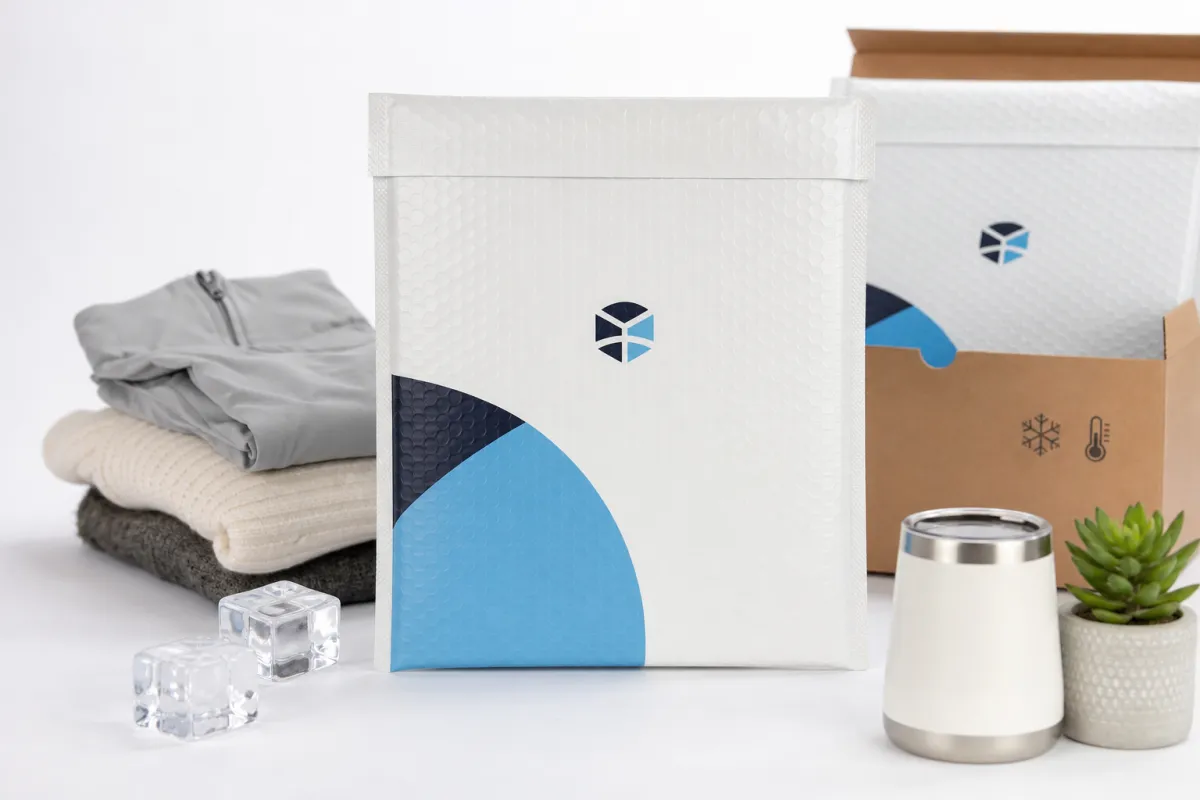
The guide to insulated poly mailer bags begins with the structure. These are flexible shipping bags built from a poly film outer shell and one or more insulating layers inside. Some rely on foam. Some use bubble structures. Some add reflective insulation to slow radiant heat gain. Their job is to hold temperature for a limited window, not to act like a refrigerated cabinet on wheels.
That distinction carries weight. A standard poly mailer is built for containment and light moisture resistance. A bubble mailer adds cushioning. A rigid insulated shipper adds more thermal mass and usually performs better over longer routes. An insulated poly mailer bag sits between those formats. It is flatter and lighter than a box-based cold shipper, which can matter a great deal when every ounce and every cubic inch affects parcel pricing.
The business case is easy to see once the numbers are placed side by side. A lighter package can cut shipping cost. A flatter package can speed packing. Fewer components mean fewer touch points at the pack station. If a team ships 5,000 orders a month and saves just $0.18 per order across materials and freight, that totals $900 a month before labor savings or damage reduction enter the picture. The guide to insulated poly mailer bags works because small changes stack up fast.
The catch is just as important. These mailers are not universal. They tend to shine in e-commerce perishables, temperature-sensitive samples, cosmetics that soften in heat, supplements that need to avoid sharp swings, and short-haul cold shipments with predictable transit windows. Longer lanes, hotter conditions, and more handoffs change the math quickly. That is the part of the guide to insulated poly mailer bags many buyers overlook.
The practical rule is simple. If a product can tolerate a short warm window and the route is fairly controlled, insulated mailers are worth testing. If shipments face repeated handoffs, long dwell times, or severe weather, a more rigid insulated solution may be safer. The guide to insulated poly mailer bags does not claim one format wins every time. It argues for matching the format to the lane.
A mailer slows heat transfer. It does not create a cold chain on its own. Route instability still wins if the packaging plan is thin.
That is the blunt version, and it is usually the correct one. The guide to insulated poly mailer bags rewards teams that think in systems: product sensitivity, route length, pack-out design, and customer expectations. A brand shipping a soft-gel cosmetic to a nearby zone may use a leaner setup than a food brand shipping during peak summer. Same category. Different risk profile. Different answer.
In practice, I have seen brands overbuy insulation because the spec sheet looked safer, then discover the extra material only made the pack-out slower and the parcel pricier. That kind of false security is common. The package feels stronger in hand, so people assume it must be better. Not always. Sometimes it is just heavier and more annoying to build.
How do insulated poly mailer bags work in transit?
The guide to insulated poly mailer bags makes more sense once the construction is broken into layers. The outer poly film adds strength, abrasion resistance, and basic moisture protection. The insulating layer slows heat transfer. If the bag includes a reflective surface, that surface helps reduce radiant heat gain from sunlight or a hot delivery vehicle. A pressure-sensitive adhesive seal closes the package and keeps ambient air away from the contents.
None of those layers creates cold. That misconception shows up often. Insulation slows change; it does not build a controlled environment. If the product enters the bag warm, the bag will not cool it down on its own. If the product is pre-conditioned and paired with gel packs, the bag can help preserve that temperature for a useful period. The guide to insulated poly mailer bags is really a lesson in slowing physics rather than pretending physics can be ignored.
Several variables shape performance. Ambient temperature matters, of course, but transit time often matters just as much. Pack-out method matters too. A tight bag with pre-chilled product and a properly sized cold source can outperform a loose bag with extra air space by a wide margin. The starting temperature of the contents changes the thermal profile as well. A product loaded at room temperature behaves very differently from one packed straight out of refrigeration.
Handling affects the result in ways that get missed in procurement conversations. A strong seal helps. Headspace hurts. Compression from stacked parcels can change the bag shape and reduce the insulating layer’s effectiveness. Fragile products may need a secondary liner or a compact internal tray. That is why the guide to insulated poly mailer bags keeps circling back to fit and process discipline instead of only material choice.
Some lanes are well suited to this format. A limited ground shipment, a predictable metro delivery, or a one-day route with stable carrier performance can work well. Other lanes are much tougher. Long warehouse dwell times, extreme summer routes, and parcels that sit in delivery vehicles for hours can push the format past its limit. In those situations, a rigid insulated shipper or a broader cold-chain design may be the safer call. The guide to insulated poly mailer bags does not replace lane testing; it insists on it.
For teams that want a more formal validation process, standards from organizations such as ISTA can help frame a test plan. Not every shipment needs a lab-heavy program, but route testing against realistic transit conditions is a smart habit. The same logic applies to waste reduction. The EPA’s packaging and materials guidance at EPA is useful context when a team needs to decide how much material belongs in the pack-out and where trimming is safe.
One more detail belongs in the guide to insulated poly mailer bags: the bag is only one part of the system. Gel packs, lining material, product mass, fill ratio, and carton or pouch orientation all affect thermal behavior. Buyers often ask for a single bag specification, but performance lives in the full package design. A sample can look perfect and still fail if it is packed badly.
There is a useful mental shortcut here. Think of the mailer as a brake, not an engine. It slows the loss of temperature you already paid to create upstream. That is why pre-conditioning matters so much. If a team skips that step, the mailer is gonna have a hard time making up the difference on its own.
How insulated poly mailer bags fit into cold-chain packaging
Cold-chain packaging is not one product; it is a sequence of decisions. The guide to insulated poly mailer bags fits into that sequence by answering a very specific question: how much temperature protection is enough for this lane, this product, and this service level? That is a different question from which format looks strongest on a spec sheet.
For some brands, a thermal mailer is the right middle ground. It protects a small shipment, reduces cubic volume, and keeps the pack station moving. For others, the mailer is only one component in a broader system that includes gel packs, temperature indicators, and a backup lane for high-risk orders. The guide to insulated poly mailer bags becomes most useful when it is treated as part of a packaging strategy rather than a single SKU choice.
Think of the economics like a triangle. On one side is unit cost. On another is temperature performance. On the third is operational speed. A rigid insulated shipper may win on performance. A plain mailer may win on speed. Insulated poly mailer bags often win when the team needs all three to stay in balance. That is why the guide to insulated poly mailer bags matters to brands that ship samples, short-run perishables, and time-sensitive consumer goods.
Put another way, cold-chain packaging usually fails at the seams, not in the headline spec. A bag can be technically adequate and still lose the lane because the product sat too long before pickup, or because the receiving dock was warm, or because the pack station left too much air inside the pouch. The guide to insulated poly mailer bags pushes buyers to think about those seams first.
Key factors that drive price
The guide to insulated poly mailer bags becomes far more useful once cost is treated as a bundle of inputs instead of a single number. Material gauge matters. Insulation type matters. Closure style matters. Print coverage matters. Size matters. A larger bag may use more raw material, but a poorly sized smaller bag can still cost more in the end if it causes damage, rework, or a higher return rate.
For common order quantities, stock insulated mailers often fall in the rough range of $0.42-$0.85 per unit, depending on size and construction. Custom printed versions usually move into the $0.68-$1.45 per unit range, again depending on quantity, color count, and surface coverage. Rigid insulated shippers can land higher, often $1.20-$3.50 per unit or more. Those figures are directional, not universal, but the guide to insulated poly mailer bags works better when buyers can see the pricing ladder clearly.
Minimum order quantities shape the decision as well. A small brand testing a new cold-packaging format may accept a higher unit price in exchange for lower risk and a faster launch. A larger brand may push for better unit economics once the format proves itself. At that point, the guide to insulated poly mailer bags becomes a procurement exercise: how many units, what artwork, what transit window, and what proof is needed before scaling?
Freight and labor add another layer that gets ignored too often. A mailer usually weighs less than a box-based insulated alternative, which can reduce parcel charges and make packing faster. If a team saves fifteen seconds per order across 20,000 monthly shipments, that is a meaningful amount of labor reclaimed, even if the unit cost of the bag is slightly higher. That is why the guide to insulated poly mailer bags should focus on landed cost rather than purchase price alone.
Setup fees matter for custom print. Artwork revisions can slow the order. Closure style can also affect cost: peel-and-seal, tamper-evident strip, and dual-seal options each change the spec and the price. Size changes are expensive too because they may require new tooling or a different production run. The guide to insulated poly mailer bags is a reminder that small spec changes can alter both lead time and budget in ways that look minor until the invoice arrives.
| Option | Typical unit cost | Typical lead time | Best fit | Tradeoff |
|---|---|---|---|---|
| Stock insulated poly mailer bags | $0.42-$0.85 | Fastest | Testing, smaller runs, standard lanes | Less brand control, fewer spec choices |
| Custom printed insulated poly mailer bags | $0.68-$1.45 | Moderate | Established programs, branded unboxing, repeat shipments | Setup fees, artwork approvals, minimums |
| Rigid insulated shippers | $1.20-$3.50+ | Moderate to longer | Longer dwell times, fragile or high-risk cold chain | More material, more storage, higher freight weight |
The table helps, but the real answer still lives in the application. A bag that looks more expensive on paper may still win if it cuts cubic volume, lowers damage, and speeds pack-out. The guide to insulated poly mailer bags keeps producing the same lesson: a lighter spec can carry a heavier business case.
If a team already uses Custom Poly Mailers for products that do not need temperature protection, it is often easier to compare artwork systems and sourcing methods before moving into a thermal format. For broader supply planning, Custom Packaging Products can help teams evaluate mailers, labels, cartons, and related components together instead of treating each one as a separate project. That systems view is exactly what the guide to insulated poly mailer bags calls for.
There is a hidden price driver that shows up only after launch: customer expectation. If the package arrives in good condition but the brand promise sounds premium, the printed surface, closure feel, and overall presentation suddenly matter. The guide to insulated poly mailer bags is not only about shipping cost. It is about whether the package matches the promise the brand makes before the box is opened.
There is also the plain reality of market timing. In peak season, a faster launch can matter more than a perfect custom spec. I have seen teams spend six weeks chasing a fractional improvement, only to miss the window when demand was highest. Sometimes the smarter move is the stock bag that gets the lane live, then a custom version later once the data is real. That is not glamorous, but it is often the right call.
Step-by-step from sample to shipment timeline
The guide to insulated poly mailer bags becomes practical once the buying process is mapped from first sample to full shipment. Start with the product profile. What is being shipped? How sensitive is it? What temperature band is acceptable? How long can it remain outside controlled storage? If those questions stay vague, the final bag choice will stay vague too.
Request samples in at least two constructions or two sizes. A smaller bag may improve thermal performance by reducing headspace, but only if it still seals cleanly. A thicker bag may add protection, but it can also add bulk and cost. The guide to insulated poly mailer bags works best when buyers compare options in real pack-out conditions rather than on a spreadsheet alone.
Test fit next. Pack the exact product, the exact gel pack or liner, and the exact insert or internal wrap that the fulfillment team will use. Check seal integrity, loading speed, and whether the contents shift during handling. If the package must survive one hot afternoon and a one-day ground move, simulate that route. If the route is longer, simulate that too. The guide to insulated poly mailer bags is built on route-specific testing, not generic claims.
Timeline planning should include sample turnaround, artwork approval, production, and freight transit to your facility. A straightforward order can move quickly when artwork is ready and the spec is already known. If the design team is still revising files, the launch slows. One common delay is the “one more change” problem: a logo shift, a warning panel tweak, or a last-minute size adjustment. The guide to insulated poly mailer bags helps teams avoid that trap by locking the spec early.
Use a launch checklist before the first full run:
- Confirm product dimensions with the primary internal packaging in place.
- Verify seal strength with at least a small batch of sample packs.
- Document the pack-out order so staff follow the same steps every time.
- Label the shipment with any handling or temperature guidance needed.
- Run a pilot lane test on the most demanding route, not the easiest one.
- Train the fulfillment team on how much headspace is acceptable.
That list sounds basic, and that is exactly why it matters. The guide to insulated poly mailer bags is not glamorous work. It is controlled repetition, sensible testing, and a willingness to measure whether the new format actually improves the operation. If the bag is faster to pack but creates more spoilage, the launch has not succeeded.
Packaging teams often underestimate weather. A bag that performs well in mild conditions may struggle in peak summer, especially on routes with multiple handoffs. That is why the guide to insulated poly mailer bags should include a worst-case route rather than only the average one. Average performance can hide one very expensive outlier.
A useful habit is to time the entire process, not just the shipment. If the new format adds thirty seconds of inspection or requires a second worker to fold the closure correctly, the packaging is not actually faster. The guide to insulated poly mailer bags rewards teams that compare the full workflow, from pick line to parcel closeout.
It is also worth comparing the first sample against the second sample under stress, not just in a neat conference-room demo. A package that looks tidy for five minutes can behave differently after an hour in a warm staging area. Real life is messier. The test plan should be too.
Common mistakes when using insulated poly mailer bags
The guide to insulated poly mailer bags should be direct about failure modes. The first mistake is buying on price alone. The cheapest bag may use thinner film, inconsistent insulation, or a weak adhesive strip. On paper, the savings look attractive. In transit, the package may split, leak, or lose thermal performance faster than expected.
Another common error is sizing badly. Too small, and the seal is stressed or the product gets crushed into an awkward shape. Too large, and the bag traps excess air, which increases waste and can weaken temperature control. The guide to insulated poly mailer bags usually points toward the smallest safe fit, because every extra inch of empty space acts like a small tax on performance.
Some teams treat the mailer like a full cold-chain system. That is risky. If the product may sit in a hot depot, wait overnight, or move through a long regional network, insulation alone will not solve the problem. A more rigid shipper, better temperature buffering, or a different logistics lane may be needed. The guide to insulated poly mailer bags is not a substitute for supply-chain planning.
Pack-out mistakes create their own mess. Warm product going into the bag defeats the purpose. A weak adhesive closure can open under pressure. Skipping temperature monitoring during validation leaves the team blind. Even something as simple as placing the gel pack in the wrong position can change the result. The guide to insulated poly mailer bags is really a pack-out discipline manual in disguise.
Presentation mistakes are easier to miss but still matter. A premium brand can look cheap if the print is fuzzy, the surface scuffs easily, or the bag feels flimsy in hand. Customers may not know the technical spec, but they do notice whether the packaging looks intentional. The guide to insulated poly mailer bags is about function first, yet brand perception still lands on the doorstep with the parcel.
A well-made thermal package can still fail if the team loads it inconsistently. Process drift costs money just as quickly as weak material.
There is a management error hiding underneath all of this: failing to document the pass/fail threshold. If one person thinks a package is acceptable after four hours in warm conditions and another wants eight, the program never stabilizes. The guide to insulated poly mailer bags works best when the business defines its threshold early and tests against that number every time.
Another mistake is ignoring the customer side of the equation. If a shipment arrives cold but the opening experience feels careless, the packaging may still underperform commercially. The guide to insulated poly mailer bags should be measured against both operational results and the unboxing experience, because both shape repeat purchase behavior.
One thing I would not gloss over: not every supplier label means the same thing. “Thermal,” “insulated,” and “cold-shipping” can describe very different constructions. Ask for layer descriptions, film gauges, adhesive type, and real transit data. If the answer stays vague, the spec is probably vague too. That’s where programs go sideways, kinda quietly, before anyone realizes what happened.
Expert tips for better performance and lower waste
The guide to insulated poly mailer bags becomes more effective when the team stops guessing and starts testing the exact combination it plans to ship. Use the actual product, the actual gel pack, the actual lane, and the actual packing team. Supplier claims are a starting point, not a final answer. That sounds obvious, yet it is still where many packaging projects go sideways.
Tune the bag size to the smallest safe fit. A tighter fit reduces dead air, which helps thermal performance and lowers material waste. It also keeps the bag from ballooning during handling. If the product needs internal protection, use a thin secondary liner or a compact insert rather than jumping straight to a larger mailer. The guide to insulated poly mailer bags usually finds that smarter sizing beats bigger sizing.
Pairing the mailer with simple process controls can improve the result. Pre-condition the product if the category allows it. Add a temperature indicator for high-risk shipments. Use a clearly marked seal zone so staff know where the adhesive should land. None of those steps is fancy. All of them can matter. The guide to insulated poly mailer bags favors practical controls over theoretical perfection.
Branding should support function, not get in the way of it. Limited print coverage often looks cleaner than full-surface coverage, especially if the material needs to stay flexible and low-bulk. Clear handling instructions can reduce delivery mistakes. If sustainability is part of the brand story, use recyclable components where the format allows it and verify claims carefully instead of overpromising. The guide to insulated poly mailer bags rewards honest messaging more than decorative overreach.
Seasoned teams usually track a few details:
- Temperature at pack-out, not just temperature at arrival.
- Transit duration by lane, including weekend or holiday risk.
- Seal failure rate by shift or pack station.
- Damage rate by bag size and closure style.
- Repack or spoilage cost per 1,000 orders.
Those metrics make the guide to insulated poly mailer bags less subjective. If a new format lowers total shipping cost but increases complaint calls, the data will show it. If a slightly higher-cost bag cuts spoilage by half, that matters more than the sticker price. Packaging buyers live in those tradeoffs every day.
One more tip: document the exact sample that passed. Not just the bag family, but the gauge, insulation style, print version, seal method, and pack-out order. Small changes across reorders can create surprising differences. The guide to insulated poly mailer bags works best when the approved spec is written down clearly enough that the next purchase matches the last one.
It also helps to review waste in context. If a thinner format reduces material use but increases spoilage, the environmental story collapses quickly. The guide to insulated poly mailer bags is most credible when it weighs material reduction against real-world performance, not against a polished sustainability claim.
From an operations standpoint, one of the cleanest wins is often the boring one: standardize the pack order. If every worker folds, seals, and stages the bag in the same sequence, the error rate usually drops. The upside is not flashy, but it is measurable. And, frankly, measurable is what pays the bills.
Next steps: a practical rollout plan
The guide to insulated poly mailer bags should end with action rather than abstraction. The next move is simple: define the product profile, request two or three sample constructions, and test them on the most demanding route. If the package passes the hard lane, the easier lanes usually follow. If it fails the hard lane, you have learned something useful before a full rollout.
Build a short procurement checklist before issuing the order. Include size, insulation type, closure style, print needs, quantity target, and acceptable transit window. Add a note for expected storage conditions and whether the product will be pre-chilled. The guide to insulated poly mailer bags is much easier to execute when everyone is reading from the same spec sheet.
Compare total landed cost, not just unit price. Include the bag, freight, labor, damage rate, spoilage risk, and any setup fees tied to custom print. A bag that costs $0.12 more may still save money if it speeds packing and reduces claims. That is one of the core lessons in the guide to insulated poly mailer bags: cheap components can be expensive in the wrong system.
A pilot launch works well for one SKU or one shipping lane. That keeps the test controlled and gives the team a clean read on temperature performance, pack speed, and customer feedback. If the pilot succeeds, the spec can be expanded with confidence. If it fails, the issue is easier to isolate. The guide to insulated poly mailer bags is strongest when it encourages small, measurable steps.
For brands that want to align cold-packaging decisions with broader sourcing, it can help to compare the full packaging portfolio instead of buying the mailer in isolation. That is where a mix of mailers, boxes, labels, and inserts can be reviewed together, especially if the brand already uses Custom Poly Mailers for other product lines. A cohesive sourcing plan often beats a patchwork of one-off orders, and the guide to insulated poly mailer bags fits neatly into that approach.
Here is the decision rule I would use: if the bag passes real route testing, holds the required temperature window, and lowers total shipping cost or total handling time, it is ready for wider rollout. If it only looks good on paper, it is not ready. The guide to insulated poly mailer bags ends where packaging professionals spend their time every day, in the gap between theory and the loading dock. Close that gap, and the guide to insulated poly mailer bags becomes a useful operational tool rather than a packaging trend.
One final checkpoint helps keep the rollout honest: compare the bag against the lane, not against the idea of a perfect package. A format that is excellent in a cool metro route may fail in summer freight. The guide to insulated poly mailer bags only pays off when the chosen format is tested where it will actually live.
If there is a single takeaway, it is this: start with the lane, not the bag. Once you know how long the shipment will travel, how hot the worst route gets, and how much handling it will face, the right spec usually becomes pretty clear. Everything else is just packaging theater.
FAQ
How long do insulated poly mailer bags keep products protected?
Protection time depends on outside temperature, product starting temperature, bag construction, and whether you add gel packs or liners. In the guide to insulated poly mailer bags, the safest assumption is that they perform best for short transit windows and moderate conditions, not for multi-day exposure to extreme heat. Lane testing with your own product is the only reliable way to set a usable time window.
Are insulated poly mailer bags cheaper than insulated boxes?
Often, yes, especially when you compare material weight and parcel charges together. The guide to insulated poly mailer bags usually shows lower freight cost and simpler packing labor, but the final answer depends on your setup fees, damage rate, and whether the mailer truly fits the product. A lower unit price does not matter if the wrong format drives returns.
What products work best with insulated poly mailer bags?
They are a strong fit for temperature-sensitive cosmetics, supplements, samples, and small food or beverage items. In the guide to insulated poly mailer bags, the best candidates are compact, reasonably stable, and shipped through predictable lanes. Large, fragile, or long-haul shipments usually need a more rigid insulated solution.
Can insulated poly mailer bags be custom printed?
Yes. Many suppliers offer custom printing for logos, handling instructions, warning panels, or brand messaging. The guide to insulated poly mailer bags also shows that print choices can affect minimum order quantity, lead time, and unit cost, so artwork should be prepared early. Clean files and clear approvals help the order move without delays.
How do I choose the right size insulated poly mailer bag?
Measure the product plus any internal packaging, then choose the smallest bag that allows a secure seal without squeezing the contents. The guide to insulated poly mailer bags favors a snug fit because too much empty space can weaken thermal performance and waste material. Request samples in more than one size and test the pack-out before you commit to a full order.
Do insulated poly mailer bags replace cold-chain shipping controls?
No. They help slow temperature change, but they do not replace pre-conditioning, lane planning, or temperature validation. The guide to insulated poly mailer bags treats them as one piece of a cold-chain system, not the whole system. If the lane is unstable, the packaging usually needs backup controls too.


