Jewelry Woven Label Beanies Material Sample Guide
Most buyers do not get tripped up by the logo file. They get tripped up by the actual beanie. The knit feels scratchy. The cuff stretches differently than the mockup. The woven label looks crisp on screen and a little dead in hand. That gap is where a lot of money gets wasted, usually right after someone says, “It should be fine.”
A sample is not a formality. It is the only honest answer to a few basic questions: Does the material feel right? Does the label sit cleanly? Does the logo stay readable after stretch? Does the beanie still feel worth buying once it is on a head and under warehouse light? If the answer is no, the sample did its job. Better now than after 5,000 units.
A sample should tell you one thing fast: would this still pass if it were sitting on a packing table instead of a polished render?
Jewelry Woven Label Beanies Material Sample Basics
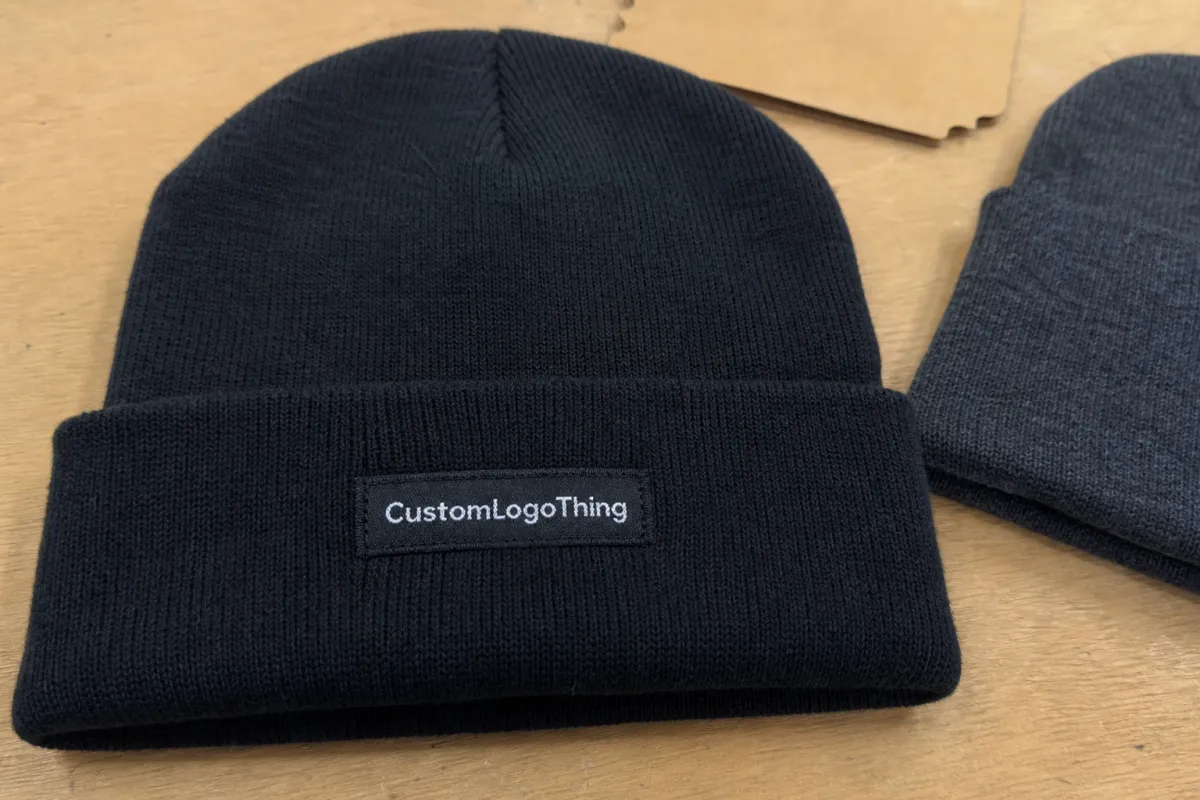
A material sample can be a full beanie, a knit swatch, a woven label strike-off, or a trimmed pilot piece with the proposed placement. Each one proves something different. The swatch tells you about yarn feel and knit behavior. The label strike-off tells you whether the logo is legible at actual size. The full sample tells you how the whole build behaves once the cuff is folded, stitched, and pulled into shape.
What it proves is practical. Hand feel. Stretch. Drape. Edge behavior. Readability. Whether the seam fights the fold. Whether the label looks premium or just expensive. None of that shows up in a flat artwork file.
What it does not prove is everything. A sample cannot rescue a vague spec sheet, and it cannot promise every bulk piece will be identical. If the label width is undecided or the yarn blend is still floating around in email, the sample will only show you the wrong thing more neatly. That is why a jewelry Woven Label Beanies material sample guide is really a decision tool, not a pretty object for a desk drawer.
For Woven Label Beanies, the fabric supporting the label matters as much as the label itself. A dense knit usually gives the brand mark a cleaner frame. A loose knit can make the label sink, tilt, or warp at the edges. Buyers tend to look for four things first: softness, cuff recovery, label readability after stretch, and whether the stitching looks intentional rather than rushed. Those are basic checks. They are also where most rework begins.
There is another useful distinction: lab dip approval is not the same as material approval, and neither one replaces a physical sample. Color may match Pantone well enough on paper while the yarn still reads dull in daylight. A beanie can also pass the color check and still fail the touch test. That is why a finished sample matters more than isolated approvals.
Good sampling reduces avoidable revisions in a very specific way. It shows when a knit is too thin for a structured label, when the yarn has too much bounce for narrow artwork, or when the edge finish adds bulk exactly where the fold should sit flat. It also ends the endless screenshot debate. Which, honestly, is reason enough.
How Material Swatches Translate Into a Finished Beanie
A swatch is not a beanie. That is the whole trap. A flat knit can look promising, then behave differently once it is cuffed, folded, stitched, and stretched over a head. Stretch changes how the weave reads. A fold changes how light hits the label. Seam tension can shift a logo by a few millimeters, and that is enough to make a premium piece look slightly off.
The path from swatch to finished beanie usually runs through yarn choice, knit gauge, stitch density, panel shaping, cuff construction, and label attachment. Each step affects how the material settles. A tighter gauge usually holds detail better and gives the label a cleaner base, but it can feel firmer on the forehead. A looser gauge often feels softer, but the woven label can disappear into the texture or lose sharpness. That tradeoff is normal. Pretending it does not exist is how people end up with samples that photograph well and sell badly.
Placement matters just as much as the swatch. A centered label on a flat cuff can look balanced. Put that same label on a thick fold and it may need a wider seam allowance or a slightly larger landing zone so it does not buckle. If the label is part of the brand story, ask for a full mock build, not a loose badge pinned to an unfinished knit. The structure around it has to cooperate.
Material choice also affects wear. Acrylic blends usually feel lighter and keep shape well. Wool blends feel warmer and more natural, but they can introduce itch if the finish is rough or the blend ratio is too aggressive. Recycled yarns are common now, and they can perform well, but recycled lots vary more than buyers expect. That means you should check consistency across the sample and not assume the next lot will feel identical just because the fiber content looks similar on paper.
Photo review helps, but only if the photos are useful. Straight-on. Side angle. Stretch test. Close-up of the label edge. On-head shot under neutral light. Styled photos with aggressive color grading are marketing, not proof. If a supplier only sends beauty shots, you are being shown the best angle, not the real sample.
Packaging matters too. A beanie shipped loose in a cheap mailer often arrives distorted, especially if the knit is soft or the cuff is folded tightly. Ask for a proper pack-out: a corrugated carton, kraft paper wrap, and clean internal protection. If sustainability is part of the brief, recycled materials or FSC-certified cartons can be requested at the sample stage. That keeps the pack-out aligned with the final product instead of turning it into an afterthought.
For label construction decisions, Custom Labels & Tags is a useful reference before you lock the spec. It is easier to change a label width on paper than to explain why a finished beanie suddenly looks cramped.
Fabric, Gauge, and Trim Factors That Change the Hand Feel
Hand feel is not a soft marketing phrase. It is usually the first reason a sample passes or fails. If the knit scratches, twists, or feels too hollow, buyers notice in seconds. Acrylic blends are usually the lowest-friction starting point for cost and consistency. Wool blends feel warmer and more premium. Cotton is less common in cold-weather beanies because it does not trap heat as well, but it can work for lighter fashion styles. Recycled blends add a sustainability angle, though they need closer inspection because recycled yarn quality can swing more between lots.
Gauge and yarn thickness shape the experience. A finer yarn at a tighter gauge usually gives cleaner logo definition and a more polished surface. A thicker yarn feels cozier and can add body, but it may blur smaller text on a woven label or make the beanie sit bulkier than expected. If your logo has small type or thin borders, the knit needs enough definition to support it. No yarn trick fixes a design that is too detailed for the build.
Trim specs decide whether the sample feels finished or improvised. Label width, fold style, edge finish, and stitch count all change the result. A 30 mm woven label can sit neatly on a narrow cuff. A 40 mm label may overpower the same beanie unless the front panel has enough space. Satin edges can feel smoother, but they often look less crisp than a tighter woven border. Merrowed or sealed edges can look neat and durable, though they add bulk if the fold area is already thick.
The biggest mistake in this part of sampling is assuming softer is better. It is not. A very soft knit may feel pleasant in the hand, but it can flatten the label detail and make the garment look less structured. A firmer knit often presents the logo better and holds the cuff shape, but can feel less cozy. The right answer depends on the channel. Retail basics need comfort first. Streetwear drops often need shape and visual discipline first. Those are not the same job.
Thickness also affects warmth and pack volume. A heavier beanie usually sells better for colder regions or utility-driven lines, but it takes up more space in cartons and display bins. A slimmer beanie stacks better, ships lighter, and usually costs less to move. That matters more than most buyers want to admit. Shipping eats margin whether the product looks premium or not.
If the carton and wrap are part of the brand experience, ask the supplier to show the sample packed the way the bulk order will ship. FSC-certified cartons, kraft paper inserts, recycled tissue, or biodegradable packaging can be included in the brief if the packaging story matters. If it does not matter, do not pretend it does. Customers can smell that kind of recycling theater from across the room.
For broader packing checks, the ISTA packaging test standards are useful when you want to think beyond the beanie itself and into how it survives transit. Crushed cartons make even a good sample look careless.
| Sample Option | Typical Feel | Quote Impact | Best Use |
|---|---|---|---|
| Basic acrylic knit with 1-color woven label | Light, flexible, easy to wear | Often the lowest sample charge, around $25-$45 | Simple promotions and entry-level retail |
| Mid-weight acrylic/poly blend with 2-3 label colors | Balanced softness and structure | Commonly $40-$70 depending on setup | Most branded retail orders |
| Wool blend or recycled yarn with specialty fold | Warmer, more textured, more premium | Usually $60-$110 once trim work is added | Higher-end retail and brand drops |
| Rush sample with extra revisions | Depends on the base spec | Adds $20-$60 plus shipping in many cases | Tight launch schedules |
Cost, MOQ, and Quote Drivers for Sample Runs
Sample pricing is not random. It moves with color count, weave complexity, label size, fold style, edge finishing, and revision rounds. A simple beanie sample with one woven label and clean artwork is not the same job as a multi-color version with custom folds and a branded insert. If a quote looks low for no obvious reason, ask what is missing. The answer is usually setup, shipping, or revision labor.
MOQ matters because small runs spread setup cost across fewer pieces. A test run of 50 pieces can cost noticeably more per unit than a 500-piece bulk order, even if the material is identical. That is normal. What is not normal is hiding the difference behind a low headline number and then adding charges later for artwork cleanup, thread changes, or packaging. Ask for a quote that separates sample build, label setup, shipping, and revision cost.
For most simple knit beanies, bulk MOQ is often somewhere around 100 to 300 pieces, though it can be lower or much higher depending on factory setup, yarn availability, and how custom the label or packaging is. Once the design gets more specific, the MOQ usually rises. That is not a punishment. It is just how setup time works.
A useful comparison method is simple: compare the base unit price, then add the likely extras. If one supplier quotes $0.18-$0.28 per unit for the label side of the project but another bundles proofing and trims into a slightly higher rate, the cheaper quote may not be cheaper. The same logic applies to beanie samples. A supplier who gives you a detailed, well-built sample often saves money later, even if the first invoice looks a little heavier.
Be careful with revision rounds. One clean revision is normal. Two is still manageable. Three or more usually means the brief was incomplete or the design changed after the first sample arrived. That is fine if the launch date is flexible. Most teams would rather not find out the hard way that “just one more tweak” costs a week.
If apparel and accessories are being sourced together, keep one reference piece in the same folder as your woven label options for custom branding. It sounds basic. It saves time later when people need to compare like with like instead of rebuilding the spec from memory three weeks after the fact.
Process and Timeline for Approving Beanie Material Samples
A clean approval flow keeps the project from drifting. Start with a written brief, not a chat thread with three half-finished ideas. Then review artwork, confirm label dimensions, approve the sample build, inspect the physical piece, request any revision, and sign off the final reference sample. That order exists for a reason. Chaos usually starts when people approve the art before agreeing on material, or approve the material before agreeing on placement.
Typical lead times depend on complexity. Simple samples often move in about 5 to 10 business days if the artwork is clean and the spec is complete. More complex samples, especially those with multiple colors, special folds, or packaging changes, often take 10 to 15 business days or longer. Add shipping time and internal approval time on your side, because those are usually the real schedule killers. The supplier may be ready while your team is still arguing about logo size.
Before sampling starts, send measurements, a clean vector file, Pantone references, and a short note on the intended use. If the beanie should feel tight and structured, say that. If it should drape softer, say that too. Vague briefs create expensive guessing. Precise briefs create samples that can actually be judged.
There is one step that gets skipped too often: defining what “approved” means. A printed approval note is not enough if the label position, yarn blend, and fold orientation are still open to interpretation. Lock the sample into a spec sheet that lists fabric type, gauge, yarn blend, label size, label position, fold direction, thread color, and packaging format. Attach a marked-up photo if needed. Boring paperwork. Useful, though.
For packaging-heavy orders, ask whether the sample can be packed the same way the bulk order will ship. A corrugated carton with kraft paper wrap and a clean insert tells you far more than a loose, overhandled beanie in a flimsy bag. If sustainability claims matter, ask specifically about recycled content, post-consumer waste, or biodegradable packaging. If the answer is vague, the process is vague too.
Common Sampling Mistakes That Create Rework
The biggest mistake is approving from a screen. A mockup can show you where the logo sits. It cannot tell you how the fabric feels, whether the label edge scratches, or whether the beanie collapses after ten minutes on a head. Check the physical sample in daylight first, then again under indoor light. Those two passes catch more problems than most teams expect, especially with dark yarns and small woven text.
Another common mistake is changing specs after the sample is already underway. Move the label 8 mm, change the stitch count, or widen the fold too late, and you have effectively ordered a second sample. That does not make you picky. It just extends the timeline and adds avoidable cost. A tighter brief upfront is cheaper than a correction later.
Wear testing is underused. A beanie can look great flat and feel wrong on a real head. Test it on at least two head sizes if possible. Check whether the cuff rides up, whether the label digs in, and whether the knit recovers after stretch. That one step often exposes what studio photography hides. A product can be visually clean and still unpleasant to wear. Tiny annoyance, big return rate.
Vague feedback causes most delays. “Make it nicer” is not useful. “The label needs to read more clearly, and the cuff feels too loose after wear” is useful. Missing reference files also slow everything down fast, especially artwork with unclear outlines or low-resolution type. If the supplier has to guess, they will either pause the job or build something you probably did not want.
Packaging review gets skipped all the time because the beanie is the star. That is short-sighted. A clean sample with a battered presentation still feels off to a retailer. If the final order uses FSC-certified cartons or other sustainable pack materials, the sample should arrive that way too. Otherwise you are reviewing a fantasy.
One more thing: do not approve color by memory. Yarn, label thread, and packaging all behave differently in daylight, office light, and store lighting. Compare the sample under the same conditions your customer will see it. That usually means bright white light, not a warm desk lamp that flatters everything.
Expert Checks and Next Steps Before You Order
Before bulk production, run one last checklist. Confirm the fabric composition, knit gauge, label dimensions, label placement, color targets, fold style, and packaging format. Then test the sample on two head sizes and under two light conditions. That is not overkill. It is how you catch the weak point before the order gets expensive.
If the sample is being judged by a team, make everyone review the same reference piece at the same time. Do not let five people compare five different photos. Write every approved detail into one spec sheet and keep the physical reference sample with it. Production teams work better when instructions are visible, not buried in a chat log nobody wants to reopen.
The jewelry woven label Beanies Material Sample guide approach works because it forces decisions early: what the beanie should feel like, how the woven label should sit, how much structure the knit can support, and whether the packaging matches the brand story. That is where the money gets saved. Not through magic. Through fewer surprises.
If the label build still feels uncertain, revisit your Custom Labels & Tags options before bulk production starts. The first correction is cheap. The third one is where schedules go sideways and everyone starts pretending the delay was “expected.”
What should a jewelry woven label beanie material sample include?
A physical fabric or knit sample, not just a mockup, so you can judge hand feel and stretch. It should also show the exact label size, weave, fold style, and placement proposed for production, plus color references and any trim details that affect the final look.
How many material samples should I request before approving woven label beanies?
Start with at least two fabric or yarn options if you are unsure about feel or structure. Ask for one backup sample when color accuracy or label readability matters a lot. Keep one approved sample as the reference so production feedback stays consistent.
What affects the cost of jewelry woven label beanie sampling?
More colors, tighter weave detail, and special folding or edge finishing usually raise the price. Rush timing, shipping, and extra revision rounds can add more than buyers expect. Lower MOQ often means a higher unit cost for the sample run because setup work is spread across fewer pieces.
How long does beanie material sample production usually take?
Simple samples often move in about 5 to 10 business days if artwork is clean and specs are clear. More complex samples can take 10 to 15 business days or longer when revisions are involved. Add shipping time and internal approval time, because those are usually the real schedule killers.
What are the most common mistakes in woven label beanie sampling?
Approving from screen color alone instead of checking the physical sample in real light is the classic one. Changing specs after the sample is already in production also resets the timeline. Skipping wear testing hides fit, stretch, and label comfort problems until bulk order time.


