Why Sticker Prices Swing More Than Buyers Expect
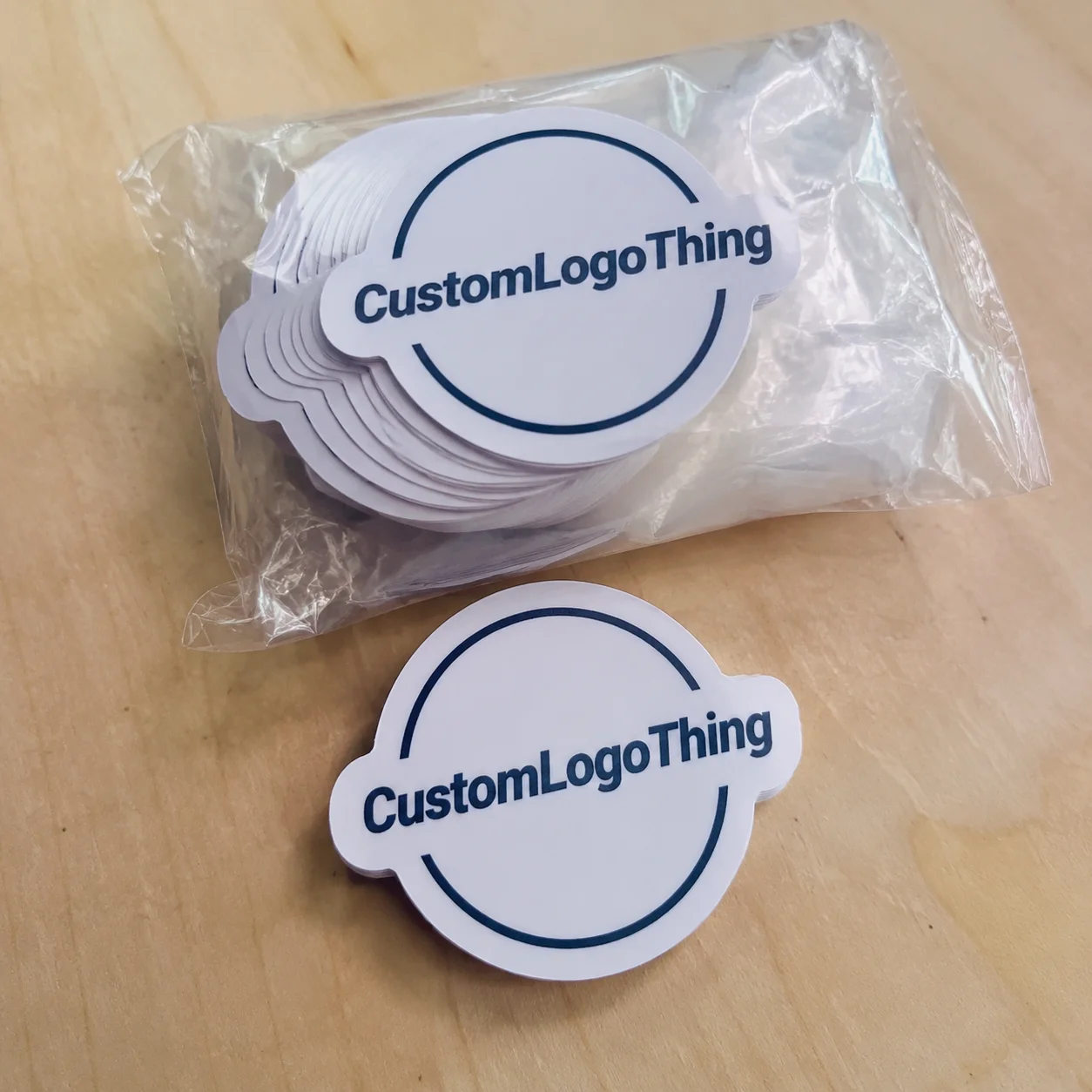
Two custom vinyl sticker quotes can look similar until one lands at $0.08 per piece and the other at $0.42. The gap usually comes from variables suppliers actually price: finished size, vinyl type, adhesive, finish, cut style, order quantity, packing method, and delivery terms.
“How much are vinyl stickers?” is too broad to quote cleanly. A 2-inch white vinyl circle for a box insert is one product. A 4-inch holographic die-cut sticker, laminated and individually packed, is another. Same category, very different cost structure.
Fixed setup costs are the main reason small orders look expensive. A 250-piece run still needs file review, proofing, machine setup, print calibration, cutting, waste allowance, packing, and quality control. Spread those steps across 5,000 or 10,000 pieces and the per-unit math improves.
Quote comparisons often fail because unlike specs get stacked together. Paper gets compared to vinyl. Unlaminated stickers get compared to laminated ones. Kiss-cut sheets get compared to die-cut singles. Bulk-packed units get compared to individually bagged retail pieces with backing cards and barcodes.
Buyer rule: compare total delivered cost for the same size, material, adhesive, finish, cut style, quantity, and packing method. Anything less precise turns into noise.
Vinyl Sticker Product Details That Affect Performance
Most vinyl stickers are produced on flexible PVC film or similar synthetic face stock. Compared with standard paper stickers, vinyl handles moisture, abrasion, and regular handling better. That is why it shows up on bottles, laptops, retail packaging, shipping kits, event giveaways, and outdoor decals.
Material choice affects both performance and price. White vinyl is the standard option because it prints opaque color cleanly. Clear vinyl works well on glass, transparent bottles, and window applications, but artwork may need white ink underprinting. Holographic vinyl creates a premium effect, though the film costs more and can complicate color consistency. Removable adhesive vinyl suits temporary promotions. Permanent adhesive vinyl is usually safer for packaging, equipment labels, and long-term use.
Buyers often use “stickers” and “decals” interchangeably. Production cares less about the name than the surface, expected lifespan, adhesive performance, and the abuse the piece will see after application.
Indoor use is forgiving. Outdoor use is not. Sun exposure, rain, abrasion, cleaning chemicals, and temperature swings all affect lifespan. For exterior use, ask about UV resistance, water resistance, abrasion resistance, laminate type, and expected service life. If the sticker must survive on a cooler, delivery vehicle, or bottle handled with wet hands, state that early.
Surface compatibility can also change the right spec. Smooth glass, coated cartons, metal tins, and many rigid plastic containers tend to cooperate. Rough kraft paper, textured powder coating, fabric, and low-surface-energy plastics can create adhesion problems. A cheaper sticker that lifts, wrinkles, or falls off during transit is not a bargain.
If a larger packaging program is involved, sticker specs may need to align with related components such as Custom Labels & Tags so finish, print quality, and adhesive behavior stay consistent across the full set.
Specifications to Lock Before Requesting a Quote
A clean quote starts with clean specifications. Before requesting a vinyl stickers Unit Cost Breakdown, lock the finished size, shape, material, adhesive type, finish, quantity tiers, artwork colors, cut style, packing method, ship-to location, and application environment.
Finished size drives material usage, sheet yield, cutting efficiency, and freight weight. A 2 x 2 inch sticker uses far less face stock than a 4 x 4 inch version, but the difference is larger than raw area alone suggests because larger pieces often reduce nesting efficiency and create more waste.
Cut style changes the job quickly. Standard squares, rectangles, and circles are efficient to impose and cut. Simple ovals are usually manageable. Custom die-cut shapes require contour paths and slower finishing. Fine points, narrow bridges, and tiny interior cuts can reduce yield or create issues during weeding and packing.
Kiss-cut stickers, die-cut singles, roll labels, and multi-sticker sheets also behave differently. Kiss-cut sheets work for handouts and merch sets. Die-cut singles are common for branded giveaways. Roll labels are usually efficient for high-volume packaging lines or repeated hand application. Sticker sheets can look strong, but inefficient spacing wastes material.
| Specification | Lower-Cost Choice | Higher-Cost Choice | Buyer Note |
|---|---|---|---|
| Size | 2 x 2 inch | 4 x 4 inch or larger | Bigger stickers use more vinyl and reduce yield per sheet or roll. |
| Cut style | Square, circle, simple shape | Complex custom contour cut | Detailed outlines increase setup time, slower finishing, and waste. |
| Finish | UV coating or no laminate | Gloss or matte laminate | Laminate costs more but improves scuff, moisture, and UV performance. |
| Packing | Bulk packed | Individual bags, backing cards, barcode labels | Hand labor can add more cost than the vinyl itself on small pieces. |
Finish should match the application. Gloss laminate adds shine and helps resist scratches. Matte laminate reduces glare and often feels more retail-ready. UV coating can be a lower-cost protective option on some jobs, though it usually does not offer the same abrasion resistance as a laminate film. Unlaminated vinyl may work for short-term indoor promotions, but it is a poor fit for bottles, coolers, outdoor decals, or anything rubbed inside a mailer.
Artwork quality matters because prepress problems become production problems. Vector files such as AI, EPS, or press-ready PDF are preferred for logos and cut lines. Raster files can work if they are built at final size and high enough resolution. As a baseline, 300 dpi at final size is usually reasonable for print.
State color requirements up front. If the job is brand-sensitive, ask whether the quote includes Pantone matching, digital simulation, or a production proof. If white ink is required on clear or metallic films, call it out. Otherwise the supplier may quote a simpler print method that does not match the intended result.
Do not over-spec. A small indoor packaging seal rarely needs premium outdoor laminate, specialty adhesive, intricate contour cutting, and retail-ready individual bagging. That is how a low-cost component becomes an expensive accessory with no measurable gain.
What Does a Vinyl Stickers Unit Cost Breakdown Include?
A realistic vinyl stickers Unit Cost Breakdown includes face film, adhesive layer, liner, ink coverage, laminate or coating, print setup, proofing, cutting, spoilage allowance, quality control, packing, and shipping. Some suppliers bundle these items into one line. Others separate them. Either approach can work if the buyer can see what is driving the number.
For simple 2-inch vinyl stickers, rough pricing often falls around $0.18 to $0.60 each at 250 pieces, $0.08 to $0.30 each at 1,000 pieces, and $0.03 to $0.15 each at 10,000 pieces. These are broad market ranges, not universal promises. Larger formats, dense ink coverage, specialty films, white ink, retail packing, and rush freight can push the total higher quickly.
| Quantity | Simple 2-Inch Vinyl Sticker | Laminated or Custom Cut | Typical Use Case |
|---|---|---|---|
| 250 pieces | $0.18-$0.60 each | $0.28-$0.85 each | Test runs, small events, early packaging trials |
| 1,000 pieces | $0.08-$0.30 each | $0.12-$0.45 each | Packaging seals, inserts, promo handouts |
| 5,000 pieces | $0.04-$0.18 each | $0.07-$0.28 each | Repeat e-commerce programs, wholesale packaging |
| 10,000 pieces | $0.03-$0.15 each | $0.05-$0.22 each | High-volume campaigns and ongoing product runs |
Those ranges compress as volume increases because setup labor gets diluted. The press still needs to be loaded, files checked, colors managed, and the cutter registered whether the run is 250 or 5,000 pieces. That is why the sharpest per-unit drops often appear between early price breaks.
Finish is another steady cost driver. Adding gloss or matte laminate may increase a small-run sticker by several cents each. On 250 pieces, that can feel dramatic. On 10,000 pieces, the same finishing step may represent a smaller share of the unit price. For heavily handled packaging, laptops, drinkware, or outdoor use, laminate is often the correct decision.
Cut complexity matters too. Standard shapes are easier to nest, trim, and inspect. Custom contours with tight curves or protruding details slow finishing and create more scrap. Some designs require wider borders to keep the edge stable during cutting and application.
Packing can distort the quote. Bulk-packed stickers are efficient. Individually sleeved units with backing cards, barcodes, hang tabs, or retail inserts add material and hand labor. On a small sticker, that labor can exceed the print cost itself.
Freight also belongs in the comparison. Sticker orders can pick up cost through rush service, residential delivery, split shipments, customs charges, or oversized packaging created by retail packing requirements. A low print unit cost means little if landed cost tells a different story.
MOQ, Price Breaks, and When Bulk Ordering Pays Off
Custom vinyl sticker MOQ usually starts around 100 to 500 pieces for straightforward digital jobs. Specialty films, white ink, roll formats, or long-run production methods may push the practical minimum higher. That does not always mean a supplier refuses smaller orders. Sometimes it means the smaller quantity carries a price that makes little sense.
Common breakpoints appear around 250, 500, 1,000, 2,500, 5,000, and 10,000 pieces. These tiers are tied to better sheet yield, smoother scheduling, more efficient cutting, and lower setup cost per unit. A strong quote should show at least three quantity options so the buyer can see where the real savings begin.
Bulk ordering pays off when the artwork is stable, the application is proven, and consumption is predictable. Evergreen logo stickers, weekly packaging seals, retail promo decals, and standard inserts usually fit that description. If the design has survived handling tests, shelf use, and shipping, volume buying can reduce both cost per piece and reorder frequency.
Bulk ordering is a bad bet when the design is seasonal, the packaging is still changing, the QR code has not been tested, or demand remains uncertain. A 10,000-piece run at a low unit price can still be expensive if 6,000 pieces become obsolete.
Sampling and test quantities make sense for jobs involving barcode scans, QR functionality, cold or wet application, regulatory text, or unusual surfaces. The cost of a short trial is usually lower than the cost of reprinting a failed large run. For broader packaging durability, some buyers also review transport and handling guidance from organizations such as ISTA when stickers are one part of a larger packaged product system.
Cash flow matters too. A lower unit price is not automatically better if it forces too much inventory too early. Good purchasing balances unit economics, inventory risk, storage, and the chance that the spec will change.
Production Steps and Timeline From Artwork to Delivery
The production path is usually quote request, file review, digital proof, approval, printing, optional lamination or coating, cutting, inspection, packing, and shipping. Straightforward does not mean instant.
Artwork review and proofing often take 1 to 2 business days. Production after approval commonly runs 5 to 10 business days for standard jobs. Shipping may add another 2 to 7 business days depending on method and destination. Physical pre-production samples can extend the schedule because the sample must be printed, finished, checked, and shipped before the full order starts.
Rush production is usually possible for simple digital stickers with clean files and standard materials. It gets harder with specialty films, custom die lines, large quantities, exact color matching, or individual retail packing. Rush fees are common because schedules, labor, and machine time have to be rearranged.
Most delays are avoidable. The repeat offenders are low-resolution artwork, missing cut lines, unclear finished size, color changes after proof approval, late approvals, and incomplete shipping details. Material availability can also stretch timelines, especially for specialty vinyls or uncommon laminate combinations.
Proof approval deserves close review. Buyers should check cut lines, bleed, safe area, spelling, final dimensions, barcode readability, QR scans, and any required regulatory text. Once the proof is approved, corrections become rework.
Printed color depends on the film, ink system, laminate, and lighting conditions. The same artwork can look different on white vinyl versus clear vinyl with white ink, and different again after a gloss laminate is added. If brand color accuracy matters, say so early.
For environmental or packaging claims printed on the sticker, buyers should verify wording against credible guidance such as the EPA and confirm the supplier can support any material or disposal claims being made. Small print still creates liability if it is wrong.
Next Steps to Get an Accurate Sticker Quote
To get a useful quote, send the finished size, shape, quantity tiers, vinyl type, adhesive preference, finish, cut style, artwork file, packing method, delivery location, deadline, and application surface. That information gives the supplier something real to price.
If the right spec is unclear, ask for good-better-best options. A basic indoor vinyl may work for short-term packaging or event use. A laminated durable vinyl is usually better for bottles, mailers, laptops, and retail handling. A specialty option such as holographic film or clear vinyl with white ink makes sense only when the visual effect is part of the product or merchandising strategy.
Photos help. A picture of the bottle, jar lid, carton, glass panel, or mailer surface often reveals issues that a written description misses, including edge lift risk, awkward sizing, and finish mismatch.
Ask for total delivered cost, not only print cost. That means setup charges, proofing, finishing, special packing, freight, taxes, duties, and rush fees if they apply. If a tooling or special die charge appears, confirm whether it can be reused on future orders.
For teams managing broader branded packaging, sticker specs can also be coordinated with Custom Labels & Tags so materials, finishes, and order volumes align instead of being quoted as disconnected one-off items.
The point of a vinyl stickers unit cost breakdown is to understand what you are paying for, which specs are doing useful work, and where the real savings are hiding. Sometimes the cheapest quote is cheap because the material is lighter, the adhesive is weaker, the finish is missing, or the freight is parked somewhere off the page.
FAQ
What is a realistic vinyl sticker unit cost for custom orders?
For a simple 2-inch custom vinyl sticker, small runs often land around $0.18 to $0.60 per piece. At 1,000 pieces, a common range is roughly $0.08 to $0.30 each. High-volume orders can fall near $0.03 to $0.15 each. Size, laminate, cut complexity, packing, and freight can move the final number well outside those ranges.
Why does the unit cost drop so much at higher quantities?
Setup work stays relatively similar across small and medium runs. File review, proofing, press setup, cut registration, inspection, and packing preparation still have to happen. Larger orders spread those fixed steps across more units, so the per-piece cost declines at common breaks such as 500, 1,000, 2,500, and 5,000 pieces.
Does laminate increase vinyl sticker cost?
Yes. Laminate adds material cost and another finishing step. It usually raises unit cost, especially on short runs, but it also improves resistance to scratching, moisture, and fading. For outdoor use or heavy handling, it is often worth the added cost.
What MOQ should I expect for custom vinyl stickers?
Many digital sticker orders start around 100 to 500 pieces. Specialty materials, white ink, complex contour cuts, roll labels, or production methods built for longer runs may push the practical MOQ to 1,000 pieces or more.
How do I get the most accurate vinyl stickers unit cost breakdown?
Send the finished size, shape, quantity tiers, vinyl type, adhesive, finish, cut style, artwork file, packing details, deadline, and ship-to location. Ask for total delivered pricing across multiple quantities so you can compare the real price breaks rather than a partial print-only number.