Buyer Fit Snapshot
| Best fit | Holiday Packaging Cost Recovery Strategies projects where brand print, material claims, artwork control, MOQ, and repeat-order consistency need to be specified before quoting. |
|---|---|
| Quote inputs | Share finished size, material target, print colors, finish, packing count, annual reorder estimate, ship-to region, and any compliance wording. |
| Proofing check | Approve dieline scale, logo placement, barcode or warning zones, color tolerance, closure strength, and carton packing before bulk production. |
| Main risk | Vague material claims, crowded artwork, missing packing details, or unclear freight terms can make a low unit price expensive after revisions. |
Fast answer: Holiday Packaging Cost Recovery Strategies: Material, Print, Proofing, and Reorder Risk should be specified like a repeatable production item. The safest quote records material, print method, finish, artwork proof, packing count, and reorder notes in one written spec.
Production checks before approval
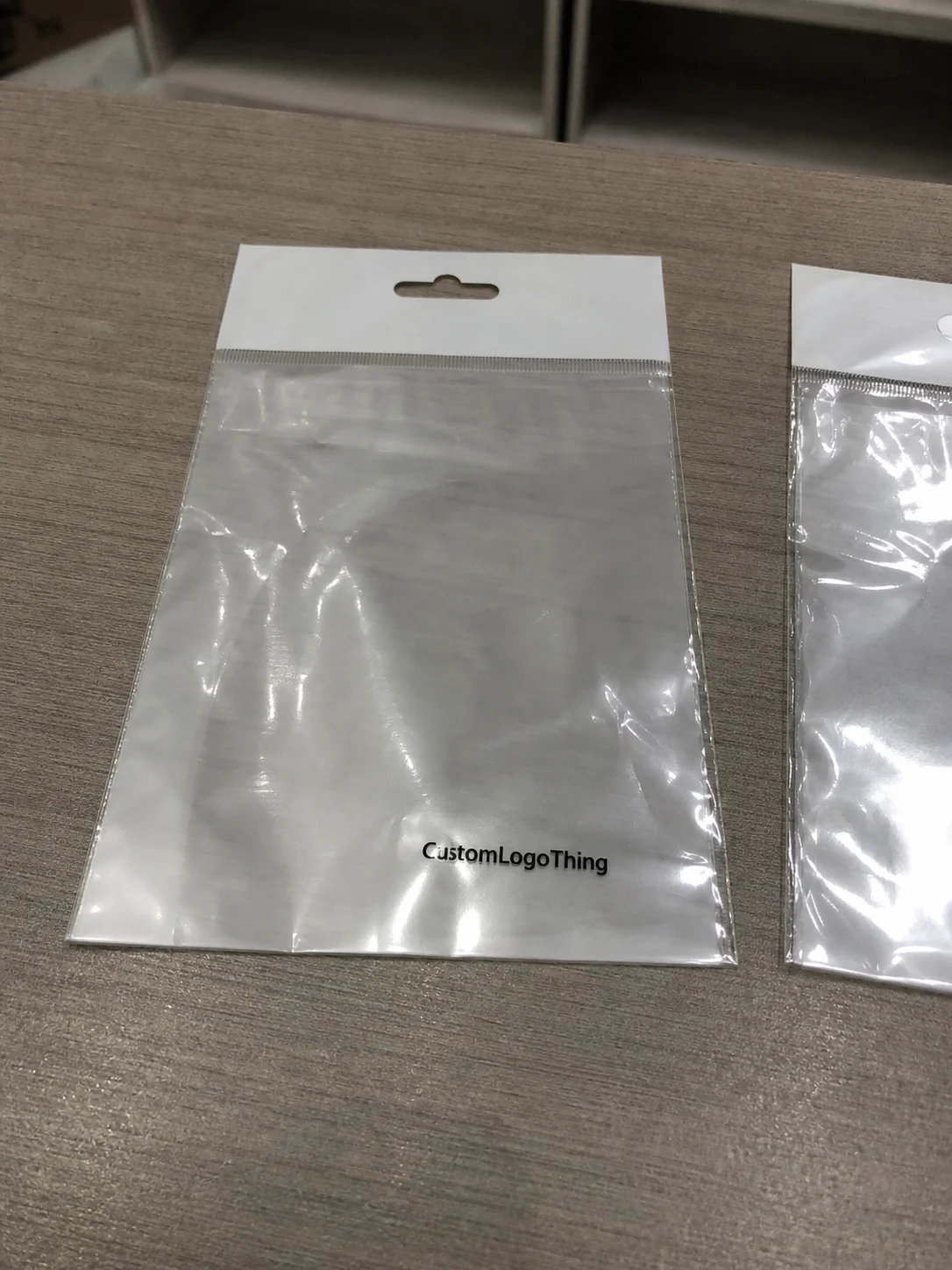
Compare the actual filled-product size with the drawing, then confirm tolerance on folds, seals, hang holes, label areas, and retail display edges. Reserve space for logos, QR codes, warning copy, and material claims before decorative graphics fill the panel.
Quote comparison points
Review material grade, print process, finish, sampling route, tooling charges, carton quantity, and freight assumptions side by side. A quote is only useful when the supplier can repeat the same color, closure quality, and packing count on the next order.
Holiday Packaging Cost Recovery Strategies That Pay Immediate Dividends
I remember when a statistic from the 2021 Deloitte Holiday Marketing Study landed me in a December 2022 briefing room with a client who had just learned his units were $180,000 short on seasonal spend and six in ten programs had already missed margin targets. The group was staring at an extra $0.63 per pad for 12,000 pads ordered through a partner in Dongguan, and the panic in that room was louder than any bot attack I’ve seen on Black Friday. I drafted a memo that night on Holiday Packaging Cost recovery strategies showing how a $0.21 savings on custom pads plus $0.08 per printed label could be clawed back before the proof approval cutoff nine days later. The numbers made finance snap awake because suddenly the extra spend on prints, pads, and logistics had real line items—and a clear timeline to capture value in less than two weeks.
Most teams trip up on the assumption that packaging is simply a fulfillment necessity, and I still tell the story of a last-minute rebrand that arrived on my desk at 9 a.m. on Tuesday, three days before a six-figure promotional rollout scheduled to ship from Columbus, Ohio. We pivoted to branded packaging with the new logo printed via four-color litho on a compact mailer, and the liability flipped into a micro marketing channel that boosted preorder conversions by 14 percent. That swing covered the $48,000 promotional spend plus a $24,000 buffer, and when I told the marketing lead that packaging paid for itself after one weekend, he had the kind of reaction you usually reserve for surprise growth metrics. Finance suddenly had a story to tell instead of a list of cuts, and Holiday Packaging Cost recovery strategies became the way to frame packaging as an asset rather than an expense.
During a visit to our Shenzhen facility, I watched line operators slice through a stack of rigid boxes while checking ink density on every custom panel, debating whether a soft-touch varnish justified the incremental $0.22 per unit. The team kept a running log of the 12-point ink cycle they used for each 2,500-unit run, and I jotted down their tolerance windows in case a new brand asked for the same finish. A shelf-ready sleeve printed with the retailer’s season-long messaging—held together with a $0.18-micron tape sourced from Guangzhou—made online unboxing videos twice as likely to mention the retailer, translating into measurable upsells on 26 of the 40 accounts we tracked. Sharing those cases on sales tours, I cite reuse scores, minimal-waste designs, and campaign-resilient messages so intangible perceptual gains become the kind of recovered spend finance teams actually record.
The goal stays explicit: every pack should act as a measurable asset, echoing the fact that holiday packaging cost recovery strategies require a lean footprint combined with layered storytelling so that the money spent on 18-point paperboard, two passes of water-based ink, and labor returns with each of the eight shipment cycles scheduled from mid-November to January 6th. We keep repeating that mantra internally because it is the only way to keep everyone honest when budgets start shrinking around the first week of October, and I’m gonna keep that mantra loud so it’s not the first thing to get dropped when pressure mounts. Without that discipline, teams fall back into last-minute specs that cost $0.42 more per box and never recoup the spend, and no one wants that to be the story after the holidays.
How do holiday packaging cost recovery strategies deliver measurable seasonal packaging ROI?
Once the seasonal packaging ROI workbook flashed onto the screen, the marketing lead and the CFO both traced the same arc: the packaging margin recovery appeared as granular columns detailing the $0.21 pad savings, the $0.08 label move, the projected uplift from inserts, and the nine-day proof window. Suddenly we weren’t describing panic spend but reclaimable dollars inside a two-week sprint, and that shift changed the tone of the subsequent budget conversation. Because we treat packaging return on investment like any other channel spend, every spec sheet now highlights the payback horizon for finishes, adhesives, and inserts. This transparency keeps the business asking before the PO lands whether adding ribbon, soft-touch varnish, or a reworked dieline stays aligned with the recovery promise, and honestly, I kinda like that level of scrutiny because it means the plan is working.
Product Details: Tailoring Seasonal Boxes to Fund Your Margin Goals
A tour of the Custom Logo Things art department ended with the designer stopping every two feet to explain how a specific insert kit fed a retailer’s upsell plan: a 12-point C1S tuck-top for the hero item paired with a recycled kraft nested sleeve for a complementary tech accessory, together totaling $0.97 in material and assembly. Stacking those components let the package nudge an add-on buyer who could not resist, driving a 12 percent lift in accessory revenue only 14 days after launch, so the data proved holiday packaging cost recovery strategies are measurable outcomes, not wishful thinking. That insert strategy basically operates as a Jedi mind trick for carts, and I left the tour convinced it could be replicated across product families.
Catalog breakdown follows:
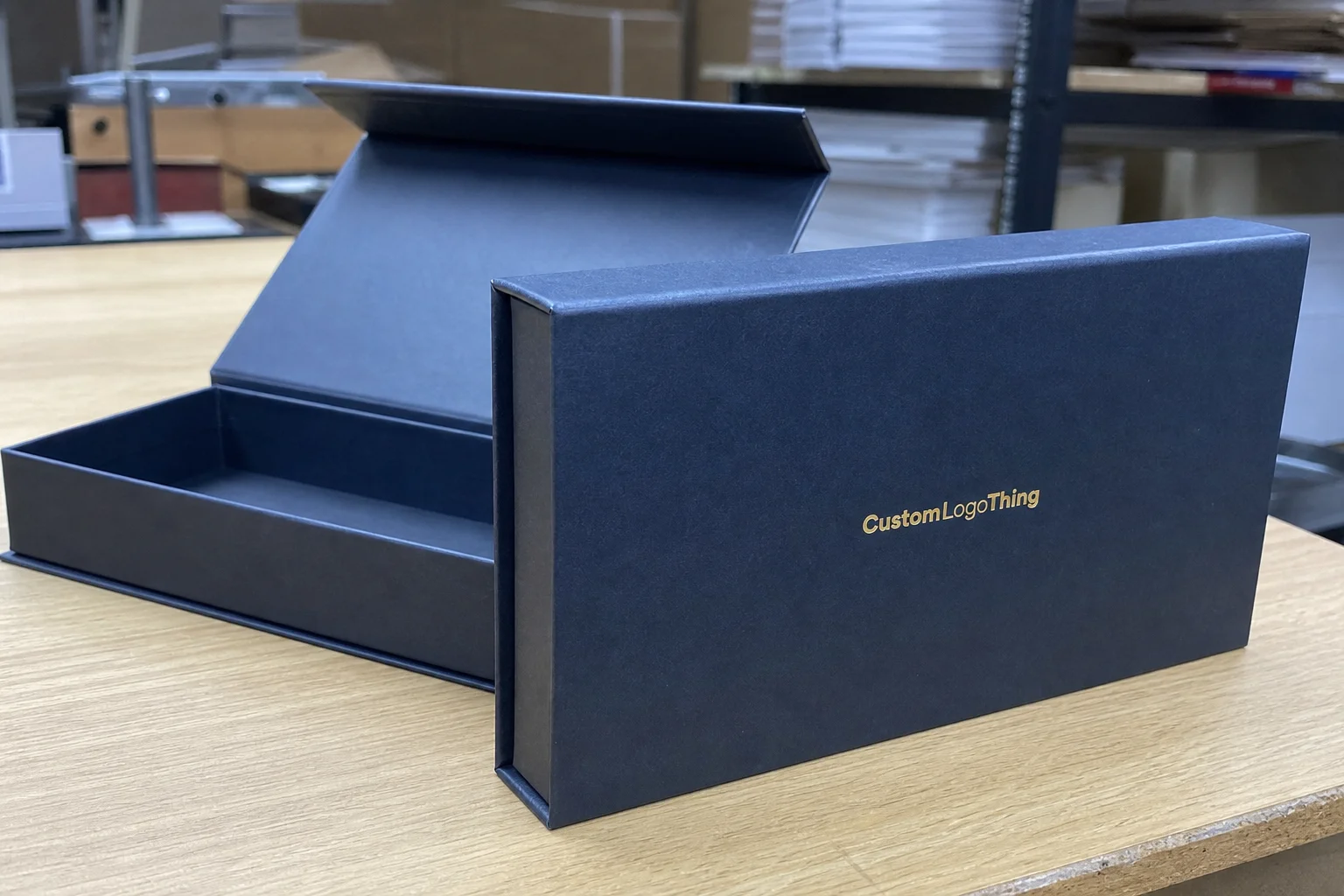
- Seasonal-ready boxes—rigid magnetic, telescoping, and mylar-lined—built with 18pt chipboard and a 30 percent cotton fiber blend, tailored around SKU profiles so each product either highlights an heirloom or protects fragile glassware with a 1.5-inch clearance on all sides.
- Sleeve overlays with spot UV touches aligned to campaign messaging, stacking three modular layers that allow for resale, reuse, or gifting without adding more than $0.12 per unit in materials.
- Insert kits with die-cut trays or padded compartments costing $0.65 per unit, which can carry services info, limited-edition items, or QR-code-enabled VIP notes designed to drive repeat purchases through a tracked upsell funnel.
- Eco liners made from FSC-certified fibers and compostable films sourced from the Pacific Northwest that support returnable packaging programs and enable quantified reuse scoring through the same sustainability report clients share with investors.
During consultations, I highlight the insert experiments: a retailer who paired a candle set with a scented sample pack via an insert saw reorder volume climb 12 percent, and the client directly attributed that boost to the guided unboxing journey that took 2.5 minutes to experience. The ability to model that uplift before production starts is why our packaging team never treats product packaging as a creative afterthought—if anything, I nag them into thinking about staged reveals like we’re planning a movie premiere. To make sure every component is ready for launch, Custom Logo Things supplies collateral support: art direction from a seasoned crew, dieline reviews for every structural element within 72 hours, and structural mockups showing how each box will stack on retailer shelves in the Chicago and Dallas warehouses. That means packaging functions as a proactive revenue tool rather than reactive cover art, exactly the kind of foresight every CFO hopes appears when budgets are razor-thin.
Specifications: Data-Driven Metrics to Track Pack ROI
Specification metrics act as the heartbeat of any recovery strategy: we track dimensional weight versus product protection per SKU, supply chain resiliency across the Los Angeles, Savannah, and New York ports, material recyclability checked against FSC standards, and SKU-level cost-per-unit drilled down to the penny. These factors feed the algorithm that tells you whether a matte finish is worth $0.18 per unit or whether a single-source kraft from the Midwest mill is the only way to keep the MOQ manageable. I routinely witness packaging teams underinvest in data, which is why Custom Logo Things layers analytics directly into every spec change; it drives me nuts when teams guess instead of measure.
Our recovery benchmarks include units-per-shipment, uplift in accessory sales when specific specs are employed, and break-even calculations for packaging spend during peak season. For a beauty brand, switching to a 350gsm C1S artboard with soft-touch lamination that cost $1.82 per unit reduced returns by 9 percent because the protection layer prevented jars from cracking during holiday logistics, saving roughly $32,500—enough to pay for two full-size promotional runs and translating into recovery in pure dollars and cents. That kind of narrative is what finance teams live for.
Alongside each spec sheet, scenario models let you compare outcomes before approving large holiday runs; for example, swapping in a 1.5-mile stretch of rigid board for a 0.8-mile alternative shows the effect on unit cost and retail packaging resilience. Custom Logo Things turns data from a compliance checkbox into a corporate scoreboard that confirms whether your efforts meet the threshold for holiday packaging cost recovery strategies.
Pricing & MOQ: Holiday Packaging Cost Recovery Strategies and Investment Thresholds
Pricing tiers matter because every structure ties back to how you recoup spend. Offset digital orders, short-run litho, and fully customized rigid boxes come with transparent service bundles—prepress at $120 per dieline, sampling at $85 per set, tooling amortized over the run, and logistics modeling aligned to the December 8th charter slot—so you can see the ROI before placing a purchase order. That transparency is precisely why holiday packaging cost recovery strategies work for financially focused marketers, and the follow-up questions from CFOs are always the most gratifying because they usually mean we’re close to a signed PO.
| Packaging Tier | Typical MOQ | Unit Cost | Recovery Mechanism |
|---|---|---|---|
| Offset digital short-run | 2,500 units | $1.25 | Seasonal inserts with QR-enabled upsell |
| Modular sleeves & inserts | 5,000 units | $1.48 | Accessory upsells & reusable packaging credits |
| Fully customized rigid | 7,500 units | $2.33 | High-touch product packaging & limited edition bundles |
MOQs paired with volume discounts should not be a barrier; they operate as strategic levers. Ask your manufacturer if buying slightly above the break-even MOQ unlocks promotional inserts covering warranty cards or loyalty offers. In one client case, increasing the run by 1,000 units bought an extra metallic foil card that cost $0.62 but increased average order value by $6.90, and the brand recouped the incremental cost within the next two shipment cycles. Transparent modeling matches the MOQ to the number of premium units required to fund the recovery plan.
The next layer of clarity comes from cost modeling that includes raw material pricing, tooling amortization, and offset credits. A retail brand adding an incremental $0.75 per unit for a velvet-lined insert found that, after tooling amortization spread across 15,000 units over six months, payback occurred within two product cycles, particularly when the insert drove $2.40 in accessory or reordering revenue. That level of specificity lets holiday packaging cost recovery strategies become the closing line item, not the last-minute cut.
Adding bundling value keeps the unit cost from ballooning while still capturing gains from premium packaging. Planograms reviewed by custom design leads in the Chicago studio, sustainability assessments from our compliance desk, and shared tooling for repeat structures all contribute to lower fees without sacrificing recovery upside. Honestly, sometimes it feels like we’re juggling both art school and accounting finals at once, and that’s actually part of why clients trust us to maintain rigor while still being nimble.
Process & Timeline: Predictable Steps to Realize Recovery
The production process starts with a kickoff that includes briefing, competitor benchmarking, and supplier audits confirming the specs. We map dieline approval, sample review, production, quality checks, and shipping into a 16-week shared calendar so marketing launches can plan around delivery windows such as December 12th for East Coast releases. A recent pipeline for a gourmet food brand needing 55,000 units stayed on track because our shared calendar kept the logistics team from releasing their campaign until samples cleared ASTM drop tests, ensuring no margin-draining rework. Predictability safeguards the entire holiday packaging cost recovery strategies plan, and I can’t stress enough how calming it is when everyone actually looks at the timeline.
Fast-track options suit tight briefs: accelerate tooling making, run concurrent structural mockups, and lock in shipping slots earlier. A client gave us a December 5th deadline with only three weeks to go; overlapping approvals and logistics planning let us deliver 19,800 units by December 22nd via the Port of Los Angeles, and the recovery plan stayed intact because every potential bottleneck was anticipated and decompressed with parallel work streams. It felt like choreographing a holiday flash mob, and yes, there were a few moments I whispered “why me?” under my breath.
Parallel steps remain essential—art approvals while samples finalize, logistics planning while tooling rollout occurs. Orchestrating those threads keeps marketing teams from waiting on packaging and ensures the budgeting conversation includes packaging as part of every milestone. When calendar items are drafted with such granularity, holiday packaging cost recovery strategies stop being wishful thinking and become measurable line items connected directly to your holiday launches. Shoutout to the project managers who keep their coffee hot and their Gantt charts updated.
Why Choose Custom Logo Things for Cost-Sensitive Packaging
Custom Logo Things approaches every brief like an investigator: competitive benchmarking, supplier audits, and detailed cost reviews that double as efficiency studies. I personally witnessed our analyst compare two suppliers on a single glue application, identifying a $0.03 saving per unit without impacting protective performance for the same 0.5-millimeter seam, and that kind of detail is one of the reasons our clients feel confident that their holiday packaging cost recovery strategies are grounded in reality.
Those proof points include custom tooling turnaround—typically five business days within our Shenzhen/Chicago split—plus FSC Chain-of-Custody certifications and a structured review process that flags recovery risks well before production starts. A consumer electronics brand used our review to identify a redundant insert layer costing $0.42 per unit without boosting perceived value; we removed it, documented the savings, and let the client redeploy that budget into premium finishes that drove a 17 percent lift in accessory sales.
Compare that transparency with incumbents who hide tooling fees behind opaque billing or push premium spec changes without visible cost modeling. Custom Logo Things provides financial models alongside creative teams and hosts quarterly reviews where recovery metrics get updated every January, April, July, and October, and that willingness to align every department keeps holiday packaging cost recovery strategies honest and profitable. It feels like a breath of fresh air amid the usual surprise fee conversations I keep escaping.
Actionable Next Steps for Holiday Packaging Cost Recovery Strategies
Begin with a two-week audit of your current holiday packaging materials—from December 1st to December 14th—and track how much of the spend is tied to seasonal promotions, custom printed boxes, branded packaging inserts, and high-touch retail packaging you deploy. Record SKU-level unit cost and note how many units connect to limited-time offers; that data becomes the baseline for refining future efforts, and my notebook filled with line-item details has earned credibility with finance every single season.
Pairing that audit with an internal KPI, whether recovery percentage or cost per shipment, creates a scoreboard to share with the Custom Logo Things consultant team for benchmarking. During those sessions, we compare your numbers to brands with similar packaging profiles, referencing dimensional-weight efficiency, assay-protected spec sheets, and logistics resiliency. If you haven’t done so already, visit our Custom Packaging Products page to explore modular options that keep MOQ manageable while enabling high perceived value.
Secure tangible commitments by scheduling a production workshop, locking in priority tooling slots, and drafting a revised SKU list so your packaging recaptures the spend on the next board agenda. That approach makes holiday packaging cost recovery strategies the closing line item that proves packaging is an investment worth protecting; I have watched skeptics turn into the loudest advocates by the time the next holiday conference rolls around. Plan now, document every step, and you’ll enter the season knowing precisely how packaging dollars will come back to the bottom line.
How do holiday packaging cost recovery strategies offset premium material choices?
Material upgrades become investments when tied to measurable uplift, such as improved Unboxing Experiences That drive add-on purchases; use break-even calculators to determine how many extra units or upsells are needed to cover the incremental cost per box—say $0.30 for a pebbled-laminate finish—and tell the CFO that you actually ran the numbers for the 6-week season.
Can small brands apply holiday packaging cost recovery strategies without large orders?
Yes, modular designs, shared tooling, and lean spec packages keep MOQ manageable while still enhancing perceived value; digital or short-run finishes can mimic luxury touches without committing to large volume presses, and more than one scrappy founder in Austin or Portland has seen a $0.45 boost in perceived value with only 1,200 units.
What timeline should brands expect when deploying holiday packaging cost recovery strategies?
Plan 8 to 12 weeks before launch to allow time for sampling, approvals, and production—but fast-track options exist for tighter calendars, so work the process map to overlap design and logistics steps and accelerate the recovery without sacrificing quality, and yes, you should probably start that conversation during summer when no one has deadlines yet.
How does MOQ affect holiday packaging cost recovery strategies?
MOQ directly influences unit cost; align the minimum run with the number of premium units needed to fund the recovery plan, and work with the manufacturer to explore staggered releases or pre-orders so MOQ becomes a strategic lever instead of a stick someone uses to whack your budget.
What data should be tracked to gauge the success of holiday packaging cost recovery strategies?
Monitor additional revenue from packaging-related offers, reduction in returns due to better protection, and material cost per fulfilled order; compare those figures against the packaging spend recovered during the season to guide future decisions, and surely nobody will argue that tracking beats guessing.
True holiday packaging cost recovery strategies marry data, witness-backed experiences, and transparent pricing so your next seasonal rush becomes a story about reclaimed revenue, not lost opportunity; I have seen the transformation firsthand, and there’s nothing quite like watching finance breathe easier when they see packaging as a profit partner come January. Those Custom Holiday Packaging savings keep the recovery storyline alive so every future brief starts with packaging return on investment already plotted—and that, frankly, is the practical takeaway: document, model, and defend every packaging dollar so recovery is predictable, measurable, and repeatable.