PVC zipper garment bags custom sample cost is usually the first number buyers ask for, and that makes sense. A clear bag can look fine in a mockup and still fail once it is loaded with a coat, suit, or layered workwear. The real test is whether the zipper runs smoothly, the seams hold, and the bag keeps its shape after handling.
For apparel brands, dry cleaners, uniform programs, and travel-focused packaging, the bag affects protection, presentation, and storage. That is why experienced buyers treat garment bags as part of the product experience, not as a generic accessory. Dimensions, film thickness, closure style, and print expectations need to be defined early, before pricing starts.
A sample is the cheapest place to catch a sizing mistake, weak zipper, or clarity problem before those defects appear across a bulk run.
Why buyers sample PVC zipper garment bags before ordering
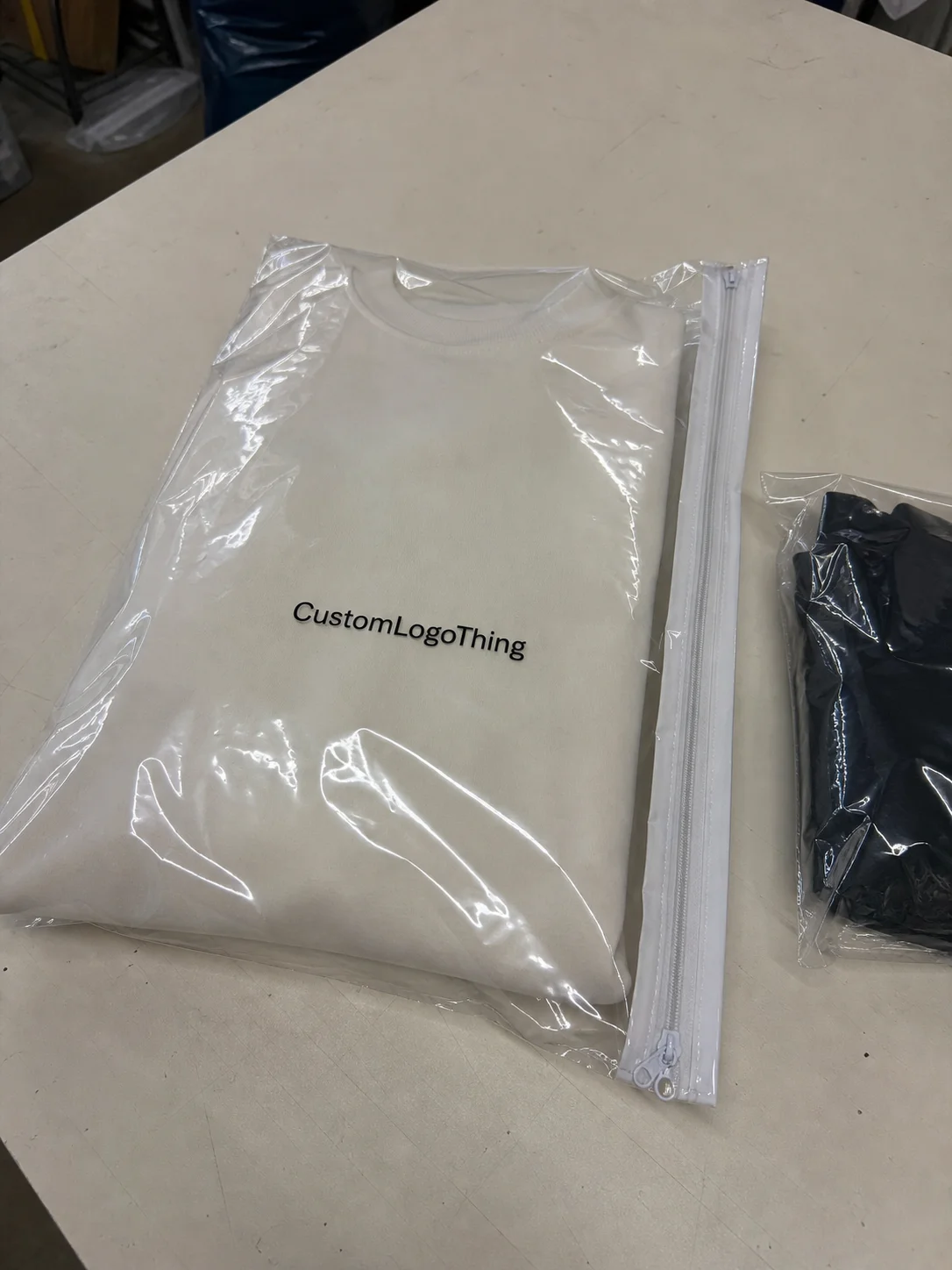
PVC behaves differently from a spec sheet. A zipper that feels smooth on one film gauge may drag on another. A clear panel that looks perfect on screen can show glare, waviness, or seam distortion once the bag hangs vertically. Coat bags, shirt bags, and dress bags may all use PVC film, but they do not behave the same once hanger load, shoulder width, and garment bulk are added.
That is why sample approval matters. The sample shows whether the bag fits the garment in the real world, not just on paper. It also reveals whether the opening is too tight, whether the gusset depth is enough, and whether the closure feels durable enough for repeated handling.
The sample fee is often driven by the number of variables involved: material gauge, zipper style, gusset depth, hanger opening, and any special print or reinforcement. A standard clear bag with one-color branding is straightforward. Add a custom zipper color, a revised top opening, or a thicker film, and the sample cost moves quickly.
That cost is easier to justify when the alternative is a rejected bulk order. For coat programs, uniforms, and premium apparel, one wrong decision can affect not just the bag itself but the presentation of the garment inside it.
Buyers get better results when the sample request is specific. “Similar to this” is too vague. A useful brief includes the garment type, the target use, the finished size, the film thickness, and the closure style. “Fits a 42-inch men’s coat, hang-through top, 0.25 mm clear PVC, black zipper, one-color logo front” gives the factory something measurable.
- Sample first when the garment has unusual bulk, trim, or padding.
- Sample first when the bag is display-facing or customer-facing.
- Sample first when the zipper will be opened and closed often.
Construction details that determine fit, clarity, and durability
The basic structure is simple: PVC film body, zipper closure, hanger opening, side gussets, bottom seam, and optional reinforcement at stress points. Simple does not mean forgiving. A few millimeters can change how the garment hangs. A weak bottom seam can split at the corners. A light-duty zipper can feel acceptable in a sample and fail after repeated retail handling.
Clarity is another variable buyers often underestimate. Transparent PVC shows the garment clearly, which helps when the product needs to sell visually. Frosted PVC hides fingerprints and small scuffs better. Tinted PVC reduces glare and creates a calmer look, though it lowers visibility. The right choice depends on whether the bag is meant for storage, display, or transport.
Film thickness plays directly into performance. Lighter film reduces material cost, but it also gives up puncture resistance and shape retention. Heavier film feels more substantial and usually performs better with heavier garments. Many buyers fall somewhere in the 0.20 mm to 0.35 mm range for retail handling or frequent use, but the correct thickness depends on garment weight and how often the bag will be opened.
Use case changes the build. A dry-cleaning customer often wants durability and easy access. A traveler may care more about folding behavior and zipper reliability. A showroom buyer may prioritize clarity and polished presentation. Seasonal storage shifts the priority again, this time toward dust control and long-term wear resistance.
For testing references, packaging teams often consult the Institute of Packaging Professionals at packaging.org and the International Safe Transit Association at ista.org. Those references are useful when the brief calls for something more disciplined than “looks fine in the sample photo.”
Size, print, and hardware specs buyers should lock first
Size should be locked before print and hardware. That order prevents the most common rework. A late size change can force a new pattern, a new material estimate, and sometimes a different zipper source. By the time the order is near production, casual revisions become expensive.
A useful spec sheet includes finished width, finished length, gusset depth, material thickness, zipper color, and hanger-hole style. If the bag needs a reinforced top header, a carry handle, a vent hole, or an internal label pocket, those details should be written down before quoting starts. If the logo must sit centered relative to the zipper or the fold line, say so clearly.
Print placement deserves special care. A large logo can look balanced on a proof and then shift visually once it crosses a seam or curves over a gusset. Glossy PVC also changes the way ink appears under light. Buyers who are used to custom printed boxes sometimes assume transparent film is easier because the surface is visible. It is not. Transparent materials expose registration, contrast, and alignment issues more easily than paperboard does.
- Prioritize depth and closure strength if the garment is thick, padded, or layered.
- Prioritize clarity and print quality if the bag is retail-facing or showroom-facing.
- Specify zipper pull style if the bag will be opened often.
- Confirm vent holes if airflow matters for long storage or dry-cleaning use.
A simple rule helps keep the brief practical. If the garment is heavy, the bag needs structural discipline. If the garment is meant to sell visually, the bag needs optical discipline. Those are different jobs, even if both fall under branded packaging.
PVC zipper garment bags custom sample cost and MOQ
PVC Zipper Garment Bags custom sample cost usually breaks into five parts: setup, material, zipper sourcing, print preparation, and labor. Freight is separate. Extra revision rounds are separate again. A buyer who compares only the sample line item is seeing a partial picture, because the factory still has to prepare the pattern, source the right components, and inspect the sample before it ships.
Sample pricing stays relatively fixed while bulk unit cost drops as quantity rises. That happens because early-stage work is similar whether the order is for one sample or several thousand bags. Bulk production spreads those setup costs across more units. The sample does not get that advantage.
| Option | Typical sample cost | MOQ impact | Best fit |
|---|---|---|---|
| Standard clear PVC, single-color logo | $35-$60 | Lower MOQ, often easier to approve | Basic retail packaging and storage |
| Custom size, custom zipper color | $60-$95 | MOQ usually rises because sourcing is less standard | Branded packaging with tighter visual control |
| Multi-color print, reinforced structure, special pull | $90-$150+ | Higher MOQ, more revision risk | Premium apparel programs and repeat orders |
Those numbers are working ranges, not fixed quotes. Material gauge, zipper type, artwork complexity, and production slot availability all affect the final price. A low sample price can be misleading if it excludes freight, assumes a simplified spec, or allows for revisions that will never be cheap once production starts.
MOQ follows the same pattern. Standard sizes and simple print usually support lower minimums. Custom dimensions, unusual gussets, special zipper colors, or detailed print coverage push MOQ upward. If an order is urgent, ask for two quote paths: a standard production spec and a premium spec. That makes the tradeoff between speed, appearance, and cost easier to see.
Some suppliers credit the sample fee against bulk if the final order matches the approved spec. That can be a sensible arrangement for serious buyers. The credit rule should be confirmed before payment, because not every fee is refundable and not every add-on is included.
Common hidden costs include artwork revisions, expedited production, extra packaging, and split shipments to multiple destinations. The more complete the first request, the less likely the quote will expand later. That is why accurate pvc zipper garment bags custom sample cost conversations start with full specifications, not rough estimates.
Process, timeline, and production steps from quote to delivery
The sequence is straightforward: inquiry, spec review, quote confirmation, sample production, sample approval, bulk production, quality check, packing, and shipment. Delays usually come from missing information. If the size is unclear, the sample may need to be redone. If the zipper color changes late, sourcing shifts. If the artwork file is not production-ready, print preparation stops.
Sample turnaround is usually faster than bulk production, but only with a clean brief. Simple samples often take about 5-10 business days after spec confirmation. More complex jobs, especially those with custom hardware or multiple revision rounds, can take longer. Bulk production often falls in the 12-25 business day range, depending on volume, tooling, and factory load.
Approval is a real control point, not a formality. Once the sample is signed off, the production spec should be frozen. That keeps the bulk run aligned with what was tested. In packaging, drift creates waste. It shows up as rework, rejected cartons, chargebacks, or complaints after the bags are already in the warehouse.
Quality checks for zipper garment bags are fairly specific:
- Zipper alignment and smooth closure
- Seam sealing at corners and along the bottom edge
- Film consistency and visual clarity
- Print registration and logo placement
- Dimensional accuracy against the approved pattern
Clear timelines also help control the total cost. Every revision loop uses labor. Every extra shipment uses freight budget. Every unclear approval adds schedule risk. Buyers who want the lowest total cost usually get there by making the sample easy to approve.
How we reduce rework from sample approval to bulk production
The best protection against rework is repeatability. The same approved spec, film source, and zipper supplier should be used again in bulk wherever possible. Some orders go off track because a team swaps a component to shave a small amount from unit cost. The savings look good on paper, then performance changes in production.
A sample only matters if the bulk line behaves the same way. A good-looking prototype is not enough if the production batch uses a different gauge or a substitute zipper. Sampling is meant to lock behavior, not just appearance.
Direct communication during production usually helps buyers get clearer answers on tolerances, print placement, and realistic color matching. That matters in package branding because color shifts on transparent film are easier to spot than on paperboard. For buyers who manage product packaging across multiple formats, the lesson is consistent: predictable components beat last-minute substitutions.
Inventory on common PVC gauges and zipper components can shorten lead time and reduce emergency sourcing costs. It also helps keep the approved spec intact. In practice, the most expensive surprises usually come from component swaps, not from the bag pattern itself.
A disciplined process usually includes a few non-negotiables:
- Keep the approved sample, spec sheet, and final artwork tied together.
- Record the exact film thickness and zipper style used for the approved version.
- Verify seam integrity and closure strength before dispatch.
- Check carton packing so the bags do not arrive creased, warped, or dusty.
That level of documentation may look excessive until a reorder arrives months later. Then it becomes the difference between a smooth repeat and a fresh round of sampling.
What to send for an accurate quote and fast next steps
Send the full spec in one message if you want a useful quote. Finished dimensions, garment type, target quantity, preferred material thickness, print file, zipper color, and delivery location all belong in the first round. If there is a reference bag, include it. A reference does not replace measurements, but it helps match construction details instead of forcing the supplier to interpret a description.
Two quote options are often more useful than one. Ask for a standard production spec and a premium spec so you can compare sample cost against bulk unit cost. That makes the value of extra reinforcement, thicker film, or a higher-grade zipper easier to judge. Sometimes the upgrade is modest. Sometimes it changes the economics enough to affect the whole order.
Before approving a sample, confirm four things: artwork format, shipping terms, whether the sample fee is refundable or creditable, and the expected production window. Those four items remove most of the friction that slows the order later. They also make it easier to compare suppliers, especially if you are evaluating multiple custom packaging options through our custom packaging products.
The cleanest path is simple: lock the spec, request the sample, inspect it against the actual garment, then release bulk only after the sample passes on size, clarity, zipper feel, and seam quality. That keeps the decision tied to the actual bag, not to a guess. Once the spec is fixed, pvc zipper garment bags custom sample cost becomes a usable buying number instead of a moving target.
What drives pvc zipper garment bags custom sample cost the most?
Material thickness, zipper type, and whether the bag needs custom dimensions usually move the sample price the most. Artwork revisions, special finishes, and rush shipping can add more cost than the base sample itself. The most accurate quote comes from a full spec, not just a photo or rough size estimate.
Is the sample fee refundable on a bulk order?
Often yes, if the final bulk order matches the approved sample spec and the supplier offers a sample credit policy. The credit may exclude freight, extra revisions, or add-on features that were not part of the confirmed quote. Ask for the refund or credit rule in writing before paying for the sample.
What MOQ should I expect for custom PVC zipper garment bags?
MOQ usually depends on size, print complexity, and whether the order uses standard or custom components. Simple, standard-spec bags can have lower minimums than bags with custom zipper colors or unusual dimensions. If the order is urgent, ask for MOQ options at two spec levels so you can compare price and lead time.
How long does the sample and production turnaround usually take?
Sample turnaround is usually faster than bulk production, but exact timing depends on artwork approval and component availability. Production time increases when the order needs custom tooling, multiple revisions, or special packaging requirements. A complete spec sheet is the fastest way to reduce delays and avoid back-and-forth.
What information do you need to quote pvc zipper garment bags custom sample cost accurately?
Provide finished size, material thickness, zipper style, print details, quantity, and destination ZIP or port. Add garment type and any special features such as gussets, vent holes, or reinforced tops. If you already have a reference sample, send it so the supplier can match the structure instead of guessing from a description.


