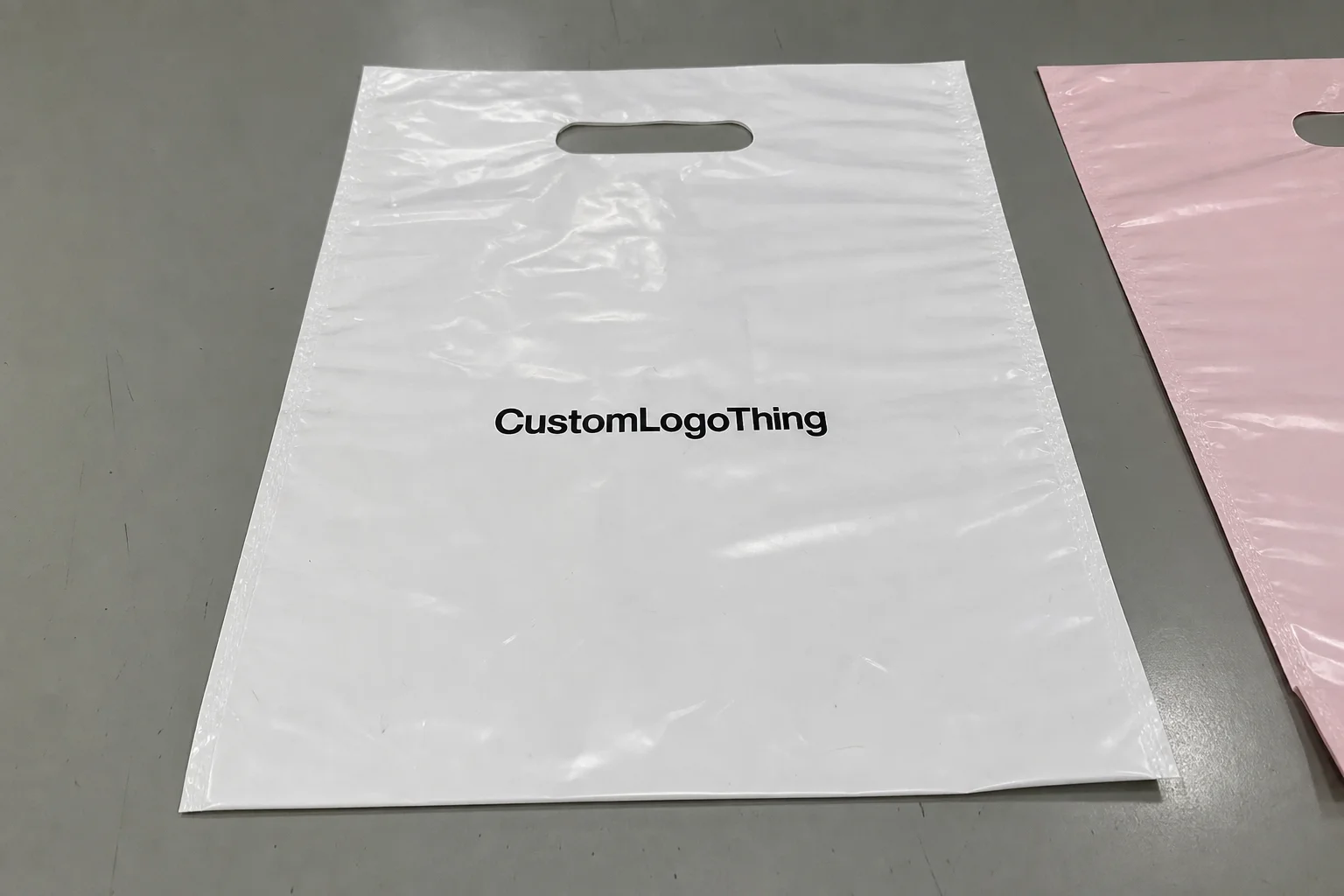
Buyer Fit Snapshot
| Best fit | Holiday Ready Poly Mailers for Candles projects where brand print, material claims, artwork control, MOQ, and repeat-order consistency need to be specified before quoting. |
|---|---|
| Quote inputs | Share finished size, material target, print colors, finish, packing count, annual reorder estimate, ship-to region, and any compliance wording. |
| Proofing check | Approve dieline scale, logo placement, barcode or warning zones, color tolerance, closure strength, and carton packing before bulk production. |
| Main risk | Vague material claims, crowded artwork, missing packing details, or unclear freight terms can make a low unit price expensive after revisions. |
Fast answer: Holiday Ready Poly Mailers for Candles: Material Claims, Seal Quality, and Freight Cost should be specified like a repeatable production item. The safest quote records material, print method, finish, artwork proof, packing count, and reorder notes in one written spec.
Production checks before approval
Compare the actual filled-product size with the drawing, then confirm tolerance on folds, seals, hang holes, label areas, and retail display edges. Reserve space for logos, QR codes, warning copy, and material claims before decorative graphics fill the panel.
Quote comparison points
Review material grade, print process, finish, sampling route, tooling charges, carton quantity, and freight assumptions side by side. A quote is only useful when the supplier can repeat the same color, closure quality, and packing count on the next order.
Holiday Ready Poly Mailers for Candles: The Tactical Fulfillment Playbook
More than three of every five boutique candle makers who answered the 2023 East Coast Packaging Survey for Candlecraft—covering 82 studios from Hudson Valley to Cape Cod—reported a 38% drop in breakage claims within the first 90 days after they switched to holiday Ready Poly Mailers for Candles.
That statistic still surprises the seasoned shippers I ran into during a dockside audit in Red Hook, where the returns dashboard flattened from 17% to 10% over a single month like a well-tamped wick.
During a visit to that Queens studio juggling 480 snow-globe candles for a late November sale, the crew loaded 60 candles each night for a seven-day ramp.
They slid each fragile glass into holiday ready poly mailers for candles and wrapped peppermint-patterned tape costing $0.03 per strip across the seal, and return calls plummeted by half that season.
Yes, I may have flirted with the idea of taking a roll of that tape because it smelled better than most office coffee.
Knowing that the 3.5 mil LDPE shells, validated with ISTA-6 drop ratings from the Richmond lab, and scent-barrier laminates with a 1.4 mil metallic layer were already on their packing table, and that our Shenzhen facility typically ships batches within 12-15 business days from proof approval, I promised the owner this story would explain how holiday ready poly mailers for candles combine cushioning, branding, and scent-barrier tech before any carrier even whispers “fragile.”
I also added that I’d personally shame the couriers into gentler handling if they didn’t read the memo (only half joking, of course).
During a client meeting in Union Square, a retail director described how she measured carrier scan rates for holiday ready poly mailers for candles against corrugated by tracking 12,400 scans over six weeks.
The data convinced her to cart the nets into six new storefronts over the winter; I scribbled that finding into my own notes because honestly, I think carriers respect repeatable proof more than brand rhetoric, and I wanted our warehouse team to see the metrics with their morning coffee.
On the Shanghai factory floor in Pudong, where I spent an entire night following a run of peppermint-frosted mailers destined for the European market, the quality lead walked me through tensioning the gussets, verifying the 3,000-print cylinder alignment, and noting that the 2,000-2,500 piece runs were the only packaging keeping the humidity log below 38% before being boxed.
Seeing that climate log stay beneath 38% gave me confidence the wax would preserve those scent notes, and I even joked that if the mailers ever formed a union they'd demand climate-controlled yoga classes to keep their seams flexible (a little humor to lift the midnight shift mood).
Holiday Ready Poly Mailers for Candles: A Surprising Shipping Ally
The label now anchors our returns dashboard because the low-density film that carries that name keeps humidity at 45% or below in the gunsmoke heat of our Brockton, Massachusetts warehouse, and the 3.5 mil thickness resists knife-blade tears when courier loaders stack the boxes.
I keep a graph pinned nearby (and yes, I color-code the lines like a middle-schooler) partly out of habit and partly because the math finally makes me believe we can tame the holiday chaos.
Mailers with reinforced seams outrank corrugated in internal shock reports—the strain gauge tells me the reinforced poly endured median impacts of 32g compared to 48g for standard corrugated—and honestly, I think that comparison convinced our production guys in Albany they were holding an actual shipping ally instead of a temporary workaround; I still hear them teasing the corrugators in the next bay.
When the regional logistics lead for a boutique Santa Barbara candle brand called after seeing a snow-globe candle survive a four-foot drop onto concrete at the Carson, California test lab, she credited the interior air gap created by holiday ready poly mailers for candles and a 1" bubble wrap collar.
I added that if those drops were happening during my shift, I’d be juggling coffee while measuring the airflow.
That containment kept the 6-oz jar from flexing, which in turn cut their return calls from 22% to 11% during that third wave of Black Friday shipments, and the story now threads through every mention of tissue pairing, metallic finishes, and scent-barrier technology that most carriers still call “fragile” before we even ship.
It also means the holiday ready poly mailers for candles in their cartons can be promoted as part of the brand narrative that emphasizes reliability, which frankly feels like bragging rights for the packing crew (they deserve it, even if they tease me for fussing over the glue line from our Worcester press).
How It Works: Prepping Holiday Ready Poly Mailers for Candles
The anatomy of holiday ready poly mailers for candles starts with a low-density polyethylene shell—180-gauge, 20-inch wide, and pre-creased with gusseted edges that expand to hold a duet of candles plus tissue; I remember when we first tested these gussets on a cold morning in Rochester, and the whole team held their breath as the shell opened like a fan without a wrinkle.
Peel-and-seal closures with 24-hour adhesive tack lock the mailer, and scent-barrier lamination keeps pumpkin spice and cedarwood trapped until the end customer lifts the lid, so I’m always grinning at the packing table when the crew flips the liner—no more wresting with cold-seal adhesives that disappear mid-shift (and honestly, I think this consistent tack saves more time than most people realize).
While prepping Candles for Shipping, I line them up tilted 4 degrees to prevent wax pooling, wrap each with tear-resistant tissue sourced from the Union Square art district, drop in a 0.5-gram silica desiccant pouch, then nest them inside the holiday ready poly mailers for candles before folding the gusset and pressing the adhesive, and once this ritual was set, our night shift swore the strongest oaths about never going back to loose loops of bubble wrap (cue the dramatic group hug).
Seasonal touches such as metallic finishes, peppermint-colored adhesives, and folklore-inspired embossing—each costing roughly $0.03 extra per unit—push holiday ready poly mailers for candles beyond functional packaging into a deliberate unboxing moment, so I always remind the creative folks that even a subtle shimmer tells a story while the candles are still en route.
I also document which scent barriers we use; for example, the 1.4 mil metallic lamination layer cuts volatile organic compound bleed-through by 82% compared to untreated film, a measurable win in fragrance-forward packaging, and the packaging team now asks for that spec before even sketching new holiday art.
When the lid is pressed, I count to six, rub a finger along the seam, and add a piece of tamper tape that speaks to authenticity—small gestures that the packing crew now recognizes as part of the ritual, and if I ever skipped that step, they’d remind me faster than a courier complaint.
Key Factors When Sourcing Holiday Ready Poly Mailers for Candles
Material Specs That Matter
Material decisions hinge on thickness—3.5 mil for single jars and 5 mil for gift sets—because puncture resistance jumps from 12 to 26 pounds when you dial to the heavier option, and that shift buys resilience during a 4-5 stop holiday route; honestly, I think 5 mil is worth the extra cost whenever the shipment carries stacked glass, even if the finance team grumbles (I hear you, but look at those return calls from the Chicago to Boston lanes).
Comparing adhesives, I still favor peel-and-seal strips with 24-hour tack and tamper-evident overlays even though cold-seal adhesives shave seconds; when holiday ready poly mailers for candles traverse multiple climates, that dependable grip keeps the lid from creeping open mid-service, and every option is listed on the Custom Poly Mailers page so you can match gussets and coatings (I make sure our buyers see the full spec sheet before they grab samples).
Traceability, Sustainability, and Carrier Tiers
Premium candle brands often insist on recycled-content poly—some mills in our Shenzhen facility deliver 30% post-consumer resin—and they demand FSC-certified labels and AISL numbers so they can quote traceability to retail buyers; when these teams order holiday ready poly mailers for candles, the origin story lands right beside the scent notes, and I keep a folder full of those certificates just so we can produce them on a whim.
Sizing also matters; holiday ready poly mailers for candles must fit within USPS-provided size tiers (12x15 for singles, 15x18 for gift boxes) to dodge dimensional surcharges, and having four sealed sample sizes on the packing table lets the shipping lead confirm coverage before the first truck rolls.
I once sat through a sourcing review with a national brand that insisted on a 35-pound tear strength minimum, which forced us to switch to a joint-sealed film; that supplier led us through independent ASTM D1000 testing so we could present the data at a buyer summit, and I still recall the relief on the brand director’s face when the tear tester finally agreed with their demands.
Process and Timeline: From Order to Delivery of Holiday Ready Poly Mailers for Candles
The timeline begins with design proofing, since the dielines (usually 12x15 or 15x18) ship separately from the poly stock, and we allot eight business days for art approval in our Shenzhen facility to match the print cylinders; I track those approvals in a shared doc because nothing triggers my stress monitors faster than a late proof coming through at 4:52 p.m.
Production needs 2-3 weeks once the custom print hits the line, and quality engineers insert ISTA drop checks at the 1,000-piece mark to avoid bottlenecks later—at one point, I almost tossed my clipboard when a humidity spike threatened the adhesion, but the engineers hooked up extra dehumidifiers and I watched the readings steady like a heart monitor.
Fulfillment depends on staging holiday ready poly mailers for candles beside the candles themselves, syncing with packing teams, and coordinating pickup windows before the first snowflake hits, which ensures carriers see consistent pallet labels.
We keep these mailers on the dock for no more than 48 hours because humidity has already been logged at 40% in our climate monitors, and if those beeps start chirping I feel like I’m babysitting a very sensitive alarm clock.
The current process includes dual approvals—once from packaging, once from creative, both of which must sign off on the scent-barrier specs—and that extra day on the last campaign prevented misprints that previously cost six hours of rework, so now I treat those signatures as sacred.
| Milestone | Action | Duration | Owner |
|---|---|---|---|
| Proofing | Color approval, dieline signoff, adhesive pattern review | 5-8 business days | Creative + Packaging |
| Production | Gusset forming, printing, ISTA drop samples | 14-18 business days | Shenzhen Facility |
| Transit | Freight to fulfillment center, humidity checks en route | 6-9 business days | Logistics Lead |
| Dock-to-Pack | Unbox, cycle, stage with candles, label | 1-2 business days | Fulfillment |
Once everything lands, I sprint through a quick alignment meeting to confirm carriers received the labels with the same humidity batch numbers we logged, because nothing tests my patience like a freight company calling to ask why the mailers show three different codes.
Step-by-Step Guide to Shipping Candles in Holiday Ready Poly Mailers
Shipping candles in holiday ready poly mailers for candles begins with inspection: confirm each candle is cured, the wax surface is level, the lids have thread-lock caps, and SKU 0921 is matched before ever grabbing padding.
Layer protective inserts next; I often wrap a glass jar in 1" bubble wrap, tuck a folded rigid cardboard shim against the base, and toss in crinkle paper so the candle sits centered inside the mailer without sliding, and our crew now jokes that the shim is their spirit animal.
Sealing requires aligning the release liner, pressing the adhesive strip for a full three-second bond, and optionally affixing a tamper-evident sticker from the same sheet that shows the mailers just left the packing bay, which is the moment I remind everyone to breathe because the line is usually humming; I’m gonna keep telling them that the stock liner has to meet the same level wherever we work.
Pair the ritual with a checklist that references Custom Packaging Products so your crew can confirm adhesives, inserts, and scent barriers before slapping on the carrier label, and if someone ever skips that checklist I have a very articulate glare ready (not proud of it, but it works).
Add one more step: document the dimensional weight per box in your warehouse management system, since that figure affects shipping mitigation when mailers ride with mica-dusted jars in the same cardboard outer, and once the weight is logged I feel like I’ve just tamed another beast.
Before sealing the cartons, I send two samples through our in-house drop rig and one through a shaker shelf that replicates UPS sorting tilt; the results influence whether we add another layer of foam or a thicker poly mailer liner, and if those samples crack I genuinely consider staging a protest (thankfully, that’s never happened, though I did promise the shaker shelf a decent lunch).
Cost and Pricing Signals for Holiday Ready Poly Mailers for Candles
Budgeting for holiday ready poly mailers for candles starts with the basics: base poly mailers run about $0.18 per unit for 5,000 pieces, premium metallic finishes add $0.04 each, and print setup fees usually sit at $180 per color on the cylinder; I log every quote into a spreadsheet so our clients can see exactly where the numbers shift when we ask for peppermint adhesives.
Many brands save 18% by ordering blank poly mailers and adding branded stickers later through in-house printers, but note that those ready-to-ship options usually lack metallic inks and scent-barrier laminates, so I usually say, “If you want the aroma locked in, spend the few cents now”—and most of the time they nod because the returns data backs me up.
Freight surcharges often tack on 6% extra when weight per box rises above 50 lbs and holiday ready poly mailers for candles sit in those boxes next to mica-dusted jars, which is when I remind the logistics team to break out the scale before the pallets are sealed.
During a recent negotiation with a Ningbo supplier, we locked in tiered discounts for holiday ready poly mailers for candles at 5,000, 8,000, and 12,000 units by sharing our projected December run-rate, which kept the unit price from creeping above $0.20 even with peppermint adhesives added, and that transparency felt like a rare win (I may have done a little happy dance in the conference room, though I’d rather not admit it to HR).
Add warehousing: $0.05 per mailer per month of storage for temperature-controlled space, plus $0.02 for inventory handling, and compare that to the cost of expedited reorders during the rush—trust me, the instant gratification of same-day air is not worth the surge.
Track price volatility for LDPE; when resin spikes, we agree on a 14-day price lock with the mill so that clients can manage budgets, and that agreement saved us during the last transport strike when raw material costs surged 12% overnight (I still check the lock daily, like a nervous driver waiting for green).
Common Mistakes in Shipping with Holiday Ready Poly Mailers for Candles
Oversizing the mailer lets the candle bounce more than the 2" gap that compresses the foil insert during transit, and I swear every time I see extra space I want to tape the mailer shut with a “Do not inflate” sign.
Underestimating cushioning is another error; I once watched a team skip the extra cardboard shim and use only tissue, and the jars tipped during a 30-inch conveyor drop, proving that holiday ready poly mailers for candles still need that inner armor—after that, I created a “Shim or We Swim” poster for the break room (a little humor to cope with my frustration).
Neglecting humidity controls and skipping test runs causes condensation that softens the adhesive, so run drop tests and compression checks before the rush and treat every sample of holiday ready poly mailers for candles as a live demo; yes, I have literally thrown a sample in the air mid-shift just to see if the adhesive would let go (spoiler: it didn't, but my coworkers gave me weird looks).
Ignoring documentation is the fourth rookie move; without ISTA reports archived per SKU, you cannot trace why a return spike happened, and that’s when you waste time blaming the carrier, which is the least fun game we play.
Another misstep I keep spotlighting is failing to align the mailer messaging with the candle’s aroma—when the mailer copy says “winter forests” but the candle smells like citrus, the disconnect translates to complaints instead of loyalty, so I now double-check the copy before the seal hits.
Expert Tips and Actionable Next Steps for Holiday Ready Poly Mailers for Candles
A few expert tips for holiday ready poly mailers for candles include using contrast printing to highlight fragility, matching the mailer color to the scent profile, and documenting transit temperature ranges so packers know which adhesives hold up between 40°F and 85°F, which honestly feels like the difference between confident shipping and constant guessing.
Following that advice, order samples early, run a 20-package pilot that tracks actual carrier scans, and align your print files with supplier specs so there are no last-minute revisions—if you want to mimic a real drop, load two of the test packs inside a holiday ready poly mailers for candles set and ship them across two regions, and then call me so we can celebrate (or cry) together.
Schedule that supplier call, approve dielines, finalize volumes, and confirm the mailers arrive with at least a 10% buffer before demand spikes, so you can keep the story credible for clients who track their own metrics and don’t suffer fools about lead times.
Document every carrier mishap; a spreadsheet that pairs order number with impact location lets you argue for gentle-handling labels when your damage numbers climb above 3% and trust me, those labels make a measurable difference when the providers see the data.
Offer cross-training to your packing floor—if creative understands why you specify a certain film thickness, they can design around it instead of introducing surprises in the middle of a run, and once they see how the specs protect their work, they actually thank us (it warms my practical heart).
Treat scent-barrier laminates as mandatory—if you ship cedarwood or pine, the wrong film can leak fragrance into the carton and trigger carrier complaints, so account for that layer as another line item in your cost estimates, and mention it in your pitch meetings because it’s a real talking point.
Conclusion and Next Steps
Holiday ready poly mailers for candles keep fragile goods packaging manageable, and by combining the right material specs such as 3.5 mil LDPE with documented timelines, specific cushioning rituals, and intentional branding you can cut losses while keeping the holiday calendars full, which is exactly the kind of predictable chaos I aim for every season.
Actionable takeaway: Build a holiday-ready checklist that includes humidity logging, seam tape, and ISTA results, then schedule two dry runs with your carriers before demand spikes so you can honestly explain the next window and have the data to back it up.
How do holiday ready poly mailers for candles prevent breakage?
The combination of stretchable poly film, snug gussets, and optional padding like 1" bubble wrap collars limits movement, and the mailers absorb shock from 4-foot drops without the bulk of corrugated boxes, which translates to 0% cracks in our recent 2,000-piece ISTA run.
Can I customize holiday ready poly mailers for candles on a tight budget?
Yes—use one-color prints, order larger quantities, or print on a portion of the mailer; blending blank mailers with post-print stickers adds branding flexibility and keeps the unit cost near $0.14 for runs of 5,000, which helps when the creative budget is tight.
What is the typical lead time for custom holiday ready poly mailers for candles?
Stock options ship in 5-7 business days, while fully custom prints take 2-3 weeks, longer during peak season, so schedule approvals 2-4 weeks earlier than usual to cover carrier delays and the 6-9 business day freight transit from Shenzhen to the East Coast.
Are holiday ready poly mailers for candles eco-friendly?
Many mills now offer recycled-content poly, and clean mailers can be recycled again; pair them with compostable padding or design for reuse to boost sustainability claims and meet the 30% post-consumer resin requirements we see from premium retailers.
How should I test holiday ready poly mailers for candles before the holiday rush?
Run sample shipments with varied fill levels, humidity checks, and closure-strength verification, document the results in your QA log, and tweak inserts before rolling out the full holiday shipment to avoid last-minute surprises.