If you are comparing Poly Mailer Bags Unit Cost for hotel, the first mistake is usually the same one: judging the bag by the line item alone and ignoring the work it creates downstream. A low quote can still become expensive if the bag is the wrong size, seals poorly, slows packing, or needs to be reordered in a rush. Hotels feel those problems quickly because packaging is tied to guest service, housekeeping speed, retail presentation, and labor control all at once.
Hotel mailers are used for guest amenities, lost-and-found shipments, laundry returns, retail shop orders, spa products, and VIP welcome kits. Those jobs do not call for one universal bag. A mailer that works well for folded apparel may be awkward for toiletries, while a pouch that looks tidy at the front desk may be too light for repeated handling in back-of-house operations.
The real buying target is not the lowest sticker price. It is the best cost per shipment after you account for material, print, freight, staff time, damage risk, and how often the item must be reordered. That is where experienced buyers save money: by choosing a bag that fits the workflow instead of forcing the workflow to adapt to the bag.
“A hotel does not need the cheapest mailer. It needs the one that gets packed once, ships cleanly, and keeps staff from fixing avoidable mistakes.”
Why hotels pay more per bag when they buy the wrong style
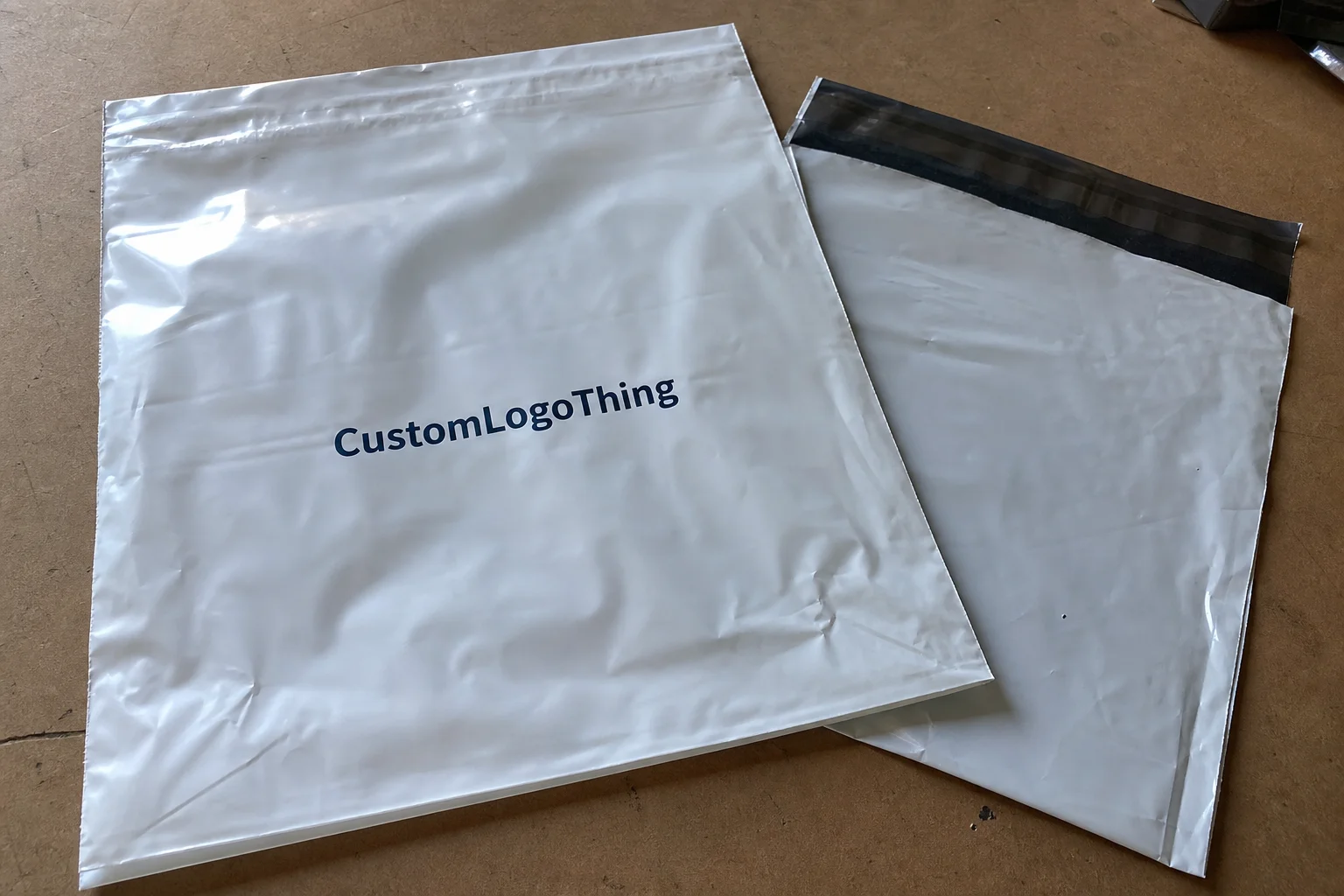
Hotels often pay more because the mailer spec does not match the actual use case. A bag for folded shirts is not the same as a pouch for toiletries, nor is it the same as a shipping mailer for mixed soft goods. If the bag is too large, you pay for extra film, extra freight, and more storage space than you needed. If it is too small, staff spend time forcing items into it or replacing it with a second bag.
That mismatch sounds minor until it shows up in daily operations. In practice, the hidden cost is often labor, not material. A mailer that closes quickly, opens cleanly, and fits the contents correctly reduces packing time, which matters for housekeeping kits, retail fulfillment, and front desk shipments. Multiply a few wasted seconds by hundreds or thousands of units and the difference becomes visible on the schedule, not just the invoice.
Hotels also get caught by low-volume rush orders. Small custom runs can carry the same plate, setup, and proofing charges as larger orders, so the unit cost rises sharply. Add expedited freight and the “simple reorder” turns into a much more expensive purchase than expected.
The better comparison is total landed cost. If a slightly higher-priced mailer reduces errors, protects presentation, and speeds packing, it may be the lower-cost option in actual use. That is especially true for properties that order branded packaging for guest-facing items and cannot afford a bag that looks inconsistent from one batch to the next.
For hotels that want their packaging program to stay consistent across categories, it helps to source from a focused packaging catalog rather than piecing together substitutes that only look similar. Matching dimensions, film type, and finish across orders reduces the chance of surprise changes in appearance or performance.
What to specify before you request poly mailer bags unit cost for hotel
To get a meaningful quote for Poly Mailer Bags unit cost for hotel, the use case has to be defined first. A laundry return bag, a spa retail mailer, a guest amenity pouch, and an apparel shipping bag all pull in different directions on thickness, appearance, and closure strength. Suppliers can estimate from a rough description, but rough descriptions usually lead to rough pricing.
Before sending an RFQ, confirm the basics: finished dimensions, thickness, opacity, closure style, and whether printing is required. If those details are missing, the quote often looks attractive at first and then changes once artwork, revisions, or packaging constraints are clarified.
- Dimensions: finished width and length, plus gusset if needed
- Thickness: usually stated in microns or mils
- Opacity: clear, frosted, or opaque
- Closure: self-seal, tamper-evident, or open-top
- Print: one-color logo, full-color artwork, or no print
- Quantity: pilot run, quarterly replenishment, or annual volume
Branding should be decided with the operating environment in mind. Some hotels need a discreet mailer for internal use. Others need a more polished appearance for retail pickup, welcome kits, or branded shipping. Matte film usually reads softer and more premium. Glossy film can look brighter and cleaner, though it tends to show scuffs and handling marks more easily.
The workflow matters just as much as the visual. Housekeeping kits need speed and consistency. Retail orders need presentation and tamper resistance. VIP welcome kits sit in the middle: the package should look composed, but there is rarely a reason to pay for complicated artwork if the bag is mostly a carrier for a robe, amenity set, or similar item.
A one-page specification sheet is the simplest way to compare quotes fairly. Send the same sheet to every supplier. Without that, buyers end up comparing different assumptions disguised as different prices, which is how a low number can look better than it really is.
Specifications that change durability, appearance, and cost
Thickness is one of the clearest cost drivers. Lighter-duty film can work for documents, small apparel items, or light amenities. Medium gauge is the practical middle ground for many hotel shipments. Heavier film is better for repeated handling, bulkier items, or contents that could snag during transport.
Size has a direct effect on cost as well. A small pouch for toiletries uses less film and ships more efficiently than an oversized mailer with too much empty space. Mid-size bags are often the most useful for folded apparel and spa merchandise. Larger formats make sense for boxed or bulkier soft goods, but they become wasteful if the item inside is small.
Closure style affects both unit cost and labor. Self-seal adhesive saves packing time. Tamper-evident closures are useful for retail shipments and any guest-facing package that needs a more secure first impression. Reinforced seams are worth paying for when the contents are heavier or the bag will be handled more than once before delivery.
Printing is where cost can creep upward faster than buyers expect. A single-color logo is usually the most economical branded option. More colors, larger print coverage, and complex artwork increase setup work and can raise the per-piece cost. If the goal is a premium appearance without a high quote, a clean logo on a matte surface is often the best balance.
For hotels with sustainability targets, ask what recycled-content options exist and what documentation the supplier can provide. Material claims should be specific rather than vague. Poly film is its own category, so a generic “eco-friendly” label is not enough to make a procurement decision. If paper components are part of the broader packaging program, hotel buyers may also want sourcing aligned with recognized standards such as FSC. For recycling direction, procurement teams often reference EPA recycling guidance, though actual recyclability depends on local collection and the full package structure.
The practical rule is simple: if a certain gauge, seal, or print spec cannot be tied to a real operational need, the order is probably carrying features the hotel will never notice.
| Hotel use case | Typical spec direction | Cost impact | Best fit |
|---|---|---|---|
| Guest amenities | Smaller size, lighter gauge, plain or one-color print | Lower | Daily housekeeping kits and toiletry packs |
| Retail orders | Mid-size, medium gauge, branded finish, self-seal | Moderate | Spa items, apparel, gift shop shipments |
| Lost-and-found or laundry returns | Heavier film, stronger seal, clear labeling area | Moderate to higher | Repeat handling and mixed contents |
| VIP welcome kits | Premium appearance, neat branding, controlled opacity | Higher | Guest-facing presentation matters more |
Unit cost, pricing, and MOQ: what hotels should expect
Pricing looks simple on a quote sheet, then gets complicated as soon as the production details are added. Unit cost drops as quantity rises, but setup fees, print plates, proofing, and freight can make small orders seem disproportionately expensive. That is why tiered pricing matters. The per-piece number is only useful once it is shown at several volumes.
Unprinted standard bags usually sit at the lower end of the range because there is no art setup. Custom printed hotel mailers cost more, and the final number depends on size, thickness, coverage, and print complexity. Hotels usually see a much better per-piece result when moving from a few hundred units to several thousand, although the exact break point depends on the supplier’s production method and the specification of the bag itself.
Minimum order quantity has a real effect on buying strategy. Low MOQ is useful for testing a new size, checking closure performance, or seeing how the bag fits into the packing process. It is not the most efficient way to buy long term. Smaller runs carry more setup overhead per unit, so the quoted price often stays high even when the bag is not especially complex.
The main cost drivers are predictable:
- Bag dimensions: larger bags use more film.
- Film gauge: heavier material costs more.
- Number of colors: more colors usually mean more setup work.
- Print coverage: full coverage is pricier than a small logo.
- Tooling fees and setup charges: these can distort small runs.
- Shipping method: air freight changes the landed cost quickly.
If the quote is meant to support a real purchasing decision, ask for tiered pricing at 500, 1,000, 3,000, and 5,000 units. Confirm whether freight is included, whether setup charges are one-time or recurring, and whether artwork revisions trigger a new fee. Those details often move the final number more than the bag spec itself.
For hotel teams comparing branded mailers, it helps to view the purchase in three parts: a pilot run to validate fit, a working inventory order for routine operations, and a replenishment order for better pricing. That makes the relationship between quantity and Poly Mailer Bags unit cost for hotel easier to see. Sometimes the larger order is worth the storage space. Sometimes it is not. The answer depends on actual usage, not just on the discount percentage.
Production steps, proofing, and lead time for hotel orders
The ordering process usually follows a predictable sequence: inquiry, specification confirmation, artwork review, digital proof, sample approval if needed, production, packing, and delivery. A supplier that cannot explain that sequence clearly is usually a supplier that will create delays later.
Most delays come from three places: slow artwork approval, unclear dimensions, and last-minute changes to the logo or message. Hotel projects are especially prone to these delays because different departments often want different branding priorities. One team wants the spa logo, another wants the property logo, and another asks to simplify everything after the proof has already been prepared. That back-and-forth costs time.
Turnaround depends on whether the item is stock or custom. Stock bags move faster. Custom printed bags require prepress work and a production slot, which adds lead time before anything is packed and shipped. For planning purposes, custom orders usually need several additional business days beyond stock reorders, and larger quantities need longer still. If the bags are tied to a seasonal occupancy spike, a group event, or a launch date, buffer time should be built in from the start.
Samples are worth the small delay they create. A plain sample confirms fit, seal strength, and handling. A printed proof confirms logo placement, contrast, and overall appearance before the full run begins. If the bags are guest-facing or used for retail orders, skipping proofing tends to cost more later than it saves up front.
For higher-volume orders or sensitive contents, some buyers also reference standard packaging test protocols such as ISTA test methods. A basic hotel mailer does not need every form of lab testing, but if the shipment will travel a long distance or carry fragile items, a little testing is better than a lot of replacement stock.
How to choose a supplier that keeps reorders simple
Consistency matters more than a flashy quote. Hotels need repeatable size, color, seal performance, and finish across every order. A bag that looks right in one run but changes in the next can create brand inconsistency and operational friction. Staff notice those differences immediately, even if they are too small to stand out on a pricing sheet.
Good suppliers ask useful questions. They will ask about product weight, use case, storage conditions, print expectations, and whether the bag will be handled only once or several times before delivery. If the only questions are bag size and quantity, the quote may still be usable, but the recommendation is likely to be generic.
Direct manufacturing often helps keep pricing steadier because there is less middleman markup, but direct sourcing is not automatically better. The real benefit is tighter control over specs, clearer communication, and fewer surprises when it is time to reorder. A supplier that saves your artwork, remembers the approved thickness, and can repeat the same print without reworking the file is doing real work for the buyer.
Reorder support matters more than polished sales language. Saved specifications, retained artwork files, and predictable replenishment schedules reduce the number of emergency purchases, which is where hotel packaging budgets usually get distorted. That predictability is worth more than a small discount on a bag that fits poorly or changes appearance from one order to the next.
The best supplier relationship lowers unit cost over time by reducing errors, eliminating last-minute freight, and preventing staff from working around a bad spec. That is a more useful result than shaving a fraction of a cent off a bag that still creates waste.
Next steps to order the right hotel mailers without guesswork
Start with a short request that includes bag dimensions, item weight, print needs, target quantity, and delivery deadline. Add a brief note about how the bag will be used, whether that is guest amenities, retail, laundry returns, or VIP kits. That context helps suppliers recommend a workable spec rather than a generic substitute.
Ask for tiered pricing at multiple quantities so the volume breakpoints are visible. Request a sample or proof if the bag will be seen by guests or used in retail. Confirm whether freight, setup, and artwork revisions are included in the price. Those items change the final number more often than buyers expect, especially on small or custom orders.
Then compare the quote against actual operations. Will the bag reduce labor? Will it improve presentation? How often will the hotel reorder? Is storage limited, or can the property justify a larger buy for a lower per-piece rate? Those are the questions that matter more than a headline price with no context.
If you are sourcing branded hotel mailers, start with a clean spec, a realistic quantity, and a supplier that can repeat the order without forcing you to rebuild it from scratch. Reviewing Custom Poly Mailers is a practical starting point, but the decision should always come back to landed cost, handling time, and whether the finished bag actually fits the hotel’s workflow. That is how Poly Mailer Bags unit cost for hotel stays under control without buying the wrong thing twice.
FAQ
What affects poly mailer bags unit cost for hotel orders the most?
Size, film thickness, print colors, and quantity usually have the biggest impact. Freight and setup fees can also shift the final landed cost. Custom branding raises the price, but it can improve presentation and Reduce Packaging Waste when the bag is used often.
Can hotels order low MOQ poly mailer bags without paying too much?
Yes, but smaller orders usually carry a higher per-bag cost because setup charges are spread across fewer units. Low MOQ works well for testing a new size, seal, or print layout before committing to a larger run. Tiered pricing will show where the better volume breaks start.
What thickness should hotel poly mailer bags use for soft goods?
Most soft goods do well in a medium-duty range, though the exact thickness depends on the item weight and handling conditions. Heavier film makes sense for repeated handling, larger items, or shipments that may be stacked or sorted several times before delivery.
How long does it take to produce custom hotel mailer bags?
Stock bags are faster than custom printed bags. Artwork approval, proofing, and production scheduling are the main timing variables. Hotels should build extra time into the schedule before busy travel periods, seasonal promotions, or event-driven demand.
What should a hotel include when requesting a quote for mailer bags?
Include dimensions, quantity, print details, intended use, item weight, and any delivery deadline. Ask for separate pricing on setup, freight, and repeat orders. That makes it easier to compare quotes and see the real landed cost.


