Hotel Amenity Magnetic Boxes Cost and MOQ Guide for Buyers
For hospitality buyers, hotel amenity magnetic boxes cost is rarely driven by the magnet alone. The bigger cost usually sits in the rigid board, the wrapped stock, the insert, the print coverage, and the hand finishing needed to make the lid close neatly and feel premium. A simple folding carton and a rigid magnetic presentation box do not live in the same price lane, so the gap starts to make sense pretty quickly once you break the structure apart.
That difference matters because the box is doing more than holding product. It protects small items in transit, keeps guest-room sets organized, and shapes the first impression the moment someone opens the lid. If you are budgeting for a property opening, a renovation, or a replenishment program, understanding hotel amenity magnetic boxes cost in practical terms helps you judge unit price, MOQ, and landed cost without getting blindsided later.
Why hotel amenity magnetic boxes cost more than standard packaging
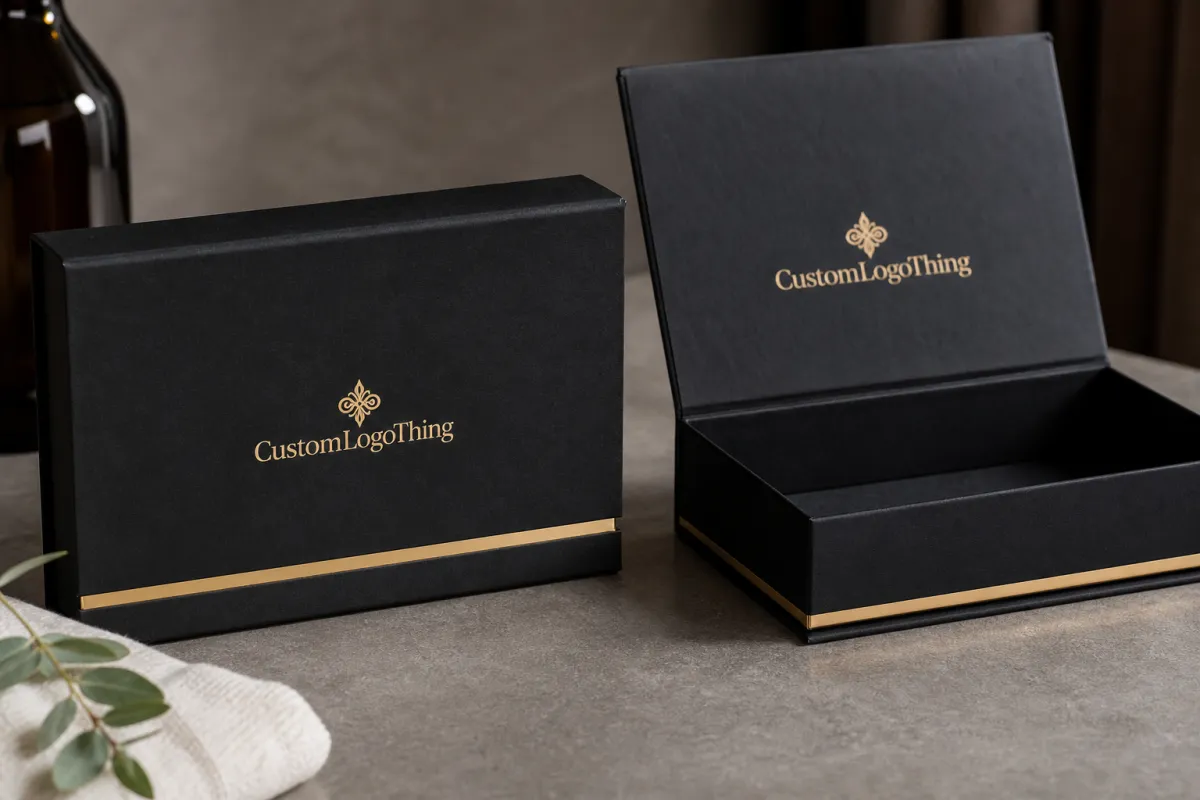
The first reason hotel amenity magnetic boxes cost more than a folding carton is structure. A basic carton might use one sheet of board and a tuck flap, while a magnetic presentation box usually starts with rigid chipboard in the 1.5 mm to 2.5 mm range, then adds wrapped art paper or specialty stock, a concealed magnet, and a more involved assembly process. That means more material, more labor, and more opportunities for the final quote to move.
The magnet itself is usually not the expensive part. In practice, the bigger cost sits in the rigid shell, the wrapping paper, the die cutting, and the hand work needed to line up edges cleanly. If the lid needs to close with a precise snap, the tolerances matter. If the box has to hold toiletries, slippers, tea service items, or a welcome set without shifting in transit, the insert design matters even more. All of that pushes hotel amenity magnetic boxes cost above ordinary packaging, but it also gives the buyer a tighter, more controlled presentation.
There is also a business case behind the price. A rigid magnetic box often protects the contents better during delivery and setup, which can reduce crushed corners, product movement, and replacement stock. For a hotel team, that is not just a packaging detail; it affects labor on the floor and how consistent the guest experience looks from room to room. From a packaging buyer's point of view, the real question is not only, "What is the unit price?" It is also, "What does this box save me in damage, time, and presentation risk?" That is why hotel amenity magnetic boxes cost should be judged against total use, not only the quote line.
"If the box has to protect a delicate set and still look sharp on the guest-room desk, the cheapest quote is rarely the real bargain."
For hospitality programs, presentation is part of the product. A neatly wrapped magnetic box can feel more like a display piece than a shipper, and that changes how buyers view value. The stronger the brand story, the more the box itself contributes to perceived quality. That is also why some buyers accept a slightly higher hotel amenity magnetic boxes cost if the result matches the property image, the room category, or the retail value of the amenity set.
What hotel amenity magnetic boxes should include
Most hotel amenity magnetic boxes share the same basic structure: a rigid chipboard core, a wrapped outer layer, a magnetic flap closure, and a fitted interior. The exact build changes depending on what the box has to hold. A grooming kit needs a different cavity than a tea set. Slippers need more depth than a folded note card. A welcome gift with glass, ceramic, or metal components needs tighter protection than a lightweight tissue or toiletry kit. Those sizing choices affect hotel amenity magnetic boxes cost because they drive board usage, insert complexity, and assembly time.
Branding belongs in more than one place. The outer lid usually carries the logo, but inside-lid messaging can lift the unboxing experience without adding much material weight if the art is planned well. Buyers often ask for a matte or soft-touch surface, careful PMS matching, foil stamping, or a subtle emboss to keep the look premium without making the box feel busy. If your brand leans clean and restrained, a single-color logo on specialty paper can work better than a full-coverage print. If the property wants a more dramatic reveal, the inner lid can carry a message or pattern that makes the opening moment feel deliberate, and that is one of the smarter ways to balance hotel amenity magnetic boxes cost against guest impact.
Inserts change the user experience as much as the outer shell. A paperboard tray can keep items organized and help the hotel team pack quickly at the back of house. Foam inserts create a more secure fit for fragile items, though they usually raise unit cost and can make recycling harder. Ribbon lifts, dividers, and nested compartments can all improve presentation, but each one adds another production decision. If your order includes multiple SKUs, such as toiletries plus a tea assortment, the insert should be designed around the full set, not one item at a time. Otherwise the final hotel amenity magnetic boxes cost may look fine on paper and still miss the handling needs of the operation.
If you are comparing formats, it helps to review a supplier's Custom Packaging Products lineup before requesting a quote. Seeing the available box structures side by side often clarifies whether you need a rigid magnetic style, a sleeve-and-tray format, or a simpler presentation carton. That early decision can save time and keep the first estimate closer to the final hotel amenity magnetic boxes cost.
For buyers, the practical checklist is straightforward:
- Contents: define every item the box must hold, including fill, inserts, and any protective wrap.
- Branding: decide where the logo, messaging, and color accents should appear.
- Finish: choose matte, gloss, soft-touch, foil, or emboss based on the property style and cleaning needs.
- Handling: confirm whether staff need the box to pack quickly, stack neatly, or display open.
Specifications that affect fit, durability, and appearance
The fastest way to control hotel amenity magnetic boxes cost is to define the right measurements before anyone quotes. Internal dimensions matter first: length, width, depth, and the usable cavity after the insert is added. From there, the buyer should confirm wall thickness, lid overlap, and whether the box is meant to hold one complete amenity set or multiple SKUs in a single compartment. A box that is even a few millimeters off can cause friction during packing, wasted headroom, or contents that rattle in transit.
Board caliper and wrap stock choice have a direct effect on rigidity and appearance. A thicker grayboard or chipboard gives the box a more substantial hand feel, but it also increases raw material use and may change shipping volume. Wrap stock influences color saturation, surface feel, and resistance to scuffing. A soft-touch laminate looks refined in guest rooms, but it can add finishing cost and may show fingerprints differently than a matte surface. If your program needs sustainable sourcing, ask whether the board or paper wrap can be supplied with FSC-certified options through FSC certification. That does not automatically lower hotel amenity magnetic boxes cost, but it can satisfy a sourcing requirement without changing the structure.
Print details are another place where accuracy matters. Full-bleed artwork requires careful dieline alignment. PMS matching matters if the brand colors must stay consistent across properties. Foil stamping, embossing, and spot UV can all elevate the box, but they also introduce extra setup charges and more steps on press. For a tight procurement budget, I like to separate decoration into three buckets: standard print, premium print, and tactile effects. That makes hotel amenity magnetic boxes cost easier to compare across vendors because the quote stops hiding the real differences.
There are also small production details that buyers often miss until the prototype arrives. Hinge strength affects how the lid feels after repeated openings. Magnet alignment affects the closure sound and the confidence of the close. Nesting efficiency affects whether the boxes stack and ship efficiently in cartons. If the boxes must arrive flat, the structure changes again, because flat-pack rigid packaging is not the same as a fully assembled magnetic box. For transit testing, many teams reference ISTA test methods alongside internal drop and compression checks, especially when the boxes will travel with delicate guest items. That kind of testing can protect the final hotel amenity magnetic boxes cost from hidden losses later.
Before you Request a Quote, lock these details:
- Internal size: exact cavity dimensions for each content set.
- Outer profile: wall thickness, lid style, and overall footprint.
- Decoration: print coverage, logo placement, foil, emboss, or spot UV.
- Insert type: tray, divider, foam, ribbon, or no insert.
- Assembly state: flat-packed, pre-assembled, or partially assembled.
Hotel amenity magnetic boxes cost: pricing, MOQ, and unit economics
When buyers ask about hotel amenity magnetic boxes cost, I usually break the quote into four pieces: the base box, the decoration, the insert, and the landed cost. That keeps the conversation practical. It also makes it easier to see where bulk pricing helps and where a small change in finish can push unit cost upward faster than expected. If the box is large, highly printed, or fitted with a custom tray, the price can rise quickly even when the magnet itself is inexpensive.
MOQ changes the economics in a big way. Setup charges, tooling fees, die cutting, plate creation, wrap preparation, and finishing setup all need to be spread across the order. That is why a run of 500 units can carry a much higher cost per piece than a run of 5,000 or 10,000. Buyers sometimes compare quotes without checking whether the supplier included all setup charges or only the printed unit. That can distort the real hotel amenity magnetic boxes cost and make one offer look cheaper than it actually is.
Here is a simple way to think about it. A basic rigid magnetic box with minimal print and no insert may land in one range, while a premium hospitality box with foil, embossing, and a custom paperboard tray may sit in a much higher one. If you are building a procurement budget, compare the options by unit cost instead of just the top-line quote. The box that looks inexpensive at first glance can become the expensive one once freight, assembly, and finishing are added.
| Order profile | Typical MOQ | Typical cost per piece | Common features | Best fit |
|---|---|---|---|---|
| Basic rigid magnetic box | 500-1,000 units | $1.70-$3.20 | Standard print, matte wrap, no custom insert | Simple amenity kits and budget-conscious programs |
| Standard branded presentation box | 1,000-3,000 units | $1.15-$2.35 | Full-color print, paperboard tray, light finishing | Most guest-facing hospitality sets |
| Premium hospitality box | 3,000+ units | $0.90-$1.85 | Soft-touch lamination, foil, emboss, custom insert | High-visibility rooms, retail-style welcome gifts |
Those numbers are only a planning frame, not a promise. The final hotel amenity magnetic boxes cost depends on size, paper choice, finish coverage, carton count, and shipping destination. A small box with heavy foil can cost more than a larger box with simple print. A simple shape with a custom foam insert can cost more than a fully wrapped box with no insert. That is why comparing apples to apples is so important. Ask whether the quote includes proofing, tooling, assembly, packaging into master cartons, and freight. If those items are missing, the headline price is not the real number.
From a procurement perspective, the most useful cost framework looks like this:
- Base box: rigid board, wrap stock, and structural assembly.
- Decoration: print, foil, emboss, spot UV, and color matching.
- Insert: tray, divider, foam, ribbon, or custom cavity work.
- Landed cost: freight, carton packing, inspection, and any import handling.
When a supplier quotes clearly in those buckets, hotel amenity magnetic boxes cost becomes easier to control. You can test one variable at a time, such as moving from matte to soft-touch, or from a simple tray to a custom insert, and see the exact impact on bulk pricing. That is far better than accepting a single lump sum and hoping the final invoice matches the planning sheet.
For buyers managing several properties, standardizing one size can also lower cost per piece. If the same outer box can hold two or three amenity variants, the factory can run longer, waste less material, and reduce changeover time. That does not always work for every set, but when it does, it is one of the cleanest ways to improve hotel amenity magnetic boxes cost without sacrificing presentation.
Production steps, timeline, and lead time from approval to delivery
A clean production schedule protects hotel amenity magnetic boxes cost as much as it protects the calendar. The process usually starts with a brief intake: dimensions, contents, artwork, finish, quantity, and shipping destination. After that comes dieline confirmation, which is the step that tells everyone whether the box will physically fit the product and whether the artwork lines up with the structure. If the measurements are vague, the quote may look fine but the production run can stall as soon as the proof is checked.
Next comes artwork review and proof approval. If the file is not press-ready, the design team may need to correct fonts, trim, overprint settings, or color values. That is one of the most common reasons lead time stretches. The same is true when a client changes the insert layout after the proof has already been prepared. Those revisions can be manageable, but they usually add days, and sometimes they add setup charges if a new print plate or cut line is needed. For that reason, buyers who want stable hotel amenity magnetic boxes cost should treat artwork approval as a production milestone, not a casual detail.
Once the proof is signed off, production moves into printing, lamination or coating, die cutting, wrapping, assembly, magnet placement, and finishing. Simple runs can often move in roughly 12-15 business days after approval if materials are in stock and the print is straightforward. More complex runs, especially those with foil stamping, embossing, specialty papers, or custom inserts, may need 18-25 business days or more. Shipping adds its own time. Domestic freight is usually faster than ocean freight, but the actual schedule depends on route, carrier, and warehouse delivery windows. If the boxes must arrive before a hotel opening or renovation handoff, build buffer time into the plan instead of leaving the order to the last minute.
Inspection is the final safeguard. A good inspection checks magnet closure, surface scuffs, print alignment, corner condition, and carton counts before shipment. If the order is going into a multi-property program, consistency matters just as much as the first sample. Many buyers also ask for a pre-production sample or prototype when the fit is critical. That can add time up front, but it often saves more time later by preventing a mismatch between the final hotel amenity magnetic boxes cost and the delivered result.
Typical delay points include:
- Incomplete measurements: the inner cavity is too vague to finalize the insert.
- Artwork delays: files need correction before press approval.
- Late finish changes: switching from matte to foil or adding emboss alters setup.
- Shipping constraints: the freight method does not match the deadline.
If the project is tied to a property launch or a seasonal guest package, plan backward from the delivery date. That keeps hotel amenity magnetic boxes cost connected to the real schedule instead of a best-case estimate. A slightly higher quote with a shorter, more dependable lead time can be the smarter buy if the opening date is fixed and the boxes must be in room before guests arrive.
Why buyers choose Custom Logo Things for hospitality packaging
Hospitality buyers usually want three things from a packaging partner: technical fit, repeatable quality, and clear communication. That is where Custom Logo Things is positioned. The value is not hype. It is disciplined production support around dielines, material choices, artwork checks, and order coordination so the finished box looks the same across every room or property. For a buyer comparing hotel amenity magnetic boxes cost, that consistency can matter as much as the price itself.
When I look at a hospitality packaging program, I pay attention to how well the supplier handles the details before production starts. A good team should ask about contents, weight, packing method, storage conditions, and whether the box is meant to be displayed open or closed. Those questions shape the quote in a useful way. They also reduce revisions later. If the supplier can explain how a paperboard tray, soft-touch finish, or magnet placement changes the final result, then the buyer has a better chance of holding hotel amenity magnetic boxes cost inside budget without guessing.
Clear pricing communication matters too. Buyers should know which parts of the quote are fixed, which parts are variable, and which parts depend on quantity. A straight answer on MOQ, tooling fees, setup charges, and freight is more useful than a low headline price that shifts after proof approval. If your project includes other branded packaging formats, our Custom Packaging Products page is a useful place to compare structures and find the version that fits the rest of the amenity program.
Most hospitality teams care about presentation, durability, and replenishment workflow. A box that opens cleanly, closes with a solid feel, and stacks well in back-of-house storage saves time every time it is handled. That is the real value in a disciplined build. It is also why buyers keep coming back to suppliers who can explain hotel amenity magnetic boxes cost in practical terms, not just quote terms.
Next steps to lock in an accurate hotel amenity magnetic boxes cost
If you want a quote that holds up, gather the minimum details before you ask for pricing. Internal size, quantity, contents, print coverage, finish choice, insert type, and shipping destination should all be on the table. The more complete the brief, the closer the first estimate will be to the final number. That is the simplest way to keep hotel amenity magnetic boxes cost from drifting during the approval process.
I also recommend requesting a sample or prototype whenever fit is critical. A sample helps confirm that the box closes properly, the cavity supports the contents, and the branding reads the way you expect under real lighting. It is a small step, but it can prevent expensive changes later. If you are comparing options, try two scenarios side by side: one with standard matte or gloss finishing, and another with premium foil or embossing. In many cases, that comparison makes the value question very clear. Sometimes the upgrade is worth it. Sometimes the simpler version is the smarter use of budget.
Use this short checklist before you approve the order:
- Confirm exact dimensions for the box and insert.
- Verify MOQ and ask whether it applies per design or per property.
- Request a landed-cost quote, not only a unit price.
- Check whether proofing, tooling fees, and setup charges are included.
- Align the production schedule with opening dates, renovations, or seasonal launches.
When those pieces are in place, hotel amenity magnetic boxes cost becomes a manageable buying decision instead of a moving target. For hospitality programs, that clarity is valuable. It keeps the structure right, the presentation polished, and the budget easier to defend from the first quote through the final delivery.
Frequently Asked Questions
What drives hotel amenity magnetic boxes cost the most?
Box size, board thickness, print coverage, and finishing usually move the price more than the magnet itself. Inserts, foil, embossing, and specialty laminations can raise unit cost quickly, especially if the structure needs extra hand assembly. Higher quantities usually reduce hotel amenity magnetic boxes cost because setup is spread across more boxes.
What is the typical MOQ for hotel amenity magnetic boxes?
MOQ depends on size, print method, and how customized the structure is. Simple runs may allow lower quantities, while highly customized boxes usually need a higher minimum. Ask whether the MOQ applies to one design, one size, or a combined program across multiple properties, because that changes how the supplier calculates hotel amenity magnetic boxes cost.
Can I lower hotel amenity magnetic boxes cost without changing the design?
Yes, often by simplifying finishes, reducing insert complexity, or adjusting the box dimensions to use less board. Standardizing one size across multiple amenity sets can improve efficiency. Ordering at a higher volume can also bring the unit price down significantly, which is one of the most direct ways to improve hotel amenity magnetic boxes cost.
How long does production usually take for hotel amenity magnetic boxes?
Timing depends on proof approval, material availability, and the complexity of printing and finishing. Add extra time if you need samples, foil stamping, embossing, or custom inserts. Freight method also matters, especially if the boxes must arrive before a hotel opening or renovation deadline. If the schedule is tight, talk through lead time before you lock the hotel amenity magnetic boxes cost.
What should I include in a quote request for hotel amenity magnetic boxes?
Provide dimensions, quantity, contents, artwork coverage, finish preference, and insert requirements. Include the delivery location so the quote can reflect freight and landed cost accurately. If you have a target budget, share it early so the supplier can suggest the best structure and materials and keep hotel amenity magnetic boxes cost aligned with the project goals.
For a hospitality packaging program, the best move is simple: define the size, the contents, the finish, the insert, and the delivery date before you ask for a number. That gives you a real comparison instead of a vague one, and it usually turns hotel amenity magnetic boxes cost into a decision you can stand behind. If the box has to look polished, travel well, and arrive on time, the details are what keep the whole thing from getting kinda messy later on.

