Hotel Amenity Tamper Evident Labels Supplier Selection
A hotel amenity Tamper Evident Labels supplier is not just selling adhesive and ink. They are selling a tiny piece of reassurance that has to survive steam, fingers, storage shelves, and housekeeping speed. The label is small enough to ignore and powerful enough to change how a guest reads the entire product. If it looks secure, the room feels more cared for. If it looks lifted, the doubt shows up immediately.
That is why hotel amenity tamper evident labels supplier selection sits at the intersection of branding, operations, and trust. Shampoo bottles, lotion pumps, minibar snacks, and in-room wellness items all benefit from seals that are obvious, durable, and easy for staff to apply. Hotels that want a broader packaging system often pair that work with other branded pieces through Custom Labels & Tags, which helps keep the guest experience visually consistent from bathroom shelf to front desk handoff.
The tricky part is that a label can look perfect in a proof and still fail in service. Humidity, curved plastic, oily residue, cold storage, and fast room turns all change the outcome. A serious hotel amenity tamper evident labels supplier should ask about the actual bottle, not just the artwork. Otherwise you get a pretty mockup and a weak seal, which is kinda the wrong order of priorities.
A seal that holds in a PDF but peels in a steamy bathroom is not a design win. It is a guest-facing problem with a procurement invoice attached.
Why hotel amenity tamper evident labels matter on property
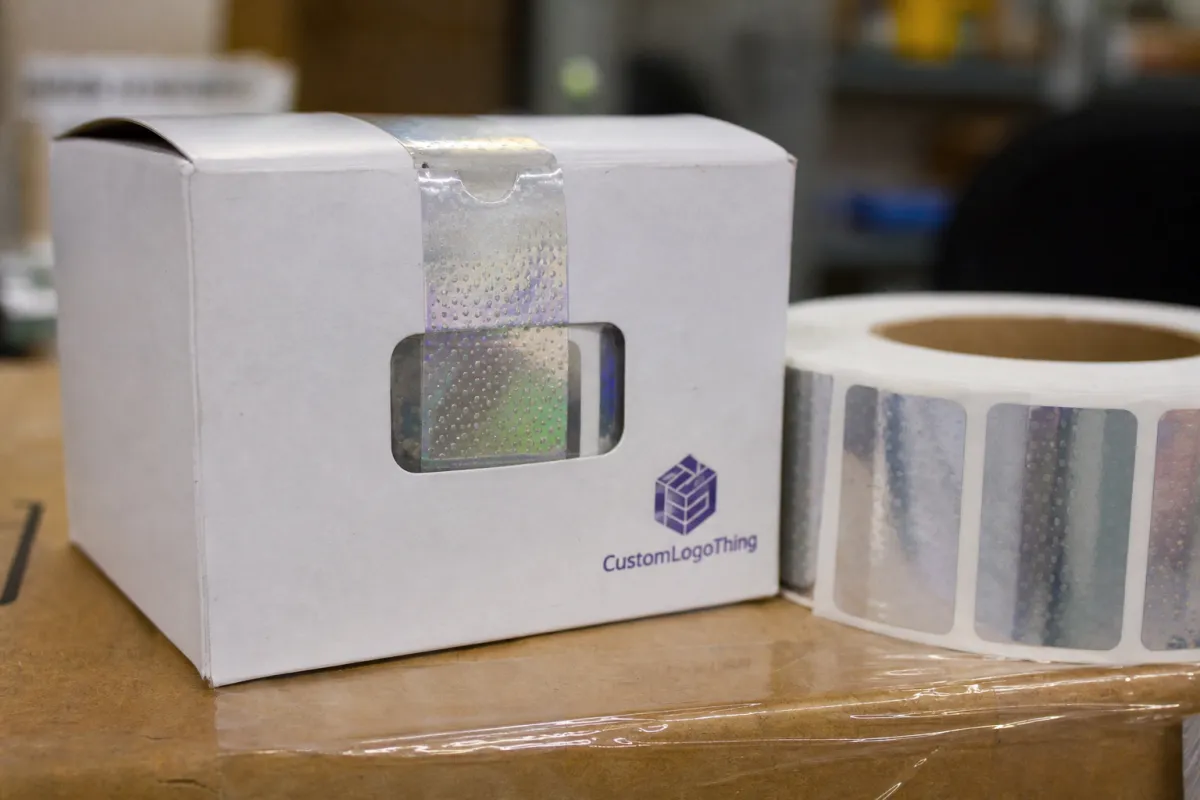
Guests read packaging faster than teams often expect. A bathroom shelf gives them a verdict in seconds. Two identical lotion bottles can sit side by side, but the one with a clear tamper seal feels fresher and safer. The reaction is not always rational. It is visual, fast, and tied to trust. That is why a hotel amenity tamper evident labels supplier is shaping first impressions, not merely shipping consumables.
I once watched a housekeeping manager in a midscale property set two amenity bottles on a cart and say, almost offhand, "The seal is the thing they notice first." She was right. The fragrance may win approval later, but the seal sets the tone before a guest ever twists a cap.
That matters because hospitality is built on small signals. A cracked cap can imply rough handling. A lifted seal can imply access. The same logic applies to toiletries, minibar add-ons, room-service extras, and premium welcome gifts. A buyer can spend hours on color matching and bottle shape, then miss the detail that actually protects perception. The seal is not decoration. It is evidence.
The hygiene signal is just as important. A product can be safe and still feel exposed. In a high-turnover hotel, where staff move quickly and the next guest expects a fresh reset, the label becomes part of the cleanliness story. A dependable hotel amenity tamper evident labels supplier understands that the visual cue has to survive wiping, condensation, and repeated handling, not just the first application.
The commercial logic is simple. A label that costs a few cents more can prevent a replacement amenity, a guest complaint, or an unnecessary service recovery. A lot of teams miss that because the line item looks tiny on a spreadsheet. But tiny numbers scale fast in a 200-room or 500-room property. If one weak seal creates even a handful of extra touches per week, the "cheap" option stops looking cheap.
From a packaging buyer's point of view, the right hotel amenity tamper evident labels supplier should answer three questions quickly: does the seal show clear evidence if lifted, does it stay bonded to the actual surface, and can housekeeping apply it without slowing the reset? If any of those answers gets fuzzy, the risk is no longer cosmetic. It has moved into operations.
There is also a brand memory at play. Guests might not remember the exact label copy, but they remember whether the product felt untouched and intentional. That memory sticks in the same way a well-sealed retail carton does. Hotels that want to lift perceived quality without redesigning every amenity often find that the seal does more work than expected.
How hotel amenity tamper evident labels supplier systems work
A hotel amenity tamper evident labels supplier usually builds the label from four core parts: face stock, adhesive, release liner, and the tamper mechanism. Face stock may be paper, BOPP, polyester, or a specialty film depending on budget and environment. Adhesive choice is often where projects succeed or fail. For bathroom amenities, the label usually needs strong initial tack, permanent bonding, and tolerance for humidity, oils, and repeated touch.
The tamper feature can take several forms. Some labels use a bridge or perforation that visibly tears when lifted. Others use void technology, where a hidden message appears after removal. Destructible films fracture into pieces, which makes reapplication difficult. Seal-over-cap designs cross the opening point, so any opening motion damages the label visibly. Each method has strengths. Each method also has a limit.
What matters is not whether the sample looks clever. What matters is whether it resists edge lift, transfer, and slow adhesive creep over time. A label can pass a quick hand test and still fail after two days in a warm storage room. That is why a good hotel amenity tamper evident labels supplier should talk about real-world conditions, not just print specs.
The workflow should begin with the exact pack format. Is it a flat carton, cylindrical bottle, pump top, squeezable tube, or curved jar? The answer changes everything. Curvature affects bond area. Surface finish changes adhesive behavior. A small rib in the plastic can create a weak point. If your supplier is not asking for bottle dimensions, cap height, neck profile, and fill method, the process is not grounded in the actual package.
Testing is where theory earns its keep. A label that performs well on a mockup may behave differently on glossy PET, HDPE, recycled resin, or coated cardboard. That is why many teams get better results when they request sample runs and test them on the exact containers used in guest rooms. If the label still holds after wiping with a damp cloth, a humid room, and a few rounds of handling, the design is far more likely to work on property.
Industry standards help frame the conversation. A supplier who understands ASTM peel and adhesion concepts, or who can speak to ISTA packaging testing expectations, is usually closer to real usage than someone who only sells from a catalog. For paper-based components, sourcing questions may matter too, especially if the hotel has ESG targets or procurement rules. In those cases, FSC guidance can help buyers compare paper claims with the paperwork behind them.
Housekeeping reality matters just as much. A room attendant does not have time for a fussy application process. The label has to place cleanly, stick quickly, and remain readable after a busy shift. If the design is too intricate or the adhesive takes too long to bite, application errors rise. That is one of the fastest ways to turn a packaging choice into a labor problem.
There is a practical difference between a label that looks secure and one that behaves securely. A supplier who can explain that difference in plain language is usually worth more than one who leans on glossy samples and vague promises.
Choosing a hotel amenity tamper evident labels supplier
Choosing a hotel amenity tamper evident labels supplier should go well beyond a quote sheet. Price matters. So does the supplier's understanding of hospitality usage, curved packaging, and repeat ordering. A label vendor that excels in retail cartons may still struggle with bathroom humidity, slick pump tops, or the need to keep color consistent across multiple amenity lines.
The first filter is technical fit. Ask whether the supplier has experience with pressure-sensitive labels for toiletries, minibar items, or room-service packaging. Then ask for sample materials. A supplier that is confident in its product will usually offer several substrate options and explain why one finish or adhesive is better for your exact use case. A weaker supplier often jumps straight to artwork without asking what the label has to survive.
Hospitality buyers should also watch how the supplier handles SKU complexity. Hotels rarely buy one label and stop there. There may be one version for shampoo, another for conditioner, another for body wash, and a seasonal pack for premium suites. If the hotel amenity tamper evident labels supplier cannot keep artwork versions straight, the operation gets cluttered fast. That leads to mismatched colors, incorrect sizes, and inventory that sits untouched because someone ordered the wrong count or format.
Another useful question: can the supplier advise on placement? That sounds minor until a label hides the bottle opening or makes a pump awkward to use. The best hotel amenity tamper evident labels supplier will help place the seal where it is visible, practical, and clearly damaged if opened. A seal that blocks dispensing is not elegant. It is friction.
Buyers should also ask how samples are tested. Are they only doing a visual proof, or are they checking adhesion on the real bottle surface? Do they evaluate the label after temperature swings or moisture exposure? A supplier that can explain the difference between a mockup and a functional sample is usually more useful over the long haul. And long haul matters, because a hotel label order is rarely one-and-done.
There is a strategic advantage in choosing a supplier that understands the broader packaging stack. If your amenity labels need to coordinate with cartons, tags, or branded inserts, that integration saves time and reduces mismatches. Many teams pair amenity seals with Custom Labels & Tags so the visual language stays coherent from the bathroom shelf to the lobby counter.
Version control deserves a seat at the table. A hotel amenity tamper evident labels supplier should keep artwork files organized, track prior specs, and guard against silent changes in substrate or adhesive. The cheapest quote means very little if the reprint six months later no longer matches the original order. Consistency is a form of quality, and in hospitality it is often the quiet form that matters most.
Here is a practical way to compare suppliers:
| Supplier attribute | Why it matters | What a strong answer sounds like |
|---|---|---|
| Hospitality experience | Shows the supplier understands guest-facing packaging and housekeeping handling | They can describe shampoo, lotion, pump, and carton use cases without guessing |
| Material guidance | Helps match adhesive and face stock to the real container | They recommend options based on PET, HDPE, glass, or coated paper |
| Sample testing | Confirms the seal works on your actual pack | They offer physical samples and ask for a live container test |
| SKU control | Prevents reorder mistakes and artwork drift | They keep clear file histories and version notes |
| Lead time reliability | Protects rollouts and seasonal changes | They give a realistic schedule with proof, sample, and production stages |
For many hotels, the best decision is not the supplier with the loudest pitch. It is the one that reduces operational surprises. A good hotel amenity tamper evident labels supplier should make your procurement team less nervous, not more.
Cost and pricing: what drives unit cost and MOQ
Pricing from a hotel amenity tamper evident labels supplier depends on more variables than most buyers expect. Material choice is the first one. Paper labels are usually cheaper than polyester or destructible film, but the savings disappear if the paper version fails in humidity or wrinkles on curved plastic. Adhesive chemistry matters too. A stronger, more specialized adhesive can raise unit cost while reducing failures, which is often the better trade in a hotel environment.
Shape and finish matter as well. Standard rectangles are easier to produce than custom contours. Foil, soft-touch coatings, reverse print, and specialty tamper patterns can all increase cost. If the label must show obvious damage when lifted, the supplier may need a more specialized construction. That is another reason the lowest sticker price is not always the lowest total cost.
MOQ changes the economics quickly. A small boutique hotel ordering a few thousand pieces may pay more per unit than a large chain ordering tens of thousands. That is normal. Setup cost, proofing, and any die tooling are spread over fewer labels in a smaller run. A buyer who orders a custom shape in a low quantity should expect a higher unit cost, especially if there are multiple artwork revisions. A hotel amenity tamper evident labels supplier that explains this clearly is usually easier to work with than one that hides setup charges in the final invoice.
It helps to think in landed cost, not just unit price. Freight, proofs, plate or die charges, inspection, and the cost of replacing failed seals all belong in the comparison. If a label is $0.02 cheaper but creates manual rework or a stream of guest complaints, the supposed savings disappear quickly. From a packaging buyer's point of view, a stable label that reduces labor is often worth more than a bargain label that creates tiny problems all day.
Typical pricing ranges for custom hotel seals can look something like this at moderate quantities, though every job depends on specification. I am using illustrative ranges here, not a promise, because no honest supplier should pretend every property is the same.
| Label option | Typical use | Approx. unit cost | Notes |
|---|---|---|---|
| Printed pressure-sensitive label with tamper slit | Basic toiletries and amenity cartons | $0.10-$0.18 | Good for straightforward branding and visible opening evidence |
| Void polyester tamper label | Premium bottles and high-touch amenities | $0.14-$0.24 | Better resistance to handling and more obvious removal marks |
| Destructible film label | Products where reapplication must be difficult | $0.18-$0.30 | Useful when a strong tamper signal is more important than low cost |
| Seal-over-cap label | Pumps, caps, and opening points | $0.20-$0.38 | Typically more material and setup intensive |
Those ranges are a starting point, not a contract. A 5,000-piece order with one-color print and a simple die can sit at the low end. A full-color label with specialty film and a precise tamper structure will climb fast. A hotel amenity tamper evident labels supplier should be willing to show what pushes the price up and what can be simplified without weakening the seal.
When asking for a quote, give the supplier enough detail to avoid guesswork:
- Container type, dimensions, and surface finish
- Label size, shape, and placement location
- Artwork colors, finish, and any special effects
- Expected quantity per SKU and reorder frequency
- Humidity, wiping, or temperature exposure on property
- Any need for FSC paper or other sourcing documentation
That kind of brief usually produces better pricing than a vague request for "tamper labels." A good hotel amenity tamper evident labels supplier can only quote accurately when the use case is specific. Broad requests produce broad numbers, and broad numbers are hard to compare.
One final commercial point: if the supplier can help reduce failures, the cheapest line item may not be the best procurement choice. A slightly higher label cost can be offset by fewer replacements, less repacking labor, and fewer guest complaints. For hotel operations, that is not theoretical. It shows up in weekly work.
Process and timeline: from artwork to delivery
A hotel amenity tamper evident labels supplier should run a process that is clear enough for procurement and flexible enough for real packaging constraints. The best projects usually move through seven stages: request, specification review, artwork prep, proof approval, sample testing, production, and shipping. If any stage is vague, delays tend to spill into the next one.
The request stage is where the supplier should ask for the exact pack details. Not the marketing description. The actual bottle diameter. The actual pump top. The actual carton size. That matters because a seal that works on a flat mockup may fold poorly around a curved shoulder. The closer the sample data is to the final pack, the fewer surprises show up during production.
Artwork prep is another place where timelines stretch. Missing dielines, low-resolution logos, unclear PMS targets, and late SKU changes are common delays. If a hotel plans to launch five amenity variants and then changes one fragrance or one bottle size halfway through, the artwork chain slows down quickly. A well-run hotel amenity tamper evident labels supplier will build in version control early so each SKU stays tied to the right spec.
Proof approval is usually quick when the project is organized. One to two business days is common for digital proofs. Physical samples may add another three to five days, depending on material and finishing. If the label needs a new die, a special lamination, or an unusual tamper structure, lead time can move out by a week or more. Realistic planning often means 12-15 business days from proof approval to production on simpler jobs, and longer for custom constructions.
Testing on live packaging is the step that most often reveals whether the timeline is honest. A supplier may print a beautiful sample, but if the label peels on the hotel's actual bottle surface, the team should pause and fix the spec. That is not wasted time. It prevents a larger failure later. A hotel amenity tamper evident labels supplier that encourages live testing is usually thinking like a packaging partner, not a print broker.
Inspection and shipping should also be discussed up front. If the labels are going into multiple properties, ask how cartons are packed, how quantities are counted, and whether lot tracking is available. That becomes important when one property needs a rush reorder or when a specific SKU needs to be separated from the others. A tight packing method lowers the odds of downstream confusion.
There are also ways to compress turnaround without cutting corners. Standardizing the label size across amenity lines helps. Using one approved adhesive family helps. So does keeping the bottle family consistent from one product to the next. The more the hotel can rationalize the packaging platform, the easier it is for the hotel amenity tamper evident labels supplier to move quickly and repeatably.
If a rollout includes multiple departments, build a simple signoff chain. Procurement should confirm pricing. Branding should confirm artwork. Operations should confirm handling. Housekeeping should confirm placement and usability. That sounds like extra work, but it usually saves time because fewer revisions happen after production starts. Small decisions made early are cheaper than big fixes made late.
For buyers who want a smoother process, the rule is simple: give the supplier enough structure to quote accurately, then test the sample on the real container before mass production. That is the point where a hotel amenity tamper evident labels supplier earns trust.
Common mistakes when ordering tamper evident labels
The most common mistake is designing for the mockup instead of the actual pack. A label may look perfect on a flat artboard and still fail on a rounded bottle shoulder or a pump that shifts during use. Hotels get burned when they approve the visual first and test the physical sample later. The order should start with the container, not the artwork.
Another frequent error is choosing an adhesive that performs on paper but fails on plastic, condensation, or cold storage. Bathroom humidity is a real stressor. Lotion residue on hands adds another layer. If the label needs to hold on glossy PET, HDPE, or a coated carton, the adhesive has to match the surface. A hotel amenity tamper evident labels supplier that does not ask about surface energy is missing a key detail.
Skipping sample testing is where many issues become expensive. One sample can look fine. Three samples can hide a pattern. Ten samples on the real bottle usually tell the truth. That is why testing should include lifting attempts, wipe-downs, and a short wait period to see whether the adhesive creeps or corners begin to lift. If the seal is for a pump top or a curved cap, the test should include the opening motion itself.
Presentation mistakes matter too. If the color match is off, the seal can look cheap even when it is technically functional. If the label is placed crooked or too low on the bottle, it can look like an afterthought. Guests may not say it out loud, but they notice it. In hospitality, a small visual inconsistency can weaken the sense of care the entire amenity is meant to project.
Finally, many buyers forget the reorder plan. A hotel may solve the first order perfectly and then struggle on the second because the supplier file was not locked down. That can lead to slightly different shades, new die cuts, or a label size that changed by a few millimeters. The safer path is to treat the spec as a controlled document. Keep it tight. Keep it current. Keep it shared across the team.
If the label is part of the guest experience, it should be treated like part of the guest experience. Sample it, measure it, and approve it like any other visible brand asset.
There is one more mistake worth naming: buying too many SKUs too early. It is tempting to create a separate tamper label for every bottle and every season, but that can bury operations in complexity. A more disciplined label architecture often performs better. Fewer sizes, fewer constructions, fewer reorder headaches. The right hotel amenity tamper evident labels supplier can usually help rationalize that mix.
Expert tips and next steps for a smarter rollout
If the goal is a cleaner rollout, start small. A pilot on one floor, one room type, or one amenity category gives you real data without tying up the entire property. That is especially useful when the hotel is deciding between a few label constructions. A hotel amenity tamper evident labels supplier should be comfortable with that kind of controlled test because it reveals how the product behaves in actual service conditions.
Build a spec sheet before final approval. It does not need to be fancy. It should lock down size, substrate, finish, adhesive, placement, expected tamper behavior, and reorder reference information. Once that document exists, every future quote becomes easier to compare. A supplier can then tell you whether a new request is truly comparable or whether it changes the label in a material way.
Housekeeping feedback is invaluable. The people applying the labels every day notice things a designer will never see. Does the seal stick fast enough? Does it wrinkle on the curve? Does the tear line make sense during opening? Collect those notes after the pilot and fold them into the spec. That is where the label becomes more than a print job. It becomes a process improvement.
Brand and operations should sit in the same conversation. Branding cares about color, legibility, and visual polish. Operations cares about handling, speed, and consistency. Procurement cares about cost and continuity. The hotel amenity tamper evident labels supplier needs all three perspectives to produce something that actually works. If any of those voices are missing, the final label tends to show the gap.
For hotels that want a broader packaging refresh, the label project can be a useful starting point. It is lower risk than a full amenity redesign, but it still improves guest perception in a visible way. When teams see that a carefully selected seal changes how a product feels, they usually become more disciplined about the rest of the packaging stack. That can include cartons, tags, and other branded pieces sourced through Custom Labels & Tags.
My practical checklist for the next step is straightforward:
- Audit the current amenity line and identify where seal confidence is weakest.
- Request sample constructions from a hotel amenity tamper evident labels supplier.
- Test the labels on the exact bottles, jars, or cartons used on property.
- Compare landed cost, not just unit price.
- Choose the version that gives the best mix of visible tamper evidence, application speed, and reorder stability.
Do that, and the decision becomes much less about guesswork. The right hotel amenity tamper evident labels supplier will not only print the label; it will help define the problem correctly, prove the solution in the field, and keep repeat orders from drifting away from the original standard. That is the kind of supplier relationship that protects brand trust, reduces waste, and keeps hotel amenities looking as intentional as the rest of the property.
FAQ
What should I ask a hotel amenity tamper evident labels supplier before ordering?
Ask which substrates, adhesives, and tamper features they recommend for your exact bottles, jars, or cartons. Request sample testing, proof timelines, and examples of similar hospitality packaging they have handled. Confirm whether they can support reorder consistency across multiple SKUs and seasonal amenity changes. If they cannot talk through those points without drifting into sales language, keep asking until the answer gets specific.
Do tamper evident labels work on shampoo bottles and pump tops?
Yes, but the label has to match the container shape, surface finish, and opening motion. Pumps, squeezable bottles, and curved caps often need different adhesive strength or placement than flat cartons. Testing on the actual pack is the safest way to confirm visible tamper evidence without slowing housekeeping. I would not trust a pump-top application based on artwork alone.
How much does a custom hotel amenity tamper evident label usually cost?
Price depends on material, size, quantity, finish, and any specialty tamper feature or print effect. Small runs often carry higher unit costs because setup and proofing are spread over fewer pieces. Ask for total landed cost, not just unit price, so freight and setup fees do not distort the comparison. If a quote seems unusually low, check whether it leaves out testing or tooling.
What is a realistic production timeline for custom hotel labels?
Simple reorders can move faster than fully custom jobs with new artwork or unique die cuts. Sampling, proof approvals, and packaging tests are the most common timeline drivers. If the supplier already knows your packaging spec, turnaround is usually smoother and more predictable. If not, build extra time for sample rounds, because the first proof is often the one that reveals the hidden issue.
How can I test whether a label is truly tamper evident?
Try lifting, peeling, or repositioning the label on the real package and look for obvious visual damage or voiding. Check whether the evidence remains visible after handling, wiping, or exposure to steam and humidity. Test multiple samples, because one good result does not guarantee consistent performance across an entire order. A label that survives one try but fails on the third is not doing the job.
For hotels that want a cleaner guest impression and fewer packaging surprises, the smartest move is to treat the seal like a functional part of the amenity, not a decorative extra. The right hotel amenity tamper evident labels supplier will help you prove the label on the actual pack, price it with the real variables in mind, and lock the reorder path to the same standard. That is the takeaway: choose the seal as carefully as the product inside it, because guests read both.