A hotel soft touch poly mailers Unit Cost Review should start with the spec, not the finish. The tactile surface matters, but the biggest cost drivers are size, film gauge, print coverage, and quantity. That is usually the first surprise for hospitality buyers who expect the soft-touch look to be the expensive part. It often is not.
For guest kits, amenity shipments, branded inserts, and staff-issued collateral, a soft-touch poly mailer can improve first impression without moving into rigid-box territory. It packs quickly, stores efficiently, and looks more deliberate than a standard shipping bag. If you are comparing formats, the Custom Packaging Products catalog is a useful starting point. For flexible mailers specifically, the Custom Poly Mailers page helps narrow down sizes and print options.
A premium finish is only useful if the mailer still fits the kit, the route, and the reorder plan.
Why Soft-Touch Mailers Reduce Damage, Noise, and Waste
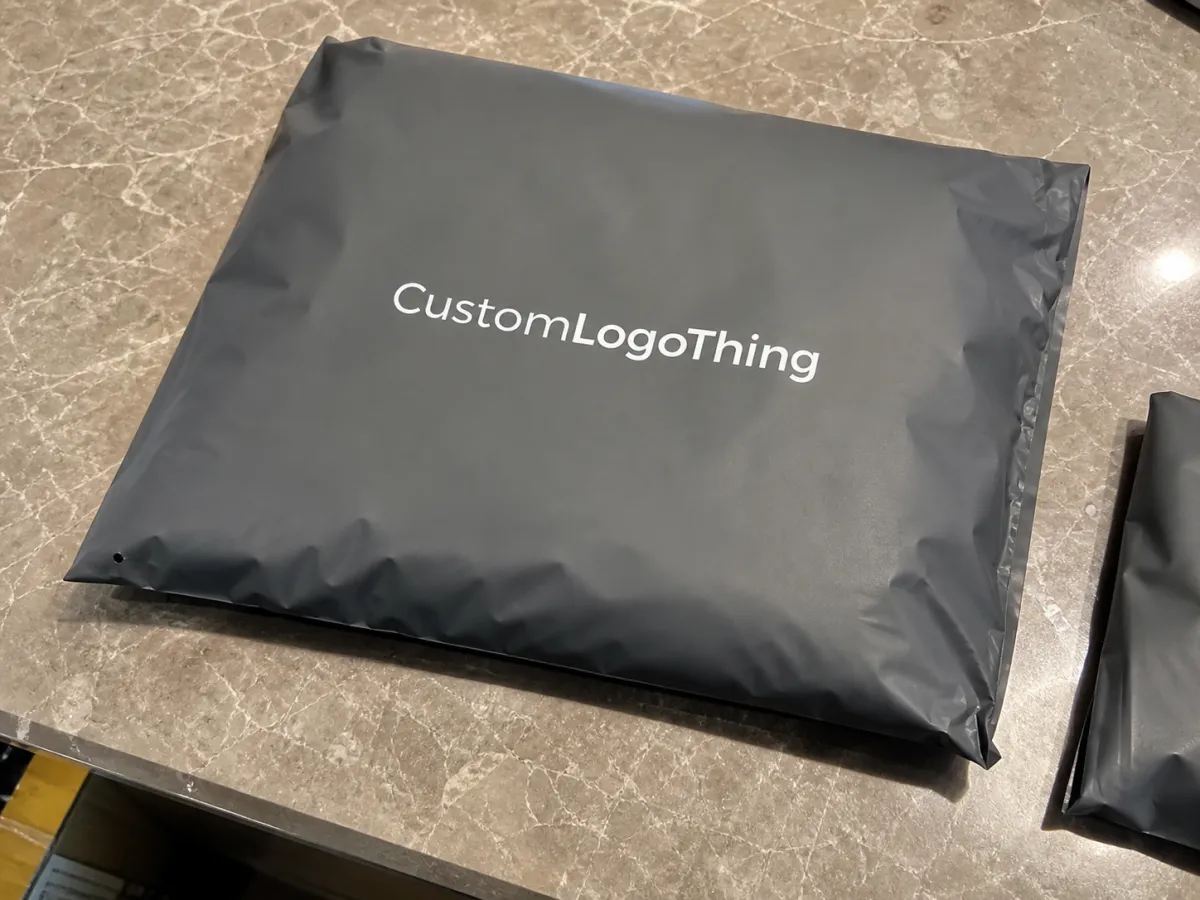
Soft-touch mailers do not protect contents just because they feel nicer. They help because buyers usually spec them more carefully. Once a team commits to a branded mailer instead of a generic one, it pays closer attention to fit, gauge, and closure. That is where the practical protection comes from.
The matte surface also improves presentation. It hides fingerprints, dulls small scuffs, and reads calmer than a glossy poly bag at check-in or in a room-drop setup. That matters in hospitality, where the outer package is often seen before it is opened. A cleaner finish makes the item look intentional rather than purely functional.
There is a small but real operational benefit too. Softer surfaces tend to make less noise in carts, bins, and packing areas. That matters in back-of-house workflows where repetitive handling is constant. The finish can also reduce waste by discouraging overpacking. Teams are less likely to add extra outer layers when the mailer already looks finished.
The buyer question is simple: does the finish earn its place in the application? For visible guest handoff, welcome kits, and room-delivered collateral, the answer is often yes. For internal transfers or low-visibility movement, standard poly may be enough. The right choice depends on use, not aesthetics alone.
If the mailer has to survive drops, compression, and route vibration, test it like a real package. The design should hold up because the specification says it will, not because everyone hopes for the best. That is especially important when the package carries mixed items, toiletries, or apparel with sharp edges.
Material and Print Details That Influence Perceived Value
Base construction matters more than many buyers expect. A typical soft-touch poly mailer uses a PE film or coextruded film structure with a matte, soft-touch outer surface and a heat-sealed edge. Some versions feel lightly muted; others push a deeper velvety finish. That choice affects both appearance and cost.
Standard poly mailers are usually slicker and lighter in hand. Soft-touch versions mute shine, soften handling marks, and make the package feel more deliberate. That matters at the front desk, in a linen room, or in a distribution run where the outer package is visible before opening. If the brand wants a quieter, more premium read, the finish helps.
Print detail changes the quote faster than the finish does. One-color artwork usually keeps pricing manageable. Multi-color logos, full-bleed backgrounds, and edge-to-edge coverage increase ink usage, setup time, and press handling. If the design can stay simple with a main-panel logo and a clean reverse side, the price usually stays closer to target.
Scale matters as well. A large, legible logo on one face usually performs better than a crowded layout with taglines, web addresses, and social handles. Hospitality packaging has a short window to register, so readability beats clutter. The mailer should communicate the brand quickly, not act like a brochure.
Closure style affects perceived value too. A strong peel-and-seal strip feels secure. A tamper-evident tear strip adds confidence for property distribution. If the mailer must be opened and reclosed internally, that needs to be decided early, because the closure choice affects both structure and price.
Sizing, Gauge, and Closure Specs to Lock Before Ordering
Size is the fastest way to waste money. An oversized mailer uses more film, weighs more in shipping, and can make a well-packed kit look sloppy. An undersized mailer is worse: stressed seams, wrinkled corners, and a package that looks forced. The useful measurements are usable width, usable length, and any depth allowance needed for folded inserts or stacked contents.
Before requesting pricing, confirm the packed dimensions, not just the product dimensions. A folded robe, a toiletry set, and a welcome packet do not behave the same way once bundled together. If the kit includes rigid corners, bottles, or boxes, give the mailer room so the seal area is not under strain. A half-inch of bad fit can create more problems than a small increase in gauge.
Gauge affects strength, puncture resistance, and how confident staff feel moving the package through storage and shipping. A thinner film may save a little on paper, but if the mailer is carrying toiletries, apparel, or multi-item hospitality sets, a heavier gauge usually lowers the risk of split seams and crushed corners. For most hotel programs, that trade is easy to justify.
Closure choice should also be locked before ordering. Peel-and-seal adhesive is the standard because it is fast and simple. Tamper-evident options make sense when the package changes hands inside the property or reaches a guest in a visible setting. If the contents need to be checked, added to, or resealed, ask for a closure that supports that workflow.
- Exact item dimensions after folding, stacking, or kitting
- Interior clearance for inserts, apparel, or bundled amenities
- Film gauge matched to puncture and handling risk
- Closure type for handoff, storage, or tamper evidence
- Print panel layout so branding stays visible without crowding
Those five details do more to stabilize the quote than almost anything else. They also make the cost review easier to trust, because the pricing is built on actual use conditions instead of a vague estimate.
Hotel Soft Touch Poly Mailers Unit Cost Review, MOQ, and Quote Drivers
This is the section most buyers care about. The unit cost has to connect to a budget, not just a spec sheet. For soft-touch mailers, the biggest price levers are dimensions, film thickness, print colors, total quantity, and whether the order uses stock components or fully custom artwork. The finish matters, but it rarely acts alone.
MOQ changes the math quickly. Small runs carry a higher per-piece cost because setup, material prep, proofing, and quality checks get spread across fewer units. Larger runs pull the unit cost down because those fixed costs are diluted. That said, a lower MOQ is still useful for a pilot property, a seasonal campaign, or a test order that needs to move now.
Here is a practical baseline. These numbers are directional, not universal, and they shift with size, gauge, print coverage, and shipping lane.
| Order Profile | Typical Cost per Piece | What Usually Drives It | Buyer Takeaway |
|---|---|---|---|
| 1,000-2,499 units | $0.38-$0.68 | Setup charges, artwork prep, smaller press run | Works for pilots, but rarely gives the best unit cost |
| 5,000 units | $0.22-$0.36 | Better spread on tooling fees and production time | Often the practical middle ground for hotels |
| 10,000+ units | $0.16-$0.28 | Bulk pricing, stable artwork, repeatable specs | Best if the same design will support multiple properties |
Those ranges can move higher if the mailer is oversized, uses heavy-gauge film, or includes full-coverage print. They can move lower if the design is simple and the quantity is large. A one-color 9 x 12 mailer is not the same product as a fully printed 14 x 18 mailer with a heavier seal zone, so compare like with like.
A proper quote request should include the exact size, expected annual or per-order quantity, artwork files, shipping destination, packing method, and whether proof approval is mandatory. If the destination is missing, freight can distort the headline price. If the artwork is incomplete, setup charges can show up later. If the proof requirement is unclear, the schedule can slip before production starts.
Tooling fees deserve a direct question. Some custom structures or print methods include one-time tooling charges, while others bury those costs in setup. That difference can make the first order look much more expensive than the reorder, which is fine if everyone notices the gap before approval. Smart buyers compare first-order cost and reorder cost separately.
Production Steps, Proof Approval, and Turnaround Timing
A quote is not a schedule. Buyers get burned when they confuse the two. The usual workflow runs from inquiry to artwork review, then proof approval, then press scheduling, production, and final shipment. Every step can move the finish date, so the safest way to manage timing is to treat the proof as the first real gate.
The proof should confirm dimensions, logo placement, color callouts, seal type, and any notes about the film or finish. If the mailer will be used across several properties, lock the master file before production starts. Changes after approval are where delays and extra charges usually show up.
Speed depends on four things more than anything else: proof turnaround, material availability, print complexity, and whether the order is domestic or imported. A simple one-color run on stocked film can move quickly once the proof is signed. A more complex order with special texture, custom colors, or a long freight lane needs more breathing room.
For planning purposes, many teams should expect something like this:
- Proofing: 1-3 business days if artwork is ready
- Production: roughly 10-18 business days for standard runs
- Freight: 2-7 business days depending on location and mode
Those are not promises; they are planning ranges. Rush work can happen, but rush work has a way of exposing sloppy specs, missing artwork, and approval delays. If the project has a fixed launch date, ask the supplier to separate proof time from manufacturing time and then attach a realistic transit estimate.
Communication matters as much as speed. A supplier should be able to tell you what inventory is on hand, what is being made to order, when the proof is due, and what can be substituted if the timeline tightens. That level of clarity is the difference between a controlled rollout and a last-minute scramble.
How We Support Reorders, Color Match, and Property Rollouts
Multi-property buyers care about repeatability as much as they care about price. A mailer that looks right on the first order but drifts on the second creates more work than it saves. Stable specs, archived artwork, and clear print notes matter from the beginning.
Reorders should be boring. The approved artwork needs to stay on file, along with the exact size, gauge, closure type, and print setup. When a chain rolls out to several locations, those records keep the package from drifting into multiple versions. Procurement teams do not need variety here; they need less confusion.
For small pilots, a tighter test loop is useful. A property can check guest reaction, front-desk handling, and kit fit before a chain-wide order gets locked. That is smarter than assuming one format works everywhere. A resort, an airport property, and a business hotel do not move the same way, and their kits are rarely packed the same way either.
Color match needs realistic expectations. Exact repeatability depends on artwork quality, print method, and material consistency. Some variation is normal. The useful goal is to keep the variation inside an acceptable range and define that range before approval. If a brand color is critical, say so early. After sign-off, the room for correction gets smaller and the cost goes up.
For broader packaging programs, it can help to standardize terminology across the Custom Packaging Products line. One spec language across categories reduces rework, speeds approval, and makes reordering less annoying. That matters more than squeezing the first order by a few cents.
Next Steps to Request Samples, Artwork, and a Firm Quote
The fastest path to a firm quote is straightforward: send the target size, expected quantity, and artwork files first. Those three items tighten the estimate faster than any long note about premium presentation. Once the dimensions and run size are known, the price becomes much easier to pin down.
Request a physical sample or at least a flat proof if the mailer will hold apparel, amenity kits, or branded welcome items. A flat proof shows layout and proportion. A physical sample shows feel, seal behavior, and how the package handles once it is folded or filled. If the contents are sharp-edged or heavy, a packed sample is better than a nice guess.
For a hotel soft touch poly mailers Unit Cost Review that actually helps purchasing, compare two volume tiers instead of one. The lower tier shows pilot cost. The higher tier shows rollout cost. That comparison is more useful than a single quote because it exposes the break point and shows whether the volume jump is worth the inventory commitment.
If the project is part of a larger packaging program, start with a clean spec sheet and a realistic launch schedule. A good quote reflects how the mailer will be used, not just how it looks in a mockup. That is the difference between a purchase that holds up and one that creates avoidable headaches in the back room.
What affects hotel soft touch poly mailers unit cost the most?
Size, gauge, print colors, and total quantity usually have the biggest impact on unit cost. Soft-touch finish adds value, but it is rarely the only factor driving price. Artwork complexity, closure features, and freight destination can also move the quote.
What MOQ should I expect for custom hotel soft-touch mailers?
MOQ depends on print method, film spec, and whether the mailer is stock or fully custom. Smaller orders usually cost more per piece because setup is spread across fewer units. Ask for two quantity tiers so you can see where the price break actually sits.
Can soft-touch poly mailers be printed with a hotel logo?
Yes, most custom programs support logo printing and brand-color matching. Clean vector artwork and a restrained layout usually produce the best result. Always review a proof before production so placement, color, and seal details are confirmed.
How long does production usually take after proof approval?
Turnaround depends on material availability, print complexity, and order size. Simple runs can move quickly once the proof is approved, while more complex orders need extra time. Ask for proof time, production time, and freight time separately so the schedule is realistic.
Are hotel soft touch poly mailers strong enough for amenity kits?
Yes, if the gauge and dimensions match the kit weight and contents. For heavier or sharp-edged items, confirm puncture resistance before ordering. A packed sample is the safest way to check fit and performance before a full run.


