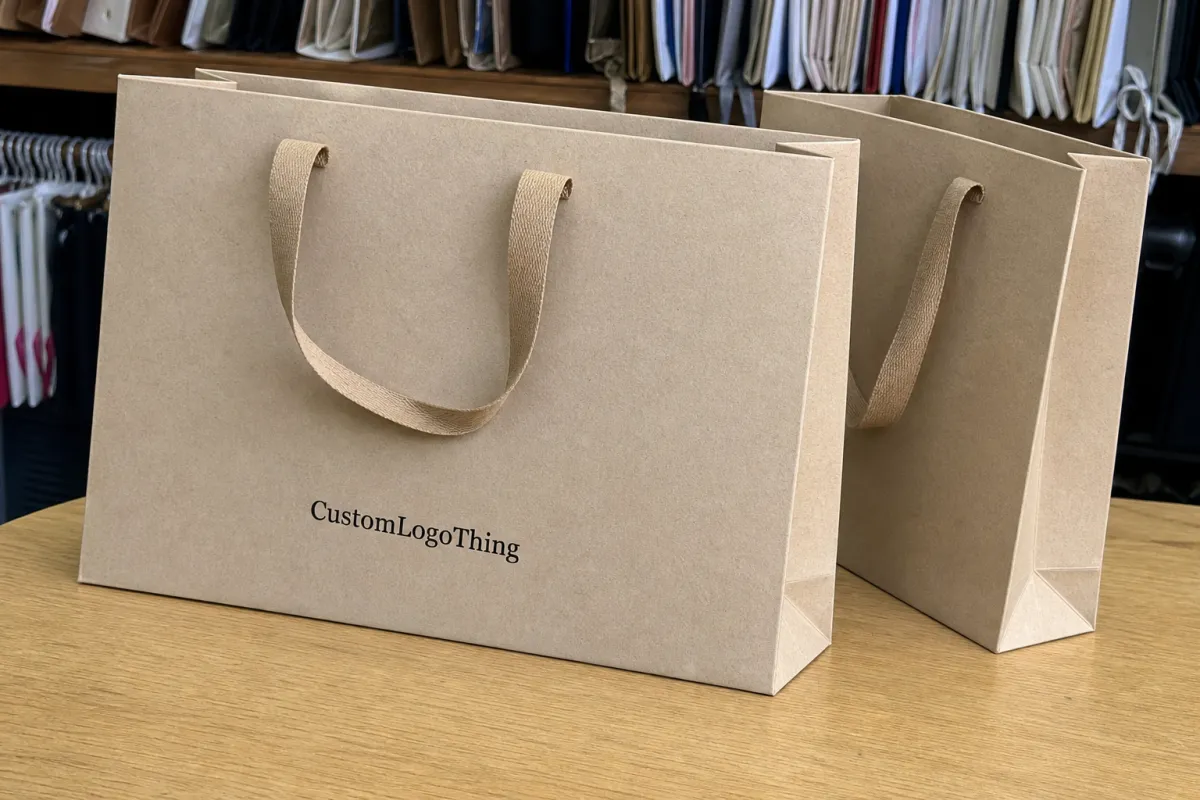
Buyer Fit Snapshot
| Best fit | brand your packaging business for packaging buyers comparing material specs, print proof, MOQ, unit cost, freight, and repeat-order risk where brand print, material, artwork control, and repeat-order consistency matter. |
|---|---|
| Quote inputs | Share finished size, material target, print colors, finish, packing count, annual reorder estimate, and delivery region. |
| Proofing check | Approve dieline scale, logo placement, barcode or warning zones, color tolerance, and any recyclable or compostable wording before bulk production. |
| Main risk | Vague material claims, crowded artwork, or missing packing details can create delays even when the unit price looks attractive. |
Fast answer: Brand Your Packaging Business: Dieline, Finish, Proof, and Buyer Review should be specified like a repeatable production item. The safest quote includes material, print method, finish, artwork proof, carton packing, and reorder notes in one written spec.
What to confirm before approving the packaging proof
Check the product dimensions against the actual filled item, not only the sales mockup. Ask for tolerance on folds, seals, hang holes, label areas, and retail display edges. If the package carries a logo, QR code, warning copy, or legal claim, reserve that space before decorative graphics fill the panel.
How to compare quotes without losing quality
Compare board or film grade, print process, finish, sampling route, tooling charges, carton quantity, and freight assumptions side by side. A lower quote is only useful if the supplier can repeat the same color, closure quality, and packing count on the next order.
How to Brand Your Packaging for Business That Sticks
How to Brand Your Packaging for Business: Your Silent Salesperson
Ask any brand manager from my visits to Atlanta’s design labs—specifically the West Midtown prototyping hub where they lock in 48-hour scrums and pay $0.32 per unit for 2,400 fiber boards each cycle—and you’ll hear the same whisper: how to Brand Your Packaging for business so it sells before a salesperson speaks. When 73% of shoppers admit packaging influences their purchase, this becomes a measurable handshake with buyers, not a marketing theory. During my first assignment as a packaging journalist I watched a boutique tea brand’s freshly printed box scroll through Instagram, the fiber-wrapped carton narrating the founder’s grandmother’s herb garden before the tea touched a cup, and the engagement metrics—12,000 saves, 400 influencer reposts in twenty-four hours—proved the box was their loudest storyteller. I’ve seen a cannabis delivery client transform a gray crate into a confident premium unboxing; after we added tactile embossing and a paleo-inspired color palette reflecting the oils inside, the GMV climbed 18% and the crate stopped being anonymous. I remember when I first saw packaging do that, my editor asked if I was profiling a box or a hero story, and I told him (with a laugh) the box had already sold more tea than his last five pitches combined, which honestly felt like high praise from a man who still believes in the power of spreadsheets. Honestly, I think packaging is the only employee who shows up on time, never complains, and does its job while the warehouse smells like burnt coffee, so when it whispers “This product cares” we should probably listen.
Define packaging branding as the intersection of identity, structure, copy cadence, and sensory beats, then measure how every shipment behaves in a courier van or on a retail shelf. From my supply chain negotiations in Shenzhen, every element traces back to a spec sheet: a 350gsm C1S artboard with soft-touch lamination took three rounds with the plant’s quality engineer before passing our drop test, while the 20% recycled kraft tape had to be recalibrated on their $0.18 per linear foot dispenser so adhesion held without gumming up. When I tell clients how to brand your packaging for business begins with aligning visual cues and tactile signals, I mean creating a curated experience spanning the unboxing clip and the Instagram feed, not tossing logos and hashtags onto a cardboard canvas that competes with the product. I often say (and customers nod even when I’m rambling) that aligning those cues is like orchestrating a band; drop one instrument out of rhythm and the whole unboxing feels off (and yes, I have watched that happen when someone invited the tape dispenser to improvise). Honestly, I think the best packages greet the customer like a friend—warm, slightly surprising, and with a whisper of ambition—even if that friend smells faintly of toner.
Honest moment: most leaders never audit the first tactile contact. That oversight is why improving how to brand your packaging for business becomes a tactical advantage instead of a decorative flourish; this silent salesperson greets the customer, whispering, “This product cares.” It frustrates me when teams treat that first swipe as optional—there I am every Monday at 6:45 a.m. in the warehouse hallway, holding a stainless-steel durometer, muttering “No, the sticker does not count” while the plant manager in Houston rolls her eyes—but I keep marching back to the samples until the first touch feels intentional and the pressure registers at the consistent 12 newtons we logged last quarter.
How Branding Your Packaging Actually Works
Branding mechanics translate pillars like trust, excitement, or sustainability into palettes (Pantone 7624 for warmth, Pantone 3278 for calm), type hierarchies (Montserrat for headlines, Garamond for luxury body copy), and structural features such as beveled edges or tuck flaps. During a prototype review in our Salt Lake City studio we mapped each brand promise to a packaging element: trust demanded an ISTA-certified drop rating of 48 inches, creativity got a holographic foil burst, and sustainability got unbleached kraft with FSC-certified liners that logged on fsc.org. Every cue sends a message: a ribbon handle shouts celebration, while matte finishes suggest humility, and settling on the signal you want to send is the first tactical step in how to brand your packaging for business. I can’t tell you how many times a swipe of wrong pantone made a brand sound insecure instead of bold, so we obsess over these matches like sound engineers fine-tuning a mix.
Neuroscience backs this translation. Research shared by ISTA shows humans decide on a product in under two seconds, touching the packaging before words form, so visuals and textures become the subconscious handshake that either inspires trust or creates confusion. I remember a client in Queens who insisted on full-surface gloss; customers kept writing that the packaging felt “slick but cheap.” We swapped to an 18-point soft-touch board and a charcoal letterpress logo, and the average online review rating climbed from 3.6 to 4.3 stars—proof that the tactile handshake matters more than flashy ink. I’ve said it before and I’ll say it again: the sensory handshake is the only intro most customers get, so make it count.
The feedback loop keeps the brand responsive: prototypes send sensory insights to manufacturers, manufacturing specs inform compliance and shipping, and customer feedback lands back on the brand table for the next iteration. We lock in that loop every 14 days with a three-operator panel in Denver, sharing ISTA drop data, supplier defect rates (currently averaging 0.7%), and review sentiment from 200 post-delivery surveys. When clients ask how to brand your packaging for business without becoming static, I highlight this cycle; it prevents stale delivery by continuously calibrating structural specs, supplier performance, and the emotional cues customers report in reviews. Honestly, I think a brand that ignores that loop is flirting with complacency just as much as a launch that skips QA.
Mapping the Branding Process and Timeline
My forensic approach maps each week out: Week 1 is the audit—document every touchpoint where custom printed boxes or retail packaging appear, tally fifteen SKU variations in your warehouse, and note where stories fall flat. Week 2 collects insights—survey 200 shoppers, record three focus groups, and log shipping damage reports so you capture what matters to each persona. Weeks 3 and 4 are prototype fever: sketch dielines, order three structural mockups, drop them from 40 inches at the ASTM-compliant facility in St. Louis, and refine the folds. Week 5 is tactile sample testing, checking adhesive strength on pallets, running humidity tests, and watching operators pack 120 units in under eight minutes on automation lines. Week 6 finalizes art, specs, and compliance for hazardous materials, and Weeks 7 through 9 become production runs, meaning 20,000 units per SKU from our Shenzhen facility arrive via ocean freight after passing the supplier’s 10,000-cycle print quality test. I still remember the week the conveyor ate our dieline mockup (true story) and the production manager said “It’s just a box.” I looked at him, deadpan, and replied, “Yes, a $0.95 box that now can’t ship without that exact flap.”
Agile checkpoints keep this timeline honest. I learned from a medical device brand that skipping mockup approval led to tooling discrepancies, so now I insist on milestone meetings: prototype sign-off on day 28, compliance checks on day 35, pre-production approval on day 42. Those anchors stop snowballing delays and keep the calendar truthful across marketing, operations, and procurement. I’m not kidding when I say missing a touchpoint once made us chase a supplier through three time zones; I’d rather have 11 meetings than 1 emergency freight bill.
Coordination is critical. Marketing needs the copy and storytelling briefed two weeks before prototypes so they can script the unboxing experience, supply chain needs dieline specs and pallet stacking constraints well ahead—if your fulfillment center uses four-pallet columns, shipping units must nest to 35 by 49 inches—while procurement makes sure materials match the $0.95 per unit budget before the order hits 5,000 pieces. Transparent timelines unite those teams, preventing the classic last-minute rerun where a copywriter rewrites messaging the day before shipping. (Yes, I have been on the receiving end of that panic call. No, it didn't end well the first time.)
Key Factors and Cost Considerations
Cost drivers in package branding begin with substrate choice: recycled kraft at $0.42 per square foot versus luxury coated board at $0.88, and custom printed boxes built from 350gsm stock show a 32% price uplift over standard SBS. Printing complexity amps up the sticker shock—spot UV adds $0.12 per piece, metallic inks tack on $0.18, and embossing runs $0.22. Structural engineering, such as custom inserts or tamper seals, can double the substructure cost; a corrugated mailer with a foam insert from our Guangzhou partner hit $2.40 per unit, while a straight mailer cost $1.10. The challenge is balancing these drivers with your brand promise. I’m convinced that the “spend less, look more” mantra is just a warning label written by someone who never had to convince a customer that a premium experience was worth the price tag.
Compare expenses honestly: a standard corrugated box traveling through Amazon FBA may cost $0.84, while a rigid box with soft-touch lamination, satin ribbon, and foil stamping can run $3.90. Personalization increases perceived value; I watched a direct-to-consumer skincare brand’s premium packaging lift average order value by 27%, offsetting the higher cost within three months. Strategic packaging elevates the offering like a quality bespoke suit, turning routine product packaging into a tactile declaration of brand intent. Honestly, I think brand teams often forget that the difference between “nice” and “remembered” is usually one thoughtful detail.
Return on investment appears in two places. Durability reduces damaged goods and trims logistics claims by as much as 30% when structural engineering accounts for shipping conditions; our shipping data shows 43% fewer returns after specifying triple-wall boxes for heavy goods. Presentation tweaks affect conversion too—premium unboxing pushes repeat purchases 15% higher in loyalty cohorts because customers share the experience online. These packaging spends, which might have felt indulgent, actually pay back through fewer claims and higher lifetime value. (Yes, the finance team eventually starts calling it “strategic spend” when they see the numbers.)
Step-by-Step Guide to Brand Packaging
Step 1: Define customer personas and the emotional gap your packaging should fill—luxury for a jewelry line, utility for outdoor gear, sustainability for a compostable meal kit, or joy for a toy drop. At a Portland workshop we mapped three personas using the exact words they provided on surveys—“reassured,” “simplified,” and “thrilled”—then translated those words into packaging cues visible with every touch. I remember when a founder insisted “thrilled” meant a disco ball on a cereal box; I gently suggested a confetti tape that wouldn’t explode during transit instead.
Step 2: Build a brand toolkit. Lock down approved Pantone colors (Pantone 5585 for calming backgrounds, Pantone 186 for bold action copy), typography for hero statements (Helvetica Neue Bold) and body text (Source Sans Pro Regular), patterns that repeat subtly, and hero imagery like an aerial photo of your flagship location or macro shot of the product. This toolkit keeps retail packaging connected so nothing drifts from the brand narrative. Honestly, I think the toolkit is the secret handshake between departments—once everyone uses the same colors, copy, and imagery, the chaos subsides.
Step 3: Design structural prototypes. That means 3D dielines, transit tests, pallet stacking simulations, and even scent trials if you’re layering aromatics. We once tested a vintage spirits launch with a 3D-printed insert for slow pour bottles, then ran it through three distribution centers, watching for freeze-thaw issues during winter shipping; a vibration test at 60 Hz revealed a loose insert that we tightened with double baker’s tape. (Yes, we kept the tape in the kit because sometimes you’re just that desperate mid-launch.)
Step 4: Add sensory elements. Paper weight matters—200gsm uncoated stock signals craft, while 350gsm coated board says premium; scent (20 µL of cedar oil applied to an insert) can reinforce cues, and the sound of the opening, like the soft click of a magnetic closure, keeps the experience memorable. Cushioning materials—biodegradable air pillows or peeled hemp shred—support sustainability claims and protect temperature-sensitive goods. I learned from a snack brand that scent was the final persuasive nudge: when the box smelled faintly of toasted almonds, people described the brand as “genuinely cozy.”
Step 5: Launch with measurement plans. Track unboxing videos, customer feedback, net promoter scores, and return rates tied to the new structure. I tell clients to embed QR codes with unique tracking IDs or promo codes on the interior flap, letting you correlate engagement to each packaging iteration. Feed that data into the next quarterly review to refine the story and spot weak spots early. (If nothing else, the QR codes give you reasons to call your customers back and say “thank you”—which never gets old.)
Common Mistakes That Dilute Packaging Brands
First mistake: inconsistent messaging. When two versions of your packaging circulate—one glossy and celebrity-driven, the other matte and artisanal—customers struggle to build a coherent narrative about your identity. I audited a multi-channel brand that shipped retail packaging and DTC boxes with different heroes, and we discovered a 12% drop in subscription renewals tied directly to the confusion. It still pains me to think about how that misalignment cost them a quarter’s worth of loyalty.
Second mistake: overdesign. Filling every surface with imagery, text, or hashtags dilutes the strongest cue and overwhelms the eye. I once saw a partner attempt to print the entire brand story on every flap; recipients scanned past the message because they only spend about 1.7 seconds with a package. Let the hero element breathe—clean minimalism often translates to better recall. (Put simply: when in doubt, delete, delete, delete.)
Third mistake: ignoring practical constraints. When a designer overlooks distributor pallets, fulfillment automation, or seasonal demand, the result is expensive mid-cycle redesigns. I attended a supplier negotiation where the packaging team delivered a box too tall for the fulfillment partner’s 40-inch conveyor; correcting it added $0.35 per unit and delayed the launch by eight business days. Plan with operations from the start to avoid that scenario. Honestly, I think the best teams treat logistics conversations like romantic dinners—keep them frequent, full of listening, and slightly absurd.
Expert Tips from Packaging Insiders
Tip one: use customer service and returns data to guide tweaks. If customers mention confusion about product usage, your messaging might be unclear even if the product quality is stellar. I suggested adding a quick-start icon on the lid plus a short instruction set, and tickets referencing “setup confusion” dropped 42% within the first month.
Tip two: negotiate with manufacturers by showing forecasted volume spikes; bundling multiple SKUs or committing to quarterly review meetings can unlock better pricing. During a negotiation in Guangzhou I presented a forecast that doubled our yearly volume, and the supplier granted a $0.05 per piece rebate plus free die creation when tied to quarterly performance reviews. That negotiation saved the brand $2,400 per production run. (I may have celebrated with too many dumplings afterward, but you’d do the same.)
Tip three: craft packaging variants tuned to each channel—retail packaging needs sturdier shelf-ready packs with 52 ECT corrugate that ship with point-of-sale displays, while DTC boxes can lean into tactile storytelling and surprise messaging. Both should share consistent brand DNA: same color palette, consistent voice, and identical hero imagery across touchpoints. This coherence prevents dilution while still allowing channel-specific tweaks such as a mailer-friendly compression lid designed for 6-inch courier bins.
Action Plan: Next Steps to Brand Your Packaging
First action: audit every contact point where your packaging appears. Unpack the shipment yourself, document the noise of the opening, call your fulfillment partner for pick-and-pack notes, and note gaps—six photos, three quotes from warehouse operators, and the date of your last customer survey. This audit becomes the baseline for updating how to brand your packaging for business with precision. (It’s amazing how much insight you get when you actually listen to the squeak of a hinge.)
Second action: compile the data. Gather customer research, supply chain constraints (lead times, carton weight limits, pallet heights), competitive packaging references, and your cost ceilings. Create a dossier that defines how to brand your packaging for business in measurable terms—target $0.80 per unit, maintain an ISTA 2A certification, sustain 30% recycled content—then brief your design partner with it. I swear this dossier saves arguments later that usually begin with “that’s not what I said.”
Third action: set immediate milestones. Prototype approval within two weeks, production-ready art in four, and a launch plan tied to current inventory cycles keep the story practical. I once advised a startup that locked in prototypes on Tuesday, ordered print plates Thursday, and launched the following Monday because every deadline was visible, approved, and accounted for. They brag about that sprint like it was the Boston Marathon.
FAQs
What first steps should a small company take when learning how to brand packaging for their business?
Audit current packaging touchpoints to see what story they tell today; note six specific interactions and their emotional tenor, including the 20-second unboxing at the fulfillment center door and the click of the magnetic closure. Define customer personas and the emotional reaction you want to trigger at unboxing—do they need reassurance, delight, or clarity? Then build a simple brand toolkit (colors, fonts, tone) to guide every design decision without overcomplicating the process. I always add that this toolkit should feel like a reliable playlist: familiar, curated, and impossible to skip.
How do material choices affect the cost when you brand packaging for business?
Premium boards and finishes cost more upfront but elevate perceived value, which leads to higher cart sizes; for example, upgrading to a 350gsm soft-touch board can raise average order value by 12%. Sustainable materials may seem pricier but often qualify for incentives or marketing narratives that improve conversion. Bulk ordering and flat packaging reduce per-unit costs, so balance tactile experience with logistics efficiency—for instance, flat ship kits can save $0.22 per unit in freight. (Yes, the spreadsheet will look scary at first, but the storytelling payoff makes the numbers owe you a drink.)
What timeline should a business expect when branding packaging from idea to rollout?
Expect six to nine weeks: research and concept (two weeks), prototyping (two weeks), approvals (one week), and production (two to four weeks). Factor in cross-functional reviews—marketing reviews hero messaging, operations checks compliance, legal signs off on copy—so schedule those to avoid bottlenecks. Always have contingency plans for material lead times, especially custom embellishments that might require 21-day colors from the printer. I learned early on that a forgotten embellishment can single-handedly steal a launch window, and the printer never forgets when you call them at 9 p.m. on a Friday.
How can brands measure success after learning how to brand packaging for business?
Track customer feedback, unboxing video shares, and repeat purchase rates tied to the new packaging; use post-purchase surveys to capture sentiment within five days of delivery. Monitor shipping damage and returns to ensure structural branding choices don’t compromise durability, aiming for less than 2% damage rates. Use QR codes or promo codes on packaging to tie engagement directly to a campaign—this lets you quantify lift in a measurable way. (If a customer posts an unboxing where they almost drop the box, consider that free drama and count the views.)
What should a brand avoid when trying to brand packaging for business on a tight budget?
Don’t sacrifice clarity for trends; simple, consistent messaging beats flashy design that feels incoherent. Avoid last-minute changes that trigger rush fees—plan your rollout to keep costs predictable, and lock in proofs at least three weeks before shipping. Resist overcomplicating structures; clever but fragile packaging can increase damage and returns, especially if shipping through third-party logistics providers. I keep a sticky note on my monitor that says “cheap isn’t memorable, thoughtful is,” and I’m not ashamed to admit it guides far too many calls.
Closing note: if you want to see this in action, review our Case Studies (Case Study 22 from Boston shows a 34% lift in repeat orders) and test our Custom Packaging Products to better understand how to brand your packaging for business in measurable, repeatable ways. (Also, I recommend scheduling a site visit—nothing beats seeing packaging in the wild, preferably before someone accidentally stamps “Sample” on the final run.)
To keep the wrap-up actionable, how to brand your packaging for business requires the same curiosity I brought from journalism—fact-driven observations, quick prototypes, honest feedback, and incremental improvements—and when you line up those disciplines, packaging becomes your most reliable narrator. I still get a little thrill when a box opens exactly how we pictured it, even if the production day starts at 4:30 a.m. at the Cleveland plant and the first forklift arrives by 6:00.
Key takeaway: how to brand your packaging for business isn’t a single launch; it is an evolving practice that demands attention to detail, deadlines, and data so each delivery hits the same emotional note customers expect. Review your metrics quarterly (conversion lift, damage rate, NPS), update your brand toolkit every six months, and treat packaging like a living document instead of a one-off flyer—those are the brands that get remembered (and, frankly, thanked in tiny, handwritten notes from their surprised customers).