Choosing a custom label company looks straightforward until you compare the same design across woven, printed, and heat-applied versions. On screen, the differences seem minor. In production, they affect hand feel, wash performance, legibility, and how polished a garment looks once it is packed, folded, and handled by customers. A label is small, but it carries more visual weight than its size suggests.
For clothing brands, labels sit inside a larger brand system. They need to work with hang tags, tissue, inserts, cartons, and the rest of your packaging without feeling disconnected. If your label feels premium but your garment packaging looks generic, the product still reads as uneven. That is why label sourcing should be handled alongside the broader packaging plan, not after the fact. If you already have a packaging direction, it helps to keep your label vendor aligned with assets such as Custom Packaging Products and the rest of your presentation materials.
What a custom label company actually does for clothing brands
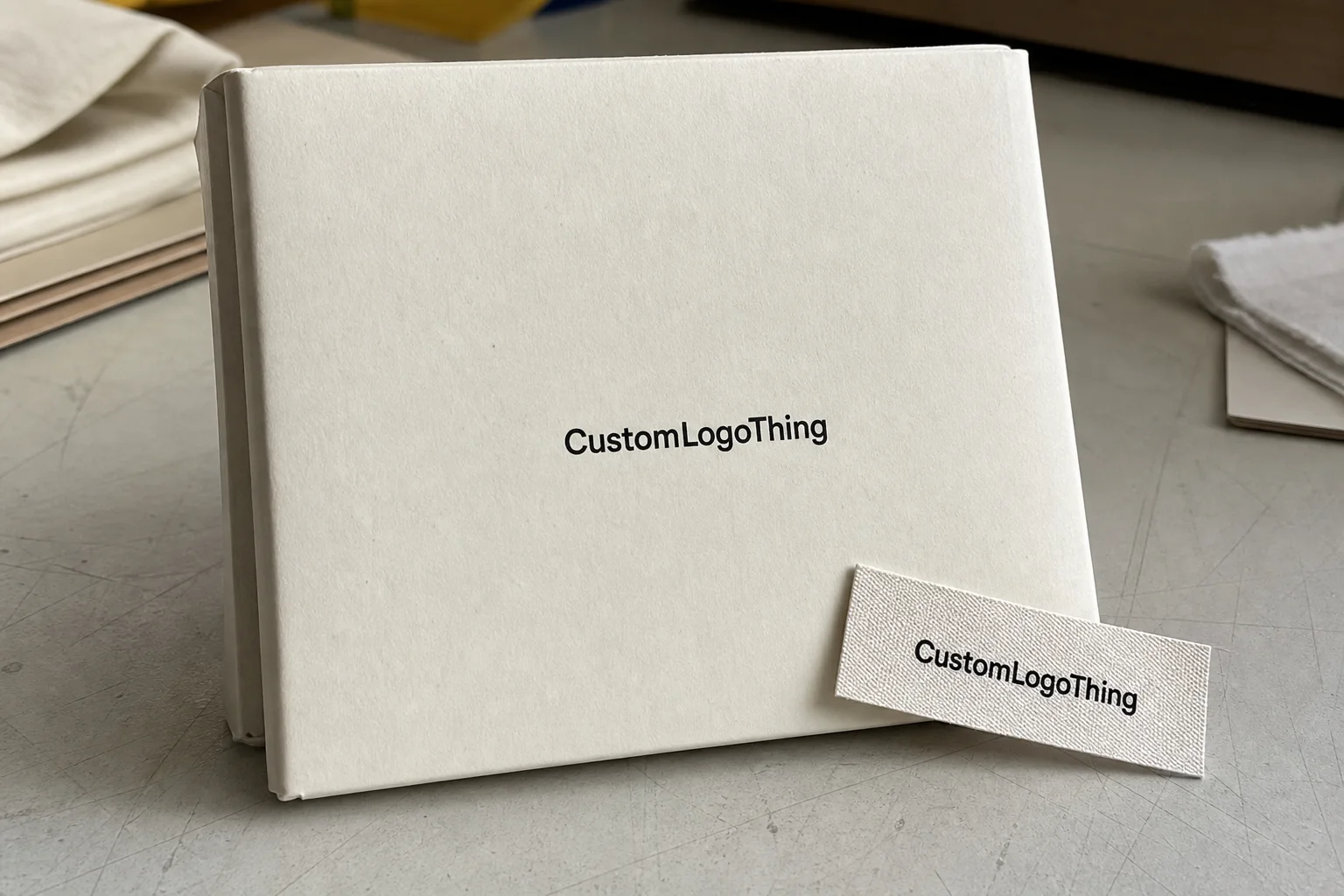
A good custom label company does more than print a name onto fabric. It translates artwork into a production-ready format, recommends construction based on garment type, helps with fold and attachment choices, and ships labels in a format your sewing or fulfillment team can actually use. The practical value is not design flair. It is fewer errors once the order is in motion.
That difference shows up quickly. A sweatshirt label that looks acceptable in a PDF can become stiff and irritating if the material is wrong. A detailed logo can blur if the weave is too loose. Care text can become unreadable if the type is too small or the contrast is too weak. These are not rare edge cases. They are routine production issues.
Experienced buyers usually ask a vendor about three things first: where the label will sit on the garment, how it will be attached, and whether it will touch skin. Those questions shape material choice more than branding language does. A woven damask neck label, a satin side-seam care label, and a heat-transfer size mark all serve different functions. Treating them as interchangeable is a common beginner mistake.
The smallest component on the garment often becomes the first thing a customer notices when something feels off: scratchiness, faded text, or a label that curls after washing.
If a supplier can explain why one build is better than another for your actual product, that is useful. If they only ask for artwork and quantity, they are probably thinking like a printer, not a production partner. The distinction matters more than the sales pitch.
How the process and timeline usually work
The normal workflow is simple, but each step depends on the quality of the brief. Most orders move from inquiry to spec review, proofing, sample approval, production, quality control, and shipment. Problems usually appear later if the early information is incomplete. That is why the first round of questions from a competent supplier is a good sign rather than an obstacle.
To get an accurate quote, send final artwork, dimensions, quantity, garment type, attachment method, and the label position. If care text or fiber content needs to be included, provide that in the same file or a clearly marked note. The phrase “we’ll know it when we see it” is expensive in packaging and apparel production because it pushes decisions downstream, where corrections cost more.
Turnaround time depends on complexity, but a typical order often lands in the range of 10 to 15 business days after proof approval. Simple printed labels may move faster. Dense woven labels, specialty finishes, color matching, or a pre-production sample can add time. If your launch date is fixed, build in a buffer. The schedule is usually less threatened by the factory than by late artwork changes.
Proofs are not the same as finished samples. A digital proof can confirm dimensions, copy, layout, and general placement. It cannot fully show how satin reflects light, how a woven edge feels against skin, or how sharply small text reads once the label is trimmed and folded. For that reason, physical samples are worth the extra step on first runs, especially if your artwork is detail-heavy or your garment line includes direct skin contact.
Packaging also affects shipping outcomes. Labels may be loose-packed, rolled, bundled, or boxed depending on how the factory applies them. If the order is going straight into apparel production, ask how the labels will arrive and whether the packaging supports fast handling on the line. Transit stress is real, even for lightweight components. Standards groups such as ISTA are useful references if you want a clearer frame for packaging durability.
Speed is usually a result of precision. The cleaner the brief, the less time gets spent clarifying details that should have been fixed before quoting.
What drives cost, pricing, MOQ, and unit cost
Label pricing is rarely one number. It is a stack of variables: setup, material, weave or print complexity, finishing, packaging, and freight. If one quote seems surprisingly low, check whether folding, trimming, or shipping was excluded. If another is high, see whether it includes a sample, a special fold, or a premium finish that the first vendor left out. Apples-to-apples quoting is the only way to make the comparison useful.
MOQ, or minimum order quantity, is one of the biggest drivers of unit cost. Small orders absorb fixed costs poorly. Larger runs usually reduce the per-piece price, but they also increase upfront spend and inventory exposure. A startup brand often benefits from a smaller first run and a narrower forecast. A stable line with repeat demand can usually justify volume pricing more easily.
As a rough market pattern, buyers often see simple printed satin labels or care labels in a lower price band than dense woven labels with fine detail. A 5,000-piece order may land somewhere around $0.08 to $0.25 per label, depending on material, complexity, and finishing, with setup and freight on top. Smaller quantities can rise quickly. The useful lesson is not the exact number. It is that unit cost only makes sense in the context of quantity and spec.
Request quotes using the same dimensions, same fold, same backing, same artwork version, same quantity, and same delivery location. If the specs differ, the quote is not really a comparison. It is a list of different products wearing the same label.
| Label option | Typical feel | Best use | Relative cost | Notes |
|---|---|---|---|---|
| Woven damask label | Soft, dense, premium | Hoodies, premium basics, outerwear | Medium to high | Good for crisp logos and repeated washing |
| Printed satin label | Smooth, lightweight | Tees, kidswear, inner neck labels | Low to medium | Works well for fine text and softer contact |
| Cotton twill label | Natural, slightly textured | Heritage brands, workwear, eco-focused lines | Medium | Fits an organic or understated brand position |
| Heat-transfer label | No physical tag feel | Performance apparel, kidswear, low-bulk garments | Medium | Useful where scratch factor matters most |
“Cheap” is a misleading target. A label can be inexpensive and still perform well, or it can be expensive and still be wrong for the garment. The important question is whether the spec matches the use case. A premium garment with a harsh or low-contrast label still feels unfinished.
How to compare materials, finishes, and attachment methods
Material choice changes both appearance and wearability. Satin is smooth and low-profile. Woven labels usually offer better detail for logos and a more structured look. Cotton can reinforce a natural, heritage, or workwear identity. There is no universal best option. The right choice depends on the garment, the brand position, and how the label will be handled after purchase.
Finishing is just as important. End fold, center fold, loop fold, straight cut, sew-on, adhesive, and heat seal all solve different problems. A center fold sits neatly in a seam. An end fold can finish cleanly on an exterior edge. Heat-applied or adhesive formats reduce bulk, which helps on activewear and kidswear. If the label sits against skin, edge quality and softness matter as much as the artwork itself.
That is where packaging and apparel design overlap. The typography on the label can echo the same visual language used in hang tags or cartons, but the construction has to survive washing, bending, and repeated abrasion. For brands aligning labels with broader packaging materials, a linked product reference such as Custom Labels & Tags can help keep the presentation consistent across the line.
There is also a materials question beyond the label itself. If your branding uses hang tags, tissue, inserts, or cartons, ask whether the supplier can support responsible sourcing for paper and board components. The FSC system is a practical benchmark when paper-based packaging is part of the order.
Use a simple rule set:
- Tees and kidswear: prioritize softness, low bulk, and readable care information.
- Hoodies and sweatshirts: choose durability and a cleaner premium finish.
- Athleisure and performance apparel: keep bulk low and test comfort against skin.
- Premium retail launches: match the label’s tone to the rest of the retail packaging.
If a supplier cannot explain how the material behaves after repeated washing, that is a weak sign. If they can show why one format suits your garment better than another, that usually means they have handled real production work rather than only quoting artwork files.
Step-by-step production steps from quote to first run
The production path becomes easier when you know where the mistakes usually happen. A reliable custom label company should guide you through the details, but you can also reduce delays by preparing the right inputs before asking for pricing.
- Brief the job: share artwork, label size, quantity, garment type, and attachment method.
- Review the spec: confirm material, fold, backing, and any care or compliance text.
- Approve the proof: check text, spacing, and placement, but do not stop there.
- Request a sample if needed: especially for woven detail, color matching, or skin-contact labels.
- Lock production approval: get written sign-off before the run begins.
- Inspect the first run: verify dimensions, finish, color, and pack count against the approved spec.
Each stage protects against a different kind of failure. Size drift is common: a label can look fine on the proof and still feel cramped once it is folded and sewn. Copy issues are another risk, especially when care instructions, fiber content, or country-of-origin details are compressed into a small space. Those details are not filler. They affect compliance in many markets and can also influence how organized the brand feels to the customer.
Samples matter most when the artwork uses thin strokes, tiny text, or tightly controlled color relationships. A digital proof can tell you whether the file is technically correct. A physical sample tells you whether the label is actually readable, soft enough, and properly constructed. Buyers who skip that step on a first run usually end up paying for a second run or accepting a compromise they did not want.
Written approval should be explicit. Keep the final version number, date, dimensions, and sign-off language together in one place. If the production team, designer, and supplier are not looking at the same file, confusion is only a matter of time. A clean paper trail is boring, but it is cheaper than arguing over which PDF was “the real one.”
Once the order is approved, ask how the labels will be packed. Some factories need them banded in counts that match application batches. Others want them boxed by size or color. If the pack format does not fit the production line, the labels may be perfect and still slow the whole operation down. That is a logistics problem, not a design problem, but the cost lands in the same place.
Common mistakes that create delays and poor wearability
The biggest mistake is approving the artwork before confirming the physical spec. A logo that reads well in a digital file may fail once it is reduced to a one-inch label with a fold and seam allowance. Size, fold style, and placement affect readability far more than most buyers expect.
Over-detailing causes trouble too. Thin strokes, crowded lines of copy, and low-contrast colors often disappear on a small label. Some buyers insist on fitting every line of text into one piece. The result is technically complete and practically unreadable. A tighter label with the right hierarchy usually performs better.
Operational errors are more mundane, but they cost real time. Missing care copy. Mixed file names. A late request for samples after the production window is already set. Those mistakes force the supplier into a reactive mode, which slows approvals and increases the chance of errors. Good production depends on boring discipline.
Comfort is the issue that tends to show up after launch. A label can be accurate and still feel wrong because of rough edges, dense stitching, or an oversized format. That matters most for tees, childrenswear, and performance garments where skin contact is constant. Customers rarely describe the issue as a label problem. They just say the garment feels cheap or irritating.
Testing against the actual garment is the practical fix. Put the label on the real fabric. Fold it. Wash a sample. Read it under normal light. The mockup is useful, but it is not a substitute for the finished object. Brands that already inspect cartons, inserts, and outer packaging should apply the same discipline here.
If the label causes friction, the customer experiences it as part of the garment, not as a separate component.
That is why the right material and the right finish matter as much as the logo itself. A good label disappears into the product experience. A bad one keeps announcing itself.
How to choose the right partner without overbuying
Start with a short audit. What label do you use now? What garment is it going on? What dimensions actually work once the label is sewn, folded, or heat-applied? Then collect two or three quotes using the same spec. If one is much lower, inspect the exclusions. If one is much higher, ask what construction detail is driving the cost.
Before placing a first order, confirm four things: artwork is final, content is approved, dimensions are measured, and the application method fits your manufacturer’s process. Then ask for samples, turnaround time, and pack format. A supplier that cannot answer those questions clearly is not ready for serious production volume.
Use a simple checklist:
- Artwork: final file, correct spelling, clear type size.
- Spec: material, fold, finish, and finished dimensions.
- Compliance: care and fiber information reviewed.
- Operations: application method confirmed with the manufacturer.
- Commercials: MOQ, unit cost, setup fee, and freight understood.
The best partner is not always the cheapest or the fastest. It is the custom label company that makes the first production run predictable. That is a more useful standard than shaving a few cents off a quote, because one bad label can affect the perceived quality of every garment in the line. The label does not need to be flashy. It does need to be correct, comfortable, and consistent with the rest of the product.
What should I ask a custom label company before placing a first clothing-label order?
Ask about material options, MOQ, unit price, setup fees, turnaround time, and whether samples are available before full production. Confirm label size, fold style, attachment method, and the file format needed for artwork. Request quotes using the exact same specifications so the comparison is meaningful.
How do I know which label material is best for my apparel line?
Choose based on garment type, skin contact, wash frequency, and the look you want to support. Softer constructions usually work better for tees, kidswear, and activewear. More structured options can make sense when premium visibility matters. Ask how the material behaves after repeated washing and wear.
Why does MOQ change the price so much with a custom label company?
Setup work, material prep, and finishing are fixed costs, so small orders spread those costs across fewer labels. Larger runs usually reduce unit cost, but they increase storage needs and upfront spend. The right MOQ is the lowest quantity that still gives you workable pricing and enough inventory.
How long does it usually take to produce clothing labels?
Timing depends on proofing speed, material choice, order size, and whether a sample is needed first. Simple labels move faster than specialty constructions with complex folds, color matching, or compliance text. Fast approvals from your side are often the biggest factor in keeping the schedule on track.
What makes a clothing label feel cheap or uncomfortable?
Rough edge finishing, stiff materials, dense stitching, and oversized labels can all create discomfort. Poor contrast or tiny text can make the label look low quality even if the garment is good. A solid supplier will recommend a softer construction or different placement if the label sits directly against skin.