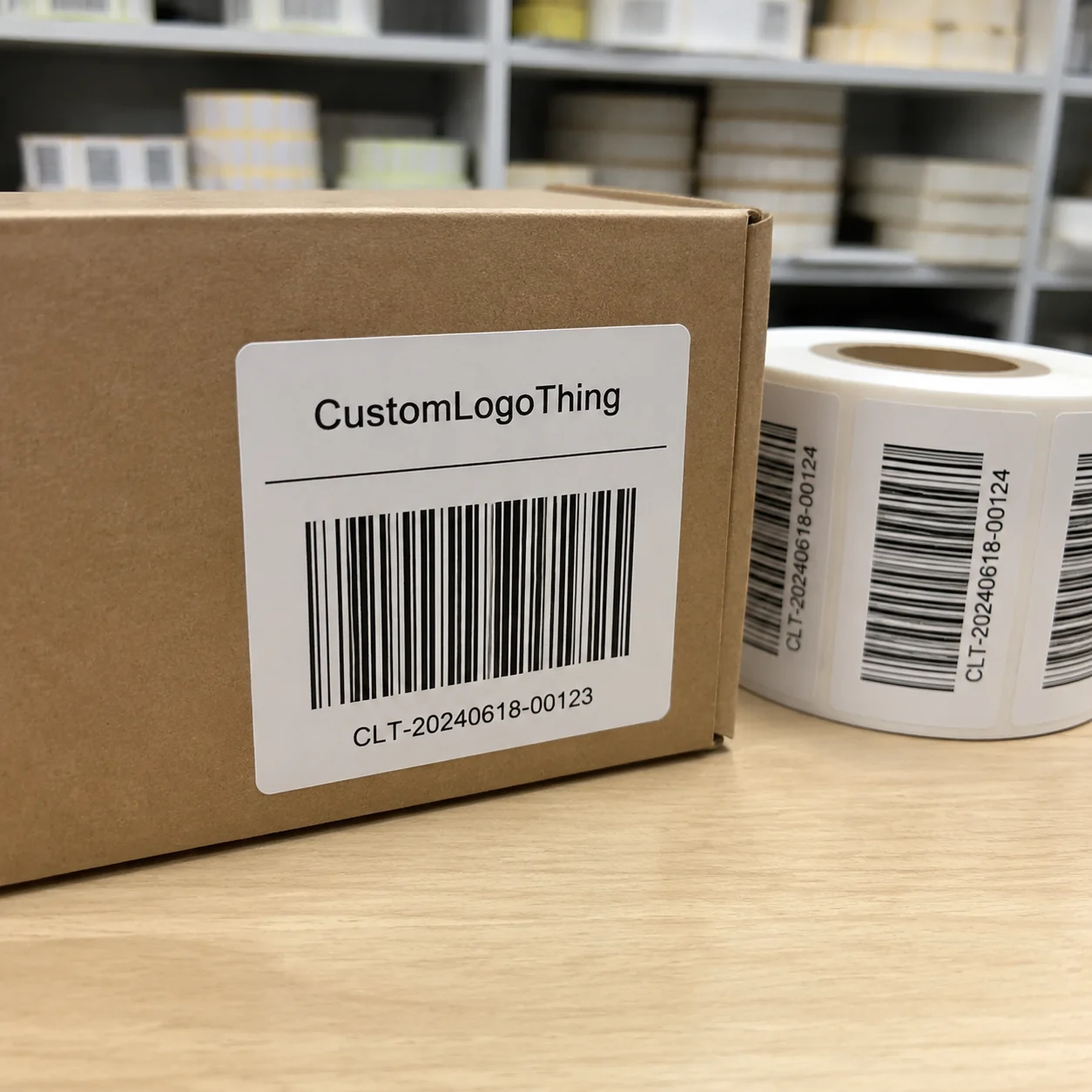
If you need a poly bag supplier for clothing wholesale, the cheapest quote is rarely the best one. A bag that tears in packing, clouds the product on shelf, or arrives in the wrong fold format creates work that never appears on the quotation. The damage shows up later as rebagging labor, damaged goods, slower packing lines, and avoidable claims. Packaging is one of those line items that looks small until it starts multiplying costs elsewhere.
For wholesale apparel, the right bag has to do three jobs at once: protect the garment, present it cleanly, and keep operations moving. That means predictable dimensions, adequate film strength, a closure that suits the workflow, and carton packing that does not create chaos at receiving. The best suppliers do more than print film. They help match bag spec to the product, whether the order is for tees, socks, hoodies, denim, or outerwear.
Why the wrong garment bag costs more than the bag itself
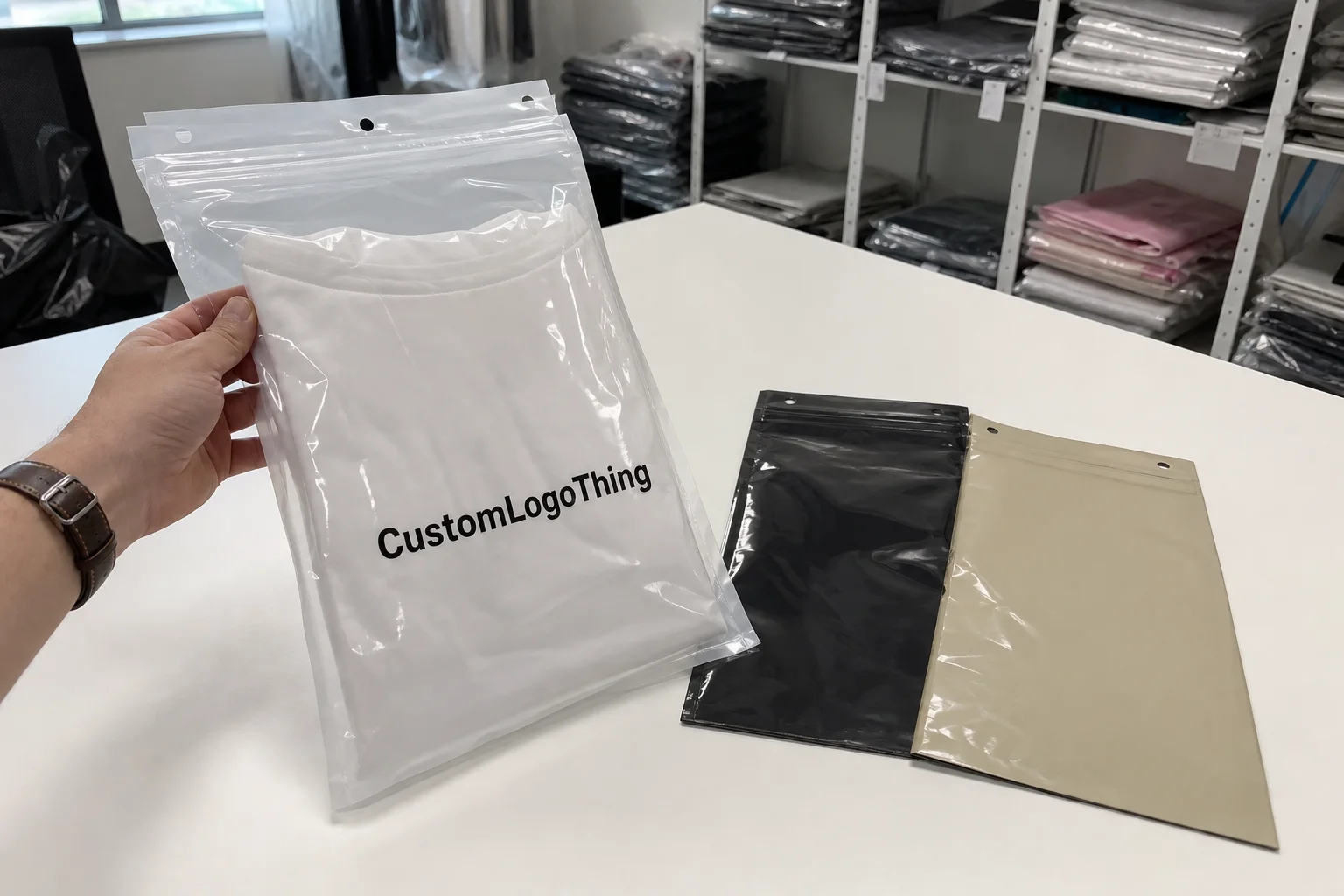
A low unit price can hide expensive problems. Thin film tears when folded garments have sharp seams or hardware. Cloudy material dulls the product. Weak seals split in transit. Once that happens, someone pays for the time spent reworking cartons, fixing pack-outs, and sorting customer complaints. The bag may cost three cents; the correction can cost far more.
In apparel wholesale, fit matters as much as film quality. A bag should hold the garment fold without leaving too much empty space. Oversized bags let the item shift, which makes presentation sloppy and increases the chance of wrinkling. Bags that are too small slow the line because packers have to force the garment in. Multiply that by thousands of units and the cost of a poor spec becomes obvious.
For a poly bag supplier for clothing wholesale, consistency is just as important as price. Buyers should ask how the supplier controls thickness variation, bag length tolerance, and seal strength across production lots. If those details are fuzzy, there is usually a reason.
The landed cost is the number that matters. A bag that saves a fraction of a cent but adds 3 to 5 seconds of handling time per unit is not a saving on a 10,000-piece run. And if the defect rate climbs even 1% to 2%, the hidden cost can outweigh any quote advantage. Buyers usually end up comparing five practical factors:
- Film thickness for puncture resistance and handling
- Clarity for product visibility and presentation
- Closure type for speed and security
- Print quality for branding and required text
- Carton packing density for warehouse efficiency and freight control
That is the real calculation. Not glamorous, but it is where the margin lives.
Poly bag types and finishes for apparel packaging
Not every garment needs the same packaging. A basic tee can ship in a simple clear poly bag. A premium shirt may need a cleaner finish. A hoodie or jacket needs stronger film because heavier seams, zippers, and trims put more pressure on the bag. Matching the bag to the product is not overthinking; it is how you avoid rework later.
Common bag formats
Clear Poly Bags remain the standard for wholesale apparel. They show the product, support barcode scanning, and keep folded garments tidy. Frosted bags soften the appearance and hide minor scratches, smudges, or fingerprints better than highly transparent film. Resealable zipper bags work well for ecommerce, premium basics, and multi-piece sets because they can be reopened without losing the closure. Flap seal bags are popular in bulk packing lines because they are straightforward and fast. Hang hole bags make sense when the same pack needs to move between warehouse storage and retail display.
Material choice changes how the bag behaves on the line. LDPE is the usual starting point for apparel because it is flexible, seals well, and has a softer feel. HDPE is thinner and crisper at the same nominal gauge, but it tends to feel stiffer and less premium in hand. Some buyers ask for recyclable PE blends, which can be useful, but “recyclable” only matters if the downstream recycling stream actually accepts that material. Otherwise it becomes a label, not a solution.
| Bag type | Best for | Typical strengths | Tradeoff |
|---|---|---|---|
| Clear poly bag | Tees, socks, basic folded apparel | Low cost, product visibility, fast packing | Shows scuffs and fingerprints |
| Frosted bag | Premium basics, branded sets | Cleaner look, hides minor marks | Less product visibility |
| Zipper bag | Ecommerce orders, reusable packing | Easy reseal, better perceived value | Higher unit price |
| Flap seal bag | Wholesale cartons, bulk folding lines | Fast closure, simple handling | Less premium presentation |
| Hang hole bag | Retail display, mixed distribution | Merchandising flexibility | Requires tighter size control |
Optional features can improve performance, but they should solve a real problem. Suffocation warning text is common in apparel packaging for many markets. Tamper-evident seals matter more for higher-value goods. Adhesive strips speed packing, especially when the line is short-staffed. Vent holes help reduce trapped air on bulk-packed thicker items. For freight-sensitive orders, carton count is another detail worth checking because a better pack-out can reduce cubic volume and make palletizing easier.
“The best bag is the one the packing team stops complaining about. That usually means the right thickness, the right fold, and no unnecessary friction in the closure.”
Specs that matter: thickness, size, print, and compliance
If the spec is vague, the quote is vague. That is usually where ordering problems begin. A usable request should include bag width, bag length, gusset if needed, film thickness, closure style, print requirements, and carton count. Leave out even one of those and suppliers may quote different assumptions. Then the comparison stops being useful.
Thickness is one of the first places buyers under-spec. Lightweight tees and socks often work in thinner film, while hoodies, denim, or jackets usually need more puncture resistance. For many garment runs, film thickness sits somewhere around 1.5 to 3 mil, depending on the weight of the product and how much handling it will see. Thinner film reduces material cost, but if the bag splits during packing or transport, the savings vanish quickly.
Size matters just as much. A bag should fit the folded garment with a little room, not a lot. Too tight and the packer fights the bag. Too loose and the garment shifts inside the carton. Buyers who order sample bags at the actual fold size usually save themselves from expensive correction rounds later. That is not being difficult; it is normal procurement discipline.
Print adds another layer. Most apparel buyers stick to one-color logos, simple brand marks, barcode space, or compliance text. The more colors, the higher the setup cost and the greater the risk of registration drift. For wholesale programs, a clean one-color print often looks more professional than an overcomplicated design that is hard to repeat consistently.
Compliance should be handled before production starts, not after. Depending on market and customer requirements, apparel packaging may need suffocation warning text, recycling marks, retailer instructions, or a specific format for print placement. The exact wording can vary by retailer and region, so last season’s bag should not be reused blindly. For broad packaging and waste guidance, the Institute of Packaging Professionals and EPA resources are useful references. If your broader packaging program includes certified fiber products, FSC is another relevant reference point.
Ask about tolerances too. A supplier should be able to state normal variation for width, length, and print placement. If every bag is described as identical to the millimeter, that usually signals inexperience or overpromising. Real production has tolerances; the difference is whether those tolerances are controlled.
Poly bag supplier for clothing wholesale: cost, pricing, and MOQ
Pricing usually moves on four variables: size, thickness, material grade, and print complexity. Then volume changes the math again. Large runs lower unit cost because the setup is spread across more pieces. Zipper closures, specialty finishes, and compliance printing push prices upward. None of that is unusual. It is how packaging production works.
For stock-style clear bags in volume, pricing often falls around $0.03 to $0.08 per unit depending on dimensions and order size. Custom Printed Garment bags commonly move into the $0.08 to $0.22 range, while zipper or specialty bags can cost more. Smaller orders usually carry a higher per-unit price because setup is spread over fewer pieces. If a custom quote looks unusually low, ask what is missing from it. Hidden costs tend to surface later.
MOQ matters because it affects both flexibility and unit economics. A lower MOQ helps buyers test the size, print placement, and handling before they commit to a seasonal buy. The tradeoff is a higher unit cost. That does not make a low MOQ bad. It simply means the buyer has to decide whether testing and flexibility are worth the premium.
For any poly bag supplier for clothing wholesale, the quote should separate the major cost drivers. A single number is hard to compare. A structured quote is easier to audit:
- Unit price
- Setup or plate charges
- Sample cost
- Carton packing quantity
- Freight terms
- Tooling or mold fees, if any
A quote that hides those items is not easier to buy from. It is harder to compare and more likely to surprise you later.
Carton efficiency can matter as much as the bag itself. If one supplier packs 500 units per case and another packs only 250 because the folding spec is sloppy or the carton is oversized, your freight and storage costs change immediately. That is especially true on imported bulk shipments where cubic volume drives pricing. A low quote with poor case density is rarely a real savings.
For buyers who need broader packaging support, Custom Logo Things also offers Wholesale Programs, plus a wider range of Custom Packaging Products if the garment bag needs to fit into a larger brand system.
Order process and production lead time
The cleanest orders follow a straightforward sequence: inquiry, spec confirmation, artwork check, sample approval, production, inspection, and shipment. There is nothing fancy about it, and that is the point. Each stage catches a different kind of mistake. Skip one and the risk usually lands in the warehouse.
Speed depends heavily on how ready your files and product measurements are. A clear spec sheet, print-ready artwork, and confirmed warning text can move an order quickly. If the dimensions are still being debated or the artwork is still changing after proofing, the lead time stretches. Custom printing is not a shortcut around missing information. Every revision adds time.
Typical production windows often look like this:
- Stock-style bags: often 7 to 10 business days after approval
- Custom printed bags: often 12 to 18 business days after proof sign-off
- New tooling or more complex runs: longer, depending on the spec
Those timings cover production, not total delivery. Freight changes the calendar. Air, ocean, and domestic trucking each affect arrival dates differently. If a launch date matters, work backward from the warehouse receiving date rather than the purchase order date. That small planning difference prevents a lot of season pressure.
Quality checks should happen before shipment. Ask whether the supplier inspects for film consistency, seal integrity, print accuracy, and carton count. On apparel packaging, a small print shift or a weak seal can create a larger operational problem than expected because every unit is handled multiple times. If the run is going to be opened, folded, shipped, and reshipped, the packaging has to survive more than one stage of contact.
What to compare before choosing a wholesale packaging partner
A polished quote sheet is useful, but execution matters more. The supplier should be able to produce consistent film, print accurately, pack cartons cleanly, and answer questions without making every correction a separate project. Slow response before payment usually means slow response after payment.
Samples are worth using. So is a test order. That is where the real picture appears. A sample may look perfect, but a production run can still reveal seal variation, color drift, stacking issues, or folding inconsistencies. Buyers who skip sampling often end up paying for the mistake in labor or inventory disruption. The sample is a test, not a trophy.
Here is a practical supplier comparison checklist:
- Film consistency: does the bag feel uniform across cartons?
- Print accuracy: is the logo aligned and legible?
- Defect rate: does the supplier disclose acceptable rejection levels?
- Carton packing: how many units per case, and how are they folded?
- Material certification: can documentation be provided if needed?
- Replacement policy: what happens if the order misses spec?
- Artwork revisions: how many proof rounds are included?
Operational support is more valuable than sales language. The right supplier flags problems early, explains constraints plainly, and keeps the schedule stable. If you also source Custom Poly Mailers for ecommerce, it helps to keep the same packaging logic across product categories so branding stays consistent and procurement stays simpler.
“You are not buying plastic. You are buying consistency. That is what protects the margin.”
Next steps to place a cleaner bulk order
The fastest way to avoid rework is to send a proper spec sheet. Include garment type, folded dimensions, target thickness, closure style, print needs, monthly volume, and any compliance text. If possible, add a photo of the folded product. A visual reference often catches sizing problems that measurements alone miss.
Then request two or three options and compare them on more than price. Material, MOQ, carton density, and lead time all matter. A slightly higher quote can be the better buy if it reduces defect risk, improves packing speed, or shortens the production schedule. That is especially true for reorder programs, where consistency matters more than testing a new supplier every season.
Before payment, confirm the compliance text, carton count, shipping terms, and approval process for artwork changes. Ask for a sample or a short test run if the order is custom. A reliable poly bag supplier for clothing wholesale should be comfortable with that process. If the supplier pushes you to skip sampling altogether, slow down.
Smart buying is simple: send the right spec, compare like with like, and lock the schedule before the warehouse gets crowded. The cheapest bag is not the one with the lowest quote. It is the one that arrives on spec, packs quickly, and disappears into the workflow without creating extra labor.
FAQ
What should I ask a poly bag supplier for clothing wholesale before ordering?
Ask for bag size, thickness, material, closure type, print method, MOQ, unit price, sample cost, and lead time. Request a Quote that separates product cost, setup charges, packing, and freight so you can compare suppliers properly.
How do I choose the right thickness for garment poly bags?
Use lighter gauges for tees, socks, and flat-fold basics. Choose thicker film for hoodies, jackets, or anything with sharper edges that can puncture thin bags. If you are unsure, sample two thickness options and test them in packing.
What is a normal MOQ for custom apparel poly bags?
MOQ depends on size, printing, and whether the bag is stock or fully custom. Small runs are possible, but the unit cost usually drops as order volume increases. For custom printed orders, expect more cost pressure at lower quantities.
How long does production usually take for wholesale clothing poly bags?
Simple bags move faster than custom printed orders. Lead time depends on sample approval, artwork readiness, and current factory load, plus shipping method. Production might take 7 to 18 business days, but freight can add more time.
Do poly bags for clothing wholesale need warning text or compliance printing?
Many retail and wholesale orders require suffocation warning text or other compliance marks. Requirements vary by market and customer, so confirm the exact wording before production starts. Do not assume last season’s text still applies.