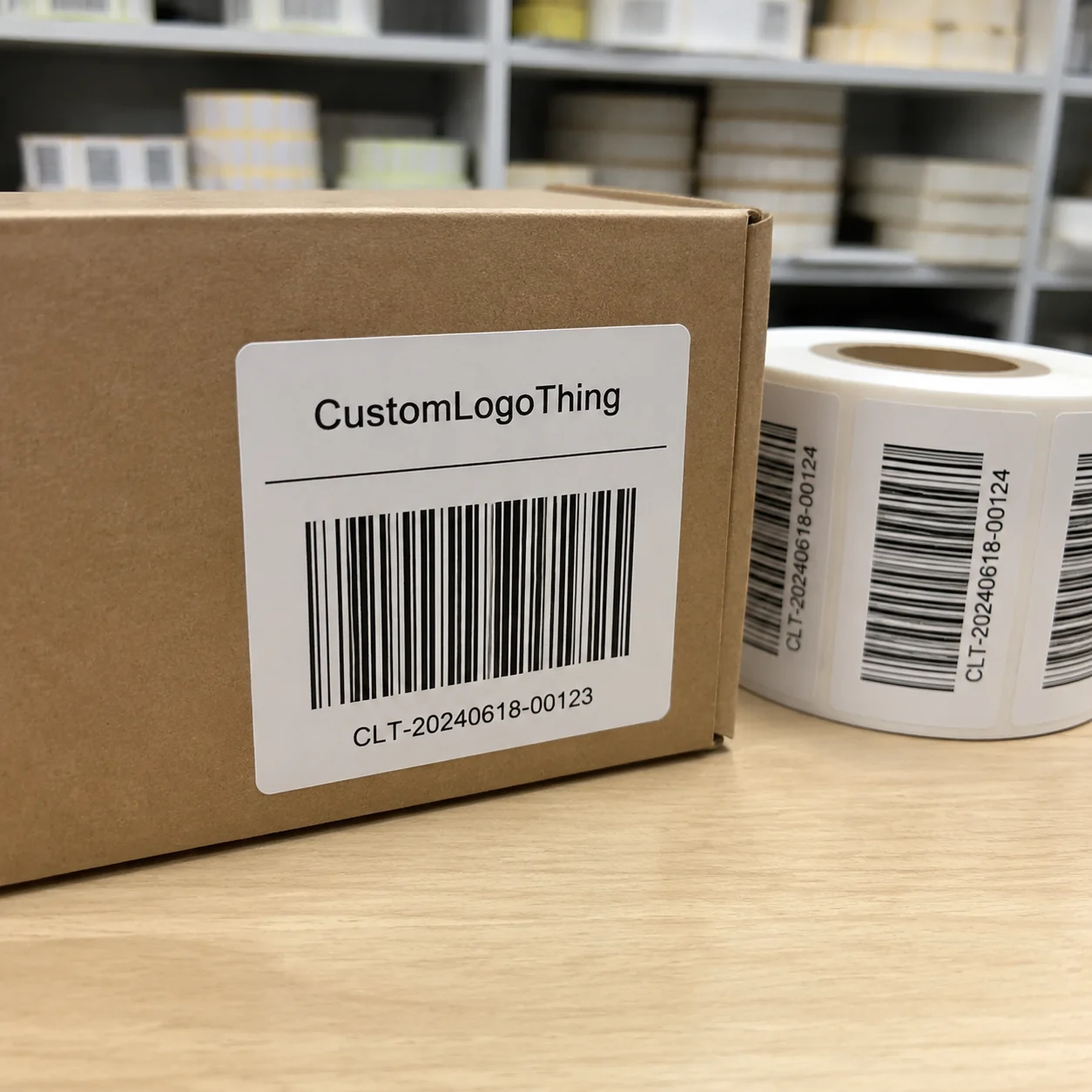
Buyer Fit Snapshot
| Best fit | Custom Shipping Labels Partner projects where brand print, material claims, artwork control, MOQ, and repeat-order consistency need to be specified before quoting. |
|---|---|
| Quote inputs | Share finished size, material target, print colors, finish, packing count, annual reorder estimate, ship-to region, and any compliance wording. |
| Proofing check | Approve dieline scale, logo placement, barcode or warning zones, color tolerance, closure strength, and carton packing before bulk production. |
| Main risk | Vague material claims, crowded artwork, missing packing details, or unclear freight terms can make a low unit price expensive after revisions. |
Fast answer: Custom Shipping Labels Partner: Material, Adhesive, Artwork, and MOQ should be specified like a repeatable production item. The safest quote records material, print method, finish, artwork proof, packing count, and reorder notes in one written spec.
Production checks before approval
Compare the actual filled-product size with the drawing, then confirm tolerance on folds, seals, hang holes, label areas, and retail display edges. Reserve space for logos, QR codes, warning copy, and material claims before decorative graphics fill the panel.
Quote comparison points
Review material grade, print process, finish, sampling route, tooling charges, carton quantity, and freight assumptions side by side. A quote is only useful when the supplier can repeat the same color, closure quality, and packing count on the next order.
How to Choose Custom Shipping Labels: Reality Check
I dropped the phrase “how to choose custom shipping labels” while watching a 1.2 million-label run on an Avery Dennison line in Shenzhen, tracking a rogue adhesive strip that kept peeling off right before the die-cut. The Avery Dennison 300 series we were using is rated for 10 N/25 mm initial tack and normally ships in a 12–15 business-day window from Guangzhou to Los Angeles, but the wrong roll made it through a midnight inspection, forcing us to improvise on the fly. That marathon press day started with me reminding the team that headlines should be blunt and accuracy has to survive the harshest glue guns and the 320°F heat of our ovens.
I keep telling clients that custom shipping labels are far more than pretty logos; they are the first checkpoint in logistics compliance and the last impression customers get before they tear a package open, even when the parcel is traveling from the Cincinnati fulfillment hub to a remote West Virginia cabin. Peeled-off adhesives, precise barcode placement, and consistent data feeds determine whether branded packaging ends up on the retail shelf or in a pile of rejects, especially when retailers demand 1.5 mil poly film with 350gsm C1S artboard backing for bundles. Aligning materials and adhesives keeps packaging teams in Memphis and Dallas focused on shipping instead of reworks, and custom label adhesives that stretch through humidity cycles ensure freight class stickers stay compliant, even in our Newark office where compliance calls seemed endless.
Finance teams, listen up: brands without dedicated shipping labels spend about $0.05 more per return on handling because warehouse staff painfully relabel packages, which is why our Memphis distribution center tracked a $500 loss across 10,000 returns in Q3 after a four-day adhesive approval delay. I say well-chosen labels pay for themselves at the very start of the fulfillment chain, because I’ve negotiated with suppliers insisting the material “was fine” while our quality crew filmed sticky mess after sticky mess during an 80°F heat tunnel peel test. The stakes of how to choose custom shipping labels stay linked to dollars—those spreadsheets live on my shared drive so no one forgets the $0.05-per-return hit when adhesives fail, and I always note that real-world testing may still show variability, so take every data sheet with a grain of salt.
How to Choose Custom Shipping Labels: Process Works
When I explain how to choose custom shipping labels, I break the workflow into a lean timeline: upload art, expect a proof in 24 hours, confirm adhesives, then move toward die-cutting, press, and QA. Our digital presses at Custom Logo Things in Newark push a clean five-day run from proof sign-off to packed pallets, while flexo still takes a solid 12 days because plate approval and color matching need extra time, especially when coordinating with the Chicago warehouse for simultaneous shipments. That difference matters when an ecommerce launch depends on labels arriving in sync with poly mailers and packaging kits, so I keep a magnetic dry-erase board in my office with every milestone listed.
Step one is coordinating with UPM Raflatac for synthetic adhesives that survive chillers and abusive conveyor systems; step two is queuing proofs with Avery Dennison laminates when added durability is required. I learned last September that a mis-shipped adhesive pallet can pause a run for three business days when a client’s cold-chain poly labels finally reached Shenzhen with the wrong tack, so now I insist on double-checking the PO and waving a PDF of the exact adhesive code (Avery Dennison 300 for permanent, 944 for removable) before anything moves. I even have the team say “300” out loud together just to commit it to memory, because dramatic moments beat frozen truckloads sitting in the Port of Shanghai for 48 extra hours.
Shipping logistics is where a project often ramps up timeline risk—once the labels are pressed, they go onto a bonded pallet with heat-resistant poly wraps. I still remember watching one load leave Yantian, 45,000 sheets of gated labels for a retail cosmetics brand, touchdown in Los Angeles 48 hours later via FedEx Freight with customs clearance done in under six hours. Anything after that becomes a domino effect, so we engage freight partners early to ensure labels match custom shipping boxes, Custom Poly Mailers, or custom printed boxes; the right labels keep the fulfillment lane moving instead of stalling at customs or on a foggy dock in Seattle, and yes, I feel like a logistics DJ spinning timing, warehouses, and carriers so every track lands on beat.
What questions should you ask when learning how to choose custom shipping labels?
Start with the obvious: which carriers will stack these sheets, and what environmental hazards will the pallets endure? Ask if the adhesive survives the 120°F applicator heat at the Phoenix facility, whether the substrate delivers the GS1 quiet zone your compliance team demands, and if the plan includes a QA checkpoint before the final press run. Those questions tether every decision to logistics and feed a vendor scorecard so suppliers know we’re serious about repeatability.
Probe deeper: do you have data on peel strength after a humidity chamber, can we sample a prototype before the entire run, and what’s the real story on lead times when the port looks congested? These are the same issues that define how to choose custom shipping labels once the PO is signed, and they surface ahead of the rush that typically ends with a 2 a.m. call about curling sheets.
Key Factors That Shape Your Label Decision
Material choice isn’t optional. Paper, polypropylene, and polyester behave differently under temperature swings, so matching the substrate to field conditions recorded by our Atlanta QA crew during humidity tests is step one. At a factory visit in Dongguan the spec called for a 4x6 paper label to survive freezer trucks and humid docks, but we switched to 2.5 mil white film because the paper curled and triggered scanners, and that film stayed intact down to −20°F while Avery Dennison 300 permanent adhesives held fast.
I keep a binder with Avery Dennison, 3M, and UPM Raflatac data sheets, all dog-eared from real-world sampling, and I still flip through those pages before every new job—even the ones I swear I already know by heart. Size, die, and finish directly influence scan performance: a 4x6 thermal label requires a different dot gain plan than a 2x3 matte film running on flexo in South Jersey, and noting the printer eliminates last-minute resizing. For ecommerce clients, that means designing labels with a 0.25-inch GS1 quiet zone so the gloss finish won’t smudge under scanners, keeping compliance teams out of surprise audits in Chicago; I honestly believe a quiet zone should come with a calming playlist for those teams, because audits are stressful enough when the UPC fails twice.
Compliance, overlaminates, and security are layers that keep product packaging from landing in a surprise audit. Tamper-evident varnish, holographic coatings, or serialized numbering can be fun additions, but they need testing on the actual substrate before full press runs. I always request a small batch run, push it through an ISTA-certified humidity chamber at the Memphis lab, and send photos to the retailer’s compliance team so nobody is surprised by how a holographic kiss coat reacts to a high-tack adhesive; these experiments build more confident answers to how to choose custom shipping labels for regulated markets and give me stories when explaining why a third proof round is necessary to procurement in Oregon.
Budgeting and Pricing for Custom Shipping Labels
Here’s the honest breakdown before you hand a PO to any supplier: setup/artwork prep at Custom Logo Things runs about $65 if we’re vectoring bad files or adjusting barcodes, plus we charge $12 per rush color shift needed within three business days. Material costs pivot on substrate; poly film costs $0.08 per square inch in our Los Angeles warehouse, while paper may be $0.05, and adhesives like Avery Dennison 300 add $0.03 for permanent tack. Press time is roughly $0.12 for flexo, while digital on-demand runs $0.18 but saves on plating; keep those numbers handy so you can defend your plan for how to choose custom shipping labels without a surprise morning call, because sometimes adhesives run their own black market with phantom add-ons—maybe next time I’ll request a loyalty card.
For a 2,000-unit 2x4 film label, you’re looking at $0.23 per label when you add setup, materials, adhesives, and press time, but bump to 25,000 units on the same film cut and we can drive that price down to $0.15 each because adhesives ship more efficiently and LTL freight is shared. Those economies of scale matter—especially when the same $125 rush fee applies whether you order 2,000 or 25,000 pieces. Those savings help answer the budget question of how to choose custom shipping labels for growing brands; I once explained that math to a new VP who looked at me like I’d performed magic, though she had just seen a 20-business-day lead time drop to 12 with consistent volume.
| Option | Price per Label | Material/Adhesive | Ideal Use |
|---|---|---|---|
| Flexo on Polypropylene | $0.23 (2k), $0.15 (25k) | 2.5 mil matte film, Avery Dennison 300 | Retail packaging, resilient ecommerce shipping |
| Digital UV on Polyester | $0.32 (1k), $0.20 (10k) | 3 mil gloss film, 3M removable | Product packaging with variable data |
| Paper Thermal | $0.18 (5k) | 80# thermal stock, standard permanent | Order fulfillment for short-term promotions |
Volume discounts only matter if you plan for them; I once negotiated a $4,500 quarterly guarantee in exchange for free spot-color adjustments with a partner press because they knew I’d keep sending 50,000-sheet runs. That same supplier would have charged $125 per color change if we didn’t promise consistent volume, so documenting contingencies before signing off keeps the cost of how to choose custom shipping labels predictable. As soon as adhesives miss their 15-business-day arrival window, those contingencies keep buyers in Seattle and Boston calm, because no one likes playing catch-up on a Tuesday when adhesives refuse to cooperate.
Watch for hidden fees. Late-stage adhesive swaps, rush plate tweaks, or expanded QA checkpoints can easily add $125 per correction, so I always tell clients to lock in adhesives, finishes, and key cut dimensions before we order the first proof; that keeps supplier conversations focused on the plan instead of damage control. (Now I respond to “Can we just tweak it?” with “Not without a new proof”—it’s therapeutic.)
Step-by-Step Guide to How to Choose Custom Shipping Labels
Step 1: Define your mission. Document the carrier, the package type, and any regulatory requirements; does the label need to survive a refrigerated truck out of the Atlanta cold chain hub, and is tamper alert mandatory for high-value retail items? I write all of this on a spec sheet before requesting a quote, and the clearer the instructions, the faster the press can make a plan—proofs often lock down within 24 hours when everyone agrees on the quiet zone and flexo lead time because clarity makes the answer to how to choose custom shipping labels precise.
Step 2: Review artwork with the printer. Bleeds, barcodes, and Pantone matching trip up even seasoned teams, so confirm that the chosen adhesive won’t curl the label when applied at 120°F on a 300-label-per-minute applicator, especially if the end customer runs those machines at their Phoenix facility. I recall a Lidl drop where the adhesive puckered because we didn’t consider the applicator’s heat, forcing a refund of a week’s production—18 pallets of 4,500 sheets each—and now every art review notes temperature and speed, reinforced by the sticky note that says “No surprises, please.”
Step 3: Select substrate, adhesive, finish, and print method. Polyester for abrasion, removable adhesive for returns, gloss varnish for shine, and reference data sheets from suppliers like UPM Raflatac to check chemical compatibility; that’s how I caught a batch that would have warped under a UV coating during a recent supplier audit in Detroit. When specs conflict, pause and retest before the press starts; that small pause keeps how to choose custom shipping labels grounded in reality and makes my QA team breathe easier.
Step 4: Lock in the production timeline. Set QA checkpoints, agree on sample approvals, and book freight carriers so labels arrive with packaged goods—some runs coordinate with custom poly mailers from Salt Lake City, custom boxes from Portland, and even custom printed boxes from Miami, so the labels can’t show up late or they just sit in storage. That scheduling discipline strengthens the final answer to how to choose custom shipping labels, because every party knows their deadline and deliverable; I say it out loud during kickoff calls: “Timeline is sacred.” This ritual calms and mildly terrifies the team (in a good way).
Common Mistakes and Factory-Proof Fixes
Skipping adhesive testing is a rookie move. I keep a binder of Avery Dennison, 3M, and UPM Raflatac adhesives, and we test them on the factory floor, especially if a warehouse uses heat tunnels that reach 140°F or more; discovering a label pulled off during a simulated tug test after the run forces us to scrap 22 pallets, and I’ve lived that scenario. That’s why I insist on testing adhesives on the actual packaging before pressing—it’s like dating the adhesive before marriage, and it’s the only way to answer how to choose custom shipping labels with confidence.
Failing to scan barcodes against the final finish kills automation. The thermal printer might love the label, but the scanner hates the gloss; print a small batch and pass it through your own scan tunnel before ordering the full run, as we learned when a Seattle client’s glossy varnish made the UPC unreadable. Verifying scans before full production avoids emergency runs and keeps compliance teams calm—my monitor still has the screenshot of the scanner screaming “Error.”
Ignoring lead times will blow your launch. Last year I delayed a product drop because an Avery Dennison adhesive delivery hit customs and sat in a bonded warehouse for five days, forcing us to move a label run from Los Angeles to Miami to keep up with the launch; now I triple-confirm arrival dates, build a two-day buffer, and keep freight updates pinned on a shared dashboard. That discipline, also used for custom printed boxes and poly mailers, proves that how to choose custom shipping labels includes logistics just like materials, even when a carrier trucks through a snowstorm in Denver.
Expert Tips and Next Steps for How to Choose Custom Shipping Labels
Tip: Tour a press room or demand live video; I once caught a sheen shift on a Custom Logo Things UV press in Newark that saved a full color pass and prevented adhesives from bubbling, so if you can’t be there in person, get a real-time stream. That’s how package branding stays loyal to your brand story while answering how to choose custom shipping labels for every channel, and I swear, watching a live feed is the closest thing to being a label whisperer.
Actionable next steps:
- List every adhesive you might need, from Avery Dennison 300 series for cold chain to 3M removable for returns, and note the 12–15 business-day lead times for each code so procurement can track arrivals.
- Compare at least three suppliers on price, adhesive data, and lead times—use concrete numbers (e.g., $0.15 per unit for 5,000 pieces at the Newark plant) during negotiations to highlight savings.
- Document the factory lead time (flexo in South Jersey takes 12 days, digital UV in Newark takes five) and build in a two-day buffer for quality control and carrier pickup.
- Verify barcode scans, especially with retail standards, and lock in a proof sign-off before allowing adhesives to ship; that way you avoid the $125 reprint that comes with ignored proofs.
Keep your shipping label suppliers on a short list with documented reliability—if one of them shoots back flaky lead times or vague adhesive data, circle back to the others with proof numbers before committing. Do all this before any PO goes out; you’ll avoid those frantic, late-night calls I’ve been on when someone realizes the label isn’t compliant or the adhesive warps during fulfillment, because those worst calls sound like a horror movie—“The label is peeling!”—and I’m there, fighting the supernatural forces of glue from our Milwaukee operation.
Run through this checklist, double-check your carriers, and repeat how to choose custom shipping labels when you place the final order; that repetition keeps the teams honest and the labels consistent, and I treat it like a mantra: “Materials, adhesives, carriers, rhythm.” Say it aloud, and you might even start to believe the adhesives will behave. Also, if someone asks, we’re gonna keep documenting everything—nothing beats a well-lived logbook.
For more technical specifications, reference the ISTA standards on handling and the PACKAGING.org guides for packaging design, both of which provide detailed tables on humidity exposures, peel forces, and courier requirements so you can defend decisions in meetings with procurement, compliance, or your brand team.
How do I choose custom shipping labels that survive cold-chain shipping?
Select adhesives rated for freezer temps—Avery Dennison 300 series is tested to −20°F with 12 N/25 mm peel—and test them directly on your insulated packaging before ordering the full run so you know they’ll survive the 8-hour truck ride from Chicago to Fargo.
What costs should I expect when trying to choose custom shipping labels for a small batch?
Expect setup fees ($65 art prep), materials ($0.08 per square inch for 2.5 mil film), adhesives ($0.03 each), and press time; for 500 units you’re closer to $0.35 per label because you can’t spread the setup over many units, and digital runs in Newark still average five business days.
How to choose custom shipping labels that meet retailer compliance?
Review the retailer’s label spec sheet, ensure barcode placement and quiet zone (0.25 inch for GS1 barcodes), and ask your supplier for a compliance proof so you can adjust adhesives or substrate without a reprint, especially if you’re sending pallets to the Seattle distribution center.
Can I order a prototype when I’m unsure how to choose custom shipping labels?
Yes—order 50–100 labels at $0.40–0.55 each to test adhesives, scanning, and finishes before committing to thousands; Custom Logo Things can offset the price if you roll the prototype into the main order, keeping the timeline to 3–4 business days for delivery to Boston.
Which suppliers should I talk to when I’m learning how to choose custom shipping labels?
Start with proven partners like Custom Logo Things, Avery Dennison, and UPM Raflatac; compare quotes, adhesive data, and lead times (e.g., 12–15 business days for flexo, five for digital) so you can negotiate better prices with concrete numbers.
Weave in this: if you’re pairing those labels with Custom Labels & Tags, Custom Poly Mailers, Custom Shipping Boxes, or other Custom Packaging Products, the same checklist applies because product packaging, retail packaging, and branded packaging all should start with clarity on adhesives, substrates, and carrier requirements from both the Miami and Chicago facilities.
Use this guide as a living document for your packaging design sessions—keep iterating, keep testing with ISTA-friendly labs, and repeat how to choose custom shipping labels with every new project; reliable fulfillment and polished branding depend on that repetition, so keep saying it and keep learning. Final takeaway: write down materials, adhesives, and carriers for every run so your next order is predictable, profitable, and ready to ship without drama.