Streetwear packaging gets judged fast. Sometimes before the garment does. That is why Clear Resealable Poly Bags for streetwear labels moq planning deserves more thought than a last-minute sourcing note buried under the hoodie order.
A good clear bag does three jobs at once. It protects the item, keeps inventory tidy, and makes the product look intentional the second someone opens a carton or clicks a product page. A bad one does the opposite. It wrinkles, clouds up, tears at the zipper, and makes a clean garment look like it shipped through a side door.
For buyers, the real question is not whether to use bags. It is which bag spec will hold up in production, packing, storage, and repeat orders without creating extra labor. That means looking at material, thickness, closure type, size tolerance, print requirements, and the MOQ tied to each choice.
Why streetwear labels rely on clear resealable bags
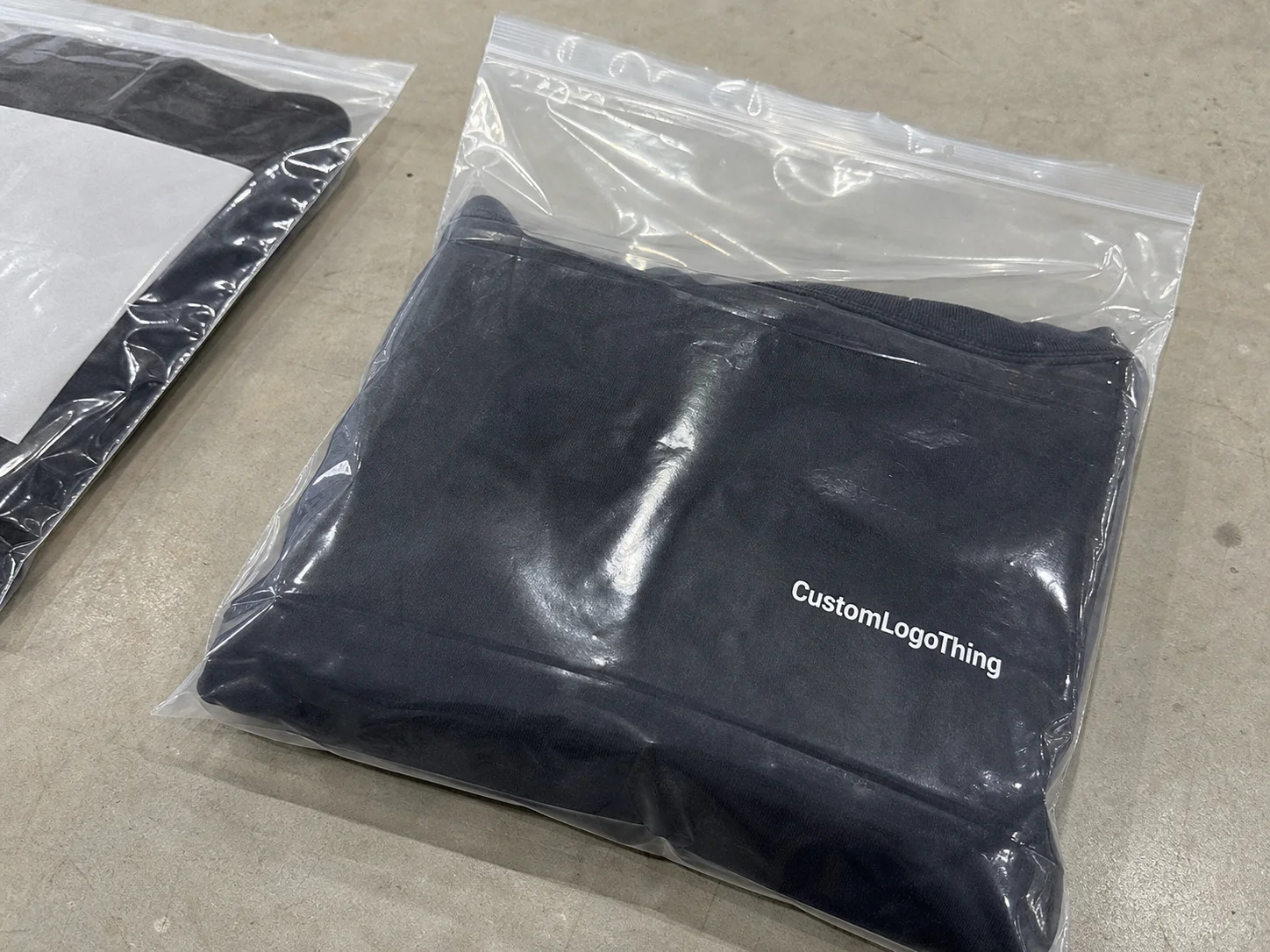
Streetwear is presentation-heavy. The package is part of the product story, even when the brand pretends otherwise. A clear resealable bag lets the folded tee, hoodie, sock set, or accessory stay visible while still being protected from dust, light handling, and minor moisture exposure during storage and shipment.
That visibility matters in several workflows. Ecommerce teams need the right size and style to be identifiable at a glance. Wholesale and warehouse teams need product that can be inspected and returned to storage without destroying the pack. Event staff need something that can be opened and reclosed without turning the item into a loose stack of folded fabric.
These bags are not a substitute for carton protection or proper palletizing. They are an inner layer, not a miracle. But in day-to-day operations, they help keep garments cleaner and more consistent than loose folding alone.
They also reduce packaging friction. A resealable film bag is usually faster to pack than boxes, paper wraps, or custom inserts that need extra handling. That matters if the brand is moving volume across multiple SKUs and cannot afford a different packing routine for every style.
“Packaging only works if the packing team can use it the same way every day. A pretty spec that slows the line is just a problem with better branding.”
There is another practical reason streetwear labels keep returning to this format: it separates functions cleanly. The bag handles visibility and basic protection. Custom Labels & Tags carry sizing, branding, and product information. Outer mailers or cartons handle transit. That separation makes sourcing easier and keeps each piece from trying to do three jobs badly.
For buyers planning a packaging program, the bag spec should fit the brand’s actual operating rhythm. Not the idealized version in a deck. That is especially true for Clear Resealable Poly Bags for streetwear labels moq planning, where the wrong minimum or the wrong bag size can create more cost on the back end than the quote saved on the front end.
Construction, closure, and finish options that change the buying decision
Most apparel bags are made from polyethylene film, usually LDPE or a similar soft plastic that folds cleanly and stays flexible instead of cracking. For garment packaging, that matters. You want a film that looks clear, feels manageable on the table, and does not turn brittle when the warehouse gets cold or the run sits in storage for a while.
Clarity is not just about appearance. A cleaner film makes it easier to verify style, color, and size without opening every bag. That saves time. It also reduces handling, which is useful when a team is checking packs before shipment or sorting backstock after a return.
Closure style is the next big decision. Press-to-close zipper tracks are better when the bag may be opened repeatedly for inspection, returns, or retail handling. Adhesive strip bags work better for one-time sealing and simpler fulfillment paths. Neither is universally superior. They solve different problems.
Finish changes the visual result more than many buyers expect. Crystal-clear film gives a sharper, retail-ready look. Slightly frosted film hides scuffs and fingerprints better, but it softens product visibility. If the label sells bold graphics or highly folded basics, a little haze may be acceptable. If the garment detail is the selling point, clarity usually wins.
Thickness, or gauge, affects both feel and performance. Thin film folds flat and keeps weight down, which is useful for smaller items. Heavier gauge film feels sturdier, resists tearing better, and can make the package feel more substantial. It also tends to tolerate repeated opening and closing more gracefully.
There are a few practical add-ons worth checking early:
- Hang holes for retail display on pegs or racks
- Suffocation warnings where consumer safety labeling is required
- Tear notches for easier opening at fulfillment or retail
- Gussets for thicker folded garments or multi-piece sets
- Size marks or SKU prints for fast picking and sorting
Printing should stay purposeful. A small logo, size mark, warning text, or product code is often enough. Full-coverage graphics usually add cost, setup complexity, and more chances for a poor result. If the brand already has strong hang tags or inserts, the bag may only need basic compliance text and a clear product identifier.
One more decision point: where should the branding live? If the label has a strong visual system already, the bag may only need functional text. If the package sits on open retail fixtures, a subtle printed mark can help the item look finished without turning the bag into a billboard.
Sizing, gauge, and pack-out specs for tees, hoodies, and accessories
Bag size should always start with the finished folded garment. Not the flat shirt measurements. Not the cut size. The actual packed piece. That distinction sounds obvious until a hoodie with a deep fold suddenly refuses to fit through the opening the buyer approved three weeks earlier.
Fold style changes everything. A compact retail fold can shrink the footprint enough to fit a smaller bag. A looser warehouse fold takes more room and usually leaves less room for tag stacks, inserts, or zipper closure. The same garment can need a different bag spec depending on how the team packs it.
For tees and lighter accessories, smaller bags and lighter film usually work well. For hoodies, joggers, fleece sets, or anything with bulk, the bag needs more width, more depth, and usually a stronger closure. If the package feels tight during insertion, the line will slow down. If it feels too loose, the product shifts around and the presentation looks sloppy.
A realistic planning approach looks like this:
- Flat tees: slimmer bag, lighter to mid gauge, tight but not cramped fit
- Heavy hoodies: wider and taller bag, mid to heavier gauge, stronger closure
- Socks and small accessories: compact format, lower gauge often acceptable
- Multi-piece sets: test the thickest packed version before approving bulk
For labels with multiple sizes, it is tempting to force one bag to cover everything. Sometimes that works. Sometimes it creates a sloppy medium and an impossible extra-large. The answer usually depends on how standardized the fold is. If the packing table is consistent, one spec may handle the whole run. If the fold varies by style or size, two specs are often cheaper than repeated packing frustration.
One mistake shows up constantly: buyers approve the bag using only garment dimensions. That is not enough. Tags, inserts, folded seam thickness, and zipper overlap all take space. If the package is meant to hold a hang tag, a barcode insert, or a care card, those pieces need to be in the sample used for measurement.
| Garment type | Typical bag fit | Practical gauge range | Operational note |
|---|---|---|---|
| Light tee | Tight, flat fit | Lower to mid gauge | Good for fast packing and clean shelf presentation |
| Heavy hoodie | Roomier fit | Mid to heavier gauge | Better zipper strength and less stress during insertion |
| Socks or accessories | Small format | Lower gauge often works | Can share one spec across several SKUs |
| Multi-piece set | Expanded depth needed | Heavier gauge preferred | Sample the packed version before bulk approval |
The most useful sample is not the prettiest one. It is the one packed the way the warehouse will actually use it. That is the version that reveals whether the zipper catches, whether the print overlaps the seal, and whether the product slides around too much inside the bag.
Pricing, quote structure, and MOQ planning
Apparel bag pricing usually comes down to a few variables: size, gauge, closure style, print coverage, warning text, and whether the bag is stock or custom. If quotes differ a lot, check the spec line by line before assuming one supplier is simply cheaper. Often they are not quoting the same thing.
MOQ is rarely random. It usually reflects production setup, film conversion, print method, and the need to run enough material to justify the line. A simple unprinted bag in a standard size can often support a lower minimum than a custom-printed bag with nonstandard dimensions. That is basic production math, not a sales trick.
For growing labels, MOQ planning should be tied to actual usage, not optimism. If the monthly pack-out is small and the item only drops seasonally, a large minimum can sit in storage far longer than anyone wants. If the style is a repeat core item, a larger run may bring better piece pricing and fewer reorder headaches. Same product, different answer.
Good planning starts with three numbers:
- Expected launch quantity
- Average monthly usage
- Reorder window before stock runs low
With those numbers, a buyer can choose an order size that fits the business instead of chasing the lowest unit price and paying for it in storage. That usually matters more than a tiny price difference on the quote sheet. Cheap inventory is not cheap if it occupies space for nine months.
There are also a few cost drivers that show up repeatedly:
- Standard dimensions usually cost less than custom ones
- Simple closure styles are easier to run than specialty formats
- One-color printing is typically easier to control than multi-color art
- Setup and tooling become more visible when artwork or bag size changes often
If the brand can standardize one or two bag sizes across multiple product categories, purchasing gets easier and warehouse receiving gets cleaner. That does more for total cost than a small discount ever will. Fewer carton codes. Fewer spec exceptions. Fewer mistakes.
A useful quote request should include bag dimensions, gauge preference, closure type, print requirements, estimated annual usage, and target launch quantity. If the supplier also knows the garment type and the packed fold style, the quote is more likely to be accurate on the first pass.
For Clear Resealable Poly Bags for streetwear labels moq planning, the better question is rarely “What is the cheapest price?” It is “What minimum, spec, and reorder structure will actually fit the way the brand sells?” That answer is almost never the one with the most dramatic headline discount.
Process, timeline, and ordering workflow
The cleanest ordering process starts with a complete brief. Include bag size, garment type, closure preference, print needs, target quantity, and destination. If the bags will be used for ecommerce, wholesale, retail display, or backstock, say that too. That context changes the spec recommendations more than most buyers expect.
A typical workflow looks like this: inquiry, spec review, quote, artwork check, sample or proof approval, production, quality inspection, and packing. The steps are normal. The delays usually come from missing details, not from the manufacturing itself.
Samples are worth the time, especially if the brand is changing from a different packaging format or adding print. A physical sample or a pre-production proof can catch size issues, zipper weakness, print placement problems, and warning text that is too small to read at practical distance. That is much cheaper than discovering the problem after bulk packing is done.
Lead time depends on several things: film availability, print complexity, whether tooling is needed, and shipping method. A simple unprinted run can move faster than a custom printed order with new dimensions. Air freight shortens transit. Ocean or ground freight does not. The production schedule and the delivery schedule are not the same thing, even though people keep acting like they are.
If the timeline is tight, keep the spec simple and proven. New artwork, unusual dimensions, and nonstandard warning text tend to add review time. The fastest order is the one that does not need a lot of back-and-forth.
It also helps to think about packaging as a system. If the label already uses custom mailers or branded outer packaging, the bag should fit the rest of that setup instead of fighting it. That is where the broader packaging stack matters, including Custom Poly Mailers and Custom Packaging Products. The goal is coordination, not a pile of disconnected purchases.
Quality checks, storage, and supplier fit
Quality control for clear apparel bags is practical, not mysterious. Check clarity, seal integrity, zipper function, print alignment, dimensional accuracy, and carton consistency. If the zipper sticks on the first open, the issue will show up on the packing table immediately. If the printed text drifts into the seal area, the whole run becomes harder to use cleanly.
Consistency matters because streetwear brands often sell through several channels at once. Ecommerce, wholesale, pop-ups, and internal stock transfer can all use the same bag spec, but each team will notice a different problem if the quality is uneven. A bag that behaves predictably makes cross-channel packing much easier.
Storage and cartonization matter too. Inner pack counts, carton counts, pallet configuration, and carton labels affect receiving speed and inventory tracking. If the bags arrive in awkward counts or the carton labels do not match the purchase order, the warehouse has to waste time fixing what should have been simple.
The best supplier fit is usually the one that handles detail work without drama. Clear spec communication. Repeatable output. Straight answers about minimums, lead time, and print setup. That matters more than polished sales language. Especially for ongoing packaging programs where the same item gets reordered over and over.
For brands building a repeatable system, the safest habit is to lock the spec, keep the fold method standard, and avoid changing dimensions unless the garment actually changed. Small spec drift creates unnecessary complexity. It also makes reorder pricing harder to compare, which defeats the purpose of having a set packaging program in the first place.
FAQ
How do I choose the right size for clear resealable poly bags for streetwear labels?
Measure the final folded garment and test it in the bag with tags, inserts, or anything else that will ship inside the package. Leave enough room for smooth insertion and closure, but not so much that the product slides around. A packed sample is better than a paper dimension every time.
What MOQ should I expect for custom clear resealable poly bags?
MOQ depends on size, gauge, closure style, and whether the bag is printed or stock. Standard unprinted bags usually support lower minimums than custom printed bags. The more unusual the spec, the more likely the minimum will rise.
Are resealable poly bags better than adhesive bags for apparel packaging?
Resealable zipper bags are better when the item may be opened more than once for inspection, storage, or returns. Adhesive bags work well for one-time sealing and straightforward fulfillment. The right choice depends on how the product moves through the business.
Can branding or warning text be printed on clear resealable poly bags?
Yes. Many apparel bags include logos, size marks, SKU codes, or warning text. Simple print usually costs less and is easier to control than full-coverage artwork. Send artwork early so the quote reflects the real spec.
What information should I send for a quote?
Send bag dimensions, thickness preference, closure type, print requirements, target quantity, and the garment type the bag will hold. Add expected usage volume and timeline needs so the supplier can judge MOQ and lead time accurately. The more complete the brief, the less likely you are to restart the estimate later.


