Streetwear packaging gets judged fast. A buyer sees the bag, the fold, the print, and the overall feel before they ever touch the garment. That is why Frosted Zipper Poly Bags for streetwear labels moq planning is not a side issue. It affects presentation, protection, cash flow, and whether the whole drop feels considered or thrown together.
Frosted zipper bags sit in a useful middle space. They look cleaner than plain clear poly, feel more deliberate than a thin sleeve, and still leave room for sensible unit costs if the run is planned properly. For tees, hoodies, joggers, caps, and smaller accessories, that balance is usually enough. You do not need to overbuild the packaging to make the product look premium. You do need the specs to be right.
Why frosted zipper bags work for streetwear packaging
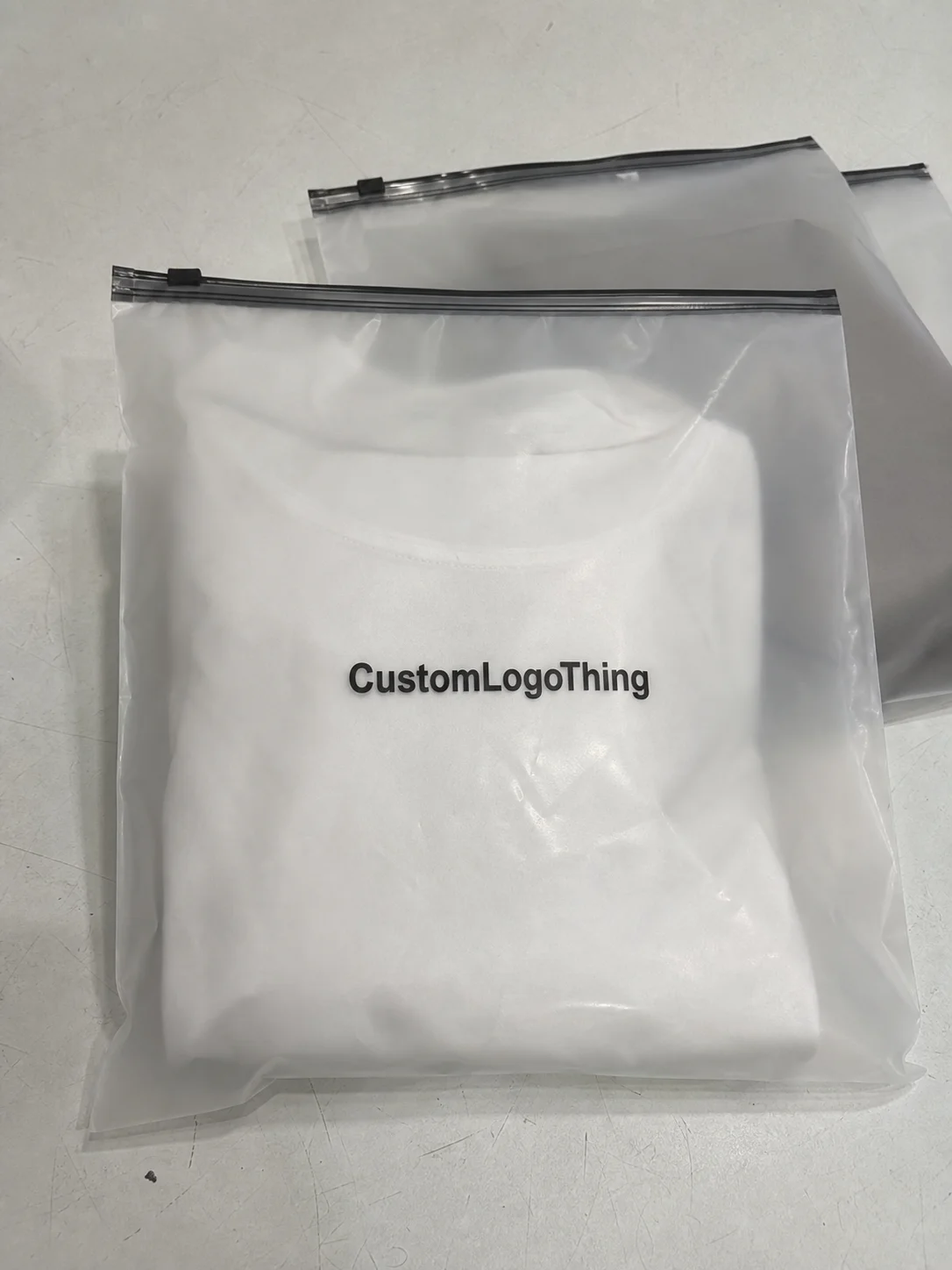
A frosted finish softens the visual noise. It hides some fold marks, reduces the harsh look of transparent plastic, and makes the garment feel more intentional at first glance. That matters in streetwear, where the product often carries the branding load already. The packaging should support that, not fight it.
The zipper is the part people underestimate. A resealable closure makes the bag useful after the first unbox. Customers reuse them for storage, travel, returns, or keeping pieces separate in a drawer. That makes the packaging feel less disposable, and it also helps during packing and fulfillment. Tees and lightweight fleece stay cleaner. Items are less likely to spill out in transit.
Frosted bags also give brands a way to move away from rigid boxes without making the drop feel cheap. That matters for smaller labels that need the presentation to improve without crushing margin. If the brand is still testing sell-through, the bag should deliver a premium cue without locking too much cash into packaging inventory.
Compared with clear poly bags, frosted versions usually win on three things:
- Less visual clutter around folds, tags, and insert cards
- Better perceived quality at a glance
- More forgiving presentation if the garment is not packed perfectly
That last point matters more than people admit. Streetwear drops are often packed under time pressure, and not every fold lands exactly the same. Frosted film gives some cover. Clear film does not.
If your packaging system also includes hang tags or sizing labels, pairing the bag with Custom Labels & Tags usually creates a cleaner result than trying to force the bag itself to carry every branding cue.
Product details that matter before you request a quote
Before asking for pricing, define the construction. Most frosted zipper bags are made from polyethylene film, usually PE or LDPE depending on the blend and the supplier's process. LDPE generally feels softer and more flexible. A blended PE film can feel a little stiffer. Neither is automatically better. The right choice depends on the item weight, how the bag will be used, and how much premium feel the brand wants.
The zipper should close cleanly across the full width without requiring a wrestling match. If a sample needs too much force, the closure will annoy fulfillment staff and frustrate customers. If it feels loose or pops open too easily, the bag looks cheap and performs poorly. The zipper profile is not a small detail. It is the part that gets handled every time the bag is opened and closed.
Thickness is one of the most important choices. Lightweight retail bags often sit around 2.5 to 3 mil. A more durable premium spec may move into the 4 to 6 mil range, depending on the product and how much handling the bag will take. Thinner film lowers cost, but it creases more easily and can feel flimsy. Thicker film gives a firmer hand feel, better puncture resistance, and a more substantial presentation. It also increases material cost and shipping weight. Tradeoffs. Nothing magical.
Other details matter too. A hang hole helps for retail display. A vent can reduce trapped air on certain pack-outs. A clear panel may be worth keeping if the garment needs more visibility than a fully frosted face allows. Some brands also prefer a double-track zipper for a more secure closure on heavier items. For smaller pieces, a standard single-track closure is usually enough.
Print placement should be planned around the zipper and the top seal. Leave a safe zone. A logo pushed too high or too close to the edge looks cramped and can be distorted during sealing. The same goes for barcodes, size marks, and warning text. Keep the layout readable. The bag is a functional surface, not a billboard.
If the packaging is part of a broader line, compare the bag spec against the shipper and inserts as well. Many streetwear brands use frosted inner bags with Custom Packaging Products for tissue, inserts, or outer mailers so the full pack-out feels consistent instead of patched together from random parts.
Specifications streetwear buyers should lock in first
If the quote request is vague, the pricing will be vague too. “Need bags for hoodies” is not enough. The supplier needs the actual size, film thickness, zipper style, print colors, and pack count. Leave one of those out and the estimate can swing more than you expect. That is usually where cheap-looking quotes turn into expensive revisions.
Typical size ranges by product type
- Tees: often 10 x 13 in, 11 x 14 in, or 12 x 16 in depending on the fold style
- Hoodies: often 13 x 18 in, 14 x 20 in, or larger for heavyweight fleece
- Joggers: usually wider formats to avoid tight pack-out and zipper strain
- Caps and accessories: smaller formats with room for the item plus a clean insert
Bag dimensions should match the folded product, not the flat garment measurement. That mistake gets made constantly. A tee that measures 24 inches wide on the table does not need a 24-inch bag. It needs a bag that holds the folded pack cleanly, with enough room for the zipper to close without crushing the fold. Oversize bags waste film and look sloppy. Undersize bags wrinkle the item and stress the closure.
For thicker garments, check the folded height as well as the width. Heavy fleece compresses differently than a basic tee. Joggers can be awkward because of waistband bulk and long folded legs. If the bag is too tight, the seal line and zipper start carrying stress they should not have to carry.
Print method changes the economics quickly. A simple one-color logo is usually the cleanest and cheapest option. Multi-color print, heavy coverage, or white ink on frosted film raises setup time and may push the MOQ higher. A lot of brands ask for more print than they need. The frosted surface already does some of the work. A restrained mark often looks better than a loud panel crammed with graphics.
Compliance is another part people leave until the last minute. Depending on where the bags are sold or shipped, you may need suffocation warnings, recycling marks, or retailer-specific warning text. Some buyers also need room for barcode labels or size stickers. For a broad reference on material disposal and recycling basics, the EPA recycling guidance is useful. If shipping performance is a concern for the outer pack, many brands also look at the testing frameworks published by ISTA.
| Spec choice | Best for | Cost impact | Buyer tradeoff |
|---|---|---|---|
| 2.5 to 3 mil film | Lightweight tees, low-touch retail | Lower unit cost | Less premium feel, easier creasing |
| 4 to 5 mil film | Hoodies, joggers, premium drops | Moderate increase | Better durability, slightly higher freight weight |
| One-color logo print | Most streetwear labels | Lowest setup charges | Simple, clean branding |
| Multi-color or heavy coverage | Statement packaging | Higher tooling fees and print cost | More visual impact, higher MOQ pressure |
Pricing, MOQ, and unit cost planning without guessing
MOQ is not random. It usually moves with bag size, thickness, print complexity, and whether the order needs plates or other setup work. That is the reality behind frosted zipper Poly Bags for Streetwear Labels moq planning. The supplier is trying to balance production efficiency against custom setup. Simple jobs can start lower. More complex jobs need more volume to make sense.
For budgeting, a smaller custom run may land around $0.18 to $0.35 per piece at moderate quantities. Larger runs can fall into the $0.10 to $0.22 range depending on size, film spec, and print coverage. These are working ranges, not guarantees. Freight, destination, packaging format, and setup charges can move the landed cost. A cheap unit price means nothing if the shipment eats the margin back.
Setup fees are often the part buyers underestimate. The first run can carry extra cost because the supplier is paying for artwork prep, plate making, proofing, or print adjustments. That is why a quote sometimes looks fine on unit price and awkward on the total. The volume needs to justify the setup, or the savings disappear fast.
What actually drives the price
- Quantity: higher volume usually lowers unit cost
- Size: larger bags use more film and cost more
- Thickness: thicker film raises material cost
- Print coverage: more ink, more setup, more cost
- Tooling fees: may apply for custom print plates or new formats
- Pack method: flat-packed, carton-packed, or bundle-counted orders can shift handling cost
Do not chase the lowest MOQ blindly. A tiny test run can make sense for a new drop, but if the per-piece price jumps too high, the packaging eats into the product margin before the product has a chance to prove itself. The opposite mistake is just as bad. Ordering beyond realistic sell-through means you are buying a discount and storing the overage.
A better approach is simple. Compare pricing at two volumes, one near your expected need and one tier higher. Then judge the difference against your actual drop calendar. If the price improvement is meaningful and the inventory will move, scale up. If the drop is experimental, keep the order lean and learn from the first run.
Brands with multiple styles should also split orders when that makes sense. A hoodie run and a tee run do not always need the same bag spec. A large blanket order can tie up cash and clutter storage. Smaller, purpose-built orders often reduce waste and make reorders easier to manage. If the outer packaging matters too, compare the cost structure against Custom Poly Mailers so the full packaging budget stays visible.
Process and lead time from artwork to delivery
The process is straightforward if the inputs are clean. First comes the brief: size, thickness, zipper type, print area, and quantity. Then the artwork gets checked. Proofs follow. If the spec is custom enough, sampling comes next. After approval, production runs, then inspection, then shipping. Most delays happen because the buyer changes something after the proof or sends artwork that is not ready for production.
Low-resolution logos, missing Pantone references, and vague placement notes slow everything down. So does moving the logo after the proof already reflects the correct position. A bad file is fixable. A moving target is not. It just burns time.
Typical timelines vary. A stock-based or simple custom bag can often move in 12 to 18 business days after proof approval. Fully custom sizes, heavier print coverage, or larger quantities can take longer. If sampling is required, add more time. Freight also changes the schedule. Air is faster and more expensive. Ocean is slower and usually better for larger runs that are not urgent.
For a streetwear drop, lead time should be built backward from the release date, not forward from the order date. That means leaving room for artwork revisions, sample review, production, inspection, and transit. If the packaging arrives after the product does, the entire schedule starts fighting itself. Nobody needs that.
Before approval, check these items against the actual garment and not just the mockup:
- Bag fit: the folded item should sit cleanly without squeezing the zipper
- Print placement: logo, barcode, and warning text should stay clear of seals and edges
- Zipper closure: it should close smoothly across the full width
- Color match: if color matters, confirm it against a Pantone or a physical reference
- Carton count: make sure the packing format fits the receiving workflow
How to avoid the usual packaging mistakes that waste money
The biggest mistake is guessing the size. Buyers estimate the folded garment, skip a sample, and end up with a bag that is too tight or too loose. A tight bag wrinkles the product and puts stress on the zipper. A loose one wastes film and makes the piece look under-packed. Neither is good. Both are avoidable.
Another mistake is overprinting. Some brands assume more graphics equals more value. Usually it just means higher setup cost and a busier front panel. Frosted film already adds visual interest. In many cases, a restrained logo, a size mark, and a small compliance message are enough. Clean packaging reads better than a bag trying too hard.
There is also the low-MOQ trap. A tiny run can help with testing, but if the unit cost is too high, the packaging becomes a tax on the drop. The right decision is not the cheapest quote. It is the quote that matches the sell-through plan. A bag that supports a fast-moving tee drop may be the wrong bag for a slow seasonal hoodie release.
Quality control deserves more attention than it usually gets. A sample should be checked with the actual folded garment, not an approximation. Look for zipper snagging, uneven frosted finish, weak seals, blurry print, and logo distortion near the edges. If the film looks cloudy in a bad way rather than a deliberate frosted way, ask questions. If the zipper feels loose or the print registration shifts, stop and fix it before production. Post-run corrections are expensive and mostly pointless.
Keep an eye on freight and carton format too. A well-priced bag can become a bad purchase if the packing arrangement is inefficient or the cartons are oversized. Packaging cost is not just unit price. It is the sum of the bag, the setup, the freight, the handling, and the time lost to fixes.
Next steps to place a smart order and keep the run on schedule
Start with three things: the folded product dimensions, the logo files, and the quantity by size or colorway. That is enough to get a useful quote without a long chain of back-and-forth. If the launch date matters, include it from the start. Lead time is part of the spec whether people write it down or not.
Request two quotes. One at the MOQ you expect to need, and one at a higher volume tier. The comparison shows where the pricing curve improves and whether the extra inventory commitment is justified. That is more useful than comparing ten low-effort replies and pretending the lowest one is automatically the best one.
Ask for a sample or a digital proof before approval, especially if the logo sits close to the zipper or edge. Confirm the production timeline, freight method, and carton count before the run starts. For teams building a broader packaging stack, the FAQ and the wider range of Custom Packaging Products can help keep the order structure consistent across inner packaging, inserts, and outer shipping materials.
For streetwear labels, good frosted zipper bag planning is not about making the packaging louder. It is about matching the bag spec to the garment, the order size to the sell-through forecast, and the production schedule to the drop date. That is the part that keeps a launch on track. Not fancy. Just controlled.
What is a normal MOQ for frosted zipper poly bags for streetwear labels?
MOQ depends on size, thickness, print colors, and whether the bag is a simple custom run or a more complex build. A one-color print usually starts lower than a multi-color or heavily customized bag. The better question is not “What is the lowest MOQ?” but “What MOQ fits the next drop without creating dead stock?”
How do I choose the right size for frosted zipper poly bags?
Measure the garment after it is folded the way it will actually be packed. Do not size the bag from the flat shirt width. Leave enough room for the zipper to close cleanly without compressing the product too hard. If the item is between sizes, sample both. Fit on paper is not the same as fit in a carton.
Do frosted zipper poly bags work for hoodies and heavier streetwear items?
Yes, if the film thickness and bag dimensions are selected correctly. Heavy fleece usually needs more room and a sturdier film to avoid zipper strain or split seams. For premium hoodies, a heavier gauge often feels more reliable and looks more deliberate.
What affects pricing the most on custom frosted zipper bags?
Size, thickness, print coverage, and quantity drive most of the cost difference. Setup fees and freight can move the final landed cost more than buyers expect. A lower unit price is only useful if the inventory plan supports it.
How long does production usually take after artwork approval?
A simple custom order can often be finished in 12 to 18 business days after proof approval. Fully custom sizes, additional print complexity, sampling, and freight method can extend that timeline. If the drop date is fixed, build buffer time before approval starts, not after it.


