Streetwear packaging gets judged quickly. That is why Frosted Zipper Poly Bags for streetwear labels material comparison matters: the bag has to look clean, protect the garment, and support the price point without drawing attention to itself. If the packaging feels flimsy or overdesigned, it works against the product before the zipper is even opened.
Frosted Zipper Poly Bags are semi-transparent polyethylene pouches with a resealable closure. The frosted finish softens what is inside, hides visual clutter, and gives folded tees, hoodies, socks, and accessories a more controlled presentation than a plain clear sleeve. For minimal streetwear, that muted look usually fits better than glossy plastic.
The real decision is not whether frosted looks premium. It is which material spec gives you the right mix of clarity, strength, feel, and cost. A thin bag can wrinkle and split. A weak zipper can make the whole package feel cheap. The material choice has to support the visual choice.
Why frosted bags feel premium without trying too hard
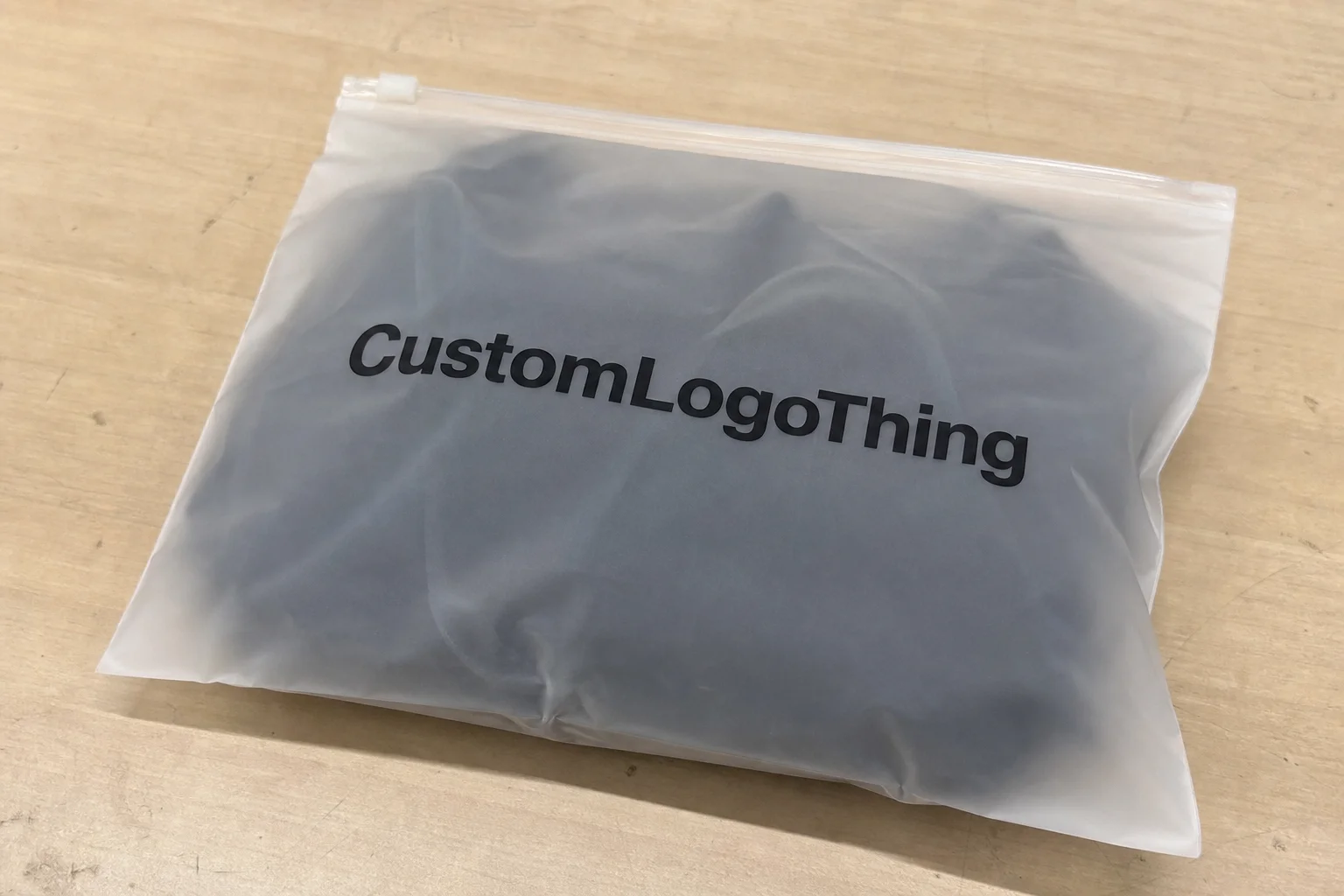
Streetwear packaging works best when it looks restrained. Frosted film has a matte-like appearance that reads as deliberate instead of loud. That matters because packaging is often the first physical proof that a label understands its own positioning.
In practice, Frosted Zipper Poly Bags are popular because they hold shape better than flimsy clear sleeves, photograph well for ecommerce, and make stacked items look tidy without adding much complexity. They suit folded tees, hoodies, crew socks, beanies, and small accessories.
But frosted is not a shortcut to premium. If the film is too thin, the bag wrinkles. If the zipper is weak, the closure feels sloppy. If the size is off, the garment swims inside the bag and loses the crisp, retail-ready look. The spec has to carry the appearance.
“A good frosted bag should disappear into the brand story. If the packaging is the first thing people notice, the spec is probably wrong.”
How the frosted film and zipper actually work
The frosted effect usually comes from polyethylene film, most commonly LDPE, LLDPE, or a blended PE structure with additives that scatter light. That light scatter is what creates the semi-transparent look. It is a material decision, not just a finish.
LDPE is softer and more flexible. It usually feels more forgiving and can be easier on price. LLDPE adds stretch resistance and improves tear performance. Blended PE sits between the two, depending on the ratio and the manufacturing setup. If a supplier cannot explain the film structure clearly, push for specifics.
The zipper matters just as much as the film. Most apparel bags use a single-track press-to-close zipper. It should close with an even snap across the length of the bag, not a weak grab in one section and a dead zone in another. Poor alignment causes gaps and a cheap feel that is easy to spot.
Thickness changes the experience. A bag in the 2.5 to 3 mil range is usually light enough for tees and socks. Step up to 4 to 6 mil and you get more body, better puncture resistance, and a bag that stands up better on a shelf. Thicker film also tends to print and label more cleanly because the surface looks flatter.
Before approving a sample, inspect it under strong light. Check for cloudiness, zipper misalignment, weak seals, static cling, odor, and thinning at the folds. If the sample smells strongly, treat that as a quality signal rather than a nuisance. Packaging should smell like very little.
For brands that also package footwear, inserts, or bundled accessories, compare frosted bags with other formats like Custom Packaging Products and Custom Poly Mailers. Different product, different risk profile.
Material comparison: clarity, strength, and feel tradeoffs
This is where the material comparison becomes practical. Two bags can look similar at a glance and still perform very differently once handled. The difference shows up in the fold, the zipper, the sound of the film, and how the bag behaves under pressure.
Thin frosted PE is cheaper and lighter. It works when you need basic protection and a clean retail look without adding much packaging cost. Thicker frosted PE costs more, but it feels more premium and resists tearing better. A 3 mil bag and a 5 mil bag do not send the same message.
| Material / Build | Typical Feel | Strength | Best For | Cost Impact |
|---|---|---|---|---|
| LDPE frosted film | Soft, flexible, easy to fold | Moderate | Light tees, socks, accessories | Lower |
| LLDPE frosted film | Slightly firmer, stretchier | Higher tear resistance | Heavier knits, stacked items | Mid to higher |
| Blended PE frosted film | Balanced hand-feel | Depends on blend ratio | Retail packaging with moderate handling | Mid |
| Thicker gauge frosted PE | Stiffer, more structured | Best overall durability | Premium presentation, heavier garments | Higher |
LDPE is usually enough for lightweight garments and tighter budgets. LLDPE or a blended film makes more sense when the item is heavier, the packaging gets handled a lot, or you need more stretch resistance during shipping. If the bag has to survive warehouse packing, retail shelving, and repeated customer handling, stronger film reduces damage risk.
There is also a visual tradeoff between softness and stiffness. Softer bags look refined, but they can collapse more easily. Stiffer bags hold shape better and photograph better, especially for ecommerce listings and lookbooks. If your brand leans minimal and clean, a medium-stiff frosted bag often lands in the right place.
On the sustainability side, keep expectations realistic. Mono-material PE is generally easier to position than mixed-plastic structures, and recycled content can help if your supplier can verify it. Do not confuse that with biodegradable packaging. Most frosted zipper bags are not biodegradable. If sustainability claims matter, verify them against local standards rather than assuming a supplier phrase is enough. For baseline recycling context, the EPA recycling basics page is useful, though local rules still matter more.
For product fit, lighter cotton tees usually work fine in lower-gauge frosted bags. Folded denim, hoodies, and two-piece sets benefit from thicker film and more room in the gusset. Small accessories like caps, scarves, and beanies usually need less width but still benefit from a zipper closure that feels firm instead of floppy.
| Product Type | Recommended Film Range | Bag Behavior to Watch | Notes |
|---|---|---|---|
| Lightweight tees | 2.5 to 3 mil | Wrinkling and bag collapse | Good for compact folding and low unit cost |
| Heavy tees and fleece | 3.5 to 4.5 mil | Puncture risk at corners | Better shelf shape and stronger zipper feel |
| Hoodies and sets | 4 to 6 mil | Stress on seams and zipper track | More structure, better for premium drops |
| Accessories | 2.5 to 4 mil | Overpacking and excess empty space | Size accuracy matters more than thickness here |
Cost, pricing, MOQ, and what changes the quote
Pricing depends on material grade, thickness, bag size, zipper style, print method, color count, and extras like euro holes, hang tabs, or custom inserts. If you want an honest quote, give the supplier a complete spec sheet. Otherwise the price will change once the actual details show up.
Small sample runs cost more per unit. Larger runs lower the per-unit price. A small custom order can land around $0.25 to $0.60 per unit, while larger runs may come in around $0.12 to $0.28. Thicker film, multi-color printing, and custom dimensions all push the number up.
MOQ matters too. Stock-size frosted bags may be flexible, especially if you are only adding labels or hang tags. Fully custom dimensions, custom zipper color, or printed logos usually require higher minimums because the factory needs tooling, material setup, and print preparation. If someone offers full customization in a tiny quantity at stock pricing, check what is missing.
| Spec Choice | Unit Cost Pressure | Best For | Watch Out For |
|---|---|---|---|
| Stock-size, unprinted | Lowest | Fast replenishment, demand testing | Limited branding impact |
| Custom size, no print | Mid | Better fit, cleaner presentation | Setup fee or tool adjustment |
| Custom size with logo print | Higher | Retail branding | Proof approval and color matching |
| Thicker film plus print plus extras | Highest | Premium streetwear drops | Margin erosion if over-specified |
Margin is the real issue. A better-looking bag can support stronger brand perception and make the product feel worth the price, but overbuilding the packaging eats into profit quickly. There is no reason to pay for a 6 mil bag when a 4 mil bag already does the job.
Process and timeline: from sample approval to delivery
Most custom packaging runs follow the same path: spec confirmation, artwork setup, sample or proof review, material sourcing, manufacturing, inspection, and packing. The steps are simple. The delays are not.
Timeline depends on whether you are buying stock-size frosted bags or going fully custom. Stock items move faster because the material and size are already established. Custom film, custom dimensions, or printed logos add time. A clean order can take roughly 12 to 15 business days after proof approval, but that can stretch if artwork arrives late or the zipper style needs special sourcing. Shipping adds its own layer on top.
Most delays are predictable: vague size specs, changes after proof approval, color matching back and forth, and slow responses during sampling. If you want fewer surprises, lock the dimensions first and check fit with a physical sample if possible. Then approve the final spec.
For brands planning a drop, build buffer time into the schedule. Packaging should arrive before the garments do, not after. Otherwise the packing line becomes a waiting room.
How to choose the right bag for your product line
Start with the product, not the packaging trend. Measure the folded garment first, then think about weight, presentation, shipping, and budget per unit. That sequence prevents the classic mistake of choosing a beautiful bag that does not fit once the folds are set.
A good rule: measure the folded thickness of the item and choose a bag that leaves enough room for easy insertion and a clean zipper close. If the garment is stuffed in, the bag looks stressed. If it has too much empty space, it looks cheap. The sweet spot is usually a little wider than brands expect.
Matching material to use case is straightforward. Basic cotton tees can use a lighter film. Heavier knits, layered sets, and folded denim need stronger, thicker film. If the bag will be handled repeatedly in retail, choose a zipper with a firmer closure and film that resists scuffing.
Branding fit matters too. Some labels want only a clean logo or a subtle label. Others want direct print, bold graphics, or a hang tag outside the bag. Frosted surfaces usually support restrained branding better than loud full-coverage art. If the garment already has a lot going on, the bag should calm it down, not compete with it. For extra branding elements, Custom Labels & Tags often do more work than adding more print to the bag itself.
If you are unsure, test three options side by side:
- A thinner, lower-cost sample.
- A mid-gauge option with better structure.
- A thicker premium sample with your logo or label treatment.
Then compare them in real lighting, not under perfect studio conditions. A bag that looks great on a white table can look flat under retail lights or in a warehouse. Packaging has a way of exposing wishful thinking.
For broader supply planning, it can also help to compare the frosted bag against recycled mailers, FSC certified paper packaging, or corrugated cardboard shippers if the item needs more protection. Different jobs, different materials. That is competent buying.
Common mistakes that make frosted bags look cheap
The first mistake is choosing the thinnest film just to save a few cents. That often leads to wrinkling, splitting, and a bag that feels flimsy in hand. Saving $0.02 per unit sounds smart until the packaging makes a $60 hoodie look like it came from a discount bin.
The second mistake is bad sizing. Oversized bags let the product slide around. Undersized bags deform the zipper and make the presentation look forced. Both problems are easy to avoid if the folded dimensions are measured correctly before ordering.
Logo placement can also ruin a good bag. Crowded print, poor spacing, or a logo too close to a zipper or edge seal makes the surface look messy. Streetwear brands usually do best with simple placement and enough negative space to let the frosted film do its job.
Another common mistake is ordering before checking zipper strength. Open and close the sample repeatedly. That is basic quality control, not overkill. The same goes for skipping sample approval. If you do not test it, you are guessing.
Finally, do not ignore storage and handling. Heat, pressure, and sharp garment components can damage softer bags before they are even used. Keep cartons flat, dry, and away from heavy stacking.
Next steps for ordering the right frosted bag spec
If you want the right bag, make the request easy to quote. Put together a spec sheet with product size, folded dimensions, desired bag thickness, zipper type, print needs, and order quantity. The more complete the spec, the better the pricing and the less back-and-forth you will waste on email.
Ask for two or three material samples so you can compare clarity, stiffness, zipper feel, and overall presentation in real lighting. Then request a matched quote that includes freight and any tooling or print setup fees. Otherwise the numbers are not comparable.
Before final approval, check the sample for fit, closure, and shelf impact. If the bag is for launch inventory, leave buffer time. Packaging arriving early is boring. Packaging arriving late is a problem.
For streetwear brands that want packaging to support the product instead of distracting from it, the buying decision should be built around the garment, the material spec, and the handling conditions. Pick the film, zipper, and thickness that match the product, budget, and brand image.
What material is best for frosted zipper poly bags for streetwear labels?
LDPE works well for lighter garments and tighter budgets. LLDPE or blended PE is better when you want more stretch resistance and a sturdier feel. The right choice depends on product weight, presentation goals, and shipping conditions.
How thick should frosted zipper poly bags be for apparel?
Light apparel often works in a lower-gauge bag, while heavier or stacked items need thicker film. A thicker bag feels more premium and resists tearing better. The right thickness depends on whether the bag is for retail display, shipping, or both.
Are frosted zipper poly bags more expensive than clear bags?
Usually yes, because the frosted finish and more premium look can add material or processing cost. Final price depends on thickness, size, print method, and order quantity. Bigger orders typically lower unit cost, while custom specs raise it.
What is the typical turnaround for custom frosted zipper poly bags?
Turnaround depends on whether you are ordering stock-size bags or fully custom specs. Artwork approvals, sample requests, and material sourcing can add time. Build in buffer time before your product launch so packaging does not become the bottleneck.
Can frosted zipper poly bags be customized with logos for streetwear?
Yes, they can be customized with printed logos, labels, or hang tags. Print method depends on film type, budget, and how bold you want the branding to look. Testing a sample is the safest way to confirm logo visibility on the frosted surface.


