Buyer Fit Snapshot
| Best fit | Poly Mailers for Ecommerce projects where brand print, material claims, artwork control, MOQ, and repeat-order consistency need to be specified before quoting. |
|---|---|
| Quote inputs | Share finished size, material target, print colors, finish, packing count, annual reorder estimate, ship-to region, and any compliance wording. |
| Proofing check | Approve dieline scale, logo placement, barcode or warning zones, color tolerance, closure strength, and carton packing before bulk production. |
| Main risk | Vague material claims, crowded artwork, missing packing details, or unclear freight terms can make a low unit price expensive after revisions. |
Fast answer: Poly Mailers for Ecommerce: Spec Review should be specified like a repeatable production item. The safest quote records material, print method, finish, artwork proof, packing count, and reorder notes in one written spec.
Production checks before approval
Compare the actual filled-product size with the drawing, then confirm tolerance on folds, seals, hang holes, label areas, and retail display edges. Reserve space for logos, QR codes, warning copy, and material claims before decorative graphics fill the panel.
Quote comparison points
Review material grade, print process, finish, sampling route, tooling charges, carton quantity, and freight assumptions side by side. A quote is only useful when the supplier can repeat the same color, closure quality, and packing count on the next order.
If you are trying to figure out how to choose poly mailers for ecommerce, the first thing I’d tell you is this: a surprising number of shipping problems start with the mailer, not the carrier. I’ve stood on packing lines in Los Angeles, Dallas, and Hangzhou where the “wrong” bag size created more wrinkled, crushed, and repacked orders than any forklift mishap ever did, and the fix was usually far simpler than people expected.
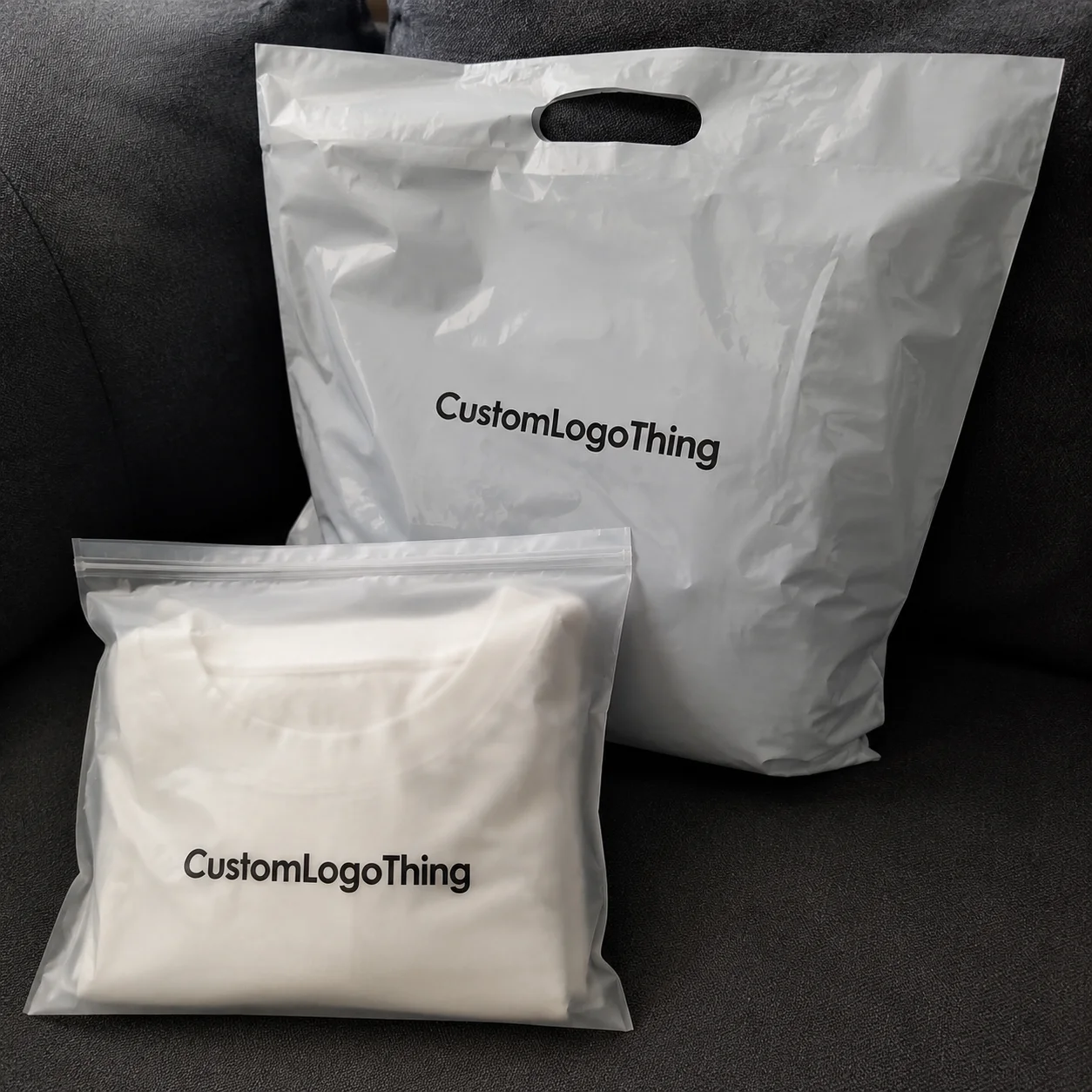
Poly mailers are Lightweight Shipping Bags made from polyethylene film, and they sit in that sweet spot between a cardboard box and a plain envelope. When you know how to choose poly mailers for ecommerce, you can protect soft goods, keep packing labor under control, and still make the package feel intentional when it lands on a customer’s doorstep. A standard stock mailer might cost $0.06 to $0.14 per unit at 5,000 pieces, while a custom printed version can run $0.12 to $0.30 per unit depending on film gauge, size, and color count.
Honestly, I think a lot of brands treat mailers like a commodity until returns start creeping up or warehouse staff start complaining that the bags are splitting at the seams. I remember one buyer telling me, with complete confidence, that “a bag is a bag.” Two weeks later, the warehouse was buried in repacks and somebody had to explain why the “cheap” option was quietly eating the margin; the spreadsheet looked like a crime scene. This guide walks through protection, branding, cost, and fulfillment speed in a way that reflects what I’ve seen on factory floors in Guangdong, in supplier negotiations in New Jersey, and in those frank client meetings where the numbers finally get everyone’s attention.
How to Choose Poly Mailers for Ecommerce: What Most Brands Miss
The biggest misconception I hear is that damage comes mainly from rough carrier handling. Sure, carriers can be hard on parcels, but in my experience, many shipping issues begin with a mailer that is too large, too thin, or simply the wrong structure for the product. A hoodie sliding around inside an oversized 14 x 19 inch bag can arrive looking sloppy, and a soft cotton tee stuffed into a bag with a weak seal can open during transit with very little pressure. On one apparel project in Atlanta, switching from a 14 x 19 inch mailer to a 12 x 15.5 inch size cut packing slack by almost 30%.
That’s why how to choose poly mailers for ecommerce is not just a purchasing question; it’s a packaging decision that affects returns, customer perception, and labor on the fulfillment line. A good poly mailer should fit the product cleanly, keep the item contained, and help a packer move quickly without fiddling with tape or second-guessing the seal. A properly sized mailer can also reduce shipping weight by 0.5 to 1.5 ounces compared with a small carton, which matters fast when postage is priced in thin margins.
When I was visiting a fulfillment center in southern California, the operations manager showed me three stacks of returned orders from the same apparel brand. The issue was not the carrier route. The real problem was oversized mailers that let garments shift and crease badly, which pushed customers to file “damaged on arrival” claims even though the products themselves were fine. That one change in packaging specification added repacking labor on nearly every return, and the team estimated an extra 18 to 25 minutes per 100 orders just from re-folding and re-labeling.
Poly mailers are especially useful for lightweight apparel, socks, scarves, books under a certain weight, and other non-fragile items. They are not magic shields. If you are shipping rigid boxes, glass, cosmetics in jars, or anything with corners that can poke through a thin film, you may need inserts, padding, or a different outer pack altogether. A mailer can do a lot, but it cannot turn a fragile product into a rugged one; a 1.5 mil film is not a substitute for a 32 ECT corrugated box when the product has hard edges.
Set your expectations this way: this topic is about balancing protection, branding, cost, and fulfillment speed so the packaging supports the business instead of creating hidden friction. “Good enough” mailers often cost more in the long run, because they quietly increase damage claims, customer complaints, and the seconds each packer spends adjusting the bag before sealing it. In a 10,000-order month, even a 4-second delay per package can add more than 11 labor hours.
“The cheapest mailer I ever signed off on became the most expensive line item once we counted rework, label reprints, and damaged returns.” — a warehouse director I worked with during a sourcing review
If your team is comparing options right now, I usually suggest looking at your actual order mix first, then matching the mailer to the product rather than choosing the lowest quoted price. That mindset is the foundation of how to choose poly mailers for ecommerce in a way that holds up after the first 5,000 shipments. It also keeps you from buying a size that saves $0.01 per unit but adds 2 seconds of manual adjustment at the pack station.
How Poly Mailers Work in the Ecommerce Shipping Process
Poly mailers are built from polyethylene film, usually sealed along the edges with heat to form a pouch that resists moisture and stays lightweight. Most versions include an adhesive strip with a peel-away liner, so the packer can close the bag quickly without tape. Some designs use a coextruded film for better tear resistance, and others add a bubble layer or kraft outer layer when a customer needs more protection or a different look. A common production spec for premium paper-based packaging is 350gsm C1S artboard, while poly mailers are more often measured in mils or microns rather than paper weight.
In a basic ecommerce workflow, the product gets picked, folded or bagged, inserted into the poly mailer, sealed, labeled, and handed off to the carrier network. On a high-volume line, the difference between a mailer that seals cleanly in one motion and one that wrinkles or reopens can add hours of labor across a week. I’ve seen plants in Shenzhen and Newark both lose throughput because a low-grade adhesive forced workers to press and re-press the flap before stacking cartons for dispatch. Nothing humbles a sourcing meeting faster than a line supervisor holding up a bag and saying, “Try this one three hundred times.”
That’s why learning how to choose poly mailers for ecommerce matters so much to operations. A mailer that looks fine on paper can still slow down the actual pack-out process if the opening is too narrow, the adhesive is inconsistent, or the film is stiff enough to fight the operator’s hands. A spec that looks acceptable at 2.0 mil can still fail if the flap adhesive peels at 85°F and 70% humidity during a July shift in Houston.
Poly mailers protect well against moisture, scuffing, and basic handling abrasion. They also keep weight down, which matters because every extra ounce can affect postage, especially on lower-cost parcel programs where dimensional and actual weight thresholds matter. For soft goods, they are often more efficient than cartons because the package conforms to the item rather than forcing the item into a rigid shell. A 12 x 15.5 inch poly mailer can typically hold a folded hoodie more efficiently than a 10 x 8 x 4 inch box, while saving on both material and freight.
Where they fall short is just as important. They have limited puncture resistance compared with corrugated cartons, and they do not prevent compression damage if a product is already delicate or bulky. A stack of folded shirts can ride in a mailer nicely; a hardcover item with sharp corners may need cushioning or a box. The best packaging spec sheet spells out those boundaries so nobody guesses under pressure on a busy Friday shift.
For teams evaluating options, I often recommend reviewing the standards and testing language from the International Safe Transit Association, because even a simple mailer should be considered in terms of transit abuse, drop risk, and package integrity. The point is not to over-engineer every shipment. The point is to match the structure to the reality of the route and the product, whether that route is a same-state parcel lane or a 7-to-12 business day international air freight path.
Key Factors When You Choose Poly Mailers for Ecommerce
There are six factors I always ask clients to review before they decide how to choose poly mailers for ecommerce: size, thickness, cost, branding, sustainability, and fulfillment efficiency. If you skip any one of those, you usually end up paying for it somewhere else, either in freight, labor, or customer dissatisfaction. A sourcing quote that looks attractive at $0.11 per unit can turn into $0.16 landed once you add freight from Yiwu or Shenzhen, labels, and overage for waste.
Size and fit
The right internal dimensions matter more than most buyers realize. If the mailer is too tight, packers struggle to insert the product and may crease garments or stress the seam. If it is too loose, the item shifts, the package looks sloppy, and the customer feels like the brand was careless. I like to see actual sample fit tests with folded garment dimensions, not just a spec sheet and a confident sales pitch. For reference, a 10 x 13 inch mailer is often a better match for tees than a 14 x 19 inch bag, which can leave 2 to 3 inches of unnecessary slack on each side.
For example, a folded women’s tee might fit neatly in a 10 x 13 inch mailer, while a hoodie or two-item bundle may need 12 x 15 inches or larger. The exact numbers depend on your folding method, tissue paper, insert card, and whether you use a return label pouch or sticker. That’s why how to choose poly mailers for ecommerce should begin with product dimensions, not with a catalog page. If your packers fold to a 9 x 11 inch final bundle, a 10 x 13.5 inch mailer may be ideal; if the bundle lands at 11 x 14 inches, you need to scale up immediately.
Thickness and durability
Thickness is usually discussed in mils or microns, and while suppliers sometimes present that data in slightly different ways, the goal is the same: find enough film strength to survive shipping without making the package too heavy or too expensive. Lightweight items may be fine in a standard gauge, but heavier apparel, bundled items, or anything with zippers or buttons may need a thicker film. A 1.5 mil poly mailer can be acceptable for a single T-shirt order, while 2.5 mil or 3.0 mil is often safer for denim, hoodies, or mixed bundles.
I’ve seen 2.0 mil mailers perform beautifully for soft T-shirts and leggings, while 1.5 mil versions started failing on thicker denim bundles during corner stress tests. The trick is to ask for actual puncture and tear data when possible, then compare side by side. Price alone will not tell you whether the film will hold during a rough sortation cycle, especially if the shipment passes through multiple hubs in Chicago, Memphis, and Louisville.
Cost and pricing
Unit price matters, but it is only one part of the total landed cost. You also need to consider minimum order quantity, print setup fees, freight, storage space, and how many seconds each mailer adds or saves at the pack station. I’ve watched buyers celebrate a $0.03 lower unit price and then lose that advantage in one month because the cheaper mailer required slower packing and generated more rework. Procurement can get strangely poetic about pennies until the labor report arrives.
For reference, unprinted stock mailers may land around $0.06 to $0.14 per unit depending on size and film gauge at higher quantities, while custom printed versions often move into the $0.12 to $0.30 range or more based on color count, film Specs, and Order volume. If you need a real comparison, ask suppliers for quotes on 5,000, 10,000, and 25,000 pieces so you can see how the price curve behaves. One supplier in Ningbo quoted $0.15 per unit for 5,000 pieces on a 12 x 15.5 inch 2.5 mil mailer, then dropped to $0.09 at 25,000 pieces. This is one of the most practical parts of how to choose poly mailers for ecommerce because the “cheap” option is not always the lowest-cost option.
| Mailer Option | Typical Use | Approx. Unit Price Range | Strength / Brand Value |
|---|---|---|---|
| Plain stock poly mailer | Basic apparel orders, low branding needs | $0.06–$0.14 | Good for cost control, limited brand presence |
| Custom printed poly mailer | Branded ecommerce shipments, repeat customers | $0.12–$0.30+ | Stronger brand impression, higher setup complexity |
| Bubble poly mailer | Soft goods needing extra cushioning | $0.10–$0.26 | Better protection, slightly higher freight weight |
| Kraft poly mailer | Premium presentation, eco-forward positioning | $0.14–$0.32 | More tactile feel, often better perceived value |
Branding and print quality
Printing is not just decoration. A sharp logo, consistent color, and clean alignment tell the customer your brand pays attention to detail. Matte finishes often feel more premium in hand, while gloss can make colors pop more brightly under warehouse lighting or at the doorstep. If your artwork includes fine text or thin lines, ask for a print proof and check legibility at arm’s length, because what looks great on a monitor can blur on film. A one-color logo printed on a 2.0 mil white mailer usually holds better than a six-color gradient on thin translucent film.
At one supplier meeting in South China, a client insisted on full-color artwork with six gradients on a thin mailer. The sample looked handsome, but the opacity was off and the palette shifted in transit from proof to production. We changed to a simpler two-color layout on a thicker film, and the final result actually looked more expensive because it printed cleaner and held registration better. That lesson still comes up every time someone asks how to choose poly mailers for ecommerce with branding in mind. In many cases, a clean two-spot-color print in Shenzhen or Dongguan will outperform a flashy full-bleed design that costs 18% more and reads worse at the door.
Sustainability and material options
Buyers ask about sustainability more than they used to, and rightly so, but the claims have to be accurate. Some mailers use recycled content, some are recyclable in specific store drop-off streams, and some are designed to reduce material usage overall. The details matter. A package cannot be called recyclable just because it is made from plastic; the collection and recovery pathway has to exist where your customers live. A mailer with 30% post-consumer recycled content made in Texas is not automatically greener than one with thinner virgin film from Jiangsu if the total material use drops by 20% and freight is lower.
For background on materials and packaging recovery, the EPA recycling resources are a solid reference point. If you are using FSC-certified paper components in a hybrid mailer or a printed insert, you can also review FSC certification information for chain-of-custody basics. I always tell clients to avoid green language they cannot support with documentation, because one vague environmental claim can create more trust issues than it solves. If the supplier cannot supply a certificate, test report, or written material declaration within 48 hours, assume the claim is still unverified.
Fulfillment efficiency
Speed on the line is a real cost. A mailer that opens easily, lays flat, and seals with one clean press can save seconds on every order. Multiply that by 800 cartons a day and you start to see why I’m so picky about adhesive strips and film stiffness. In one Midwest distribution center, we changed a mailer with a sticky flap and poor release liner for a slightly thicker, better-engineered bag, and the packers shaved just under 11 seconds per order from the process. That was enough to reduce overtime during peak weeks and cut one Saturday shift in half during the December rush.
When you are learning how to choose poly mailers for ecommerce, ask your warehouse team what actually slows them down. They usually know within two minutes which bags wrinkle, which ones stick together, and which sizes are annoying to fold. Their feedback is often more useful than a product brochure, especially if they can tell you that a 13 x 16 inch bag causes fewer jams than a 12 x 15 inch option on your current label printer setup.
How to Choose Poly Mailers for Ecommerce: Step-by-Step
Here is the method I recommend when clients ask me how to choose poly mailers for ecommerce without getting buried in options. It is practical, and it works whether you ship 300 orders a month or 30,000. A good supplier should be able to turn a quote into a proof in 2 to 4 business days and move from proof approval to production in about 12 to 15 business days for a standard custom run.
- List your most common products. Write down the top 10 SKUs, including folded size, weight, and whether they include inserts, tags, or protective tissue. A 6-ounce tee and a 24-ounce hoodie do not belong in the same mailer spec. If you ship women’s tops in 9 x 11 inch bundles and hoodies in 11 x 14 inch bundles, those should be treated as separate packaging profiles.
- Measure real packed dimensions. Do not guess from flat garment sizes. Fold the product the way your team actually packs it, then measure the final bundle with a ruler or caliper. I like to see dimensions taken after the item has sat for 10 minutes, because some fabrics relax and expand slightly. A knit shirt can grow by 0.25 to 0.5 inch after handling, which is enough to change the ideal mailer size.
- Choose a protection level. Decide whether you need basic shipping protection, added puncture resistance, or extra cushioning from a bubble layer. This depends on the route, the carrier, and the damage history of similar products. If your parcels travel through humid Florida sort centers or long-haul winter lanes in Minnesota, the seal and film choice may need to be stronger than you first expected.
- Estimate monthly volume. Volume changes the pricing bracket, the print method, and the MOQ you can tolerate. A brand shipping 3,000 units a month has different sourcing options than one shipping 50,000. At 5,000 pieces, a custom print might be $0.15 per unit; at 20,000 pieces, the same item could drop closer to $0.08 or $0.09 depending on artwork and film.
- Request samples and test them. Run the sample through the real workflow: pick, pack, seal, label, stack, and ship. Test seal strength, tear resistance, and whether the label sticks properly to the surface finish. I also like a simple drop test from 24 inches onto a concrete floor, repeated three times, because that is closer to reality than a glossy sample sheet.
- Confirm lead times. A normal quote should tell you artwork approval time, sampling time, production time, and freight time. If a supplier cannot explain those pieces clearly, that is a warning sign. For a Shenzhen factory shipping by sea to Los Angeles, the full timeline may run 12 to 15 business days after proof approval, plus 14 to 22 days in ocean transit.
I once worked with a subscription apparel brand that kept replacing mailers every quarter because the buyer was chasing a lower quote. Their team never standardized a test method, so each new supplier changed the film, adhesive, or size slightly. Once we created a real spec sheet and a simple acceptance test, they stopped reordering by instinct and started ordering with confidence. That is the cleanest answer I can give for how to choose poly mailers for ecommerce: test first, then standardize. Their final spec ended up at 12 x 15.5 inches, 2.5 mil film, and a matte finish that held up better than the prior glossy 1.8 mil version.
Here is a comparison I often use in sourcing conversations:
| Decision Area | What to Ask | Why It Matters |
|---|---|---|
| Mailer size | Does the product fit with less than 1 inch of unnecessary slack? | Reduces shifting, creasing, and wasted material |
| Film thickness | Will the bag resist puncture during normal sorting and delivery? | Prevents tears and seal failures |
| Print method | Will the logo stay sharp on matte or gloss film? | Affects brand presentation and readability |
| Adhesive | Does the seal hold in heat, cold, dust, and humidity? | Protects against accidental opening |
| Lead time | How long from proof approval to shipment? | Prevents stockouts and rush fees |
That kind of simple matrix keeps the conversation focused on evidence rather than opinions. It also makes it easier to compare quotes from different vendors, including those offering Custom Poly Mailers and other branded packaging formats from Custom Packaging Products. If one vendor quotes a 7-day proof cycle and another needs 3 weeks, you can see the operational difference immediately.
Common Mistakes Buyers Make with Poly Mailers
The first mistake is choosing by price alone. I know that sounds obvious, but I’ve sat in procurement calls where someone saved two cents per unit and then spent more than that on extra labor, mispacks, and customer service tickets. If you only compare unit price, you miss the hidden cost of slower packing and higher damage rates. On a 25,000-unit order, a $0.02 savings can look like $500 on paper and disappear the moment the team spends an extra 6 seconds per pack handling the flap.
The second mistake is buying oversized mailers. Oversizing creates slack, and slack creates movement. Movement leads to wrinkling, corner wear, and a package that looks cheap even when the contents are fine. It also raises shipping cost in some cases because you are sending air instead of product, which is never a smart use of freight budget. A 14 x 19 inch bag used for a 10 x 13 inch product bundle can waste both material and presentation.
A third problem is choosing too-thin film for heavier apparel or anything with hardware, zippers, or sharp edges. A lightweight bag might look fine on a sample table, but once it is filled, stacked, and dropped into a bin, weak film can split at the seam or near the flap. I’ve seen this happen during peak season, and the resulting rework line was longer than the outbound queue. Nobody enjoys the sound of a tearing mailer at 4:45 p.m. on a Friday, especially when the packers are using a 1.5 mil bag for a 22-ounce denim order.
Another mistake is ignoring adhesive performance. A seal that works in a warm showroom may fail in a humid warehouse or a cold dock area. If your facility uses chilled storage, dusty shelving, or long dwell times before pickup, test the adhesive under those conditions. That little detail often separates a decent mailer from a dependable one. In a warehouse near Minneapolis, a mailer that looked fine at 72°F failed at 41°F because the adhesive needed more pressure than the line could consistently apply.
People also skip print proofs. They approve artwork on a laptop, then discover that the logo is too dark, the background is off by a shade, or the text disappears against the film color. Print on plastic behaves differently than print on paper, so color checks matter. This is one of the easiest places to avoid embarrassment and returns from customers who care about presentation, especially if your brand uses a Pantone-matched orange or black that must stay consistent across 10,000 units.
Finally, some teams overlook process issues. A mailer can be technically correct and still be a bad fit if it stacks poorly, jams in the dispenser, or forces workers to pause and reseal orders. How to choose poly mailers for ecommerce should always include the human side of packing, because a supplier can ship a perfect spec and still miss the realities of your line if nobody tests it under pressure. A factory in Dongguan may produce a beautiful mailer, but if it arrives with a release liner that is too hard to peel on an 8-hour shift, the line will tell you immediately.
Expert Tips for Better Poly Mailer Selection
If you want a practical shortcut for how to choose poly mailers for ecommerce, build a small test matrix. Compare two sizes, two thicknesses, and one printed versus one unprinted option. That gives you a useful amount of data without turning sourcing into a research project that eats the quarter. A matrix with 8 samples can usually tell you more than 80 emails with suppliers.
Ask for landed-cost quotes instead of unit price alone. A quote that includes freight, setup, and packaging details is far easier to compare than one that hides half the cost in the back end. I’ve seen buyers lose weeks because they compared a domestic stock price to an imported custom run without realizing the freight and customs assumptions were completely different. One Shanghai supplier may quote $0.08 FOB, but the landed number in Chicago can come in closer to $0.13 once air freight and brokerage are added.
If brand image matters, prioritize print durability and color consistency over ultra-low-cost film. A crisp one-color logo on a strong, consistent bag often looks more premium than a busy design on flimsy material. The package is part of the customer’s first physical interaction with your brand, and first impressions are earned in seconds. If your logo needs a 4 mm stroke width to stay readable, do not approve a film that distorts fine lines at the edges.
Build a packaging spec sheet for operations. Include internal dimensions, film thickness, adhesive type, print artwork, approved color codes, and reorder quantity. Once that sheet exists, your team can order with less debate and fewer surprises. I’ve watched warehouse managers breathe easier the first time they see a spec they can actually trust, especially when the sheet clearly says 12 x 15.5 inches, 2.5 mil, matte white, and one-color black print.
For growing stores, plan for future SKU expansion. A mailer that works for today’s top sellers may fail once you add bulkier items or new seasonal bundles. Choose a supplier who can support reorders, art changes, and incremental size adjustments without forcing you to restart from zero each time. That flexibility is underrated, and it matters a lot when your catalog grows faster than your packaging library. A supplier in Guangzhou that can turn a revision in 3 business days is worth more than a cheaper vendor that needs 3 weeks to rework a proof.
Also, do not ignore paperwork. If a supplier claims recycled content, recyclable structure, or certified sourcing, ask for documentation. If you use FSC-labeled components or make environmental claims in your store, confirm that the wording matches the actual materials. Trust is easier to keep than to rebuild. Ask for the certificate number, issue date, and test report, and keep the file in your procurement folder with the dated sample photo.
Next Steps After You Choose Poly Mailers for Ecommerce
Once you decide how to choose poly mailers for ecommerce for your store, turn that decision into a repeatable standard. Create a one-page checklist with product size, mailer size, thickness, print finish, and seal type. Keep it short enough that your team will actually use it during a busy shipping shift. A 12-line SOP posted at the packing table is more useful than a 14-page PDF no one opens.
Then run a pilot of 20 to 50 units through your real workflow. Watch for slowdowns at folding, insertion, sealing, or labeling. If the bag catches on the printer label, sticks to itself in humid weather, or makes workers fight the flap, that is useful data. I would rather catch those issues in a pilot than after 5,000 units are already in a warehouse aisle. A 48-hour pilot in a Dallas warehouse can save you from a 3-week cleanup after launch.
After the pilot, review damage rates, return reasons, and any carrier complaints. Pay attention to the language customers use. “Arrived wrinkled” and “packaging looked cheap” may not sound like engineering terms, but they are signals about fit, film quality, and presentation. Those comments often tell you more than a generalized satisfaction survey, especially if they appear in 7 out of 100 returns.
Finalize artwork proofs carefully, approve reorder quantities, and set a reorder trigger point before stock gets tight. If you wait until the last pallet is open, you lose bargaining power and invite rush freight. A good replenishment plan keeps the packaging side calm even when sales volume jumps. For many brands, a reorder trigger at 30 days of supply is safer than waiting until 10 days and paying expedited freight from Vietnam or eastern China.
Finally, document the standard and train staff on it. A good mailer choice is only valuable if the same mailer is used consistently across orders. I’ve seen teams drift back to old habits because the approved spec lived in someone’s inbox instead of on the packing station wall. A simple printed SOP can solve that, and so can a labeled sample board with the approved 10 x 13, 12 x 15.5, and 14 x 19 sizes taped beside the scale.
If your team is still refining how to choose poly mailers for ecommerce, keep the decision rooted in tested fit, honest cost, and a realistic view of the shipping environment. That is how you avoid chasing the lowest quote and end up with the right mailer for the job, the right presentation for the customer, and the right workflow for the warehouse. It also keeps your packaging program grounded in actual numbers rather than supplier promises written in a rush.
FAQs
How do I choose poly mailers for ecommerce clothing orders?
Measure the folded garment size first, then pick a mailer that gives a little room without leaving excessive slack. For heavier apparel like hoodies, denim, or layered bundles, I’d move up to a thicker film, usually in the range that offers better tear resistance and puncture resistance. If presentation matters, printed mailers can make the order feel more intentional the moment the customer opens the mailbox. A 10 x 13 inch mailer often works for tees, while hoodies frequently need 12 x 15.5 inches or larger.
What thickness is best when I choose poly mailers for ecommerce?
Lighter items often work well with standard film, while heavier items or products with zippers, buttons, or sharper edges usually need a thicker gauge. I always recommend testing thickness against tear strength, seal reliability, and actual warehouse handling instead of assuming the lower price is enough. Ask suppliers for material specs in mils or microns and compare samples side by side under the same packing conditions. In practice, 1.5 mil may be fine for tees, while 2.5 mil or 3.0 mil is safer for heavier bundles.
Are custom printed poly mailers worth the extra cost?
They can be worth it when repeat purchases, premium presentation, or brand recognition matter to the business. The key is balancing print cost against volume, setup charges, and how often the package is seen in transit and at delivery. For newer brands, even a simple one-color print can deliver a strong branded impression without pushing costs too high. At 10,000 pieces, a custom mailer might cost $0.11 to $0.18 per unit, which can be reasonable if it reduces perceived “plain packaging” complaints.
How long does it take to order custom poly mailers?
The timeline depends on artwork approval, sample production, factory capacity, and freight method. In a typical flow, you go from quote to proofing to sampling, then manufacturing, then shipping. If you want custom colors, multiple sizes, or a new print layout, build extra time into the schedule so you are not forced into expensive rush shipping. Many factories in Shenzhen, Ningbo, or Dongguan can ship 12 to 15 business days after proof approval, but sea freight to the U.S. often adds 2 to 4 weeks.
What should I ask a supplier before I buy poly mailers for ecommerce?
Ask about film thickness, adhesive strength, minimum order quantity, lead time, freight costs, and whether the quote includes printing and setup. Request samples and confirm how the supplier handles reorders, artwork updates, and sustainability claims. A good supplier should be able to explain those details clearly without hiding behind vague language or incomplete pricing. I also recommend asking for the factory city, such as Shenzhen, Yiwu, or Ningbo, so you know where the mailers are actually being produced.