A custom boat bag has a narrow job and a hard life. It needs to survive sun, salt, spray, wet hands, sand, and being stuffed under a bench or tossed into a locker. If the spec is wrong, the bag may still look polished in a mockup and still fail on deck within a season.
That is why this purchase should be handled like a product spec, not a color decision. The best logo placement in the world does not matter if the closure leaks, the straps dig into the shoulder, or the stitching starts pulling after a few rinse cycles. Marine use exposes weak choices quickly.
The same logic applies across packaging and soft goods: define the use case first, then design around it. Function pays the bill. Decoration is the last layer, not the first one.
What a custom boat bag actually needs to do
Most boat bags fail because they were treated like casual totes and asked to behave like marine gear. That is the mismatch. A proper custom boat bag has to handle movement, moisture, abrasion, and repeated loading without giving up at the stress points. Water resistance helps, but resistance to wear matters just as much.
The job is straightforward: carry valuables, protect them from splash, and keep working after repeated use. If the bag is for a skipper, marina staff, or weekend buyers, it needs enough structure to keep its shape, enough resistance to stop incidental water exposure, and enough reinforcement that the handles do not tear out when loaded with damp gear.
A bag that looks premium and fails on the dock is not premium. It is just expensive disappointment.
Buyers often start with the logo or the color and forget the operating conditions. That is how a pretty bag gets approved and then disappoints in the field. The better sequence is less glamorous and more effective: define what gets carried, how wet it gets, how often it is opened, and whether it lives on a boat, in a car, or in a retail program.
If the bag is part of a branded merchandise line, keep the decoration disciplined. One clear logo placement, readable contrast, and a body that can take abuse will do more for the brand than four extra print locations. Marine buyers notice construction fast. They notice excuses even faster.
It also helps to be honest about the level of protection. A splash-resistant bag is not the same as a dry bag, and a dry bag is not always the best choice for fast access. The right answer depends on whether the buyer is protecting towels and clothes or keeping electronics and documents safe. Those are different jobs, and they should not be spec’d as if they were interchangeable.
Materials and construction that hold up on water
Material choice drives most of the durability story. Common bodies include PVC tarpaulin, coated polyester, nylon, and mesh accents. They are not interchangeable, and the better supplier should be able to explain the tradeoffs without hiding behind vague claims like “water-resistant.” That phrase is too broad to mean much on its own.
- PVC tarpaulin: Best for wipe-clean surfaces, splash resistance, and heavy use. It usually feels stiffer and weighs more, but it handles wet environments well.
- Coated polyester: Lighter and often cheaper. It works for lighter-duty boat use and promotional runs, but coating quality needs to be consistent if the bag will see regular moisture.
- Nylon with coating or DWR: Good hand feel and good strength, but less forgiving if the bag needs true everyday splash protection.
- Mesh accents: Useful for drainage and visibility. They belong in zones where airflow matters, not where electronics or dry clothing need protection.
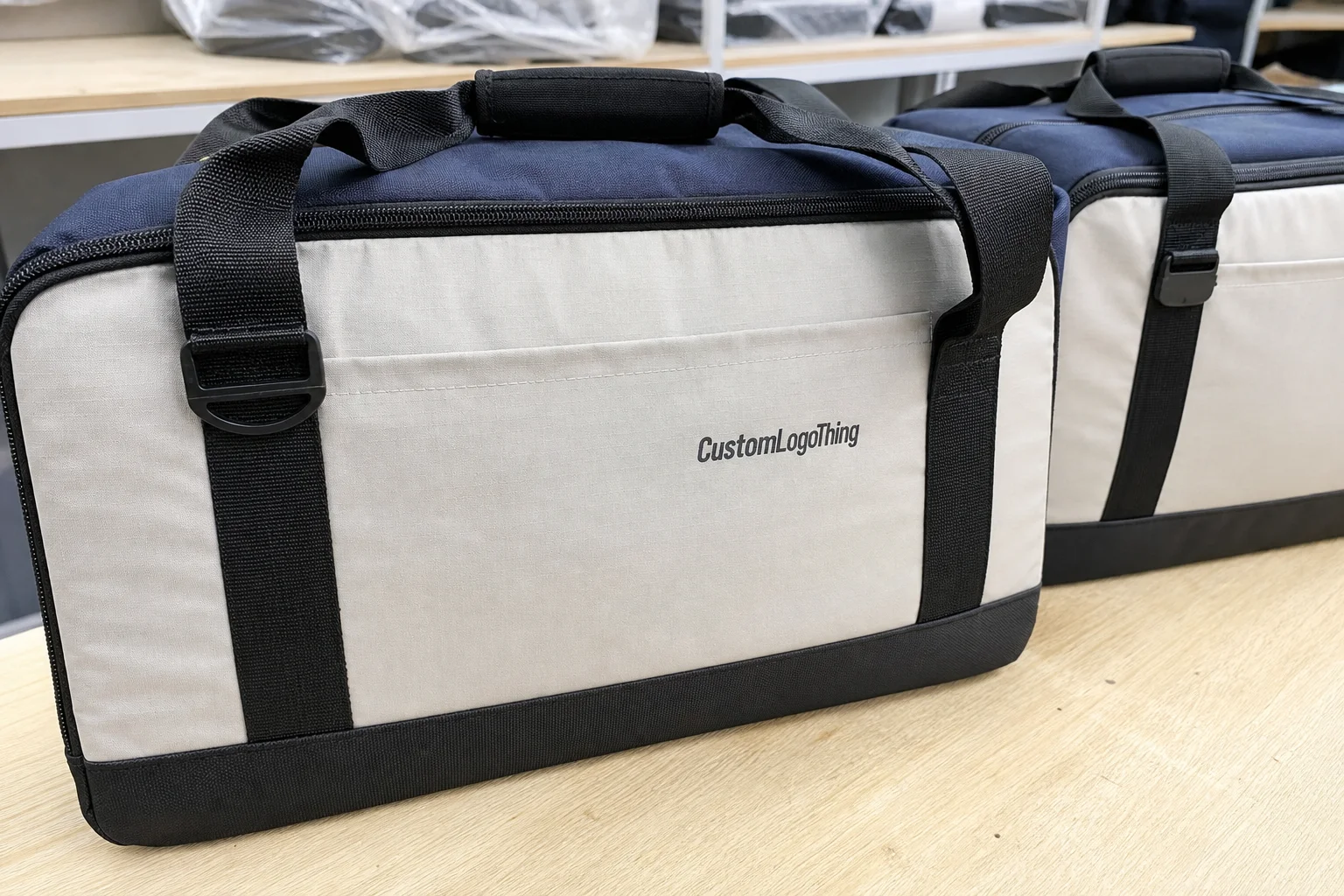
Construction matters as much as the base fabric. Stitch density, seam allowance, reinforcement patches, and bar-tacks at stress points all influence life span. If the handles meet the body on a thin seam with no reinforcement, expect trouble. Corner patches, zipper end guards, and extra material where the load lands are not decorative. They are the difference between a usable product and a return problem.
Welded seams are worth considering on PVC and similar coated materials when splash protection is a real requirement. They cost more, but they reduce needle holes and improve water resistance. Stitched bags can still perform well, but they need smart seam placement, seam tape, or other protection if the bag is going to face spray, rinse cycles, and damp gear day after day.
Closures should match the use case. A roll-top gives better protection from splash. A zipper gives faster access. Hook-and-loop and snap pockets are fine for accessories, but they do not substitute for a reliable main closure if the contents need real protection. For rough handling, use zippers with substantial pullers and proper end stops. Thin zipper tape and tiny pulls feel economical until they start failing in use.
Decoration method affects durability too. Screen print is a strong default for simple logos. Heat transfer can work for detail, but it needs abrasion and adhesion testing. Embroidery can look sharp on the right fabric, yet it can create too much stress on thin coated materials. Woven labels and sewn patches are often safer for wet-use bags because they stay readable without relying on a thick ink layer.
For volume orders, think beyond the bag itself and consider transit abuse. If the product will be packed with other goods or sent through fulfillment, look at distribution testing standards from groups such as the ISTA community. Real shipping conditions are rarely gentle, and weak corners or handles show up quickly once the cartons start moving.
Sizing, capacity, and everyday features buyers forget
Size the bag around what it will actually carry, not around a rough guess. Towels, shoes, electronics, bait, tackle, lunch gear, and spare clothing all create different volume needs. A bag for one set of dry clothes can stay compact. A family day-trip bag needs more depth and gusset width so awkward items do not force the zipper to fight back.
Capacity is only part of the story. Strap length, grip comfort, gusset shape, pocket layout, and access speed matter once the bag is loaded and damp. A bag with the right liters but poor carry geometry feels wrong immediately. Users notice that before they notice the logo.
A practical spec sheet usually covers these points:
- Main capacity range: Small personal use, medium day-use, or larger gear-hauling format.
- Carry style: Hand carry, shoulder carry, crossbody, or backpack-style straps.
- Pocket plan: One main compartment, one wet pocket, one phone pocket, or a simple open interior.
- Visibility: Bright lining, contrast zipper tape, reflective trim, or a dark interior if concealment matters more than visibility.
- Drainage: Grommets, mesh panels, or a wipe-clean floor if wet gear goes back inside.
Some details seem small until the bag is in use. Bright linings make small items easier to find. Reflective trim helps during early mornings or after sunset. Contrast hardware makes the opening easier to spot when hands are wet and the user is not interested in searching for a black zipper on a black body. That mistake happens often enough to matter.
Straps deserve close attention. If the bag carries wet towels, metal hardware, or gear with sharp edges, the handles need enough width to spread the load and enough length to sit comfortably on the shoulder. Reinforced grab handles and stitched shoulder straps are load-bearing parts, not trim. If the strap design feels awkward in a sample, it will feel worse after a week of use.
My practical rule is simple: specify the must-haves first, then cut any decorative feature that does not improve use. If the budget is tight, spend on seam strength, closure quality, and handle reinforcement before extra pockets or fancy trims. That approach usually delivers a better custom boat bag and fewer complaints later. Extra compartments are only valuable if they solve a real problem.
There is also a difference between what looks good in a presentation and what works on a wet deck. Large open pockets can trap water. Tiny zipped pockets can be useless when hands are cold or slippery. Even the most attractive layout needs to be tested against the actual behavior of the user. That is why a sample should be evaluated with some weight inside it, not just handled empty on a table.
Cost, pricing, and MOQ for a realistic order
Price is driven by a handful of predictable variables: material choice, bag size, print colors, hardware complexity, and whether the construction needs welding, heavy stitching, or both. A simple bag with one logo placement is easier to quote. A bag with multiple pockets, reinforced bases, and custom zipper pulls is a different product entirely. The quote should show that difference clearly.
Bulk orders usually lower unit cost as quantity rises, but the savings are not limitless. A more complex spec can absorb part of the discount, especially if the factory needs special setup, custom trims, or extra handling. That is why buyers should compare the full spec, not just the first number on the page.
| Spec Tier | Typical Use | Common Materials | Indicative Unit Cost | Notes |
|---|---|---|---|---|
| Promo | Giveaways, events, simple merchandise | Coated polyester, light nylon | $1.80-$3.20 | Good for basic branding; lower splash resistance. |
| Mid-range | Retail, team gear, regular weekend use | Heavier coated polyester, PVC blend | $3.25-$6.50 | Often the best balance of price, durability, and appearance. |
| Heavy-duty | Marine use, frequent exposure, rough handling | PVC tarpaulin, welded panels | $6.75-$12.00+ | Better protection and seam performance, with higher production cost. |
Those ranges are directional, not fixed. Order quantity, decoration, and hardware can move them up or down. A 500-piece run with a complex multi-color logo may cost more than a 2,000-piece run with one simple print. Manufacturing rewards repetition. Surprise is expensive.
MOQ, or minimum order quantity, usually tracks the setup burden. If the factory is cutting stock Material and Printing one color, the minimum may stay lower. If the build requires custom welding, special zipper pulls, or unique panel shapes, MOQ rises because the line needs enough volume to justify setup time. The more custom the bag, the higher the minimum tends to be.
For budget planning, think in tiers. Low-cost bags work for giveaways and promotional use. Mid-range bags suit retail or premium gifts. Higher-spec bags make sense if the item has to survive repeated use and replacement would be a recurring cost. Paying a bit more for stronger seams and better hardware often saves money over the life of the product.
When packaging is part of the project, ask for those costs separately. Unit price, setup, sampling, freight, and any secondary packaging should each be visible. That gives you a real landed number instead of a headline price that collapses once finishing and shipping are added. It also helps if the bag is part of a broader retail package or shipper program, because the numbers stay comparable instead of getting blurred together.
Process and timeline: from quote to shipment
The production flow is predictable if the brief is clean. It usually goes like this: request, spec review, artwork prep, proof or sample, approval, bulk production, inspection, and shipment. Each step can move quickly or drag, depending on how well the buyer answers basic questions the first time.
The biggest delay source is usually not the factory. It is vague input. Missing dimensions, unclear artwork, late material changes, and endless sample revisions slow everything down. If the logo file is not ready, or if the team keeps changing the closure after the first sample, the calendar slips. Production can only follow the approved spec.
A realistic schedule often looks like this:
- Brief and quote: 1-3 business days if the spec is clear.
- Sample or proof: 5-14 business days depending on complexity.
- Bulk production: 12-25 business days for straightforward runs, longer for welded or highly customized builds.
- Inspection and shipping: Add time for quality checks, export packing, and transit.
Seasonality matters. Capacity tightens before peak selling periods, holiday buying windows, and major promotions. Special components can also slow things down. If the bag needs custom hardware, custom zipper pulls, or color-matched trim, the supply chain has more points of failure. That is not drama. That is manufacturing.
Testing and packaging choices can extend the schedule too. If the bag needs distribution testing, drop testing, or packaging verification, build in more time and budget. Transit expectations should be realistic, especially for a product that may be shipped alongside hard goods. Strong product design helps, but it does not erase shipping stress.
If the order also includes labels, inserts, or outer cartons, lock those files early. Bag production and packaging production do not enjoy last-minute art changes. A simple order can be delayed by a late decision to match the inner box color to the bag. That sort of decision usually arrives right before deadline pressure peaks.
Common mistakes that create refunds, delays, or ugly bags
The first mistake is approving a sample without testing the parts that matter. Strap strength, zipper feel, and print placement should be checked under real lighting and with real loading, not just on a clean desk. A sample can look excellent and still feel wrong in use. Good sampling is about function, not surface polish.
Another common miss is under-specifying the environment. A bag used in dry dock storage is not the same thing as a bag exposed to spray, sand, and repeated rinsing. If the usage pattern is harsher than the spec, the product will look weak even if the fabric itself is decent. That gap is on the brief, not the factory.
Artwork failures are usually avoidable. The usual culprits are low-resolution logos, tiny type, overcomplicated gradients, and print placement across seams or curved panels. On a wet-use bag, simple often wins. A bold logo, enough contrast, and a clean safe area around zippers and stitch lines are usually the best choice. The eye reads that quickly, and the print lasts longer.
The cheapest quote can also be the most expensive outcome. If the bag is used hard, a low starting price may turn into replacement costs, complaints, and lost trust. Cheap is only cheap if the product survives the actual use case. Otherwise it is just a smaller invoice followed by a larger problem.
One more mistake shows up often: the branding plan starts overpowering the build. A strong logo helps, but it cannot rescue weak construction. For a custom boat bag, durability is the brand message. Decoration should support that, not compete with it. If the bag needs matching sleeves, cartons, or other packaging pieces, make sure those decisions do not hold up the core product spec.
There is also a quieter failure mode: too many optional features. Buyers sometimes try to force in wet pockets, tablet sleeves, molded feet, extra zips, and decorative piping on a bag that is supposed to be simple and washable. Each addition adds cost and another possible point of failure. The result is often heavier, slower to produce, and less practical than the original idea.
Next steps for a cleaner quote and better final spec
Start with a one-page brief. Keep it plain: intended use, target quantity, size range, must-have features, logo files, and deadline. A short brief prevents a lot of back-and-forth. It also makes supplier quotes easier to compare because everyone is pricing the same product, not slightly different interpretations of the same idea.
Ask for material options if the bag will face water, sun, or heavy daily handling. A good supplier should be able to show the tradeoff between a lighter coated fabric, a tougher PVC body, and a premium welded build. If that explanation is fuzzy, keep looking. You do not need a dramatic sales pitch. You need a clear answer.
Request a Quote that breaks out the actual cost drivers:
- Unit price by quantity
- Setup or plate charges
- Sampling or proof costs
- Shipping and packaging
- Any extras such as custom zipper pulls, woven labels, or retail packaging
That format tells you whether the supplier is competitive or just good at hiding charges. It also makes it easier to compare the bag against the rest of the presentation budget. If inserts, cartons, or labels are already part of the program, a clean quote structure keeps the numbers honest.
The final decision should match the real use case. For a promo drop, prioritize price and visual impact. For regular marine use, prioritize seam strength, closure quality, and easy cleaning. For retail, balance durability with presentation. That is the practical way to buy a custom boat bag without overpaying for features nobody uses or underbuying and then explaining a failure later.
On a good order, the bag feels straightforward in use and uneventful in production. That is the real target. No drama at sea, no drama in the sample room, and no surprises on the invoice.
What material is best for a custom boat bag?
PVC tarpaulin is usually the most forgiving for splash resistance and easy cleaning. Coated polyester is lighter and often cheaper, but it may not handle abuse as well. If the bag will live in sun and salt, prioritize UV resistance and reinforced seams over a flashy finish.
How much does a custom boat bag cost in bulk?
Pricing usually depends on size, material, print complexity, hardware, and order quantity. Simple promo bags can be relatively low per unit, while heavier-duty bags climb quickly because of construction and finishing. Ask for a quote that breaks out setup and shipping so the unit cost is not hiding the real total.
What MOQ should I expect for a custom boat bag order?
MOQ varies by factory and material, but it is often tied to how much setup the order requires. Simpler designs may allow lower MOQs, while welded or highly customized bags usually need higher quantities. If your quantity is small, ask whether stock material with custom print can bring the minimum down.
How long does production usually take?
The timeline depends on proof approval, sampling needs, material availability, and factory load. Straightforward orders move faster; complex builds or late artwork changes slow everything down. Build in extra time for shipping and approval, because deadlines get tight right when the order matters most.
Can I add a logo without reducing durability?
Yes, if the decoration method matches the material and the placement avoids high-wear zones. Screen print and woven labels are common, while embroidery can be too aggressive for some coated fabrics. A good supplier should explain how the logo method affects abrasion, water resistance, and color life.
What should I send before requesting a quote?
Send the intended use, target quantity, size range, deadline, logo files, and any must-have features like splash protection or extra pockets. If you need matching shipper cartons or other packaging pieces, include that too so the quote reflects the full project and not just the bag.