Comparing packaging for a skincare launch is rarely just about the mailer. The skincare recycled Poly Mailers Quote checklist should show material content, print build, unit cost at different volumes, and landed cost after freight. That matters because a quote that looks competitive at first can become expensive once setup, packing, and delivery are included. On a 5,000- or 10,000-piece order, even a few cents per unit changes the budget.
Skincare also creates a different risk profile than apparel or paper goods. Jars crack, pumps press through weak film, and boxed sets can shift during transit. A recycled mailer can handle that load, but only if the spec is built around the product instead of a generic size sheet. The clearer the RFQ, the less room there is for guesswork.
What a Skincare Recycled Poly Mailers Quote Checklist Should Show
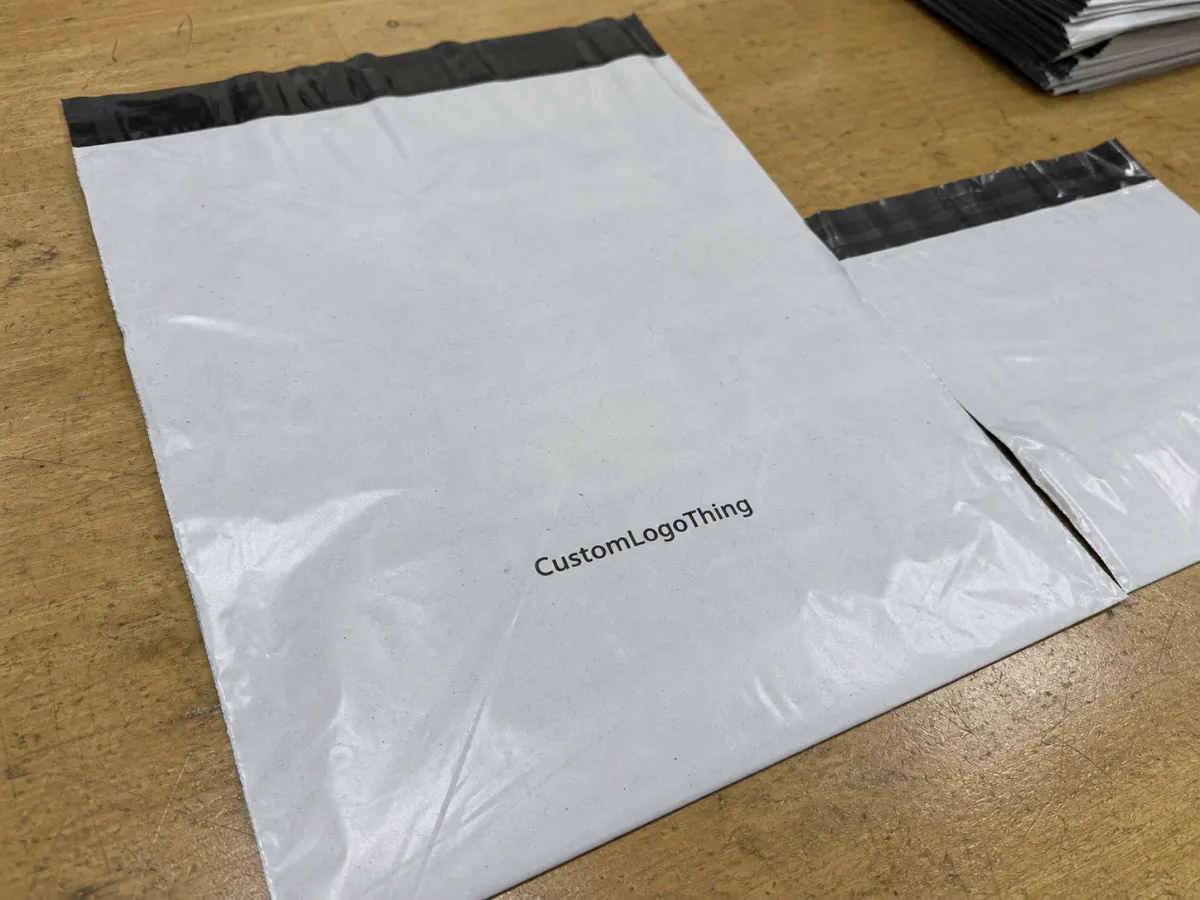
A useful quote checklist starts with line-item visibility. Ask for material, printing, packing, and freight to be separated. A single all-in price hides too much and makes it hard to tell whether the supplier included shipping, assumed simple artwork, or padded for a vague brief. If two quotes are being compared, they need to be built from the same assumptions.
The checklist should also state the end use. A mailer for a fulfillment center is not the same as one used for subscription boxes or direct-to-consumer orders. If the pack will hold flat sample kits, a lighter film may be enough. If it needs to protect glass jars, a thicker structure and better seal usually pay for themselves by reducing damage. Recycled-content targets matter too: a 30% PCR film and a 60% PCR film can look similar on paper but behave differently in opacity, odor, and consistency.
- Quantity: 2,500, 5,000, and 10,000 pieces usually sit in different cost bands.
- Size: Finished width, length, and flap allowance should be explicit.
- Material: PCR percentage, film gauge, and whether the structure is single-wall or layered.
- Destination: Ship-to zip code and delivery type affect freight more than many buyers expect.
- Use case: DTC, subscription, sample kits, or warehouse fulfillment.
That framework prevents back-and-forth and helps the supplier answer the real question: is this a stock size with print, or a custom structure that needs a production plan? If the packaging program includes inserts, labels, or cartons, it can help to review Custom Packaging Products at the same time so the outer mailer fits the rest of the pack.
Film, Size, and Closure Details Buyers Should Lock Down
Material description is where quotes often diverge. “Recycled poly mailer” is too broad to compare on its own. One supplier may quote a 2.0 mil film with modest opacity; another may price a 2.75 mil structure with better tear resistance. For skincare, the heavier option is usually safer if the contents include rigid packaging or glass.
Finished dimensions matter just as much as film gauge. Even a half-inch change can alter material yield, and yield is one of the least visible drivers of unit price. Flap length should be specified too, along with the closure style: standard self-seal, peel-and-seal, or tamper-evident. Adhesives do not all behave the same, and weak seals become a real issue in humid pack rooms or fast fulfillment shifts.
If the product line includes pumps, jars, or boxed sets, say so in the RFQ. A soft pouch and a rigid retail box stress a mailer in different places. Sharp corners may need more room to avoid seam pressure, while flat sample sets can tolerate a tighter fit. The supplier should also be able to confirm whether the exterior should be semi-opaque, fully opaque, matte, or low-gloss, since that affects both appearance and wear visibility.
A lower price is not a better buy if the film gauge, closure style, or finished size is different. Compare the structure first, then the number.
For most custom runs, buyers will see PCR content in the 30% to 60% range, with film gauges often landing around 2.5 to 3.0 mil. Those are not fixed rules. Resin access, opacity, print coverage, and production method all change the final build. The goal is not to chase an arbitrary recycled-content figure; it is to align the material with the product and the shipping lane.
Print Coverage and Tolerance Specs That Change Fit
Print has a bigger effect on price than many first-time buyers expect. A simple one-color logo in the corner is one job. A full-bleed layout that runs close to the seal is another. Flood coverage requires more ink, more setup attention, and more waste during press adjustment. If artwork wraps edge to edge or uses multiple spot colors, ask the supplier to price it as a full print job.
Artwork detail should never be vague. Include file type, number of colors, whether the design is line art or photographic, and the intended finish. Matte, satin, and low-gloss surfaces all change how a logo reads under warehouse lighting, and recycled films may need a white underprint to keep darker bases legible. That is a production issue, not just a brand preference.
Tolerance specs deserve attention as well. Ask for both dimensional tolerance and registration tolerance. A mailer may technically meet size spec while still looking off if the art sits too close to the fold or seal. In skincare, presentation often carries more weight than in commodity shipping, so a pre-production proof or clear sample photos usually reveal more than a polished quote.
For transit testing, the ISTA methods are a useful frame of reference. ASTM film standards can help set expectations for tensile and puncture performance. An RFQ does not need to become a lab report, but a little precision keeps everyone accountable.
Pricing, MOQ, and Unit Cost Breakpoints
Price should be checked at multiple order sizes. A 2,500-piece quote often looks fine until you compare it with 5,000 or 10,000 pieces and see where the setup cost gets diluted. The better question is not “What is the price?” but “At what quantity does the price become efficient enough for the launch or replenishment cycle?”
Ask for MOQ, sample charges, setup fees, and freight separately. Custom recycled mailers can carry plate costs, print calibration, or artwork prep fees depending on the printing method. Freight is another frequent blind spot. A quote can appear strong until pallet shipping, residential delivery, or liftgate service is added. Those charges can move the landed unit cost more than the product line itself.
| Order Size | Typical Unit Price Range | Common Cost Drivers | Best For |
|---|---|---|---|
| 2,500 pcs | $0.24-$0.40 | Higher setup share, smaller yield, carton packing | Launch tests, short runs |
| 5,000 pcs | $0.18-$0.30 | Balanced setup cost, standard print coverage | Early scaling, replenishment orders |
| 10,000 pcs | $0.14-$0.24 | Better material efficiency, lower per-unit setup share | Established DTC volume |
These are working ranges, not guarantees. They help spot numbers that are too low to be believable or high enough to suggest hidden friction. A good procurement review also checks carton count and pallet configuration. Finance cannot model storage, receiving, or freight properly without those details, and a low per-unit price with poor carton efficiency can still be the expensive option.
Process and Timeline From RFQ to Delivery
Production timing starts after proof approval, not after the first email. A supplier may quote 12 to 15 business days after approval for a simple custom run, but that only covers manufacturing. It does not include proofing, comments, or freight.
Ask the supplier to split the schedule into proof time, production time, and transit time. That makes the critical path visible. If a brand is working to a launch date, the ship-to address, receiving hours, and dock rules should be included in the RFQ. Small logistics details affect pallet labeling and carrier choice, and a truck arriving at the wrong time can delay an order more than a design revision.
It also helps to ask about partial shipments if the launch calendar is tight. Some brands need enough mailers to cover the first release while the balance finishes production. Not every supplier can split the shipment without affecting pricing, but the question is worth asking before approval. If the mailer needs to match an existing format, compare it against Custom Poly Mailers to see whether the project is truly custom or a branded variation on a standard structure.
Testing, Compliance, and Recycled Content Proof
Recycled content should be documented, not just claimed. Ask for a material declaration, specification sheet, or test summary that shows what recycled content is being used and how it is controlled from run to run. Buyers in skincare usually care about more than a sustainability label. They want consistency in color, opacity, and seal performance, especially if a mailer will be reordered across multiple production cycles.
For shipping performance, focus on seal integrity, puncture resistance, and rub resistance. A mailer can look fine on arrival and still split at the seam if the adhesive is weak or the film is too slick for the chosen closure. Scuffing is another common issue. Dark recycled films can show handling marks differently than virgin film, so the buyer should know what wear is normal and what counts as a defect.
If the brand plans to print sustainability language on the mailer, confirm exactly what claims are supportable. Some suppliers are comfortable stating recycled content by percentage. Fewer are comfortable backing broader environmental language unless the documentation is clear. The EPA has a useful overview of recycled materials and waste streams at epa.gov/recycle, which can help keep internal discussions grounded in standard terminology.
One practical check is contrast. Ask whether the supplier has a minimum contrast recommendation for darker recycled films. A logo that is technically printed well can still disappear visually if the underprint is weak or the color choice is too close to the film base. That is a common miss in recycled packaging, and it usually surfaces only after the first production sample arrives.
How to Evaluate Supplier Support and Quote Clarity
The strongest suppliers explain how they got to the number. A good quote should identify the material grade, print method, carton pack, freight assumption, and any sourcing limits tied to recycled resin. If the answer is clear, packaging, procurement, and operations can work from the same expectations. If it is not, the order is likely to create avoidable questions later.
Support before the order matters too. If the supplier can help with sizing guidance, artwork checks, and sample validation, the odds of a reprint fall. This matters most when the mailer needs to pass through a fulfillment center with dimensional restrictions or protect products with sharp edges, heavy glass, or awkward geometry. A few minutes spent checking fit usually costs less than a second production run.
One question cuts through a lot of noise: what assumptions are built into the price, and what changes the rate? A supplier that can answer directly is usually quoting a real production plan. A supplier that answers in broad generalities is probably leaving room for surprises. The best quotes read like a purchase decision, not a teaser.
If a quote cannot explain itself, it is not ready for approval. Buyers should not have to reverse-engineer a packaging spec from one line on a PDF.
That same clarity should extend to samples. Ask whether the sample is plain stock, a printed proof, or a pre-production unit. Each one tells you something different. A plain sample helps with fit. A printed proof shows contrast and logo placement. A pre-production sample is the closest version to the final order, and it is usually the safest basis for sign-off.
Next Steps for a Skincare Recycled Poly Mailers RFQ
The cleanest RFQs are usually the shortest ones that still contain the right facts. Send the finished size, quantity, recycled-content target, print colors, seal preference, and ship-to location in one message. Add the end use as well: DTC orders, subscription kits, sample shipments, or fulfillment center packing. That context helps the supplier quote something usable on the first pass instead of a number built on assumptions.
If you are unsure about the best size, include a photo of the product in its current packaging and the exact dimensions of the item or carton. That gives the supplier something real to work from. Better sizing often saves money in two directions at once: less wasted film and fewer upsized packs later in the process. A mailer that fits properly also tends to close more reliably.
Before approval, check tiered pricing, sample availability, estimated lead time, and freight assumptions against the same skincare Recycled Poly Mailers Quote checklist. That is the fastest way to keep procurement, brand, and operations aligned. If the quote still feels thin, ask for a revised version with the assumptions spelled out plainly. A better spec now usually means fewer problems at receiving, fewer packing mistakes, and fewer budget surprises when the invoice arrives.
For brands building a larger packaging system, the mailer should be treated as one component of the full pack, not an isolated purchase. The right structure, print detail, and delivery plan tend to save more money over time than chasing the lowest initial line item.
Frequently Asked Questions
What should I include in a skincare recycled poly mailers quote request?
Include finished size, quantity, recycled-content target, print colors, seal style, and ship-to location. Add artwork files or a mockup so the supplier can confirm coverage, print complexity, and placement. It also helps to say whether the mailers are for DTC orders, subscription packs, or a fulfillment center, because those use cases place different demands on the film and closure.
How does recycled content change skincare mailer pricing and MOQ?
Higher recycled-content targets can raise cost if the resin blend is less common or needs tighter sourcing controls. MOQ can also increase when the size, color, or finish is unusual, because the supplier has to run the job in a way that keeps waste manageable. Pricing at several quantities is the quickest way to see whether a higher order size pays for itself.
Which print details affect a recycled poly mailer quote the most?
The number of colors, full-bleed coverage, and artwork registration have the biggest effect on setup and waste. Dark films, metallic inks, and edge-to-edge art usually require more proofing and can move the price up. A supplier should also confirm that the logo remains readable after sealing, folding, and handling in transit.
What is a realistic lead time for custom skincare recycled poly mailers?
Lead time usually starts after proof approval, not after the first quote request. Simple builds move faster, while larger runs, complex print, or tighter recycled-content targets can extend the schedule. Ask for proof time, production time, and freight time separately so the delivery date is realistic enough for launch planning.
Can I get samples before placing a bulk order?
Yes, and for skincare packaging it is smart to sample the size, seal, and print before committing to volume. Ask whether the sample is plain stock, a printed proof, or a pre-production sample, because each one serves a different purpose. Test it with the actual product and under the lighting conditions your team will see in the warehouse or retail environment.