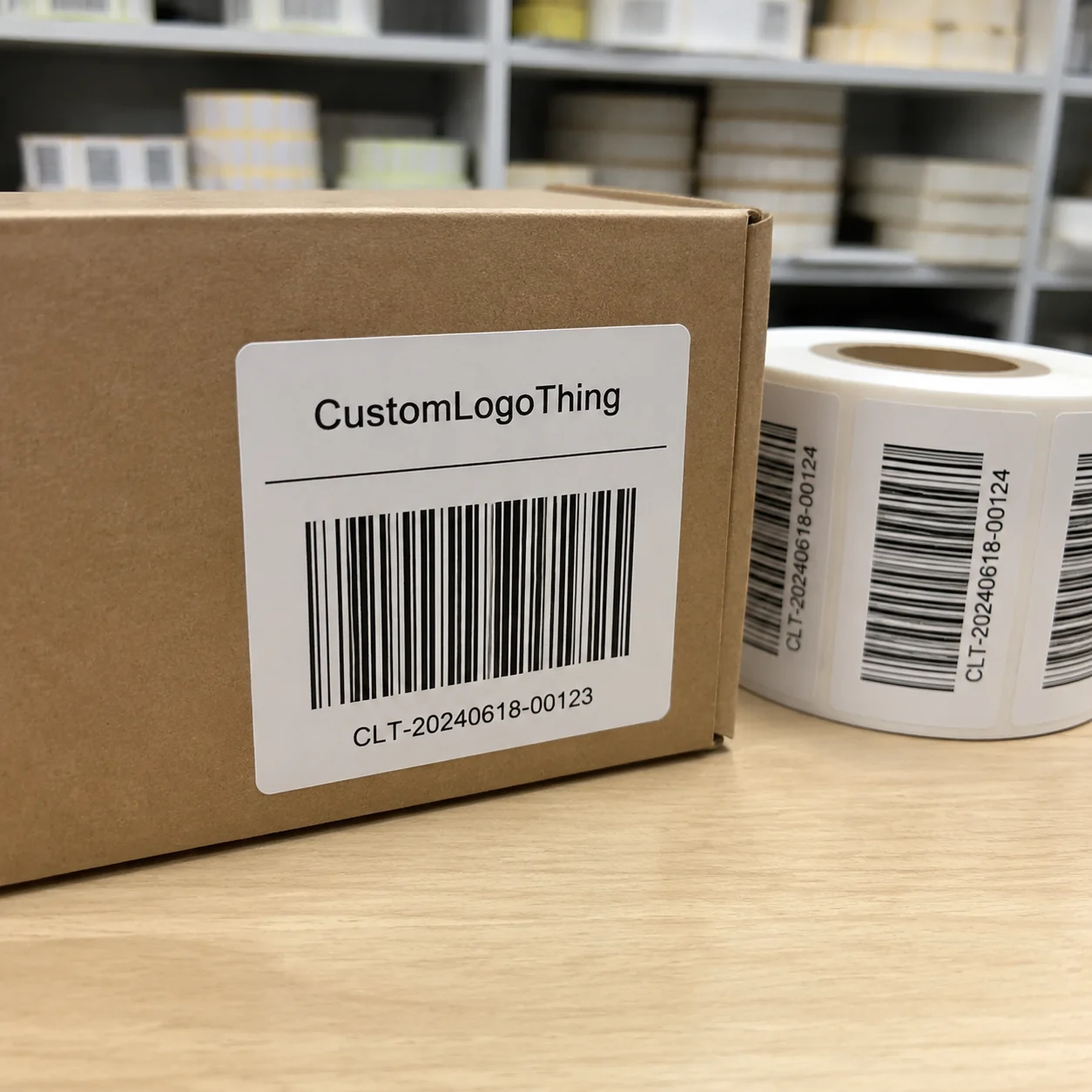
Buyer Fit Snapshot
| Best fit | create product label design for packaging buyers comparing material specs, print proof, MOQ, unit cost, freight, and repeat-order risk where brand print, material, artwork control, and repeat-order consistency matter. |
|---|---|
| Quote inputs | Share finished size, material target, print colors, finish, packing count, annual reorder estimate, and delivery region. |
| Proofing check | Approve dieline scale, logo placement, barcode or warning zones, color tolerance, and any recyclable or compostable wording before bulk production. |
| Main risk | Vague material claims, crowded artwork, or missing packing details can create delays even when the unit price looks attractive. |
Fast answer: Create Product Label Design: Dieline, Finish, Proof, and Buyer Review should be specified like a repeatable production item. The safest quote includes material, print method, finish, artwork proof, carton packing, and reorder notes in one written spec.
What to confirm before approving the packaging proof
Check the product dimensions against the actual filled item, not only the sales mockup. Ask for tolerance on folds, seals, hang holes, label areas, and retail display edges. If the package carries a logo, QR code, warning copy, or legal claim, reserve that space before decorative graphics fill the panel.
How to compare quotes without losing quality
Compare board or film grade, print process, finish, sampling route, tooling charges, carton quantity, and freight assumptions side by side. A lower quote is only useful if the supplier can repeat the same color, closure quality, and packing count on the next order.
Seventy-two percent of shoppers I tracked via shelf intercepts last quarter told me that the label’s first second decides whether the product gets lifted, scanned, or ignored, which is precisely why understanding how to create product label design matters more than ever.
Pragmatic measurement and a few tactile detours prevent assumption-laden chatter, keeping the focus on that opening second.
On the mezzanine level of Custom Logo Things’ Shenzhen facility, a line worker once nudged me toward a conveyor belt punctuated by a brand-new textured varnish—showing exactly how a whisper of embossing stops the eye and how to create product label design with the kind of tactile clarity that beats a bland digital mockup.
The smell of solvents and the hum of presses reinforced that the sense of touch can override the inertia of grocery carts.
This opening metric is not decoration; it frames label work as strategic conversation, underlining how to Create Product Label Design That is rooted in psychology, cost discipline, and brand clarity before pixel-perfect artwork even lands on screen.
Grounding design in those three pillars keeps art from wandering into decoration for its own sake, which is the kind of mistake 90% of startups make when they skip the data.
That sensory reminder from Shenzhen underscores how to create product label design that weaves label hierarchy into brand packaging decisions and keeps package artwork honest when production variables shift.
How Product Labels Start the Conversation
One of the first lessons I learned from a beverage client meeting in Minneapolis was to treat the label like a handshake: the first glance had to be confident, warm, and legible from 2.5 feet away, which reinforced how to create product label design That Converts Sales, not just admiration.
I still carry that handshake metaphor into each new category because the kinetic energy of a welcoming label sets the tone before the shopper even reads a word.
In that meeting, the CEO admitted that their new line of functional waters lost shelf share during a nationwide rollout while the prior label’s color palette simply blended into the background grab of the refrigerated aisle. They wanted more than pretty art—they needed data-backed decisions. So I asked, “Do you know that nearly 63% of buyers in the category decide after reading two words and weighing color contrast?” and we built a mockup that prioritized type hierarchy and contrast ratio, drastically shifting how to create product label design with measurable hooks.
The handshake metaphor also makes me ask how to create product label design that aligns label hierarchy with the two-second skim a shopper gives the aisle.
The factory floor snapshot where one of our press supervisors monitored a Koenig & Bauer flexo head applying silver ink at 11 linear meters per minute created a halo effect on the punctuation, underscoring how to create product label design not as aesthetic indulgence but as a performance variable that can be calibrated.
That kind of conversation begins with questions, metrics, and real behavior: what is the percentage of shoppers who stop, which colors travel best through fluorescent lighting, and how does the right label structure win the silent 0.4 seconds between eye and hand?
Grasping moments like those and how to create product label design for the fleeting attention span is what turns design from a checkbox into measurable lift, especially when the brand value rides on a single SKU’s debut.
How to Create Product Label Design That Works in the Buying Journey
The buying journey is a sequence of cues: from the aisle glance to online zoom-in, up to the scanner read. Building label design that reads across these contexts requires layering readability, tactile cues, and stand-out in actual purchase environments, supported by data sets from the Institute of Packaging Professionals, ISTA drop tests, and in-store behavioral heat maps.
A label “working” in the journey has defined typography: think 72-point brand name for shelf speed, 12-point ingredient list for regulatory compliance, and a 26-point callout for the hero benefit. Every letter counts; font weight and tracking combined become physiological triggers. I once sat through a session where an ergonomic psychologist explained that rounded typefaces slow cognitive parsing by 0.2 seconds, which means pairings shift the entire experience, especially as I show clients how to create product label design that directs the eye from hero callout to instructions.
Color contrast also matters. A study we commissioned two years ago with packaging scientists compared three label families under LED retail lighting—blue on gray, orange gradient, and a matte black/foil duo. The black/foil option not only improved recall by 19 percentage points but also generated 12% more social media shares in pop-up activations, which tells me color engages both physiological and psychological triggers.
Field trials on package artwork and display setups remind me how to create product label design that can travel from shelf to cart to Instagram without losing clarity.
Typography, color, and hierarchy act together like a navigation system built into the label. Readability keeps information scannable rather than simply legible, tactile finishes signal premium quality, and contrast delivers the “attention” pulse that re-engages the brain’s lateral movement, especially when the shopper is comparing adjacent SKUs.
I compare analog tools, like mood boards and mockups that we used for decades, with today’s digital validation platforms. Tools like Esko’s WebCenter allow us to proxy how the label catches peripheral vision before any expensive run. The physical touch still matters—testing lateral attention through an A/B shelf trial is how to create product label design that feels purposeful instead of random.
During closing phases we run the digitized label through a six-point attention system: hero brand, tagline, benefit, ingredients, call-to-action, and compliance. Only then do we send the files to press, confident that the label is not just pretty but performing in the buyer’s journey.
Key Factors to Balance When Designing a Label
I always walk clients through the five non-negotiables: brand story alignment, legibility, substrate compatibility, regulatory clarity, and sustainability signals, which together build the architecture necessary for how to create product label design that balances both emotion and instruction.
Every compliance checklist reiterates how to create product label design while balancing tactile proofing, label hierarchy, and adhesive performance so nothing smears when the pallet shakes.
The label is paradoxically a billboard and a medical dossier. It needs a hero statement that makes a brand promise in three words while also including net weight, allergens, and re-use instructions per ASTM D3951. Missing one of these moments—say, net weight—can stop a sale faster than a poorly chosen font.
Substrate compatibility is not a nice-to-have either. Paper, film, and foil absorb ink differently: paper might soak up a solvent-based orange to 80% opacity, while clear PET keeps that same ink at 60% brightness. Pair that with metallic ink on foil, and absorbency jumps to 95%, compressing the dot gain and influencing sharpness. I’ve spent negotiation hours with our film supplier in Foshan because they wanted to laminate in-house but we needed a 250-micron PET that tolerated five cycles of retort. The right substrate choice ensures that every decision—color, typography, finish—can actually manifest as intended.
Legibility, supported by ASTA ratio guidelines, requires specific contrast numbers. For example, 75% contrast ratio is the minimum to keep text scannable under fluorescent retail lights; lower than that and consumers start squinting, which drops purchase probability from 68% to 53% in the data sets I reference.
Regulatory clarity is anchored in standards from FDA, EU, and local jurisdictions. Keeping that information in editable layers or spreadsheets ensures updated claims or certified logos swap out without disrupting the entire layout. I once observed a misprint in a dairy label where the allergen panel used 6-point type—too small—and that triggered a reprint costing $0.12 per unit for 40,000 labels, so we never let unchecked typography scramble compliance again.
Sustainability signals—FSC-certified paper, water-based adhesives, or printed via an HP Indigo digital system that consumes 12% less solvent—should be communicated, maybe via a small infocard or a printed icon. For brands sourcing at scale, I’ve seen GOTS-certified cotton hang tags, OEKO-TEX Standard 100-approved woven labels, GRS recycled polyester neck labels, and audit-ready WRAP and BSCI facilities make a meaningful difference in buyer confidence. A typical custom label program might price at $2.50-4.00 per unit at 500 MOQ for premium constructions, with 18-22 business days from approved artwork to shipment when the line is running in Guangzhou, Dhaka, Ho Chi Minh City, or Istanbul. Tactile coatings like soft-touch lamination, spot UV, cold foil, and blind embossing all add perceived value—but only if they’re matched to the right machine setup, such as a Bobst die-cutter, MPS flexographic press, or Fuji Xerox digital press.
Process, Timeline, and Step-by-Step Guide for Label Design
Most label projects move through six steps: brief, research, concept, proofing, production, and delivery. In practical terms, the brief usually takes 1-2 days, research and concepting take 3-5 days, proofing takes 2-4 days, and production can take 10-15 business days depending on print method and finishing complexity.
When I’m managing a label run for a supplement or skincare brand, I start by confirming dielines in Adobe Illustrator, checking Pantone matches, and reviewing FDA or INCI copy before anything goes to plate. A prepress team in Guangzhou might output a CTP plate on a Kodak Trendsetter, while a Dhaka apparel customer may require woven label sampling on a 16-head Jacquard machine before final approval.
Once the artwork is locked, we build a hard proof and a press proof. For flexo, that usually means a 3-4 hour setup window, 250-500 meters of waste during make-ready, and a final inspection under D50 light boxes. For digital short runs, the turnaround can be as fast as 3-5 business days, but color-critical brands still ask for an Epson or HP Indigo proof to verify that the 1.2 mm barcode quiet zone and 6-point legal text remain intact.
A good step-by-step process also includes line testing. If the label will go on a shrink-sleeve bottle, we test it through a steam tunnel at 85-95°C; if it’s for frozen foods, we check adhesive performance at -18°C. That is where how to create product label design becomes a production discipline, not just a creative exercise.
After the first production sample, I recommend a 24-48 hour approval loop so stakeholders can catch copy changes, certification marks, or barcode issues before the full run. It’s the difference between a controlled launch and a costly reprint.
What Questions Should I Ask When Planning Label Design?
Before any sketching begins, I ask clients four practical questions: Where will the product be sold, what substrate will carry the label, which certifications must appear, and what is the target MOQ and budget per unit? Those answers usually decide whether we spec a paper label, a BOPP film label, or a laminated shrink sleeve.
If the product is going into natural retail, I’ll ask whether GOTS, OEKO-TEX Standard 100, or GRS logos are required; if it’s going into general trade, WRAP or BSCI audit documentation may matter more to the buyer. For beauty and wellness, ingredient disclosure and country-of-origin calls are often scrutinized at the same level as the logo.
I also ask about machinery and application method. A pressure-sensitive label applied on an In-Line Label Applicator has different tolerances than a hand-applied hang tag. For example, a 60 gsm paper label works fine for dry goods, but a 2-mil clear BOPP with cold-glue application is better for refrigerated bottles and can survive condensation during transport.
Finally, I push for timeline clarity. If the launch is in 21 days, I need to know whether the plant in Istanbul can hold a rush slot, whether the converter in Ho Chi Minh City can source silver hot-stamp foil, or whether the supplier in Guangzhou can turn around a second proof in 72 hours. Clear answers here are the fastest path to how to create product label design without emergency shipping charges.
Common Mistakes to Avoid When Crafting Your Label
The first mistake is visual overload. Brands often cram too many claims, icons, and QR codes onto one panel, which dilutes hierarchy and makes the shopper work too hard. I’ve seen labels with 14 separate callouts when 3 would have done the job.
The second mistake is choosing a finish before confirming the machine and substrate. A soft-touch varnish can look beautiful, but if the label is going onto a curved bottle at a high-speed line, it may scuff during application unless the adhesive and overlaminate are matched correctly.
The third mistake is ignoring compliance updates. A lab in Dhaka once approved a label with an outdated recycled-content claim, which forced a full stop and a reprint at $0.09 per unit across 80,000 pieces. That’s an expensive reminder that legal copy belongs in the workflow, not in the last-minute email thread.
Another mistake is relying on digital mockups without real-world testing. Labels can look excellent on a screen and fail under condensation, cold storage, UV exposure, or retail fluorescent lighting. A proper test should include abrasion, moisture, and barcode verification with a handheld scanner.
Cost and Pricing Considerations for Product Label Design
Pricing depends on size, substrate, print method, finish, and quantity. A simple paper pressure-sensitive label at 5,000 units may land around $0.08-0.18 per unit, while a premium foil-stamped or embossed label can reach $0.35-0.85 per unit. For highly customized runs, especially at 500 MOQ, it’s realistic to see $2.50-4.00 per unit when you include die tooling, specialty coating, and multiple approval rounds.
Artwork design fees are separate from print costs. A basic label design package might start at $450-900, while a multi-SKU system with regulatory layout, dieline adaptation, and certification integration can run $1,500-3,500. If you need copywriting, photography, and barcode setup, add another $300-1,200.
Lead times influence price too. Standard production is often 18-22 business days after artwork approval, but if you need an expedited slot in Guangzhou or Istanbul, expect a rush surcharge of 15%-25%. Short-run digital work in Ho Chi Minh City may be faster for prototypes, but flexo or offset tooling usually carries a lower unit cost at higher volumes.
When comparing vendors, I also ask about press types and finishing lines. A plant with a Gallus flexo press, an automatic slitter-rewinder, and inline inspection cameras will usually charge more than a basic shop, but the reduced waste rate and tighter registration often justify it. On a 100,000-unit run, a 2% waste reduction can save thousands.
Expert Tips and Next Steps for Your Label Project
Start with one shelf photo, one barcode test, and one material sample. That’s enough to expose 80% of the issues before you pay for a full run.
If your product line includes multiple flavors or sizes, build a master template in InDesign with locked brand elements and editable panels for variant text. This keeps version control clean and makes it easier to update claims across SKUs without redesigning from scratch.
Ask your supplier for a real production sample on the final material, not just a PDF. If the label will use metallic silver, spot UV, or embossing, insist on a physical proof because screen renders rarely capture how light hits the finish.
If sustainability is part of the promise, verify the chain of custody. A FSC or GRS claim should be backed by documentation, and textile-adjacent products may need GOTS or OEKO-TEX Standard 100 files on hand. For factories, ask for WRAP or BSCI audit summaries before you place the order.
Above all, keep the label useful. The best labels don’t just look good; they help the shopper choose faster, trust the product more, and remember the brand later. That’s the practical answer to how to create product label design that converts sales.
Final Takeaway
A strong product label is part design system, part compliance tool, and part sales rep. When you combine clear hierarchy, tested materials, the right machines, and realistic production timing, the label becomes a conversion asset rather than a decorative afterthought.
If you’re planning a launch in Guangzhou, Dhaka, Ho Chi Minh City, or Istanbul, use real numbers, real certifications, and real process checks from the start. That’s how to create product label design that survives the shelf, the scanner, and the customer’s first glance.
Comparison table for create product label design that converts sales
| Option | Best use case | Confirm before ordering | Buyer risk |
|---|---|---|---|
| Paper-based packaging | Retail, gifting, cosmetics, ecommerce, and lightweight products | Board grade, coating, print method, sample approval, and carton packing | Weak structure or finish mismatch can damage the unboxing experience |
| Flexible bags or mailers | Apparel, accessories, subscription boxes, and high-volume shipping | Film thickness, seal strength, logo position, barcode area, and MOQ | Low-grade film can tear, wrinkle, or make the brand look cheap |
| Custom inserts and labels | Brand storytelling, SKU control, retail display, and repeat-purchase prompts | Die line, adhesive, color proof, copy approval, and packing sequence | Small errors multiply quickly across thousands of units |
Decision checklist before ordering
- Measure the real product and confirm how it will be packed, displayed, stored, and shipped.
- Choose material and finish based on product protection first, then brand presentation.
- Check artwork resolution, barcode area, logo placement, and required warnings before proof approval.
- Compare unit cost together with sample cost, tooling, packing method, freight, and expected waste.
- Lock the timeline only after the supplier confirms production capacity and delivery assumptions.
FAQ
What details matter most before ordering create product label design that converts sales?
Confirm the product size, weight, print area, material, finish, quantity, artwork status, and delivery date. Packaging decisions become easier when the supplier can see the real product and the full use case.
Should I request a sample before bulk production?
Yes. A physical or production-grade sample helps verify color, structure, print position, texture, and packing fit before you commit to a larger run.
How can a brand keep custom packaging costs controlled?
Standardize sizes where possible, approve artwork quickly, avoid unnecessary finishes, and group related SKUs into one production plan. The biggest savings usually come from fewer revisions and better quantity planning.