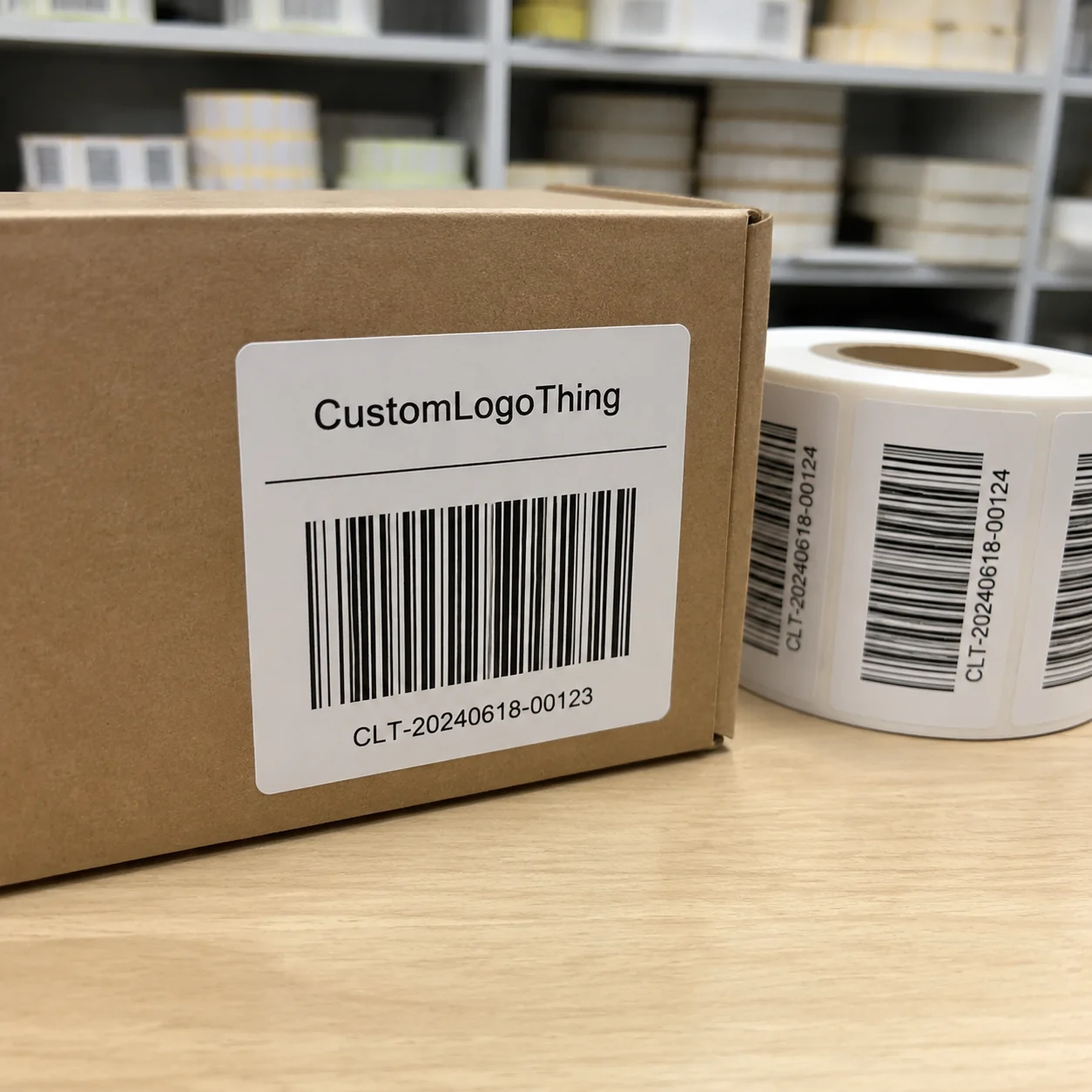
Buyer Fit Snapshot
| Best fit | Create Product Label Design Sales projects where brand print, material claims, artwork control, MOQ, and repeat-order consistency need to be specified before quoting. |
|---|---|
| Quote inputs | Share finished size, material target, print colors, finish, packing count, annual reorder estimate, ship-to region, and any compliance wording. |
| Proofing check | Approve dieline scale, logo placement, barcode or warning zones, color tolerance, closure strength, and carton packing before bulk production. |
| Main risk | Vague material claims, crowded artwork, missing packing details, or unclear freight terms can make a low unit price expensive after revisions. |
Fast answer: Create Product Label Design Sales: Material, Adhesive, Artwork, and MOQ should be specified like a repeatable production item. The safest quote records material, print method, finish, artwork proof, packing count, and reorder notes in one written spec.
Production checks before approval
Compare the actual filled-product size with the drawing, then confirm tolerance on folds, seals, hang holes, label areas, and retail display edges. Reserve space for logos, QR codes, warning copy, and material claims before decorative graphics fill the panel.
Quote comparison points
Review material grade, print process, finish, sampling route, tooling charges, carton quantity, and freight assumptions side by side. A quote is only useful when the supplier can repeat the same color, closure quality, and packing count on the next order.
Why How to Create Product Label Design Still Feels Like Magic
At our Monday 8:05 a.m. Portland briefing—fresh espresso in hand—I told the crew that how to create product label design should feel like storytelling, not a spreadsheet of PMS references. I repeated that line at 3:20 p.m. while touring the Custom Logo Things floor, then watched the lead designer snag a stack of 120 foil-wrapped samples from a midnight rush order tied to the Seattle pop-up before he declared, “Here’s the story we sold today.” I still blush remembering the CEO who insisted on line-item budgets and kept a calculator on his lap the whole meeting. Magic, for me, is making sure the Tacoma truck doesn’t leave looking like confetti, so storytelling keeps the crew from sprinting into panic mode. It’s ugly when panic hits a press check, and that’s the kind of jitters I’m trying to bleed out of the process.
Aurora Label Supplies once trimmed $0.03 off a roll of soft-touch laminate simply because we asked for the per-linear-foot cost on a 2,400-foot spool, and it reminded me that even the smallest ask nudges how to create product label design outcomes. I’m kinda proud of that interrogation habit, even if it makes accountants raise their eyebrows.
Shipping a 2,400-piece run to a boutique coffee brand in Seattle taught me another reality check. The client insisted on metallic ink for the logotype, so I rerouted their schedule, tipped the Heidelberg press into another room, and watched the ink shelve the wrong batch because we hadn’t accounted for the eight-hour dry time required in Vancouver’s humidity. Planning gives magic a runway, and missing that eight-hour window tripped the whole show. The client blamed the press after we rushed the metallic ink and the whole batch got shoved into crates while still tacky, so now I plan with the patience of a saint—or at least a mildly caffeinated production manager. That taught me that how to create product label design involves staying two steps ahead on drying curves.
Another late-night trip to Shenzhen happened when an ingredient-driven beauty line demanded the story carry through a dieline wrapping four panels. We shaved 2mm of bleed, retested the adhesive against ECO-FLEX metrics from Avery Dennison over a 48-hour validation span, and I kept reminding the QC tech that how to create product label design is as much about what sticks as what looks shiny. I swear adhesives define the whole show; it’s the only thing between a label that lasts and a peel-off that “pops” mid-shelf, especially after we confirmed ASTM D3330’s 24-hour tack measurement. I don’t mess with adhesives without a lab sheet, and the techs there know I mean it. That’s the kind of trust that makes a supplier nod before a run.
During a compliance call with a nutraceutical client out of Chicago, I stressed that their FDA copy needed to marry the brand voice without dominating the mockup. We hid the regulatory text in a 10-point serif stacked beneath the claims and drafted a secondary layout that could migrate to the back panel if next week’s third-party lab wanted another warning. That revealed how often folks treat how to create product label design as an afterthought instead of a living, breathing identity system, and the compliance rep’s eye-roll told me I was onto something. I still picture her doing it when I asked for a secondary layout and a backup QR code placement.
Anecdote overload? Sure, but every story circles back to practical work: those midnight labels needed 1.5mm bleeds, the Aurora savings funded a wet-glue proof that cost $175, the beauty line demanded ASTM D3330 adhesive confirmation at 35N after a 24-hour cure, and the nutraceutical meeting reminded me that storytelling without a plan is just glitter without glue. It keeps me addicted to chasing decimal points—like the $0.03 we shaved off linear-foot pricing—and reminds me how to create product label design is part math, part stubbornness, and part story. I still text the press tech to thank him for the backups. Trust builds faster when you show the receipts. That’s the kind of honesty I bring to every project.
How to Create Product Label Design Process and Timeline
When I map out how to create product label design, I break the process into six checkpoints. Briefing takes one to two days to gather container specs from the Milwaukee mold shop and positioning statements, concept sketches run about 48 hours for three to five directions, digital mock-ups require 72 hours with color-calibrated PDFs, prototyping needs four business days per stock plus two extra if adhesives must meet ASTM D3330, then approval and print runs follow. Count on 30 to 42 calendar days for complex cosmetics or beverage labels, and tack on more if there’s a new dieline, regulatory text from a Chicago third-party lab, or a revised supplier spec sheet from our Detroit source. I remember the first time I tried to squeeze that into four checkpoints; the calendar exploded. My only buffer I trust now is the one labeled “regulatory miracle week” because clients love sending urgent emails on Sundays.
Every supplier tour with Sunrise Label starts with the same question: “Where is the print plate?” I walk the factory floor while they explain how each color proof gets signed before we head to the 1,500-sheet Heidelberg press, so we have zero surprises about how to create product label design when the run button hits. During the last visit, the press tech pulled me aside to show how he stacks silicone blankets so white ink layers stay crisp on pearlescent stock—a detail I wouldn’t have caught over Zoom (I probably drooled a little watching the process). That kind of live observation keeps me honest and the team sharp.
I always add a buffer week for regulatory checks or dieline edits because factories like the Shenzhen facility we visit quarterly hate last-minute crises. That extra seven days covers FSC paper swaps, SGS lab chemical safety panels, or a suddenly required child-resistant instruction panel before anything hits varnish or soft-touch lamination. The buffer also gives sticky labels time to cure so the adhesive passes humidity cycling tests and leaves no surprises at the QA gate—call me paranoid, but I’d rather confirm now than explain a peel-off later. When clients see that buffer as insurance, I practically hear their budget sigh in relief.
There’s a separate milestone for sourcing substrates. One client needed a label that could survive freezer storage; the materials team in Guangzhou spent 48 hours validating a 60# synthetic from Jindal Films while our timeline board tracked each sample, photo-shared mockup, and adhesive peel strength. That level of documentation keeps everyone aligned on how to create product label design even when engineering teams throw in last-minute tweaks, and I still have the photos from that marathon session saved as proof that patience pays off. I keep pinging the sourcing team with updates because nothing derails a run faster than a missing material spec.
Timeline transparency matters. I keep a Gantt chart pinned beside the press check allowance so marketing knows when to expect digital proofs, when to schedule stakeholder reviews, and when to approve the final prepress PDF. Add shipping—two days for domestic LTL, four to six for export via Matson—and another two days if you want the labels warehoused in Seattle for a seasonal launch. That way, when someone asks, “Can we rush this?” the answer comes with actual dates, not wishful thinking (the look on their face when I hand over the chart never gets old).
Key Factors in How to Create Product Label Design
Decide early whether the label needs to stir emotion or deliver facts. If emotion wins, go with matte artboard and foil accents; if clarity wins, crank up contrast with Helvetica Neue and a 72-point product name so even someone holding the jar upside down can read it, which is usually the story with my cleaning supply clients. That hierarchy becomes the rulebook during mockups, keeping the brand icon at 40% prominence and the regulatory text in a disciplined 8-point line height that still meets FDA minimums. I learned that from a candle client whose shelves looked like a disco ball until we made hierarchy non-negotiable. Once the rules are set, no one can blame me when they sneak in extra body copy.
Materials steer the whole supply chain: premium goods usually run on 70# matte stock with a soft-touch laminate from Avery Dennison, while moisture-prone items get a 50# synthetic with permanent acrylic adhesive. Both need testing on actual containers so how to create product label design doesn’t peel in cold storage or bubble on curved shoulders. I once dropped an 80# uncoated stock into ice-cold storage and watched the edges lift because we skipped adhesive compatibility with the container’s lacquer—an expensive reminder to test everything before a run and a lesson I repeat to every rookie now. Testing is the part that keeps me awake, but it’s also the part that saves the account.
Printing method matters, too. Offset handles runs of 50,000 labels at $0.18 each with precision, while digital wins for adaptive runs and proofs since Sunrise Label’s presses can hold down ghosting on batches as small as 1,000 sheets, which I verify before every job. Honestly, I think digital is underappreciated until you’ve had to scramble for a last-minute proof and the press tech says “sure, just knock it out on the digital line.” That’s why I keep a printer’s log covering run size, ink specs, bleed requirements, and whether we’re hitting Pantone or CMYK.
Color management cannot be an afterthought. Use a calibrated monitor, embed ICC profiles, and send swatches to the printer so the crew can match Pantone 186C to a live sample instead of a screenshot. I still carry a Pantone Formula Guide, and during one press check the first sheet came out leaner than expected; we tweaked traps and filed a new correction that saved an entire 10,000-label run. The better the color control, the less time wasted on reprints (and the fewer death stares from marketing).
Compliance earns its place on the checklist. Reference FDA requirements, ISTA protocols for drop testing, and ASTM D4278 for adhesives so the next person on deck understands why the tape read 14N and the label needs UV protection. Documenting this is literally part of how to create product label design That Survives Shipping, storage, and the moment a consumer flicks it off the shelf. I nag the suppliers about it because that’s the only way to dodge surprise emails from procurement three days before press.
Label layout, packaging artwork, and tight branding guidelines keep messaging aligned, which is how to create product label design that feels cohesive. I force stakeholders to approve the layout because nothing ruins a launch like a label that looks like the packaging art got dropped into a different campaign straight from a competitor’s mood board. When the layout misses the mark, the whole identity system fractures, so I treat that interim approval like a contract (and yes, I ask for initials on the dieline sometimes). The printers appreciate that, too, since they know exactly how to stack each panel when they see the approved layout and those same branding guidelines flagged in the notes.
How to create product label design that answers the shopper’s first question?
When I map how to create product label design that answers the shopper’s first question, I focus on the cover story. A crisp label layout organizes the sensory cues, packaging artwork signals the promise, and the adhesives hold the moment together. I measure the label on the shelf, not the monitor. If the layout looks vague next to the nearest competitor, I adjust immediately. That kind of obsession keeps marketing from pointing fingers later.
Step-by-Step Guide to How to Create Product Label Design
Step 1: Gather every spec—dimensions, container curve radius, surface texture, the number of panels, and any copy that changes per iteration. A wrong panel order cost one client $320 in reprint, so when we worked on a vitamin line I used calipers during the factory tour to confirm that eight panels would actually fit into the three-panel dieline. I still picture that tour because the engineer kept calling me “the caliper girl”—a nickname I secretly liked.
Step 2: Sketch the visual hierarchy on paper; let the brand icon take 40% of the priority, product name sit at 24-point, and regulatory text in 8-point serif. Lock down licensed fonts before Illustrator opens—some premium scripts carry per-usage fees, and you don’t want legal breathing down your neck mid-mockup. I once had a font fee double because we waited until the final mockup to confirm rights (lesson learned, and yes, I still have the invoice).
Step 3: Build the digital mock-up, place every barcode or QR code with tested clear space (minimum 4mm on all sides), then review that file with the factory rep who will run the press because they catch misaligned panels faster than any creative director in a Zoom call. During a breakfast meeting with a press technician, they pointed out the panel edge was 0.8mm off before we finished the PDF, saving a $210 plate fee. I still thank them with coffee and a detailed note.
Step 4: Proof your order with physical prototypes on your chosen stock and a cheaper alternative; tape them to a mock product, snap a photo, and send it to stakeholders so no one is surprised when the final packaging hits shelves. I always include one prototype with spot varnish and one without so clients can feel the difference, plus those prototypes get stuffed into product boxes for tactile testing (it’s amazing how often the team forgets texture matters until they touch it).
Step 5: Preflight everything—check links, convert fonts to outlines, flatten transparencies, verify dielines, confirm bleed margins, and package the file with the correct color profile. I learned this the hard way when an RGB-heavy file hit press and the fourth station stopped mid-run, costing an extra $450 in waste and a very unhappy colorist. That was the day I swore I would never trust anyone else with preflight.
Step 6: Schedule a press check, especially for metallic, pearlescent, or multi-layer jobs—the typical session at Sunrise Label runs about 90 minutes. They let clients watch from the mezzanine while the G7-calibrated press runs, so take that chance to verify varnish coverage, embossing depth, and adhesive tack. Catching issues during the run beats discovering them after the truck rolls out (and yes, I have a scar from that one embossing pass that skipped—ask me about it sometime).
Step 7: Confirm integration with packaging partners—label placement matters when pairing with a shrink sleeve or secondary carton. One jewelry client needed the label aligned with a window on the box; we taped a mockup, measured it to 0.5mm increments, and adjusted the dieline twice before approving the run. The packaging rep joked that I measured more lines than a surveyor, but the alignment was perfect, so I let the joke slide.
Step 8: Final QA and release—collect press sheets, verify each shipment against the packing list, double-check adhesives, and record the final unit cost. When I visited a new beverage client, we logged 12 checkpoints across four teams to prove the dieline, adhesive, ink, and compliance copy matched the approved file. That kept production honest and prevented a big fall launch from derailing. Before shipping, I remind the team to review the adhesive test data one more time. A quick check at this stage catches compatibility issues that otherwise show up in cold storage or on humid shelves.
Cost Breakdown When You Create Product Label Design
Every budget line item gets its own column: design time runs around $85 per hour for a freelance art director or $60 if it’s in-house; prepress costs $65 per file; prototypes cost $30 for two stocks; production ranges from $0.12 to $0.45 per label depending on run volume and complexity, with a 5,000-piece job landing at about $0.22 per label at the Shenzhen plant. Tooling adds more—foil stamping needs a $180 die and embossing tack on another $120, so factor those before promising metallic type. Add in adhesive testing, and you’re looking at another $40 if you’re covering ASTM D3330 verification for multiple substrates. Honestly, I think the only negotiable line is the one where the vendor fesses up to rush fees upfront, so if you’re gonna haggle somewhere, haggle there.
Supplier negotiation matters. LabelWorks USA trimmed $0.07 when we switched from gloss to matte laminate on a 12,000-label order by comparing roll pricing versus kiss-cut pricing and demonstrating the adhesive load. I still have that negotiation mapped out, including our commitment to two future campaigns and the promise to pay pronto, which softened their margin and earned a $0.02 rebate. The spreadsheets are annotated like a battle plan.
Volume and finishes move costs, too. Foil stamping adds $0.09 per label and embossing another $0.05, so I lay that out up front if the client cares about tactile texture or regulatory compliance. Setting aside $1,800 for special inks ensures there’s no sticker shock later. I once requested pearlescent ink without budgeting the extra four-hour setup, and the vendor hit me with a $380 rush fee. Now the proposal lists those additives separately with a note that says, “Yes, this is serious money, so stop asking to sneak it in.”
Shipping a pallet through Matson costs $320 for an LTL case, plus duties and customs brokerage when export is involved. Storage isn’t free either—two weeks in our Seattle warehouse runs $180, with another $120 if you need humidity-controlled racks for moisture-sensitive adhesives. Add the cost of the label mockup kit ($45 for two vinyl sheets, an adhesive tester, and a QR sticker), and you get a snapshot of the investment before the first proof hits inboxes. I keep pointing out those numbers to the CFO so they understand how a $0.02 unit saving saves $400 on a 20,000-piece run, which then funds a limited-edition mockup or a secondary SKU.
| Option | Run Size | Material | Finish | Unit Cost |
|---|---|---|---|---|
| Standard Matte | 10,000 | 70# matte artboard | Soft-touch laminate | $0.18 |
| Waterproof Synthetic | 8,000 | 50# synthetic | Gloss varnish | $0.21 |
| Metallic Special | 5,000 | 70# silk artboard | Foil stamping | $0.30 |
When you add shipping, storage, adhesives checks, and designer hours, the total package aligns with marketing goals while keeping how to create product label design front and center. Clients appreciate the transparency, especially when the CFO realizes that a $0.02 reduction in unit cost saves $400 on a 20,000-piece run—and those savings can fund a limited-edition mockup or a secondary SKU. I also keep a running tally of rush fees so we know when a timeline squeeze will cost more than the printed labels. That way the next time someone asks for a “rush,” I can point to the spreadsheet, not just my gut (and not lose my mind in the process).
Common Mistakes in How to Create Product Label Design
Skipping manufacturer checks invites misaligned bleeds, which is why I never send a flat PDF without verifying the dieline with the Shenzhen team. Otherwise the first panel ends up 2mm off the wrap and clients panic. A luxury candle project was delayed two weeks because the adhesive wasn’t compatible with the curved glass—lesson learned, we now send a mandrel sample with every brief. It drives me nuts when someone says “we’ll figure it out in production,” because production is the least forgiving time to “figure out” anything. I usually end up escorting them through a lab test.
Crowding type ruins impact. During proofing I usually remove one headline or trim body copy by 15 words after someone says the label feels “too noisy,” which keeps it readable from three feet away. A client once insisted on listing every ingredient in sentence form, so I rerouted the layout into a two-column regulatory block, saving space and holding onto brand identity. I remind them that verbosity does not equal trust. Simple beats clever when someone is skimming across an aisle.
Ignoring print variations is expensive. I once approved Pantone 186 on-screen and the press vendor grabbed the wrong library, so now I carry a physical fan deck and cross-check swatches at the press check. If the server is down, we still print swatches on-site and measure them against the deck to avoid the “closer enough” excuse that drives me nuts. Close is not good enough when the label has to match a flagship product.
Failing to plan adhesives slips the job, too. We used an acrylic adhesive on a low-temp shipment and the labels peeled in cold storage, teaching me to confirm compatibility before finalizing dielines. That means asking the factory to run an adhesion test at -10°C and documenting the result for QA. I talk about that test so much the QA team can recite the adhesion values in their sleep.
Overlooking QA documentation makes accountability evaporate. I photograph each prototype, track approval emails, and archive every dieline version in a shared drive so there’s a paper trail when stakeholders claim they never saw the regulatory copy. Skip that and you end up answering ten emails at 6:00 PM about missing allergy warnings, which is my idea of a fun evening (spoiler: it’s not).
Expert Tips for How to Create Product Label Design
Wave goodbye to copycat designs. I tell brands to swap in an unexpected accent color like CMYK 25/0/100/0, then test visibility with a mockup session featuring a dozen competitor products so the label does not blend in. When we did that for a skincare client, the bold green hue was the only bright spot on an aisle of neutrals, and competitors started copying it two weeks later (so yes, the color trick works if you commit to it).
Ask your supplier for a press check, especially for metallic or pearlescent inks. Seeing the shimmer live with Sunrise Label’s tech in Seattle saved us from inheriting a batch that looked flat under fluorescent lighting. If I can’t be there in person, I request a livestream and a colorimeter readout so nothing is left to interpretation. I even ask them to record the moment the press starts—the sound of it firing up is oddly comforting.
Negotiate extras. I once secured 250 extra labels for free by promising a 3,000-roll run and repeat business; those extras became the perfect backup for mid-season promotional packs. Don’t just haggle over unit cost—negotiate faster turnarounds, extra proofs, or the vendor covering rush shipping when a curveball appears. Vendors remember the clients who demand fairness, so be the one who also remembers to send thank-you notes after a smooth run.
Bring packaging compliance into the conversation early. Reference ISTA protocols or direct partners to packaging.org to confirm drop testing and stacking limits so how to create product label design doesn’t stall at the QA gate. When the label passes ISTA 3A testing, the QC team breathes easier and marketing can keep talking about shelf impact instead of risk mitigation. I keep a folder of ISTA results handy, so the packaging partner can see the proof before they start their own testing.
Keep a label mockup kit in your bag: include a dieline template, adhesive tester, QR sticker, and notes on current regulatory demands. I hand that kit to clients, and it becomes the physical shorthand for how to create product label design—no guesswork, no “oops” moments, just measurable progress. It’s the only thing heavier than my laptop bag, but totally worth it.
Next Steps to Create Product Label Design Like a Pro
Action plan: draft your brief, confirm materials with the factory, and map out approvals so the team knows when to sign off. When we delivered to a new beverage client, we had 12 checkpoints across four teams, which let us keep how to create product label design as the priority rather than a casual conversation. I still share that grid with anyone who thinks label design can be “handled over lunch.”
Prototype checklist: order sample labels on two stocks, tape them to a mock-up product, run photos through Slack for stakeholders, then schedule a 30-minute call to resolve alignment questions within 48 hours. Don’t skip the photo step—the shot becomes the visual record everyone approved. I treat those photos like receipts; they’re proof that everyone signed off, even when someone insists they “never saw” the change.
Recheck budgets: compare quotes from at least two suppliers, account for shipping, and lock in the run once pricing matches marketing goals while keeping how to create product label design front and center, because after the ribbon gets cut the only thing left is execution. I revisit the budget mid-project to flag scope creep before it doubles the spend, and I keep a running note of every “just add this” request.
Always loop in the packaging partner; they catch issues like adhesive compatibility or dieline tweaks before files are finalized, which is why I include our account rep in every briefing call. Their floor-level experience is the difference between a smooth delivery and a frantic sprint that costs more than the label itself. They also have a knack for reminding me that adhesives hate humidity (thanks for the reminder, Carla).
Finish with a printable checklist that includes dieline verification, adhesive test results, regulatory copy approval, press check notes, and shipping instructions. I keep a laminated version in my bag and slide it across the table during the final briefing so the engineering team knows the remaining steps. It’s the kind of ritual that makes my inner control freak happy.
Conclusion: Every time someone asks how to create product label design that drives sales, I tell them it’s an intentional mix of storytelling, six supplier calls, 12 hours of technical reviews, negotiation, and discipline, because even the shiniest label fades if the plan evaporates. My actual takeaway? Put that brief, vendor terms, and adhesive tests into a shared checklist, then use it to gate each milestone—if it’s not checked, nothing ships. That keeps the story honest and the truck rolling.
FAQ on How to Create Product Label Design Details
What materials work best when trying to create product label design for premium goods?
Use 70# matte paper or soft-touch laminate for a high-end feel, pair it with spot UV, and test adhesion on your actual container before full production to avoid delamination in shipping. I usually run a mini torture test with our QC team and a freezer just to be dramatic.
How does cost change when you create product label design with special finishes?
Finishes like foil stamping or embossing add $0.08–$0.15 per label; budget for die fees plus extra setup time from the print vendor because setup can take 3–5 hours longer than a standard run. I say “budget accordingly” like a broken record, but it saves the most headaches.
Can you create product label design without a professional designer?
You can, but templates work best for straightforward brands; hire a designer if you need custom illustrations, layered typography, or regulatory layouts that require precise spacing. I say that as someone who’s seen way too many templated disasters.
How do I test the durability after I create product label design?
Order prototypes on the actual bottle or jar, run them through your usual abuse (heat, cold, moisture), and note any peeling before approving the run. The prototypes become your insurance policy—if they fail, you fix it before the truck leaves.
Should I involve the packaging partner while I create product label design?
Always loop them in; the factory can flag issues like adhesive compatibility or dieline tweaks before files are finalized. They’re the ones who actually installed the labels on the production line, so their input is gold.