Buyer Fit Snapshot
| Best fit | Create Unique Packaging for Products That Stands Out projects where brand print, material claims, artwork control, MOQ, and repeat-order consistency need to be specified before quoting. |
|---|---|
| Quote inputs | Share finished size, material target, print colors, finish, packing count, annual reorder estimate, ship-to region, and any compliance wording. |
| Proofing check | Approve dieline scale, logo placement, barcode or warning zones, color tolerance, closure strength, and carton packing before bulk production. |
| Main risk | Vague material claims, crowded artwork, missing packing details, or unclear freight terms can make a low unit price expensive after revisions. |
Fast answer: Create Unique Packaging for Products That Stands Out: Material, Print, Proofing, and Reorder Risk should be specified like a repeatable production item. The safest quote records material, print method, finish, artwork proof, packing count, and reorder notes in one written spec.
Production checks before approval
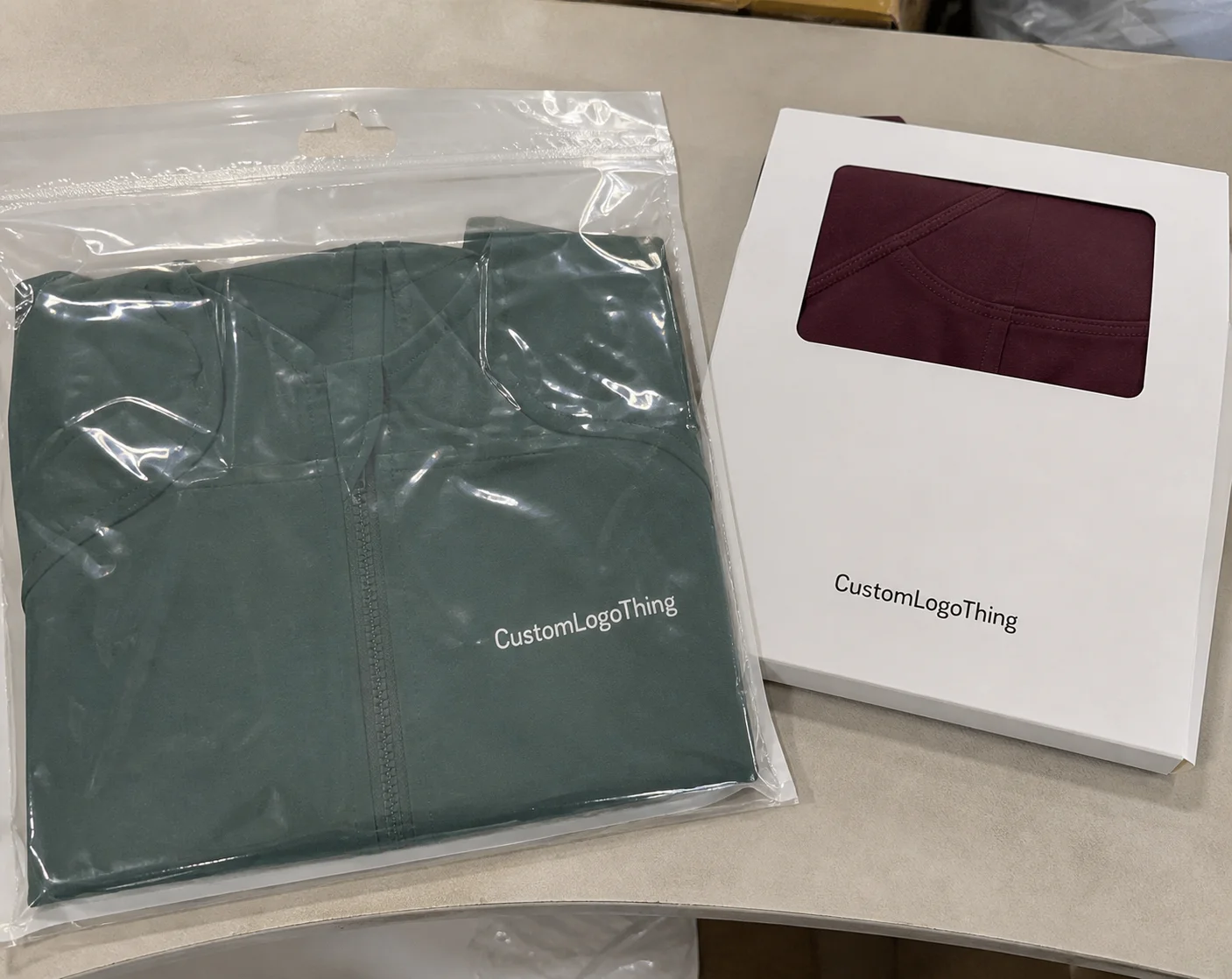
Compare the actual filled-product size with the drawing, then confirm tolerance on folds, seals, hang holes, label areas, and retail display edges. Reserve space for logos, QR codes, warning copy, and material claims before decorative graphics fill the panel.
Quote comparison points
Review material grade, print process, finish, sampling route, tooling charges, carton quantity, and freight assumptions side by side. A quote is only useful when the supplier can repeat the same color, closure quality, and packing count on the next order.
Twelve years ago, a client handed me a plain brown shipping box and asked me to transform it into something that would make customers stop scrolling. I remember staring at that 12"x10"x8" box for way too long, thinking "This is either going to be a fun challenge or a spectacular disaster." The lesson stuck with me ever since: how to create unique Packaging for Products isn't about spending the most money—it's about making every design decision count.
Across two decades working with manufacturers in Shenzhen, Dongguan, Los Angeles, Chicago, and everywhere in between, I've watched brands pour millions into advertising only to lose customers at the precise moment of first contact—the unboxing. Custom printed boxes sit on doorsteps, shelf displays compete for eyeballs, and that split-second judgment determines whether your product gets kept or returned.
What follows is the complete process I use with clients to create packaging that doesn't just protect your product but actively sells it.
The Psychology Behind Packaging That Commands Attention
Industry research consistently shows that roughly 72% of consumers admit packaging design directly influences their purchase decisions, according to a 2023 study by the Paper and Packaging Board. That figure appears across multiple studies I've seen referenced in packaging trade publications, and it aligns with what I've observed on factory floors for years.
The human brain processes visual information incredibly fast. Within 2-5 seconds of seeing your retail packaging on a shelf or screen, a customer has already formed an impression that's surprisingly difficult to change. This isn't about being superficial—it's just how our minds work. We take mental shortcuts, anchoring our perception of product quality to the quality of the container holding it.
When consulting with brands, I always emphasize this point: your packaging is your first salesperson. It works 24 hours a day, seven days a week, without needing a salary or training session. A customer picking up your product is having a conversation with your brand, and that conversation happens through color, texture, weight, and the sound of materials interacting.
I've watched companies like Apple and Hello Bello nail this principle. They understand that branded packaging creates an emotional bridge between the product and the person holding it. The unboxing becomes part of the product experience itself.
That emotional connection drives something powerful: repeat purchases. Customers who feel good about the package branding experience develop loyalty that goes beyond rational evaluation of product features. They associate positive feelings with your entire brand, which means they'll forgive occasional missteps and evangelize to friends and family.
Define Your Brand Identity and Product Requirements
Before touching any design software or requesting samples, you need absolute clarity on two things: who you are as a brand and what your product actually needs. (I cannot stress this enough—I've seen companies pour thousands into gorgeous packaging designs only to discover the structural dimensions don't accommodate their actual product. The crying on my shoulder was not pretty.)
Start by examining your core brand values. Are you a premium brand positioning yourself alongside luxury goods? A sustainable company appealing to environmentally conscious consumers? A playful startup targeting Gen Z? Each of these directions leads to completely different custom printed boxes and material choices. The packaging must be an authentic extension of your brand promise, or customers will sense the disconnect immediately.
Your target demographic matters enormously here. I worked with a client in the children's educational toy space who initially wanted sleek, minimalist packaging that would appeal to design-conscious parents. When we tested concepts with actual target customers, those parents wanted vibrancy and playfulness. The children—the actual end users—were drawn to textures they could touch and interactive elements. We redesigned completely, and their conversion rates improved by 34% within two quarters. The dad who said "Finally, packaging my kids actually want to play with" was the moment I knew we'd nailed it.
Assess your product-specific requirements with brutal honesty:
- Fragility levels — Electronics, glassware, and ceramics require structural reinforcement with minimum 32 ECT corrugated walls and often cushioning inserts like custom-cut foam or corrugated dividers
- Size and weight — Products exceeding 10 lbs need minimum 200# test corrugated or double-wall construction with reinforced corners
- Storage conditions — Products destined for humid environments (bathrooms, outdoor retail) need moisture-resistant treatments like wax coating or poly laminations
- Shelf placement — Hanging bags need die-cut hang holes and header cards (typically 8-12 point kraft paperboard), while counter displays require counter-ready bases
- Shipping method — E-commerce packaging faces different stresses than products displayed in locked cases, requiring minimum edge crush test ratings of 44 ECT for single-wall corrugated
Create a detailed brief that captures your vision, constraints, and absolute must-haves. Clients who invest time in comprehensive briefs save money in revisions later. Include reference images of packaging you admire and, equally important, packaging you want to avoid.
Key Design Elements That Make Packaging Truly Unique
Learning how to create unique Packaging for Products means mastering several design dimensions simultaneously. Each element either contributes to your package standing out or fading into the background noise of competitors.
Color Psychology and Perceived Value
Colors trigger immediate emotional responses. Deep purples and blacks signal luxury and exclusivity—think high-end perfume packaging or premium electronics. Vibrant yellows and oranges create energy and accessibility, which is why you'll see them dominating fast-moving consumer goods and children's products. Earth tones communicate sustainability and natural ingredients.
I've worked with brands that obsessed over color matching to their existing brand guidelines but failed to consider how those colors would photograph under different lighting conditions. A package that looks perfect under studio lighting might disappear on Amazon's white background. Always test your color palette in the actual retail or digital environment where customers will encounter it. (The amount of times I've seen a gorgeous navy blue design turn into an invisible blob on a product listing is frankly embarrassing for the industry.)
Texture and Structural Innovation
Texture creates tactile differentiation that photography can't capture but hands absolutely feel. Soft-touch aqueous coatings feel like velvet and typically cost $0.08-$0.15 per unit additional. Spot UV over matte backgrounds creates raised, glossy patterns that beg to be touched. Corrugated "e-flute" materials (approximately 1/16" thickness) give a natural, artisanal Quality That Works beautifully for coffee brands and craft goods.
Structural innovation goes beyond standard rectangular boxes. Magnetic closure rigid boxes create that satisfying "click" sound when closing, reinforcing quality perception. Window patching lets customers see the actual product without opening. Nested compartments and custom inserts organize multiple items while making the unboxing feel like a guided journey.
Typography, Branding Placement, and Visual Hierarchy
Your logo placement and typography hierarchy guide the customer's eye through your package like a visual story. Most successful product packaging follows a clear hierarchy: brand name/logo at the top or dominant position, product name secondary, and supporting information (ingredients, usage instructions, barcodes) in smaller type at the bottom or back.
White space is your friend. Brands often fear leaving areas of their packaging "blank," but breathing room actually increases perceived value. Consider how luxury brands use generous white space versus budget brands that cram every available inch with text and graphics. More space signals confidence and quality.
Choosing the Right Materials and Production Methods
The substrate you choose affects everything: print quality, structural strength, shipping costs, environmental impact, and that subjective "feel" when customers handle your product. Here are the main categories I discuss with clients.
Comparing Substrate Options
| Material Type | Best Use Cases | Typical Cost Range | Print Quality |
|---|---|---|---|
| Rigid Chipboard (14-24pt) | Cosmetics, pharmaceuticals, premium retail | $0.80-$2.50/unit | Excellent for offset |
| Corrugated (E-flute, B-flute) | E-commerce, shipping, food/beverage | $0.35-$1.20/unit | Good, slightly textured |
| Kraft/Craft Paper | Artisanal, sustainable, organic brands | $0.25-$0.90/unit | Limited, best with natural tones |
| Rigid Board (80-100pt) | Luxury goods, electronics, jewelry | $2.00-$8.00/unit | Superior, premium feel |
| Mixed Materials | Complex products, subscription boxes | $1.50-$5.00/unit | Varies by component |
The pricing assumes quantities of 2,500-5,000 units and includes standard printing but no specialty finishing. During a visit to a paper mill in Dalton, Georgia last year, their technical team showed me how the same design prints dramatically differently on coated versus uncoated stocks—always request material samples before committing. (I learned that lesson the hard way with a coffee company in Portland, Oregon that ended up with packaging looking like a faded photograph of what we intended. Not fun delivering that news.)
Printing Techniques for Visual Impact
Offset lithography remains the workhorse for high-quality custom printed boxes at volume. It delivers consistent color matching and sharp detail reproduction across large runs. A typical offset setup for a new design runs $800-$1,500 in plates and $300-$500 in setup charges.
Flexographic printing works better for functional items like shipping cartons and food packaging where absolute photographic quality matters less than cost efficiency and ink flexibility. Digital printing eliminates plates entirely, making it economical for short runs under 500 units. The quality improvements in HP Indigo and Xerox digital presses over the past five years have been impressive.
Screen printing adds a thick ink deposit (typically 30-70 microns) that creates tactile, dimensional effects. It works beautifully for specialty applications but requires longer setup times (usually 3-5 days) and works best on flat surfaces.
Finishing Options That Create Premium Feel
This is where you can separate your packaging from competitors without dramatically increasing base costs. Embossing and debossing create raised or recessed textures that add perceived value. Foil stamping (particularly holographic or metallic gold/silver) catches light and draws attention. Soft-touch aqueous coating provides that luxurious, velvety texture I mentioned earlier.
Spot UV allows you to selectively gloss specific design elements—your logo, product name, or decorative pattern—while leaving other areas matte. This contrast creates visual interest and tactile invitation.
Understanding Packaging Costs and Budgeting Wisely
This is where brands make costly mistakes. They focus entirely on per-unit pricing without understanding the total cost picture. When you learn how to create unique Packaging for Products on a budget, you need to see the full financial landscape.
Breaking Down Cost Factors
Your packaging cost has several components that compound together:
- Material costs — The substrate itself, which fluctuates with paper/board commodity markets (recent fluctuations of 8-12% annually have been common)
- Printing costs — Setup fees (plates, cylinders, screens) plus per-unit printing charges
- Structural costs — Custom die creation for non-standard shapes typically runs $500-$2,500 depending on complexity and number of cuts
- Finishing costs — Each additional process (foil, emboss, soft-touch) adds $0.05-$0.25/unit
- Shipping and handling — Often 8-15% of production costs for domestic delivery; international freight from Shenzhen averages $0.35-$0.75 per cubic foot
- Tooling amortization — Custom dies and plates spread across your initial order quantity
A box that looks inexpensive at $0.45/unit might actually cost you more than a premium option when you factor in $1,800 in setup fees and tooling. Always calculate total project cost divided by quantity for true comparison. (Pro tip: spreadsheetphobes, this is not the time to avoid doing math. Your wallet will thank you.)
How Order Quantity Affects Per-Unit Pricing
Economies of scale dramatically impact pricing in packaging. Here is a pattern I've observed across multiple vendors:
- 500 units: Base price plus significant setup fees (often 150-200% premium over volume pricing)
- 1,000-2,500 units: Setup fees spread across more units, moderate per-unit pricing
- 5,000-10,000 units: Significant per-unit discounts, most efficient use of setup costs
- 25,000+ units: Maximum efficiency, but storage and capital costs increase
For startups and growing brands, I often recommend starting with 1,000-2,500 units to validate your packaging design before committing to larger quantities. The cost per unit will be higher, but so will your flexibility to adjust or pivot based on market feedback.
Strategies for Quality Results at Any Budget
You can create impressive branded packaging without a Fortune 500 budget. Start with standard box sizes (common ones include 4"x4"x2", 6"x4"x2", 8"x6"x3", and 10"x8"x4") to eliminate expensive custom die creation. Use digital printing for short runs to eliminate setup fees entirely. Add impact through cost-effective finishing like spot UV on key elements rather than full coverage. Consider two-color designs that look intentional rather than cheap. A limited color palette executed flawlessly often outperforms a full-color design with poor execution.
A skincare startup I worked with last year had a $3,000 packaging budget. We chose a standard 4"x4"x2" rigid box in natural kraft with black and white two-color printing and subtle embossing on their logo. The total came to $1.85/unit for 1,200 units. It looked sophisticated and on-brand, not budget. Their founder told me it was the best money she'd spent. (I'll admit—I felt a little smug about that one.)
Your Packaging Production Timeline: From Concept to Shelf
One of the most common questions I get from clients is about timeline. They want their packaging yesterday, but realistic production schedules prevent that. Understanding the phases helps you plan and communicate urgency appropriately.
Typical Production Phases
Discovery and Brief Development (3-5 business days): This is where you define requirements, research options, and align stakeholders. Rushing this phase leads to expensive changes later. Projects have been delayed for weeks because someone realized the marketing team hadn't approved the final logo version. (Why does this always happen on a Friday afternoon? I genuinely don't understand.)
Design and Proofing (1-2 weeks): Your design team creates mockups, you provide feedback, revisions happen, and final artwork gets approved. Plan for 2-3 rounds of revisions maximum—each round adds time. Get all stakeholders to sign off on a single approved proof before proceeding.
Sample Production (5-10 business days): Physical prototypes get produced. This is non-negotiable in my process—I won't approve production without physical samples in hand. The sample reveals issues that digital proofs miss: how colors actually print, how materials feel, how the structural design functions.
Production Run (2-3 weeks for standard quantities): Once samples approved, full production begins. Standard timeline runs 10-15 business days for quantities up to 10,000 units. Complex finishing or international production extends this to 20-30 business days.
Shipping and Delivery (5-10 business days): Don't forget transit time. Domestic shipping typically runs 5-7 days for ground freight. International shipping from Shenzhen or Dongguan (including customs clearance) can add 3-4 weeks via sea freight or 7-10 days via air freight.
Avoiding Common Delays
The biggest delays stem from communication breakdowns. Artwork files that aren't print-ready require back-and-forth for corrections. Misunderstandings about color matching lead to reprints. Scope creep—adding design changes mid-production—can derail entire timelines.
Build a two-week buffer into your schedule from the beginning. You'll thank yourself when vendor workload increases or shipping encounters unexpected issues.
Common Mistakes to Avoid When Creating Custom Packaging
After two decades in this industry, I've watched brands stumble through the same pitfalls repeatedly. Let me save you the time and expense of learning these lessons the hard way.
Underestimating Physical Prototypes
Digital proofs are helpful but fundamentally limited. They can't show you how a soft-touch coating actually feels. They can't reveal that your spot UV registration is slightly off-center. They can't demonstrate how your structural design handles the weight of your actual product.
I always insist on physical prototypes before production. Yes, it adds cost—typically $150-$500 depending on complexity—but it prevents the far greater expense of 5,000 incorrect units sitting in a warehouse. While consulting with a vitamin company in Boulder, Colorado, they skipped samples to save time and money. Their embossed logo looked perfect digitally but was nearly invisible on the actual matte-textured box. They had to reprint everything at a cost of $12,000. The owner's words: "We should have listened when you said not to skip the samples." Yeah, you should have.
Choosing Aesthetics Over Functionality
Beautiful packaging that fails to protect your product creates unhappy customers, returns, and potential safety issues. A candle company designed gorgeous minimalist packaging with thin walls (single-wall E-flute corrugated rated at 32 ECT). Their candles were arriving broken at 15% rate. The redesign with double-wall BC-flute corrugated and custom foam inserts cost $8,500—far exceeding what they would have spent on proper structural engineering initially.
Always validate that your packaging passes realistic shipping tests. The International Safe Transit Association (ISTA) publishes testing protocols that simulate real-world distribution hazards. Consider whether your packaging needs to survive drops from 36 inches, vibration testing, compression stacking of 200 lbs, or humidity exposure of 85% RH.
Ignoring Shipping and Retail Requirements
Your packaging doesn't exist in a vacuum. It must survive the supply chain and thrive in its retail or e-commerce environment. During design, consider:
- Will your boxes be palletized (typically 40"x48" wooden pallets stacked 5-6 feet high) and potentially stacked during shipping?
- Does your product require specific certifications or labeling (FDA, USDA, FCC) for your markets?
- Are you designing for hanging pegs (requiring 1/4" die-cut holes), shelf slots, or floor displays (needing weighted bases)?
- Do your dimensions work efficiently for standard shipping carton sizes to minimize dimensional weight charges?
- Is your barcode (minimum 80% red contrast ratio, UPC-A at 100% magnification = 1.469" wide) scannable and placed where it won't be damaged?
A pet peeve of mine: brands design beautiful packaging without verifying their barcodes are properly sized, contrasted, and positioned. During a visit to a retail partner's distribution center in Memphis, Tennessee, 30% of incoming shipments had unscannable barcodes. The retailers were not happy. (Neither was I, honestly, because I had to be the one to deliver that news to my clients.)
Pro Tips for Creating Packaging That Actually Converts
Understanding how to create unique packaging for products that converts browsers to buyers requires thinking beyond visual appeal. Here are strategies that experienced packaging professionals use to maximize return on investment.
Storytelling Through Structural Design
The unboxing experience is a narrative. Your packaging structure guides the customer through a sequence: opening, revealing, discovering, and engaging. Subscription box companies pioneered this approach—each layer adds anticipation and delight. But you don't need to be a subscription service to apply these principles.
Consider how your internal packaging layout creates reveals. A well-designed insert can make opening your box feel like unwrapping a present. Custom foam or cardboard supports can be engineered to hold items at specific angles. Tissue paper (18 GSM tissue typically), shred fill (biodegradable paper shred at 10 lbs per case), or branded tissue can add sensory delight. Every element is an opportunity to reinforce your brand story.
Sustainability as a Differentiation Strategy
Environmental responsibility isn't just good ethics—it's good business. Consumers increasingly prefer brands that demonstrate environmental commitment, and your packaging is highly visible evidence of those commitments. According to EPA data on municipal solid waste, containers and packaging account for 82.2 million tons of waste annually, making this an area where your choices genuinely matter.
Sustainable options have expanded dramatically in recent years. Recycled content boards perform nearly as well as virgin materials (post-consumer waste content of 30-100% is now standard at many mills). Water-based inks eliminate solvent concerns and meet Prop 65 requirements for California. Soy-based adhesives and vegetable-based dyes reduce chemical footprints. The Forest Stewardship Council (FSC) certification provides credible third-party verification of responsible forestry practices.
Many sustainable options cost the same or only marginally more (typically 5-10% premium) than conventional alternatives. Natural kraft boards often price competitively with coated alternatives. (Honestly, the "sustainability costs more" excuse is getting tired. Do better, industry.)
Testing Methods That Validate Design Decisions
Never assume your packaging is perfect without testing. Here are the validation methods I recommend:
- Internal focus groups — Gather 8-12 employees and stakeholders to handle samples and provide feedback on perceived quality and functionality
- Customer sample programs — Send prototypes to existing customers and ask for honest feedback about the unboxing experience; aim for minimum 50 responses for statistical significance
- Drop and vibration tests — Simulate shipping hazards per ISTA 3A protocol to verify protection levels
- Shelf placement tests — Place your packaging alongside competitor products and observe how retail environments and customers respond
- A/B testing — For e-commerce, test different packaging approaches with targeted customer segments and measure conversion and review sentiment; run tests for minimum 2 weeks to account for traffic variations
Your Action Plan: Bringing Your Unique Packaging Vision to Life
You now understand the principles and strategies. Here's a concrete action plan to move from concept to completion. These steps work whether you're launching a new product or refreshing existing product packaging.
Step 1: Create Your Product Specification Sheet
Before approaching any packaging partner, document everything about your product: exact dimensions (length, width, height in inches), weight (in grams or ounces), fragility considerations (shock rating in G-force), storage requirements (temperature range, humidity limits), shelf placement plans (hanging, shelf, floor), and quantity needs (initial order and projected annual volume). Include high-resolution product photography (minimum 300 DPI) and any existing brand guidelines. The more detail you provide upfront, the faster and more accurately vendors can respond.
Step 2: Research and Request Samples
Identify at least three potential Custom Packaging Products suppliers and request material samples from each. Compare the actual paper stocks, print quality, and finishing capabilities. A vendor's sample quality typically predicts their production quality. Ask about their experience with your specific product category and request references from similar clients.
Step 3: Schedule Design Consultations
Book consultations with your top vendor choices. Come prepared with your specification sheet and brand brief. Ask about material recommendations for your budget, cost-saving opportunities, and potential design enhancements you might not have considered. Good vendors will offer value beyond simple execution—they'll suggest improvements based on their experience across many projects.
Step 4: Request Prototypes Before Production Commitment
Never finalize a production run without physical prototypes in hand. Review them critically: Does the design match your vision? Does it protect your product adequately? Does it feel right when you hold it? Does it photograph well for your e-commerce presence? Adjust anything that doesn't meet expectations before committing to volume production.
Explore our Custom Packaging Products when you're ready to move forward. Our team has experience across industries and can guide you through material selection, design optimization, and production planning.
The difference between packaging that merely contains your product and packaging that actively sells it comes down to intentionality. Every choice—from the substrate weight to the finishing techniques to the structural engineering—is an opportunity to communicate value and create connection. Invest the time and resources to do it right, and your packaging will work as hard as your best salesperson, every single day.
What is the average cost to create custom packaging for a new product?
Entry-level custom packaging typically ranges from $0.50-$2.00 per unit depending on complexity. Setup fees for custom dies and printing plates add $500-$2,000 initially. Higher quantities (5,000+ units) significantly reduce per-unit costs through economies of scale. For example, a standard rigid box that costs $1.85/unit at 1,200 quantity might drop to $1.10/unit at 5,000 units—factor in your projected volumes when budgeting.
How long does it take to design and produce unique product packaging?
Standard timeline spans 4-8 weeks from initial concept to finished product. The design phase takes 1-2 weeks for revisions and approval depending on complexity and stakeholder availability. Production and shipping add 2-4 weeks depending on finishing complexity and vendor workload. Rush orders can sometimes accelerate timelines but typically carry 25-50% premium pricing.
What materials work best for creating distinctive product packaging?
Rigid boxes (80-100 point chipboard) deliver premium perception for cosmetics, electronics, and luxury goods—they're the structural choice behind Apple products and high-end perfume packaging. Corrugated cardboard (E-flute for retail, B-flute for shipping) offers excellent protection and printability for e-commerce brands and everyday products. Kraft paper (typically 30-50 lb basis weight) and recycled materials appeal to eco-conscious consumers and communicate sustainability values. The best choice depends on your product requirements, brand positioning, and budget constraints.
How can small businesses create unique packaging on limited budgets?
Start with standard box sizes to avoid costly custom die creation—stock sizes work fine for most products. Use digital printing for short runs (under 2,500 units) to eliminate setup fees that make small quantities prohibitively expensive. Add visual impact through cost-effective finishing like spot UV ($0.03-$0.08/unit) on key elements rather than full-coverage expensive processes. A two-color design on quality kraft stock (approximately $0.35-$0.55/unit at 1,000 quantity) often looks more intentional and premium than a poorly executed full-color design.
What are the most effective ways to test packaging designs before mass production?
Request physical prototypes and conduct internal focus group testing with employees who represent different perspectives. Perform drop tests (ISTA Procedure 3A specifies 26 drops from heights of 6-30 inches depending on package weight) and shipping simulation tests for durability—especially important for fragile products. Gather authentic feedback from actual customers through sample programs where they unbox products in their own environments. For e-commerce products, consider A/B testing different packaging approaches with targeted customer segments and measure conversion rates and customer reviews.