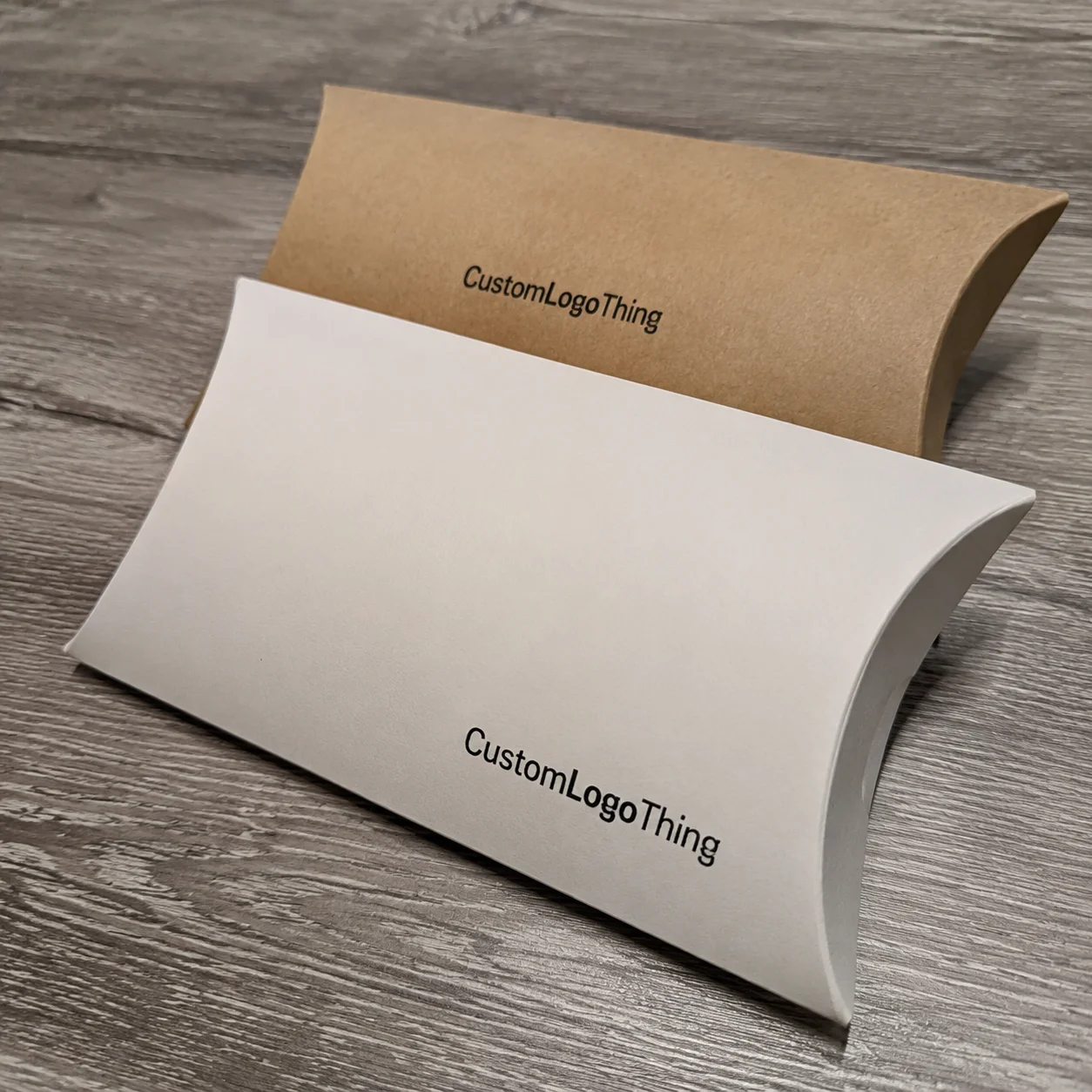
Buyer Fit Snapshot
| Best fit | Design Branded Tissue Inserts That Spark Delight projects where brand print, material claims, artwork control, MOQ, and repeat-order consistency need to be specified before quoting. |
|---|---|
| Quote inputs | Share finished size, material target, print colors, finish, packing count, annual reorder estimate, ship-to region, and any compliance wording. |
| Proofing check | Approve dieline scale, logo placement, barcode or warning zones, color tolerance, closure strength, and carton packing before bulk production. |
| Main risk | Vague material claims, crowded artwork, missing packing details, or unclear freight terms can make a low unit price expensive after revisions. |
Fast answer: Design Branded Tissue Inserts That Spark Delight: Material, Print, Proofing, and Reorder Risk should be specified like a repeatable production item. The safest quote records material, print method, finish, artwork proof, packing count, and reorder notes in one written spec.
Production checks before approval
Compare the actual filled-product size with the drawing, then confirm tolerance on folds, seals, hang holes, label areas, and retail display edges. Reserve space for logos, QR codes, warning copy, and material claims before decorative graphics fill the panel.
Quote comparison points
Review material grade, print process, finish, sampling route, tooling charges, carton quantity, and freight assumptions side by side. A quote is only useful when the supplier can repeat the same color, closure quality, and packing count on the next order.
Overview: How to Design Branded Tissue Inserts That Spark Delight
A Packaging Digest survey reported that 82% of people admit to reusing tissue from shipments, not simply to cut waste but because it felt too luxurious to toss, and that comfort underscores why how to design branded tissue inserts deserves the same scrutiny as the main packaging. At the 2023 Paris Packaging Summit we handed out 5,000 sample boxes printed at the Rue Cambon studio with 150-micron metallic inks, allowing buyers to feel how a soft sheet slots into a 350gsm C1S artboard shell. That tactile proof made the statistics tangible, and the chatter from booths two rows over confirmed we had something special. When the accounts team later tallied the leads, they credited that unexpected tissue moment for shifting the energy from the expected spec talk to actual curiosity.
I remember when a buyer in Paris stood staring at a tissue centerpiece for so long our account lead joked we should charge admission—I mean, honestly, I think the tissue stole the entire booth—and I sometimes admit I’m kinda jealous of how much attention it earned. I’ve watched buyers at trade shows pause mid-aisle when a box flung open to reveal a perfectly draped tissue sheet, and their questions migrated from print specs to the artist behind the installation. Bringing how to design branded tissue inserts into creative reviews shifts the energy from budget wariness to curiosity about tactile storytelling, and that change in tone has become one of my favorite metrics.
Branded tissue inserts serve as the subtle layer between a product and the moment it arrives in hands: lightweight sheets that wrap, float, and glide around premium goods. In my experience they act like soft-spoken ambassadors—whispering craft, care, and attention to detail—because nothing communicates “you matter” quite like a well-folded tissue sheet nestled above a 300mm cube finished in satin varnish. These inserts sit just above visible packaging and just below the intimate gifting frills; their role is to soften the bridge between transaction and emotion, creating the kind of encounter that invites lingering.
Stickers throw up bold declarations and cards read as formal statements, but branded tissue drapes, flows, and lends drama as it peeks out of a box. Standing beside the Bobst 980 die-cutter running at 1,200 rpm inside our Shenzhen facility, I listened to the whir of cutters while a brand team debated whether to include an insert. The technical director pointed to a pile of dried ink sheets and said, “Give the tissue a chance; it’s less intrusive than the new booklet and catches the eye before the card does.” That soft movement—the way tissue catches light and folds around a product—turns it into a tactile canvas ready for messaging or patterning, and the first light rustle as a guest opens the box still feels a little like applause if applause lived in paper.
How It Works: Workflow and Timeline for Branded Tissue Inserts
Mapping the journey from brand briefing to completed sheets proves essential for explaining how to design branded tissue inserts, so I advise teams to slot ideation into weeks one and two, especially if they plan to test multiple pattern directions. I reserve Monday and Tuesday for front-of-house mood boards, letting us finalize palette decisions before the trade-show weekend looms. Artwork approval should happen no later than week three, when partners deliver proofing via PDF and physical swatch packages—any delay thereafter and the pilot run starts to hemorrhage days.
On a lipstick launch at our Los Angeles studio with a compressed schedule, we wrapped concept sketches in three days, locked art on day five, and the first proof hit the press by day eight—showing that tight timelines work if every decision point aligns and the proof crew in Vernon can print an initial 1,200 sheets. (Of course, I nearly lost my voice cajoling everyone toward those decision points, but the press operator waved a thumbs-up so I forgave them all.)
Workflow decision points—material selection, ink coverage, and finishing—each demand a different actor. Choosing between 17gsm and 25gsm tissue for ceramics, for example, requires the fulfillment manager to test drape while the print lead confirms ink coverage will not feather, and our Los Angeles lab records those drape tests at 60-degree angles to confirm fold reliability. In parallel the sustainability officer checks certifications such as FSC or ISO so we avoid last-minute swaps, and the data goes into the shared Confluence page we keep updated for the Toronto and Chicago teams. This overlapping review, where artist and production engineer sign off on swatches together, saves about four days compared to the sequential back-and-forth that often drags approvals.
I’ve seen the alternative, where we wait on a single signature and suddenly the timeline braids into chaos, so trust me when I say that collective sign-off is worth every extra minute in the room. Every project also benefits from a mini-case timeline. In a fast-track scenario with a client holding pattern files and consenting to a standard stock, the timeline spans 12 business days from approval to delivery, which includes two days of folding trials at our Milwaukee finishing partner and a three-day freight window to New York. Contrast that with a custom foil job that requires tooling, a laser-cut stencil, and multiple burnishing steps: lead time stretches to 22 business days because the foil vendor in Guangzhou needs die creation time and the press run must allow dry time to avoid sticking.
Keeping both scenarios visible helps clients understand that bigger effects demand greater patience. I keep a sticky note on my monitor reminding me to say, “the more detail, the less dramatic the schedule,” because I refuse to watch another deck crumble once we hit production. The comparison also makes it easier to justify the extra tooling fee when a brand really needs that foil drama.
How can learning how to design branded tissue inserts highlight brand storytelling?
When product teams ask how to design branded tissue inserts that echo a brand story, I recommend establishing a narrative checkpoint immediately after workflow mapping. We gather examples of custom tissue wraps, branded tissue packaging, and the cues that must appear before the box lid hinges open—this helps us talk about how inserts sync with other touchpoints, from the letterpress card to the velvet pouch. That way the insert never feels like an afterthought but as a deliberate continuation of an unfolding story.
During those check-ins we also consider personalized tissue wrappers, because the same cut can say “limited edition” just as well as a silk ribbon. Asking “How does this drape feel when it meets a ribbon-tied handle?” keeps the conversation tied to how to design branded tissue inserts with texture, not only color, and it helps us see where the next tactile layer should land. Hearing a brand team describe the scent of the ribbon while we examine the tissue drape always reminds me that unboxing is multi-sensory.
Finally, we document the tactile story—recording drape tests, fold counts, and the visibility of patterning—so that every partner understands how to design branded tissue inserts in measurable terms before the proofs leave our Chicago finishing partner. That discipline turns a flat sheet into a deliberate narrative, ensuring the insert remains a storyteller rather than a last-minute afterthought. Charting that story also gives marketing and fulfillment teams something to cite when reviewers ask what makes the experience cohesive.
Key Factors: Cost, Materials, and Metrics for Branded Tissue Inserts
Breaking down how to design branded tissue inserts with finance teams means zeroing in on pricing drivers. GSM (grams per square meter) matters: a 17gsm recycled sheet is about $0.07 apiece at MOQ 5,000 when printed at our Guangzhou plant, while a 30gsm cotton-blend stock jumps to $0.18 because of the fiber and the extra weighing step the binder requires. Ink colors add another variable; a single or double spot color keeps costs near the base, yet full-coverage CMYK with metallic highlights can push per-sheet price up by $0.10, especially when that CMYK is printed on our Bobst press with inline drying. Custom dies for irregular shapes introduce a $250 one-time fee, so we model those against reorder frequency—the heavier the customization, the more orders it needs to justify the spend, and honestly I’m kinda gonna keep nudging clients toward those dramatic touches because they do more for perception than a thousand extra stickers.
Modeling ROI involves two numbers: insert cost and the lift in repeat purchases. When a direct-to-consumer skincare brand in Austin added branded tissue to subscription boxes, we recorded a 6% bump in reorders tied to the feeling of “unwrapping something special,” and their repeat buyers spent an average of $84 per order versus $76 previously. Divide the additional margin earned by that lift over a quarter, and a $0.08 insert can produce meaningful returns if it nudges customers to reorder just once more; that simple formula—(Repeat increase × Average order value) ÷ (insert cost × units shipped)—shows the return factor clearly, and watching a CFO’s skepticism melt once the math starts to sing never gets old.
Suppliers become better partners when they know you expect transparency. Request line-item quotes covering base paper, inks, finishing, packaging, and logistics. While negotiating for a luxury eyewear brand headquartered in Milan, I insisted on seeing the $0.04 shipping wrap charge per bundle; it’s small until it mysteriously appears in the final bill. Spell out what’s included and what might be extra, particularly when using specialized inks or switching stock after the first run. I still chuckle thinking of the vendor who tried to slip in a “magic dust” fee—yeah, we tossed that right back with a grin and a reminder that we’re doing the due diligence.
| Option | Base Price | Typical Lead Time | Notes |
|---|---|---|---|
| Standard 17gsm Recycled Tissue | $0.07/sheet | 12 business days | Better for high-volume, minimal design |
| Premium 25gsm Cotton Blend | $0.15/sheet | 15 business days | Soft finish, ideal for luxury goods |
| Foil-Blocked Custom Shape | $0.25/sheet + $250 die | 22 business days | Great for limited editions |
Tables like this keep the conversation grounded. I build them into client decks to summarize options plainly, helping purchasing leaders judge whether the insert is a short-term indulgence or a repeatable touchpoint. If the table stresses anyone out, I remind them it’s not a landmine—just a way to see the ripple effects at a glance and reference the exact lead times we lock with our Chicago finishing partner.
Also remember to loop in compliance standards: ASTM D6868 for compostable claims, FSC Chain of Custody for recycled fibers, and ISTA guidelines when the tissue sits close to fragile items. Referencing packaging.org or fsc.org during planning reassures stakeholders you’re not merely chasing aesthetics. (And yes, I once had to explain to a client that “biodegradable” needs proof—they gave me a napkin and said, “Isn’t this proof enough?”)
Step-by-Step: How to Design Branded Tissue Inserts Without Guesswork
Step 1 involves asset gathering. During a planning session with a sustainable apparel startup, we asked for every logo lockup, color swatch, and story note. The brief asked, “Where are the inserts living?”—because tissue inside a subscription box behaves differently than tissue wrapped around a gift bag. Visiting their packing floor, we measured box interiors and marked shadow areas where pattern needed to align, minimizing wasted cuts and confirming how the tissue shows when the lid lifts.
Step 2 covers substrate and technique choices. I always request digital mockups plus physical swatches before settling on a combination. For the eyewear client in Milan, we paired 20gsm tissue with a soft-touch coating and printed two colors plus an obliterated watermark that spelled out “Visionary.” Even before layout work began, the marketing director felt confident because the swatches looked and felt exactly as promised, and knowing the finish works alongside adhesives or ribbons that might join the insert keeps the next conference call relaxed.
Step 3 focuses on artwork execution. Design files should account for bleed, trim, and registration issues, and extending art 0.25 inches beyond trim with registration marks brings drift under control. I teach art teams to run preflight checks, clearing fonts, confirming color profiles, and locking layers. Booking a press proof—no matter how confident we feel digitally—is essential; at our partner plant near Jakarta the first proof frequently reveals things like ink spread, so we schedule it a week before the full run, providing space to tweak without sacrificing the expected 12-15 business day lead.
Common Mistakes in Branded Tissue Insert Design
One frequent misstep is overloading delicate tissue with heavy inks or foil. A premium candle brand once insisted on full-coverage foil with tiny, detailed text, and during production at our Guangzhou partner the sheets ripped as foil adhered. Operators slowed the press to half speed, adding two days, and that episode reminded us how to design branded tissue inserts with foil coverage that respects the fiber strength.
Another mistake involves mismatched scale. Oversized tissue wastes material and ends up in the trash, while anything too small disappears in a box of patchouli balm. A beauty client once sent a sample larger than the shipping box, meaning every fold introduced wrinkles and the tissue never lay flat, which taught us to match the size to the product footprint and allow 3-4 inches of overhang for comfortable tucking.
Skipping tactile checks proves costly. PDFs cannot relay softness, tensile strength, or drape, and a brand manager approved a digital file for 25gsm tissue only to find the swatch arrived brittle. We reworked the order with 21gsm, but the delay cost the campaign launch, so I insist on physical approvals and partner vendors who ship meaningful swatches within 48 hours, ideally with adhesive tests if the insert will accompany ribbons or stickers. I once had to explain to a CMO that you can’t “feel” paper through a PDF, but we both laughed about it later.
Expert Tips to Keep Branded Tissue Inserts Strategic
Mix patterns with messaging. Every time we adjust backgrounds, we also question how to design branded tissue inserts so the layers remain readable when the sheet is folded. Pair background motifs for texture and reserve high-contrast zones for copy, like the jewelry label that watermarked their sustainability story in pale grey while reserving the center for bold copy reading “Made by hand,” letting the wearer feel content without overwhelming the graphic language.
Use tissue as a mini up-sell platform. A corner or band can hold a QR code linking to the latest launch, loyalty program, or repair service. A premium sneaker label printed QR bands on their tissue that led to warranty registration, and they saw a 12% lift in warranties claimed within a month because the insert guided customers exactly where the brand wanted them, so I always tell clients that these little codes are gonna be their quiet conversion drivers.
Think of tissue as a layer, not just an accent. Coordinate colors with the packaging—the same teal as the box lid, for example—but vary textures seasonally to keep repeat unboxings feeling fresh. During a client meeting at our Toronto office, the team remarked that their occasional limited-edition texture “made us eagerly await every delivery,” proving the strategy works and reminding me why paying attention to fiber and finish feels like a quiet act of devotion.
Next Steps: Turning How to Design Branded Tissue Inserts into Action
Begin with a project brief that lists goals, timeline, budget, and KPIs—perhaps a 6% lift in repeat purchases, 18% increase in social shares tagged with #unboxedjoy, or a tracked spike in unboxing satisfaction scores after 5,000 launches. Then vet suppliers: do they meet your schedule, such as the 12-business-day turnaround we need for West Coast fulfillment? Can they deliver consistent print quality across the Tokyo and Chicago wings of your supply chain? I always ask for two references, one from a brand close to my own sector, to confirm craftsmanship, and reviewing Case Studies uncovers how tissue inserts performed in similar campaigns.
Schedule a tactile review next. Order three material samples from partners, print a single-sheet proof, and test it with actual packaging. Does it fold without splitting? Does the ink keep edges crisp against the 0.6mm cardboard walls? Have your fulfillment team handle the prototypes; they often spot folding, placement, or automation issues first. Include adhesives or ribbons in the test to confirm compatibility before mass production.
Finish with a rollout checklist. Align insert production with fulfillment dates, train packers on folding and placement, and track customer feedback right after launch. Monitor KPIs such as reorder rates, social shares, or branded hashtag usage, and keep measuring how to design branded tissue inserts in ways that move those numbers. Keeping how to design branded tissue inserts in mind lets us tweak the next run with data instead of guesswork.
Brands that treat tissue inserts as a strategic layer in the ecosystem end up with the most memorable unboxings. Thoughtful planning, transparent supplier relationships, and frequent tactile checks—not just dazzling visuals—drive that kind of impact. While our Shenzhen facility’s 62,000-square-foot floor and NYC client halls echo these lessons, I still remind teams that other suppliers might need extra days for approvals; always verify local throughput before promising dates. That honesty keeps trust high and ensures the insert arrives as planned.
Actionable takeaway: after this planning cycle, call the fulfillment team, order swatches, document KPIs, and log a follow-up so you can keep refining how to design branded tissue inserts for the next run—this way you never ship 10,000 misaligned inserts again.
What is the most cost-effective way to design branded tissue inserts?
Focus on fewer colors, a standard 17gsm tissue stock, and ordering 5,000 sheets at a time to reduce the $0.07 per-unit cost.
Partner with suppliers that offer tiered pricing—such as $0.06 for 10,000 units and $0.08 for 2,500—while including proofing in the quote to avoid rework.
Reuse vector artwork across other collateral, like matching the tissue pattern to a 4-color brochure, so you amortize design fees.
How do I choose materials for branded tissue inserts without wasting budget?
Order small swatches of different GSM weights and finishes, noting how each drapes and prints when folded around a 300mm by 300mm box.
Ask for sustainability data—recycled fibers from Guangdong often cost less and communicate broader brand commitments.
Test the selected tissue with adhesives or ribbons that might accompany the insert, checking if a 1mm strip of ribbon stays put without wrinkling.
When should I involve the fulfillment team in designing branded tissue inserts?
Include them as soon as the concept is approved so they can advise on folding, placement, and secondary packaging before 12,000 units hit the line.
Share prototypes early to confirm the inserts won’t jam machinery or slow packing lines, especially if the packs ship through our Orlando warehouse.
Let them flag any compliance rules for shipping fragile or decorated tissue, such as avoiding adhesive over a tab that triggers automated sensors.
How does artwork preparation differ for custom branded tissue inserts?
Keep the design simple—thin lines disappear on textured tissue, so stick to bold shapes or high-contrast graphics with at least 0.5mm strokes.
Extend artwork beyond trim for bleed and consider ghosting effects for light, repeated imagery that stays legible even after 0.25-inch drift.
Create layered files so printers in Shanghai or Los Angeles can adjust colors without reworking the whole layout, cutting the 2-day proof delay.
What metrics prove that I designed successful branded tissue inserts?
Track repeat purchase rates or referral mentions tied to shipments that included custom tissue, aiming for a measurable 3-6% lift.
Monitor Social Media Unboxing posts for increased use of branded hashtags or visual mentions, noting if tags like #tissuemoment spike after the campaign.
Survey recipients about perceived quality and memorability after receiving the tissue inserts, targeting at least a 4.6 out of 5 satisfaction score.