Buyer Fit Snapshot
| Best fit | design memorable product packaging for packaging buyers comparing material specs, print proof, MOQ, unit cost, freight, and repeat-order risk where brand print, material, artwork control, and repeat-order consistency matter. |
|---|---|
| Quote inputs | Share finished size, material target, print colors, finish, packing count, annual reorder estimate, and delivery region. |
| Proofing check | Approve dieline scale, logo placement, barcode or warning zones, color tolerance, and any recyclable or compostable wording before bulk production. |
| Main risk | Vague material claims, crowded artwork, or missing packing details can create delays even when the unit price looks attractive. |
Fast answer: Design Memorable Product Packaging: Dieline, Finish, Proof, and Buyer Review should be specified like a repeatable production item. The safest quote includes material, print method, finish, artwork proof, carton packing, and reorder notes in one written spec.
What to confirm before approving the packaging proof
Check the product dimensions against the actual filled item, not only the sales mockup. Ask for tolerance on folds, seals, hang holes, label areas, and retail display edges. If the package carries a logo, QR code, warning copy, or legal claim, reserve that space before decorative graphics fill the panel.
How to compare quotes without losing quality
Compare board or film grade, print process, finish, sampling route, tooling charges, carton quantity, and freight assumptions side by side. A lower quote is only useful if the supplier can repeat the same color, closure quality, and packing count on the next order.
How to Design Memorable Product Packaging is not a hunt for a prettier box. That misses the point by a mile. The real job is harder and more useful: create packaging a buyer can spot instantly, understand in a few seconds, and remember well enough to buy again. Most packaging gets handled, glanced at, and forgotten almost immediately. That is exactly why how to design memorable product packaging matters. A package has to protect the product, carry the brand story, and leave some kind of mental imprint after the tape is peeled away.
From the buyer's side, memorable packaging rarely comes from some magic creative trick. It usually comes from disciplined choices: a clear hierarchy, a finish that feels intentional rather than decorative, a shape that can be recognized across a room, and copy that explains the product fast. That is the practical side of how to design memorable product packaging. Fancy graphics do not rescue weak structure. Clever structure does not rescue muddled messaging. The package has to do both jobs without stumbling.
Picture a crowded retail shelf with ten similar products lined up shoulder to shoulder, each trying to outshout the next. Then picture a subscription box landing on a doorstep, where the customer decides almost at once whether the brand feels thoughtful or generic. In both cases, how to design memorable product packaging comes down to one question: does the package give the buyer a clear shortcut back to the brand? That is the real purpose of branded packaging, not decoration for decoration's sake.
That question shapes everything that follows. Not decoration. Real packaging decisions. Real budgets. Real timelines. Real materials. Real tradeoffs, too, including the annoying ones nobody wants to face until the print quote arrives higher than expected. How to design memorable product packaging gets much easier once those limits are visible early instead of buried in fine print.
How to Design Memorable Product Packaging: What It Really Means
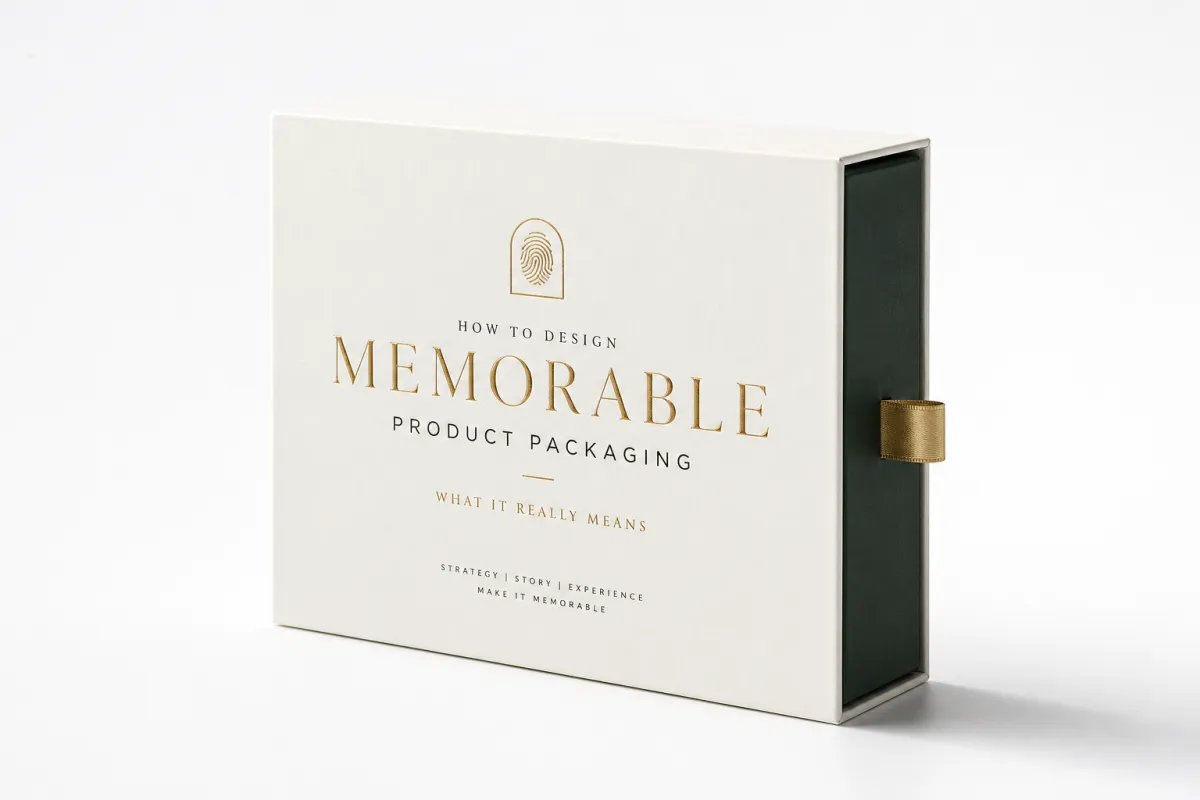
Plenty of people assume memorable packaging means pretty packaging. It does not. Pretty packaging can still disappear the minute the customer walks away. How to design memorable product packaging begins with recall, not ornament. The package should be easy to spot, easy to understand, and easy to remember later. If a buyer sees it once on a shelf or in a feed and can identify it again a week later, that is useful design.
Memorable packaging usually combines four ingredients: shelf impact, tactile experience, clear product communication, and repeat recognition. Shelf impact helps the product stop the shopper. Tactile experience gives the buyer a physical memory of the brand. Clear product communication prevents confusion. Repeat recognition turns a one-time purchase into a second order. That is the real work of how to design memorable product packaging.
I have sat through enough mockup reviews to know that a box can look gorgeous on a monitor and still fall flat in the hand. That mismatch is kinda the whole problem. A team may fall in love with a color palette that feels elegant on screen, only to watch the retail shelf swallow it whole. A brand may choose heavy foil and embossing, then discover the product name becomes harder to read. How to design memorable product packaging means making the package memorable for the right reasons, not merely the loudest ones.
Strong packages usually have one unmistakable cue. Sometimes it is a bold color block. Sometimes it is a distinctive panel layout. Sometimes it is a closure that feels more like a keepsake box than a disposable carton. The aim is not to add more signals. The aim is to choose one or two signals that repeat across the line so the customer can recognize the brand fast. That is why how to design memorable product packaging is really a discipline problem.
Strong packaging does not try to say everything. It says the right thing first, then steps aside so the product can do the selling.
If you want a wider view of materials, formats, and finishing options, browse our Custom Packaging Products. Comparing structure before anyone starts arguing about foil color usually saves a lot of time and a couple of headaches.
Memorable does not always mean premium-looking. A kraft mailer with a clean one-color print can outlast a cluttered glossy box in the buyer's memory. The deciding factor is whether the package creates trust and recognition. That is the core of how to design memorable product packaging, and it applies whether the product is a $12 accessory, a $120 gift set, or a subscription box that has to earn a second month.
How do you design memorable product packaging?
Good packaging rarely begins with art. It begins with the product. How much does it weigh? How fragile is it? Does it need inserts, tamper evidence, moisture resistance, retail hanging, or shipping durability? Those answers shape the structure before any graphic work starts. How to design memorable product packaging works best when the design team treats the box as a business tool, not a blank canvas waiting for decoration.
A basic workflow usually looks like this: define the product needs, study the audience, choose the structural format, establish the visual direction, build a prototype, test the prototype, revise, and approve production. That sounds orderly because it should be. In real projects, packaging goes off the rails when one of those steps gets skipped and everyone hopes the printer will rescue the rest. The printer will not rescue the rest.
Brand strategy and packaging design are related, yet they are not the same job. Brand strategy decides what the company stands for, how it sounds, and what it wants people to remember. Packaging design translates those ideas into physical form. A brand may be playful, clinical, premium, or earthy. The package has to express that without cluttering the shelf. If you want how to design memorable product packaging to work, the brand message and the physical format need to pull in the same direction.
Constraints matter more than people expect. Shipping durability can force stronger board or a tighter fit. Retail regulations can demand barcode placement, ingredient panels, warning text, or country-of-origin details. Print limitations can affect color accuracy, black coverage, and finish choices. Assembly speed matters too, especially if a warehouse team has to pack hundreds of units a day. A box that looks great but takes twice as long to assemble is a problem, not a win. That is the unglamorous side of how to design memorable product packaging.
There is also the software-and-proof stage, where vector files, dielines, bleed, and safe zones decide whether artwork lands cleanly or turns into a production headache. If a package has to survive parcel handling, ask for distribution testing aligned with ISTA methods. For fiber-based packaging, the supply chain may also need FSC-certified material options from FSC. Those standards do not make the design more exciting, but they make it real.
The most reliable packages usually come from a few disciplined choices instead of a stack of trendy effects. That is why how to design memorable product packaging is less about adding features and more about Choosing the Right ones, then stripping away the rest. Structural packaging, print finishing, and packaging materials should all support the same story.
Key Factors That Make Packaging Memorable
Color is usually the first lever people notice, but it is not the only one. Contrast matters more than color alone. A loud palette with weak contrast can still dissolve into category noise. A restrained palette with sharp contrast can stop a shopper fast. How to design memorable product packaging often starts with contrast because it affects visibility, legibility, and brand recall at the same time.
Shape is another major cue. A standard folding carton can work beautifully if the graphics are disciplined, yet a distinct structural silhouette or opening style can make the package feel instantly recognizable. For branded packaging, structure is part of the identity. Typography carries similar weight. A package with a clean, confident type system usually feels more trustworthy than one with five fonts and no hierarchy. If buyers have to decode the front panel, the package has already lost time.
Material choice also leaves a memory. Coated artboard feels different from uncoated kraft. Rigid board feels different from a lightweight mailer. Soft-touch lamination feels different from a high-gloss varnish. These choices are not cosmetic afterthoughts. They change the sensory impression of the product. That is why how to design memorable product packaging should always include a conversation about touch, weight, and opening resistance.
Opening experience matters because people remember the instant the package gives way. A magnetic closure, a tear strip, a drawer pull, or a fitted insert can make the unboxing feel considered. Even the sound of the material can alter perception. A crisp fold feels different from a flimsy flap. A tight lid feels more premium than a loose one. Package branding becomes physical here, not just visual. The unboxing experience can be the moment the customer starts assigning value.
What usually works by category
- Premium cosmetics: rigid setup boxes, soft-touch lamination, foil used sparingly, and a restrained color system.
- Food and beverage: strong front-panel hierarchy, clear ingredients, moisture-aware materials, and shelf-readable contrast.
- Tech accessories: precise fit, minimal clutter, product photography or iconography, and a sturdy reveal sequence.
- Gift-ready retail packaging: a reusable structure, tactile finish, and enough visual restraint to feel worth keeping.
Hierarchy is the quiet hero. The customer should see the brand, then the product name, then the proof points. Not a wall of text. Not a decorative collage pretending to be strategy. How to design memorable product packaging depends on that hierarchy because most buying decisions happen quickly. Quick decisions demand layered communication. Shelf appeal is often a matter of what gets read first, not what gets printed most boldly.
Brand consistency matters too, yet consistency without a distinct cue can become invisible. The trick is to repeat the same color block, corner treatment, icon system, or opening format across the line while giving each SKU a clear difference. That is how brands build recognition without confusing the shelf. If a package is memorable but impossible to navigate, it is not doing its job.
For practical inspiration, many teams compare current packaging benchmarks before sketching anything new. That does not mean copying competitors. It means identifying what shoppers already expect in the category, then deciding where your package should look familiar and where it should break the pattern. That balance sits at the center of how to design memorable product packaging.
One grounded observation matters here: the design that wins in the studio is not always the design that wins in the aisle. Test it under store lighting, on a phone screen, and beside the nearest competitor. Those three environments will expose a weak package faster than a creative review ever will. That is not a drawback. It saves money. It also keeps the final Custom Product Boxes closer to what the market can actually read.
How to Design Memorable Product Packaging Step by Step
Start with a proper brief. Not a vague wish list. A real brief. Include product dimensions, weight, fragility, target customer, channel, budget range, launch date, and any must-have features like inserts, tamper seals, or retail hanging tabs. How to design memorable product packaging gets easier when the brief is specific because the team can work around actual constraints instead of guessing.
Next, map the buyer journey. What should happen at first glance? What should happen during pickup? What should happen during unboxing? What should happen when the customer stores or reuses the package? Different moments call for different design decisions. A package that needs to sell on shelf should lead with contrast and clarity. A package that ships directly to a customer may need a more dramatic reveal. A package meant to be reused should feel sturdy enough to keep around. That is where how to design memorable product packaging becomes a sequence of choices, not a single visual move.
After that, build a concept board. Include color directions, type references, finish ideas, structural cues, and sample packs that capture the mood. Keep competitors on the board if needed, but only as comparison. Do not copy the nearest premium brand and call it strategy. That gets stale fast, and it usually gets rejected in review anyway. Use the board to decide whether the package should feel bold, quiet, technical, artisanal, playful, or premium. The goal is alignment before artwork starts.
Then prototype early. Compare several versions side by side. Hold them in your hands. Look at them in the actual light they will live in. Read the front panel from three feet away. Open and close the structure. How to design memorable product packaging improves dramatically once the team stops arguing on-screen and starts comparing physical samples. Real packaging products reveal what digital comps hide.
Refine the artwork only after structure and materials are mostly locked. If the dieline keeps changing, the layout keeps shifting, and someone eventually pays for another proof. That is how timelines disappear. Clean structure first. Final graphics second. Production files last.
- Brief the project: product specs, audience, budget, channel, and deadline.
- Define the message: what the package should communicate in three seconds.
- Choose the structure: folding carton, rigid box, mailer, sleeve, tray, or another format.
- Set the visual system: color, typography, imagery, finish, and brand cues.
- Prototype and test: compare real samples, not just mockups.
- Lock production details: line art, bleeds, materials, coating, and assembly method.
Good teams also check whether the package can be assembled quickly without special training. A design that adds 30 seconds per unit can become expensive very quickly. That is why how to design memorable product packaging has to account for operations, not just aesthetics. If the product is destined for ecommerce, test the package with transit abuse in mind. If the product is headed to retail, test visibility against competitors. If the package is a gift item, test the unboxing sequence for awkward moments. Awkward moments can wreck premium positioning in a hurry.
If you want to compare formats and finishing combinations commonly used in custom printed boxes, review our custom printed boxes options. A simple structural comparison can save a week of design revisions and a few awkward production emails.
Product Packaging Cost and Pricing: What to Expect
Packaging cost is usually driven by six things: material, size, print method, finish, insert complexity, and quantity. The first mistake people make is asking only for the unit price. That is like asking how to design memorable product packaging and then ignoring the materials. The number on the quote matters, but the full job costs more than the box itself.
Small runs cost more per unit because setup gets spread across fewer pieces. That is normal. A 500-unit run can be dramatically more expensive per box than a 5,000-unit run, even if the design stays the same. Structural changes can also add tooling or setup costs. Rigid boxes, custom inserts, and unusual opening systems usually cost more than a standard folding carton. That does not make them bad choices. It means the budget should be realistic from the start.
Here is a practical way to think about pricing. A simple folding carton might sit in a lower-cost band, while a premium rigid box with foil, embossing, and a custom insert will sit in a higher one. Exact numbers vary by coverage, material grade, supplier, and geography, so a quote always beats a guess. Still, concrete ranges help planning. For many custom packaging projects, the difference between standard and premium is not a few cents. It can be dollars per unit at low quantity. That is why how to design memorable product packaging should be planned with budget in mind from the first meeting.
| Packaging Option | Typical Use | Relative Cost | Common Range at Low Quantity | Notes |
|---|---|---|---|---|
| Folding carton | Retail items, cosmetics, supplements, accessories | Low to medium | $0.75-$2.50 per unit | Best when you need clear branding and efficient assembly |
| Mailer box | Ecommerce, subscription boxes, direct-to-consumer shipping | Medium | $1.25-$3.50 per unit | Good for unboxing and transit protection |
| Rigid setup box | Gift sets, luxury goods, premium electronics | High | $3.50-$9.00 per unit | Feels premium, but needs more budget and usually more lead time |
| Sleeve with tray | Display-friendly retail packaging | Low to medium | $0.90-$2.80 per unit | Useful when you want a clean reveal without a full rigid structure |
| Custom insert system | Fragile products, multi-piece kits, samples | Medium to high | $0.40-$2.00 extra per unit | Can improve protection and presentation, but it adds cost fast |
There are smarter places to save than others. You can often reduce cost by simplifying finishes, standardizing dimensions, reducing ink coverage, or choosing a less complex insert. What you should not do is strip away hierarchy until the package becomes hard to read. Cheap-looking packaging is not a bargain if it hurts conversion. That is the ugly part of how to design memorable product packaging: the cheapest-looking option can become the most expensive one if it drags down sales.
Budget separately for design, sampling, production, and freight. If you do not split those out, someone will eventually be surprised by the total. That surprise is never fun. Freight can be especially annoying on bulky boxes because volume matters as much as weight. Keep sustainability expectations honest too. If fiber-based packaging is a goal, ask for FSC-certified board and check local recycling guidance with the EPA recycling resources. Recyclable in theory and recyclable in a real local system are not always the same thing.
If you are comparing budgets across materials and box types, our custom packaging products page can help you narrow the options before you start collecting quotes. That usually beats polishing a concept nobody can manufacture within budget.
Packaging Process and Timeline: From Concept to Production
A realistic packaging timeline usually has five stages: briefing, concept development, revisions, sampling, and production. Simple projects can move quickly. Custom work usually cannot. How to design memorable product packaging gets easier when the timeline is understood early, because late-stage panic is one of the main reasons packaging becomes expensive.
A typical concept phase may take 3-7 business days, depending on how clear the brief is and how many directions the team wants to explore. Revisions can take another few days, especially if stakeholders keep adding copy or shifting the product hierarchy. Sampling often takes longer than people expect, particularly for structural changes, print matching, or insert adjustments. A first sample might reveal that the closure is too tight, the print contrast is too low, or the package is hard to assemble. That is normal. Sampling exists so the team can catch those issues before production.
Production lead time varies by factory load, material availability, and order size, but many custom jobs land somewhere around 10-20 business days after final approval. Shipping adds its own calendar. If the package has to arrive before a product launch, work backward from the launch date and add buffer time. A late package can wreck inventory timing, ad campaigns, and retailer commitments. That is not melodrama. It is operations.
Delays usually come from the same places: late copy changes, missing dielines, indecisive approvals, proof revisions, and test failures. If the package needs structural testing, give yourself extra time. If the artwork needs regulatory text, give yourself extra time. If the project depends on a specific finish, give yourself extra time. In packaging, the last 10 percent of the work often consumes 30 percent of the calendar.
That is why how to design memorable product packaging should be tied to a launch schedule from the start. A beautiful package that misses the ship date helps no one. Pretty is nice. On time is nicer.
Practical timeline view:
- Brief and discovery: 2-5 business days
- Concepts and initial direction: 3-7 business days
- Revisions and file prep: 2-6 business days
- Sampling and fit checks: 7-15 business days
- Production and finishing: 10-20 business days
- Freight and delivery: depends on destination and carton size
A good rule: if the launch date matters, build at least one buffer week into the schedule. Add more if the box is structural, highly finished, or tied to regulated labeling. How to design memorable product packaging should never be rushed so hard that the package becomes a source of emergency revisions. That usually ends with more cost and less confidence.
Common Mistakes, Expert Tips, and Next Steps
The classic mistake is trying to say too much. Brands pile on claims, badges, illustrations, product shots, icons, and marketing copy until the package has no breathing room left. The result is noise. How to design memorable product packaging works better when the message is cut down to the few things the buyer actually needs. Product name. Brand. Main benefit. Maybe one proof point. That is enough for a lot of categories.
Another mistake is designing for the studio instead of the shelf, the shipment, or the unboxing moment. A package can look polished on a monitor and still fail in a warehouse or retail aisle. Test it in real lighting. Test it beside competitors. Test it after it has been handled twice. If it only works in a pristine mockup, it is not ready.
Unreadable copy is another common issue. Tiny type on a busy background is not elegant. It is lazy. If the audience cannot quickly understand what the product is, the package has already burned attention. The same goes for weak hierarchy. If every element screams, none of them are heard. That is packaging design 101, yet people still ignore it.
My practical tips are straightforward:
- Choose one hero element: color, shape, texture, or a signature graphic cue.
- Test in context: shelf, mailbox, countertop, or display stand.
- Keep the message tight: clarity beats clutter almost every time.
- Check structure early: line accuracy, fit, closure, and assembly matter.
- Compare against the category: the package should fit the market, not fight physics.
One smart habit is to ask for two or three concept directions before anyone gets too attached to one option. That makes tradeoffs easier to see. Maybe one version is more premium but costs more. Maybe another version is cheaper but less memorable. Maybe the middle option gives you the best balance of branded packaging and production sanity. That comparison is usually where the right answer appears.
Another useful habit: request physical samples before final approval whenever the structure or finish matters. A soft-touch coating can feel wonderful or slightly rubbery depending on the material. A foil accent can look elegant or drift toward cheap-looking if it is overused. That is where how to design memorable product packaging becomes a practical craft, not a mood board exercise.
If the project is still at the planning stage, start with three things: a packaging brief, a reference set, and a budget range. Then decide whether the product needs more shelf presence, more gift appeal, or more shipping protection. Those priorities will shape the design faster than any trend deck will. If you need more structure options, revisit our custom packaging products and compare formats against your actual use case.
Here is the part most teams hear too late: the best package is not the one with the most effects. It is the one that makes the product feel obvious, useful, and worth keeping. That is the real standard for how to design memorable product packaging. The package should help the buyer remember the brand without forcing them to work for it. Simple idea. Not always simple execution.
So here is the clean takeaway. Write the brief with real product specs, pick one memorable cue, prototype in physical form, test it beside competitors, and keep the structure honest about cost and assembly. If a package cannot be understood in three seconds and held together in the real world, it is not finished yet. That is how to design memorable product packaging without turning the project into a design circus.
When the decision is made well, the product feels more confident on shelf, the unboxing feels more intentional, and the customer has a better reason to come back. That is why how to design memorable product packaging is not just a visual exercise. It is a sales decision dressed as a box.
How do you design memorable product packaging for a small brand?
Pick one distinctive cue, like a strong color, a clear shape, or a signature texture, and repeat it consistently. Keep the message simple so customers know what the product is in under three seconds. Use affordable materials and finishes that still feel intentional, because fake luxury usually looks like fake luxury. For a small brand, how to design memorable product packaging is usually about clarity and consistency before anything else.
What makes product packaging memorable instead of just attractive?
Memorable packaging is easy to recognize, easy to understand, and satisfying to open. A clear hierarchy and a repeatable visual cue matter more than random decoration. The package should create a mental shortcut so shoppers remember the brand on the next purchase. That is the practical difference between pretty and memorable, and it is a core part of how to design memorable product packaging.
How much should I budget when learning how to design memorable product packaging?
Budget separately for design, sampling, production, and shipping so the final number is not a surprise. Lower unit costs usually show up at higher quantities, while small runs tend to cost more per piece. Save money with simpler materials or fewer finishes before cutting structure or readability. If you are serious about how to design memorable product packaging, treat the budget as a system, not a single line item.
How long does the packaging design process usually take?
Simple projects can move quickly, but custom packaging often needs several rounds of concepts, proofs, and samples. Sampling usually takes longer than the first design stage, especially when structure or print details need adjustment. Build buffer time into the timeline so launch dates do not get wrecked by avoidable revisions. That is especially true for structural packaging or highly finished Custom Product Boxes.
What is the biggest mistake people make with product packaging design?
They try to say too much and end up hiding the product behind visual noise. They design for a mood board instead of for the shelf, the shipment, or the unboxing moment. They skip testing, then act surprised when the box looks good on screen but fails in real use. That is why how to design memorable product packaging should always be tied to real-world testing.