Buyer Fit Snapshot
| Best fit | Wholesale Packaging Design for Brand Orders projects where brand print, material claims, artwork control, MOQ, and repeat-order consistency need to be specified before quoting. |
|---|---|
| Quote inputs | Share finished size, material target, print colors, finish, packing count, annual reorder estimate, ship-to region, and any compliance wording. |
| Proofing check | Approve dieline scale, logo placement, barcode or warning zones, color tolerance, closure strength, and carton packing before bulk production. |
| Main risk | Vague material claims, crowded artwork, missing packing details, or unclear freight terms can make a low unit price expensive after revisions. |
Fast answer: Wholesale Packaging Design for Brand Orders: Material, Print, Proofing, and Reorder Risk should be specified like a repeatable production item. The safest quote records material, print method, finish, artwork proof, packing count, and reorder notes in one written spec.
Production checks before approval
Compare the actual filled-product size with the drawing, then confirm tolerance on folds, seals, hang holes, label areas, and retail display edges. Reserve space for logos, QR codes, warning copy, and material claims before decorative graphics fill the panel.
Quote comparison points
Review material grade, print process, finish, sampling route, tooling charges, carton quantity, and freight assumptions side by side. A quote is only useful when the supplier can repeat the same color, closure quality, and packing count on the next order.
Wholesale Packaging Design Tips for Smarter Brand Orders
A carton can look sharp in a render and still bleed margin once it starts moving through freight, warehouse handling, and retail receiving. That gap between the mockup and the real world is where packaging budgets get shredded. The best wholesale Packaging Design Tips are not about making a package louder. They are about making it cheaper to move, safer to ship, easier to reorder, and less likely to surprise the operations team after approval.
Teams often begin with decoration and finish with damaged goods, rushed reprints, or a warehouse manager asking why the box adds two inches to the shipper cube. I have seen a polished sample save the sales pitch and still fail the line test. That kind of miss is not rare. It happens because packaging is treated like a graphic exercise instead of a production system. The better approach is to start with structure, material, and logistics before artwork enters the conversation. That is where the practical wholesale packaging design tips live.
Custom Logo Things works in that space every day. The goal is not to oversell custom printed boxes or pretend every format fits every channel. The goal is to make retail packaging, shipping packaging, and product packaging behave predictably across a wholesale run, whether the order is 500 units or 50,000. These wholesale packaging design tips are built around that reality, and they apply to reorders just as much as first runs.
"From a buyer's point of view, the cheapest quote is not the cheapest package if it adds one more touch, one more pallet, or one more claim."
What are the best wholesale packaging design tips that protect margins?
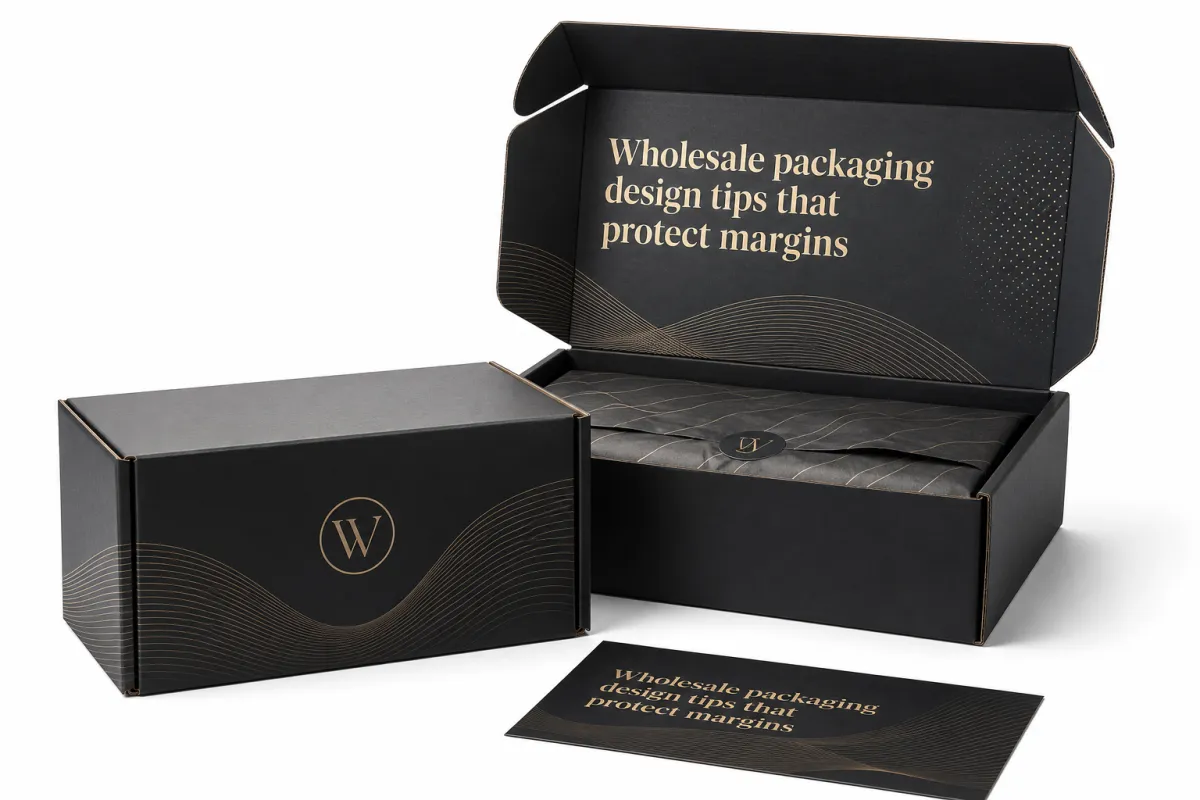
The most expensive packaging mistake is often invisible in the mockup. A folding carton can look elegant on screen and still force oversized freight, extra void fill, or slower packing speed once it hits the line. Fifteen extra seconds per unit sounds small until you multiply it by thousands of orders. That is why wholesale packaging design tips need to start with total cost, not visual appeal alone.
Unit price matters, but it never stands alone. A carton priced at $0.22 can become the expensive option if it fits poorly and drives damage, while a $0.31 carton may save money because it ships tighter, stacks cleaner, and breaks less often. Freight is not just freight. It is pallet density, carton count, breakage rate, and labor folded into one bill. Across a larger run, those differences compound faster than most brands expect, which is why wholesale packaging design tips have to include logistics, not just print specs.
Structure changes the economics more than many buyers realize. A rigid box can create a premium unboxing moment, yet it also adds material weight, more hand assembly, and more cube. A lighter corrugated mailer may feel less luxurious, but it can cut shipping cost and move faster through fulfillment. The right choice depends on whether the product is headed to DTC fulfillment, wholesale distribution, or a retail shelf. Those are three different jobs, and one box shape rarely handles all three without compromise.
Material choice matters just as much. A 350gsm C1S artboard with aqueous coating behaves differently from an E-flute mailer with litho laminate or a rigid setup box wrapped in printed paper. One gives stronger color fidelity, another brings crush resistance, another reduces shipping waste. The point of wholesale packaging design tips is not to pick the fanciest spec. It is to pick the spec that survives the supply chain without wasting money at every handoff.
Finish choices can change the economics quietly. Spot UV, soft-touch lamination, foil, embossing, and heavy ink coverage all look attractive in a sales sample. At volume, they can slow throughput, complicate recycling, or increase spoilage if registration is tight. For branded packaging, the finish should support package branding, not create a bottleneck in production. Good wholesale packaging design tips keep the finish aligned with the run size and the route to market.
One thing buyers sometimes miss is the cost of handling, not just materials. If a box needs extra folding steps, a separate insert line, or manual sticker placement, the labor shows up somewhere. Usually it shows up late, after the purchase order is already approved. That is why margin-safe packaging is not always the prettiest. It is the package that can be made, packed, and shipped without drama. Plain, maybe. But not sloppy.
Buyer confidence rises when the package feels intentional and performs the same way every time. That is not marketing gloss. It is what happens when the structure matches the product, the channel, and the shipping method. Strong wholesale packaging design tips protect margin by reducing rework, lowering claims, and helping each carton do its job with less waste.
Start with the product: size, weight, and shelf fit
Before artwork, before finish, before any supplier quote, define the product with precision. Exact outer dimensions, weight, closure style, fragility, and accessory count are the starting point. A bottle with a pump, a kit with inserts, or a set with protective sleeves changes the internal layout immediately. Good wholesale packaging design tips begin with product reality, not design preference.
The channel comes next. DTC mailers need different compression resistance and insert strategies than retail cartons. Club packs need stronger stacking performance. Distributor cases need clean labeling, efficient pallet patterns, and enough structural integrity to survive warehouse handling. Wholesale packaging is not one format. It is a family of formats that should match the route to market.
Shelf fit gets missed more often than it should. A package that looks balanced in a render can still fail if it faces forward awkwardly, crowds a neighboring SKU, or uses more depth than the retailer allows. A few millimeters can decide whether a product clears a planogram review or gets pushed back for revision. That is why wholesale packaging design tips should include retail dimensions, not just product dimensions.
Incorrect sizing sets off a chain reaction. Too much void space increases filler use and can raise dimensional weight. Too little room leads to scuffing, pressure marks, and breakage. Either problem can wipe out the savings from a lower print quote. For fragile items, a fit test is more valuable than a polished mockup because it shows where movement actually happens. That is one of the simplest wholesale packaging design tips to apply before sampling begins.
When I review packaging briefs, I look first for measurements that are exact enough to quote and build against. Rounded dimensions and vague notes are how teams end up revising a dieline three times. That delay is expensive, but it is also avoidable. A clean product spec saves everyone from guessing, and packaging production hates guessing. It always has.
Product teams should gather the basics before they ask for samples:
- Exact dimensions of the product, not rounded estimates.
- Weight of the packed unit, especially if the carton will be stacked.
- Fragility level, including corners, glass components, or sensitive surfaces.
- Closure type, such as tuck top, magnetic close, sleeve, or tape seal.
- Channel, whether DTC, retail, club, or distributor shipping.
That short list cuts back-and-forth and helps a supplier recommend the right product packaging structure the first time. It also makes comparison shopping easier because every vendor is quoting the same use case. In a wholesale setting, that clarity carries real value, and it is one of the most practical wholesale packaging design tips for keeping the process on track.
If a brand needs structure options quickly, Custom Logo Things can support both visual and functional needs through Custom Packaging Products. A box that looks right on a shelf may not be the same format that survives shipping, and the strongest wholesale packaging design tips keep both realities in view.
Material and print specifications buyers can quote
Quotes only become reliable when the specification is tight. A supplier cannot price vague packaging well, and vague specs tend to come back later as surprise charges. The most useful wholesale packaging design tips are the ones that turn creative direction into a one-page brief a production team can price without guesswork.
Substrate and board grade come first. For custom printed boxes, a buyer should know whether the job needs SBS, C1S, CCNB, corrugated board, rigid board, or another option. Flute choice matters too. E-flute gives a tighter print face and slimmer profile, while B-flute and C-flute add durability. A folding carton needs paper weight. A mailer needs board grade and flute profile. A rigid box needs wrap material and base board thickness. Those details shape cost, print quality, and handling.
Print and finish should be defined with the same discipline. A supplier needs to know color count, print side, coating, lamination, varnish, foil, embossing, debossing, and whether the package carries high-coverage ink. Spot decoration can help package branding, but only if it supports the sales story and does not make production messy. These wholesale packaging design tips save time because they narrow the quote to a real build, not a generic idea.
Artwork requirements belong in the brief too. Include bleed, dieline format, accepted file type, and color expectations. If a brand uses Pantone matching, say so. If the file must be converted to CMYK, say so. If image resolution matters because the package will be read at close range in retail, note that as well. Packaging design may start with brand voice, yet print production still runs on technical rules, and that is where wholesale packaging design tips become operational rather than decorative.
Compliance items should be on the spec sheet from the beginning. Barcodes, recycling marks, ingredient panels, warning text, country-of-origin lines, food-contact requirements, and retailer label rules all affect layout. The earlier they are listed, the less likely the design will be rejected after proofing. For regulated goods, one missing line can stop an entire order.
For sustainability programs, buyers often ask for FSC chain-of-custody or recycled content details. If the job needs forest certification, the paperwork should be settled before production starts. The same applies to ship testing. For parcel performance, ISTA standards help determine whether a package is built for transit or only for display. You can review those standards at ISTA. For responsible fiber sourcing, FSC information is available at FSC.
A one-page spec sheet keeps the process clean. It should include the following:
- Product name and SKU.
- Outer and inner dimensions with tolerances, if known.
- Material, board grade, and coating.
- Print method, color count, and finish.
- Compliance notes, barcode placement, and label copy.
- Quantity, target cost, and desired delivery window.
That level of detail makes quote comparisons defensible. It also shows where the cost is coming from, which is one of the most practical wholesale packaging design tips anyone can use. If the quotes vary, the reason should be visible in the spec, not hidden in a supplier assumption.
Custom Logo Things can source custom printed boxes and other branded packaging formats through its production network, which is exactly why the brief matters. Better specs produce sharper quotes, and sharper quotes are the difference between a busy month and a costly one.
Wholesale packaging design tips for pricing and MOQ
Price is not a single number. It is the result of material, print coverage, finishing steps, setup labor, and run length. The strongest wholesale packaging design tips for pricing start there. A quote can look low until the buyer notices extra charges for tooling, plate setup, special varnish, or secondary assembly.
MOQ is the other half of the equation. Lower minimums reduce inventory risk, though they usually raise unit cost. Higher volumes improve price, yet they demand more cash and more storage space. The right balance depends on how fast the product sells and how much room the brand has to carry stock. For some businesses, a 1,000-unit run is sensible. For others, 10,000 units makes more sense because the packaging turns faster and the per-unit savings are meaningful.
Tiered quotes help separate instinct from math. Ask for pricing at multiple breaks so you can see the cost curve rather than one point on the curve. A quote at 1,000 units, 3,000 units, and 5,000 units often shows where setup and material costs begin to spread out. It also reveals whether storage becomes the bottleneck before the unit price improves enough to matter. These wholesale packaging design tips make volume decisions easier to defend internally.
Several variables move the quote more than most buyers expect:
- Material choice: rigid board and specialty corrugate cost more than standard folding carton stock.
- Print coverage: full-bleed, rich blacks, and heavy ink use add cost.
- Color count: more colors mean more setup and more risk of register issues.
- Finishing steps: foil, embossing, soft-touch, and spot UV increase complexity.
- Structural design: windows, inserts, magnets, and custom closures raise tooling and labor.
A useful comparison for common wholesale packaging options is below. The ranges are directional, not universal, because carton size, print coverage, and supplier location all affect the final number.
| Packaging option | Typical MOQ | Estimated unit cost | Best use case | Cost drivers |
|---|---|---|---|---|
| Folding carton, full-color print | 3,000-10,000 | $0.18-$0.42 | Light products, retail packaging, cosmetics, supplements | Color count, coating, board grade, dieline complexity |
| Corrugated mailer, printed exterior | 500-5,000 | $0.78-$1.35 | DTC shipping, subscription boxes, protected fulfillment | Flute choice, print coverage, inserts, shipping cube |
| Rigid setup box with wrap print | 300-2,000 | $1.90-$4.80 | Premium gifts, presentation packaging, luxury branded packaging | Hand assembly, board thickness, magnet or ribbon features |
| Retail tray or display carton | 1,000-8,000 | $0.32-$0.90 | Shelf display, club packs, promotional launches | Display structure, ink coverage, pallet efficiency |
The table makes the trade-offs clear. A rigid box may look more premium, but the labor and material cost can be two to five times that of a folding carton. A corrugated mailer may cost more per unit than a simple carton, yet it can save money once damage rates and fulfillment labor are included. That is the practical side of wholesale packaging design tips: compare the landed outcome, not the quote in isolation.
Standardization is another route to savings. If a brand can use one or two standard sizes across a product family, the per-unit cost often falls because the supplier repeats the same board size, the same tooling, and the same production rhythm. Standardization also helps with warehousing and replenishment. In plain terms, it reduces friction.
Simplifying finishes can lower cost without flattening the look. A matte coating, strong typography, and one accent color can create a more disciplined package than a crowded surface with four specialty effects. Good package branding does not need every finish in the catalog. It needs the right finish in the right place. That is one of the most useful wholesale packaging design tips for brands trying to protect margin while still looking established.
There is also a subtle cost in inconsistency. If one run uses a different coating or a slightly different board thickness, the brand may not notice on a desk sample. The warehouse usually notices later, in the form of split seams, scuffed corners, or slower packing. Those are the sorts of things that never show up in the sales deck, but they do show up in returns. Packaging math has a way of finding the weak spot.
Map the process and timeline before you place the order
Packaging timelines slip for predictable reasons. The order is rarely late because of one dramatic failure; it is late because several small steps were left vague. Strong wholesale packaging design tips include a timeline that treats the package like a production project, not a single purchase order.
The workflow usually moves through brief, dieline, design, proof, sample, approval, production, inspection, and shipping. Each step can move fast, but none of them should be guessed. A simple paperboard carton may go from brief to proof quickly. A custom structural package with foil, inserts, or complex die-cuts takes longer because each revision touches the tool, the print file, or both.
Typical timing varies by complexity, but a practical range often looks like this:
- Brief and quote review: 1-3 business days if the specs are complete.
- Dieline and layout: 2-5 business days for standard packaging, longer for custom structures.
- Proof and revisions: 2-7 business days depending on artwork changes.
- Sampling or mockup: 3-10 business days, especially if tooling is needed.
- Production: often 12-20 business days, with larger or more detailed runs taking longer.
- Inspection and shipping: varies by destination and freight method.
That schedule is not fixed. It shifts with quantity, seasonality, material availability, and how quickly the buyer returns approvals. A brand can lose several days waiting on a corrected barcode or a final color call. That is why timing belongs in the brief from the start. It is one of the simplest wholesale packaging design tips, and one of the most ignored.
Launches and promotional windows need buffers. Retail onboarding can trigger unplanned revisions. Distributors may ask for label changes. A seasonal order can get squeezed by factory capacity. If packaging is tied to a product launch, the order should not begin at the last responsible minute. It should begin early enough to absorb one round of revisions without panic.
Testing deserves attention too. If the package will move through parcel networks, ask whether it should be tested to relevant ISTA or ASTM methods before a full run. That matters especially for fragile goods, subscription packs, or products with narrow margins for damage. Testing may cost more up front, but it can prevent a far larger bill later when replacements and claims pile up.
I have seen brands skip the sample stage because the first mockup looked fine on a screen. Then the insert arrived too tight, the closure tab bent, or the shipper bulged under stack pressure. None of those problems are mysterious. They are just expensive when they appear after the order has already been placed. A little caution saves a lot of cleanup.
From a planning standpoint, smart buyers treat packaging as part of the launch calendar. They reserve time for artwork, revisions, mockups, and approvals. They also keep one eye on inventory. A design that saves pennies per unit can still hurt the business if it arrives after the launch window. Good wholesale packaging design tips keep both clocks visible: production time and sales time.
Why choose a packaging partner that handles wholesale volume
A design-only vendor can produce a beautiful mockup. A supplier built for recurring wholesale volume does more than that. It understands repeatability, reorder consistency, and the cost of variation. That difference matters because wholesale orders are rarely one-and-done. The second and third runs often matter as much as the first.
In a wholesale environment, the best partner is a risk reducer. They catch issues in prepress, flag file problems before production, and help the brand avoid costly surprises. They also know where to look for savings without hurting presentation. That may mean adjusting board grade, simplifying a closure, or changing an insert so the box packs faster. These wholesale packaging design tips are easier to execute with a partner who already thinks in production terms.
Consistency is another reason to choose a wholesale-focused supplier. Color drift, inconsistent coating, and variation in board performance can undermine package branding across multiple runs. A strong partner documents specs, controls revisions, and keeps a record of what worked last time. That matters when a SKU is reordered six months later and the brand expects the box to match the first run.
Wholesale packaging should also support operational speed. A supplier who understands larger orders can usually quote faster, source materials more cleanly, and manage prepress with fewer delays. That does not mean every job moves quickly. It means the steps are predictable. Predictability protects timelines, cash flow, and shelf availability.
If a brand is growing into larger order volumes, it helps to work with a partner that can support both product packaging and retail packaging needs. Custom Logo Things offers that type of path through its Wholesale Programs, which is useful for brands that need packaging to scale without losing control of quality or cost.
There is a financial angle too. A supplier handling wholesale volume can often show the impact of a change before the order is placed. That might be the effect of switching from a window box to a closed panel, or from a soft-touch finish to a matte aqueous coating. Small changes can move the whole quote. Good wholesale packaging design tips are easier to act on when the partner explains those trade-offs plainly.
That is the real value: fewer surprises. Not perfect conditions, not magic pricing, not instant turnaround. Just cleaner information, steadier execution, and a package that behaves the same way on the last pallet as it did on the first sample.
Next steps: turn your brief into a quote-ready package
The fastest way to improve a packaging quote is to make the brief impossible to misunderstand. Gather the basics first: product dimensions, weight, quantity, target cost, sales channel, deadline, artwork files, and any compliance needs. Those inputs are the backbone of strong wholesale packaging design tips because they replace assumptions with facts.
From there, ask for two or three structural options. A buyer should not compare only one box against one price. Compare landed cost, shelf presence, and shipping efficiency. A structure that saves a few cents on paper may lose money in freight. Another may cost more upfront but improve fulfillment speed enough to justify the difference. That is how smart packaging decisions are actually made.
Order a sample or mockup before the full run if the product is new, fragile, or tightly fitted. Fit matters. So does stackability. So does how the package feels in a buyer's hand. A sample can reveal whether the insert is too tight, whether the closure is awkward, or whether the print reads clearly at arm's length. Those are not cosmetic questions. They are commercial questions. They are also the kind of questions that good wholesale packaging design tips are meant to answer before scale makes them expensive.
Use the quote process to pressure-test your assumptions. If the supplier suggests a different board grade, ask why. If the lead time looks long, ask which step is the bottleneck. If the MOQ seems high, ask for tiered pricing. The goal is not to push for the lowest number. The goal is to find the most efficient combination of cost, protection, and presentation. That is what the best wholesale packaging design tips are built to do.
For brands building a packaging plan from the ground up, the following checklist keeps the conversation focused:
- Confirm the product specs: dimensions, weight, accessories, and fragility.
- Choose the channel: DTC, retail, club, distributor, or mixed use.
- Select the structure: folding carton, mailer, rigid box, tray, or display pack.
- Set the material and finish: board, coating, lamination, and special effects.
- Define the order economics: MOQ, tiered pricing, target landed cost, and storage space.
- Lock the timeline: proof, sample, production, and shipping buffer.
If you are moving toward a first wholesale order, this is also the point to review the rest of your packaging stack. Inserts, shippers, labels, and outer cartons should work together. A box that looks strong on its own can still fail if the master carton is too weak or the label placement slows receiving. Strong wholesale packaging design tips treat the package as part of a larger system.
For many brands, the smartest next move is simple: build a clean brief, get comparable quotes, and test one sample before scaling. That process protects margin, speeds approvals, and improves confidence on the sales floor. Done well, wholesale packaging design tips do more than reduce cost; they make the order easier to repeat, easier to ship, and easier to sell. If one action comes first, make it this: measure the product carefully, Choose the Right structure for the channel, and do not approve artwork until the sample proves the box can actually do its job.
How do I start with wholesale packaging design tips for a new product?
Start with product measurements, weight, fragility, and the channel it will ship through so the packaging matches the real use case. Create a simple spec sheet before requesting quotes so suppliers can respond with comparable pricing and timelines. Ask for one sample or mockup early to confirm fit and avoid expensive redesigns after production starts. These wholesale packaging design tips are most effective when they are tied to a specific launch plan.
What affects wholesale packaging design pricing the most?
Material choice, print coverage, color count, finishing steps, and structural complexity usually have the biggest effect on cost. Quantity changes the price curve quickly; larger orders often reduce unit cost but require more storage and cash upfront. Custom tooling, tight turnaround, and specialty coatings can add cost even when the box size stays the same. If you want better pricing, start with wholesale packaging Design Tips That simplify the structure before you ask for a quote.
What MOQ should I expect for custom wholesale packaging?
MOQ depends on material, print method, and finishing; simple structures usually allow lower runs than complex custom builds. If volume is uncertain, ask for tiered pricing so you can compare a short run against a higher-volume order. The right MOQ is the one that balances inventory risk, unit cost, and launch timing for your business. That balance is one of the most useful wholesale packaging design tips for growing brands.
How long does wholesale packaging design and production usually take?
Typical timelines include brief, dieline, design, proofing, sampling, production, inspection, and shipping, each with its own lead time. Revisions, custom tooling, and specialty finishes are common reasons schedules slip beyond the original estimate. Build buffer time into launch plans, especially for retail deadlines or seasonal promotions. Strong wholesale packaging design tips always account for the full path from brief to delivery.
What files do suppliers need for a wholesale packaging quote?
Send product dimensions, weight, quantity, target price, artwork files, and the channel the packaging will be used in. Include brand standards, barcode needs, compliance text, and any preferred materials or finishes. A complete brief reduces back-and-forth and makes the quote more accurate from the start. Clear inputs are the foundation of wholesale Packaging Design Tips That Actually save money.