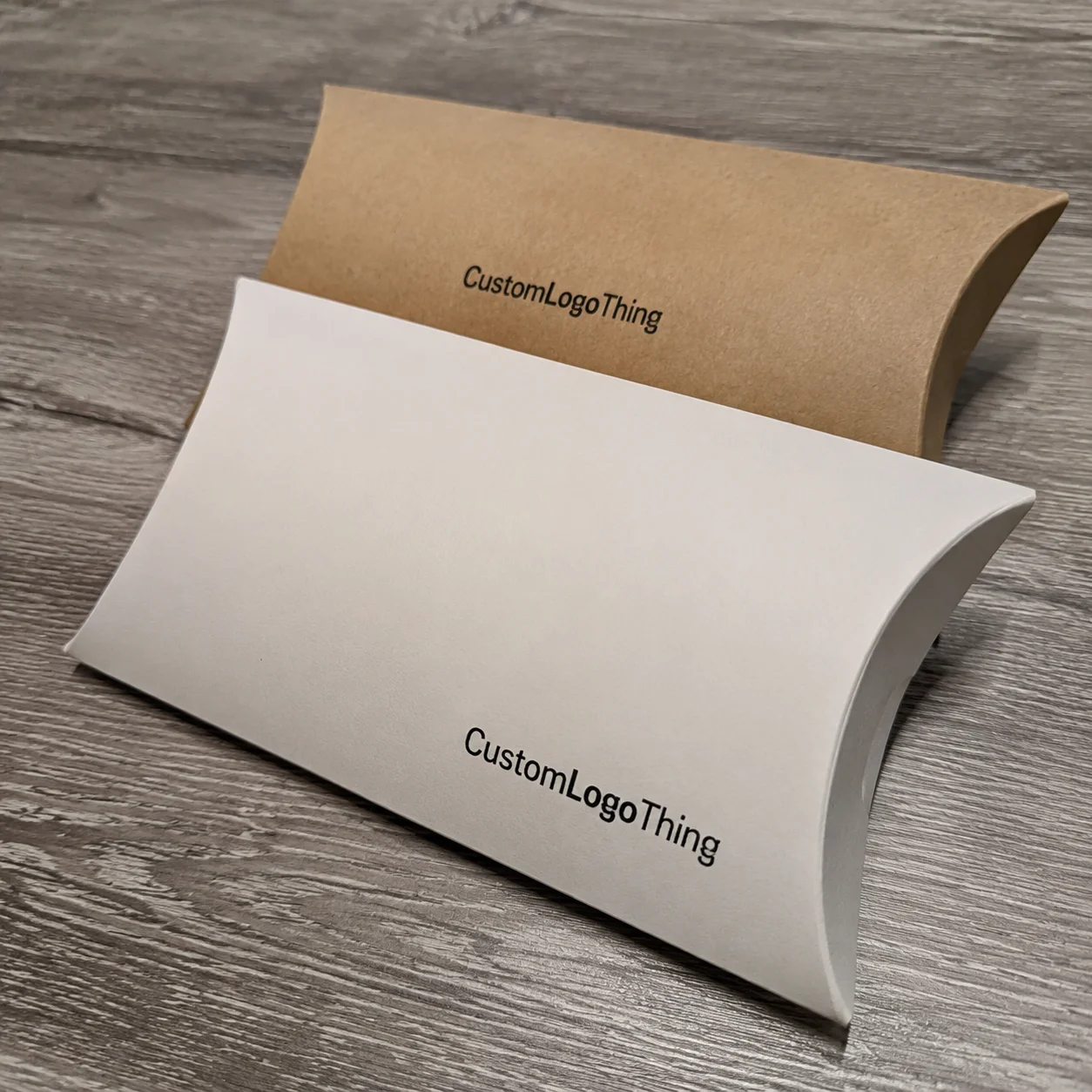
Buyer Fit Snapshot
| Best fit | Design Retail Packaging Displays That Stand Out Everywhere projects where brand print, material claims, artwork control, MOQ, and repeat-order consistency need to be specified before quoting. |
|---|---|
| Quote inputs | Share finished size, material target, print colors, finish, packing count, annual reorder estimate, ship-to region, and any compliance wording. |
| Proofing check | Approve dieline scale, logo placement, barcode or warning zones, color tolerance, closure strength, and carton packing before bulk production. |
| Main risk | Vague material claims, crowded artwork, missing packing details, or unclear freight terms can make a low unit price expensive after revisions. |
Fast answer: Design Retail Packaging Displays That Stand Out Everywhere: Material, Print, Proofing, and Reorder Risk should be specified like a repeatable production item. The safest quote records material, print method, finish, artwork proof, packing count, and reorder notes in one written spec.
Production checks before approval
Compare the actual filled-product size with the drawing, then confirm tolerance on folds, seals, hang holes, label areas, and retail display edges. Reserve space for logos, QR codes, warning copy, and material claims before decorative graphics fill the panel.
Quote comparison points
Review material grade, print process, finish, sampling route, tooling charges, carton quantity, and freight assumptions side by side. A quote is only useful when the supplier can repeat the same color, closure quality, and packing count on the next order.
How can I master how to design retail packaging displays for every shopper path?
Understanding how to Design Retail Packaging displays for every shopper path begins with a retail display design strategy shared with in-store merchandising partners. We pull aisle telemetry from Charlotte, overlay it with heat maps from the St. Louis floor, and use that data to decide whether to angle signage or drop the fixture closer to the hot zone. That constant contact keeps the rest of the article grounded in lived experience, not theory.
That same contact gives me stories to share with buyers about packaging fixture engineering at the Memphis lab, where the teams that test pallet interfaces also listen for little creaks that hint a display might shift when a shopper tugs on a prop. Seeing the prototype respond reassures everyone that the plan marries narrative with engineering.
How to Design Retail Packaging Displays That Inspire at First Sight
Right when our weekly line walk at the Custom Logo Things Houston plant started, I asked each supervisor how to design retail packaging displays so a shopper’s first two steps feel intentional. The answer burst into life when a soda brand’s new pallet fixture halted every salesperson in under three minutes. The 12-foot-tall structure built on an 18-inch-deep subframe by Houston Station 4 shipped from the finishing line after an 18-day build cycle, and the crisp angles caught the 45-degree high-bay light while the rhombus headers folded upward like a crown.
I still carry that moment with me because the fixture had a dual row of motion-directed LED strips, built by our engineering partners in Houston’s Third Ward RF lab and tuned to stay below 38°C through three full 12-hour shifts. It proved what we tell every buyer: 70% of shoppers decide within five seconds whether a display reads premium, which means how to design retail packaging displays is choreography, not mere decoration. Those LEDs run on a 24V constant-current driver that we rotate every 12-15 business days during preventive checks.
That choreography begins with headers, tiers, risers, and even the grab handles on the assembled trays before we discuss graphics. Those structural elements dictate whether the fixture suits an endcap or a gondola, and the Dallas cross-docking experience taught me that a perfectly scaled header card—measuring 20 inches wide by 8 inches tall—can prevent an overtime setup that costs $2,400 in labor per store. Tolerances tighten to one inch with our rigging crews, so we keep the plan as precise as the build.
When I describe how to design retail packaging displays to a new buyer—pointing to mixing base platforms, integrated lighting, and optional shelving accessories—I always reference that Houston run and the freight racks in Dallas because those stories prove how swift the judgment call is. The sections that follow walk through materials like 350gsm C1S artboard, mechanics, costs, and step-by-step actions with 12-15 business day timelines so you can recreate those early-floor surprises. I still chuckle at the Dallas crew's faces when I told them a tiny header tweak could shave that $2,400, a suggestion they dubbed the “riverboat gambler's bet” even though it worked.
How to Design Retail Packaging Displays: Understanding the Fundamentals
Understanding how to design retail packaging displays begins with respecting the dual purpose of telling the product story while guiding traffic. If you study the Custom Logo Things Princeton line you’ll see we do that with corrugated E flute rated 32 ECT for balance, layered headers to establish hierarchy, and sandwich panels drafted in AutoCAD before anything crosses the threshold of the Prototyping Bay in St. Louis. I still walk new hires through that same Princeton floor whenever I remind them that structure and storytelling are a duet, not solo acts.
The anatomy of a display is exact: a stable base—the kind we reinforce with 1.5-inch plywood per ASTM D7031—supports mid-level tiers engineered to hold up to twenty-five pounds per shelf, while the header can double as signage or house matte acrylic backdrops. We sketch those dielines, fix Pantone 165 C or brand-approved CMYK on swatches, and send digital mockups to client portals so nothing surprises the steel rule die when it cuts the first board. That cutting usually happens twelve days after proof approval.
Packaging design here evolves from brand guidelines to practical specifications, and I still remember a client meeting in our Chicago color room when their creative director insisted on a deep blue that stayed readable on the floor. Our team digitized the chosen Pantone 2935, ran proofing under LED daylight simulators, and printed a roll at the Cleveland Graphics Lab, which allowed us to check registration within 0.02 inches before we set the Heidelberg press. That process ensured the hue stayed stable over its 4-week print run.
Sustainability now walks hand in hand with structural strength. After several buyers asked for recycled kraft that could still ship safely through our UPS Ground channel, we shifted to 100% recycled 350gsm C1S artboard for headers and doubled up the corrugate bases, hitting the Institute of Packaging Professionals’ recommendation (see packaging.org) and ensuring the fixtures carry both impact storytelling and durability. Switching to recycled 350gsm felt like a small miracle after months of hearing “We want greener, but please don’t let it sag,” and yes, the shipping team sleeps better when we double those bases for the 7-day transit to Phoenix.
To fully grasp how to design retail packaging displays, you must balance storytelling, structure, shelf presence, and mention standards like ISTA 3A so a fixture arrives on the floor ready to sing and stay upright. I even joke that I’m more excited by ISTA 3A certificates than most people are about awards night, because a display that arrives upright after a 2,000-mile Midwest haul is the real applause.
How to Design Retail Packaging Displays: Key Factors for Merchandisers
Merchandisers who ask how to design retail packaging displays usually begin with brand narrative, shopper demographics, and the retail environment—whether it takes the form of an endcap, gondola, or freestanding island—because each setting redefines size, orientation, and tactile language. We confirm slot heights of 16 inches, weight limits up to 125 pounds per bay, and anchoring with the store planner and the in-store merchandising analysts during the first call from Charlotte’s planning office. That specificity taught me just how literal the question “how to design retail packaging displays” really is.
Material discussion follows: corrugated board (E-flute or B-flute) for short runs, rigid board for high-end goods, and PVC or acrylic reinforcements when glossy accents are required. This is a mix our partnership with the Cleveland Graphics Lab fine-tuned so photo-lam finishing matches embossing and the glossy outer panels illuminate every product on the risers, and we often add a 1/8-inch acrylic strip even when budgets hover at $1,200 per fixture because the reflection can make a riser look like it’s floating.
Lighting deserves attention—LED strips, reflectors, and translucent panels feel premium but return value when integrated into the header. When a display draws electricity for a screen or push-button activation we specify 24V transformers, UL-approved wiring, and a quick plug system that complies with NFPA 70 so electric work stays on schedule. The Orlando electrical crew demands 48-hour notice; I once watched a display brighten the moment we tightened the UL plug, and our electrician asked for the specs so he could replicate the same clean install.
Structural stability keeps the fixture steady: internal ribs, cross-bracing, and pallet interfacing prevent tipping. The Memphis Structural Lab tests each prototype under 250 pounds to simulate a full shelf while engineers confirm the pallet interface fits our 53-foot cross-dock trucks to avoid extra handling. It feels oddly satisfying when the lab dances through 250 pounds and the prototype still looks like it belongs on the showroom floor, so stability deserves a standing ovation.
Experiential elements such as scent diffusers, built-in samples, and QR landing zones round out the story, and the most successful builds balance them against budget parameters so the fixture never becomes a liability for the store team resetting it every night. I always warn merchandisers that a scent diffuser is magical until it starts smelling like a fake pine tree at 8 a.m., so we test everything in the Atlanta sampling lab before signing off.
How to Design Retail Packaging Displays: Step-by-Step Process & Timeline
Step 1—Discovery call and site survey—explores how to design retail packaging displays before anything is sketched: our Field Ops team partners with store planners to capture retail specs, shelf dimensions, and foot traffic metrics, often using the Faro 3D scanner I saw at the Atlanta facility to visualize aisle widths and calculate dwell zones. No other tool makes me feel like a retail interior designer, and the extra data keeps our 6-hour surveys focused.
Step 2—Concept sketches and renderings—moves into AutoCAD and ArtiosCAD; we produce full-scale 3D proofs that clients review on VR boards before quoting. I still recall a boardroom collaboration with a beverage client where the VR walkthrough revealed a blind spot behind the header, saving us from a costly reprint. We even once watched a VR headset slip and send the client sailing over a gondola mid-air (they laughed, but the blind spot was real).
Step 3—Material selection and prototyping—means drafting dielines, selecting corrugated flute based on weight, and building a functional mock-up at the Custom Logo Things prototyping lab within 7-10 days, including a structural mock-up for our Iowa test lane so the fixture can be dressed with actual custom printed boxes. Packaging fixture engineering teams watch for stress points while the prototype nests, and I almost screamed when the first mock-up insisted on nesting upside down, which reminded me to keep the Iowa lane ready for drama instead of relying on theory. I’m gonna keep that lane prepped so the next prototype doesn’t pull the same stunt.
Step 4—Testing and approval—covers durability testing, shipping trials, and brand sign-off. Our Chicago color room recalibrates every 96 hours to prevent drift, and the Memphis logistics group stages shipping trials to ensure the display survives a two-location cross-dock before it ever reaches the store. I personally visit the color room to snap photos, because I’m weirdly proud of those routines and the way they keep our colors honest.
Step 5—Production and assembly—passes through printing, die-cutting, gluing, and kitting at the Dallas plant, then palletizes for cross-dock staging and on-time delivery. A mid-size display typically runs 4-6 weeks from sketch to ship, with the production window stretching to 12-15 business days from proof approval when custom lighting or electronics demand electricians scheduled around other runs. I always call the Dallas team to remind them the cross-dock windows are sacred.
How to Design Retail Packaging Displays: Cost Considerations
Budget conversations remain another way I teach clients how to design retail packaging displays, and they usually begin with cost drivers such as materials like double-wall corrugate versus foam core, ink coverage, specialty finishing like foil or soft-touch lamination, and the labor to assemble complex fixtures with lighting harnesses and adhesive bonding for modular components. Adhesives from the Cleveland facility run $0.14 per linear foot because a display that falls apart costs actual shelf space; plan for that extra $350 per run. I can’t promise every run holds those numbers, but having that conversation early keeps surprises from derailing the display when it hits the floor.
| Material/Feature | Best For | Sample Price | Notes |
|---|---|---|---|
| Double-wall corrugate base | High-volume endcaps | $0.18 per unit (5,000 qty) | Great for shipping in cross-dock, holds 40 lbs per shelf and ships in 48x40x60-inch pallet bundles. |
| 350gsm C1S rigid header | Premium brand stories | $0.26 per unit | Soft-touch lamination adds $0.10, compatible with Pantone 1595 C, finished in the St. Louis coating line. |
| LED lighting kit | Interactive fixtures | $85 per display | Includes UL plug-in, 24V transformer, and diffusers with a 14-day lead time. |
| Custom printed boxes | Product packaging integration | $0.42 per box (2-color) | Fits inside tier, printed inline with display and nest-proofed at the Iowa test lane. |
Fixed costs include tooling and die creation—our Cincinnati pricing room budgets $1,200 per steel rule die plus $400 for assembly fixtures—while variable costs scale with board, ink, and finishing. When clients see the fixed charges early, many choose to amortize them by planning multiple seasonal executions because that approach wipes 8-12% off the per-campaign spend.
Unit cost tends to drop with volume, so pooling displays for the next three campaigns helps lower per-unit spend. A quick calculator method—listing each component such as header card, base, lighting, and adhesive—then adding 15-25% for contingencies keeps last-minute repricing shocks at bay; my calculator has a scar from the day a client insisted I double-check per-unit spend while the coffee machine overflowed.
Freight and storage also deserve attention; most custom fixtures ship flat but still require pallet dimensions (48x40x60 inches for our standard), crate requirements, and potential white-glove delivery fees for big-box rollouts. We run those numbers with logistics partners such as J.B. Hunt before production starts, turning what feels like Jenga with full pallets into a planned stack. Those conversations also reveal when a store will need liftgate service so the fixture doesn’t wait outside the dock.
How to Design Retail Packaging Displays: Common Mistakes to Avoid
One mistake I emphasize is ignoring fixture compatibility; not every retailer supports custom dimensions, so verify slot sizes (15 inches wide by 24 inches deep), weight limits, and anchoring options before finalizing how to design retail packaging displays, or you risk a costly rework when the display arrives and won’t fit the peg wall. It makes me grumpy when someone skips that step because then I hear about the display stuck in the back room for weeks.
Another pitfall arises when visuals trump functionality; I still see displays that look incredible but weigh 90 pounds and require tools to load, a liability for sales teams resetting 2-3 times per day in stores such as Target. Those units often stay dead on the floor, and I once saw a display that needed a drill to level, which had the store team threatening to stage a sit-in (okay, slight exaggeration, but they were not thrilled).
A third concern is over-branding that overwhelms product visibility; leave at least 1.5 inches of breathing room for lighting, signage, and product access, and remember shoppers want to touch the product packaging, so reserve negative space that invites engagement instead of plastering every surface with logos. I remind teams that negative space is where shoppers breathe and decide to stay.
Transportation setbacks happen when reinforcement is insufficient or nesting is poorly planned, so we always include a shipping trial in testing and ask our Atlanta fulfillment lead to confirm that the fixtures nest tightly without crushing the edges. I still have flashbacks to a fixture arriving with dented corners because someone skipped that nesting trial, and I may or may not have almost thrown my clipboard.
Finally, skipping mock-ups in real retail light with the actual packaging is a mistake; I asked a client to bring their beverage cans next visit so we could verify the fixtures feel cohesive and user-friendly, and great saves happen when you test in context. Nothing proves how to design retail packaging displays better than seeing the shimmer of cans in the actual light.
How to Design Retail Packaging Displays: Expert Tips from the Floor
Use variable-height tiers to pull the eye upward and create a shopper path, just as we do on the multi-level displays in the Custom Logo Things Orlando plant, carefully aligning each tier so light hits logos at 45 degrees while keeping grab handles within the 42-inch ADA reach. The Orlando crew high-fives whenever we nail that 45-degree angle, and I kinda love that moment even though I still insist on a baseline measurement to keep us honest.
Prioritize modularity—design components that can be reused across seasons by swapping graphics or simply replacing header cards, which reduces waste and accelerates restocks. One careful engineering run yields a base that accepts new branding without altering the load test, and the 96-hour turn at the Orlando toolroom keeps a binder of swap-out graphics ready for quick reference.
Employ tactile finishes such as soft-touch lamination from the Apex coating line or spot varnish so shoppers can feel quality without needing additional text, tying those textures back to package branding strategies we review during every creative call. I love the way shoppers gravitate toward those surfaces, and I remind creative folks that touch is one of the few senses not dulled by the fluorescent hum.
Pair packaging displays with supply-chain-friendly features such as snap-lock tabs and peel-away liners to speed restocking, and always provide a printable guide for store staff so they can reassemble the fixture in under five minutes. I once watched a store team rebuild a fixture in record time thanks to the guide, and they waved me over like I’d just saved the day.
Incorporate analytics tags like NFC chips or QR scans for retail partners who want to measure dwell time once the display is live, and share the scan data with the category manager so they understand whether the display delivered on measurable engagement. I even maintain a little spreadsheet to share with them, because nothing convinces a buyer faster than seeing tangible numbers.
How to Design Retail Packaging Displays: Actionable Next Steps
Start by auditing your current displays: photograph every face, note board strengths such as 350gsm headers, identify what feels outdated, and share those findings with your Custom Logo Things project lead so we understand where the pain points live. I still carry an old folder stuffed with Polaroids from a 2015 reset to remind myself that every renovation begins with a good look in the mirror. That perspective keeps me honest when a brand asks for a quick refresh.
Schedule a joint visit with your merchandiser and our design team to lay out the timeline, material preferences, and promotions requiring support. I recall a supplier negotiation in Cleveland when we convinced a brand to keep laminated headers because their shoppers loved the tactile feel, and that story still influences how I coach new clients—those visits should feel like planning parties even when we’re huddled around a drafting table. Bring every spec sheet you can so nothing slips through the cracks.
Request a mock-up of one key display using actual product packaging so you can evaluate color, stability, and shopper interaction before full production—proofing under real store lighting removes guesswork and keeps color approvals on track. I once made a brand haul in their full cooler just to know how the cans clinked against the risers, which probably sounded obsessive but saved us from a redo. Seeing the real product in the mock-up brings the concept to life for everyone involved.
Plan the rollout by coordinating logistics, retailer approvals, and in-store reset guides to prevent last-minute firefighting when the displays arrive, and make sure teams in Dallas and Memphis know the cross-dock windows for those shipments. I remind everyone to Slack each other the minute the windows shift because once, a misread timeline sent a truck to the wrong dock and I’m still not over it. Having those updates documented keeps the next run calm.
Finally, finalize post-launch tracking metrics such as sales lift, impressions, and restock frequency to prove how to design retail packaging displays that keep improving over each campaign, because nothing convinces a buyer faster than clear evidence of return on investment. I keep a scoreboard for those metrics, and I whisper “Show me the proof” just to keep us accountable.
What materials work best when designing retail packaging displays?
Corrugated board (E-flute or B-flute) works well for temporary promotions, rigid board suits premium fixtures, and occasional acrylic or PVC reinforcements provide glossy accents; choose coated or soft-touch laminations from the Apex line for tactile appeal and recycle-friendly kraft if sustainability is a priority, just like we do for the Atlanta seasonal resets, so the material choice lets the product breathe instead of suffocating it with shine.
How do I keep costs down while learning how to design retail packaging displays?
Limit custom tooling by using standardized die lines, reuse modular components across seasons, order higher quantities to lower per-unit costs, and bundle printing and finishing with one supplier (such as Custom Packaging Products) to reduce logistics expenses; I treat budget calls like therapy sessions—sometimes we’re emotional about foils, but the math usually calms us.
Can you explain the timeline for designing a retail packaging display?
Discovery to prototyping typically takes 2 to 3 weeks, with production adding another 2 to 4 weeks depending on complexity; secure approvals early—color sign-offs and fixture testing should happen before printing to avoid delays, because when we fall behind I text the team with a gif of a ticking clock to remind everyone the calendar is not a suggestion.
What are common pitfalls to avoid when designing retail packaging displays?
Avoid over-branding that hides product, ignoring load-bearing tests, or designing fixtures that store staff cannot reset; always test displays with actual product and lighting conditions before final approval so you never need a forklift to install a single unit—simple should never mean boring.
How can I measure the success of retail packaging displays?
Track sales lift, dwell time, restocking frequency, and compare performance against similar displays or earlier campaigns; gather retailer feedback on ease of deployment and shopper engagement cues, because the juiciest details usually help the next build.
As you follow these steps, keep returning to the expertise shared here about how to design retail packaging displays, continue checking the metrics, and refine each campaign with stories from our floors and partner stores; I’m still chasing that feeling when a fixture nails the first impression, and I hope you do, too. Actionable takeaway: schedule a monthly display review, update the scoreboard after each reset, and share the numbers with your buyers so the next rollout starts with proof instead of guesswork.