A toy retailers Soft Touch Poly Mailers print proof checklist is not paperwork theater. It is the last inexpensive moment to catch the small mistakes that become very expensive once 5,000, 25,000, or 100,000 branded mailers are printed, converted, packed into cartons, and sitting in your warehouse.
A pastel mailer for a plush subscription program may look charming on screen: soft lavender background, friendly mascot, playful copy, tidy QR code. Then the finished bags arrive and the logo prints dull on the matte film, the barcode sits too close to the seal flap, and the shipping label covers the character’s face. Cute concept. Poor packing tool.
Proofing matters because custom mailers have to do more than look branded. They must survive parcel handling, scan correctly, carry safety language, fit the product, support the packing workflow, and still feel right in the customer’s hands. Miss one quiet detail and the full run can turn into expensive packing-room confetti.
Why Toy Mailer Proofs Fail Over Tiny Details
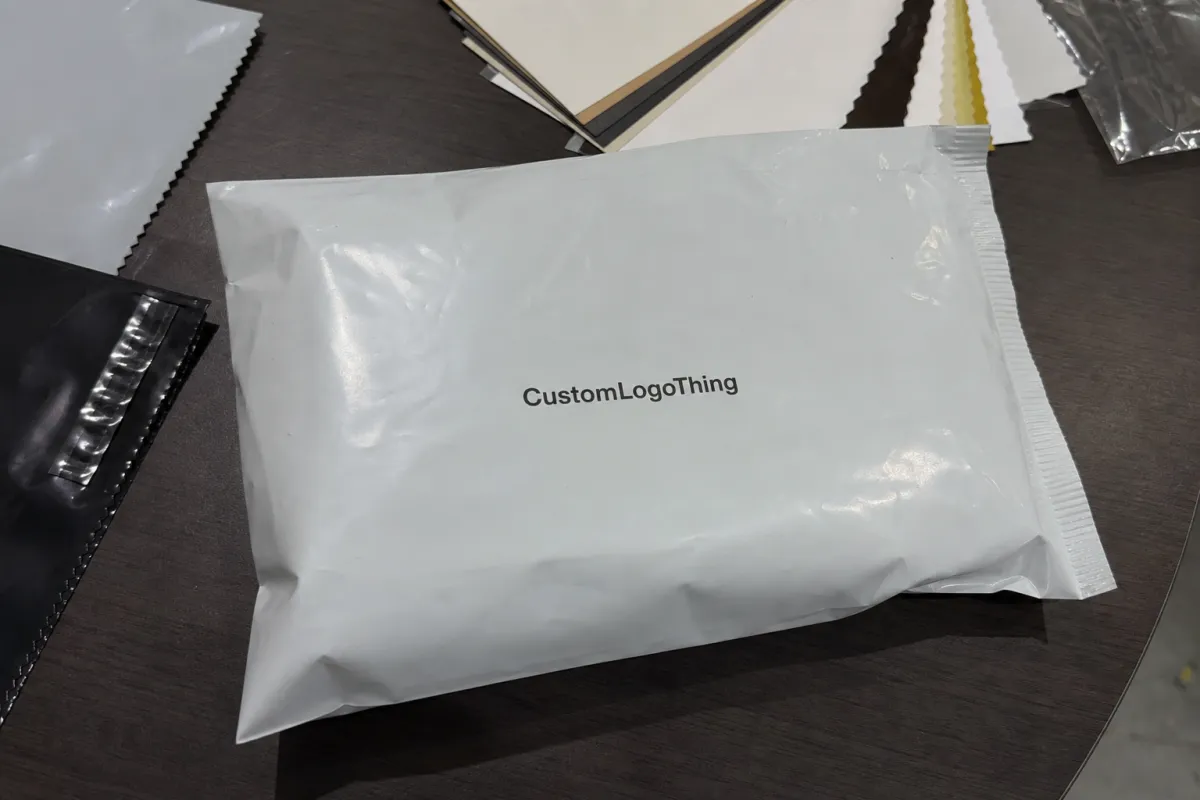
Soft Touch Poly Mailers are flexible polyethylene shipping bags with a matte, velvety surface finish. They feel more premium than standard glossy poly mailers, which is why toy brands use them for plush products, collector toys, educational kits, blind box drops, subscription shipments, and giftable ecommerce orders.
That premium finish is also less forgiving. Matte surfaces can flatten contrast. Fine type loses edge definition more easily. Pastels may drift from “gentle and branded” to “washed out” if the proof is reviewed only on a bright laptop screen.
A print proof is the approval document or sample that shows artwork placement, dimensions, print notes, seal areas, barcodes, QR codes, warnings, orientation, and production details before the full run begins. It may be a PDF, a color reference, a physical sample, or a pre-production mailer made on the intended material. Those proof types are not equal, and buyers should not treat them as if they are.
From a toy retailer’s side of the table, the proof should confirm more than whether the logo looks pleasant. It should answer practical questions:
- Does the artwork clear the seams, edges, folds, flap, and seal strip?
- Is the logo large enough at actual printed size?
- Will the barcode or QR code scan after printing on matte film?
- Is there a clean zone for a 4 x 6 inch shipping label?
- Can the suffocation warning be read without squinting?
- Is the mailer oriented correctly for packing and customer opening?
- Does the color direction make sense on soft touch plastic, not just on screen?
- Will the toy, insert cards, protective wrap, and any paperwork fit inside without wrestling?
Proofing rule: if the issue would bother you after production, it belongs on the checklist before approval.
A good checklist gives each department a specific job. Marketing checks brand design. Operations checks fit and packing speed. Compliance checks warnings. Ecommerce checks labels and scan codes. Purchasing checks quantity, tolerance, freight, and cost. The proof stops being a decorative PDF and becomes a production control document.
How Soft Touch Poly Mailer Printing Actually Works
Most custom poly mailers begin with co-extruded polyethylene film. Common base colors include white, black, gray, and occasionally custom-tinted film. Soft touch versions use a matte surface treatment, coating, or finish that changes both hand feel and ink appearance.
Custom runs usually follow one of three print paths. Flexographic printing is common for larger quantities because plates and setup have upfront cost, but unit pricing improves as volume increases. Digital printing works well for smaller runs, faster tests, short promotions, or designs that change frequently. Very high-volume programs may use gravure-style production, though that generally makes sense only when the order size justifies the setup.
Artwork changes once it leaves the screen. Monitors glow. Plastic reflects. Ink behaves differently on film than on paper. Matte finishing softens contrast. A brand color that looks crisp in a deck can look quieter on a velvety mailer.
On soft touch film, dense solids may need adjustment, gradients can show banding, and small reverse type can fill in. A thin white warning line on pale blue film may look clean in a PDF and weak in print. CMYK builds can shift more than a spot color target, but spot color matching on polyethylene still has tolerances. Poly film is not coated paper, and it will not obey a brand book with perfect precision.
Ask which proof type is included before assuming the quote covers everything. A digital proof is commonly included. A physical proof or pre-production sample often costs extra and adds time, especially if the supplier has to print on the actual soft touch material.
| Proof Type | Best For | What It Confirms | Limits | Typical Added Time |
|---|---|---|---|---|
| PDF layout proof | Simple logos, repeat orders, copy checks | Placement, dimensions, spelling, dieline notes | Does not prove real color or material feel | Often 1-3 business days |
| Color reference proof | Brand color direction and CMYK or spot color review | General ink target and contrast | Still may not match production film exactly | Often 3-7 business days |
| Pre-production sample | Premium launches, QR codes, full-coverage art | Material behavior, print appearance, size, seal, scuff visibility | Costs more and takes longer | Often 1-2+ weeks |
| Production sample | Final confirmation during the full run | Actual run quality and consistency | Too late for major redesign without cost | During production |
Toy mailers also carry more competing information than many apparel bags. Front branding, return copy, suffocation warnings, QR codes, shipping label zones, promotional messages, seasonal graphics, age-range references, and collector-series artwork all fight for space. A toy retailers soft touch Poly Mailers Print Proof Checklist keeps those elements from being approved with a vague “looks good.”
Key Specs to Check Before You Approve the Proof
Start with dimensions. Always. The prettiest mailer in the warehouse is still a problem if the boxed toy has to be shoved into it like luggage into an overhead bin.
Confirm both exterior size and usable interior size. A 10 x 13 inch mailer is not always a true 10 x 13 inch packing cavity after seams, flap, and seal area are considered. Check flap depth, side seams, seal strip placement, and the way bulky toy packaging slides inside. Boxed toys, plush animals, and kits with rigid inserts need more room than flat apparel.
Thickness matters too. Many custom poly mailers run around 2.5 to 4 mil. Lighter film may work for soft plush toys or small accessories. Heavier film is usually smarter for boxed toys, collector products, sharp carton corners, and shipments moving through rough parcel networks. For premium collectibles, a thin bag can make the whole order feel cheaper before the customer opens it.
Opacity deserves a real check, not a guess. Toy retailers shipping surprise toys, gifts, higher-value items, or colorful retail boxes should confirm the bag blocks product visibility. White film may need a gray or black inner layer for better opacity. If possible, hold an actual product behind a material sample under normal room lighting and warehouse lighting.
Review artwork at actual size. Not 300% zoom on a large monitor. Print the proof at 100%, trim it to size, and place it next to the toy carton or pouch. Logo scale, mascot details, small icons, age-range copy, QR codes, and recycling marks all read differently in hand.
Keep critical artwork away from danger zones:
- Edges and side seams
- Bottom folds
- Seal strips and flap folds
- Return perforations
- Shipping label zones
- Areas likely to wrinkle around thick product corners
Compliance copy needs slow, boring attention. Boring is fine. Boring is cheaper than a rejected run or a relabeling project. Check suffocation warnings, recycling marks, resin identification codes, choking hazard references where applicable, country-of-origin language if used on the packaging system, and any marketplace or retailer-specific label requirements. For ecommerce shipping programs, some brands also reference distribution testing standards from groups such as ISTA, especially when bags are part of a larger shipping qualification process.
Barcodes and QR codes need quiet zones, strong contrast, correct orientation, and enough size to scan after printing on matte plastic. Avoid placing codes over folds, seams, dark art, heavy ink coverage, or areas that will wrinkle once the product is inserted. Test scans under normal warehouse lighting, not under perfect studio lighting.
Color standards help, but they do not perform miracles. Include Pantone references, CMYK values, or brand color values, then define an acceptable tolerance for the material. Soft touch poly film will not behave like a coated paper card printed offset. Different substrate, different ink behavior, different result.
Closure type belongs on the proof checklist as well. Permanent peel-and-seal is common for standard shipments. Dual adhesive strips help with returns. Tamper-evident features and perforations can improve customer experience, but they also change available print area, flap direction, and packing orientation. Confirm them before approval, not after the adhesive zone eats into the back-panel design.
Pricing, MOQ, and Unit Cost Factors for Custom Mailers
Unit cost depends on size, film thickness, print coverage, number of colors, print method, order quantity, proof type, and whether the soft touch finish is standard or upgraded. A single universal price without specs is not useful for purchasing; it is a placeholder.
Smaller custom runs usually cost more per piece because setup, artwork handling, and proofing are spread across fewer units. Larger bulk orders bring the piece price down, especially with flexographic printing, because plates and setup are amortized over more mailers.
For planning, a simple small-to-mid-size custom poly mailer may land around $0.18-$0.45 per unit at several thousand pieces, depending on size, film, print coverage, and supplier. Larger volume programs can fall below that range. Premium soft touch finishes, double-sided printing, full flood coverage, thicker film, low MOQs, or oversized bags can push costs higher quickly.
MOQ reality is straightforward: many custom printed soft touch poly mailer programs start in the low thousands. Fully custom sizes, specialty films, plate-based printing, metallic inks, or tight brand color targets may require higher minimums. That is setup math, not supplier drama.
Common cost drivers include:
- Custom sizing instead of stock dimensions
- Full-coverage flood printing
- Double-sided print
- More ink colors or tight spot color matching
- Metallic or specialty inks
- Extra adhesive strips for returns
- Thicker film, often 3.5-4 mil or more
- Physical proofing or pre-production sampling
- Rush production or split shipments
Digital proofs are commonly included in quotes. Physical samples, press proofs, or pre-production samples may add both cost and time. For large orders or complex artwork, that added step is often sensible. If the design has full-color characters, pastel backgrounds, QR codes, safety text, and a soft touch finish, approving from a PDF only is faster and cheaper, but it carries more risk.
Freight and storage also matter. Poly mailers are lightweight, but cartons of bags still take space. A larger order may cut the unit cost by 15-35%, yet it ties up cash and warehouse room. For a holiday toy launch or subscription cycle, that tradeoff may be smart. For a new product test, it may be too much inventory too soon.
Request quotes with clear line items: mailer size, usable interior size if available, film thickness, print method, number of colors, proof type, MOQ, overrun or underrun policy, freight, and estimated production time. If you are comparing formats, start with Custom Poly Mailers, then match the quote to the packing job instead of chasing the lowest unit price in isolation.
Process and Timeline From Artwork Upload to Approval
The usual process is simple on paper: submit size needs or a dieline, provide artwork files, receive a digital proof, review corrections, approve the proof, run production, complete QC, and ship. Simple does not mean instant.
Good file prep saves days. Provide vector logos, outlined fonts, embedded image links, high-resolution raster artwork, Pantone references, bleed settings, and separate layers for notes or dielines. If the mascot art is a 900-pixel PNG pulled from an old social post, the proofing team cannot turn it into crisp production art by wishing hard enough.
Typical timing varies, but these ranges are realistic:
- Digital proof: often 1-3 business days after usable artwork is received
- Simple revision: often 1-2 business days, depending on queue
- Physical or pre-production sample: often 1-2 weeks or more
- Production after approval: commonly 10-25 business days, depending on quantity, print method, and complexity
- Freight: a few days domestically to several weeks for ocean freight
Proof approval is the real clock-starter. Suppliers generally do not begin full production until the approved proof is signed off. Letting an approval email sit for six days and then requesting rush production creates a scheduling problem that could have been avoided.
Revision rounds need discipline. One typo correction is different from redesigning the entire back panel after proofing. Larger changes may require new setup, new artwork review, or a restarted timeline. If plates are already made for flexographic printing, late changes can cost real money.
Holiday timing needs padding. Toy retailers should build extra time before peak gifting seasons, influencer drops, subscription box billing cycles, marketplace promotions, and retail replenishment windows. A two-week delay in October is not the same problem as a two-week delay in March.
Assign one final decision-maker. Marketing can approve brand visuals, operations can approve fit, compliance can approve warnings, ecommerce can approve labels and scan codes, and purchasing can approve commercial terms. Still, one person should consolidate comments. Four conflicting comments sent to the supplier usually produce a strange second proof and a longer timeline.
Keep a proof approval record. Save the final PDF, signed approval, color references, barcode test notes, dimensions, material specs, production date, and tolerance notes. The next reorder should not become an archaeological dig through old message threads. A toy retailers Soft Touch Poly Mailers print proof checklist works best when it becomes part of the reorder file, not a one-time scramble.
Common Print Proof Mistakes Toy Retailers Should Catch
The first mistake is approving artwork without printing it at actual size. A logo that looks clean on a laptop can become mush when reduced on a mailer. Small script fonts, thin outlines, tiny legal copy, and delicate icon sets are common offenders.
The second mistake is ignoring shipping label placement. If the label covers the mascot face, campaign hashtag, QR code, or return instructions, the design failed in the packing room. Leave a clear label zone, usually large enough for a standard 4 x 6 inch shipping label, plus some tolerance for human placement.
Third: fine light-colored text on a pastel soft touch background. Cute, delicate, and unreadable. For safety copy and return instructions, contrast beats subtlety every time.
Fourth, seal and flap orientation. The artwork may be upside down when the customer opens the package if orientation is not checked against the packing workflow. Mock up the actual open-and-seal process. Put a toy inside. Seal it. Flip it. Pretend you are the customer. That five-minute test catches more errors than another internal email thread.
Fifth, assuming Pantone colors will match exactly on matte poly film. The proof should define an acceptable tolerance, not a fantasy. A capable supplier can aim for the target, but film color, ink system, print method, and lighting all affect the result.
Sixth, missing safety and compliance copy. Toy shipments often need extra care around suffocation warnings on outer bags, choking language on inner retail packaging, age grading on product packaging, and marketplace or retailer-required marks. For environmental claims and recycling language, check current guidance from sources such as the EPA recycling resources rather than writing green-sounding copy that may not hold up.
Seventh, placing QR codes, barcodes, or return instructions over seams, folds, or heavy ink coverage. Code areas should be flat, clean, and high contrast. Test with several phones or scanners if the code matters for returns, loyalty signups, authenticity checks, or collector content.
Eighth, choosing size based only on product dimensions. Add carton thickness, protective wrap, insert cards, stickers, catalogs, seasonal gift notes, and the way staff actually packs orders. A 9 x 12 inch bag might technically fit a toy box, but if it takes 30 seconds of wrestling per order, the bag is slowing down fulfillment.
Ninth, ignoring rub resistance and scuff visibility. Matte soft touch finishes can show handling marks more than glossy bags, especially in dark colors such as black, navy, and deep purple. Ask about rub testing or request a sample you can handle, stack, label, and toss into a carton. Pretty on a desk is not the same as durable through parcel handling.
The checklist does not need to be elaborate. It needs to be used before money leaves the building.
Build a Proof Checklist You Can Reuse
Create the approval checklist before sending artwork to the supplier, not after the first proof comes back messy. That one move reduces revision rounds because everyone knows what must be checked before the artwork enters production review.
Your one-page checklist should include these categories:
- Size and fit: exterior size, usable interior size, flap depth, product fit, inserts, padding
- Material: film thickness, opacity, base color, soft touch finish, recycled content if applicable
- Artwork placement: front, back, side margins, seams, folds, label zone
- Color: Pantone references, CMYK builds, acceptable tolerance, soft touch sample review
- Logo and graphics: scale, clarity, mascot position, pattern repeats, seasonal elements
- Copy: suffocation warning, return instructions, promotional text, safety references
- Codes: barcode size, QR code quiet zone, scan test, contrast
- Closure: peel-and-seal, return strip, perforation, orientation
- Approval record: final proof, signer, date, supplier notes, production specs
Test with real products. Pack the bulkiest toy. Add tissue, bubble, insert cards, catalogs, or whatever the packing team actually uses. Seal the mailer. Apply a 4 x 6 inch shipping label. Photograph the packed piece from the front and back. If the label covers the best part of the artwork, fix the layout before production.
Set internal signoff roles. Marketing approves brand visuals. Operations approves packing fit. Compliance approves warnings. Ecommerce approves labels and scan codes. Purchasing confirms MOQ, price, freight, and overrun terms. Clear roles prevent late-stage “one small logo idea” comments from derailing the schedule.
Ask the manufacturer three direct questions:
- What proof type is included in this quote?
- What changes after approval cost extra?
- What production tolerance applies to color, size, and print position?
If you need packaging beyond mailers, compare options under Custom Packaging Products. Poly mailers are practical for many ecommerce toy shipments, but rigid boxes, padded mailers, cartons, or inserts may be better for fragile collectors’ items, premium gift sets, or toys with crush-sensitive retail packaging.
Finally, save everything: approved proof, dieline, film thickness, ink references, closure details, supplier quote, barcode test notes, and reorder specs. Your future self will appreciate not having to reconstruct a production decision from a half-remembered email chain and a screenshot named “final-final-use-this-one.png.”
Before approving any custom run, use a toy retailers soft touch poly mailers print proof checklist to slow the process down for ten careful minutes. That pause is far cheaper than paying for thousands of wrong bags later.
FAQ
What should be on a soft touch poly mailer print proof checklist for toy retailers?
Check mailer size, usable interior dimensions, film thickness, opacity, artwork placement, brand colors, barcode or QR code scannability, shipping label area, seal orientation, suffocation warning, and any toy-specific safety or retailer copy. Print the proof at actual size and review it with the real toy packaging before approval.
Do toy retailers need a physical proof for custom soft touch poly mailers?
A digital proof may be enough for simple one-color logos, basic layouts, or repeat orders with known specs. A physical proof or pre-production sample is smarter for full-color artwork, pastel colors, QR codes, collector packaging, premium launches, or large orders where one mistake becomes expensive.
How long does the print proof process take for custom poly mailers?
A digital proof often takes a few business days after usable artwork is submitted. Revisions add time, and physical samples can add one to two weeks or more depending on material, printing method, and production schedule. Full production usually starts only after final proof approval.
What affects the cost of soft touch poly mailers for toy retailers?
Main cost factors include mailer size, film thickness, order quantity, number of print colors, ink coverage, double-sided printing, custom sizing, soft touch finish, proof type, and freight. Higher quantities usually lower unit cost, but they require more storage space and upfront cash.
How can toy retailers avoid barcode or QR code problems on printed mailers?
Keep codes away from seams, folds, seal strips, and dark or busy artwork. Use strong contrast, preserve quiet zones, avoid shrinking codes too much, and test scans from a printed proof or sample under normal warehouse lighting.


