Buyer Fit Snapshot
| Best fit | Fold Poly Mailers for Storage projects where brand print, material claims, artwork control, MOQ, and repeat-order consistency need to be specified before quoting. |
|---|---|
| Quote inputs | Share finished size, material target, print colors, finish, packing count, annual reorder estimate, ship-to region, and any compliance wording. |
| Proofing check | Approve dieline scale, logo placement, barcode or warning zones, color tolerance, closure strength, and carton packing before bulk production. |
| Main risk | Vague material claims, crowded artwork, missing packing details, or unclear freight terms can make a low unit price expensive after revisions. |
Fast answer: Fold Poly Mailers for Storage: Material, Print, Proofing, and Reorder Risk should be specified like a repeatable production item. The safest quote records material, print method, finish, artwork proof, packing count, and reorder notes in one written spec.
Production checks before approval
Compare the actual filled-product size with the drawing, then confirm tolerance on folds, seals, hang holes, label areas, and retail display edges. Reserve space for logos, QR codes, warning copy, and material claims before decorative graphics fill the panel.
Quote comparison points
Review material grade, print process, finish, sampling route, tooling charges, carton quantity, and freight assumptions side by side. A quote is only useful when the supplier can repeat the same color, closure quality, and packing count on the next order.
How to Fold Poly Mailers for Storage: Smart Guide
If you have ever opened a packing shelf and found a loose stack of mailers sliding forward like a half-built deck of cards, you already know why how to fold poly mailers for storage matters. A poly mailer is supposed to save time and space, not quietly swallow half the shelf depth in your packing area, and the difference between a neat stack and a drifting pile shows up every single time someone reaches for one.
For small sellers, home-based packing stations, and busy warehouse benches, the goal is simple: reduce bulk, protect the adhesive flap, and keep every size easy to grab without turning the area into a jumble. That sounds basic, but in practice the best way to handle how to fold poly mailers for storage depends on the film thickness, the mailer size, and how often you replenish stock. A clean system also makes the packing area feel calmer, which matters more than people admit once orders start stacking up and everybody is moving a little faster than they planned.
How to Fold Poly Mailers for Storage: Start With a Space Problem
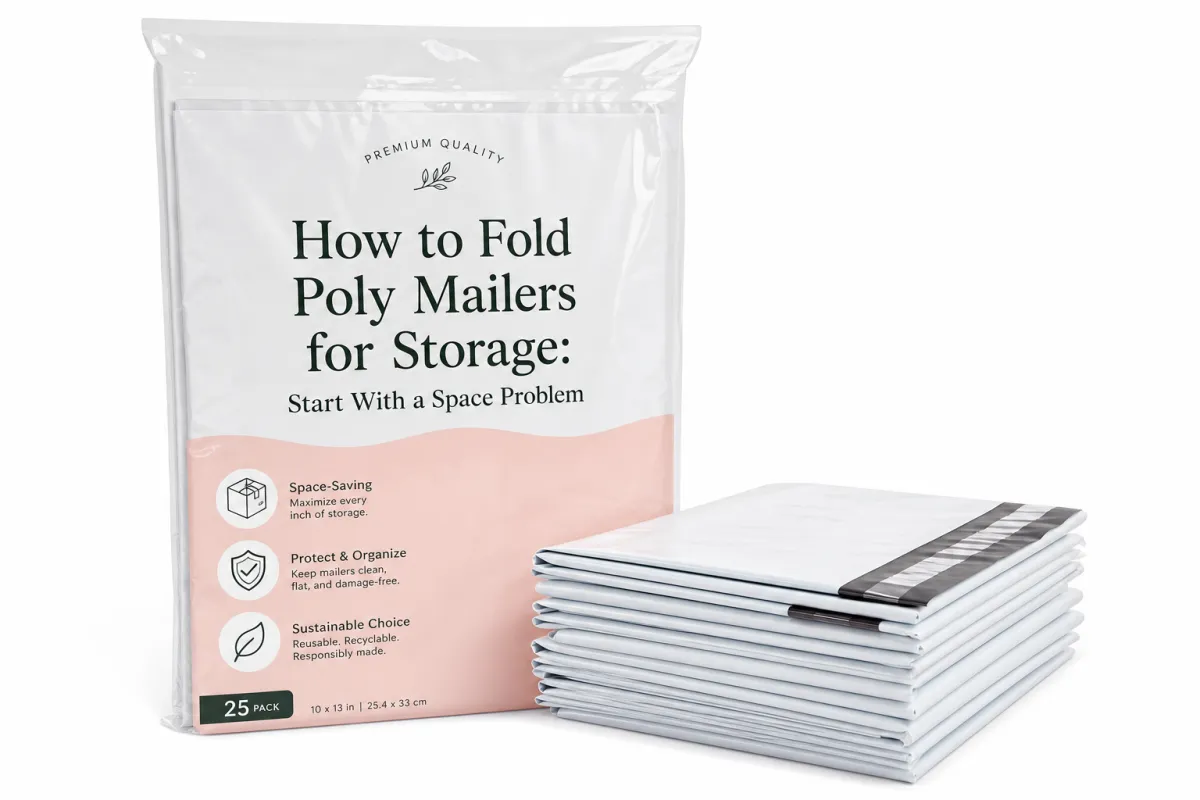
The first thing I tell buyers is that how to fold poly mailers for storage is really a shelf-space problem wearing a packing hat. A loose pile of mailers can take up more depth than the product they are meant to protect, especially if the stack leans, curls, or shifts every time someone pulls from the front. A shelf that looked generous on paper can start to feel cramped once a few sizes are stacked without a plan.
That is why storage goals should stay plain and practical. Flatten the mailers enough to reduce bulk, keep the adhesive flap from getting crushed, and make the stack easy to grab in one motion. If the process creates more fiddling than it saves, the method is too fussy for daily use. Good poly mailer storage should feel calm, not clever. The best setup disappears into the routine and lets the packing station keep moving.
In small operations, this matters even more because the packing station is often sharing space with labels, tape, scales, void fill, and finished cartons. In a larger warehouse, the same problem shows up in a different form: bins overflow, sizes get mixed, and the person picking mailers wastes seconds on every order. Over a day, those seconds add up. That is where how to fold poly mailers for storage stops being a neat trick and becomes a real workflow decision.
There is also a mental side to it. A clean stack is easier to count, easier to replenish, and easier to trust. From a packaging buyer's point of view, the best storage method is the one that keeps the most-used mailers visible, flat, and ready without introducing wrinkles or a sagging shelf front. If you need a quick rule of thumb, think in terms of access first and compression second. The stack should support the work, not demand attention every time someone passes by.
A neat mailer stack is not just about appearance. It helps prevent wasted motion, mixed sizes, and that slow drift into clutter that makes a packing area feel twice as small as it really is.
So before you start folding, decide what the space needs to do. If you are storing six sizes in a drawer system, your answer to how to fold poly mailers for storage will look different than it does for a home seller keeping two sizes in a shelf bin. Same product, different constraints. The right fold is the one that fits the room you actually have.
How Folding Poly Mailers Actually Works in Storage
The basic mechanics are simple. A mailer folds best when the film is relaxed, the gusset stays aligned, and the adhesive strip is not bent into a hard crease. If you force the film too sharply, you can create a memory line that makes the mailer awkward to reopen, and in some glossy or printed finishes, that crease can stay visible. That is why how to fold poly mailers for storage should be gentle, not aggressive. The material needs a little respect if you want it to keep its shape and still feel easy to use later.
Most poly mailers are made from polyethylene-based film, often in the 1.5 mil to 3 mil range for standard shipping use, though thicker constructions exist. Thinner films tend to lie flatter, but they can also curl more easily if stored under pressure or in a warm room. Heavier-gauge mailers hold shape better, yet they can resist folding if the stack is too tall. The point is not to force every mailer into one shape; the point is to fold in a way that respects the material. Material choice changes the handling feel more than most people expect.
Inside a bin, drawer, or shallow carton, folded stacks behave best when the edges line up cleanly. Straight edges reduce sliding. They also help the stack sit square instead of bowing at the middle, which is a common reason mailers look messy even when the pile is not especially tall. If you have ever watched a stack gradually flare outward, you have seen what happens when how to fold poly mailers for storage is handled without any edge control. A stack that starts square tends to stay manageable longer.
There are alternatives, of course. Rolling can work for some temporary setups, especially with soft film, but rolls tend to spring open and make the stack uneven. Stuffing mailers into a carton without organizing them is the fastest way to lose time later, because every pull shifts the rest of the stock. Leaving them in open boxes is fine if you have the shelf depth and a low enough usage rate, but once access becomes frequent, the box itself starts to look like clutter. Clean access usually wins once the station gets busy.
Printed, metallic, or Glossy Poly Mailers need an extra bit of care. Heavy pressure can dull the look or leave a line across the surface. If the mailer is part of a brand presentation, the storage method should preserve that finish. A buyer may not inspect every bag closely, but they will notice if the stock looks tired before it is even used. That is one more reason how to fold poly mailers for storage deserves a repeatable method rather than a casual squeeze. Presentation starts before the order is packed.
Key Factors That Change Results in Poly Mailer Storage
Not every mailer behaves the same way. A slim 6x9 mailer used for jewelry or small accessories folds differently from a 10x13 bag or a padded mailer with more structure. Gusset style matters too. Side gussets, bottom gussets, and flat mailers all compress in slightly different ways, which affects how to fold poly mailers for storage without creating odd bulges. Even the way a mailer was packed from the supplier can influence how it settles on your shelf.
Humidity is another quiet factor. In a dry room, the film may feel crisp and easy to stack. In a damp or open loading area, the same mailer can pick up a softer feel that makes it slide around more. Dust also matters, especially if your storage area sits near a garage door or an open dock. The mailer itself is not usually damaged by ordinary dust, but the handling feel changes, and that affects the neatness of the stack. Temperature plays a role too; warmer film tends to relax, while colder film can feel stiffer and more prone to edge lift.
Access frequency should guide the arrangement. Fast-moving sizes belong closest to the packing hand, while slower movers can sit deeper in the rack or higher on a shelf. That is one of the simplest ways to make how to fold poly mailers for storage pay off in real use. If you handle a certain size twenty times a day, it should not live in the hardest-to-reach slot. The shortest path usually saves the most friction.
Shelf dimensions matter just as much as the mailers themselves. A bin that is too tall invites leaning. A shelf that is too deep encourages buried stock. A carton that is too narrow squeezes the stack and creates bowed edges. In practice, the best storage setup starts with a tape measure, not with a guess. Measure shelf height, depth, and width before deciding on the fold. A few minutes of measuring can prevent weeks of frustration.
Adhesive flaps and labels need protection. A flap that gets folded sharply across the glue zone can stick where it should not, or stay bent in a way that slows packing. Labels should remain readable so a team member can grab the right size without opening every stack. From a workflow point of view, how to fold poly mailers for storage only works if the finished stack is still easy to identify at a glance. If the size is hidden, the system has already lost part of its value.
For teams that want a broader packaging setup, it also helps to keep related supplies together, such as tape, void fill, and branded cartons from Custom Packaging Products. A cleaner supply area usually means fewer mistakes with mailer sizes, too. The whole bench tends to run smoother when each supply has a clear place.
How to Fold Poly Mailers for Storage: Step-by-Step Method
Start with a clean, dry table. That sounds obvious, but dust, grit, and leftover label adhesive can make a stack feel sloppy faster than people expect. Sort the mailers by size first, because mixed sizes are one of the most common reasons how to fold poly mailers for storage falls apart after the first day. When every stack is the same size, the fold stays consistent and the bins stay easier to manage. That early sorting step pays back every time someone reaches for a bag.
Lay one mailer flat with the opening and adhesive flap aligned. If there is a gusset, smooth it so the edges sit even before folding. The aim is to reduce air and bulk without creating a hard kink across the body of the mailer. For most packing stations, a single gentle fold is enough. Smaller mailers may stay flat; larger ones often store better with one relaxed fold that shortens the footprint without pinching the flap. You are not trying to crease cardboard; you are just bringing the mailer to a more compact shape that nests well with the rest of the stack.
Then press lightly. I mean lightly. A lot of people think better storage means more force, but too much pressure can leave sharp lines and make the top piece harder to separate from the rest. That is the part most people get wrong about how to fold poly mailers for storage. Gentle compression keeps the stack flat while preserving the film's usability. The fold should support speed later, not fight against it. If the mailer feels like it needs a wrestle to open, you went too far.
Once the stack is formed, place it into a labeled bin, carton sleeve, or vertical organizer that supports the edges. Edge support is what keeps the stack from bowing outward after a few grabs. If you are using open bins, choose one with just enough height to hold the stack without compressing it. If the stack needs to sit upright, a file-style divider can help keep the mailers square and visible. A little structure goes a long way here, and it is usually cheaper than the time you lose chasing down mixed piles.
A short finishing check saves time later:
- Confirm the size label is visible.
- Count the stack so replenishment is easier.
- Make sure the adhesive flap is not trapped or folded under the body.
- Set the fastest-moving size at the easiest access point.
If you want a more standardized packing area, it can help to pair mailer organization with a broader set of storage materials from Custom Poly Mailers, especially when you are using several sizes in the same station. A consistent system is much easier to maintain than a stack of one-off fixes. When the supplies share the same logic, the workflow usually gets simpler instead of busier.
For teams that care about transit performance as well as storage, it is worth remembering that packaging groups such as the International Safe Transit Association focus on how packages behave under real handling conditions. Storage is not the same as transit testing, but the same discipline applies: keep things square, stable, and ready for the next move. Good handling habits tend to show up wherever packaging is touched.
Common Mistakes When You Fold Poly Mailers for Storage
The biggest mistake is folding too tightly. A hard crease can weaken the look of the mailer, and on adhesive-flap styles it can make the opening less friendly when packing starts. If the flap area is bent sharply every time, eventually the stack becomes annoying to use. That frustration is exactly what how to fold poly mailers for storage is supposed to prevent. The storage method should remove friction, not create it.
Mixed-size stacks are another problem. They look harmless at first, but they slow every pull from the shelf because someone has to separate the right size before packing can continue. It is a small delay until it happens fifty times. Then it becomes a real drag on the workflow. Keep each size in its own stack or bin, and the whole packing station gets simpler immediately. Clear separation is one of the easiest habits to keep.
Storage conditions matter more than many people admit. Damp rooms can make the film feel tacky or limp. Dusty shelves make the stacks look tired. Direct sun, even through a window, can age printed film or warm the material enough that it bows. None of those conditions are ideal for how to fold poly mailers for storage, and none of them are hard to fix if you catch them early. A small environmental adjustment can save a lot of handling trouble later.
Overfilled bins cause curling and edge spill. Once the stack is packed too tightly, the sides flare out and the top piece starts to wander every time someone grabs one. The fix is simple: reduce stack height, widen the bin, or switch to a more vertical organizer. The right answer depends on space, not on habit. It is usually faster to resize the storage than to fight the stack every day. I have seen teams keep using a bin because it was already there, even though the shelf was basically telling them it was the wrong fit.
Another common oversight is forgetting rotation. People grab from the front stack again and again, while older stock gets pushed to the back and forgotten. That is less of a problem with poly mailers than with perishable goods, but it still creates waste through clutter and disorganization. A quick first-in, first-out habit keeps the system clean and keeps how to fold poly mailers for storage working the way it should. Old stock should stay visible enough to move.
If you are building a more sustainable supply setup, organizations like the Forest Stewardship Council can be useful when you are comparing paper-based alternatives or mixed material packaging strategies. Not every mailer is paper-based, of course, but the larger packaging plan still benefits from thoughtful material choices. The storage side gets easier when the materials fit the rest of the operation.
Expert Tips for Cleaner, Faster Poly Mailer Storage
One of the easiest upgrades is to use simple spacers or divider cards. A slim board behind a stack can keep the mailers from slumping forward, and a divider inside a shelf cubby can stop sizes from blending together. These are inexpensive fixes, but they make how to fold poly mailers for storage far more repeatable across shifts, roommates, or family helpers. Small tools like these often do more than fancy containers.
Clear bins are useful for fast movers because they let the team identify a size in a second or less. File-style organizers work well when you want each stack to stand upright without leaning. If you only use one or two sizes often, keep them in the most convenient spot and give the slower movers a less valuable shelf position. Storage is always a tradeoff between convenience and space, so put the fastest action where it matters most. That is where the daily time savings usually live.
Build one reference stack for each size and use it as the pattern. That sounds minor, but it keeps the fold consistent and prevents the slow drift that happens when everyone improvises differently. A reference stack also helps train new staff. If someone does not know how to fold poly mailers for storage by feel yet, they can copy the template until the motion becomes automatic. Consistency usually looks boring, and boring is a good thing in storage.
Match the storage method to the speed of the operation. A high-volume shipping desk might need shallow drawers or upright sleeves because every second counts. A low-volume craft studio can use simpler shelf bins and still get great results. There is no prize for the most complicated solution. The best setup is the one that people actually maintain. A practical layout beats a polished one that nobody follows, every time.
A short weekly review is worth the effort. Check whether the stack has started curling, whether labels are still visible, and whether the most-used sizes are still in the right place. If problems are spreading, correct them before the whole shelf becomes messy. That tiny habit keeps how to fold poly mailers for storage from turning into a one-time project that nobody remembers to keep up. A few minutes of care can keep the whole area looking ready.
- Use one fold standard for each size.
- Keep stacks under moderate pressure, not heavy compression.
- Store the most-used mailers closest to the packing hand.
- Review the setup after a week of real use.
Cost, Pricing, and Unit Cost Tradeoffs for Storage
Folding poly mailers usually costs time more than money, which is why how to fold poly mailers for storage should be judged by the value of the space it saves. If a folded stack frees up a shelf and makes the packing bench easier to work at, the time spent folding may be well worth it. If the fold takes so long that the mailers become annoying to handle, the system is too expensive in labor terms. The best setup is the one that earns its keep through daily use.
The main cost drivers are pretty clear: labor minutes, bin or divider purchases, shelf space, and waste from damaged or hard-to-reach stock. In larger operations, even small handling savings matter because they repeat across many orders. A fifteen-second reduction per packing cycle can matter more than a cheap storage accessory if the station is busy enough. That is the real economics behind how to fold poly mailers for storage. Small efficiencies stack up fast when the flow is steady.
To make the tradeoff easier to see, here is a simple comparison of common storage options.
| Storage Option | Typical Setup Cost | Best For | Main Tradeoff |
|---|---|---|---|
| Original box, left flat | $0-$5 | Low-volume use, extra shelf depth | Simple, but can waste space and look messy |
| Folded stack in a labeled bin | $8-$25 per bin | Mixed sizes, moderate order volume | Better access, modest handling time |
| Vertical file-style organizer | $15-$40 | Fast-moving sizes, small packing stations | Clean access, but needs consistent folding |
| Divider rack or shelf insert | $25-$60 | Multi-size operations, warehouse benches | Best structure, higher setup cost |
When the right storage method reduces clutter, picking mistakes, and rework, it usually pays back through speed and fewer interruptions. That is especially true if your team handles the same sizes every day. How to fold poly mailers for storage is not a packaging expense in the usual sense; it is more like a small process investment that either saves labor or quietly steals it back. The difference becomes visible once the station gets busy enough to expose weak spots.
One more practical note: if you buy accessory materials such as bins, labels, or inserts, compare them against the total packing workload, not just the purchase price. A $30 organizer that saves a few minutes a day can make more sense than a free cardboard workaround that collapses after a month. In packaging, cheap and efficient are not always the same thing. Durable structure usually wins in the long run.
Process and Timeline for Setting Up Poly Mailer Storage
A workable setup usually starts with a simple field check: measure the storage area, sort the mailers by size, choose one fold standard, and test it on a single stack first. That first test matters because it tells you whether how to fold poly mailers for storage fits the real shelf dimensions or just looks good on paper. A quick trial reveals more than a long planning session usually does.
Most basic setups can happen in one short session if the supplies are already on hand. A shelf, a few bins, and some labels are often enough to get started. The better results, though, usually show up after a few days of use and one cleanup pass. That second pass is where you notice whether a stack leans, whether a bin is too shallow, or whether a certain size should move closer to the packing zone. Real use tends to expose the weak spots fast.
If you need more permanent supplies, give them a realistic lead time. Bins and labels are often easy to source, while custom shelf inserts or divider systems may take longer depending on the supplier. For operations that also order printed packaging, it helps to line those up with other replenishment needs so the whole station refreshes together. That kind of coordination makes how to fold poly mailers for storage easier to maintain because the system is built as a unit, not patched together later. When the pieces arrive together, the setup usually settles in faster.
Training matters more than people expect. Everyone who touches the packing area should understand the same fold, the same bin labels, and the same return location after use. If one person folds the mailers differently, the stack starts to drift, and then the whole system loses its neatness. Consistency is not glamorous, but it keeps storage usable. Even a simple handoff works better when the method stays the same.
A simple rollout sequence looks like this:
- Measure the shelf or drawer space.
- Pick the most-used mailer size first.
- Set one fold method and test it on a single stack.
- Label the storage location clearly.
- Review the stack after a week of normal use.
If you want to keep the habit alive, add a quick weekly check. Look for curling, mixed sizes, crushed flaps, or stacks that have slipped out of their bins. A two-minute review can prevent a messy shelf from becoming the new normal. That is usually the difference between a temporary fix and a process that really holds up. Once the habit settles in, the whole station runs with less second-guessing.
For most teams, the smartest end goal is simple: make how to fold poly mailers for storage automatic enough that nobody has to think about it twice, but structured enough that the stacks stay flat, visible, and ready for packing. That balance is what keeps a small area feeling organized instead of crowded. It also keeps the packing rhythm steady when order volume spikes.
How do you fold poly mailers for storage without damaging the adhesive flap?
Fold on a clean, dry surface and avoid pressing the flap into a sharp crease. Store the stack in a bin or sleeve that supports the edges rather than squeezing the flap zone. Light pressure is usually enough for how to fold poly mailers for storage; hard flattening is what causes trouble. If the flap still feels stressed, back off on the compression and let the stack relax a little.
Is it better to fold poly mailers for storage or keep them flat in the original box?
Keep them flat if you have plenty of shelf space and want the simplest handling. Fold them when the packing area is tight, the shelf depth is limited, or you need faster access to mixed sizes. The best choice is the one that reduces clutter without making the mailers harder to grab. A small station usually benefits more from folding than a roomy one does.
What is the best way to store multiple sizes of folded poly mailers?
Separate each size into its own labeled stack or bin. Put the fastest-moving size in the easiest-to-reach spot and keep a consistent fold for every size. That is the most reliable way to keep how to fold poly mailers for storage from turning into a mixed pile. Clear labels save time whenever the station gets busy.
Can folding poly mailers for storage affect printed or glossy finishes?
Yes, if the fold is too tight or the stack is compressed too hard. Printed and glossy mailers usually do best with lighter handling and flatter support underneath. If the finish is decorative or brand-facing, test one stack first before committing to the full storage setup. A quick sample stack tells you more than a guess ever will.
How often should you reorganize folded poly mailers in storage?
A quick weekly check is enough for most busy packing areas. Revisit the bins after inventory changes or seasonal order spikes, and restack any curling or mixed-size piles before they slow down packing. Small corrections keep how to fold poly mailers for storage working the way you intended. A short reset keeps the shelf from drifting back into clutter.
Good storage is rarely about one dramatic fix. It is about a repeatable habit, a sensible stack height, and a layout that fits the way people actually pack. Once you settle on how to fold poly mailers for storage, the benefit is immediate: less shelf waste, fewer mixed sizes, and a packing area that feels ready instead of crowded. That kind of order makes the rest of the work move with less strain.
If you want the simplest next step, pick one mailer size today, fold five samples the same way, and place them in the bin you will actually use tomorrow. If the stack stays flat, the flap stays clean, and the mailers pull out in one motion, you have found a method worth keeping. From there, repeat it size by size until the whole station follows the same rhythm.


