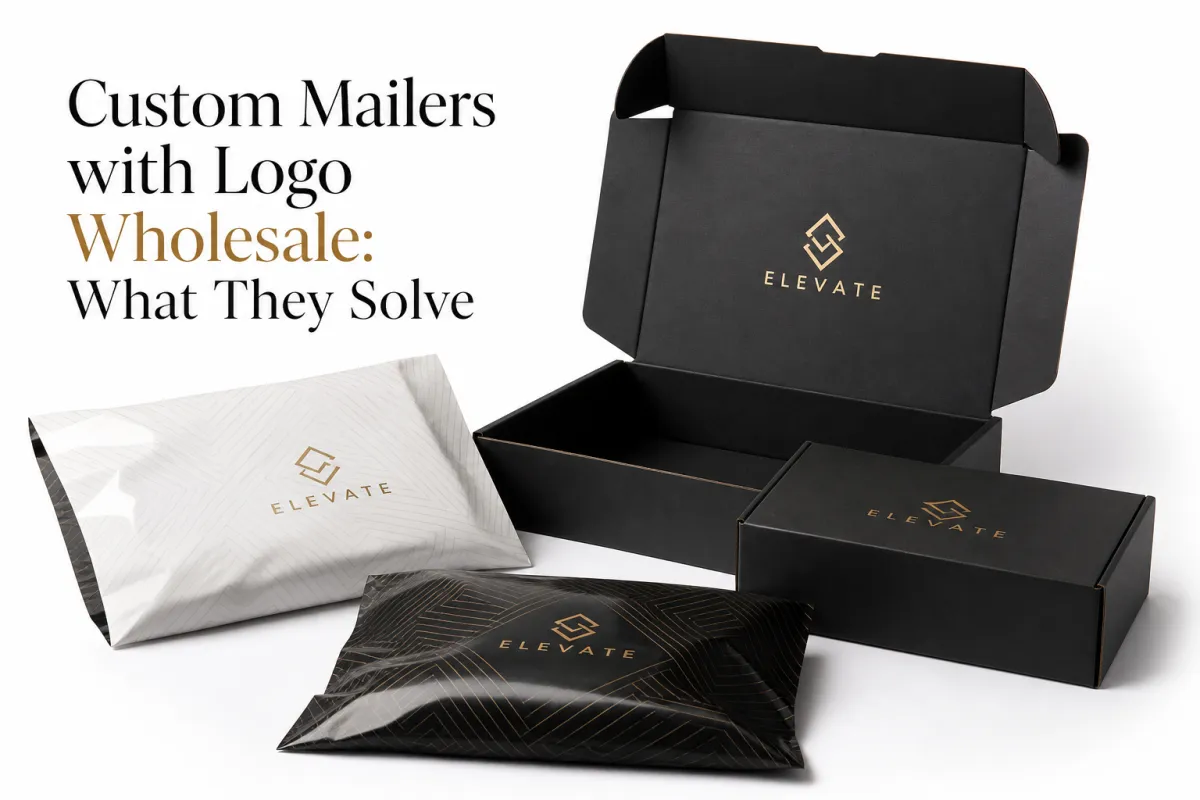
Buyer Fit Snapshot
| Best fit | make custom boxes at home for packaging buyers comparing material specs, print proof, MOQ, unit cost, freight, and repeat-order risk where brand print, material, artwork control, and repeat-order consistency matter. |
|---|---|
| Quote inputs | Share finished size, material target, print colors, finish, packing count, annual reorder estimate, and delivery region. |
| Proofing check | Approve dieline scale, logo placement, barcode or warning zones, color tolerance, and any recyclable or compostable wording before bulk production. |
| Main risk | Vague material claims, crowded artwork, or missing packing details can create delays even when the unit price looks attractive. |
Fast answer: Make Custom Boxes At Home: Dieline, Finish, Proof, and Buyer Review should be specified like a repeatable production item. The safest quote includes material, print method, finish, artwork proof, carton packing, and reorder notes in one written spec.
What to confirm before approving the packaging proof
Check the product dimensions against the actual filled item, not only the sales mockup. Ask for tolerance on folds, seals, hang holes, label areas, and retail display edges. If the package carries a logo, QR code, warning copy, or legal claim, reserve that space before decorative graphics fill the panel.
How to compare quotes without losing quality
Compare board or film grade, print process, finish, sampling route, tooling charges, carton quantity, and freight assumptions side by side. A lower quote is only useful if the supplier can repeat the same color, closure quality, and packing count on the next order.
Why Make Custom Boxes at Home? Understanding Your Options
I remember the exact moment I realized my packaging was holding my business back. I was standing in a boutique in Portland, watching a customer pick up my product, examine the generic brown box, and set it back down without buying. The product was solid. The packaging told a different story—one of cost-cutting and afterthought.
That experience sent me down a rabbit hole that eventually became my career in packaging consulting. Here's what I found: custom packaging doesn't have to mean minimum orders of 5,000 units and $3,000 setup fees. For entrepreneurs and small business owners, making custom Boxes at Home has become a legitimate, cost-effective option that offers surprising advantages. This guide on how to Make Custom Boxes at Home will walk you through everything from materials to finished product.
Consumer-grade printing technology has improved dramatically. The equipment that once cost $2,000 now sells for under $300. Cardstock that mimicked professional quality was reserved for specialty suppliers—now you can find it at any craft store. This shift opens doors for anyone willing to invest a few hours in learning the craft of homemade packaging.
Benefits of DIY Custom Packaging for Small Businesses
When I advise small businesses on packaging decisions, I ask them one question first: what story does your packaging tell when you're not in the room? Generic packaging tells customers you're impersonal. Custom packaging tells them you care about every detail.
DIY custom boxes offer several compelling advantages:
- Zero minimum order quantities. Professional manufacturers typically require 250-1,000 unit minimums. At home, you make exactly what you need—10 boxes or 100.
- Immediate iteration. Hate your first design? Print a new version tomorrow. Traditional manufacturing means weeks of back-and-forth and costly setup fees for each revision.
- Complete creative control. Your printer, your paper, your process. No compromises on material quality or finish options.
- Just-in-time production. Seasonal products and limited runs become economically viable when you're not sitting on thousands of boxes.
- Profit margin flexibility. Even modest per-unit cost reductions compound significantly at higher volumes.
When Home Production Makes Sense vs. Outsourcing
Let me be straight with you: home box production isn't right for every situation. After years of watching small businesses waste money on the wrong production method, I've developed a simple framework.
Home production makes sense when:
- You're producing fewer than 100 identical units at a time
- Your product launches involve testing or iteration
- You need boxes within 48-72 hours
- Your product sizes are non-standard or vary frequently
- You're a startup testing market demand before scaling
Professional manufacturing makes sense when:
- You need 250+ identical boxes per order
- Your product is retail-listed and requires consistent, pristine quality
- You need specialty materials like magnetic closures, foam inserts, or specific coating treatments
- Time per unit matters more than per-unit cost
I've seen too many entrepreneurs spend 40 hours making 50 boxes at a cost of $4 per box in time alone, then wonder why their margins disappeared. Honest self-assessment prevents this trap.
Can You Make Professional-Quality Custom Boxes at Home?
Your design ambitions need to match your technical capabilities. Not all box styles are created equal for home production. The short answer: yes, you can create professional-looking custom packaging at home with the right techniques and a willingness to practice.
Beginner-friendly options:
- Straight tuck-end boxes (STE). The simplest structure—tabs tuck into slots on the opposite end. These require minimal scoring and assemble in seconds.
- Reverse tuck-end boxes (RTE). Similar to STE but tabs fold in opposite directions. Slightly more complex but still highly achievable.
- Sleeve boxes. An outer sleeve slides over an inner tray. Two simple pieces rather than one complex template.
Intermediate complexity:
- Folding carton style with lock-bottom. Requires more precise scoring but produces sturdier bases.
- Two-piece set-up boxes. Separate lid and base—each is simpler than a single complex piece.
Avoid starting with: Display boxes, auto-bottom constructions, or anything requiring die-cutting. These require equipment you won't have at home or precision that exceeds what hand-cutting achieves.
Scale Considerations and Limitations
Honest assessment of scale matters. I've consulted with businesses that built entire product lines around DIY packaging, only to discover they'd painted themselves into a corner. When your side-hustle becomes your main income and you're making 200 boxes a week by hand, something breaks.
Here's what to consider:
- Physical space. A dedicated cutting mat, storage for materials, and workspace for assembly requires at least a 4-foot section of table.
- Time sustainability. Can you realistically produce your volume while maintaining quality? Eight hours of box-making on Sunday nights isn't a business model.
- Consistency limits. Handmade means human variation. Some customers accept this; others return products over slightly crooked seams.
- Material waste. Expect 10-15% material waste as you learn. Budget accordingly.
Key Insight: Start with DIY production, but maintain relationships with professional manufacturers. Build templates and specifications that can transfer when your volume demands it. The goal isn't home production forever—it's home production until home production stops making sense.
Essential Materials and Tools for DIY Custom Boxes
Walking into a craft store for packaging supplies feels overwhelming. Aisle after aisle of papers, adhesives, and tools—and that's before you reach the online retailers with thousands of additional options. I've made every purchasing mistake possible, and I'm going to save you from most of them.
Cardboard Types: Single-Wall, Double-Wall, Kraft vs. Coated
Cardboard is not cardboard is not cardboard. The material you choose affects everything: structural integrity, print quality, cost, and assembly difficulty.
Corrugated cardboard provides superior strength but presents printing challenges. The fluted middle layer creates an uneven surface that absorbs ink inconsistently. For home printing, avoid corrugated unless you're applying labels rather than direct printing.
Paperboard (also called chipboard when unbleached) is your primary home production material. It comes in various thicknesses measured in points or "pts"—one point equals one-thousandth of an inch.
- 10-12 pt board: Thin, flexible, suitable for small lightweight products only
- 14-18 pt board: Standard for most small boxes, good balance of rigidity and foldability
- 20-24 pt board: Sturdy, holds shape well, requires more force to score and fold
- 28+ pt board: Heavy-duty, typically requires specialized equipment for clean folds
Kraft paperboard has a natural brown appearance and textured surface. It prints beautifully with bold graphics and earth tones. Its rustic aesthetic suits artisanal, handmade, and eco-conscious brands. You can write directly on kraft with markers for a hand-labeled look.
Coated paperboard has a smooth, often glossy surface that produces crisper text and more vibrant colors. It's ideal for photographic designs, gradients, and detailed illustrations. However, it shows fingerprints and requires handling care.
For most beginners, I recommend starting with 14-18 pt coated paperboard from a specialty supplier. It's forgiving enough for learning, professional enough for actual sales, and versatile enough for multiple product types.
Cutting Tools: Scissors, Box Cutters, Paper Cutters
The cutting tool question depends on your precision requirements and volume ambitions.
Craft knives and box cutters offer the most control for straight cuts and are essential for complex curves. I recommend the OLFA 9mm utility knife—it features an auto-locking mechanism that prevents accidents and produces consistently clean lines. Replace blades frequently; dull blades tear rather than cut and create dangerous slipping hazards.
Paper shears work adequately for straight cuts through thinner materials (under 14pt). Quality matters here—cheap scissors crush rather than cut. Invest in Fiskars Professional-grade shears if you go this route.
Rotary paper trimmers excel at straight cuts and offer built-in measurement guides. The Fiskars 24-inch SureCut Trimmer handles up to 20-sheet stacks and provides accuracy difficult to achieve with handheld tools. For batch production of identical rectangles, these become essential.
Skip the paper cutters with circular blades unless you have a specific need. These guillotine-style cutters create compression before cutting, which can crush thicker paperboards.
Scoring Tools: Bone Folders, Scoring Boards, Rulers
Scoring—creating a crease before folding—is the step most beginners skip, and it's the step that dooms their first boxes. Without scoring, paperboard bends unpredictably and creates weak, ugly folds.
Bone folders are the traditional scoring tool. The smooth, polished edge creates a sharp crease without cutting through the paper. I keep two: a standard 7-inch bone folder for general use and a 12-inch folder for longer seams. Treated beech wood is the standard material—plastic versions exist but create less crisp creases.
Scoring boards offer guided scoring for consistent results. The We R Memory Keepers Score Board and EK Tools Scoring Board both feature pre-set measurements for common box dimensions. Align your material, run the bone folder along the groove, and achieve perfect scores every time.
Metal rulers serve double duty: measurement and as a straight edge for knife cuts. A 24-inch aluminum ruler provides sufficient length for most box dimensions while remaining manageable. Avoid plastic rulers—they cut more easily and produce inconsistent results.
Pro tip: when scoring with a bone folder, place the ruler on your fold line and run the bone folder against its edge. This creates a perfectly straight score with no chance of the folder drifting.
Adhesives: Glue Sticks, Double-Sided Tape, Hot Glue Guns
Every adhesive has strengths and weaknesses. Matching adhesive to application prevents headaches.
Glue sticks (specifically UHU sticks or Elmer's Disappearing Purple) work well for paper-to-paper bonds. The purple disappearing glue shows you where you've applied it and dries clear. Apply in thin, even layers and allow 30-60 seconds of open time before pressing surfaces together. Avoid cheap glue sticks—they create lumpy bonds and take forever to dry.
Double-sided tape provides instant bond with no drying time. 3M Scotch ATG adhesive transfer tape dispensers produce consistent tape application without wrestling with curled tape. This is my go-to for assembling boxes that need immediate handling.
Hot glue guns offer strong bonds on a variety of materials and set in seconds. A low-temperature mini glue gun (around 40 watts) prevents burns and works adequately for paperboard. High-temperature guns can cause warping on thinner materials. Keep spare glue sticks on hand—they seem to disappear.
Specialty tape: For tuck flaps and closure mechanisms, clear packaging tape provides reinforcement without visual distraction. Matte-finish tape accepts pen and marker for hand-labeling.
Measuring and Marking Supplies
Measure twice, cut once applies with religious devotion to box-making.
Steel measuring tape (the kind contractors use) provides the accuracy and rigidity needed for measuring box dimensions. Fabric tapes stretch; steel doesn't.
Digital calipers measure material thickness precisely. When you're ordering specific-gram-weight paperboard, verifying thickness prevents unpleasant surprises. A decent digital caliper costs $15-30 online.
Fine-tip permanent markers for marking cut lines. Sharpie Fine Point or Paper Mate Flair pens work well. White chalk markers work on dark materials. Avoid felt-tip markers that bleed.
Self-healing cutting mat protects your work surface and extends blade life. A 12 x 18-inch mat handles most box-making; larger if you're ambitious. The grid lines assist with alignment.
My essential toolkit checklist:
- Bone folder (7-inch and 12-inch)
- OLFA utility knife with spare blades
- 24-inch metal ruler
- 24-inch rotary trimmer
- Self-healing cutting mat (12 x 18 minimum)
- UHU glue sticks (buy in bulk)
- 3M double-sided tape dispenser with refills
- Low-temperature hot glue gun with sticks
- Steel measuring tape
- Fine-tip permanent markers
- Pencil and eraser for template marks
- Calculator (your phone works, but dedicated calculators are faster)
Step-by-Step Process: How to Make Custom Boxes at Home
I'm going to walk you through the complete process for creating a straight tuck-end box—the most forgiving design for beginners. This is the same fundamental process I use for consulting clients, scaled for home equipment. Follow these steps exactly, especially on your first attempts, and you'll understand how to make custom boxes at home that rival professional production.
Measuring and Planning Your Box Dimensions
Before touching any materials, plan on paper. Actually on paper. Not in your head, not in a notes app—on paper, with measurements written down.
Determine your internal dimensions first. Measure your product at its widest points, then add clearance:
- Height clearance: Product height + 1/8 inch minimum, 1/4 inch for fragile items
- Width/depth clearance: Product width/depth + 1/8 inch minimum
- Consider orientation: Does your product need to sit flat, or can it angle?
Calculate external dimensions based on material thickness. Paperboard thickness varies, but typically adds 1/32 to 1/16 inch per wall. A 14pt board is approximately 0.014 inches thick.
Example calculation: Suppose your product is 4 inches wide, 6 inches long, and 2 inches tall. You need a 14pt board. Internal dimensions: 4.125 x 6.125 x 2.125 inches. Wall thickness adds approximately 0.028 inches per wall. External dimensions approximately: 4.18 x 6.18 x 2.18 inches.
Document everything: Internal dimensions, external dimensions, board thickness, number of pieces, and which cuts correspond to which folds. This documentation becomes your template library.
Creating and Printing Custom Designs
Design creation deserves its own section (which follows), but printing requires specific attention.
Set up your printer correctly. Most inkjet printers default to photo paper settings. For paperboard, manually select the plain paper or cardstock setting. This adjusts ink coverage and drying time.
Print a test sheet first. Always. Print your design on standard copy paper before committing paperboard. Check for alignment, color accuracy, and any text errors. I've caught costly mistakes on test sheets that would have ruined expensive materials.
Calculate print area carefully. Standard home printers handle paper up to 8.5 x 11 inches (letter size) or 8.3 x 11.7 inches (A4). Larger boxes require:
- Tile printing: Print in sections, align carefully, trim borders
- Multiple sheets: Print different box panels on separate sheets, cut and assemble
- Commercial printing: Output a PDF, use a local print shop with large-format printers
Allow ink to dry completely. Inkjet ink takes 5-15 minutes to cure fully. Handling too soon smears graphics. I use a drying rack—stacking wet prints creates disasters.
Cutting the Box Template Precisely
This is where patience separates quality results from frustrating failures.
Secure your material. Paperboard shifts under cutting pressure. Use masking tape to hold the template in place, or have a helper hold corners steady. The goal is zero movement during cutting.
Use fresh blades. This cannot be overstated. A dull blade requires more pressure, which creates movement, which ruins cuts. If the blade isn't gliding through material effortlessly, replace it.
Follow the outer edge of lines. When cutting printed templates, trim along the outside edge of the printed border, not the center or inside edge. This preserves your design.
Cut curves and corners methodically. For corners, stop the knife at the corner point, lift, reposition, continue. Attempting to cut corners in one continuous motion creates overshoots.
For long straight cuts: Score first (more on that next), then cut. Scoring weakens the material along the cut line, producing cleaner results.
Cut slightly wide. When cutting internal cutouts (windows, display openings), cut 1/32 inch inside your line. This prevents gaps and ensures clean edges when assembled.
Scoring Fold Lines Correctly
Remember: score before you cut internal features, score before cutting the outline. Score consistently with even pressure.
Align your ruler precisely. Scoring requires the ruler edge to sit directly on your fold line. Any deviation creates crooked folds.
Apply consistent pressure. Bone folders aren't about force—they're about control. Run the folder along the line once, with steady even pressure. Multiple passes can weaken the material.
Score on the waste side of the fold. If you're folding a flap inward, score on the inside surface. This places the fold's natural weakness on the inside, producing cleaner outside edges.
Test your fold before final assembly. After scoring but before cutting the outline, fold along your score to verify accuracy. Adjust if necessary. Once the outline is cut, corrections become difficult or impossible.
Corner reinforcement: For boxes requiring extra strength, score diagonal stress-relief creases at corners before folding. These small triangular scores (45 degrees, about 1/8 inch) prevent cracking at high-stress points.
Assembling and Securing Corners
Assembly is where your careful work either pays off or falls apart.
Work on a flat, clean surface. Debris under your box creates warping. A clean cutting mat provides ideal assembly space.
Fold all score lines before applying adhesive. Pre-folding ensures pieces fit correctly before committing to glue. It also pre-weakens the fold, making final assembly cleaner.
Apply adhesive to joining surfaces only. Smearing glue across entire surfaces wastes adhesive and creates mess. Apply a thin, even layer to the tab or flap that will contact another surface.
Press firmly and hold briefly. Most adhesives require 15-30 seconds of sustained contact to form initial bond. Don't rush this—wiggling or shifting creates weak joints.
Reinforce corners for durability. Interior corner tape (clear tape applied inside the corner joint) dramatically increases structural strength. For premium results, apply interior corner tape on all four corners.
Allow complete curing before filling. Adhesive strength continues to develop for 24-48 hours. I know it looks done in 10 minutes—it isn't. Place assembled boxes under light pressure (stacked books work) for at least an hour before moving.
Adding Custom Inserts and Dividers
Inserts elevate packaging from functional to impressive. They also protect products during shipping—functionality and aesthetics aligned.
Foam inserts require specialized equipment for clean cuts at home. Skip the kitchen knife approach—use hot wire foam cutters or purchase pre-cut foam from suppliers. The Institute of Packaging Professionals offers resources on foam insert design for various product categories.
Paperboard dividers are the home-producer's foam alternative. Cut slots in a base piece, insert divider strips. Simple, effective, recyclable.
Thermocol and molded pulp require manufacturing equipment. These aren't DIY options unless you're making prototypes for professional tooling specifications.
Crinkle paper fill fills void space without inserts. Colored crinkle cut adds visual interest. Tissue Paper Wrapping around products before box insertion provides cushioning and presentation appeal.
Custom fit cardboard platforms elevate products for visibility in retail settings. Cut to product footprint + small margin, score and fold edges downward to create a platform. Product sits higher, draws attention, protects from direct box contact.
Design Tips for Professional-Looking Custom Boxes
Your box design determines whether homemade reads as "charming artisan" or "saving money shows." Here's how to achieve the former.
Software Recommendations (Free and Paid Options)
Free options:
- Canva: Surprisingly capable for basic box designs. Templates speed initial creation. Limited export options but sufficient for simple designs.
- GIMP: Full-featured image editor, steep learning curve. Works for photo editing and manipulation.
- Inkscape: Vector graphics editor, ideal for logos and clean graphics. Steeper learning curve than Canva but infinitely more powerful.
Paid options:
- Adobe Illustrator: Industry standard for packaging design. Expensive ($20.99/month) but unmatched capabilities. The subscription model makes it accessible.
- Affinity Designer: One-time purchase ($49.99 Mac, $19.99 Windows) for professional vector tools. Excellent value proposition.
- Pepakura Designer: Specifically for 3D papercraft models. Converts 3D designs into foldable templates. Invaluable for complex box shapes.
I use Adobe Illustrator for client work due to industry-standard file compatibility. For personal projects, Affinity Designer delivers 95% of the capability at 20% of the cost.
Template Sourcing and Customization
Starting from scratch wastes time when excellent templates exist. Customize existing templates rather than designing from zero.
Template sources:
- Adobe Express templates: Decent starting points, limited customization
- Pinterest: Search "box template SVG" or "packaging dieline template" for user-shared designs
- Packaging manufacturer websites: Many publish standard dielines for common box styles
- Creative Market: Premium templates from professional designers
- Etsy: Sellers offer custom dielines and templates—verify measurements carefully
When using templates: Verify every dimension before printing. Templates designed for commercial printing may assume different bleed settings or finishing methods. Always print test copies on cheap paper first.
Color Management and Print Settings
Home printers struggle with exact color matching. Manage expectations and settings for best results.
Convert to CMYK before printing. RGB colors often print darker or muddier than expected. Most design software includes CMYK preview—use it. Home printers are RGB devices, but CMYK conversion helps calibrate expectations.
Print at highest quality setting. Draft mode saves ink but produces visible dots and banding. Normal or high quality produces acceptable results for most applications.
Calibrate your monitor. A $20 color calibration tool improves color accuracy between screen and print. Without calibration, what you see isn't what you get.
Paper choice affects color. The same design prints differently on matte versus glossy stock. Test on your actual paperboard before final production runs.
Branding Elements and Logo Placement
Consistent branding transforms packaging from generic to professional.
Logo placement: Primary logo on the front face, centered or slightly above center. Secondary branding (company name, website) on back or bottom. Avoid cluttering multiple surfaces.
Size matters: Logos should occupy 15-25% of the visible surface area. Too small reads as afterthought; too large overwhelms other design elements.
Maintain clear space: Define a margin around your logo where no other elements appear. Crowded logos lose impact and legibility.
Consistent positioning: If your logo sits 1 inch from the top edge on the front, maintain that positioning on all faces. Inconsistency registers subconsciously as unprofessional.
Color contrast: Place logos on backgrounds that provide sufficient contrast. Test by converting to grayscale—if your logo disappears or becomes hard to read, adjust the background or logo colors.
Typography and Visual Hierarchy Guidelines
Typography creates hierarchy—the order in which eyes read your box.
Limit font families. Two or three fonts maximum: one for headlines, one for body text, one for fine print. Using five different fonts creates visual chaos.
Establish a clear size hierarchy. Headlines largest, subheads medium, body text readable, fine print smallest. Each level should differ by at least 2 points.
Align text deliberately. Left-aligned body text improves readability. Centered text works for headlines and short phrases. Avoid justifying body text—it creates awkward spacing.
Test readability at actual size. Typography that looks perfect at 400% zoom may be illegible at print scale. Step back from your screen and squint—can you read the key information?
Consider printing limitations. Very thin fonts, small text under 6 points, and fine lines may not reproduce clearly. Simplify for home printing.
Design Reality Check: Your box has approximately 3-5 seconds to communicate before a customer moves on. Every element should serve immediate comprehension. If something requires explanation, remove it or simplify it.
Cost Breakdown: DIY Custom Boxes vs. Professional Manufacturing
Let's talk money. I've analyzed box production costs for dozens of small businesses, and the numbers often surprise people.
Material Costs Per Box at Home ($0.50-2.00 Range)
Material costs depend heavily on size, quality, and where you purchase.
Paperboard pricing:
- Budget craft paperboard: $0.08-0.15 per square foot (12-20pt thickness)
- Standard quality board: $0.15-0.30 per square foot (14-18pt)
- Premium board: $0.30-0.50 per square foot (20-24pt, specialty finishes)
- Heavy-duty board: $0.50+ per square foot (28pt+)
Calculating Material Cost Per box: A 6x6x4 inch box (when flat) requires approximately 0.75 square feet of material (accounting for waste). At $0.20/square foot, that's $0.15 in paperboard alone. Add adhesive ($0.02-0.05), printed ink ($0.10-0.25 for home printing), and you're at $0.27-0.45 before any mistakes or waste.
Realistic per-unit Costs for Small boxes (4x4x2 to 8x8x4 inches):
- Budget quality: $0.50-0.80 per box
- Standard quality: $0.80-1.25 per box
- Premium quality: $1.25-2.00 per box
Equipment Startup Investment ($50-300 Initial)
Your equipment budget determines production capability.
Minimum viable setup ($50-75):
- Utility knife with spare blades ($5-10)
- Metal ruler ($8-12)
- Self-healing mat ($10-15)
- Bone folder ($5-10)
- Glue sticks and tape ($15-25)
- Measuring tools from existing supplies
Enhanced setup ($150-200):
- Everything above, plus:
- Rotary trimmer ($40-60)
- Scoring board ($20-30)
- Hot glue gun ($15-25)
- Professional glue sticks ($10-15)
- Bulk material purchases
Production-focused setup ($250-350):
- Everything above, plus:
- Quality inkjet printer capable of borderless printing ($100-150)
- Specialty papers and materials ($50-75)
- Digital calipers ($15-30)
- Additional organization and storage solutions
Time Cost Analysis: Hours Per Unit Produced
Time is money, even when you're not paying yourself hourly. Understanding production time prevents bad business decisions.
First boxes (learning phase):
- Design and setup: 30-60 minutes
- First unit production: 30-45 minutes
- Quality issues requiring rework: Common
- Effective cost with time: $3-6 per box minimum
Experienced production (after 20+ boxes):
- Template already created: 5-10 minutes
- Print and cut: 10-15 minutes
- Assembly: 5-8 minutes
- Quality issues: Minimal
- Effective cost with time: $1-2 per box
Batch production optimization:
- Print multiple designs simultaneously while cutting others
- Score all pieces before switching tasks
- Assembly line approach: fold all boxes, then glue all boxes
- Experienced operators can produce 15-20 boxes per hour
Comparison table for make custom boxes at home
| Option | Best use case | Confirm before ordering | Buyer risk |
|---|---|---|---|
| Paper-based packaging | Retail, gifting, cosmetics, ecommerce, and lightweight products | Board grade, coating, print method, sample approval, and carton packing | Weak structure or finish mismatch can damage the unboxing experience |
| Flexible bags or mailers | Apparel, accessories, subscription boxes, and high-volume shipping | Film thickness, seal strength, logo position, barcode area, and MOQ | Low-grade film can tear, wrinkle, or make the brand look cheap |
| Custom inserts and labels | Brand storytelling, SKU control, retail display, and repeat-purchase prompts | Die line, adhesive, color proof, copy approval, and packing sequence | Small errors multiply quickly across thousands of units |
Decision checklist before ordering
- Measure the real product and confirm how it will be packed, displayed, stored, and shipped.
- Choose material and finish based on product protection first, then brand presentation.
- Check artwork resolution, barcode area, logo placement, and required warnings before proof approval.
- Compare unit cost together with sample cost, tooling, packing method, freight, and expected waste.
- Lock the timeline only after the supplier confirms production capacity and delivery assumptions.
FAQ
What details matter most before ordering make custom boxes at home?
Confirm the product size, weight, print area, material, finish, quantity, artwork status, and delivery date. Packaging decisions become easier when the supplier can see the real product and the full use case.
Should I request a sample before bulk production?
Yes. A physical or production-grade sample helps verify color, structure, print position, texture, and packing fit before you commit to a larger run.
How can a brand keep custom packaging costs controlled?
Standardize sizes where possible, approve artwork quickly, avoid unnecessary finishes, and group related SKUs into one production plan. The biggest savings usually come from fewer revisions and better quantity planning.


