Buyer Fit Snapshot
| Best fit | Prep Poly Mailers for Storage The Right Way projects where brand print, material claims, artwork control, MOQ, and repeat-order consistency need to be specified before quoting. |
|---|---|
| Quote inputs | Share finished size, material target, print colors, finish, packing count, annual reorder estimate, ship-to region, and any compliance wording. |
| Proofing check | Approve dieline scale, logo placement, barcode or warning zones, color tolerance, closure strength, and carton packing before bulk production. |
| Main risk | Vague material claims, crowded artwork, missing packing details, or unclear freight terms can make a low unit price expensive after revisions. |
Fast answer: Prep Poly Mailers for Storage The Right Way: Film, Print, MOQ, and Carton Packing should be specified like a repeatable production item. The safest quote records material, print method, finish, artwork proof, packing count, and reorder notes in one written spec.
Production checks before approval
Compare the actual filled-product size with the drawing, then confirm tolerance on folds, seals, hang holes, label areas, and retail display edges. Reserve space for logos, QR codes, warning copy, and material claims before decorative graphics fill the panel.
Quote comparison points
Review material grade, print process, finish, sampling route, tooling charges, carton quantity, and freight assumptions side by side. A quote is only useful when the supplier can repeat the same color, closure quality, and packing count on the next order.
Open a storage bin after a rough month and you will find the same depressing little mess: curled mailers, dusty corners, and a stack that has fused together at the flap like it has a personal grudge. That is exactly why how to prep poly mailers for storage matters. The damage usually starts small. Then packing gets slower, the team starts sorting around bad stock, and the “cheap” inventory turns into a headache nobody budgeted for.
This is not just about keeping the shelf neat. How to prep poly mailers for storage is a control point. Keep mailers away from dust, humidity, heat, crush pressure, and direct sun, and they stay flat, clean, and ready to use. Ignore that, and you get warped bundles, scuffed branding, sticky flaps, and more replacements than anyone wants to explain in a meeting.
For operations teams, this is one of those unglamorous habits that quietly saves money. You do not need a fancy room to do it well. You need dry air, a stable temperature, Labels That Actually make sense, and a storage setup that does not treat mailers like spare junk. I have seen perfectly good inventory ruined by a damp corner and one overpacked shelf. It is kinda amazing how fast a “temporary” shortcut becomes a monthly problem. If you are building a wider packaging workflow, this belongs next to your Custom Packaging Products plan and your ordering rhythm for Custom Poly Mailers.
The cheapest poly mailer is the one that stays usable long enough to ship something.
How do you prep poly mailers for storage, and why does it matter?
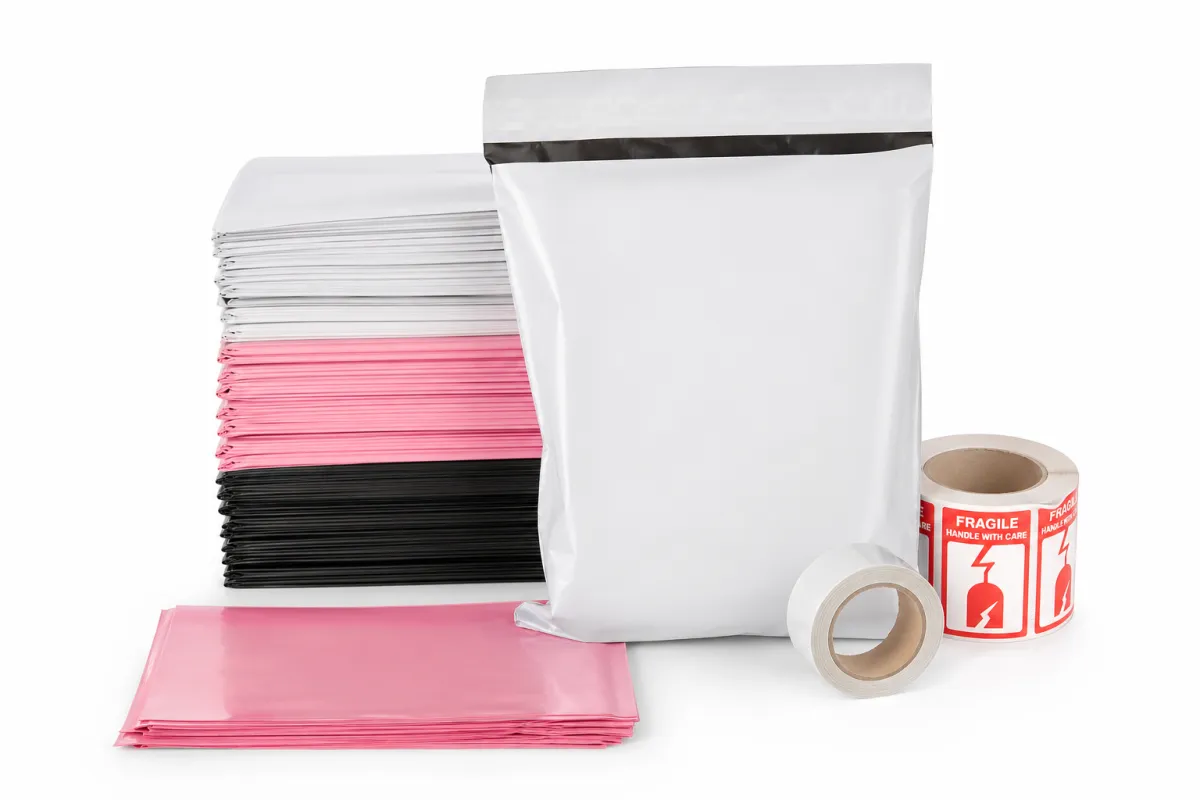
How to prep poly mailers for storage starts with a blunt question: what actually goes wrong if you store them badly? Usually it is not dramatic. Edges curl. A carton picks up dust. The flap area catches grit. A few bundles get crushed under heavier stock. Nothing looks catastrophic until someone is standing at the packing table trying to use inventory that no longer behaves like fresh inventory.
Poly mailers are durable, but they are not magic. Heat can deform them. Pressure can flatten them in the wrong way. Dust clings. Static does its thing. Printed mailers show wear even faster, because a wrinkled or scuffed branded bag looks tired before it ever reaches a customer. That is a small presentation issue with a very real operational cost.
From a workflow standpoint, this prep is about protecting throughput. Clean inventory is faster inventory. When stock is labeled well and easy to pull, packers move. When it is not, they stop to inspect, re-bundle, flatten, and reject units that should have been protected in the first place. A few extra seconds per pick sounds harmless until you multiply it across hundreds of orders.
Run the numbers. A bulk order of 5,000 mailers with even 2% damage means 100 units gone before shipping begins. Add the time spent sorting around the bad stock and the cost climbs again. That is why this storage routine belongs in receiving and inventory control, not in the “we’ll deal with it later” pile. Later is where waste likes to hide.
There is also a brand signal buried in this process. Packaging that arrives clean and intact tells customers the operation behind it is organized. Nobody sees the storage shelf. They do see the result. In packaging, the back room shows up on the front porch whether you like it or not.
How to Prep Poly Mailers for Storage: How the Storage System Works
The system is not complicated. Clean mailers go into a stable environment, then into a container or shelf setup that keeps them flat, dry, and easy to grab. That is the core of storage prep. You are not preserving a fragile artifact. You are keeping a flexible film product from getting crushed, dirty, or misshapen before it gets used.
Short-term storage and long-term storage do not need the same approach. If the mailers will be used within a week or two, the original carton may be enough, provided the room is dry and nothing heavy is stacked on top. If the stock might sit for a month or longer, the prep needs more care: tighter labeling, better dust protection, and better control over humidity and pressure. A method that works for a quick reorder can fall apart after a few temperature swings.
Material behavior matters here. Polyethylene film can cling, crease, or deform under heat and compression. Put a pallet near a loading door that bakes in the afternoon and cools at night, and you invite slow warping. Store cartons in a damp room and the paper softens, labels peel, and dust sticks more easily. The carton is usually the first thing to complain. The mailers inside are what you are actually trying to save.
Not every poly mailer behaves the same way, either. A plain polyethylene bag, a recycled-content mailer, and a printed mailer with pressure-sensitive adhesive do not always age the same under storage stress. That is why “good enough” storage is a gamble. If the adhesive liner gets bent or the carton bows, the bag may still look fine from the outside while the stack inside has started to curl. I have opened those boxes. They always look innocent until you touch them.
A clean inventory flow usually looks like this: receive, inspect, flatten, bundle, label, store by size or usage rate. That order gives the team a repeatable process instead of a memory test. It also makes rotation easier. If you know which sizes move fastest, storage prep becomes part planning and part layout. Fast movers go near the pack station. Slow movers stay protected farther back.
If your team already has rules for receiving tape, boxes, or inserts, use the same logic here. Good storage should reduce handling, not create more of it. Every extra touch increases the odds of damage or confusion. Fewer touches usually means fewer problems. Shocking, I know.
Key Factors That Affect Poly Mailer Storage
Three things do most of the damage: temperature swings, humidity, and direct sunlight. If you want the shortest answer to how to prep poly mailers for storage, start there. A room that stays cool enough, dry enough, and shaded will protect inventory better than a fancy system in a bad location. The EPA’s moisture guidance says the quiet part out loud: once a space gets damp, cleanliness and material quality get harder to control. See EPA mold and moisture guidance for a plain reminder of why dry storage matters.
Physical protection comes next. Shelving, bins, boxes, and stacking limits all matter. A lidded tote keeps dust out. A shelf keeps cartons off the floor. A rigid container does a better job of preventing curl than a loose strap around a pile. The right setup depends on volume, traffic, and how often the team pulls stock. There is no universal answer, which is why the setup has to be site-specific instead of generic.
Organization is the part people try to skip, then regret. If your mailers come in multiple sizes, colors, or adhesive types, they should be easy to identify at a glance. Clear labels cut down on picking errors. Consistent grouping helps too. Unlabeled stock turns every pull into a mini audit, and nobody wants that kind of labor sink. The storage container usually costs less than the time lost to searching.
Process discipline ties it together. Dust, fingerprints, loose bands, and torn cartons usually come from repeated handling, not one disaster. If one person repacks carefully and the next person drops the carton on a dirty floor, the system drifts. How to prep poly mailers for storage works best when the handling rules stay the same every time, especially during receiving and put-away. The routine only works if people do not improvise every Tuesday.
There is a cost angle too. Better bins or moisture protection can cost more up front, but the tradeoff is fewer damaged units, less waste, and less labor fixing mistakes later. That becomes obvious once a business starts tracking damaged stock by month. A few dollars spent on the right bin can save far more than that in replacements and recovery time. Not glamorous. Very effective.
Helpful signs your storage area is working
- Mailers stay flat, clean, and easy to count.
- Labels remain readable after several weeks.
- No one needs to re-bundle stock before packing.
- Dust and moisture issues do not show up during routine checks.
One more useful reference point: if your packaging program includes transit testing or durability checks, the International Safe Transit Association is a good reminder that packaging performance changes when products are stacked, dropped, compressed, or exposed to environmental stress. Storage sits in that chain even if nobody wants to think about it. If the inventory starts stressed, the rest of the process has less room to breathe.
Step-by-Step Guide to Prepping Poly Mailers for Storage
The process gets much easier once it becomes routine. The goal is not to spend forever on each carton. It is to give every bundle the same treatment so the stock stays ready to ship. Standard steps make training easier and cut down on sloppy surprises.
- Inspect the shipment. Check cartons or outer wraps for dents, punctures, water marks, and torn seams before they go to storage. If the outer package looks compromised, open it and inspect the mailers inside.
- Flatten and regroup. Re-stack mailers by size or SKU if the shipment arrived mixed. Keep the bundle count aligned with how your team actually picks orders, such as 50-count or 100-count groups.
- Protect the bundle. Put the mailers back into a clean carton, lidded bin, or another rigid container that prevents edge curl and dust buildup. This is the part most teams skip, and it is one of the fastest ways to ruin good inventory.
- Label clearly. Mark each stack with size, color, quantity, and received date. If you use multiple SKU variants, note the adhesive type or print finish too.
- Store strategically. Keep the stock off the floor and away from heaters, loading docks, and direct sun. A dry, low-traffic area is usually better than a convenient but exposed corner.
Keep the original carton intact when you can. If it is clean and dry, it already gives you some protection. If it is torn or soft, repack before storing. That one habit improves storage prep without buying a single extra gadget.
The human factor matters just as much as the box. Pack stations get cluttered fast when storage is not clearly marked. The closer the mailers sit to the packing area, the more important the labels become. One unlabeled stack can lead to the wrong size being pulled over and over, and then the team starts sorting on the fly. That is not prep anymore. That is damage control.
If a bundle is hard to identify, hard to reach, or hard to trust, it is not finished prep.
For teams that buy through a larger packaging program, standardization pays off quickly. Keep the same label format, bundle count, and put-away rules across your Custom Packaging Products inventory. Once the habit is set, the storage routine stops being a judgment call and becomes a routine.
Process and Timeline for Preparing Poly Mailers
A small order may take ten to twenty minutes to inspect and re-bundle. A larger shipment with several sizes or colors can take an hour or more if the stock arrives mixed and unorganized. The difference is usually not the mailer. It is the quality of the receiving routine.
A clean sequence helps. Inspection first, then sorting, then bundling, then labeling, then placement into storage. Reverse that order and the task gets messy fast. People shove cartons onto shelves before checking them. Labels get added later, if they get added at all. Rework piles up. A simple timeline keeps the storage routine from colliding with fulfillment peaks.
Timing also depends on reorder cycles. If the next shipment is already planned, prep can happen during a quieter window. That beats receiving stock in the middle of a rush and trying to make space while orders are stacking up. Good storage routines are boring for a reason. They happen before pressure builds. That is the win.
What slows things down? Unplanned repacking, missing labels, and sloppy receiving habits. Loose cartons get opened too early. Mixed sizes show up with no clear ID. Someone decides to deal with it later. Later becomes everyone’s problem. Storage prep should happen the same day the stock arrives, because once inventory drifts into generic storage, rotation and count accuracy get worse.
There is also a practical cleanup rule I like: if a carton is going to sit, make it sit on purpose. Do not leave it half-open on a pallet because someone “might need it soon.” That is how dust gets in, labels get lost, and the whole thing turns into a scavenger hunt. A finished storage job should look finished.
A realistic operating rhythm
- Small replenishment: inspect, flatten, label, and put away in one work block.
- Bulk shipment: use a dedicated prep area and batch the work by SKU.
- Busy fulfillment period: stage incoming stock away from the pack line so it does not interrupt order flow.
There is a standards angle here too. When businesses care about downstream performance, they usually borrow from transit and quality frameworks instead of improvising. That is where ideas associated with ASTM and ISTA help sharpen expectations: if the package has to survive handling and environment, then storage is part of the protection plan, not a side chore. Storage is not the glamorous step. It is still part of the chain.
Cost and Pricing Considerations for Storage Prep
The direct costs of storage prep are usually modest. Most teams are paying for bins, shelving, labels, floor space, and sometimes moisture absorbers. What changes the number is the level of control you want. A basic tote-and-shelf setup costs far less than a climate-managed corner, but the extra protection can make sense if inventory sits for a long time or the room runs humid.
| Storage Option | Typical Cost Range | Best For | Main Risk |
|---|---|---|---|
| Open shelving with original cartons | $0-$20 if shelving already exists | Short-term stock in a clean, dry room | Dust, crush damage, and label confusion |
| Lidded plastic tote | $8-$25 per tote | Small to medium inventory, frequent access | Overfilling and awkward stacking |
| Sealed carton with desiccant | $2-$8 per carton plus $4-$15 for moisture control | Longer storage in a moderate humidity space | Cost rises if cartons are repacked often |
| Climate-controlled cabinet or room | $200-$800+ upfront, depending on setup | High-value branded inventory or damp facilities | Higher initial spend and maintenance |
Those numbers are not universal, and they are not supposed to be. Facility size, local humidity, and packaging volume all shift the picture. The pattern stays the same, though: storage spend should track inventory value and risk, not guesswork. If 100 damaged mailers cost less than a shelf upgrade, the shelf may still be worth it because it saves labor every week. That is the subtle part of the process: it is a cost decision as much as a housekeeping decision.
Hidden costs are usually the worst ones. Crushed inventory means replacement orders. Dusty or warped stock slows fulfillment. Poorly labeled bundles create extra handling. A team may not notice those costs on a single day, but over a quarter they add up fast. If you are tracking packaging performance seriously, treat storage prep as risk management. A small investment up front is usually cheaper than repeated recovery work later.
A practical buying rule keeps the decision grounded: match storage spend to how long the mailers sit before use, how many units move each week, and whether the room is naturally stable or naturally difficult. That is the cleanest way to decide how much protection the storage routine actually needs in your operation. No mystery. Just a decent match between risk and spend.
Common Mistakes When Storing Poly Mailers
The biggest mistake is putting mailers on the floor or against an exterior wall. That location exposes them to more temperature swing and moisture risk than most people realize. Concrete holds coolness and dampness. Exterior walls can sweat. If you care about storage prep, the off-the-floor rule should not be negotiable.
Overstacking is another common failure. When mailers are piled too high, the bundles at the bottom take the pressure. Edges crease. The stack shape changes. Adhesive areas and openings get harder to use later. A stack that looks tidy on day one can turn into a warped mess after a few weeks. Pressure damage usually shows up quietly.
Mixed inventory storage creates its own headache. If different sizes and colors sit together without clear labels, packers start guessing. Guessing slows everything down, and wrong picks waste material. This is one of the easiest mistakes to prevent, which makes it frustrating to see it repeated. Good organization is not decoration. It is part of the process.
Repackaging mistakes are just as common. Torn cartons, loose bands, and open boxes invite dust. They also make the inventory look neglected, which affects how the team handles it. People tend to treat sloppy stock sloppily. A neat carton or labeled bin usually stays neater because it signals care. That sounds soft. It is not.
Skipping rotation is the last big error. Poly mailers are durable, but older stock should still be checked now and then, especially if the storage area is hot, bright, or damp. FIFO, or first in, first out, is the cleanest fix. It moves older stock before it starts to look rough. In a busy operation, that habit saves more money than people expect.
A storage area does not have to be fancy. It does have to be consistent.
If you want a fast audit, check for three things: stock on the floor, unlabeled bundles, and visible curl at the edges. Those signs usually tell you enough. Once they show up, storage prep needs tighter control, not a longer meeting. More meetings do not dry a room, flatten a stack, or relabel a carton.
How to Prep Poly Mailers for Storage: Next Steps and Expert Tips
The fastest way to improve how to prep poly mailers for storage is to make the checklist boring and repeatable. Keep it short: inspect, flatten, bundle, label, bin, and place in a dry location. If everyone on the team follows the same sequence, the storage area gets easier to count, easier to trust, and easier to maintain.
The best habits matter more than fancy tools. Use FIFO so older stock moves first. Keep a small buffer of the sizes you use most so the pack team does not need to raid a damaged carton for one last bundle. Review storage conditions monthly, not only after something goes wrong. Those habits keep the process from drifting into a reactive mess.
A light audit is worth setting up. Once a month, scan for curling, dust buildup, moisture spots, torn packaging, and mislabeled bundles. Catch the issue early and it stays small. Catch it late and it turns into a receiving problem, a labor problem, and a waste problem all at once. The best storage systems feel almost invisible because they remove problems before anyone has to argue about them.
For teams making purchasing decisions, tie storage prep back to the buying cycle. If a reorder is on the way, clear a staging area before the boxes arrive. If your packaging line uses branded inventory, keep the best stock in the cleanest zone. If you are refreshing your packaging mix, review your Custom Poly Mailers and related Custom Packaging Products together so storage, usage, and branding all point in the same direction.
The real payoff is simplicity. When the team knows where each size lives, what each bundle should look like, and which condition is acceptable, the system stops depending on memory. That is the point of how to prep poly mailers for storage: not perfection, just a repeatable method that keeps mailers flat, clean, and ready to ship.
One last practical takeaway: if you do nothing else today, keep poly mailers off the floor, keep them labeled by size or SKU, and keep them in a dry place with the cartons closed. That alone prevents most of the mess people end up calling “storage issues.”
What is the best way to prep poly mailers for storage?
Inspect each bundle for damage, moisture, and dust before putting it away. Flatten the mailers, sort them by size or SKU, and label them clearly so the right stock is easy to pull later. Store them in bins or on shelving away from the floor, heat, and direct sunlight. That is the simplest, most reliable version of the storage routine.
Should I keep poly mailers in their original packaging?
Yes, if the outer packaging is clean, dry, and intact, original packaging can help protect the mailers. Repack if the carton is torn, open, or likely to crush during storage. If you do repack, add clear labels so the contents stay easy to identify after the move. Keeping the original carton often makes the process faster and cheaper.
How do I protect poly mailers from moisture in storage?
Use a dry area with stable temperature and low humidity, ideally one that does not swing hard during the day. Keep the mailers in sealed bins, closed cartons, or wrapped bundles instead of leaving them exposed. If the room tends to hold moisture, add desiccant packs. Moisture control is one of the most important parts of storage prep.
How much does proper poly mailer storage cost?
Basic storage can be very inexpensive if you only need bins, labels, and shelving you already have. Costs rise when you add better containers, moisture protection, or a dedicated storage area. The real savings come from avoiding damaged inventory, slower picking, and replacement orders. That is why the storage routine should be treated as a cost-control step, not just a storage habit.
How long can poly mailers stay stored before they go bad?
They can stay usable for a long time if they are kept dry, cool, and out of direct sunlight. Heat, UV exposure, and moisture are the main factors that shorten usable life. Check older stock periodically for curling, discoloration, or adhesive issues before using it. In most facilities, the answer is less about a fixed expiration date and more about keeping conditions steady.

